




Cycling kit is really expensive, and you can sometimes feel a bit silly wearing it. So why not just wear casual clothes, or even full work attire on your commute?
This can be a very tricky choice to make when cycling to work. How far is too far for normal clothes? Will your work clothes get all sweaty? And crucially, is Lycra kit going to make you that much faster? >
Well, that’s what Dave and I wanted to find out. We headed out to Saltford, a great example of a commuter town 8.2km away from our Bath office. This, according to Strava, is the average distance of a bike commute here in the UK.
> Bike vs train vs car mega commuting race: who will win?
We would do two rides each, one in our lovely new road.cc-branded Isadore kit, and a second in typical office attire. I chose a more formal outfit, while Dave opted for a smart casual number.
Comfort
The first observation centred around on-bike comfort. I particularly found there was a lot of benefit of swapping to cycling shorts, finding the suit trousers to be far too restrictive, especially around the hips.
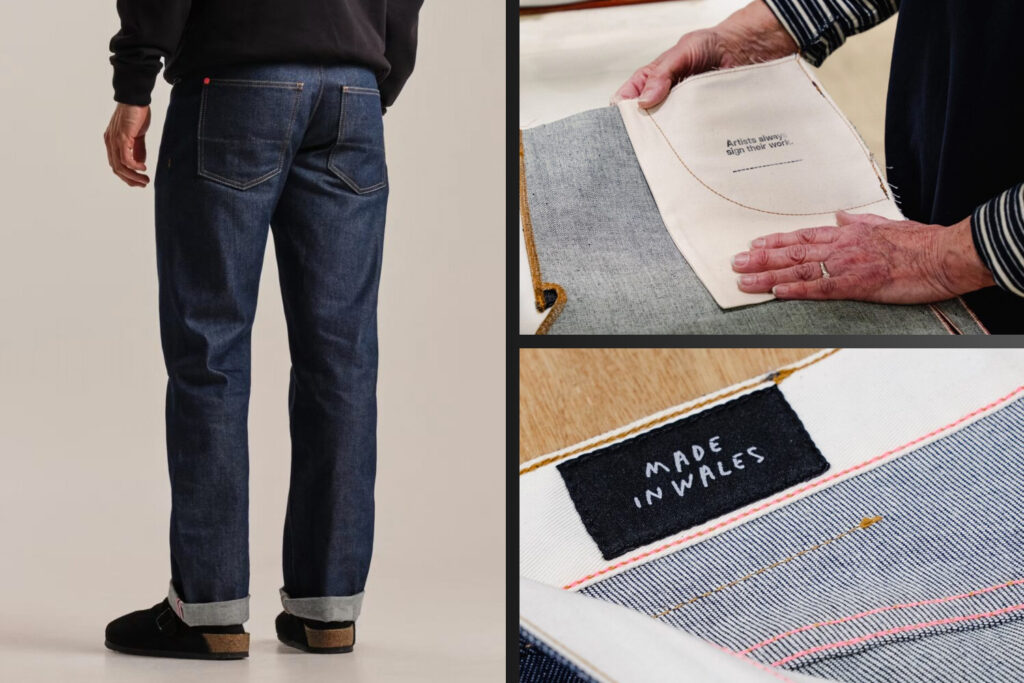
Dave was more comfortable in his casual office wear, but it’s safe to say that jeans are also out of place on the bike. There are, however, some good options for cycling-specific denim, so if you’re looking to wear casual clothes for your ride to work, these are worth a look.
For the 8.2km distance and, more importantly, the road bikes that we were using, cycling kit was the far more comfortable option. It is designed to be worn in a road riding position, though it must be said that similar comfort issues might not be faced when using a more upright city bike.
Weather
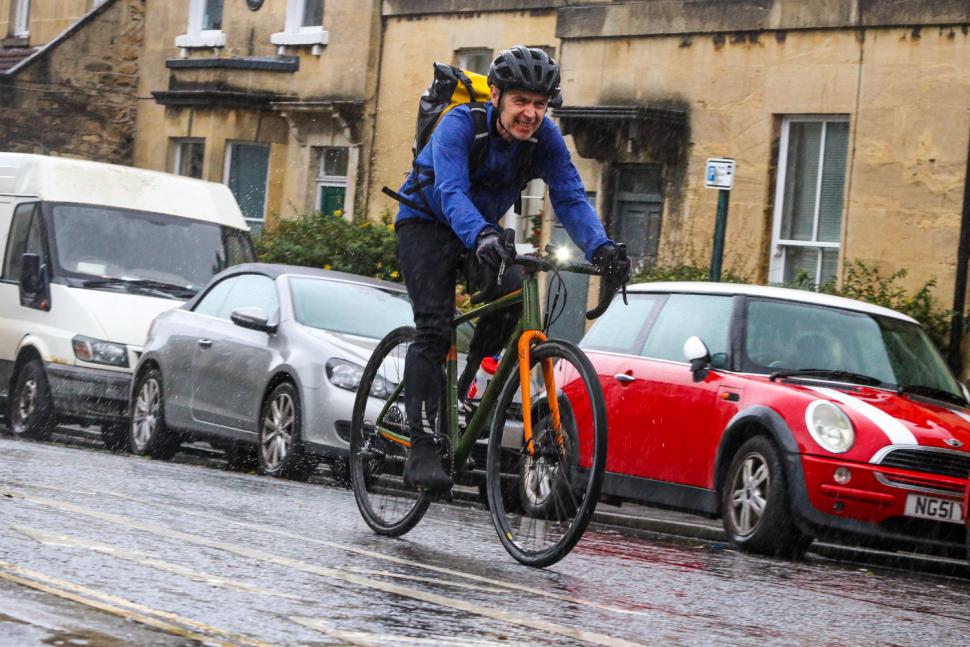
While the weather was relatively clement with light winds and sunshine, the 20ºC temperature still caused me to arrive very sweaty. Sitting in a sweaty suit would not be comfortable for me or anyone in my vicinity, though given a shorter commute and a more suitable bike, this would not have been an issue.
On the day we’d chosen for testing (and filming), biblical rain had been falling all morning. In these conditions, there is rarely any clothing you’d call ‘perfect’, but getting your work clothes soaked isn’t a great way to start the day. A set of waterproof over clothes is a sensible purchase for committed commuters, but any sort of exertion in these will quickly make you sweaty.
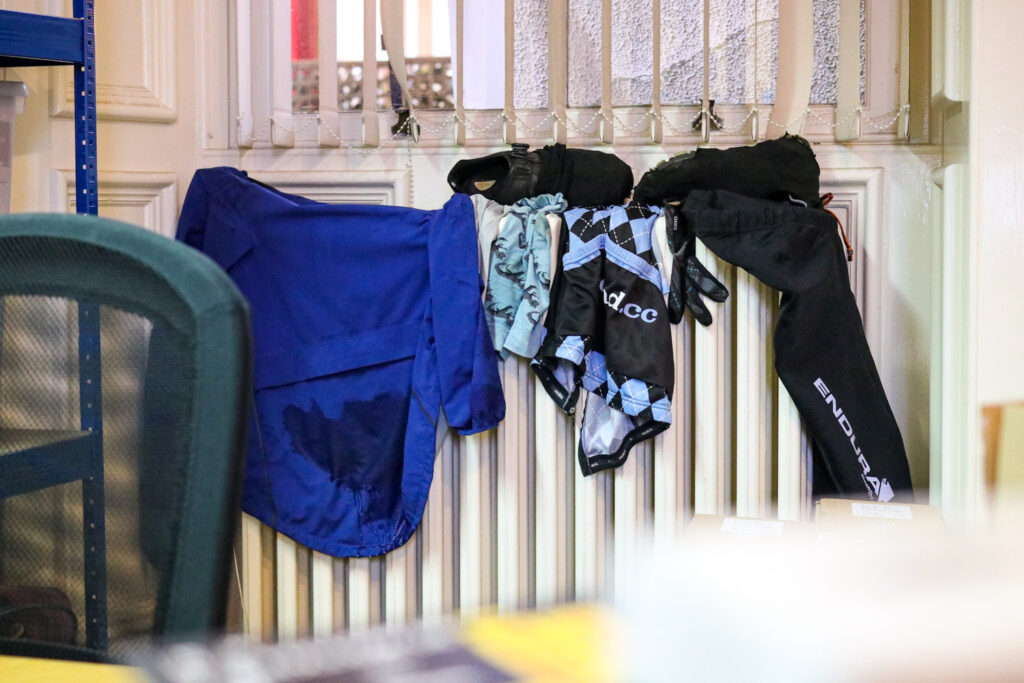
While standard Lycra is pretty useless for keeping you dry, it does at least dry quickly, meaning that once you get to work and change into work clothes, your kit stands a chance of being dry enough for your ride home.
Results
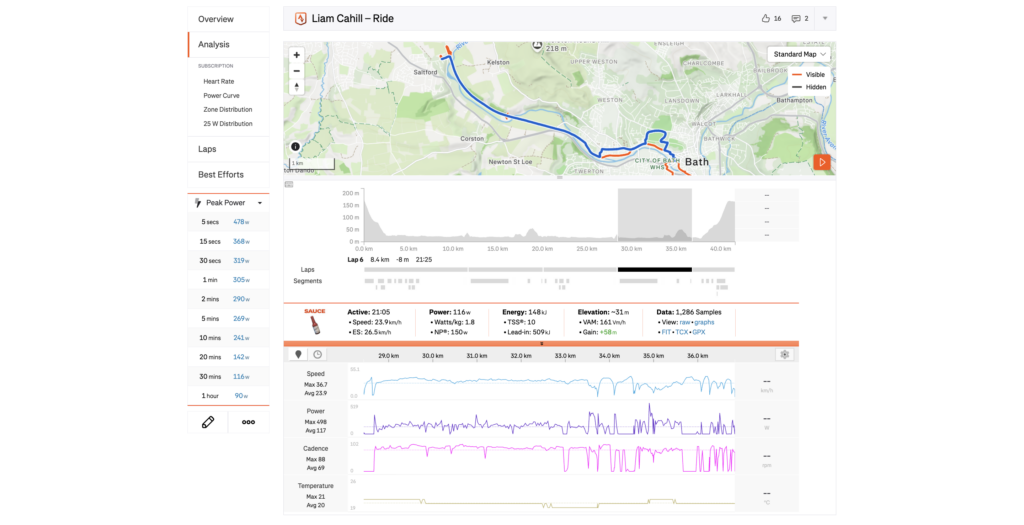
The casual commute took 23:05 with an average power of 106 watts. The second run, this time in cycling kit, took 21:05, and my average power was 117 watts.
While the second run was a little faster, much (if not all) of the time saving would be lost when getting changed out of your cycling kit and into office clothes. We’d also point out that timed testing on open city roads is far from accurate, with plenty of traffic and red lights to negatively impact the accuracy of any speed claims.
Instead, it is more useful to look at the less tangible differences. Both Dave and I were far more comfortable in cycling kit while riding, and arrived feeling far fresher. A little extra time taken to get changed was worth it for this commute.
It’s difficult to put a number on the distance where riding in normal clothes becomes uncomfortable and cycling kit should take over. Elevation and the bike you choose will likely have more of an impact than distance alone.

Both of us, however, reached one firm conclusion. For commuting, especially when hills are involved, an e-bike is what we’d choose.









18 thoughts on “How much faster is proper cycling kit? Riding to work in full Lycra vs normal clothes”
I commute nine miles (14.5 km) each way in casual clothes. In warm weather, my top is just a thin base layer like Pearl Izumi Transfer Mesh. I just have to put my collared shirt on at my desk once I cool off for a few minutes.
Even at my commute distance, there’s no way I’d save enough time in cycling kit to make up for the time and hassle of changing.
If time really isn’t. a factor, then comfort/weatherproofing trumps everything else.
But, at the end of the day, do what works for you – Thousands of Dutch people can’t be wrong
I commute nearly daily (10 km to office, 15km back home) and always in cycling kit. Less sweat, much more comfortable.
But we also have showers and a room for sweaty clothes 🙂
Another test you could do is comparing wearing a backpack vs mounting it as a pannier on a rear rack. The pannier is going to be way more comfortable with dropbars but comes at an aero penalty.
If you’re still wearing that suit in your 50’s, Liam, I’ll buy you a pint.
@lesterama That won’t help him much keep that weight, though.
My commute is also 9 miles each way, and no matter what I’m wearing, I’m a sweaty mess at the end of it, and need to shower. So I might as well wear cycling kit.
There’s no way I’m not sweating on my 20km each way commute across London, so there’s no way I’m wearing my office clothes on the bike!
@AidanR Even if one takes it slowly enough not to sweat, it’s still not a good idea to wear office clothes. Many years ago I taught in a school in Vauxhall that was a mere five kilometres from my home and, tired of the logistics of keeping clean shirts and suits in a cupboard in my classroom, I thought I would ride in my teaching clobber on nice days. After two days two quite expensive suits had to go to the dry cleaners, one with chain oil on the trousers and the other after I came round a corner straight into the outflow from a burst watermain, plus a rather nice shirt had become good for nothing but DIY or gardening after becoming irrevocably stained when I had to replace a dropped chain in a hurry. Lesson learned, ever since then it’s been cycling clothes and leave ten minutes earlier to have time to wash and change.
I did this exact route today as I do once or twice every week – Midford to Bristol and back through tunnels and along cycle paths. Don’t see many people in suits… I agree that lycra is not a time saver but as you’re going to have to shower on arrival anyway, 100% agree with Liam that you might as well wear comfy clothes that dry fast.
The actual travel time is only a part of the equation, and it’s skewed by what facilities you have in the workplace.
I always used to judge it on time for bed to desk – having shower facilities and the ability to store smart clothes and shoes at work meant there was no question about the advantage of wearing cycling kit for the comfort (and not wearing out the crotch of proper trousers).
I have almost always cycled in lycra for commuting. However, I have also had a shower and locker room available.
When I have been dressed in my work clothes I did get sweaty.
As to speed in lycra vs. street clothes, I suggest looking up the show “The World According to Jeff Goldblum”. He brought that question to the Specialized headquarters, where they have a wind tunnel.
Street clothes have an almost 20% impact on speed. So you work harder for the same result. Or you just go slower in street clothes.
13km each way.
Four days a week, lycra top and gilet/jacket depending on temperature. I have full plastic cover (coat, trousers, boot covers) in my pannier bag along with a t-shirt/shirt for work. Long mudguards with extra flaps for wet ground. Those are e-bike days. From November to April, I have handlebar mitts which, along with the mudguard flaps and boot covers are the best additions I’ve made over the years.
Thursday is road bike day, full lycra, take it easy on the way in to minimise sweaty mess, take the long way home.
GCN* did this recently (I don’t know when they made the video but I saw it a few weeks ago) and the surprising (to me) finding was that the difference between t-shirt and lycra was greater than the difference between suit with flapping jacket and t-shirt. But what hasn’t been mentioned is that a flapping jacket is great for getting extra passing distance!
*I think there might be some overlap in personnel between road.cc, GCN and ye olde Future Publishing? Certainly great coincidence of locations!
I cannot comment on different commute routes/locations.
But my own, when working in central London was approximately 10 miles door to door.
I do not have any lycra.
I just wear t-shirt, shorts, waterproofs when required which was very rare, helmet and gloves.
When I first did the route it took me nearly 90 minutes.
So I was obviously very unfit.
But surprisingly within 2 weeks of daily commuting I got it down to what became my baseline time of 50-55 minutes.
So my average speed over the whole journey was 11-12 mph.
Which was meeting or beating motorists’ average speed on a £50 second hand mountain bike.
Given my route was main roads with plenty of driver traffic, especially on the way home, the biggest delay was caused by stopping at red lights etc and having to squeeze/filter through rush hour traffic.
—-
“The casual commute took 23:05 with an average power of 106 watts. The second run, this time in cycling kit, took 21:05, and my average power was 117 watts. ”
When comparing those stats it would be usefull to include how much time was lost to red lights etc in each case.
At the risk of sounding like a certain former Prince, I don’t get that sweaty and was fine doing my 14 mile e/w commute in smart/casual (but designed for cycling) clothes.
What do you wear when you’re cycling to Pizza Express though?
When I had a longer commute, I’d always wear cycling gear and shower/change in work due to sweat. But weather is also an issue. I have mudguards, but I’d frequently see people cycling in ‘office’ clothes on with a mud stripe up their back from the back wheel.