



If you’ve watched TV in the last couple of decades, chances are you’ve seen three grumpy blokes race across a city using different forms of transport. Most of these so called races, though, have been conducted by car shows, and perhaps don’t present cycling as the efficient, fun and environmentally-friendly form of transport that it is. Especially for getting to work and back when the traffic is dreadful.
So, to provide some much-needed balance in the car-centric world of commuting races on TV and across the internet, we sent another three grumpy blokes out for the road.cc ultimate commuting race challenge to see if car really is king (or if it’s actually a bike, or catching the train). Even if the car is faster, is it really better for getting yourself to work?
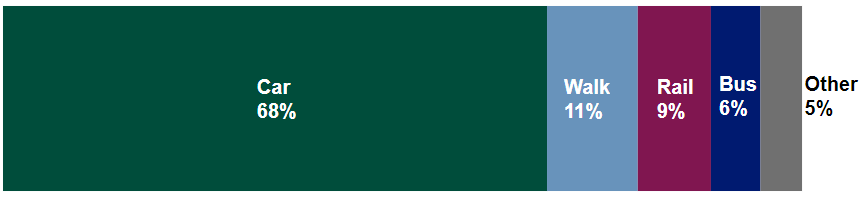
In the UK, there’s no hiding from the fact that the commute is absolutely dominated by the car. According to official Department for Transport statistics for 2022, 68% of journeys to work were completed in a car. Walking and public transport made up much of the rest, and less than 5% of people choose to commute by bike/other modes.
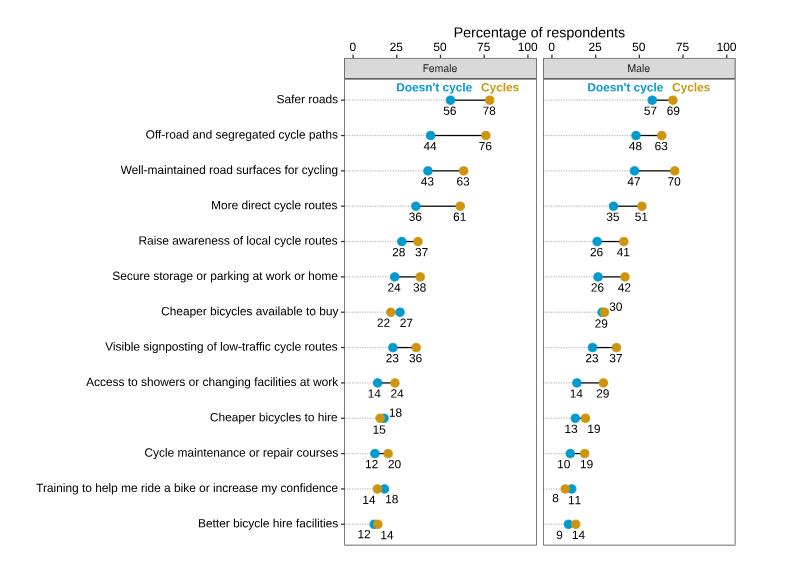
With fuel prices never knowingly low, congestion at an all-time high and public transport seeing decades of underfunding and privatisation, it might seem baffling to regular cycle commuters why the vast majority are still shunning the bike; but of course, there are a numerous different factors at play here. A recent National Travel Attitudes Survey found that seven out of 10 people say they never ride a bike, and the main thing that would encourage more of them to ride is safer roads.
For this feature and accompanying video, the aim is to show that cycle commuting can be quick, efficient and fun, even if we are well aware that where we’re based in the UK, cycling-specific infrastructure and safe cycle routes are indeed lacking compared to nations such as the Netherlands. While we (hopefully) catch up with nations that are more advanced when it comes to active travel, we can at least try to demonstrate that cycling is quicker and cheaper than driving…
The contestants
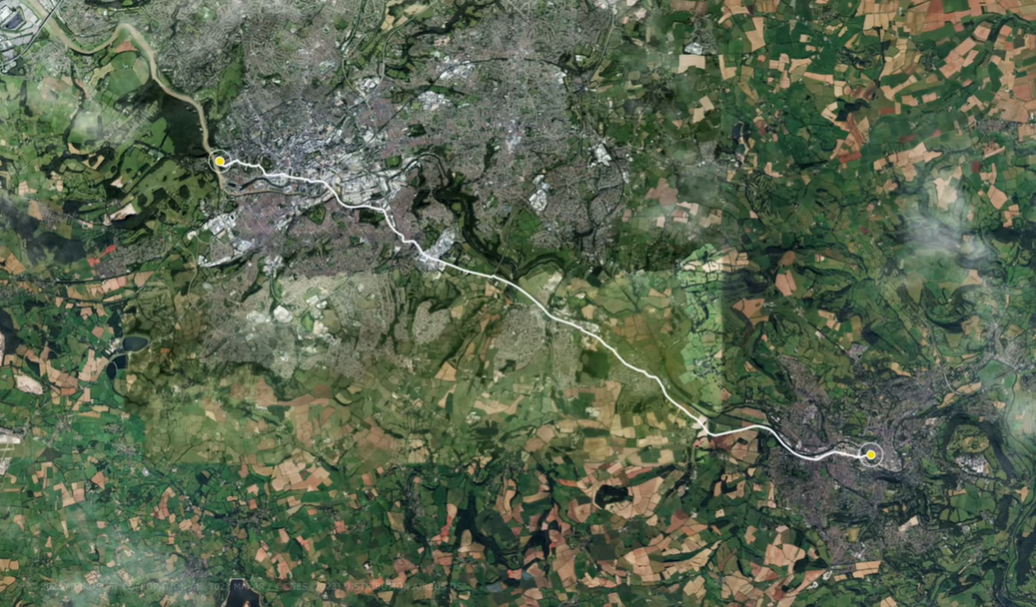
Commuting races carried out by other esteemed publications always seem to focus on short trips, but as we’re so confident that bike wins when it comes to getting across the city, we wanted to see if it’s still faster over a longer journey between two bustling urban areas.
Our commuters will all start in the same location just under the Clifton Suspension Bridge in Bristol, and end their journey at the road.cc office in Bath just over 20km (roughly 12 miles) away. The driver and cyclist will take almost exactly the same route, and of course, all competitors have to stick to the rules of the road at all times.
Jamie hates sitting in traffic, so will be taking on the journey entirely by bike. He reckons not only will it be quicker, but riding to work and back means he doesn’t have to fit a training session in when he gets home.
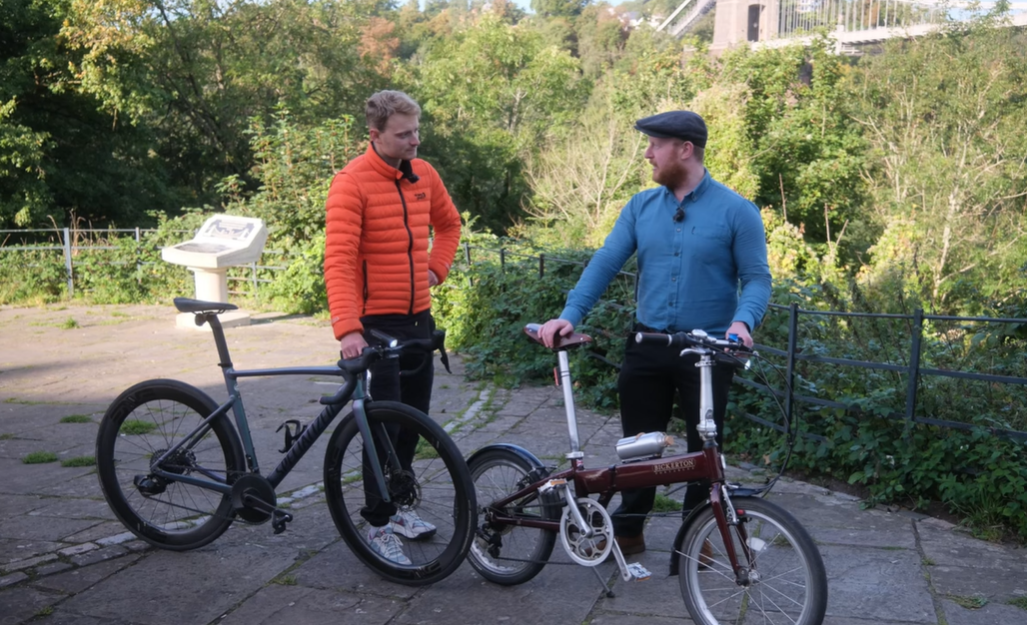
I’m obviously a big fan of bike commuting too, and actually used to commute between Bristol and Bath regularly by bike when I lived in the South West. Now though, with a young family and dodgy joints to contend with, 40-odd kilometres every day in all weathers is perhaps a bit demanding. Therefore, I’ll be riding from our start point to the train station, hopping on a train for around 15 minutes, and doing the last mile to the office by bike.
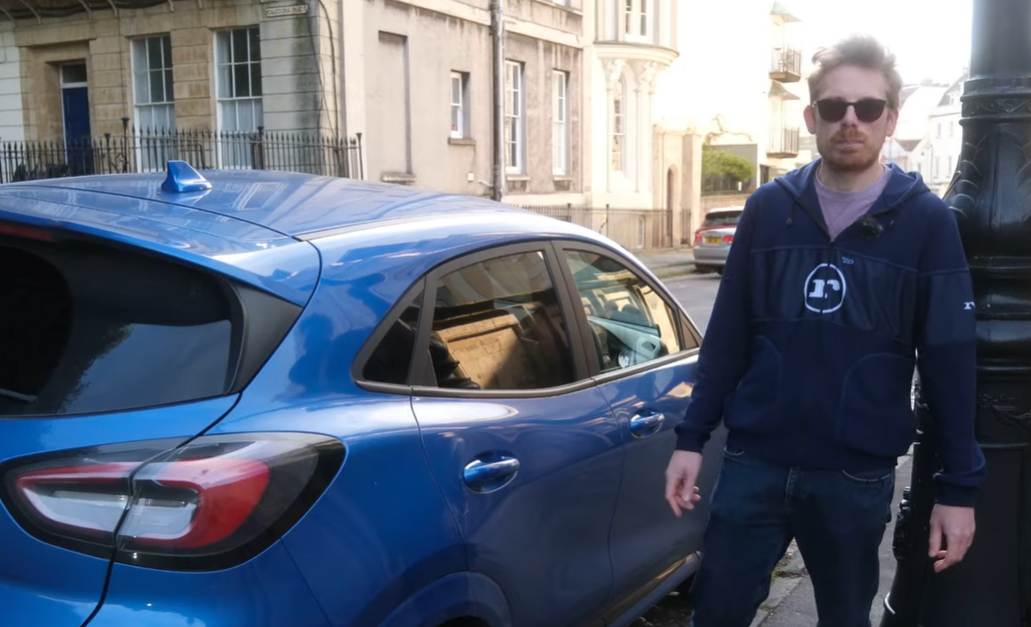
Andrew also has a young family and regularly needs to carry equipment, so all things considered, decides to commute by car usually. His mornings are time-crunched and well, old habits just die hard.
The winner, of course, is the person sat at their desk first…
The race
Ironically, our race started a little later than planned because of… traffic! We wanted to start at a peak morning commuting time to replicated peoples’ actual experience of travelling to work, but Andrew our car driver experienced heavy delays getting to the start point of the race. With most people in work by the time we set off, it was already advantage car…
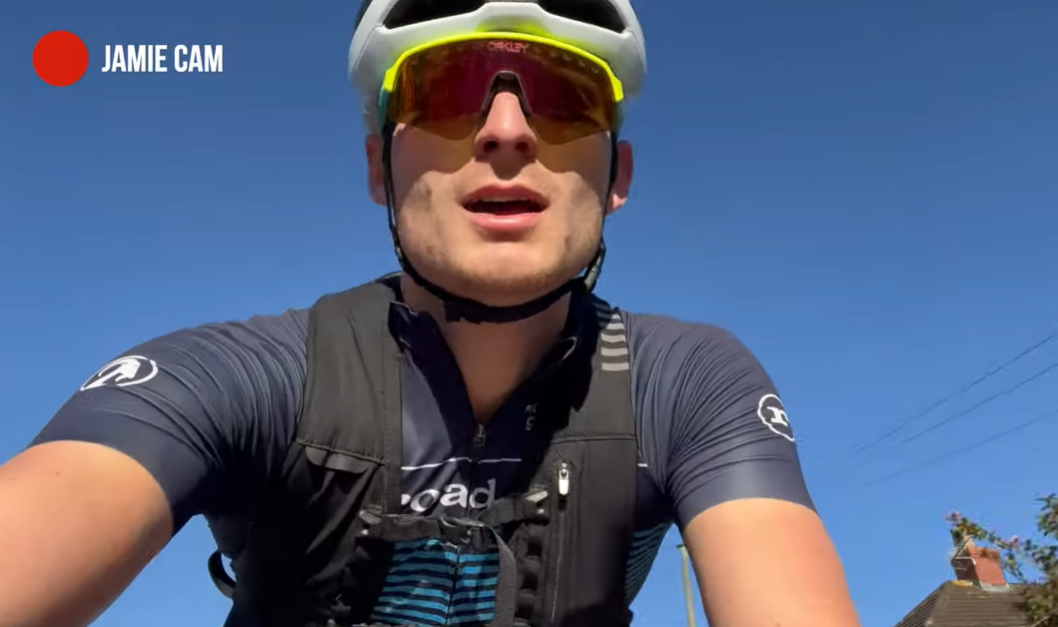
Even so, Jamie and I unsurprisingly made much faster progress than Andrew through Bristol city centre. Data from sources such as the TomTom traffic index regularly show Bristol to be one of the slowest places to drive during peak hours, where you can expect to average 21km/h if you’re lucky.
Even on my trusty Bickerton folding bike I topped that speed going downhill to the station, so it was very much advantage bike(s) for the first three miles.
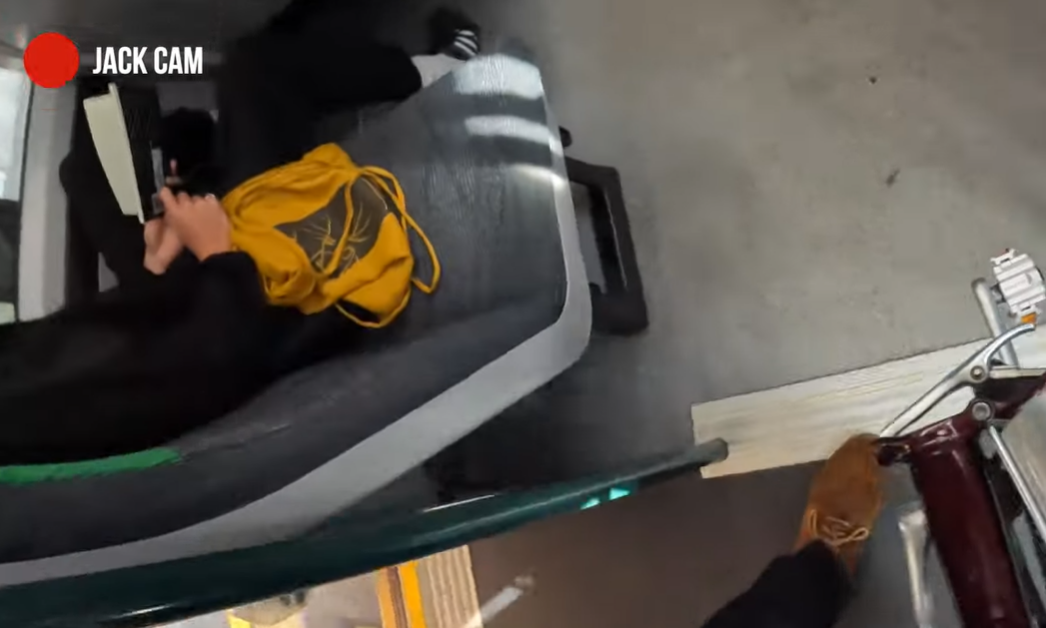
As Jamie hit the dual carriageway I hit Bristol Temple Meads, and a whole load of unexpected delays.
The train that was due to leave six minutes after I arrived at the station (perfect timing) was delayed, and I had to go to a different platform and catch a slower, local train. While this wouldn’t have happened every day, it perhaps demonstrated the limitations of being at the mercy of train operators to get to work on time.
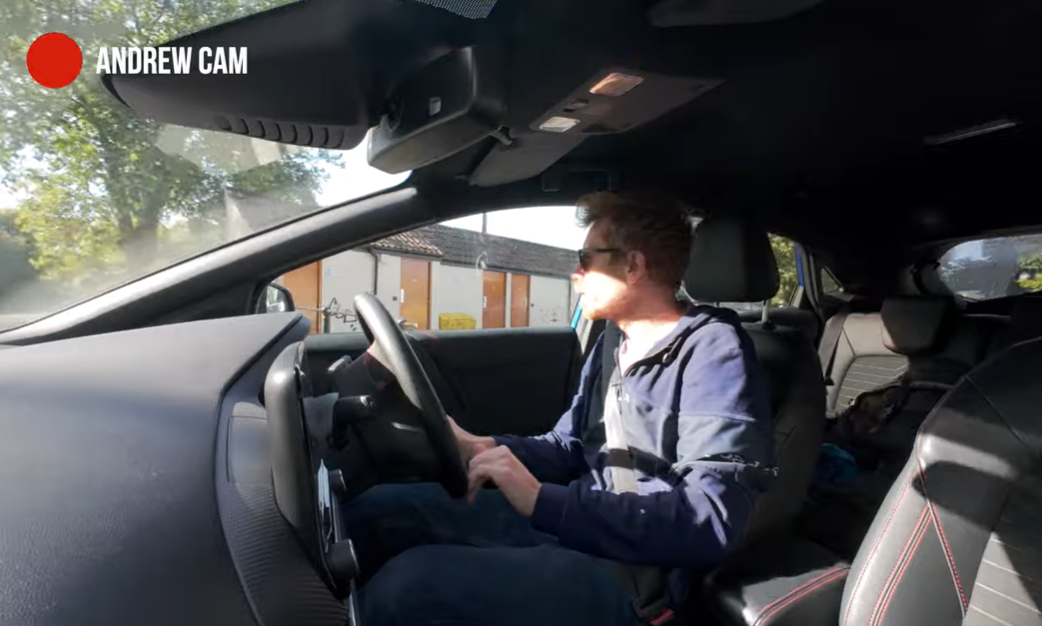
Andrew actually had a remarkably good run considering he was commuting between two very busy cities, hitting no major roadworks, accidents or hold-ups. Still, though, regular traffic conditions meant that Jamie and I made up very good time using bus lanes and cycle lanes to jump the car queues where we could.
The results
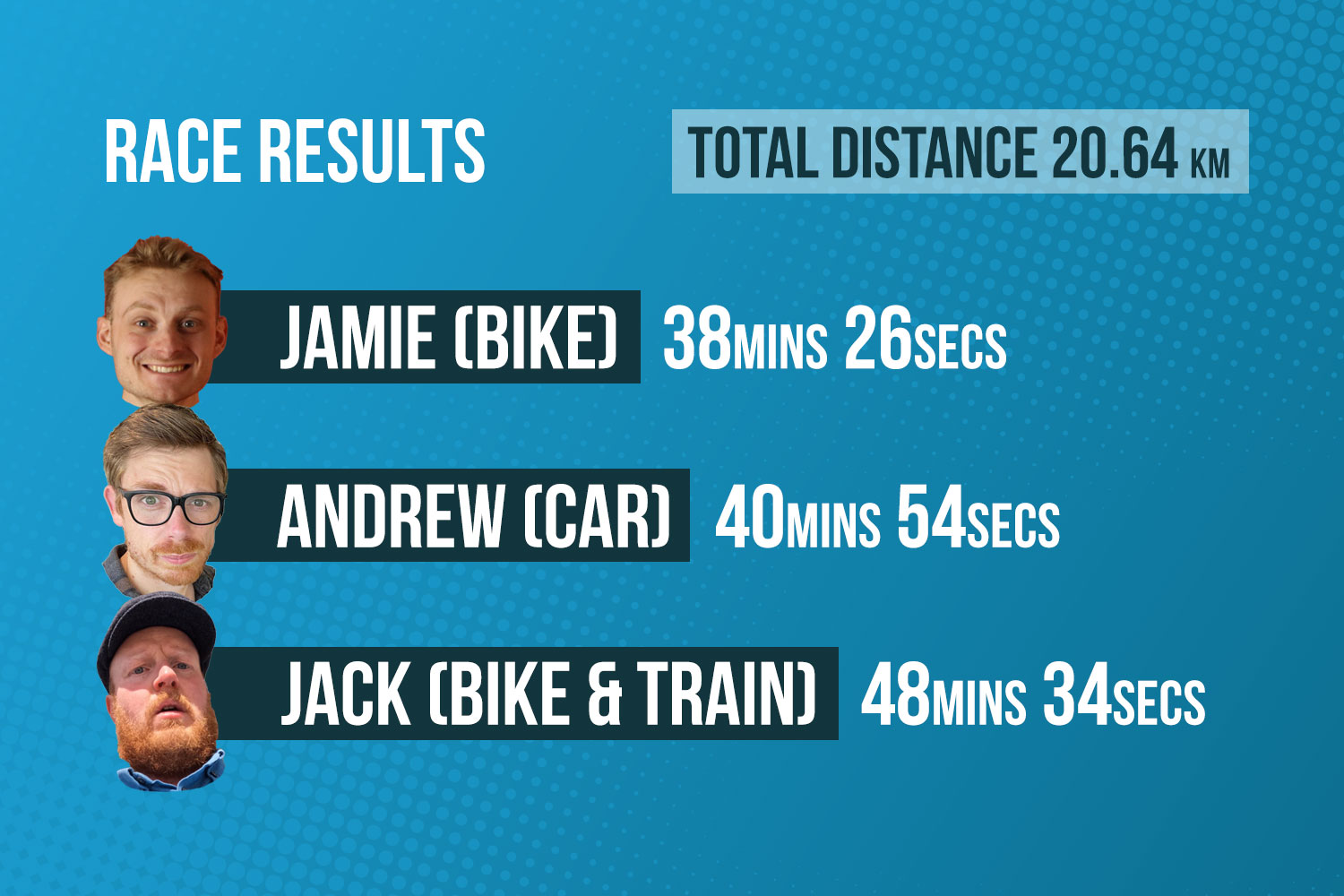
Well it was close, but the bike still won! And if we’d have left an hour earlier, it’s highly likely the car journey would have taken a lot longer.
Jamie put the hammer down and completed the journey at an average speed well in excess of 30km/h, including traffic light stops, while for Andrew the usual delays either end of a smooth dual carriageway run meant he still came up short. The bike>train>bike journey was obviously affected by delays at the station, but again, it shows that using public transport can be less reliable than travelling fully under your own steam.
Let’s address some caveats and disclaimers: to make bike vs car as fair as possible, Jamie and Andrew completed an almost identical route, which included a section of dual carriageway. If this wasn’t a ‘race’ and a genuine commute we’d consider riding every day, we’d look for a route that was much more bike-friendly, and it just so happens there is a very popular traffic-free shared use path between the cities of Bristol and Bath. This would have added distance and time to Jamie’s journey, and it wouldn’t have been appropriate to go fast on some sections of it, but it would have been a much more enjoyable and safe route for commuting.
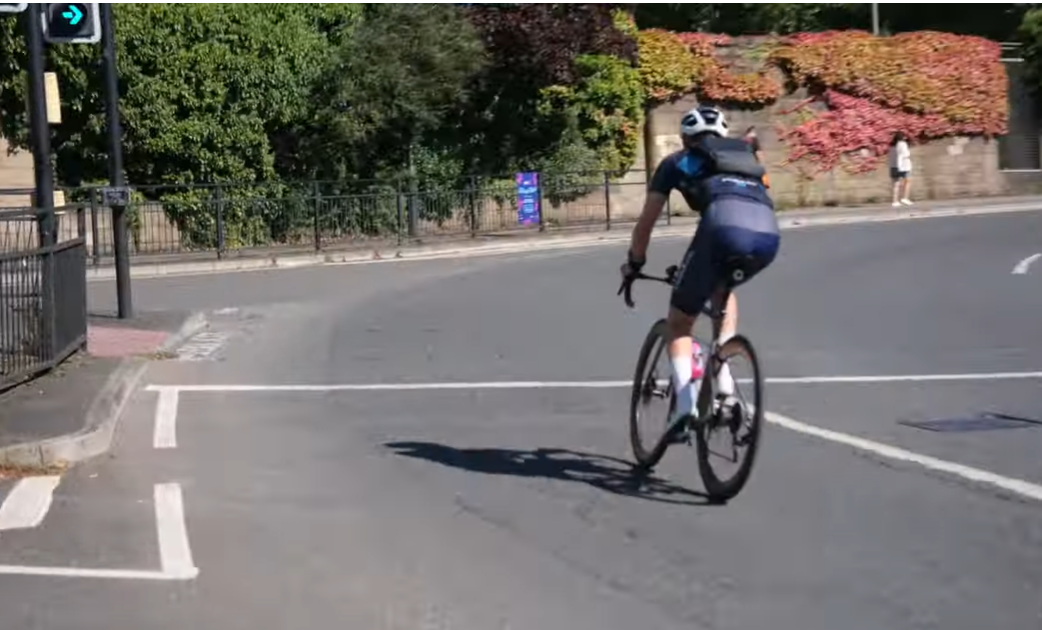
We also concede that Jamie is a competitive cyclist who was riding a race bike in full Lycra, so completed the journey a fair bit quicker than most bike commuters would have done. He was carrying just a small backpack with spare clothes in it which is all he needed for the day, but in reality most commuters would probably need to carry more stuff, and use a bike better suited to year-round commuting.
Still, the idea was to show that even over a long commute a bike can still be quicker, and it was on this occasion.
So, is cycling best for commuting?
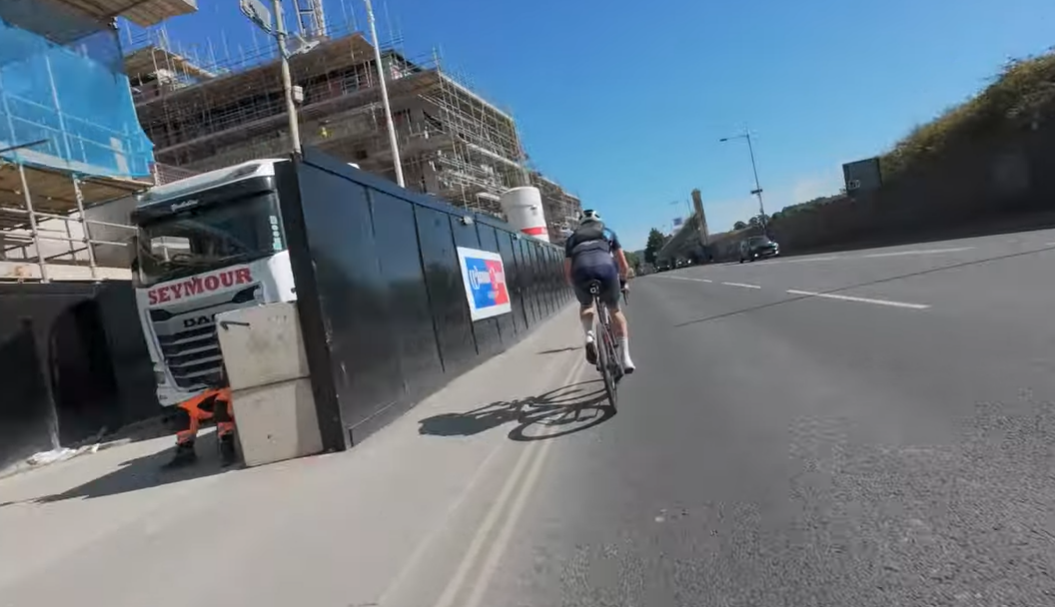
As we’ve already addressed, commuting by bike every day – especially over long distances – isn’t going to be practical or particularly safe for everyone. If you aren’t lucky enough to live somewhere with safe cycling routes to and from your place of work, this could be a major discouraging factor as research has often shown.
You may also need to carry heavy equipment for work that even panniers or a cargo bike would struggle to handle. There are ways around this – such as taking in most of what you need at the start of the week in the car, cycle commuting the rest of the week and driving home on Friday – but this requires careful planning and wash/changing facilities at your place of work. As we’ve demonstrated, though, if you are willing and able to cycle to work over longer distances then it could even be quicker, not to mention all the health and environmental wins.
For short distances in congested urban areas, it’s a no-brainer to cycle or walk instead of drive wherever possible. Not only will it simply be quicker, but there are proven health benefits, it’s better for the environment and you’ll save a considerable amount of money over time.
Let us know if you expected this result down in the comments below, plus how you get to work and why.
The video included in this feature contains product placement from Magicshine UK. Find out more about the Magicshine ALLTY 1200U and the SEEMEE 50 V2.0 combo here.


















16 thoughts on “Bike vs train vs car mega commuting race: who will win our long-range multimodal time trial to the road.cc office?”
My regular commute is centre
My regular commute is centre of Bath to centre of Bristol (near to Temple Meads station).
In the morning, if I want to get to the office by 08:30, I would have to leave at 07:00 if I was driving. On the odd day I might sail through and have a really quick journey, but most days the morning traffic through Saltford, up past the park and ride, and then in the centre of town makes a journey of well over an hour, often 90 minutes. That’s for a 10 mile / 16km journey. On the days I have to drive in I get free parking at my office, but if that wasn’t the case I would be looking at between £10 and £17 for parking (depending on which car park) plus the £9 clean air zone charge (due to driving an inherited deisel car and refusing to spend money on a newer car). On the way home the journey time tends to be a lot shorter, at around 40-45 minutes.
Taking the train means a 20ish minute walk down to Bath Spa, the train journey itself, and then a 10 minute walk from Temple Meads. All in all, just shy of an hour. The train, for a peak time day return, costs £11.10, so once you add in the cost of fuel is about the same as driving (assuming free parking). If I really wanted to save a bit of time, I’d use my Brompton at each end rather than walk (would save just over 15 minutes), but I quite like the walk through Bath in the morning).
The vast majority of the time I cycle. I take the Bristol and Bath Railway Path rather than the more direct A4 route, even though this is a lot further (16 miles / 26km door to door). It takes 50 minutes in the morning (give or take a couple of minutes at most – cycing is amazingly consistent) and a few minutes longer on the way home (I live up a hill). My office has good secure bike parking and shower facilities, which enables a proper bike commute. If I add on shower and getting changed time, that adds another (at the very most) 15 minutes, so technically total time is longer than the train, but it saves me needing to go to the gym, so it serves double duty.
My clear preference is to cycle, then take the train if I have to, and to only drive when absolutely unavoidable
My current commute is 20km
My current commute is 20km (one way) and with two lovely kids around those kms are almost my only chance to get at least some sort of cycling fix these days. I have a dedicated commuter bike and an extra singlespeed MTB for those snowy/icy days and I always ride clipless pedals.
To me changing dress at work has always been a matter of how and not if it can be done.
In my previous jobs the distance to work ranged from 15 to 23km and the routes went either straight trough Cologne, Germany or more recently from the outskirts of Hamburg, Germany into the city. Cycling infrastructure is a mixed bag in Germany.
In 23 years of regularly going to work there were roughly 200 days where I did NOT go to work by bike.
Those horrible experieces when I was sick, injured or had to transport stuff included a maximum of 10 train rides and lots of swearing and murder phantasies behind the steering wheel of a car.
My experieces perfectly mirror the result of this race: bike and car almost equal, train a distant third.
If it comes to me the only question around going to work by bike is how people can choose to NOT do that and spend their lives paying, sitting, waiting and congesting instead.
The other day I realised I
The other day I realised I have one thing in common with Rishi Sunak; I have no idea how much petrol costs. In conversation with a friend about cars and stuff I realised I didn’t know the cost of petrol – so rarely do I buy it and when i do I just buy 30 quids worth. The thing is, I would rather crawl to my destination than sit in traffic, passively breathing fumes, inching towards my destination whilst listeining to ranty shock jocks on the radio.
My commute is a mostly
My commute is a mostly traffic free 20 minute ride. A recent survey by our local paper showed that the bike was the quickest way into our city centre. Congestion and trains are so bad that if I want to get to an early meeting I’m better off cycling in.
The biggest advantage of
The biggest advantage of commuting by bike, is it’s just much more fun (well, when a dodgy driver isn’t trying to run you off the road).
I used to cycle commute even though driving was far quicker and easier (no traffic issues, free parking etc), just because I enjoyed it more and it’s good for my health.
Even emerging from the house at 7:30am in the dark, cold and wet for a 40 minute mid-December grind into a strong headwind, felt good once you got going.
Big problem with this test,
Big problem with this test, and others. It doesn’t account for faff time. How long did it take to prep for the commute, and how long was there between arriving and being ready for work.
Cycling to work is great, and cycling to work in full cycling kit is certainly more enjoyable on longer commutes, but that adds a load of faff as a result of needing to change and freshen up, which looking at the journey times in your results, would move the bike only to last place.
We all know there are lots of advantages to cycling to work, regardless of whether it’s quicker or not, but if you are doing your experiment to see which is faster, you need to account for the whole process in all cases.
I cycle into work and then
I cycle into work and then shower. If I don’t cycle, I shower at home instead. The difference in faff time is therefore minimal – unlocking and locking up the bike and the time it takes to put on cycling gear. Maybe an extra 5 minutes compared to getting the train, and probably less than that in comparison to a car (especially if finding a parking space is an issue).
I think that whether you
I think that whether you shower or not depends on how hard you are riding.
Ride a little more slowly and a shower really isn’t necessary.
IMO.
YMMV.
&c &c &c.
21 miles each way, roughly
21 miles each way, roughly half up hill, then down hill. No matter how gently you try to ride, it’s gonna make you sweat
You have to shower etc
You have to shower etc whether you ride, walk, drive, or use a jetpack. Whether the shower is one end or the other of the commute is immaterial.
It’s prep time really, once
It’s prep time really, once you sort out a routine it’s a lot easier and planning ahead helps
For a total newbie it probably feels more faff involved but overall it’s pretty much the same level of time spent doing stuff
If you’re only after a short
If you’re only after a short commute, not fitness, then an e-bike gives you the same benefits in terms of speed, but with none of the faff
“With fuel prices never
“With fuel prices never knowingly low..”
We have never, ever paid the true cost of using fossil fuels. The majority of the cost has been shouldered by the biosphere because economics as practiced does not recognise the real biophysical world.
Actually a lot of it is on
Actually a lot of it is on people – often in the places others drive through or park in. Pollution (not just emissions), traffic noise (health hazard!), disconnection (less convenient or worse to walk / cycle), lots of local stuff being closed and centralised because “everyone drives”, suppression of activity, hours of dire conversations about traffic, parking, or the price of these activities…
…And that’s without looking at where the fuels and materials come from and how they gets to us!
On a personal level I agree
On a personal level I agree completely, but in the context of this feature and the point we were trying to make about driving almost always being more expensive than using less polluting methods of transport, “fuel prices are way too cheap” wouldn’t have worked.
I usually do a mixed mode
I usually do a mixed mode commute these days. Drive halfway, cycle rest, cuts my journey time considerably, leveraging the car where it’s quicker, and the bike where it’s quicker.