


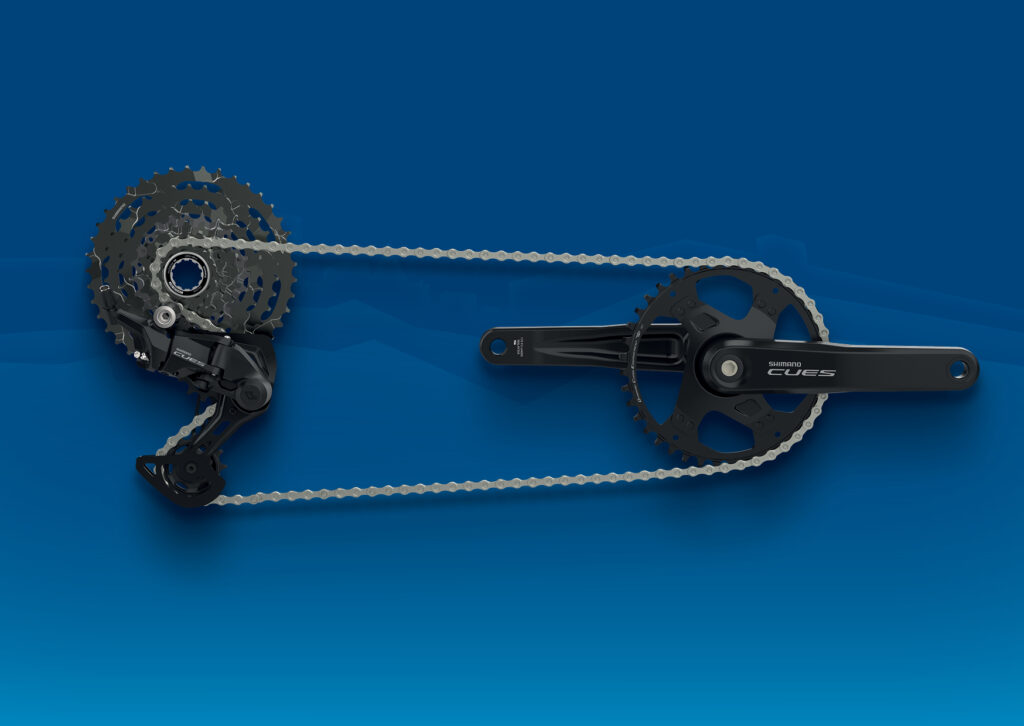

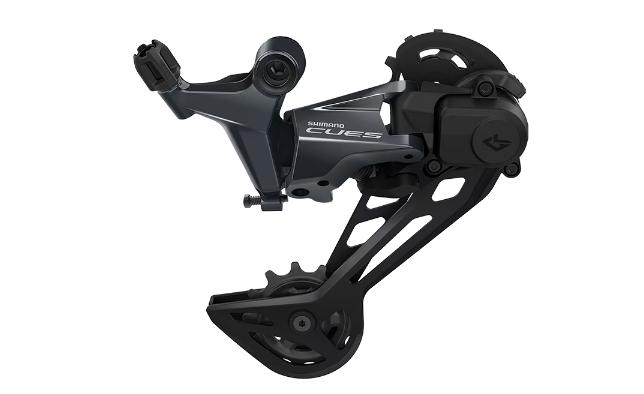
Shimano has announced a brand-new approach to its mid-tier component lineup, unifying the 9-, 10- and 11-speed ‘lifestyle’ lineup under a new product family called CUES. At the moment, CUES is only available for flat-bar bikes, redesigning the existing Claris, Sora and Tiagra groupsets – and mechanical 105 – into a range of interchangeable components, including derailleurs, cassettes and chains. The change also applies to the Altus, Acera, Alivio and Deore MTB drivetrains, which could make sourcing and fitting spare parts for bike shops and riders much less of a headache.
> Opinion: Shimano CUES looks like a genuine game changer
Totally revamping how we’ve come to know the Shimano drivetrain hierarchy, Shimano says that CUES will “offer smoother shifting, more durable components, and standardises compatibility across a wide range of categories” in the brand’s lifestyle component lineup. The wide cross-compatibility of the CUES components should mean that repairs and upgrades are easier on CUES-compatible bikes going forward, as shops are not limited by the number of gears on the bike when it comes to replacing or updating components. As we understand it, though, CUES components will not be backwards-compatible with outgoing Tiagra, Sora and so on because the pull ratios are different to the older groupsets.
What is changing?
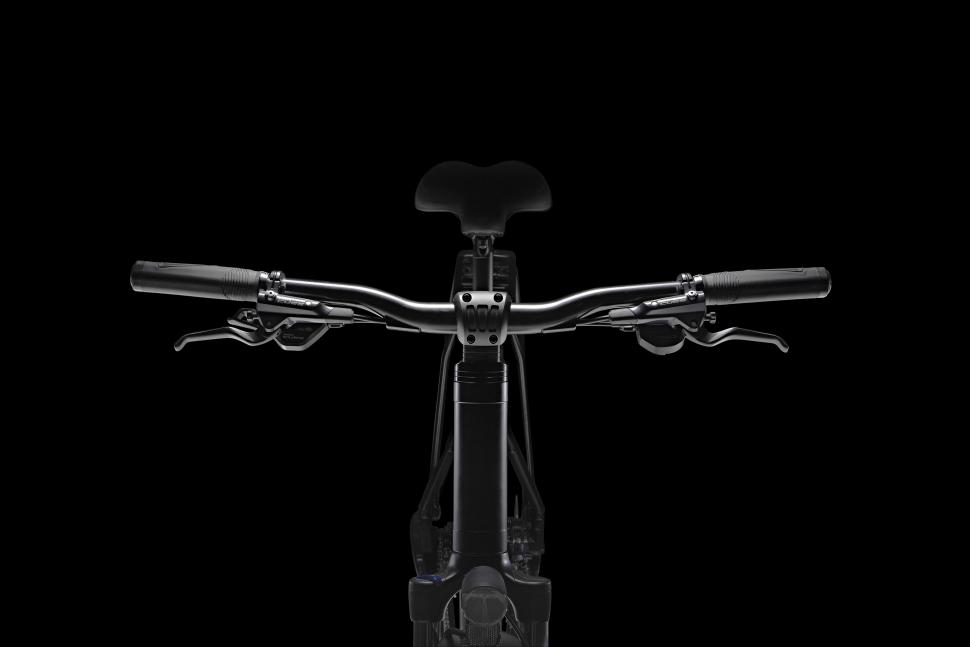
CUES, (which stands for “creating unique experiences”), is not a totally new concept from Shimano, as we’ve already seen it launched on the e-bike-specific electronic groupsets last year. Now, the CUES family is consolidating the mechanical mid-tier groupsets, meaning that whereas you previously had a rather clear hierarchy and limited cross-compatibility – between a Sora and Claris groupset, for example – the CUES system should make the mixing and matching of components across speeds much less of a faff.
The CUES lineup modernises the offerings, meaning that some drivetrain options are no longer available and the old groupset options are being phased out. CUES only includes hydraulic disc brake options, and the chainsets are limited to either 1x or 2x setups – meaning there will be no triple chainsets with a granny ring or rim brakes anymore.
Those who are currently running existing 9-, 10- or 11-speed drivetrains on their flat bar bike don’t need to panic (yet) though, as Shimano has said the current drivetrain options will stay in the brand’s offerings for at least the next seven years as they are being slowly phased out.
> Are we seeing the death of the triple chainset?
CUES will incorporate and discontinue Claris – Shimano’s current entry-level 8-speed groupset for road, fitness and touring – as well, but the timeline of all of the changes being rolled out is not clear. This slightly vague launch of CUES can be seen as the introduction of the concept, rather than a definite announcement of groupsets being discontinued.
The CUES lineup

CUES consists of three levels of components across all riding disciplines: U4000, U6000 and U8000. The U4000 range is 9-speed, U6000 is available in both 10- and 11-speed and the U8000 comes with 11-speed components. All of these are cross-compatible, to a certain extent.
You will find all of the CUES groupsets designed to use an 11-speed chain – meaning all of the cassettes have the same spacing between the sprockets and can be run with any existing 11-speed chain – including the e-bike specific E8000 chain that was part of the e-bike CUES launch last year.
How is CUES more durable than previous drivetrains?
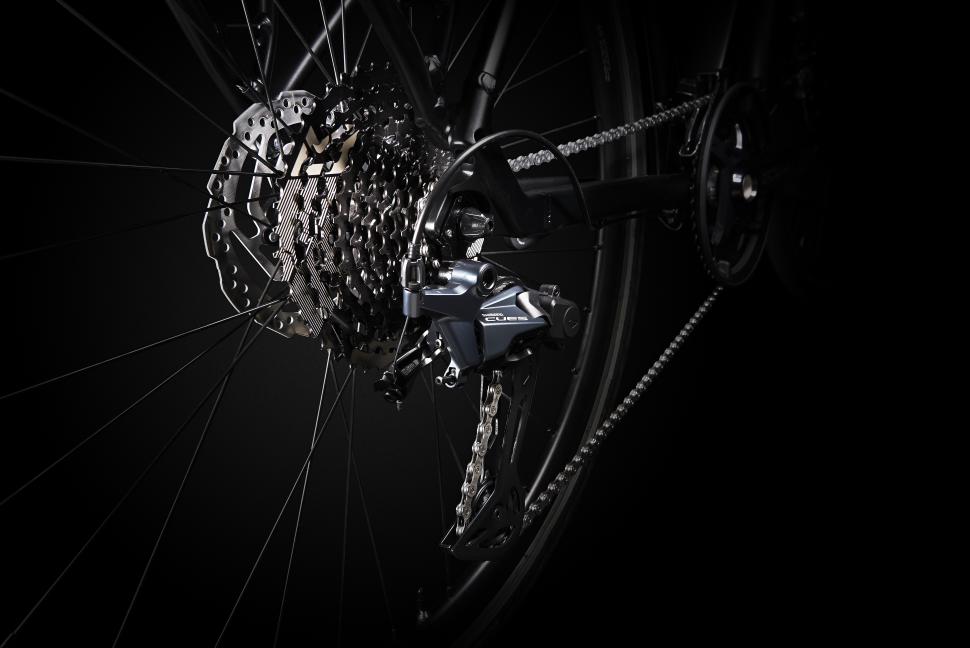
The cassettes all feature Shimano’s Linkglide technology – something the brand initially introduced as an alternative to its more premium Hyperglide tech. Whereas Hyperglide is all about lightweight and performance, Linkglide is about durability and in the case of CUES, compatibility and accessible price points, so we’re told.
The Linkglide cassettes have a specifically designed, taller and thicker tooth shape that provides additional surface area and mitigates the chain from skipping, especially under heavier loads experienced on e-bikes. The design distributes pedalling forces more evenly to prevent premature wear due to shifts from less experienced cyclists, so in other words, the Linkglide system is very forgiving for gear crunchers.
The CUES Linkglide cassettes fit on a standard HG freehub body and the two smallest sprockets – the 11 and 13-tooth ones – are the exact same across the range so that they can be replaced separately from the rest of the cassette.
Shimano says the lifespan of the Linkglide cassettes is three times longer than that of the alternatives, making them the most durable in the brand’s offerings. This obviously makes the Linkglide range more budget-friendly, as well, as you don’t have to change the components so often.
Can different speed CUES components be mixed?
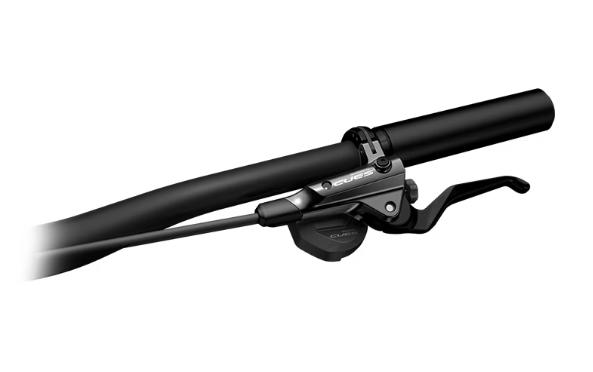
All of the CUES shifters and derailleurs use the same, specific Linkglide pull ratio, meaning that yes, the shifters can be used across different speed groupsets.
The CUES drivetrains feature 13-tooth jockey wheels across the range, again making the system more cross-compatible across the 9,10 and 11-speed CUES components. This should make sourcing and fitting spare parts much easier, because all pull ratios and cog spacings are the same.
When can we see CUES on bikes?
The CUES components are not widely available in the UK quite yet, but it’s likely that most of the mid-range bikes that you’re going to see enter the markets later in 2023 will be equipped with a Shimano CUES groupset instead of the outgoing 9, 10 or 11-speed models.
What about STI levers/drop bar bikes?
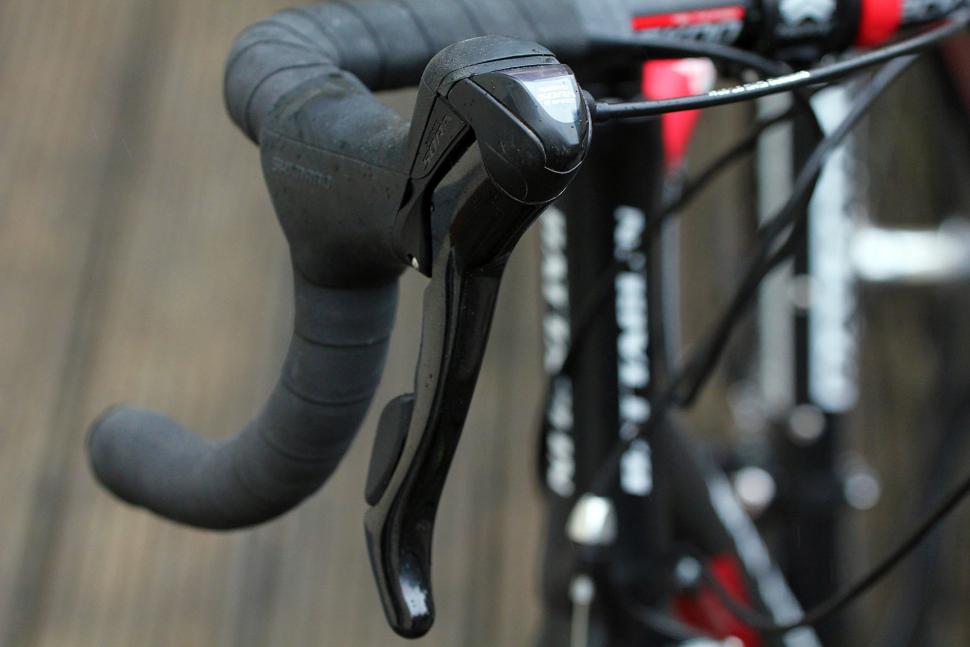
This is the first launch of CUES outside the electronic groupsets that were announced last year, and a source tells road.cc that “Shimano have ‘have all but confirmed’ that CUES componentry for drop bar is coming, but not until much later”.
We’re taking this to mean that the CUES treatment, with the phasing out of Tiagra, Sora and Claris, could be coming to road bikes too, although we’re not 100% sure if the phasing in and out times are the same as this initial announcement for flat-bar fitness, city and mountain bikes.
And the prices?
At the time of writing, we don’t have any pricing information at all for the CUES system or any of the components in the new line-up… so we’re unable to judge if it will indeed provide the accessible price points we’ve been promised right now! You can check out Shimano’s website for more details on CUES, and we’ll update when we get more information.



















59 thoughts on “Shimano unveils new cross-compatible CUES groupsets for city, touring and mountain bikes, consolidating Claris, Sora and Tiagra”
Any impact to Deore Trekking?
Any impact to Deore Trekking? Last of the triples afaik…. in flat or drop.
Shimano will continue to make
Shimano will continue to make existing groupsets for several years and if there is enough demand for sets like Deore Trekking, they will continue to make parts, if not the groupset for new bikes.
If they replace XT with this
If they replace XT with this please can they call it EXCUSE, it would make my brain very happy
CUES will be produced in 1x
CUES will be produced in 1x and 2x variants that will feature 9, 10 and 11-speed cassette options.
You’ll find both 2-piston and 4-piston brake options.
Everything above CUES (that’s Deore, SLX, XT and XTR) will remain as 12-speed.
Makes a lot sense harmonising
Makes a lot sense harmonising all those groups, MTB has been a mess with loads of overlap and dubious product differentation for a while now.
Road is a little simpler. Assuming they harmonise in the same way that means we’ll have R4000 (8/9 sp?) & R6000 (10/11sp?) replacing Claris, Sora, and Tiagra and then the existing R7000, R8000, and R9000 groups which will likely be electronic only.
FWIW, while Shimano has not
FWIW, while Shimano has not publicly confirmed a mechanical 12 speed 105 groupset, it has been seen on some leaked spec sheets for 2024 MY bikes.
Can see some of the touring
Can see some of the touring afficiandos not being best pleased with no 3x crankset….
I’m managing without a triple
I’m managing without a triple (Alpine Double is great) and have only just edged one bike up from 7 to 8 speed.
I’m not making Shimano much money I guess!
What is the obsession of
What is the obsession of trying to kill off the rim brake? Is it just down to that can charge more money? I get it that hydraulic discs work better but they are harder to maintain and cost more It’s crazy that an entry level groupset is not available with the simplest technology.
They don’t even work better.
They don’t even work better.
mjc2669 wrote:
They don’t even work better.
— mjc2669— ChuckSneed
It’s crazy that an entry
It’s crazy that an entry level groupset is not available with the simplest technology
What is the obsession with conspicuously living in the past? Is it now ‘cool’ to be a ‘head-in-the-sand Old Knacker’? Disc brakes are taking over because they’re better for us non-racers. Cable discs are much better than rim brakes because they brake better, especially in the wet, and the engineering is simple and cheap. That’s good enough for me
They’re ‘better’ for non
They’re ‘better’ for non-racers because they brake ‘better’? What does that even mean?
The limit of my stopping power when braking with my rim brakes is my tyre traction, in the dry and even moreso in the wet. I can lock up both wheels easily in dry or wet conditions without much force from my hand with my 105 levers and calipers.
The only thing I have ever noticed when using disc brakes is that I can lock up easier. To me that’s a very, very bad thing.
Horses for courses – and the
Horses for courses – and the importance of “what’s the average (given a not particularly fastidious mechanic and decidedly middle-range parts)?”
A well-adjusted *drum brake* never mind rim brake can lock a wheel. Incautious braking with a disk brake is certainly bad for the unwary. The other side is that I have found the best disc brakes I’ve used required less effort. That was a good thing when you get tired, or for fine control
Not having wet / dirty braking surfaces is always a good thing. I’ve run both drum and disk brakes and they both generally retain much more stopping power in the wet / slushy conditions compared to the average canti / V-brakes I’ve used. (I haven’t run kool-stop or other better rim pads).
Once used to them I did find the (not particularly special) *hydraulic* disk brakes to require less effort than my medium to low grade cantis or cable discs (Avid BB7). I’ve also had a go with hydraulic rim brakes – Maguras – and while that was some time ago and always in the dry I recall them being “good”.
I’ve done very little adjustment to my brakes other than changing parts. I did take a little more time setting up the drum brake cable. I also haven’t yet suffered from a warped disc rotor or had air in the lines, both of which will apparently cause you to curse that technology!
Indeed, as if stopping was
Indeed, as if stopping was ever really a problem on road bikes in normal use by average people? For high end bikes with carbon rims, maybe. For super aero bikes with completely concealed cabling, yes I can see why you’d want disks. For downhill mountain bikers, sure.
But for the mass of people, hydraulic disks are overdesign. Cable operated disks, yeah, they work, but they’re typically very heavy and need regular adjustment or they can fail catastrophically – see this story. The limit to braking on a bike is quickly reached in a panic stop, due to the tiny contact patch and short wheelbase. The few times in my 58 years of cycling that I’ve needed to make an emergency stop, the back wheel has locked up then come off the ground. You can’t brake harder than that.
Every day I see people cycling to work who are stuck in their highest gear, because they’ve never bothered to learn how to change gear. They’re not going to service hydraulic disks when they get spongy and soft.
That said, standard derailleur pull ratio is a good idea, though it’s typical that they’ve designed it to be incompatible with any existing system. Exactly what you’d expect from a company that deliberately made its chainrings incompatible between ranges for no good reason at all.
matthewn5 wrote:
If your rear wheel is lifting off the ground, then you have not exceeded the limit of traction on the front tyre, so the wheelbase and weight distribution is more of a limit than the tiny contact patch.
If your front wheel locks and slides out you have breached the traction limit, (and likely had a crash). I have never lost the front wheel in this way with any braking system.
And I agree that in the dry I can brake as hard as I need to with rim brakes
However, sometimes I ride in the rain, or rain happens when I didn’t expect it, and in these conditions the brake disc is less affected than the rim.
ShutTheFrontDawes wrote:
Amazing the number of people that assert they can lock up their wheels in the wet with rim brakes.
That is far from my experience and even less so with carbon rims. I’ am left wondering what rubbish tyres they are using, or maybe they are riding on ice. I have never locked up a wheel using disc brakes except where the wheel is unweighted (by hump in road or weight transference). I have certainly never locked up the front, except as a youth deliberately doing endos.
In addition I do not want my expensive carbon rim to be considered a consumable wearing part as the grit and muck from UK roads is squeezed between pad and rim.
Any time someone wants to come out with me on my local roads with 20% downhills in heavy rain and show they can match braking performance, I’d be most interested.
Traditionalists: rim brakes are just as good, disc brakes are a con
Other traditionalists: disc and rim brakes shouldn’t be allowed in the same peloton due to the risks of different braking performance.
you’re missing the point. We
you’re missing the point. We’re taking about cheap starter hybrid bikes here, fitted with the likes of Tourney that many people on low incomes buy to get around and hopefully get a bit fitter. They’re currently fitted with v-brakes that are ridiculously cheap, low maintenance and stop you effectively. A hydraulic disc brake set up is ridiculously overkill on a setup like that. It will be hugely more expensive and add another barrier to getting people on bikes. This has to be wrong? Are they seriously just going to offer a Tourney groupset equivalent with hydraulic discs?! It will at least double the price of the groupset.
The lowest Cues groupset will
The lowest Cues groupset will be 9 speed with hydraulic disc brakes; that said, the current groupsets will still be made for several years and I suspect if manufacturers provide a demand for low end 8 speed V-brakes ongoing, Shimano may keep making them.
You say with certainty that
You say with certainty that they are going to be hugely more expensive and will double the price of a group set. Where have you seen Shimano’s price list please?
Do you know how much a full
Do you know how much a full Tourney groupset costs? it’s about £100. If the lowest price CUES system is that low, then amazing, I’ll take back everything i said.
Can’t you see Shimano putting
Can’t you see Shimano putting this out at silly discounted prices to get a really firm grasp of the new bike market so as a first time buyer you are locked in to their product then making a tidy profit on replacement parts which in the real world won’t make much difference to the consumer, even if something is twice the price of a current Tourney rear mech in real spending terms it won’t be too bad. I agree with you that individual parts will probably cost more but to what is probably Shimano’s target market the additional cost will be minimal
a1white wrote:
If a Tourney has an RRP of arond £100 I can very clearly see why Shimano might not want to race to dominate the bottom of the market.
They already dominate most of
They already dominate most of it, apart from Microshift that are used a bit, at the entry level it’s mostly Tourney on entry level hybrids. (Tourney drop bar costs a fair bit more becuase of the Shifters). I wouldn’t be suprised if Shimano sell more Tourney than any other groupset.
a1white wrote:
valid
Not living in the past, I
Not living in the past, I just want a simpler more sustainable life. Rim brakes work, are cheap to buy and maintain. Just because we can have tomatoes in February does not make it the best option… Let’s keep life simple.
I’m with Froome on this one (not completely the same reasons). Anyway, the industry has spoken and I’m wrong.
This.
This.
It has been shown that a part from hub dynamos and LED lights, there hasn’t been a *real* improvement in bike technology since the 1930s, when bike frames moved to thinwall tubing, only “innovations” i.e. money spinners.
marmotte27 wrote:
If you enjoy mountain biking or commuting with downtube shifters, you might be right. But although my 1988 steel bike is the comfiest I have, I’m never commuting on it again – braking and shifting without having to move my hands is just so much better.
marmotte27 wrote:
Please show us your source(s).
‘Unique’ has ambiguity!
‘Unique’ has ambiguity!
It’ll be interesting to see the cassettes, hopefully they’ll still be OK with DT friction and old XTR RDs.
No; Linkglide cassettes are
No; Linkglide cassettes are not compatible with older RD’s; friction shifter may work but Linkglide uses specific shifters and derailleurs; it is compatible with existing 10/11 speed chains and chainrings.
I don’t see why not. 9- and
I don’t see why not. 9- and 10-speed cassettes have been unchanged for over two decades.
If all of 9, 10, 11 speed
If all of 9, 10, 11 speed have the same pull ratios, doesn’t this mean that 9, 10, 11 speed cassettes will have different widths? How will that play on wheels?
I can see from Shimano’s pov that they will really get the SKU count down with this.
If all of 9, 10, 11 speed
If all of 9, 10, 11 speed have the same pull ratios, doesn’t this mean that 9, 10, 11 speed cassettes will have different widths?
Obviously, yes, but it doesn’t matter because it’s not by very much! Looks like a good plan to me
No, because the amount of
No, because the amount of cable pulled is controlled by the shifter. A 9-speed shifter pulls more cable between clicks than a 10-speed shifter.
Ah, but the cog spacings are
Ah, but the cog spacings are the same, according to the article.
They’ve got pictures up on the USA Shimano site and annoyingly, no end on view. I would imagine the 9 speed has a healthy gap between big sprocket and spokes.
tubasti wrote:
sounds right to me, if the pull ratio is the amount of cable that makes the derailleur move over by 1mm, then it would theoretically be possible to change from 10spd to 11sp, by changing only shifters and cassette, because the rear mech would react in exactly the same way.
11spd would need a smaller shift, and the shifter would provide that by using less cable per click.
In CUES the pull ratio is
In CUES the pull ratio is identical. You can swap between series/speeds just fine, you just lose some clicks, ie runing a 9-speed shifter on an 11s mech/cassette. Emergency repairs FTW.
Im. a bit puzzled. My fairly
Im. a bit puzzled. My fairly cheap dependable hybrid, I use for errands etc., I bought a few years back has Altus 8 speed and cheap effective v-brakes. What happens in 7 years time, when they stop making replacement parts? Will I no longer be able to get compatible cassettes and chains? Also are they seriously only going to spec all those low end hybrid bikes (that currently have tourney and cheap v-brakes) with hydraulic disc brakes?! That’s going to push up prices somewhat, I’d gave thought. I understand disc brakes are better, I get that, but on low end hybrids a huge chunk of the cost will be the hydraulic brakes. They surely still must have the option to fit cheap 3rd party rim brakes?
I suspect Shimano will still
I suspect Shimano will still make parts for obsolete groupsets; they still make 7 speed cassettes and chains, even though they haven’t made a 7 speed groupset for new bikes for some time.
The likes of Sun Race and
The likes of Sun Race and MicroShift are good places to go.
I used a lot of SunRace components on budget bike repairs. In a way, Shimano not providing for that market is a good thing, it makes opportunities for others. SunRace was at least as good as Shimano and covered 5-7 speed with nicely designed trigger shifters and simple derailleurs, as well as economical cassettes.
Then Tektro were good for v-brakes though I didn’t drop on any side pull brakes I was fond of over Shimano at the right price.
Yeah was thinking that too. i
Yeah was thinking that too. i know Decathlon use Microshift on quite a few lower end bikes now. Though I looked at the CUES page on Shimano and I can see that Shimano have obviously thought about 3rd party providers for brakes. The levers are seperate untis from the shifters, so in theory, Tektro and the like can still make the rim brakes as they do now, if they also make levers that will work with the shifter fitments. I have a decent Road bike, but also a cheap Ridgeback hybrid runaround. It has Altus (and Tourney crank/front deraileur) plus very cheap Promax V-Brakes. I’m still pretty amazed at how well those cheap brakes work! Why use Hydraulics at 5x plus the price? Complete overkill on a bike like that.
I think what this means in
I think what this means in practice is that Shimano is choosing to drop you and move out of the budget/bottom end of the market, leaving that to cheap Chinese brand stuff.
Prosper0 wrote:
I find this very hard to believe. They absolutely dominate this sector currently, with Tourney and Altus. Rightly so too, when an entire groupset performs as well as that does for £100. Why drop all that? Really it’s a testament to their years of experience and refinement of the mechanical shifting that they are able to come up with a reliable mech as cheap and effective as Tourney. Sod 105 Di2, the real marvel is how they pump out all those hardy Tourney mechs so cheap ?!
Looking at the Shimano page, though, the Brake levers are seperate units from the shifters. so in theory a 3rd party brake lever, with cables, could be used with v-Brakes. I imagine this is how budget City/Hybrid bikes will be specced up. Even now they’ll rarely come with Shimano brakes.
Prosper0 wrote:
Good call, though it might see them go the same way as Campag once they do, because they’ll end up only making high end kit.
“CUES components will not be
“CUES components will not be backwards-compatible with outgoing Tiagra, Sora, Tourney and so on because the pull ratios are different to the older groupsets. ”
So when I fall off and destroy my Tiagra or 105 mechanical rear mech in 7 years’ time, I’m stuck with a useless shifter and a big bill because the pull ratio changed. Why, exactly? Are the MTB or Sora and Claris pull ratios different so that’s what we all have to have?
I get it that 7 years is a long time in product lifecycles, but this feels a bit like planned obsolescence, and somewhat at odds with benefits of more durable cassettes.
Had the similar problem on my
Had the similar problem on my 10 year old Tiagra equipped bike recently. Not long after I got it, they updated Tiagra, changing the pull ratios, you now can’t buy the old Tiagra deraileur. So when I went to my bike shop with a problem with my rear mech, they told me it needed replacing and I was possibly looking at having to get new shifters too as I’d have to upgrade to new Tiagra, at a minimum. Thankfully they had an old 10 second hand speed Ultegra deraileur, in a parts box, they were able to clean up and fit (which has the same pull ratio) Saved me a fortune (looks damn nice too!). So yeah Shimano parts obsolescence is nothing new unfortunately.
I believe the derailleur pull
I believe the derailleur pull ratio changed for Tiagra 4700 10 speed. For 4600 you may be able to use Sora or NOS/secondhand Tiagra rear mech.
Shimano also adjusted the cable pull for caliper brakes too, so BR-R451 deep drop brakes are required with 4700, which means BR-R450 and BR-R460 aren’t fully compatible any more. Shimano no longer make deep drop (mudguard compatible) brake calipers that work properly.
Exactly the reason I don’t
Exactly the reason I don’t like Shimano. I’ve loved using their gear over the years, but want to keep it going for a long time.
The reason is that Shimano’s
The reason is that Shimano’s pull ratios have historically been different different between MTB and road groupsets. In aligning them, backwards compatibility with either MTB or road had to be sacrificed.
Historically all shimano had
Historically all shimano had the same pull ratio until 11s road and 10s mtb. Hopefully it’s only Sora that will change to become compatible with 105 11s and tiara.
I like it. From the USA site,
I like it. From the USA site, it looks like the 9 speed is the outlier lacking compatibility, and you can potentially flip to 11 speed with just a RH shifter and cassette on the middle stuff. I can see a lot of bike builders selling 11 speed with the bottom of the range crank, the crank being the first port of call for economy now.
IanMSpencer wrote:
you talking abut the ultegra ones that fall apart?
The cassettes are more wear
The cassettes are more wear resistant but a worn chain is still going to need checking, and it will be interesting to know how durable the chain is. Ideally, every group set should have a chain checker included. Wouldn’t it make sense for bike makers to sling in a cheap chain checker in the box? With a warning sticker.
Wake me up when they release
Wake me up when they release the road shifters.
So there isn’t a release date
So there isn’t a release date, no discontinue date for old goupsets, there’s no physical CUES stock and no CUES components to actually show anyone.
This is vapourware…
CUES parts are now appearing
CUES parts are now appearing on the UK disti website. The foundation cassettes have been there for months, I’m riding one now. When the mechs and shifters will be there, TBC.
Barring the loss of
Barring the loss of mechanical brake support.. this move by shimano looks to me to be a pretty good.. it should make the interchange and upgrade of parts far easier.
I’m sure they’ll continue to produce parts or stockpile parts for older systems for a while yet..
Someone will step up to fill any void in the ‘entry level mechanical brake/shifter space’ pretty quickly.. I’m guessing this space must not be as profitable as others.
Just to add into the pot that
Just to add into the pot that Shimano have a tradition of non-series components and I can see that rim brakes of whatever variety for budget offerings could well be provided down that route, without tarnishing the CUES compatibility approach. Long drop brakes were an example, where there weren’t series versions when I put my Kinesis T2 together with Tiagra.