


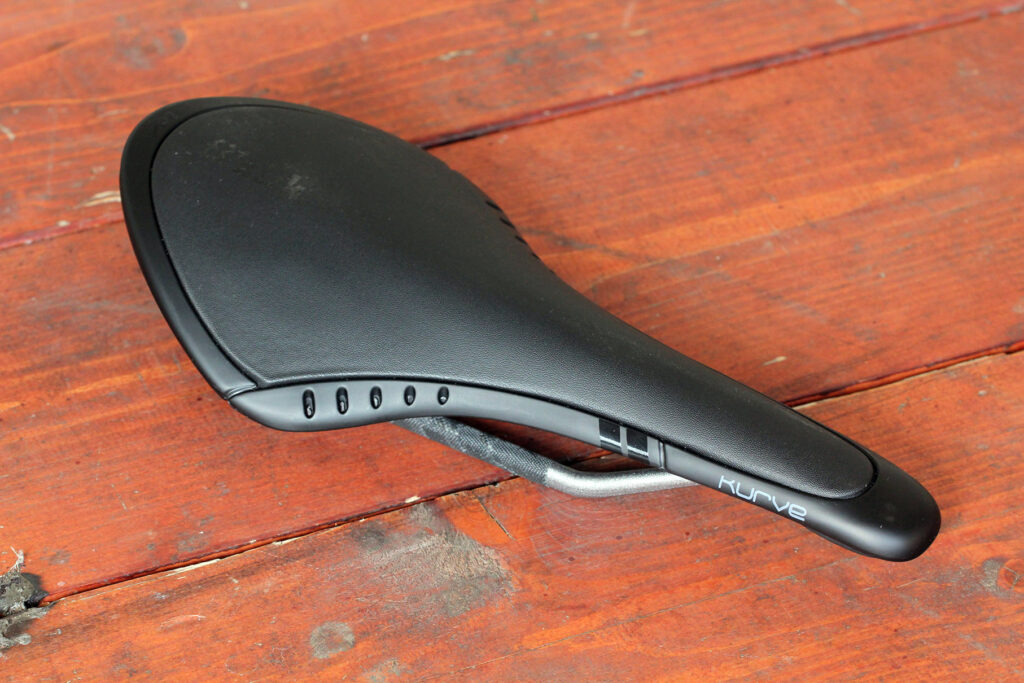

Bicycle industry saddle experts have come together at the request of the UCI, cycle sport’s world governing body, to provide scientific information about saddle development from a performance and medical perspective.
Whether this will result in a redrawing of the rules on saddles or is a step towards a UCI saddle approval programme, it’s too early to say for sure. However, the World Federation of Sporting Goods Industry (WFSGI) – the body which set up the Bicycle Saddle Committee at the UCI’s request – believes it will eventually lead to a renewal of regulations relating to saddles for competition use.

The Bicycle Saddle Committee comprises seven companies that are involved in the manufacturing of saddles.
The Chairman of the committee is Dave Schindler, Technical Commander (yes, Commander) of ISM Saddles, while the Vice-Chairman is Piet van der Velde from Selle Italia, who has been involved with launching and re-launching various successful brands in the market.
“The WFSGI is therefore well armed to start its work in collaboration with the UCI in order to renew the regulations for bicycle saddles,” says the WFSGI.
The UCI has recently looked to be more in favour of allowing technological innovation. Its Equipment Commission, set up to review the regulations currently in place, includes representation from pro teams as well as the WFSGI. Don’t hold your breath for imminent changes to the rules, though. These things invariably take a lot of time.
The UCI began clamping down on tilted saddles back in 2011-12. The maximum amount of slope the UCI will allow is 3° from horizontal.
The other key regulation relating to saddles states: “The peak [by which they mean the tip of the nose] of the saddle shall be a minimum of 5 cm to the rear of a vertical plane passing through the bottom bracket spindle… The peak of the saddle can be moved forward until the vertical line passing through the bottom bracket spindle where that is necessary for morphological reasons.”
Graeme Obree famously sawed the nose off one saddle in an attempt to comply with UCI regulations back in the 1990s.
When the UCI introduced its approval protocol for frames and forks at the start of 2011, it said that the process would eventually be extended to include wheels, handlebars, saddles and clothing. Saddles do not yet require approval although they must, of course, comply with UCI technical regulations including one that states they must measure 24-30cm in length.

















8 thoughts on “Bike industry sets up saddle committee to work with UCI”
I get that all kit should be
I get that all kit should be up to the rigours of the sport, but are these approval commitees really necessary? The cost of type approval is just prohibitve to the small companies. Why does the saddle need to be 24-30cm in length? Who cares if it’s a bit more set forward, thus breaching the 5cm rule?
(Not rhetorical questions – answers appreciated!)
The Bicycle Saddle
The Bicycle Saddle Committee….sounds like something the Monty Python lads would have come up with.
Zermattjohn wrote:The Bicycle
Cyclists today don’t know how easy they ‘ave it with their modern fancy-dan saddles. Saddles! When I were a lad we had to sit on a rusty spike. 😀
Rusty spike? Bloody luxury!
Rusty spike? Bloody luxury! When ah were a lad…
lick road clean, 36 hours a
lick road clean, 36 hours a day downt pit … 15 mile walk home … i were
right about that saddle though 🙂
Justification therapy? No
Justification therapy? No committee, no cash. And industry is flocking to mitigate disaster. The consumer pays anyhow.
The big brands love this sort
The big brands love this sort of shit. As has been mentioned, smaller companies can’t compete with the constant merry-go-round of innovation and promotion, whereas the big companies are built around using UCI events as shop windows.
Happily, cyclists themselves are a little more switched on and will seek out ever more obscure frames and parts to make their steed unique.
Quote from the article:
“The
Quote from the article:
“The UCI has recently looked to be more in favour of allowing technological innovation.”
Looked to be more in favour my ar5e….they haven’t actually done anything, have they?