



A new ‘super sewer’ for London could cause problems for cyclists, with clashes anticipated with work on the Mayor’s new Cycle Superhighways and an influx of HGVs in the capital.
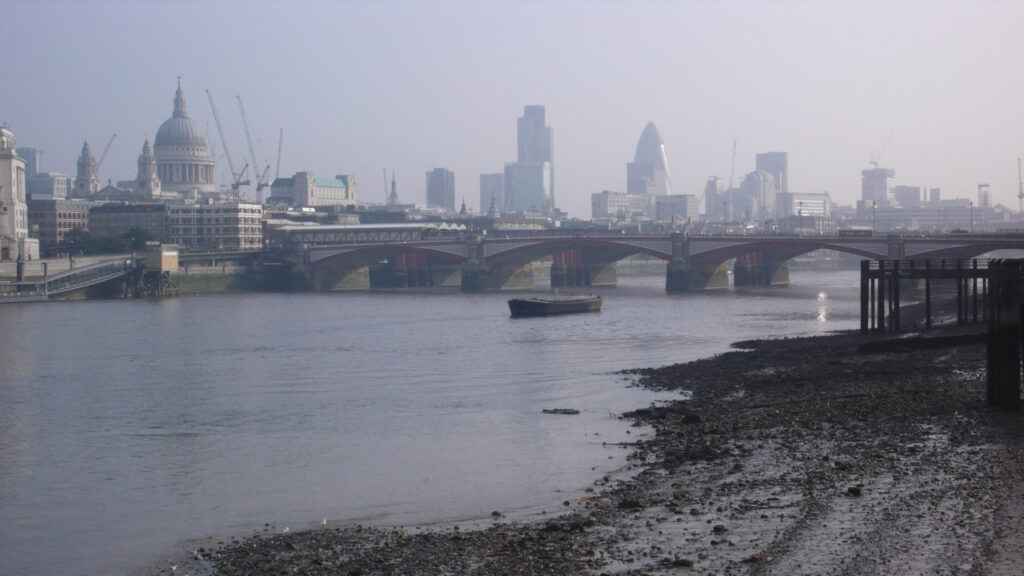
Last month the Thames Tideway Tunnel was green-lit by ministers, but it will mean closing off two sections of the east-west cycle superhighway for works; at Blackfriars and on Victoria Embankment – two of the most crucial pinchpoints on the route.
“There’s no easy way of saying it but we have planning permission,” Thames Water’s Nick Tennant. told the Evening Standard. “It’s a very congested site.”
TfL says there will still be space for cyclists to ride on the southern carriageway, and cycling commissioner Andrew Gilligan insists: “There will be no impact on the east-west superhighway — it will be maintained in segregation past the work sites.”
The 15.6-mile, 7.2-metre-wide tunnel running below the river from Acton to the Abbey Mills pumping station near Stratford is being built by Thames Water and will cost £4.2 billion.
It will be funded in part by an extra £80 a year on water bills.
Stephen Cowan, leader of Hammersmith & Fulham council, said there would be “human misery to thousands of people”.
Work at some of the major tunnelling sites could go on for up to seven years, some of it 24 hours a day and seven days a week.
Inevitably this will involve dozens of HGVs carrying materials and tunnel waste through the city day and night.
Although it aims to use river barge transport for most deliveries and transporting waste to and from the major contruction sites, Thames admits that the project will mean an average 38,000 extra HGV movements a year across the capital.
Last month we reported how TfL’s managing director for surface transport, Leon Daniels, said: “We are working closely with Thames Water to ensure that there is no impact on the superhighway. It is planned that in the event of any closures, a safe, segregated and clearly signed cycle lane will be installed to get cyclists past the works.”
But a spokesman for Thames Tideway Tunnel, which received the green light from the government last week as it was grnated planning consent, suggested that sections of the planned cycle route might even be delayed.
He said: “We are liaising closely with TfL to identify ways of working collaboratively to minimise any impacts that our construction works may have on the Cycle Superhighway. These include the option of a phased approach to the Cycle Superhighway’s construction that integrates with our own plans.”




















8 thoughts on “London ‘super sewer’ could cause chaos for the capital’s cyclists”
This does need to be built.
This does need to be built. What bugs me is that because of many decades of under-investment & mismanagement by Thames Water, we now have to pay another 25% on our water bills… while the directors hand themselves a pay rise & bonus because the turnover increased.
The disruption shouldn’t be a
The disruption shouldn’t be a major problem for cyclists. That’s one of the best things about cycling: road works only rarely inconvenience us. The extra HGVs on the road should be fine too. Providing the drivers are carefully trained and there is no financial insentive for them to drive quickly and carelessly. That will be the case, right?
significantly less tipper etc
significantly less tipper etc than are currently involved with Crossrail shaft and station enlargement works. Plus my time TTT starts tipper type work on CRL will be long complete. Plus likely that the CRL led truck safety initiaties developed by CRL will be taken on and expanded by TTT.
This work and the associated
This work and the associated congestion will affect car drivers far more than it will us cyclists.
As a result car use will be less attractive than the alternatives. With any luck more car drivers will leave their cars at home and try other modes of transport such as public transport, walking and cycling. You never know, they may not return to their cars when the works finish.
If you regularly cycle these areas and you start to notice a lot of new faces cycling please be nice to them and we might get to keep them.
I always knew it but this
I always knew it but this proves it, a bigger sewer in London must mean there’s more shite down there 😉 😉
Only joking folks so no need to blow the site up with replies.
In all honesty though i hope everyone is safe and they dont bring in drivers from abroad for cheapness as we all know how well they drive. I know up North we had some major roadworks carried out and they only drove the lorries during the night, perhaps this will be better for london ?
If only they were building
If only they were building this next to a river. They could use that to transport thousands of tonnes of materials in and out without creating much traffic at all.
Oh…
The disruption to cycle
The disruption to cycle traffic will be a lot less than to motor traffic. Hopefully might convince a few people not to drive into central London.
London already has so many building sites the number of HGVs is already very high.
Hopefully they can make as much use as possible of using the river to avoid using so many HGVs.
Might mean the cyclists using
Might mean the cyclists using the West->East CS section as a their local TT training section during peak commuting periods might slow down a touch, which is no bad thing (and links back to the Gilligan article about too much testosterone in London commuting). I use that section every day and it is a regular racetrack.