



Borrowing tech from aerospace and supercar manufacturing, Cambridge-based Flit is using advanced adhesives to build a lightweight and small folding e-bike.
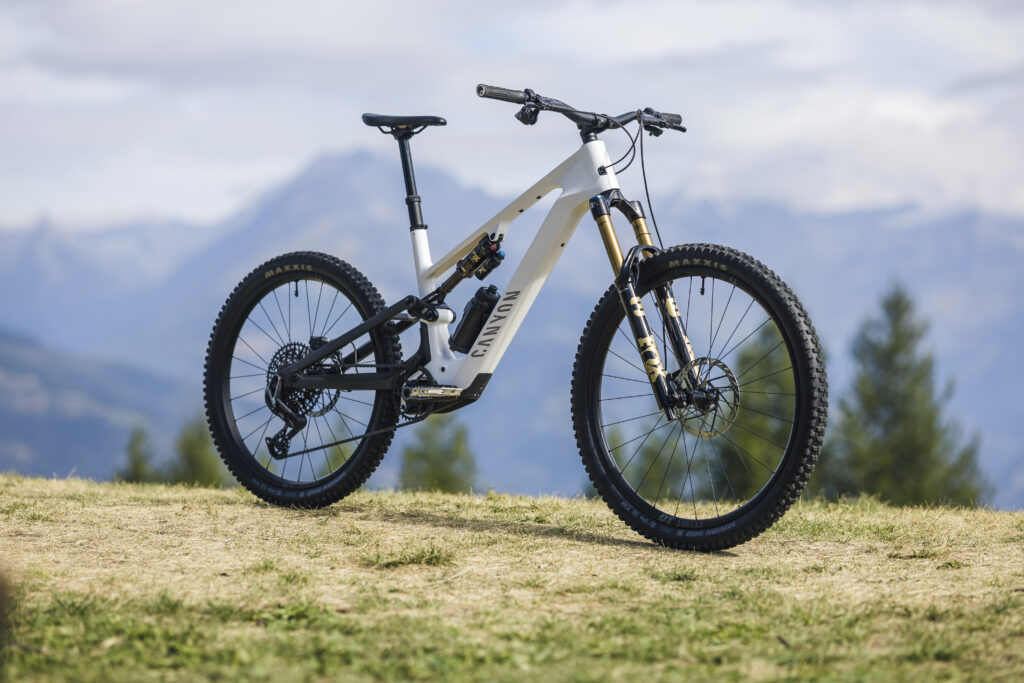
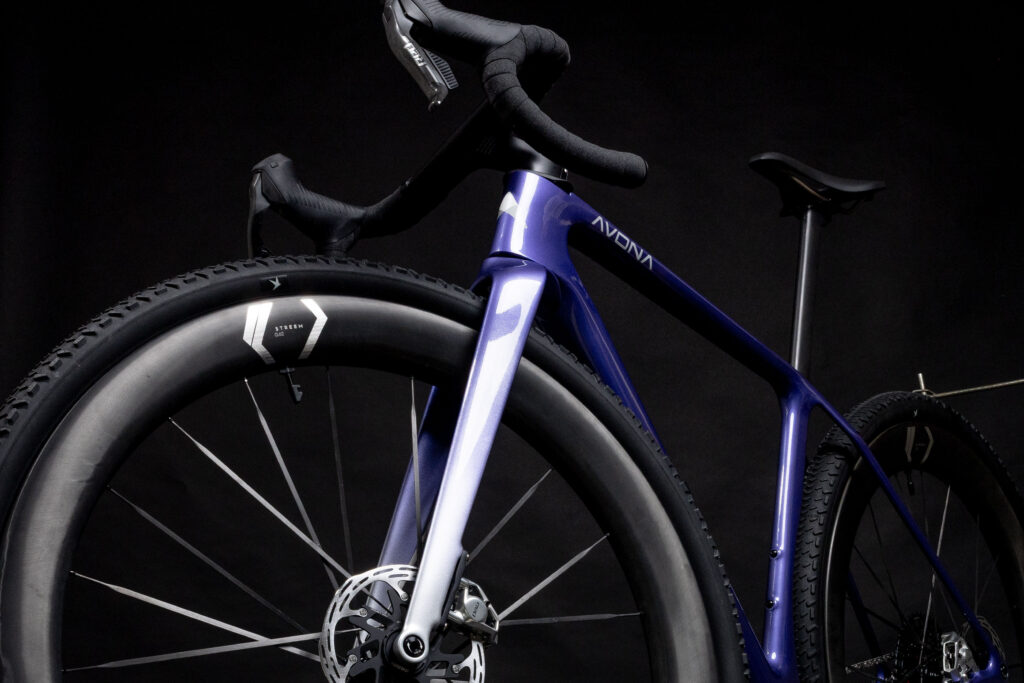
Are bonded frames going to take off in the world of cycling? High-end and specialist brands such as Atherton Bikes and Bastion are already assembling frames held together with glue instead of welds, and the Flit M2 marks the first time this tech has been employed to construct a folding e-bike.
While it may sound like a recipe for calamity, the adhesives used by Flit are a far cry from UHU — they’ve been used in air and spacecraft for many years to deliver bonds that can be stronger than welds, while reducing material fatigue during the manufacturing process. It’s not even that new in the bicycle industry: Raleigh made use of adhesive bonding with its Dyna-Tech mountain bikes way back in 1989.
> Flit takes salty swipe at Brompton with e-bike and caviar bundle
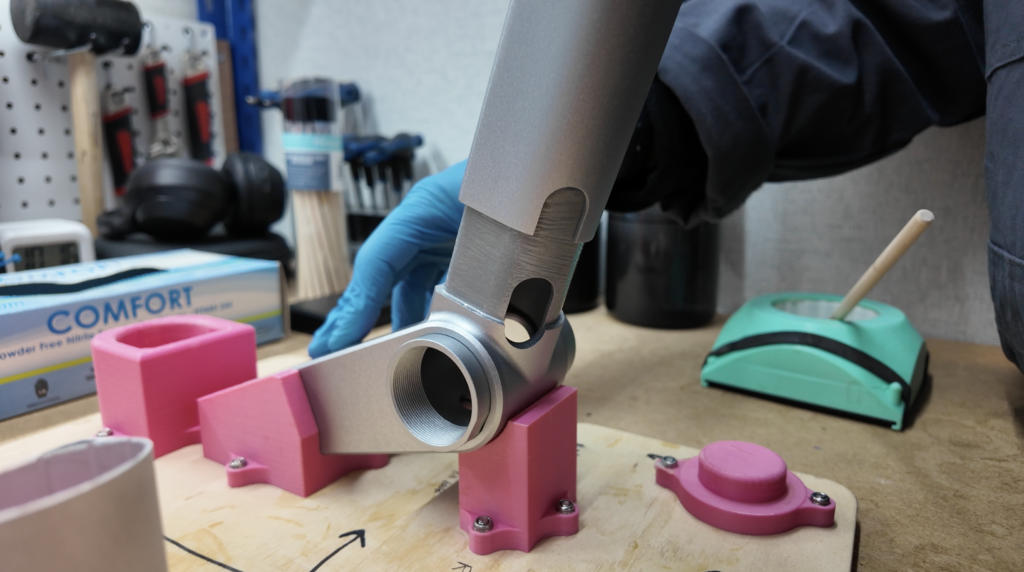
“There are other industries out there with really big R&D budgets who do the hard work of industrialisation so that the bike industry can adopt these processes once they are proven to be safe and reliable,” says Alex Murray, Flit’s Managing Director and Co-founder.
“The chassis of the Lotus Elise and Aston Martin DB9 are bonded together using adhesives. These are the industries that collaborate with large companies like Henkel to develop the adhesives that are used in our manufacturing process.”

The Flit team, based in Cambridge, decided upon bonding technologies out of necessity. Its first folding e-bike, the Flit-16, made waves as one of the lightest in its class, but it introduced a novel problem: heat-treating and welding the frame together caused distortion, which had to be countered by allowing looser tolerances. This had the knock-on effect of giving the bike a larger overall folded size, and in the fickle world of folders, every millimetre and milligram matters.
By shifting to bonding, Flit was able to work with much lower temperatures that didn’t warp the aluminium tubing of the bike. In turn, the folding mechanism could be manufactured more precisely and in a smaller format. Now, each bike that comes off Flit’s manufacturing line is practically identical.
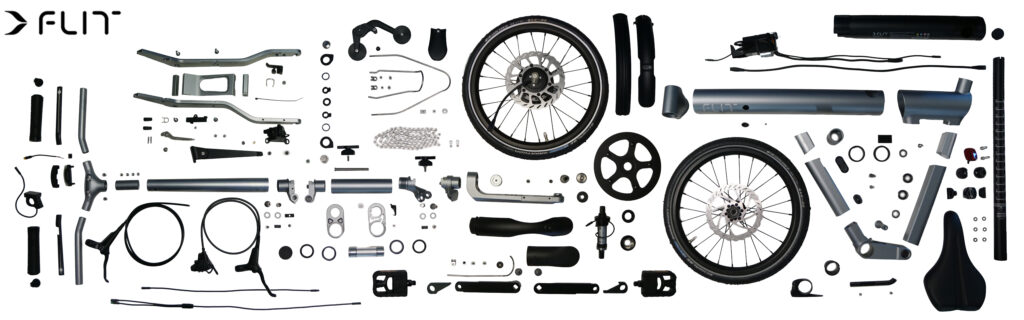
Flit also found that bonding brought additional benefits. Unlike welded joints, which can create abrupt structural changes, a bonded frame distributes forces more smoothly across the junctions, avoiding dangerous stress concentrations (often called stress risers).
It also looks great: because the components can be cleanly finished before assembly, the final frame boasts a sleek, seamless look entirely free of weld lines. An additional advantage of the unique fold is that key electrical components, such as the battery, controller, and cabling, can be strategically tucked inside the frame to minimise weight and folded size.
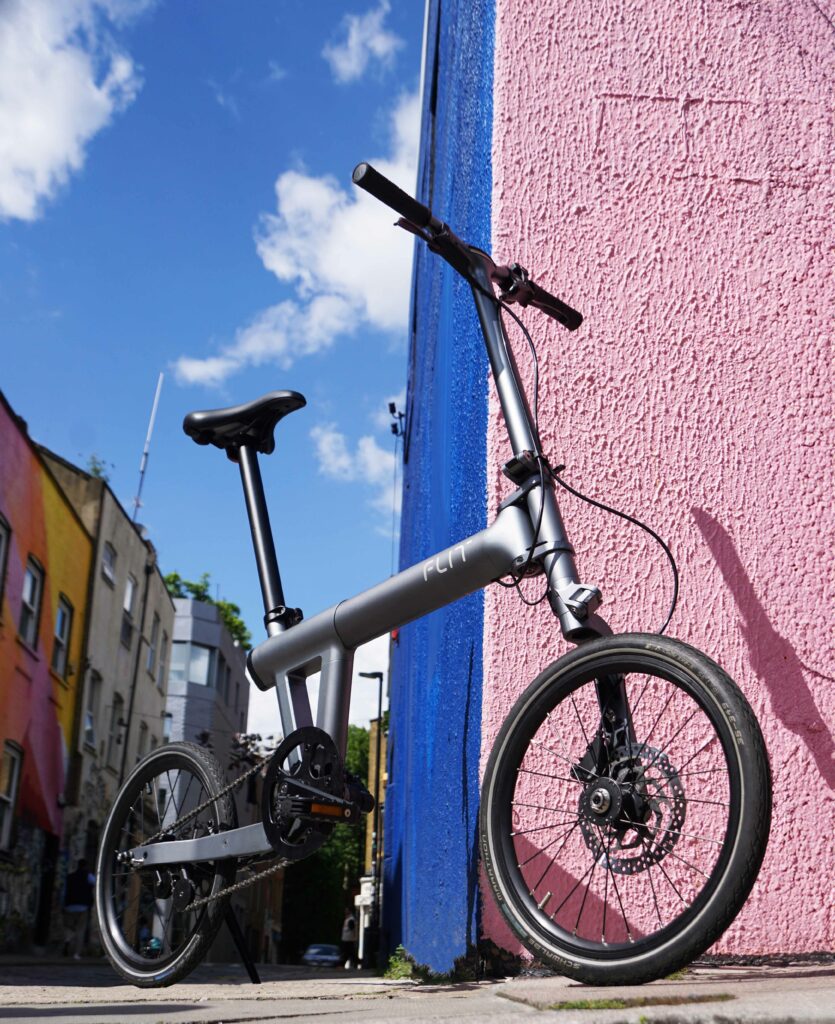
“Instead of taking an existing folding design and electrifying it (like Brompton), we designed it to be electric from scratch,” says Murray. “This meant that we couldn’t have a hinge on the top tube and instead developed a fold around the front of the bike. It starts and finishes in the same place as the existing most compact folds, but gets there via a different method. International patent offices have verified that this is a unique fold, and we now hold a patent on the fold in key countries.”
The result is a light (14.5kg) folding e-bike that can be fully bonded and assembled in Flit’s facility — and Murray believes that the company has only just scratched the surface with its new model. “We are sure that other applications and rider benefits will emerge and you’ll see this more and more in the industry,” he says.
Will the ride live up to expectations? We’ll be trying to get our hands on a test bike very soon.

















22 thoughts on “The next big thing in bike manufacturing? Flit claims adhesive bonding helped it to make a lighter and tighter folding e-bike”
I suggest Henry sticks (no pun intended) to marketing and steampunk because he is clueless about Engineering!
Ask the guys who attempted a visit to the Titanic wreck aboard that submersible that had carbon fiber bonded to Ti how it worked out for them.
The only bike manufacturer -that I know of- that uses epoxy metal bonding is Pole. But they play in a totally different ballgame with the frame parts CNC’d out of solid Aluminium alloy, full custom geometries and bikes costing 15k Euro.
The Shimano glued pasta cranks didn’t work out that well, but I had an early 90s Raleigh Special Products Dyna-Tech bonded frame that lasted until about 2017 when the right chainstay corroded through. The lug bonding lasted fine right up to the end.
But that submersible failed through very poor design, inadequate manufacturing and totally ignoring the warnings of failures during testing, not an inherent weakness of the process itself. Plus I don’t think many people are going to be riding a bike at a pressure of 400 atmospheres as pertains around the Titanic site.
Battaglin use carbon tubes bonded into titanium lugs for their Cortina gravel bike.
Xenophon – not sure of the relevance of comparing something made of different materials for a totally different, much more extreme, use case.
Good luck to Flit, and their imaginative video of ‘cycling’ up Snowdon (Yr Wyddfa, to be politically correct) is worth seeing. I certainly wouldn’t be worried about the bonded frame if I was in the market for a folding EAPC
@Rendell Harris “I don’t think many people are going to be riding a bike at a pressure of 400 atmospheres as pertains around the Titanic site.”
Indeed – nowadays the fashion seems to be to rolling ever closer to atmospheric pressure…
My Raleigh special products division MTB frame became unglued at the head tube down tube interface. It was always a bit wobbly, but then got very wobbly. Was replaced by the fully welded to 650.
Will they be including an extra tube of glue in case something comes unstuck mid-ride?
@ktache Was it bonded inside lugs, or just tube to tube?
Alloy lugs, purple, bonded to ti tubes, patterned mauve.
https://www.facebook.com/velowbikeworks/posts/havent-built-a-retro-classic-mtb-in-a-wee-while-was-great-fun-researching-and-bu/1273461374780665/
I’ve visited the Flit base in Cambridge, been guided around the facility, and given the Flit M2 a trial ride. All really good. The M2 is an impressive bike. Thanks to Alex and Flit’s senior design engineer for the invitation and for showing me around.
The frame parts are aluminium; anodised to harden them, as I recall my guide saying.
If there are issues, the bikes can be returned to the Flit base, if necessary. The bikes being folding bikes, the postage should be relatively reasonable.
The bicycle user group at my place of work looks forward to seeing them at the travel to work road show that our employer is holding later this summer.
@Xenophon2 That’s more a failure from bonding two different materials that have different rates of thermal expansion. As you go from hot to cold environments to hot again one part is going to want to stretch more than other putting stress on the bond. It’s the same issue people have with bonding threaded metal sleeves into the bottom bracket to make a carbon frame BSA or T47 threaded. But bonding two piece of aluminium together isn’t going to have the same issue.
@ktache That looks just like mine with flat bars and a triple, although mine was steel with a pinkish colour scheme
@Bright Strider
If there are issues, what would actually be reasonable would surely be that the company would organise and pay for postage themselves?
Still using my Raleigh Dyna-Tech Ogre XT mountain bike with a bonded frame, that I bought new in 1993 for just over a grand with a Vetta HR monitor computer (also still working).
Used for winter commuting and fully loaded bikepacking/touring for many years with no issues. Gone through a few wheels etc, over the years obviously, but the frame is fine. 3M’s Scotch-Weld 7823 adhesive was used at the time.
Great article. Gave a sense of context and history. Interested to see where this takes the industry.
I believe that postage would be covered for return-to-base issues within the warranty period. You’d have to ask FLIT to be sure, though.
That post above was my reply to Rendel Harris. I did click reply, but it didn’t work any better on my PC (Mac) than it did on my phone (iPhone).
@Bright Strider Since the “improvements” to the website the reply feature only seems to work for the first four replies in a thread, after that if you want to make it clear to whom you are replying the @ has to be added manually.
Oh, I see. Very helpful! Thank you, @Rendel Harris.
@Rendel Harris It only works at all on road.cc site – on offroad.cc and here on ebiketips it just pretends like it’s going to work and then ignores it.