



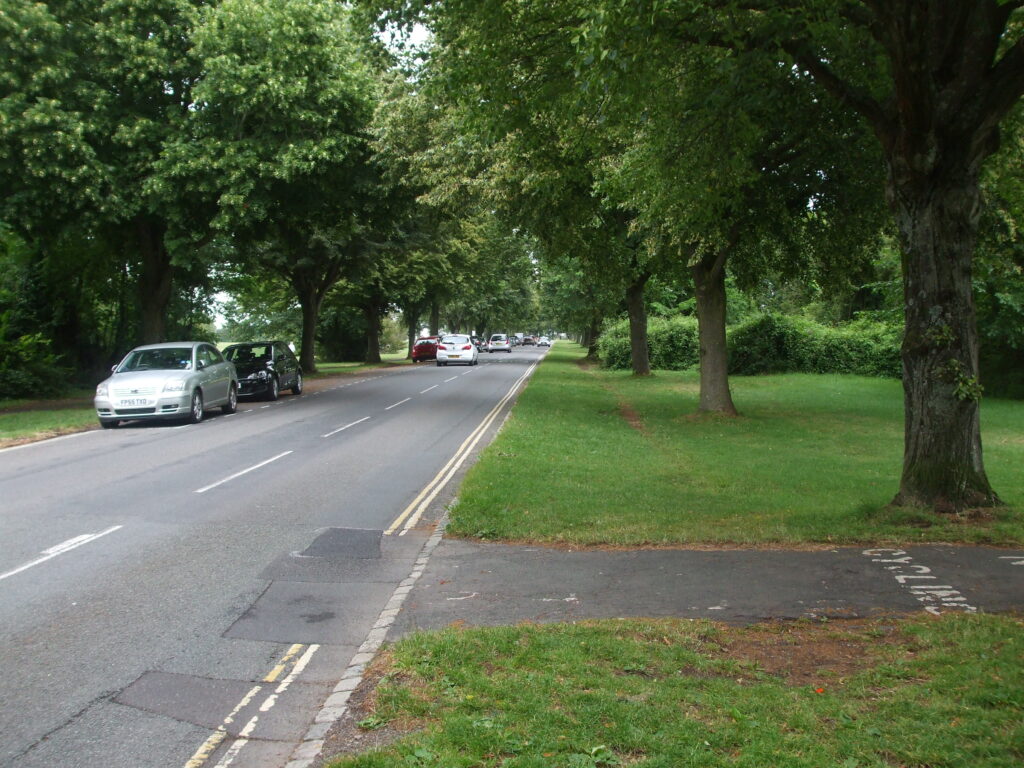
An independent committee responsible for one of Bristol’s largest estates has called for traffic-calming measures to be introduced to turn surrounding roads into a ‘family cycle loop’.
The Downs Committee, responsible for managing the Clifton and Durdham Downs in the north of the city, say that the proposal would encourage parents who are currently “concerned about the idea of cycling with their children.”
The proposals, on Circular Road and Ladies Mile, include 20mph speed limits and a one-way system, and could also involve cutting the roadside parking space. However. as the Downs do not have a dedicated car park, leading many cars to park on the road, such a proposal is likely to be contested.
Original proposals, drafted in 2020 included constructing new bike paths through the Downs, and largely avoided shared spaces with cars. However, in a meeting earlier this week, the committee concluded that overcoming “the resistance to path building on the grass might be a very challenging exercise.
“We are therefore tabling an alternative way to deliver much of the Downs Loop concept by extending the road calming approach to Ladies Mile, in addition to the original plan for calming Circular Rd, by restricting through traffic on Ladies Mile to stop this being used as a rat-run.”
> Plans for £15m regional cycling hub approved despite residents’ concerns
However, the committee acknowledge that their proposal “would be likely resisted by those who commute or cut through along Ladies Mile.” It’s also unclear if the proposed loop would be completed by cycling on the busier Stoke Road, or would involve making the footpaths through the Downs shared-use.
Bristol 24/7 report that chair of the Bristol Cycling Campaign Ian Pond played down suggestions of an on-street car parking ban, saying “If you want to go to those roads or park on them, all those roads (will still be) open. It’s just you have to go a slightly different route.”
However, the committee’s statutory independence means it is reliant on Bristol City Council to implement the road changes and provide funding for the traffic-calming proposals. Such proposals will then likely be subject to a second public consultation organised by the council.
Bristol has historically been among the better UK cities for cycling, and last year was ranked the eighth-best city in Europe for children to cycle in. However, the same report found the UK as a whole suffered from a “lack of political ambition” towards safer active travel.
The city has also not been immune to criticism, with existing cycle lanes being branded as “invisible”, causing pedestrians to regularly walk in them, whilst the marquee car-free Railway Path running between Bristol and Bath has become subject to frequent bikejackings.
















6 thoughts on “Drivers told to “go a slightly different route” to stop rat-running on proposed family cycle loop”
I think you might have elevated Ian Pond to a councillor. He’s actually chair of the Bristol Cycling Campaign.
Long past time that through traffic was reduced on the Downs. Something must also be done to prevent idiots parking on the grass, which has become a serious and widespread problem recently.
The difficulty with the family cycle route though is how people get to it in the first place. Apart from the difficulty of cycling through traffic with one’s family, there’s also the prospect of a pretty serious climb for almost anyone who doesn’t live in Sneyd Park.
Getting up to the Downs? If it’s in the summer can’t people just catch a passing balloon?
I’m slightly “EAPC cautious” but Bristol seems a reasonable use-case for them. Alternatively what about the council installing escalators – after all if it’s hard to cycle up there won’t you think of the pedestrians?
“We are where we are” (why *wouldn’t* you drive everywhere?) but I do occasionally stop to wonder how anyone got anywhere pre-car.
@chrisonabike Tramway used to run to the top of Whiteladies then all the way along to Westbury
Trams would be great!
Wonder what happened to them…
It’s unclear what is being proposed – just 20mph and traffic calming, or modal filters too?