



French startup Wasted Watts claims it can help riders unlock free speed by showing aerodynamic losses in real time, turning any ride into a rolling wind tunnel experiment. We took the system to the track to find out whether it really works, and whether instant aero feedback could change the way cyclists train and test equipment.
For years, cyclists have chased speed through increasingly expensive upgrades. Deep section wheels, slippery helmets and aero skinsuits have all become standard kit for riders looking to save a few watts. The problem is that most of us never really know how much difference those products are making once we get out onto the road. Wind tunnel testing is expensive and lab conditions are difficult to recreate outdoors. Wasted Watts wants to change some of that.
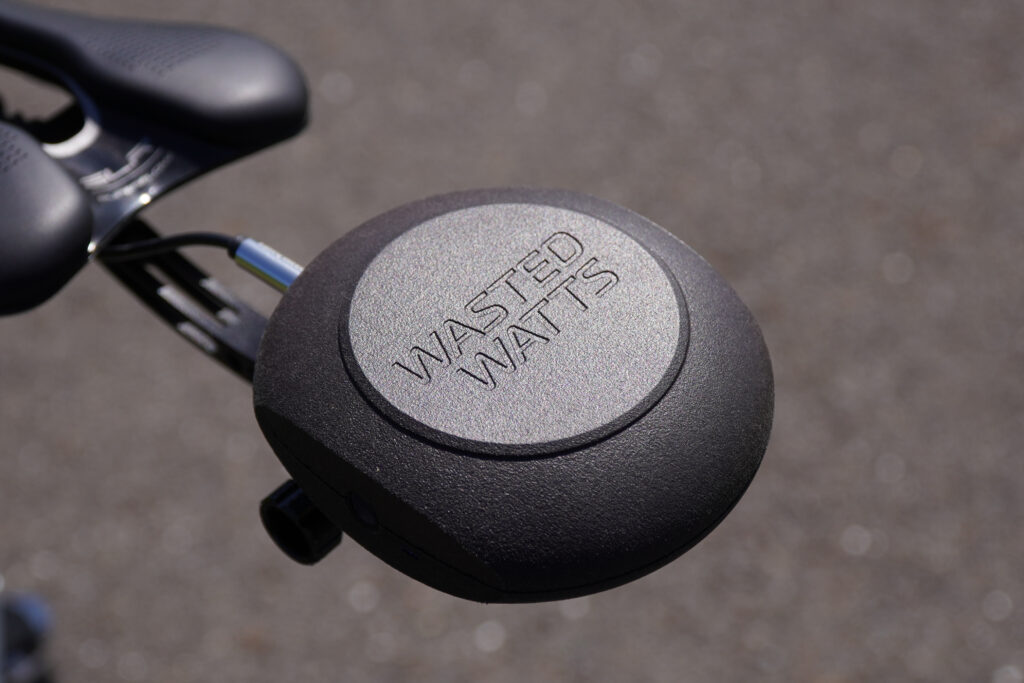
Created by French engineer Manuel Sellier, the system measures aerodynamic drag while you ride, and displays the data live on a cycling computer. We first heard about it in early 2025, when the system was less refined and a fair bit chunkier, but was already been tested by WorldTour pros. It’s not a completely new concept by any means – we tested Body Rocket’s ‘real-time aerodynamic drag force measurement system’ back in 2024, and reported on a drag-detecting device then known as Notio Konect almost a decade ago – but Wasted Watts is the only one that claims to be working with multiple WorldTour teams to our knowledge.
The idea is simple enough. If you can see how much energy is being wasted through poor aerodynamics, you can immediately change your position or setup and become more efficient. Instead of guessing whether a lower torso position is faster, you can watch the numbers change in front of you. Before heading out to test it, we wanted to understand how the technology actually works.
The system combines a highly accurate GPS setup with power data and environmental measurements to estimate aerodynamic drag in real time. According to the company, the aim is to bring professional level aerodynamic testing to ordinary riders without the need for a wind tunnel or specialist lab equipment. The concept is certainly appealing.
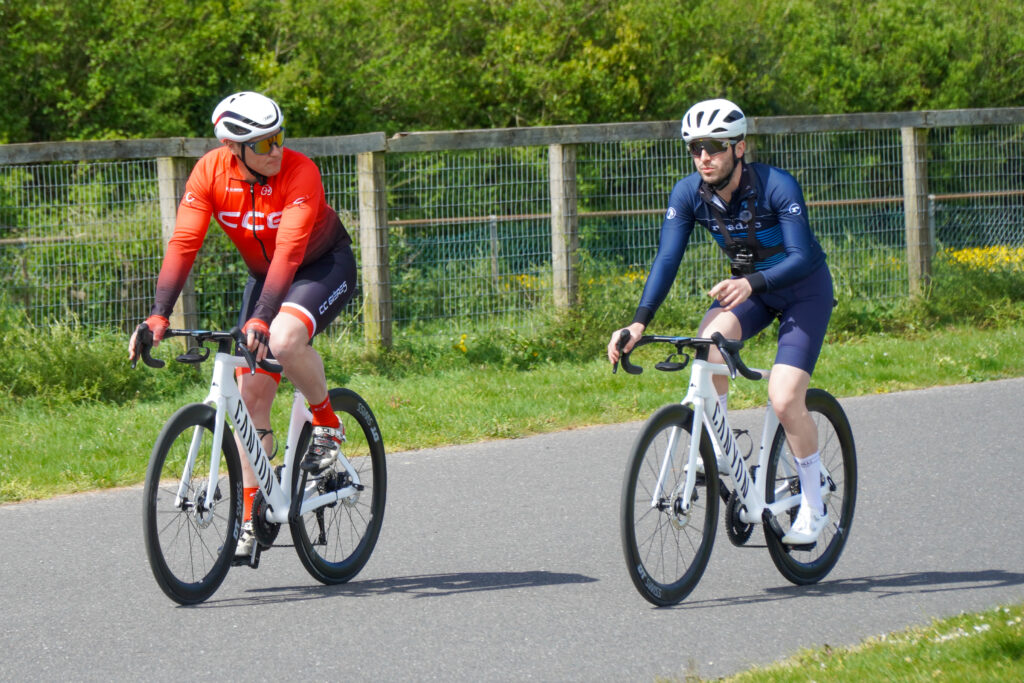
To put the system through its paces, we split testing into two parts. The first focused on changes that could be made instantly while riding. That meant altering riding position and drafting another rider. The second phase involved another position change and testing two different tyre pressures. Our intention for the second part of testing was to look at more granular differences between components, but the weather conditions did not allow for this.
For the real time tests, the results were surprisingly convincing. Riding in a more aggressive aerodynamic position significantly reduced the ‘wasted watts’ figure, with the numbers on the head unit responding with a 7-second time delay as body position changed. Sitting upright produced a clear increase in drag, while lowering the torso and narrowing the shoulders improved efficiency.
Drafting behind another rider produced equally obvious results. Tucking in behind a wheel dramatically reduced aerodynamic losses according to the tracker, underlining just how significant drafting can be during group rides or racing. Even small changes in following distance appeared to influence the readings.
Those live results gave confidence that the system was capable of detecting meaningful aerodynamic changes. However, the second set of tests proved a little more difficult.
Comparing wheelsets, helmets and clothing requires stable conditions and repeatable runs. Unfortunately the weather during testing was far from ideal, making it difficult to gather reliable data. As a result, Wasted Watts left us with a unit for further testing when conditions improve.
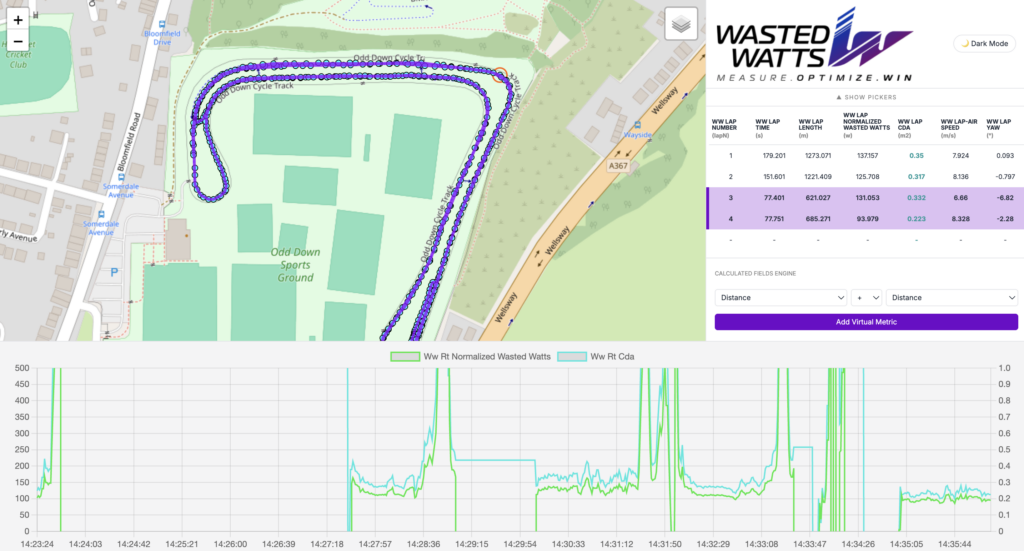
We were, however, able to dive into two data sets a little more closely. The first, a repeat of the aero vs upright riding position, showed a saving of 37 watts (normalised) by simply adopting an efficient riding position. This took CDA from 0.332 to 0.223.
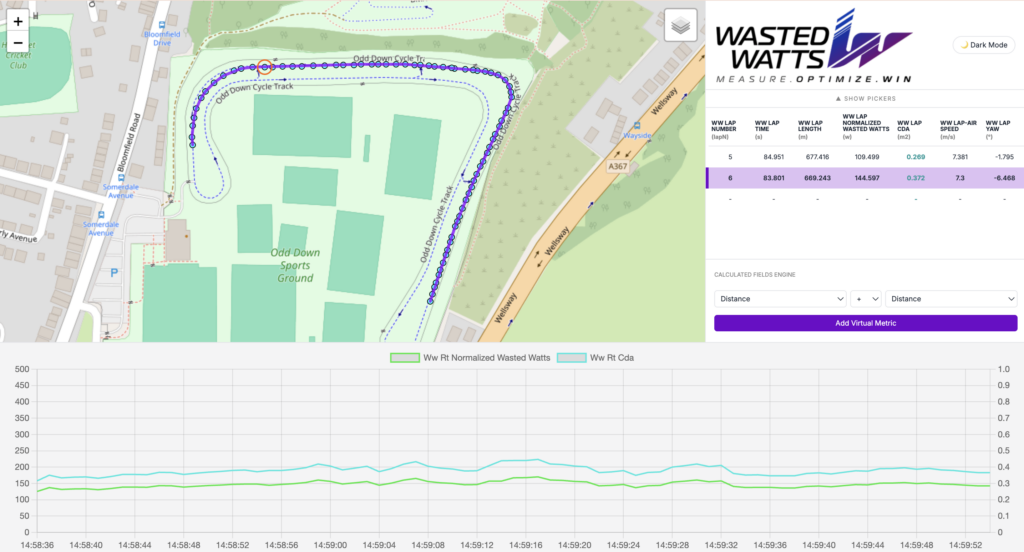
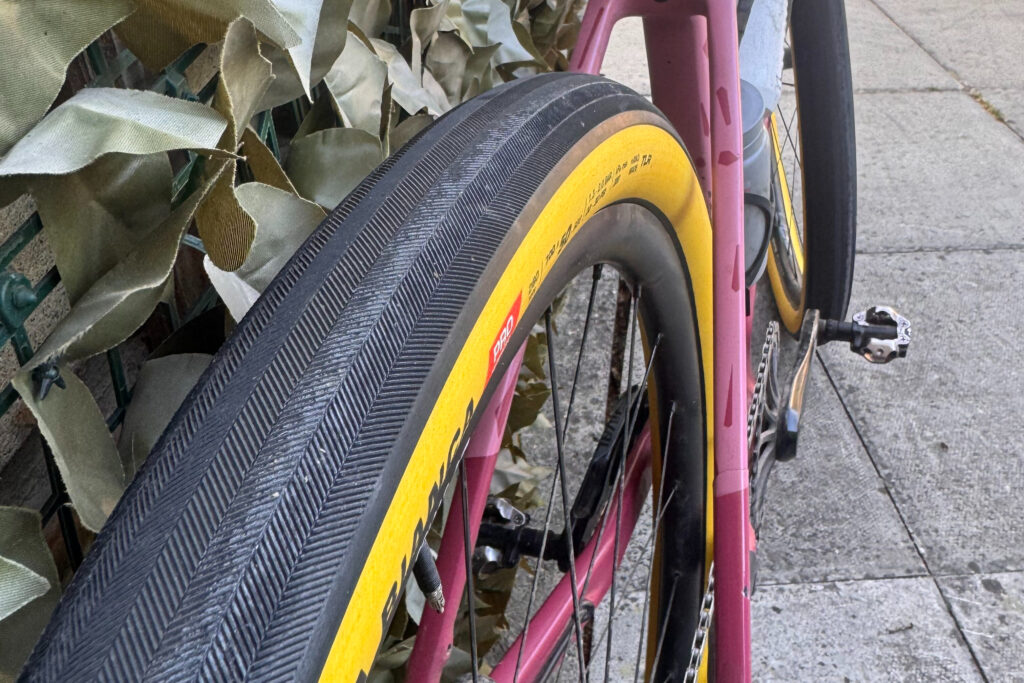
The second test saw us simulate riding with tyre pressure which is too low (30psi for a 67kg rider on 28mm tyres). Normalised wasted watts, in this test, rose from 109.5w to 144.6w due to the lowered tyre pressure. While this will come as little surprise to anyone who likes to experiment with their pressures, it does show how much tyre pressure can slow you down.
One of the biggest challenges facing any outdoor aerodynamic testing system is finding the right conditions. Even on a calm day, environmental variables can easily influence the results. A slight change in wind direction, temperature or rider position can affect the numbers. To compare two wheelsets accurately, for example, you would need multiple runs over the same course under near identical conditions. Even then, there is always going to be some degree of noise in the data. Rider consistency is another issue.
Holding exactly the same position for repeated tests is extremely difficult, particularly outdoors where traffic, corners and road surfaces constantly interrupt the flow. Even experienced testers are likely to introduce small variations that affect the outcome. In many ways, Wasted Watts reflects the same reality seen in other cycling technology. Power meters transformed training, but they also introduced a flood of data that only becomes useful when interpreted and used carefully.
Aerodynamic testing is no different. The more runs completed, the more confidence riders can have in the results. There are also some technical limitations. During testing, tight and fast cornering caused the satellite connection to drop out. The system worked well through gentler bends, but hairpins at speed were problematic. Clear sky visibility is also essential, meaning heavily wooded areas or built up environments are not ideal testing locations.
Braking currently presents another challenge. Any braking during a test is interpreted as wasted energy, effectively ruining a run. On technical circuits with frequent corners, that significantly limits usable testing distance. Riders therefore need to choose test locations very carefully, ideally somewhere open, quiet and consistent. Then there is the price…
The Kickstarter launch price is expected to be around €1,600, rising to approximately €2,000 once the system goes on general release, and Wasted Watts is asking those who are interested to sign up to a mailing list to be notified of the Kickstarter launch (we’re expecting that to be some time in the summer of 2026). There will also be an ongoing subscription cost linked to the specialist GPS connection required for the system to function. That immediately places Wasted Watts firmly in enthusiast territory.
It is not difficult to imagine time trial specialists and data obsessed racers embracing the technology, particularly those already spending heavily on aero optimisation. For everyday riders, however, the appeal may be less clear. Despite the limitations, the system did demonstrate something genuinely interesting during testing. Real time aerodynamic feedback has the potential to change rider behaviour almost instantly.
Seeing a poor wasted watts figure on the screen encourages you to optimise your position and become more efficient without even thinking about it. However, whether it becomes the next must have cycling technology remains to be seen.
Much like the early days of power meters, adoption will probably begin with dedicated racers and committed data enthusiasts before filtering into the wider market. But the promise of free speed is always tempting, and Wasted Watts is betting that cyclists will pay to see exactly where their watts are going.
Would you be tempted by real-time aero measurement? Let us know in the comments.


















15 thoughts on “Could correcting your aero position in real time really unlock free speed? I put the new Wasted Watts Tracker to the test to find out”
“Even on a calm day, environmental variables can easily influence the results…”. Which is one of the many things that make cycling both a challenge and a joy.
Sorry, I do try to keep my teacher/writer/editor instincts under control but can’t let that pass: it should be “for you and me”. Easy way to check, take the other party out of the sentence and see if it still works: “Will it really be worth the lofty investment for I?”
Not to mention that ‘lofty’ doesn’t really work as an adjective for an investment – while it is roughly synonymous with ‘high’, it’s in the sense of a high position, rather than a high value. Unless maybe the writer stashes all their cash in the attic.
Can you increase the potential of your cash by keeping it in the attic?
Yes, but unless you’ve insulated well it’s offset by thermal losses.
I think there’s more to criticise here than the English. Surely the point of measuring the air speed at the front of the bike (which I presume this is doing) is to take into account weather conditions when comparing power usage for different positions, kit etc?
Maybe it’s not among the most effective systems out there, but hey, at least it’s one of the most expensive ones and thank goodness it’s a Kickstarter project so you can’t assume you’ll ever get it!
Sounds like the deal of a lifetime.
I’m convinced that it works, but the system for tyre pressure adjustment as you ride also works and the company has failed, at least temporarily. I wish WW well, as they appear to deserve it. I will never buy one, as I also hold ‘never’ positions on carbon frames, tubeless, Classified etc., and ‘almost certainly never’ on carbon rims & spokes.
We know what else to check up on when you announce your first ebike purchase then! 😉
Yes, but do you know how aero holding those positions is?
I think this system could be used to give indicators that a simple parameter (eg new helmet) could make you faster, based on reduced drag, but it would then need to be more fully tested in a variety of conditions over a longer period of time.
A more complex parameter such as changed position, is more difficult, as there is a trade off between reduced drag and capacity to apply power. A lower drag position will not necessarily give higher speed.
What is the point of the fancy air sensor if it can’t account for changing weather conditions??
If all you care about is a delayed approximation of aerodynamic watts in steady conditions, you don’t need any special sensors for that. Just your speed on a decently flat course is enough to approximate rolling resistance and drivetrain losses. And the rest must be aero. If you assume a less aero body position at the same watts, your speed will drop while rolling resistance also drops, which means approximated aero watts goes up. And that’s enough to demonstrate what you’ve shown in your testing protocol (“I sat upright and the number went up a little while later”).
If you were spending that much money on the device the obvious thing to do is to book a couple of hours in a velodrome for testing in a stable environment, I can’t understand why Road.cc tried to do it outdoors.
@Backladder
Oh I think I can guess – the nearest indoor velodrome to road.cc HQ looks to be some distance away in Wales, whereas Odd Down Cycle Track (where this test was conducted) is just 2 miles away.
@Backladder Given that the makers are selling it as being useable on any ride on open roads, it doesn’t seem unreasonable to try to test it in those conditions.