


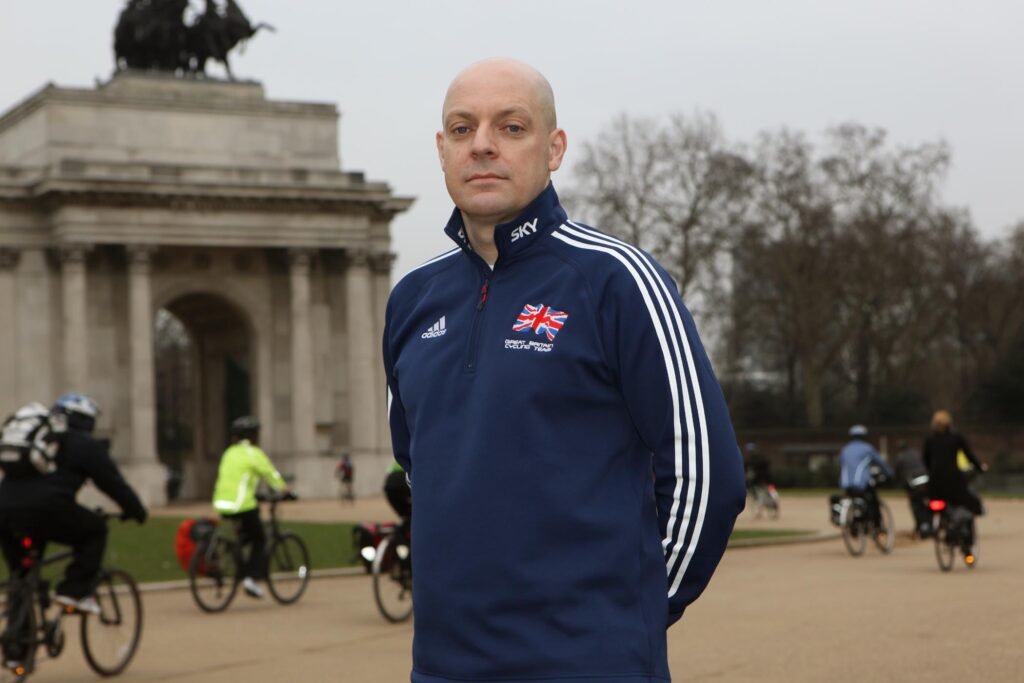

British Cycling performance director, Dave Brailsford has attacked the decision by UK Sport to cut the funding for top Olympic sports in the run-up to London 2012, including a £500,000 cut in funding for cycling.
Speaking to the Guardian Brailsford said that London 2012 that the Sport UK’s emphasis on using funding to increase participation in smaller sports was in danger of turning London 2012 in to the “Have a go games” and by inference endangering it’s target of finishing fourth in the medal table. British Cycling is tasked with providing a significant proportion of those medal – the cycling team that competed in Beijing was the most success part of the most successful British Olympic team ever contributing 7 of the 19 gold medals won – indeed only one member of the cycling team returned without a medal of any sort – Mark Cavendish.
This week British Cycling saw the the already tall order of emulating its winning feats in Beijing made significantly harder with two strong gold medal chances disappearing in the IOC’s shake-up of the track cycling events for London 2012 with the loss of the men’s and women’s individual pursuit, events won in Beijing by Rebecca Romero and Bradley Wiggins.
British Cycling along with a number of other sports governing bodies based it’s spending plans for the run-up to 2012 on the outline budgets put forward by UK Sport last year, however a spokesman for UK Sport told the Guardian that the figures announced last year were based on an expectation that inflation would be higher, the fact that it has proved to be substantially lower combined with a commitment to spending £13m on increasing participation in smaller sports meant that there was less money allocated to the bigger sports such as cycling, rowing, swimming and sailing all of which have been allocated around £500,000 less than they were expecting. The UK Sport spokesman said the organisation would still be sticking to its medal targests and pointed out that the £13m would help meet its target of having British participants in every Olympic event at 2012.
While £500,000 is undoubtedly a lot of money, the total budget allocated by UK Sport to British Cycling’s elite programme is still £26.39m (down from £26.92m) spread over the four years from 2009 – 2013. What irks Brailsford is the seeming shift in the funding strategy, "A reduction like this two and a half years prior to the Olympics is a real disappointment. I was always led to believe funding was meritocratic."
UK Sport’s funding strategy had clearly been to reward success and punish failure, however it is the two most successful sports at Beijing: cycling and rowing which take the biggest funding hits in the new budget while athletics which was originally penalised for its relative failure has managed to claw some of the money it originally lost back.
While making his point, Brailsford was not going to dwell on the disappointment saying, “if we’re moving to a have a go Olympics we’ll just have to get on with it”.

















5 thoughts on “Brailsford rails at funding cut for British Cycling’s 2012 Olympic programme”
Can he not get a sub of
Can he not get a sub of Sky?
I would have thought that that in the past they needed quite a chunk of cash to set things up but there would have been a lot of one off costs. Therefore losing 1.89% of your funding over a 4 year period would not really be such a hardship.
When other minority sports are struggling for funds I think he is being a bit of a toad in his response to this.
they probably need that 500k
they probably need that 500k to get the planks for the track 🙂
I share Brailsford’s
I share Brailsford’s concerns. It’s a typical British attitude. Lets hit a succesful sport and give the money to some undeserving minority sport in the quest for fairness and participation. I think it’s ridiculous. Give the money to the sports that have demonstrated a track record of delivery results and let them continue to produce. Dont kill the golden goose.
He’s been given the same
He’s been given the same amount of spending power, the amount of money has simply been adjusted for lower than expected inflation, by a relatively tiny amount I might add.
Even if he is really worred this money covers them for a period that stretches beyond the Olympics… so just spend a bit less afterwards if necessary.
Hammergonewest – I dearly
Hammergonewest – I dearly hope you aren’t an accountant the effect of inflation is to reduce the value of money in the long term. So you have to spend more to get the same as you did before, which the press describe as “in real terms” (but never seem to explain what they mean).
Only if we’d entered deflation would a cut represent keeping up with inflation.
I would love to be able to find a breakdown of how much is invested in each sport, I imagine that athletics gets double the funding and returns less than half the success.