


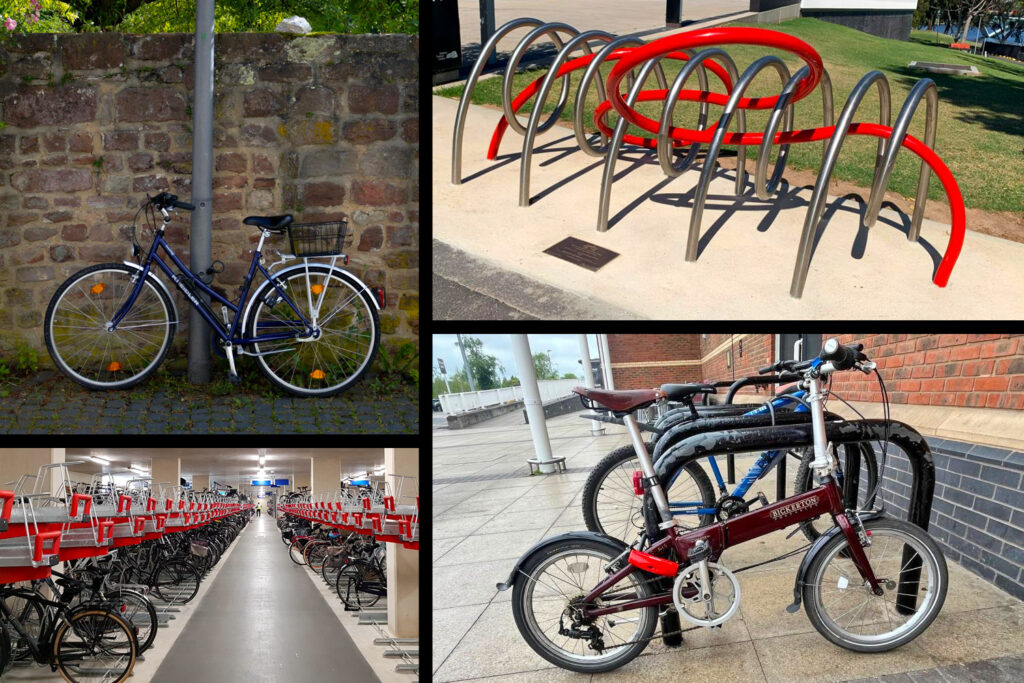

We’ve spent a fair bit of time testing locks recently, with the road.cc angle grinder kept busy as we put just shy of 20 bike locks from across the price spectrum through their paces.
You can check the results of that testing out here, but one very valid point that came out of the comments section was that while lock resistance is the most important aspect, what you lock your bike to is also worth considering.
Much like locks, racks and stands come in all shapes and sizes, and with a wide range of effectiveness and qualities. In short, some are good, many aren’t. Here are some of the best… and of course also some of the worst.
Sheffield Stands
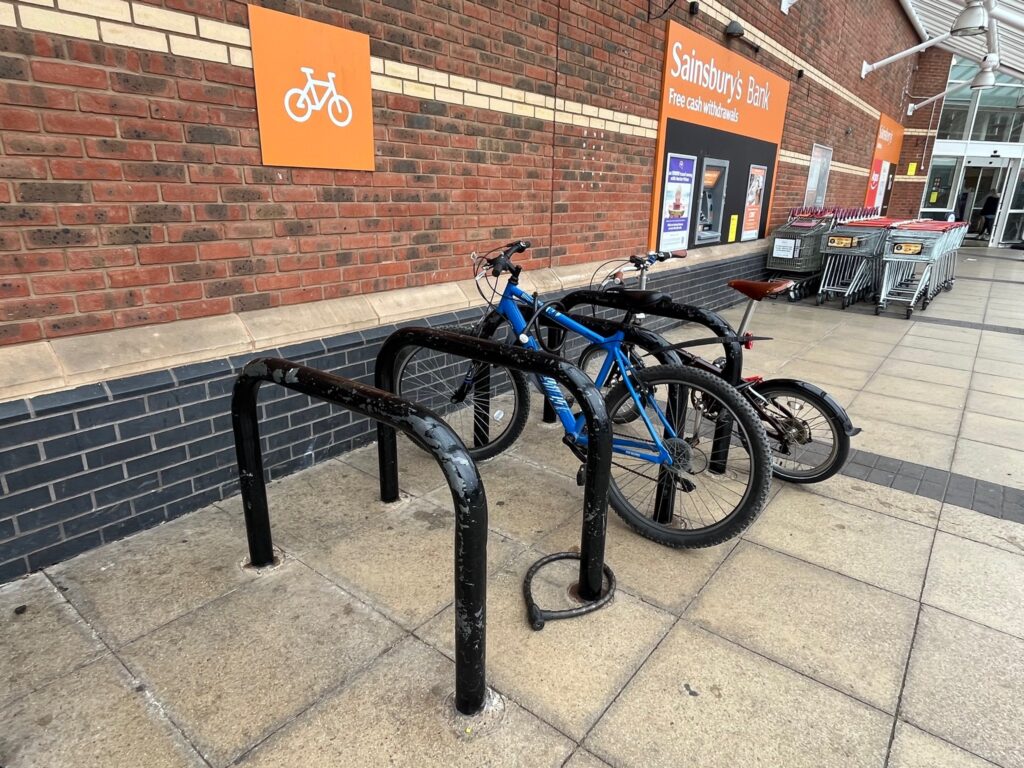
The classic Sheffield Stand. This feature could end right after this, the old faithful of bike racks. Any big cheeses reading this, provide enough of these in handy locations and you’ll get no complaints from anyone on two wheels. Sturdy and practical, you can’t really go wrong.
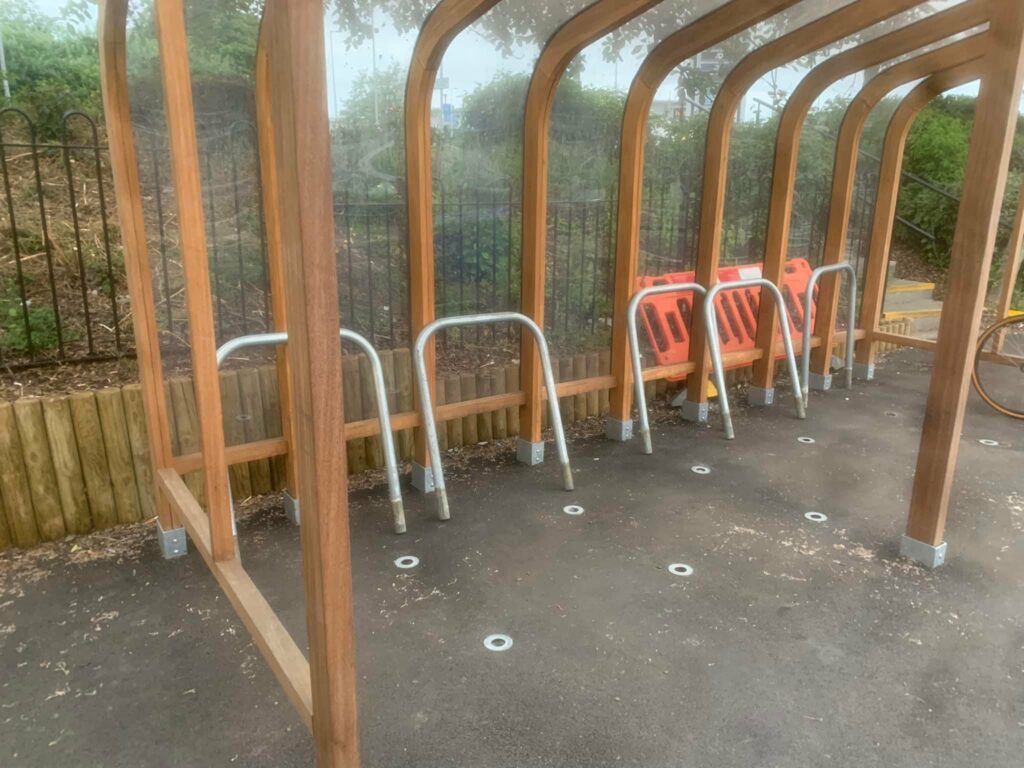
Well, as long as they’re installed properly that is. Try to avoid the embarrassment these “middle-aisle bike stands” that a newly opened branch of Aldi had to fix quick after opening in Leamington Spa. Likewise, these stands in Edinburgh had the same issue.
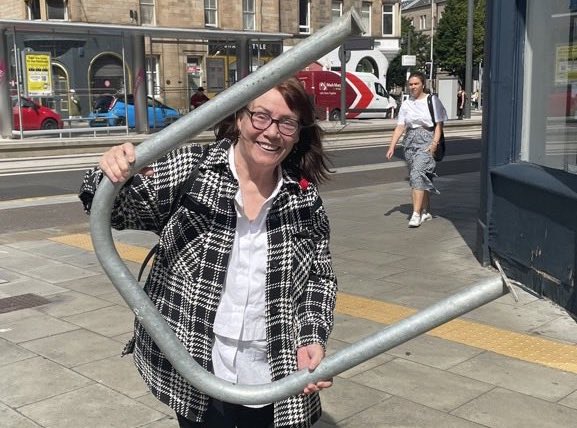
You can’t blame the stand for the person installing it doing a poor job, so no slight on the Sheffield Stand for that, although it can be worth checking (especially when at a new location) that everything’s bolted down, can’t easily be unscrewed and has been put in correctly before locking your bike.
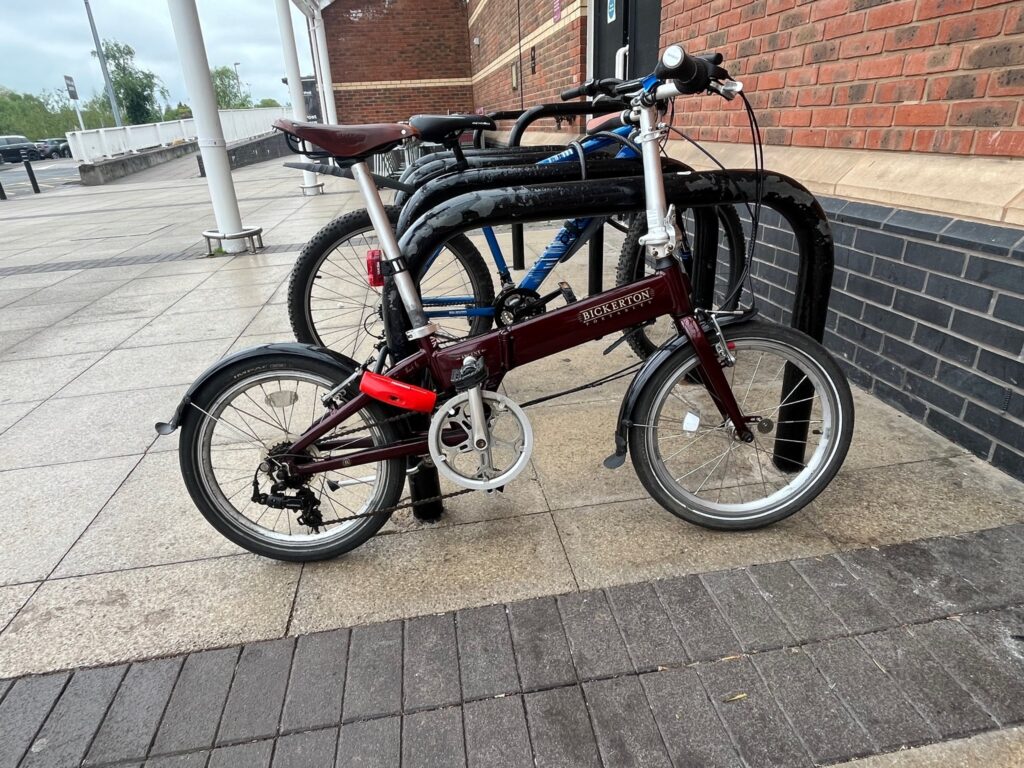
Check for cuts and faults too, some bike thieves have got quite sneaky with cutting through some less durable designs, but on the whole if we see a Sheffield Stand, we’re happy.
Pros:
- Does the job, without faff
- Fairly common
- Practical locking for pretty much any type of bike
Cons:
- Can sometimes be vandalised by thieves to still steal bikes
- Occasional installation issues, but can’t knock the stand for human incompetence…
The station-style double decker
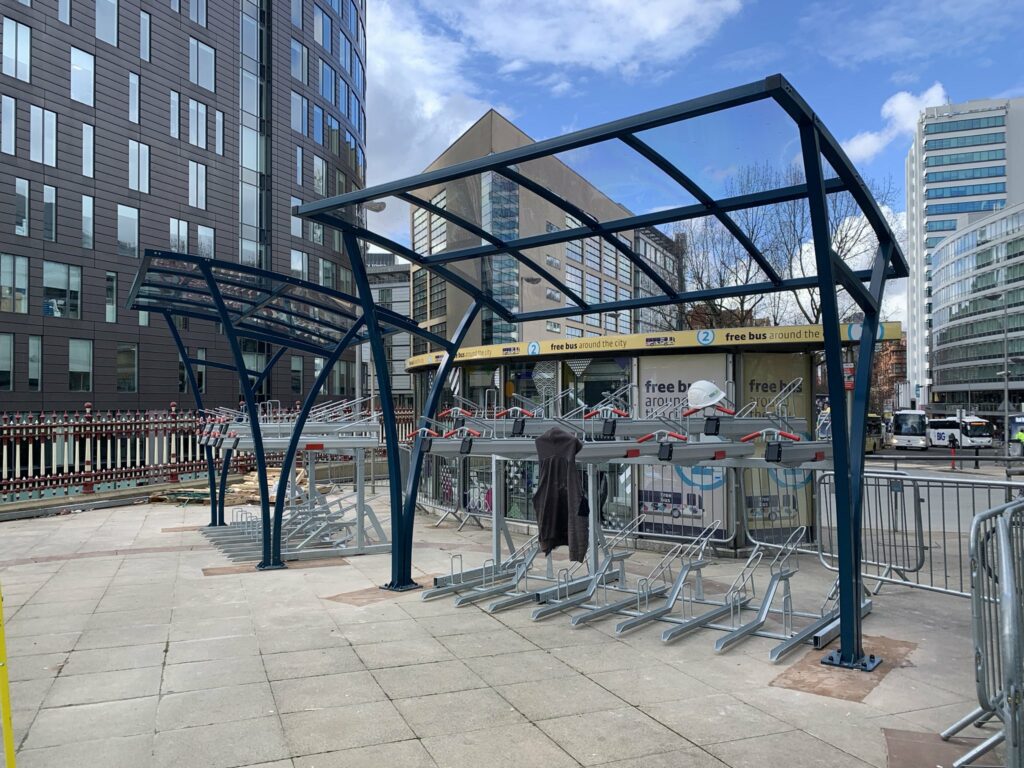
These double-deckers are often seen in the UK at train stations and are quite common in the Netherlands too. While in the UK they’ve occasionally received criticism for being “overly complicated” and “ableist” due to the impossibility for some people to use the top level, they seem to work fine on the continent. Then again, they’re often seen in giant superparking facilities, like the one below in Maastricht, where there’s no issue finding a space.
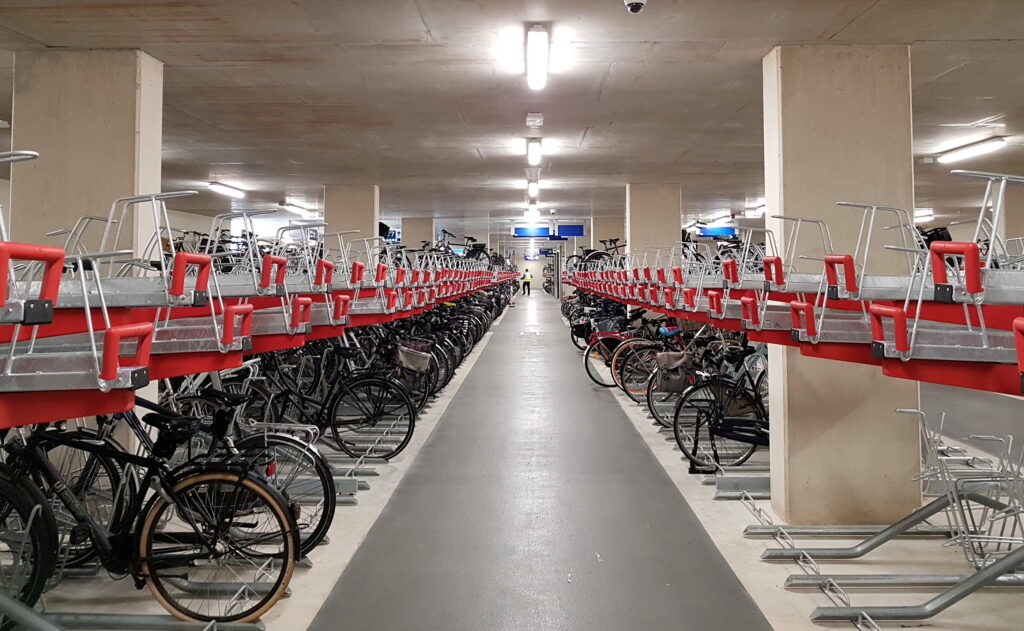
Pros:
- Often come in large quantities
- If it’s good enough for the Dutch
Cons:
- Don’t dare try using the top bunk unless you’ve had your Weetabix and ride a lighter, skinnier bike
- Can be hard to lock the frame sometimes, depending on the exact design
- Anecdotally feels like you see lots of missing wheels, stolen parts, but maybe that’s just because train stations are notoriously bad for bike theft in the UK
The wheel bender
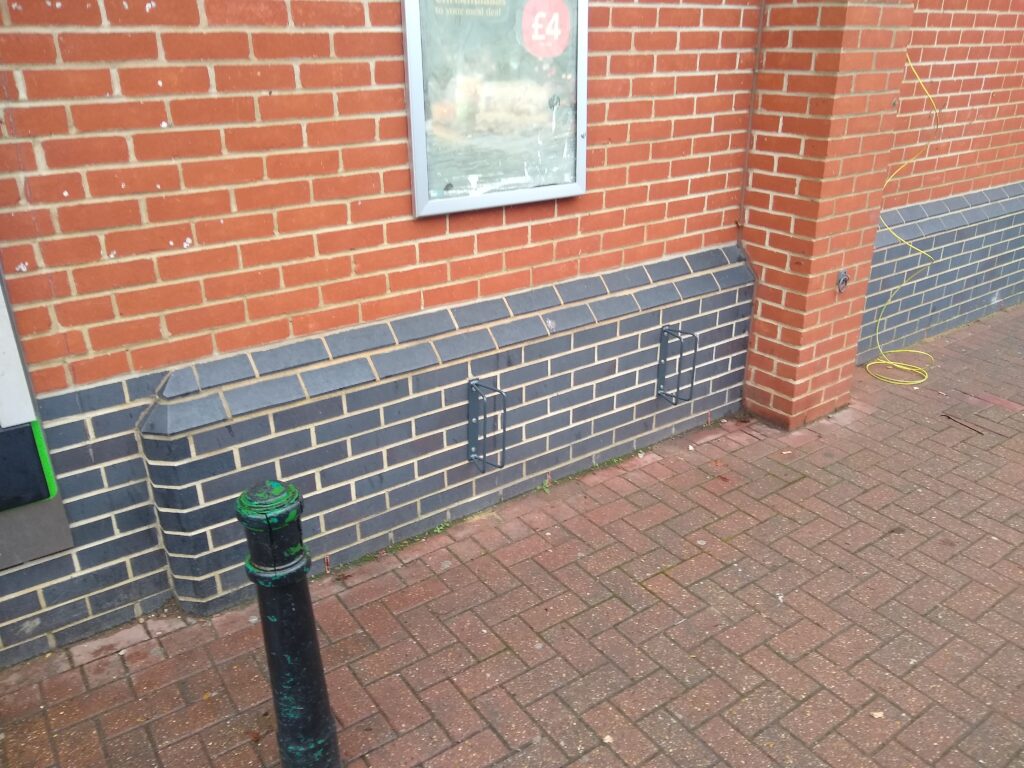
We’re firmly into ‘not ideal’ territory now. Bike parking provided by people who’ve clearly never locked a bike. Really hard to lock a frame if they’re like the one above. Still really hard to lock the frame if they’re ground-based too, plus they’re often part of a whole moveable unit which somewhat undermines the point of giving someone somewhere to lock a bike. Oh, and as the name suggests, your poor wheel probably won’t thank you for using them.
Pros:
- Really struggling for anything other than ‘better than nothing’… maybe
Cons:
- Make the sole purpose of locking a bike really difficult
- You’ll struggle to lock the frame, especially with a decent D-lock
- Often part of a whole unit that can be moved
- Bend your wheels… (hence the name)
Upright train bike parking
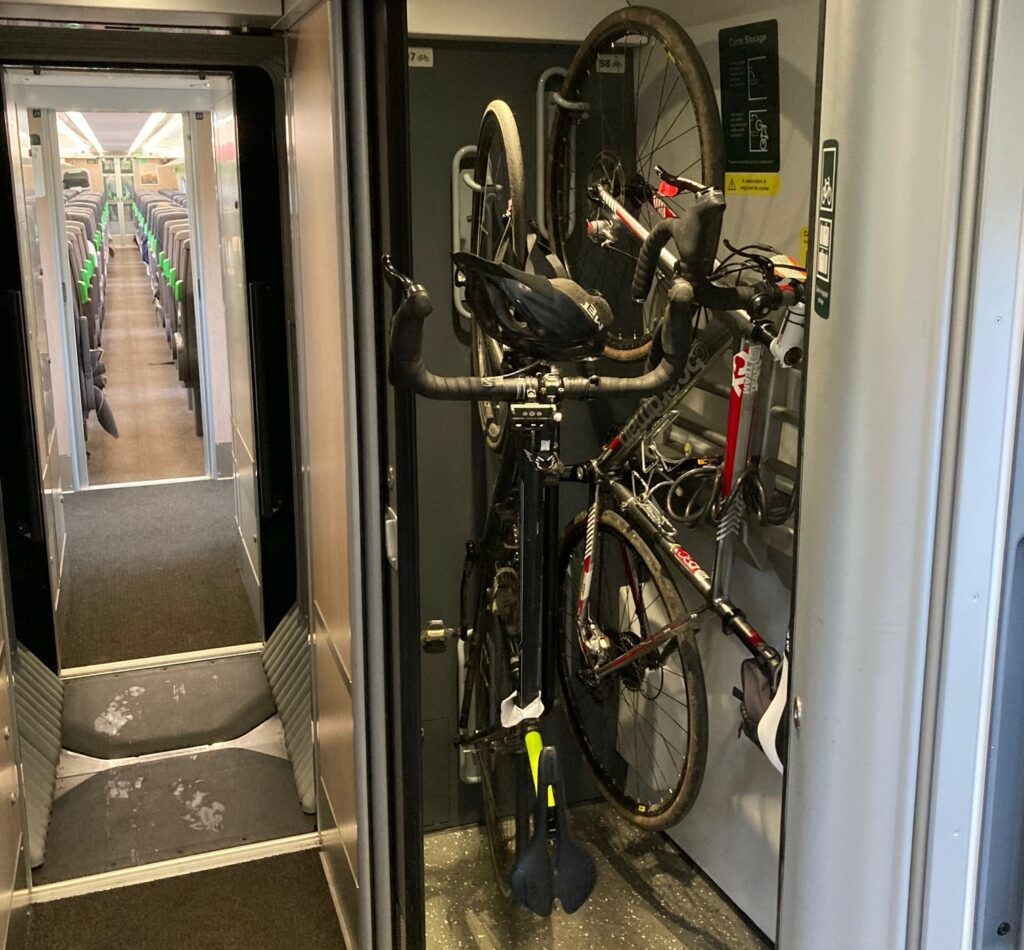
Another one that has us waking up in the middle of the night in cold sweats, the infamous upright bike parking suffered on many trains. It’s narrow, unsuitable for many types of bike with wider handlebars, requires plenty of strength to use and just generally makes you feel like you’re being punished for the horrendous crime of bringing a bike on a train.
Pros:
- We tried to think of one, we really did… the best I’ve got is that train companies still haven’t charged us extra for it, but that’s an incredibly low bar
Cons:
- What do you mean more than two people might want to bring a bike on this 500-person train?
- Has to be pre-booked
- Nightmare for wide bars, heavier bikes, mountain bikes, bikepackers… basically anyone whose bike isn’t a sub-10kg road bike with 40cm bars or narrower
Less of that, more of these ScotRail bike-friendly carriages please…

The ramp
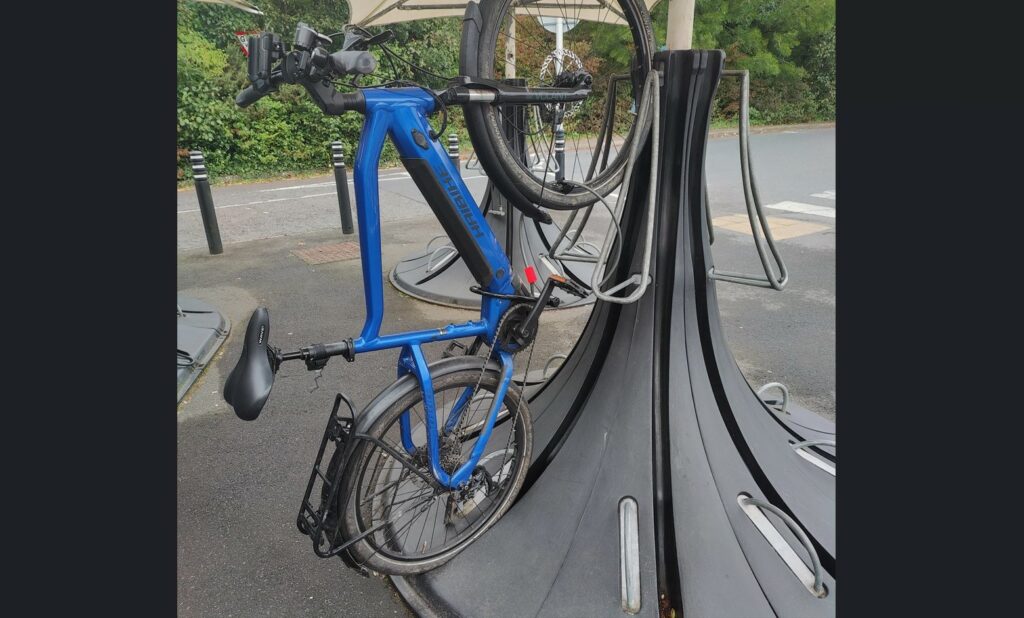
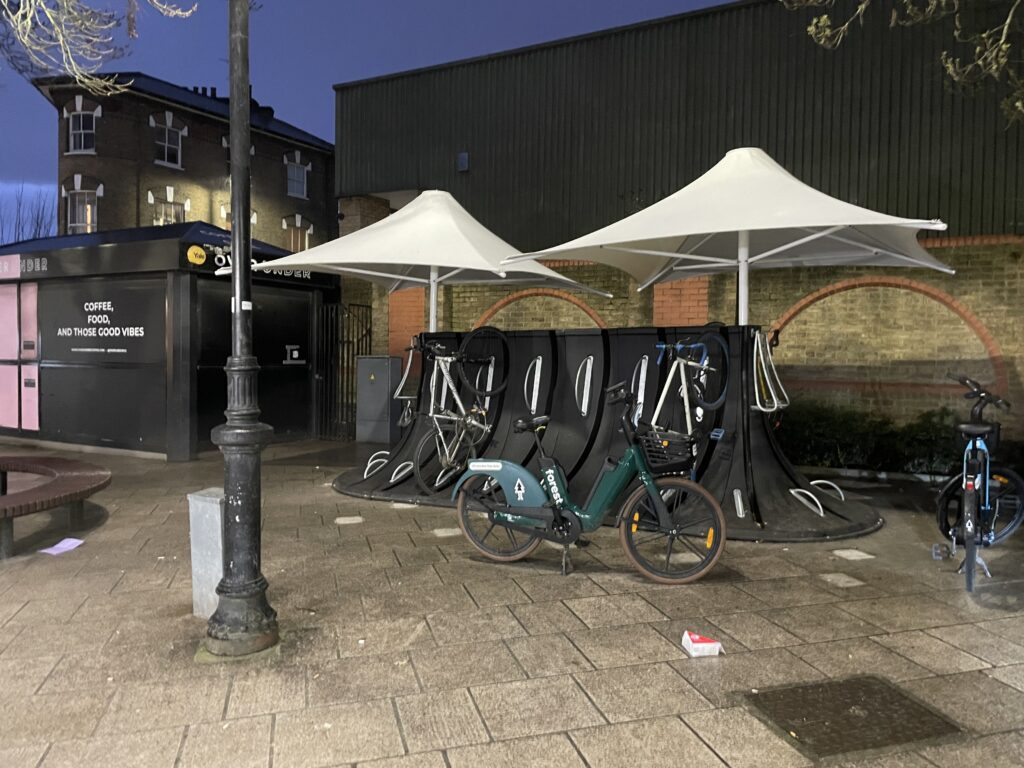
We’ve seen these appear in a couple of places, such as outside a London station and at a Sainsbury’s in Dorset. The latter, in September, saw one local councillor take to social media to ask: “Hey Sainsbury’s, what kind of hell is this? Difficult to move the bike into, impossible to secure the bike to it safely. The only good thing is the shelter. Please replace with Sheffield Stands as soon as possible.”
Pros:
- Marginally less impossible to use for riders of heavy bikes than the double-decker and train racks, but still… really?
- Danny MacAskill could probably ride straight in without dismounting
Cons:
- Can we please not just have a Sheffield Stand?
The Turkey Twizzler
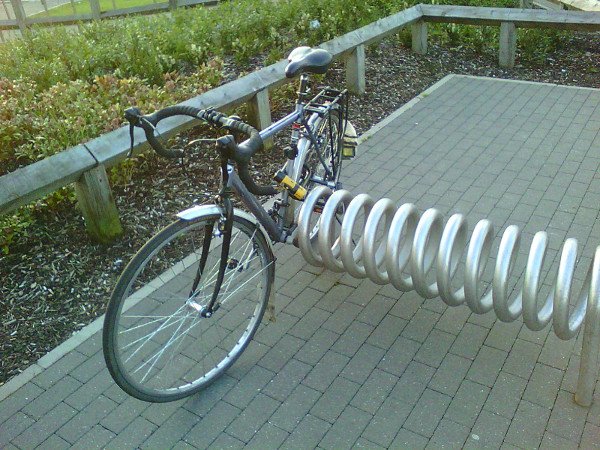
Aldi got a mention earlier on so it’s only fair we give Lidl a visit too, this coiled ‘turkey twizzler’ rack spotted outside one of the budget supermarket’s Dublin stores. All a bit strange, even if it at least looks usable by one person at either end at a time and doesn’t involve hoisting your bike upright.
Pros:
- More civic infrastructure should pay tribute to nostalgic school dinners
Cons:
- Almost completely useless
- Gives Jamie Oliver flashbacks… suppose that could be a pro
There are plenty more artsy designs out there and they’re very hit and miss, but mainly miss. In almost all cases, the best just replicate the Sheffield stand… so why not just use them? In no particular order.
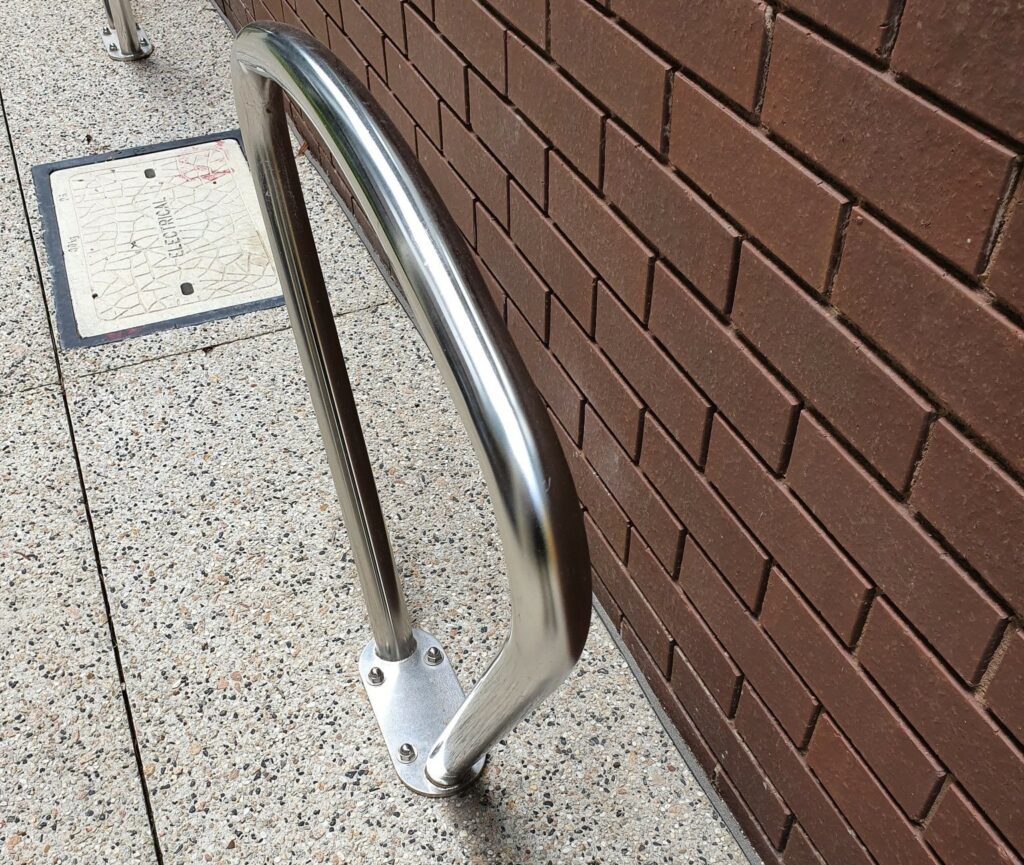
The hoop. A rack that’s like if we gave a Sheffield Stand to bike brands’ marketing departments: more aero and lighter.
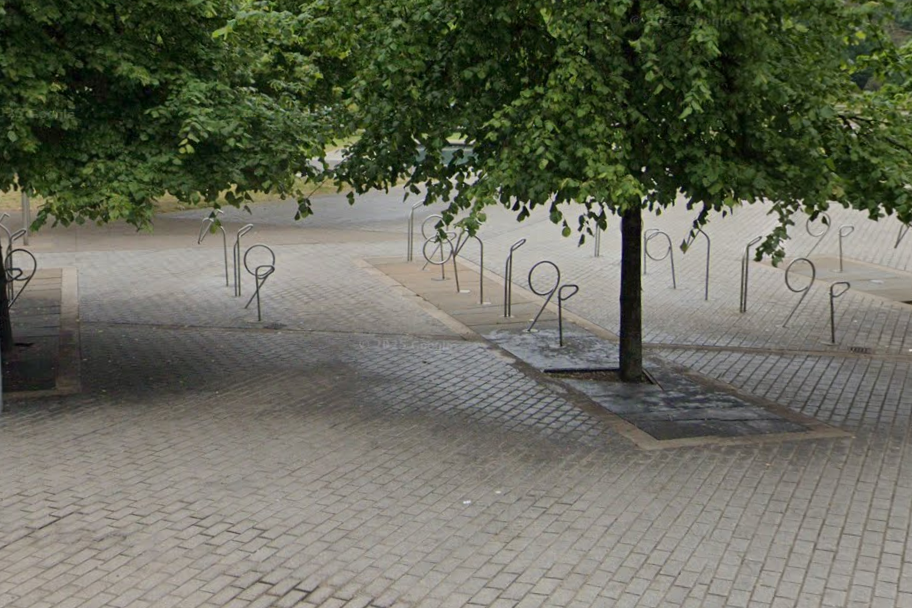
These three were all submitted by readers under our ‘Worst bike racks’ feature, so no surprises they ain’t particularly good. To Scotland for the next contender, outside Holyrood on the wonderfully named Horse Wynd.
For the final boss of artsy bike racks we’re heading down under…
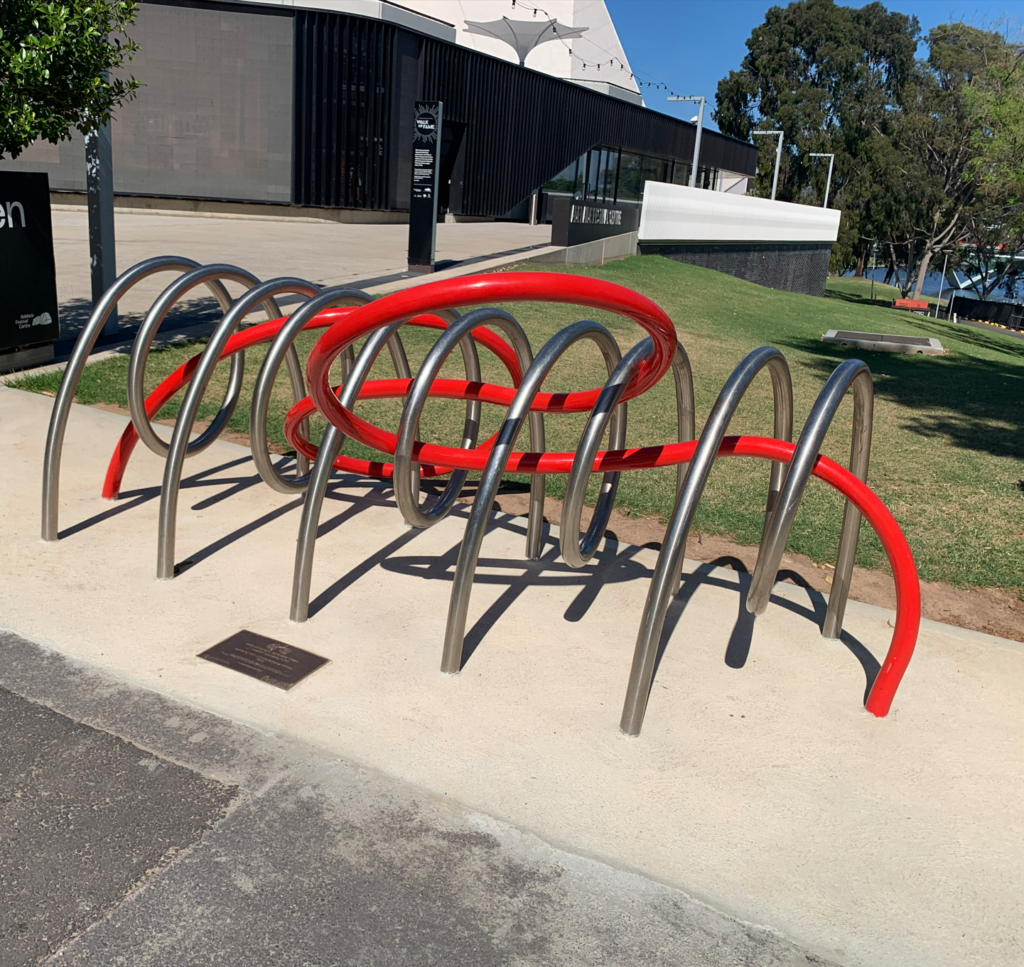
In 2013 this was installed as part of the Adelaide City Bike Art Trail. Brace yourselves for the tourist board’s description, no laughing: “This artwork seeks to express playfulness and movement, both embodied within the Festival Centre and with cycling.
“The work seeks to embrace the cycling narrative within the bike racks and interplays with the spiral forms. The double red loops also seek to engage with bicycles wheels. The work uses the form and shape of the circular bike stand in proximity and repetition providing an inviting pathway for the twist and playfully guides itself through the created tubular/spiral form.”
New build flats/offices
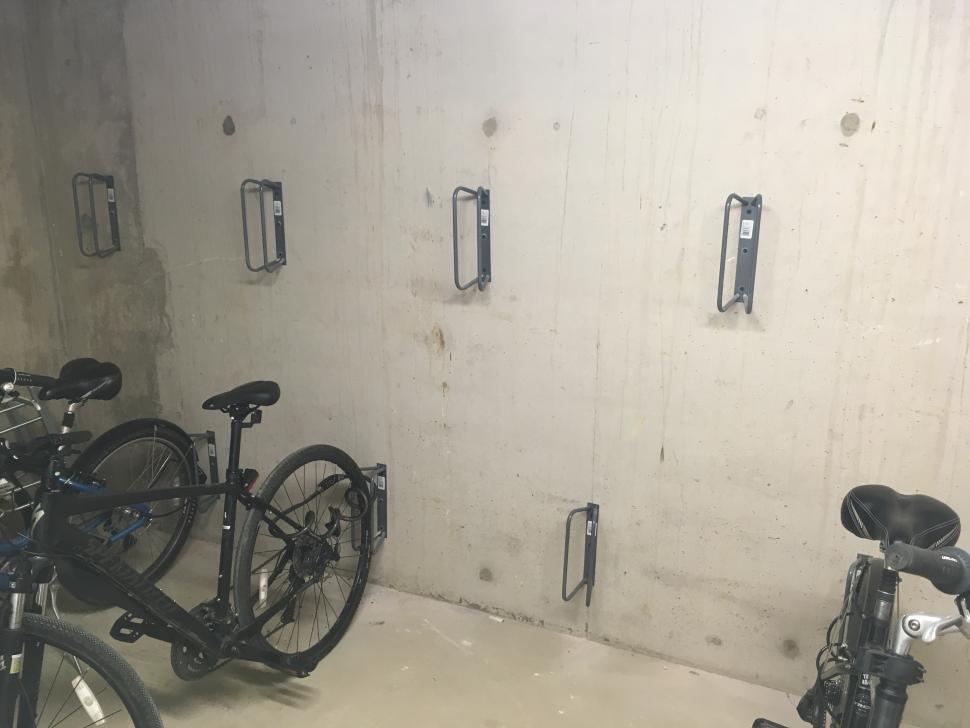
Another from the comments is the new-build office/flats favourite, usually in some basement by the bins and often involving a wheel bender, such as this interesting design.
Pros:
- Inside
Cons:
- Wheel-bender on steroids
- Only as secure as your neighbours and colleagues, might be off the street but how many people could still get to it?
Bike hangars
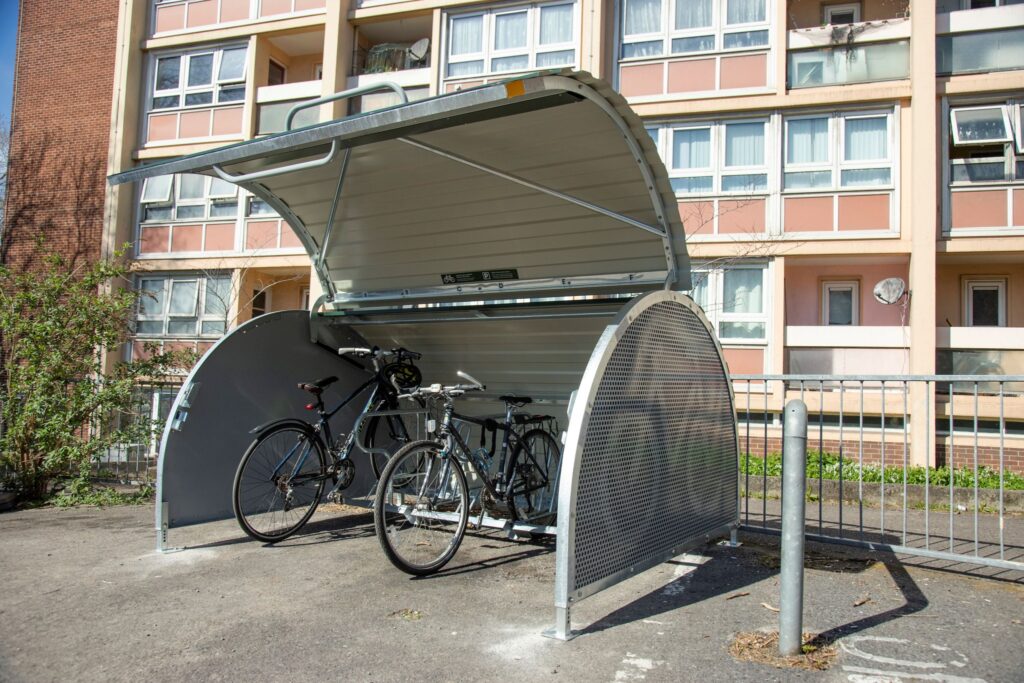
We quite like bike hangars. They offer about as secure a place to leave your bike as you can find outside your own home. Now, the caveats are that these are of course very much residential parking, so great for parking your bike outside your house, but you’re not going to find any outside the supermarket or on the high street.
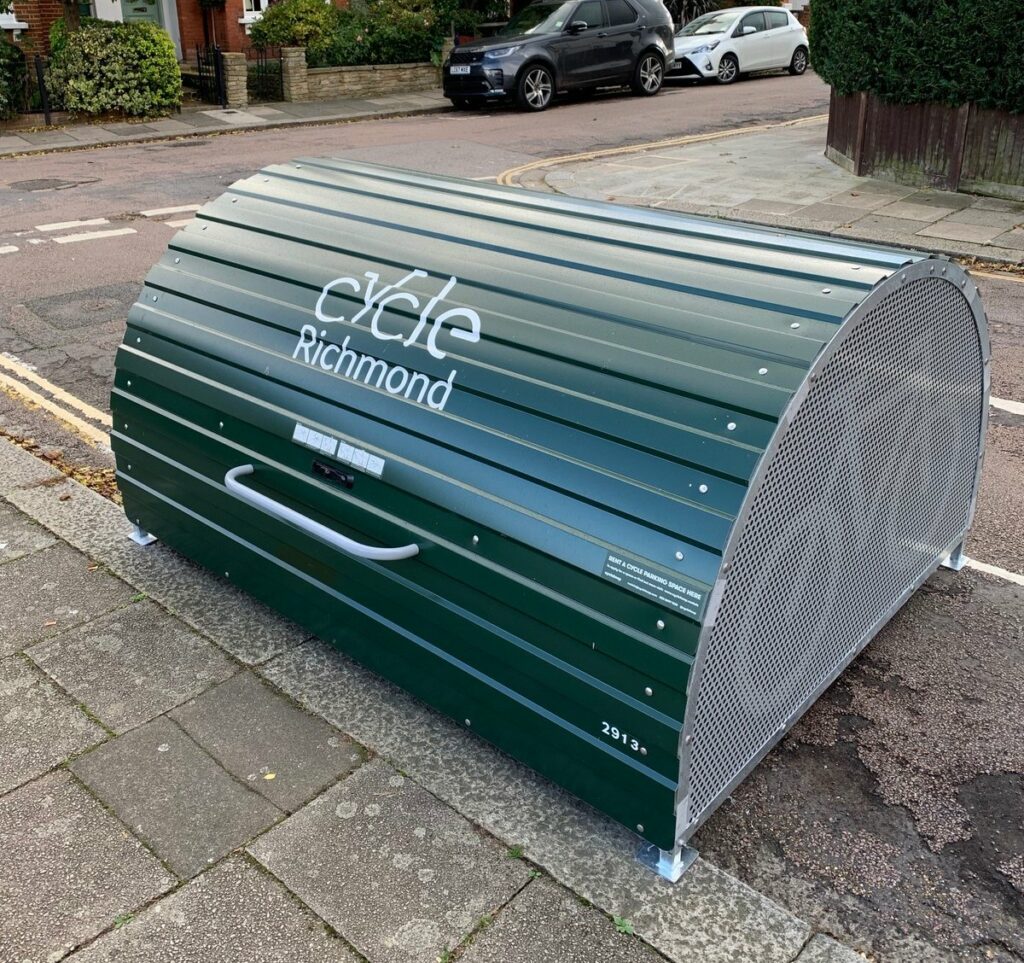
They also cost about £60 per year, depending on where you live, so there’s that too, but if you’re short on space at home and need a secure option, bike hangars are a strong option that will almost certainly trump any on-street option. Just don’t be surprised if you find yourself in a culture war…
> NIMBY locals “concerned and distressed” by “giant ugly” bike hangar
Pros:
- Secure
- Easy to use
- Weatherproof
Cons:
- Comes at a cost
- Only outside your house
- Might get called ‘woke’ by The Sun for using one
The car-shaped one
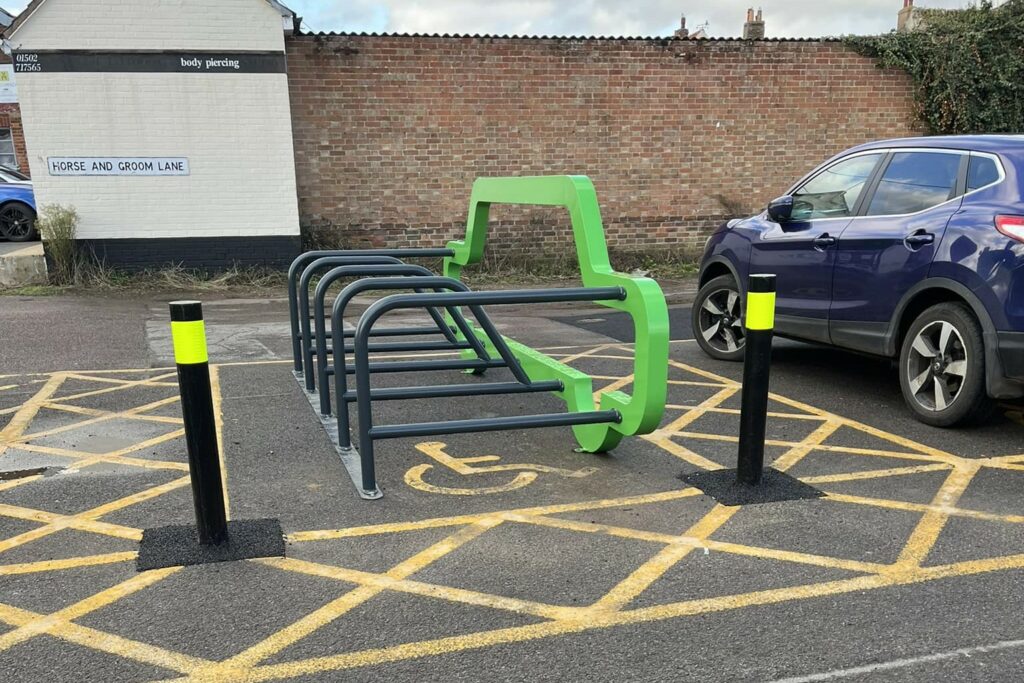
Talking of bike parking that caused outrage in local Facebook groups. It’s almost a Sheffield Stand that makes a point about how much road space respective modes of transport take up. If only we could make that car a bit more realistic in size, then there might be enough room between the racks for easy use and wider bikes.
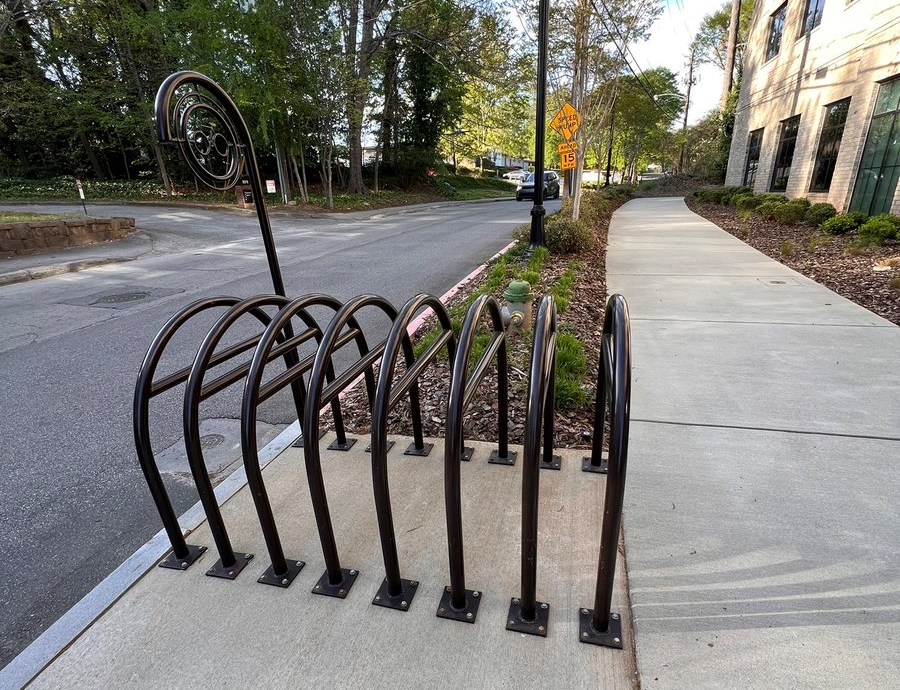
Definitely not as bad as ‘the toast rack’ and better than many on this list. Oh, you want to know what the toast rack is?
Pros:
- Will almost certainly cause a meltdown in the local residents’ Facebook group
- Makes a decent point about space in urban areas
- Imitates everyone’s favourite Sheffield Stands almost perfectly
Cons:
- Doesn’t quite hit the Sheffield Stand level… and there’s a big drop off in usability once you miss that point
- May leave you listening to a NIMBY about ‘the bloody council stealing our car parking spaces’ when all you really want to do is park your bike and get on with your day
Railings
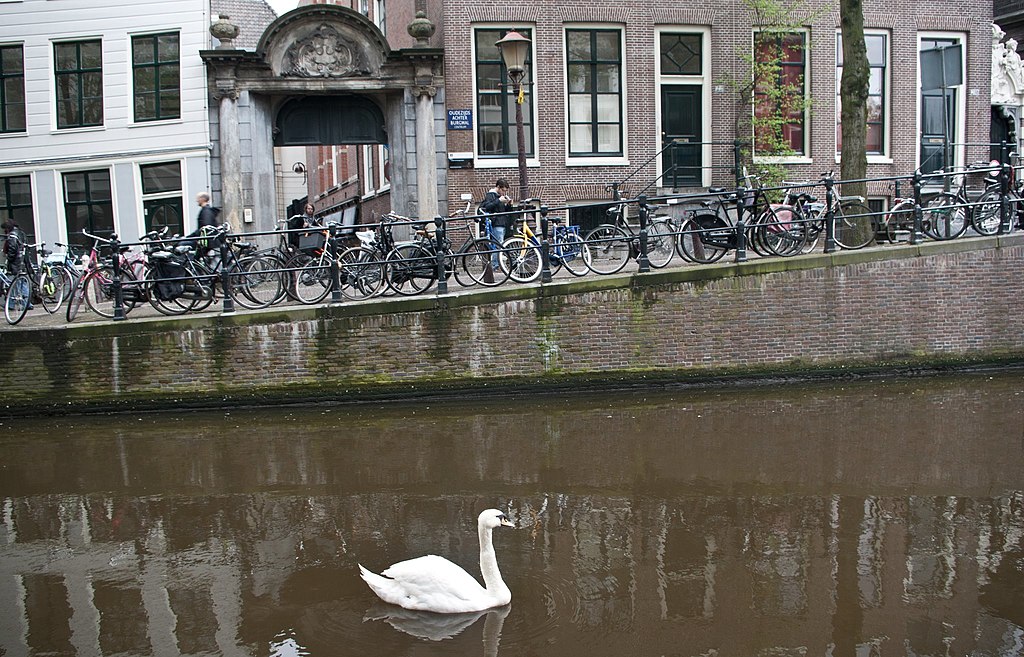
There’s a bit of a theme with this feature — if it replicates a Sheffield Stand, it’s a decent option. That’s something that your humble urban railing is likely to do. Many people won’t want a bike locked to their front gate or building, and there’s often a sign threatening some sort of action if you do, so it perhaps requires some care, especially as you won’t want to block a pavement either.
Pros:
- Handy access to your destination (assuming it’s your building’s railing you’ve locked it to)
- Useful for locking the frame
Cons:
- There’s probably already a sign telling you not to lock it there
- Want to avoid blocking a footway
Poles and lampposts
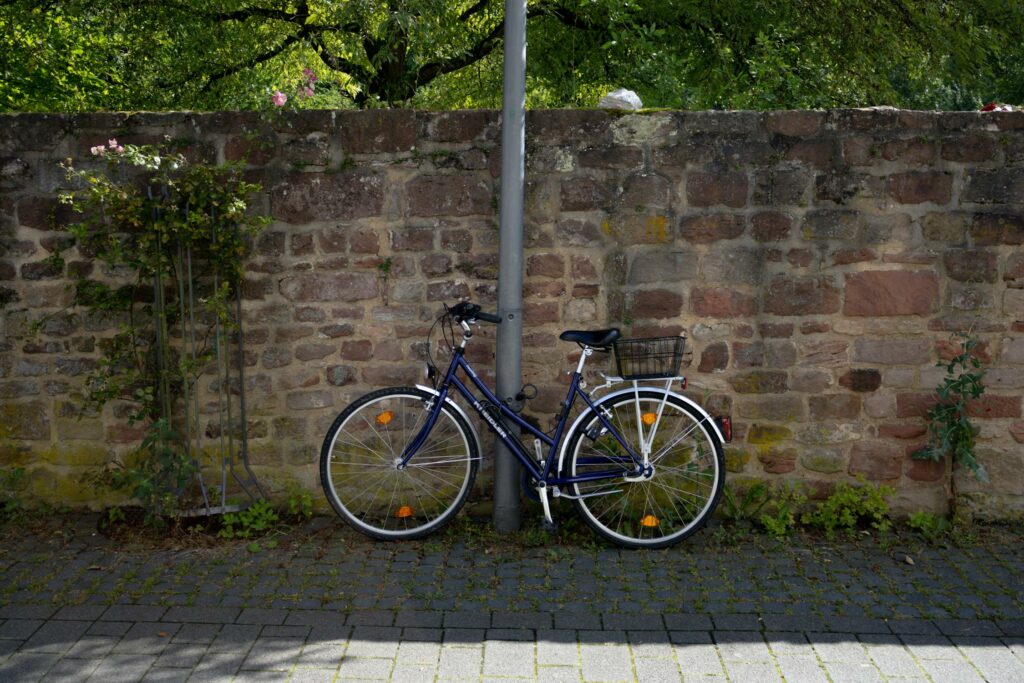
See above about not wanting to block any pavements. It’s also worth remembering that if your bike can be lifted above the height of the pole then locking it isn’t going to make much difference, someone could still get it over the top.
Pros:
- Lots of them
- Less likely to piss off residents than building railings
Cons:
- Might block a footway
- Needs to be tall enough not to be lifted
Trees
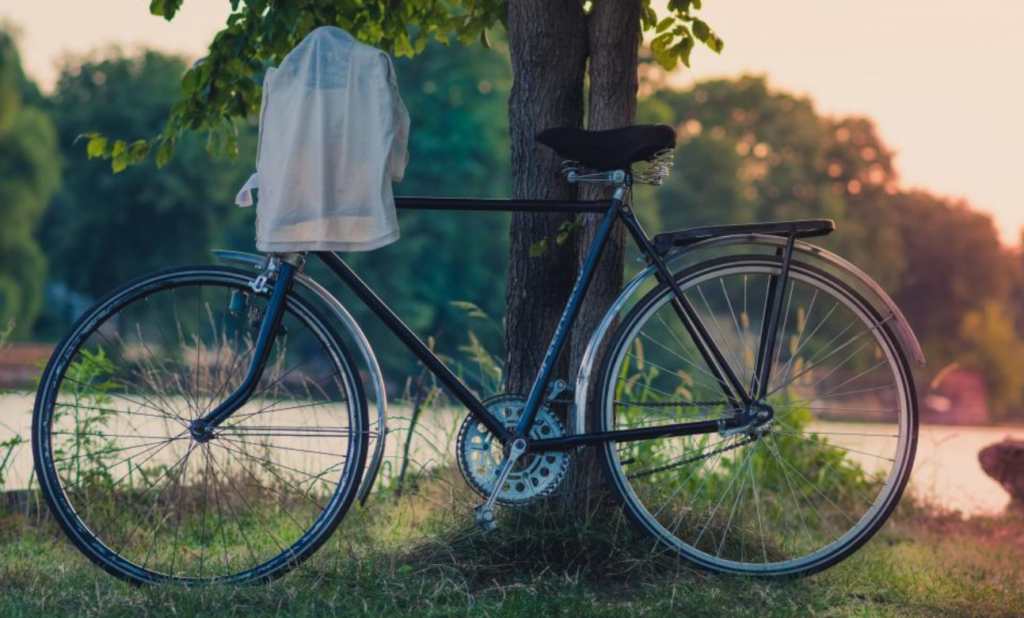
The natural choice, just don’t be surprised if you have to clean bird mess off your bike at some point. The thicker the tree the safer your bike will be, but at some point you might not be able to get your lock round. The thinner the tree the easier it’ll be to lock, but it also becomes an easier theft. It’s a bit of a pickle. Maybe just find something better to lock your bike to…
Pros:
- Photographic
Cons:
- Saws exist, it probably won’t be there when you get back
- Don’t want to be damaging trees











15 thoughts on “You’ve invested in a great bike lock, but what should you lock it to? Bike racks and stands rated”
https://yehudamoon.com/comic
No honourable mention of
No honourable mention of famous bike stand designer, and occasional musician, David Byrne? His portfolio speaks for itself:
Well, the second one doesn’t
Well, the second one doesn’t – it has a little sign to speak for it.
Most of those designs seem
Most of those designs seem fairly good, at least compared to most “artistic” bike racks. Not quite as easy to use as a good ol’ Sheffield stand, but not terrible.
But not convinced by the letterform racks in first image (which google informs me is at the Brooklyn Academy of Music) – looks far to easy to accidentally lock around a letter (e.g. the “i” or “c”) and leave your bike vulnerable to simply being lifted off – you need to put the lock through the hollow inside of the letter to prevent that. Other letters you could get away with locking around the outside.
Not a complete dealbreaker, but any stand that requires you to think carefully about the topology is not a good design IMHO.
“the coffee cup” looks very
“the coffee cup” looks very useable, bit of a Sheffield+.
Would look good as a set outside a coffee shop, in differing shades of brown.
Bike rack in the shape of a
Bike rack in the shape of a bike.
What should you lock your
What should you lock your bike to? One of your insurer’s agents (bike is insured, right?), or a high court judge *. The latter will at least likely be sitting for some time.
But make sure you’ve checked that both of their legs are solidly anchored in the concrete and both connect without any gaps.
* Was going to say policeman, but if the policeman wasn’t damaged when the bike was stolen it’s just “bike theft” and they’ll only give you a crime number.
chrisonabike wrote:
Be very careful that you follow the correct process for locking it though.
The big con with all these
The big con with all these steel designs that you have to lean your frame against is that they will scratch it, I know that’s not as bad as having it stolen but can you imagine a car parking space that was guaranteed to scratch a car parked there? How about some close fitting rubber rings that can be slid around to protect your frame?
Can’t be precious about the
Can’t be precious about the paintwork on a utility or commuter.
Painted is better than raw though, stand wise.
Not too worried if its
Not too worried if its aluminium but on steel frames I absolutely am precious about paintwork to stop the dreaded rust!
Trees – are crims really
Trees – are crims really sawing down trees to steal bikes?!
Toast rack – isn’t this just poor spacing of perfectly decent Sheffield-ish stands?
I remember locking my bike to
I remember locking my bike to a stand in the shape of a pig, in Okehampton, whilst cycling the Devon Coast to Coast cycle route (which I highly reccomend). I’m guessing they have local significance, but they were the only stands I could find in the town. Looking on Google street view, they’ve even had a fresh lick of gold paint since I was there a few years back.
The Sheffield stand has a
The Sheffield stand has a weakness that is mitigated by the addition of a cross bar. With a cross bar thieves need to saw the stand twice (or need to cut the lock(s)) and “hidden swivels” do not work. A mid-height cross bar also makes it easier to secure non-standard frames such as folding bikes, cargo bikes and the like.
When I take the train to work
When I take the train to work, I cycle to the railway station. The Sheffield type stands there have been sawn carefully in the middle at times, so you have to check them and make sure they’re not damaged first.