



You’ll have seen the wild-looking Factor aero road bike ridden by Israel–Premier Tech’s Jake Stewart in this week’s Critérium du Dauphiné – thousands of you have checked out our original story and watched our video on YouTube. That got us wondering how Factor has managed to come out with such a radical design and stay within the rules, and what this could mean for the bikes that the rest of us buy?
Racing on a prototype
You probably know that framesets raced in the WorldTour have to be approved in advance by the UCI (cycle sport’s world governing body). There’s a detailed protocol that has to be followed here, which you can read to your heart’s content – if you really want to – and a regularly updated list of approved models of framesets is available online.
Factor’s new design isn’t included on the UCI’s List of Approved Models of Framesets and doesn’t have a UCI frame code, but it is clearly marked with a UCI Prototype label.
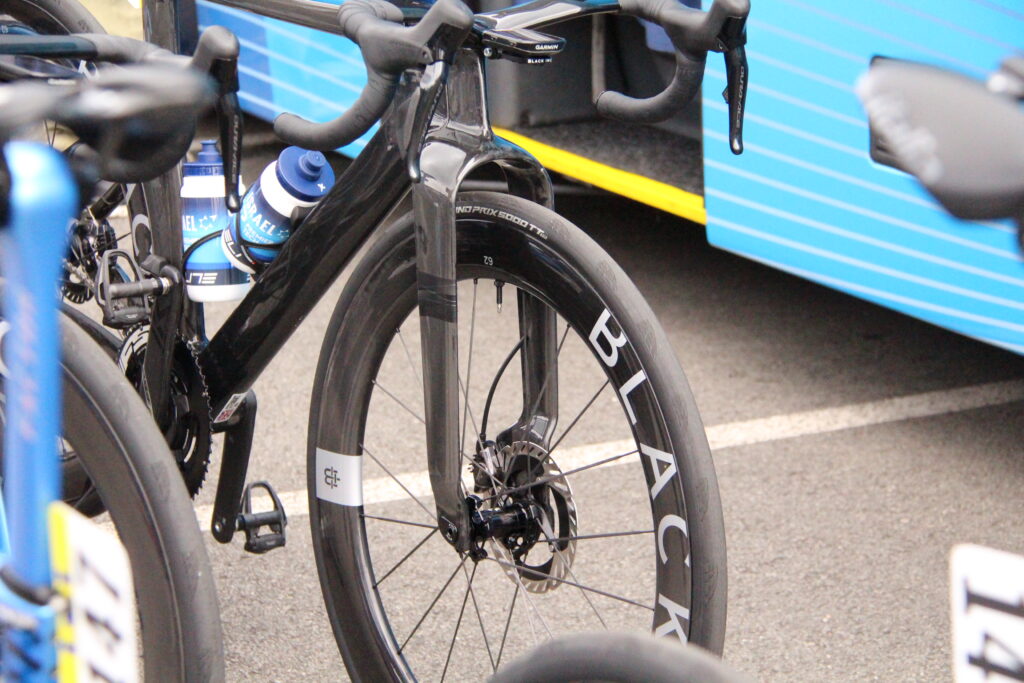
There’s nothing unusual about that. The UCI’s general rule is that any equipment used in racing must be available to the consumer – you should be able to buy it – but there’s an allowance when it comes to prototypes.
Article 1.3.006 of UCI’s Technical Regulation says, “Any equipment in development phase and not yet available for sale (prototype) must be subject to an authorisation request to the UCI Equipment Unit before its use. Authorisation will be granted only for equipment which is in the final stage of development and for which commercialisation will take place no later than 12 months after the first use in competition.”
Even prototype framesets must adhere to UCI rules on frame design. We know that Factor will release this bike sometime before June 2026, then. In reality, the official launch will probably be much sooner. It’s not 100% guaranteed, but any prototype bike raced at the Dauphiné is likely to be launched around the time of the Tour de France, cycling’s biggest shop window – usually just before the start, occasionally during the race. The 2025 Tour starts on 5th July.
We saw the eighth-generation Trek Madone ridden at the 2024 Dauphiné, for example, and it was officially released on June 27th, two days before the start of the Tour. That’s a pretty normal way of doing things.
There are certainly exceptions to this rule with some bikes being launched later in the season, sometimes due to manufacturing delays (brands usually like to have a new bike ready to buy on the day it goes public), but the likelihood is that we’ll hear more about Factor’s new bike in the next month or so.
From a brand’s point of view, the ideal situation is that an unlaunched bike gets ridden in a race like the Dauphiné, media outlets like road.cc inevitably notice it and give it a bit of airtime. The fact that the brand and team won’t comment on it all adds to the air of mystery and all-round buzz. It’s a big game, really.
Then the bike is officially launched a few weeks later, everyone learns all about the new tech features, and the team’s star rider takes a stunning Tour de France stage victory while the eyes of the world are on pro cycling. That’s pretty much the marketing department’s fairy tale scenario.
Is the new Factor really within the rules?
Some commenters have expressed doubts that the new Factor is within UCI rules, but it certainly is.
For many years, the UCI had a 3:1 rule governing bike design. The rule limited the ratio of a bike tube’s height (or depth, depending on your perspective) to its width at a maximum of 3:1.
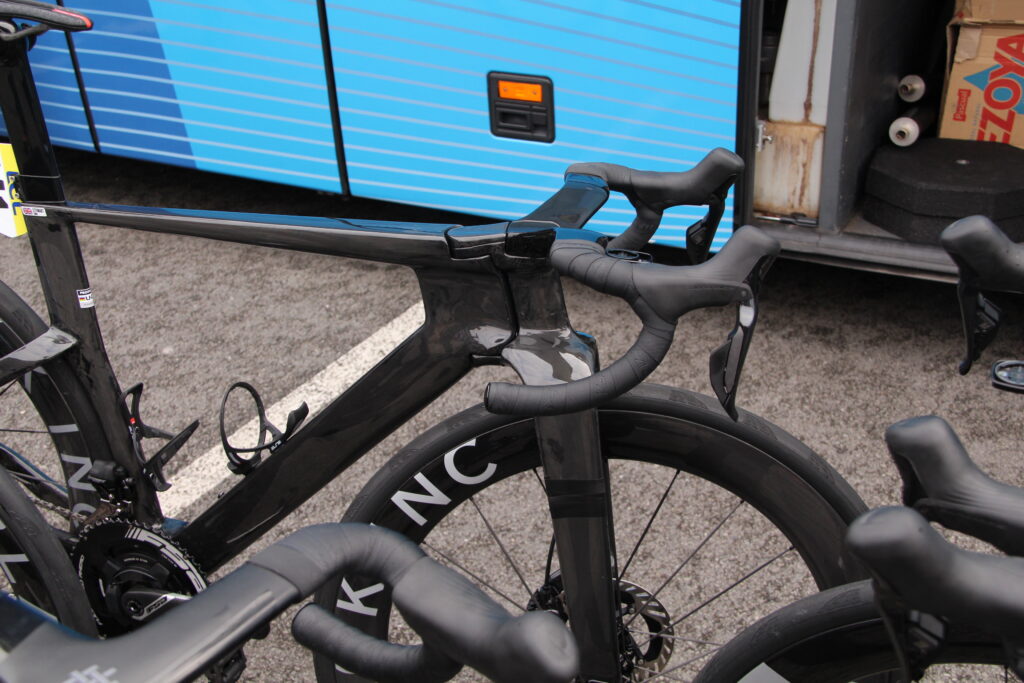
That rule was scrapped a few years back. The UCI still has strict equipment regulations, but the 3:1 rule isn’t among them.
Bike designers can now go with an 8:1 profile. We’ll spare you the details but UCI rules say that the various elements of a frameset (top tube, seat tube, and so on) must fit into a series of rectangular boxes on a template, those boxes being 80mm wide (it gets a bit more complicated at the head tube ‘reinforcement zone’ where 160mm is permitted).
While the maximum dimension of any tube is 80mm, the minimum thickness is now 10mm. If a frame designer goes to these limits, they’ll have a tube with an 8:1 ratio; that’s what the rule means.
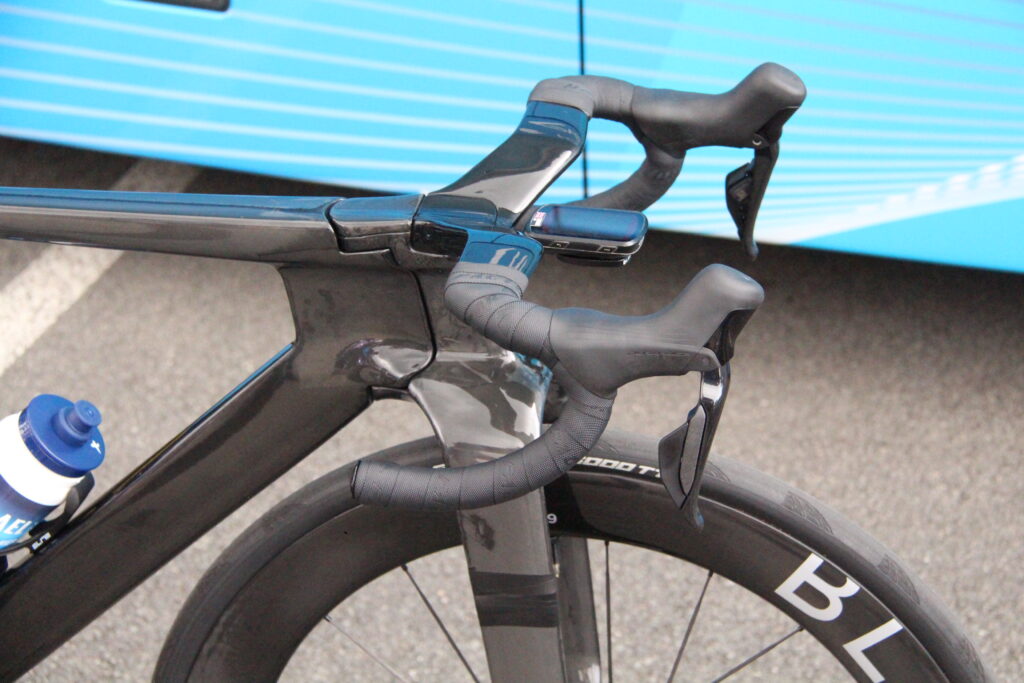
We didn’t measure the width and depth of the various elements of the Factor’s frame, but they’ll be within those limits.
What about up front around the head tube? That whole area is very deep, but that’s partly because Factor has gone with an external fork steerer. They’re not exactly common, but external steerers have been around for many years. Factor used one on the Vis Vires it launched back in 2013, for instance, and its Hanzo TT bike (above) has an external steerer too. You’ll also see them on the Cervelo S5, Colnago Y1Rs (below), and various other road bike designs.
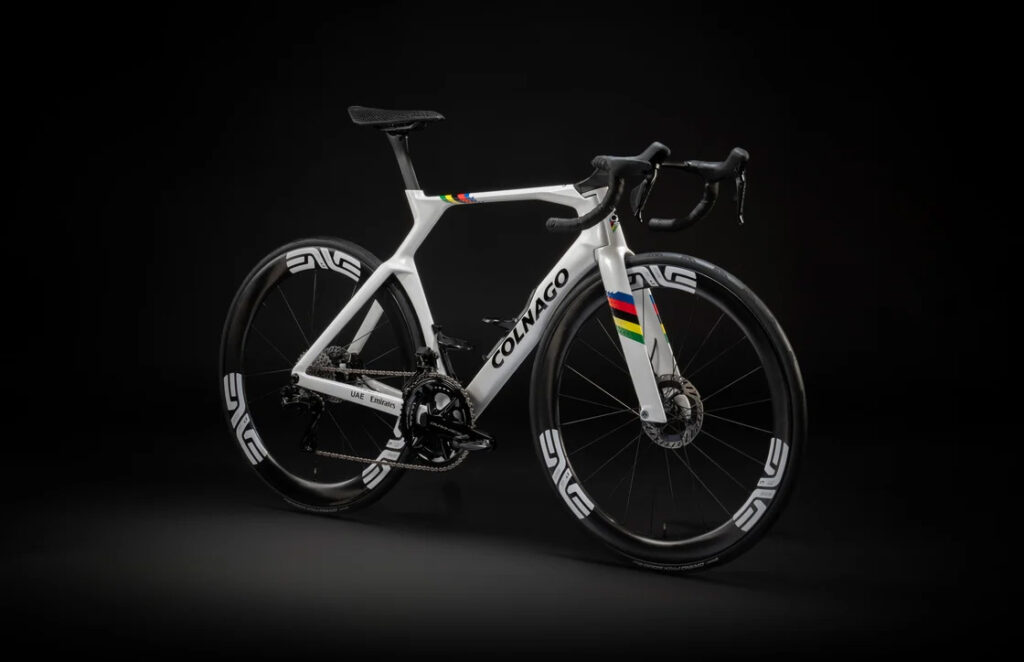
Fairings are banned by UCI regulations, but an external fork steerer doesn’t count as a fairing.
UCI Technical Regulation 63 Article 1.3.024 says, “Any device, added or blended into the structure, that is destined to decrease, or which has the effect of decreasing, resistance to air penetration or artificially to accelerate propulsion, such as a protective screen, fuselage form fairing or the like, shall be prohibited.”
> New Cervélo S5 aero bike breaks cover at Critérium du Dauphiné
A fairing is defined as “the use or adaptation of a component of the bicycle in such a fashion that it encloses a moving part of the bicycle such as the wheels or the chainset”.
An external steerer tube is permitted, as is a seat tube that follows the curve of the rear wheel – which has been commonplace for years – as long as it isn’t enclosed.
What about that saddle position?
It looks like the new Factor has a very steep seat tube angle, almost like you see on a time trial bike to rotate the rider forward around the bottom bracket for a flat-backed and aero riding position, so what are the rules here?
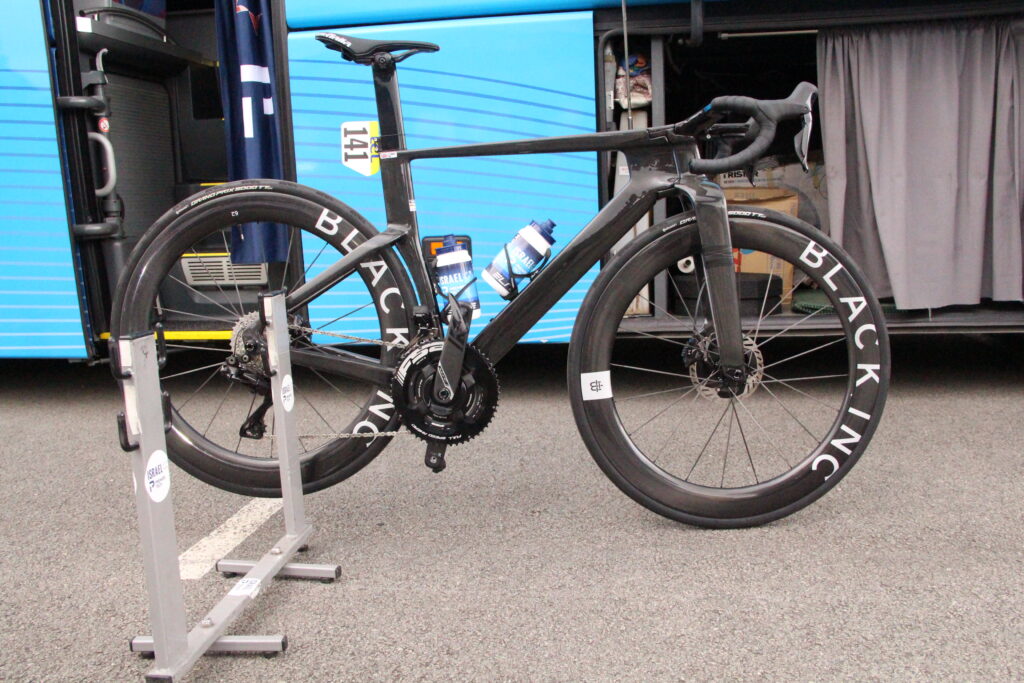
Article 1.3.013 of the UCI Regulations says that the front tip of the saddle must be at least 50mm behind a vertical line that passes through the centre of the bottom bracket, although a rider can occasionally get an exemption.
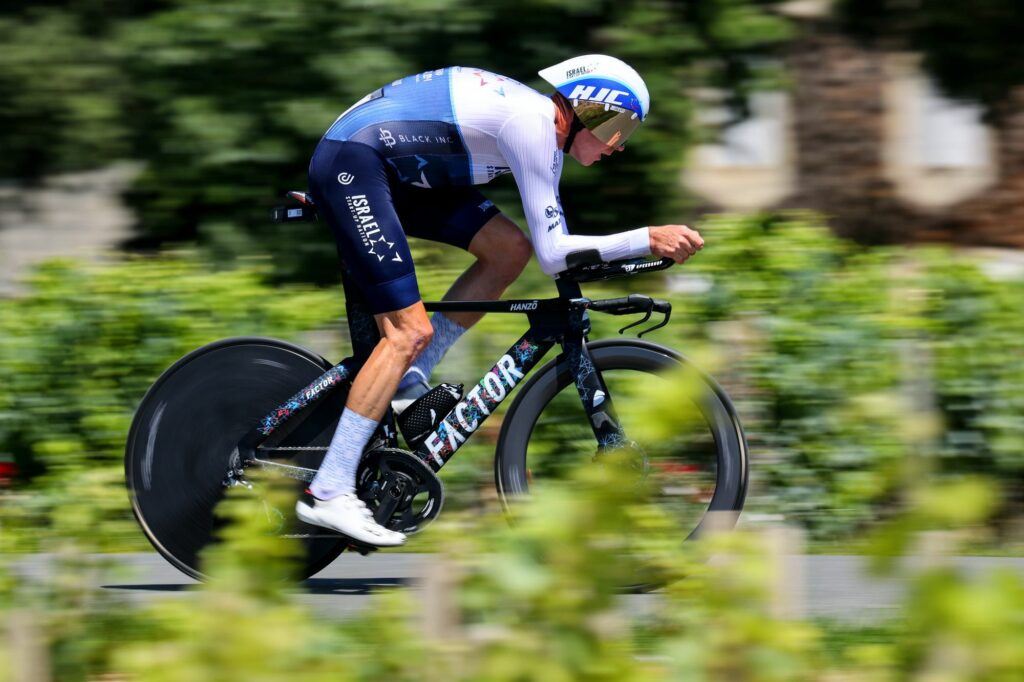
With an inline seatpost, Jake Stewart has his saddle pushed as far backwards as possible on its rails and it still looks like a very steep angle there (the rear wheel is raised in the picture above, making it look even steeper). Maybe Factor will release the new bike with the option of a setback seatpost too.
That fork: wow!
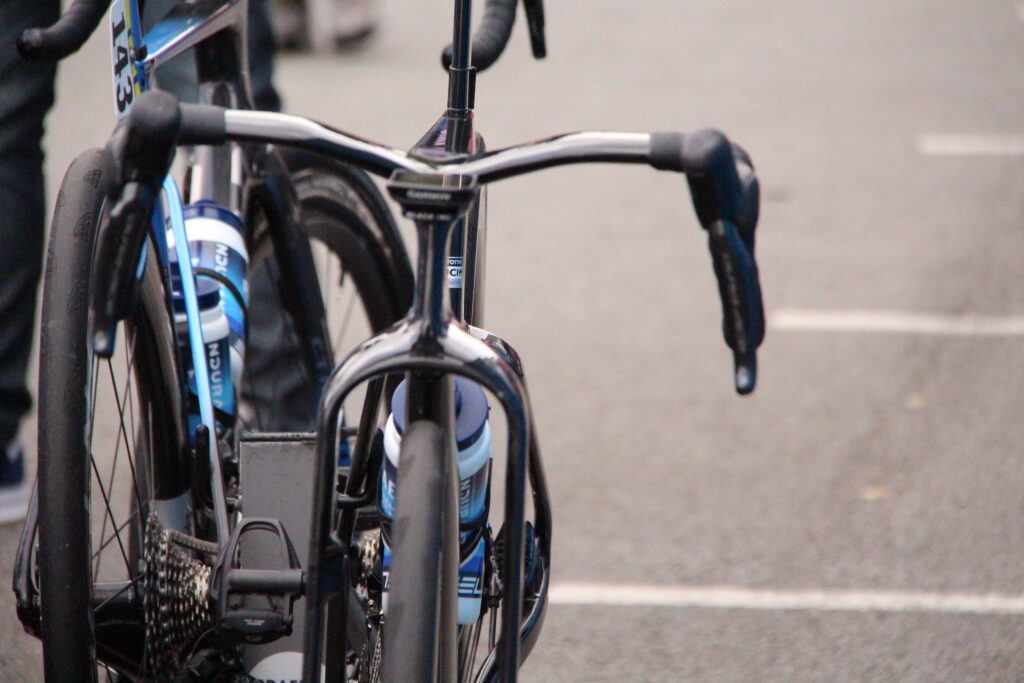
One of the new Factor’s standout features is a fork with masses of space around the front wheel, presumably for aerodynamics. We’ve seen a few bikes moving in this direction over the past few years, notably the Hope/Lotus British Cycling Olympic track bike (below).
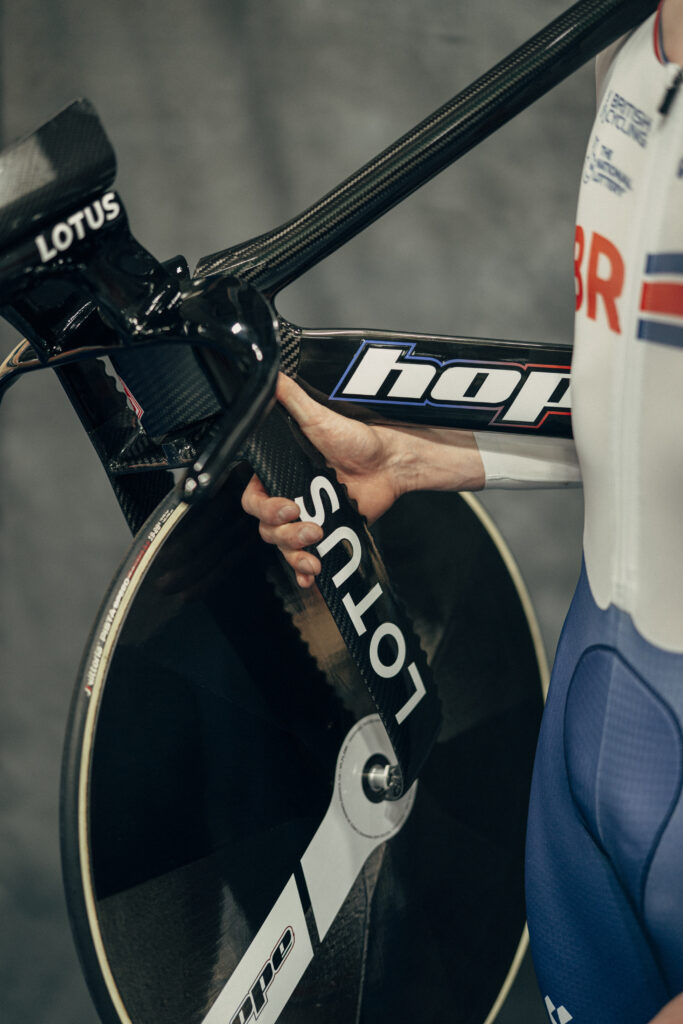
> How the new Hope/Lotus British Cycling Olympic track bike was designed and made for Team GB riders
Sam Pendred, Design Engineer at Hope Technology, told us, “Instead of designing an aerodynamic bike, the idea was to have the bike and rider as a unit. You can design a very aerodynamic bike, but the rider is the main problem once he’s on the bike. That’s the main issue for aerodynamics.
If you design the bike with a rider as a whole unit, you can come to some different conclusions regarding the best way to design the tube profiles and the best way to locate the tubes around the bike. If you have a rider on the bike, you can place the fork and seat stays effectively in line with the rider’s legs to help channel air better around something that has to be there anyway.”
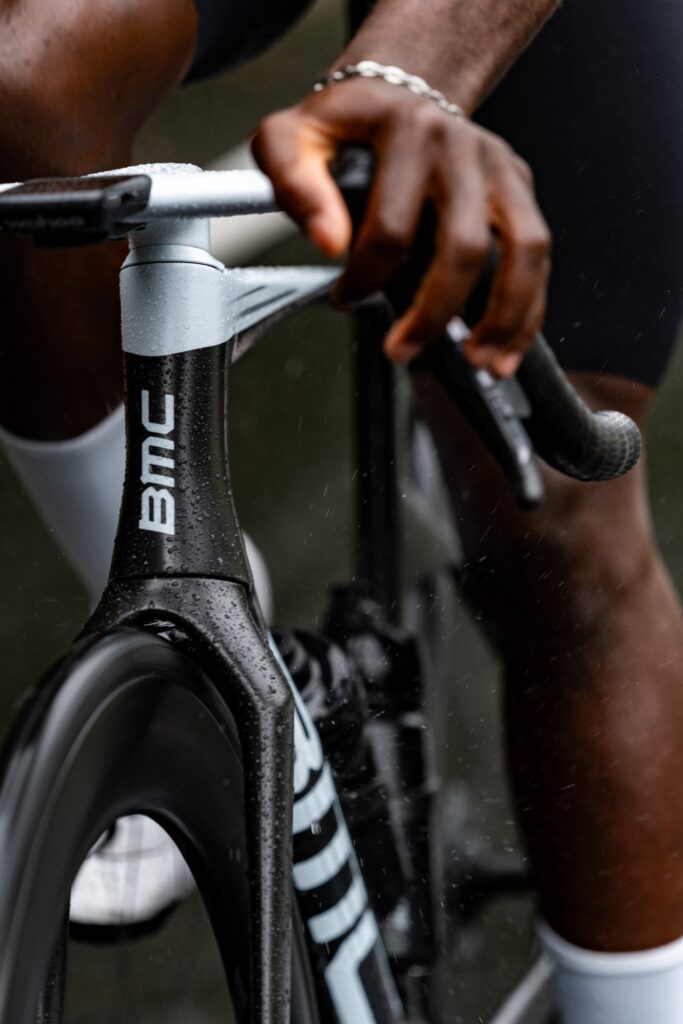
Since then, we’ve seen super-wide forks on the Ribble Ultra, the BMC Teammachine R (above), and various other bikes designed for the road.
> Ribble launches radical new Ultra aero road bike (+ video)
When launching the Teammachine R, BMC said, “When rotating at speed, the front wheel produces a significant amount of turbulent air. We increased the inner fork spacing to allow that turbulent air to be shuttered away from the frame and reduce aero stall. The result is cleaner air that hugs the frame longer, resulting in a significant drag reduction.”
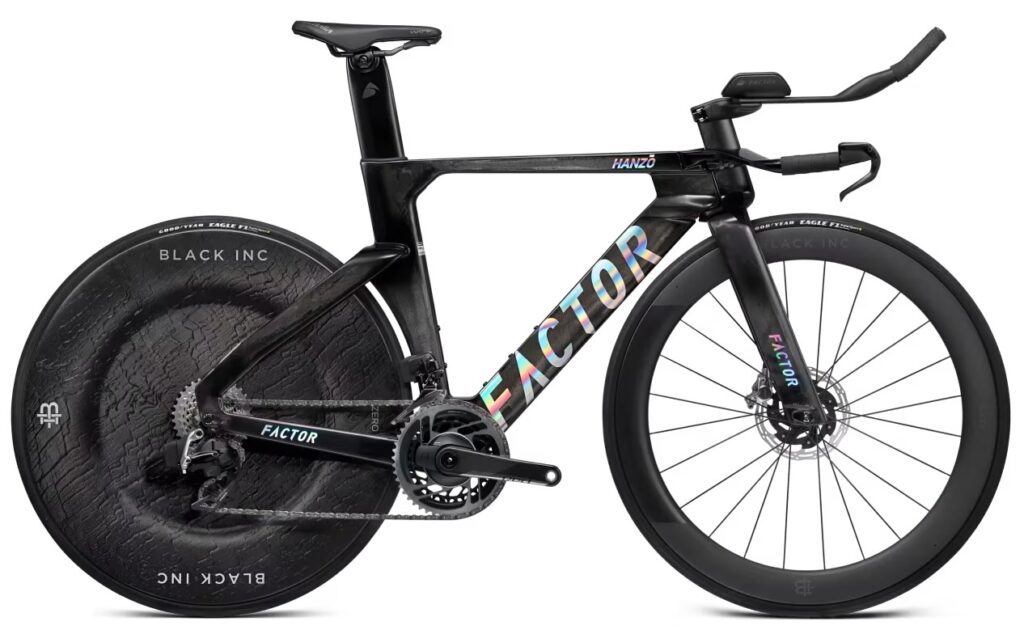
It looks like Factor has gone even wider, particularly around the fork crown, and the seatstays are also widely spaced. Factor has had the Hanzo time trial bike (above) with widely spaced fork legs and seatstays in its range for several years now, and it introduced the Hanzo Track (below) last year. It could make sense to transfer some of the tech over to a road bike. The bike Jake Stewart has been riding clearly isn’t just a Hanzo with a drop bar slapped on up front, but it looks like a close relative.
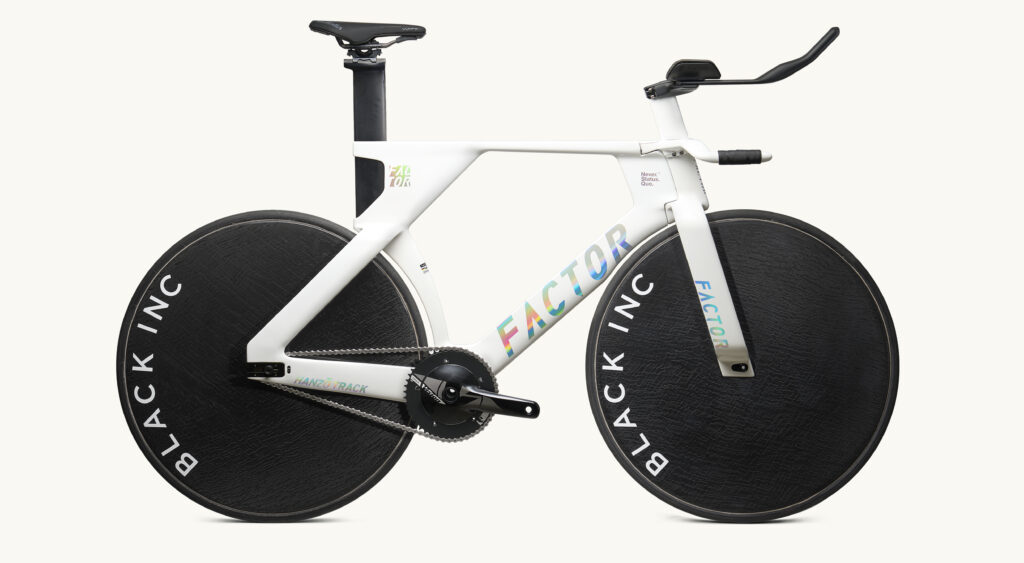
Talking about the Hanzo, Factor says, “The front end of the frame defines the level of aerodynamic efficiency. A change in UCI rules now allows for a minimum cross-section on all tubes to be as small as 1cm — down from the previous minimum of 2.5cm. With this new rule, we can reduce the frontal area by as much as 60%.
“Having the thinnest possible frontal frame thickness and allowing for wide frame clearance from the spinning wheels aids the aerodynamics. Meanwhile, radical seatstays and drop out shapes work as inline aerodynamic flow conditioners to corral the vortexes emerging from the rider’s rotating legs and feet.”
It’ll be interesting to hear what Factor has to say about these elements of its new bike, and to check out any drag figures that it shares.
One bike to rule them all?
A few years ago, starting with the launch of the Specialized Tarmac SL7 back in 2020, it looked like brands were moving away from offering separate aero and climbing bikes and heading towards a ‘one bike to rule them all’ approach – ultra-aero bikes at the UCI’s 6.8kg minimum weight for racing.
> Why the aero road bike is making a comeback
Does Factor’s new bike fly in the face of that ‘one bike to rule them all’ philosophy
Well, we don’t know how much it weighs. Israel-Premier Tech didn’t allow us close to the new Factor, never mind letting us get out the scales. Deep aero tubes do weigh more than shallow tubes, all other things (material and wall thickness) being equal, but will a complete bike be much more than the UCI’s minimum weight limit? We’d guess it’ll be a little more, but you can’t tell just by looking.
We’ll be interested to see how Factor positions this new bike within its range. Factor called its Ostro VAM “the benchmark aerodynamic, lightweight race bike” at launch last year, claiming that it outperformed the Specialized Tarmac SL8 and Cervelo S5 in terms of aero efficiency with a frame weight of just 820g (size medium).
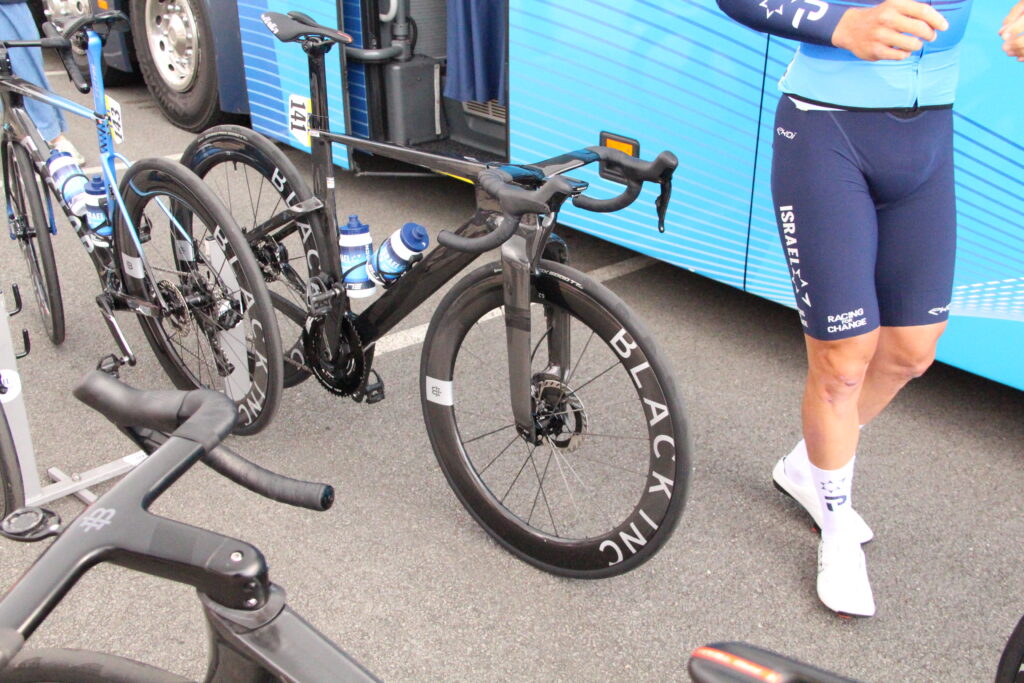
We’re guessing – and it is a guess – that Factor will leave the Ostro VAM in place and that Israel-Premier Tech will continue to use it as one of their go-to weapons of choice, and that the new model – the Hanzo Road, or whatever it is called (maybe they’ve come up with some funky new name) – will be brought in for flat days and sprints.
What will be even more interesting is where this leaves the ‘one bike to rule them all’ philosophy, and whether more brands will be tempted to go for an all-out aero approach. Anyone up for the return of the Specialized Venge?









2 thoughts on “Coming soon to a bike shop near you? Jake Stewart’s radical unreleased Factor has 12 months to hit the shops… or else”
I have a Hanzo and the one
I have a Hanzo and the one thing it isn’t is light. I guess it makes sense to maximize the aero and forget about the weight when riders can still choose between the OSTRO and O2. A different bike for every day, rather than one bike to rule them all.
I can see Factors thinking
I can see Factors thinking withth the wide fork, but the Hope track bike has been around for nearly 4 years for the British Track Team and if they want to say its given them a competitive edge it really hasnt. IF anything in the last 4 years the success of British track cycling is in a bit of a lull. Sure the riders have to be good enough too, but even with established names the bike hasnt proven to be as succesful as its made out to be. I fail to see how this will be different for Factor.