


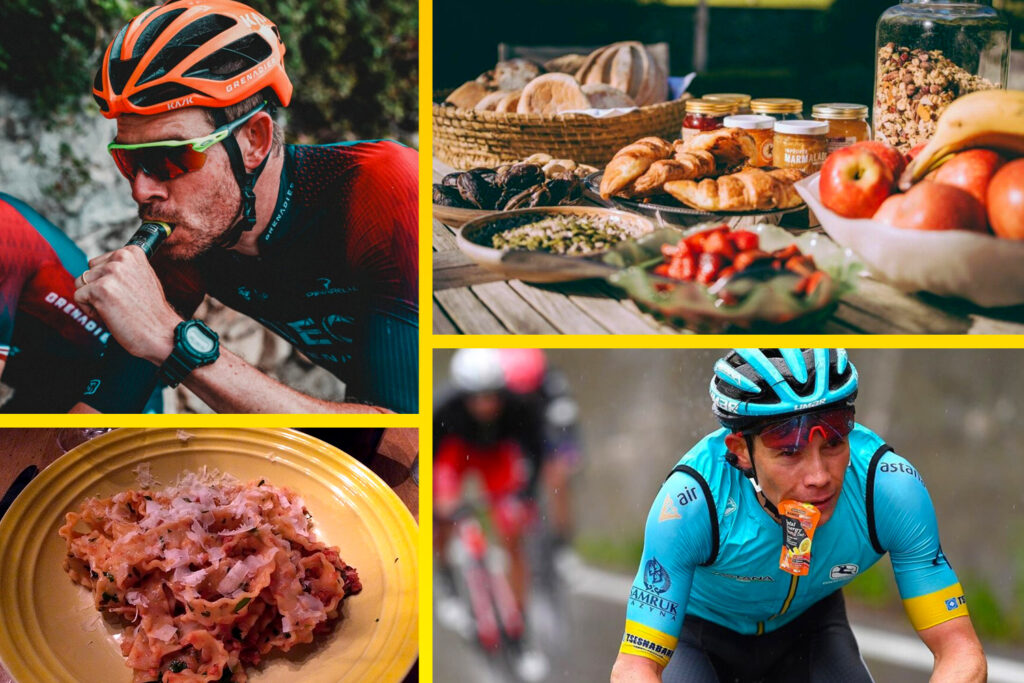

The Tour de France, in case you weren’t aware, is tough… very tough, even for the world’s best road cyclists. Battling 3,3333km and over 54km of elevation gain over 21 stages burns through calories like wildfire; in fact, some teams have reported their riders burning over 8,000 calories on stages with the toughest climbs, or about four days’ worth of regular sustenance for the average human. So, how do they do it? In this article, we speak to those on the nutritional front line about what it takes to energise and rejuvenate a Tour de France rider.

In 1893, Maurice Garin charted his food and drink intake during a French 24-hour bike race. The mobile menu included oysters, red wine, champagne, coffee, cigarettes, 19 litres of hot chocolate, seven litres of tea, 45 cutlets and five litres of tapioca. A similar dietary plan helped Maurice to victory at the first Tour de France 10 years later. How things have changed. Now, as you’ll discover, it’s all about the appliance of fuelling science…
How Tour de France riders eat and drink before, during and after a stage

The aim? Steadiness.
“During a Grand Tour, the aim is to stabilise the riders’ weight and avoid fluctuations that would either indicate a gain in fat mass or loss of fat mass and/or muscle mass if the weight decreases,” says Dr Julien Louis, nutritionist at Decathlon CGA CGM, whose leading rider at this year’s Tour is the Frenchman Paul Seixas.
> How to eat right for sportives and long rides

“However, we don’t weigh the riders daily so as not to generate fixation. Generally, we take advantage of rest days for nutritional assessments – things like what went well during the previous week, what did not go so well… – and weigh our riders. Sometimes, we also weigh our riders before and after tough stages, too, particularly those in the heat. That’s to check sweat losses and so adapt the hydration strategy.”
Before the stage

The goal of breakfast is to pack the body with energy, hydrate, and to deliver sufficient good fats and protein to reduce inflammation and maintain muscle mass. “That’s why for breakfast the riders regularly consume the following,” says Dr Louis. “Omelette; a large plate of rice; a bowl of milk; white bread as less fibrous; honey or jam; fruit juice plus tea and/or coffee.”
The bus from the hotel to the village départ
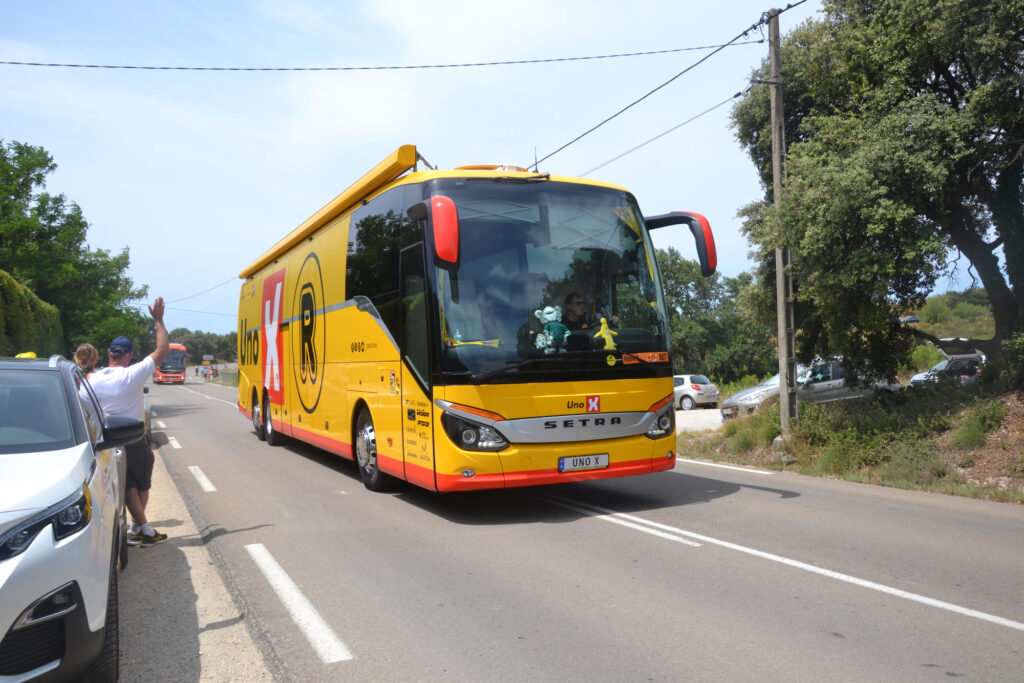
“This is where the riders will eat one or two rice or semolina cakes prepared by our soigneurs,” says Dr Louis. They’ll also tuck into a banana plus water for hydration and blood-sugar-levelling purposes.
During the race
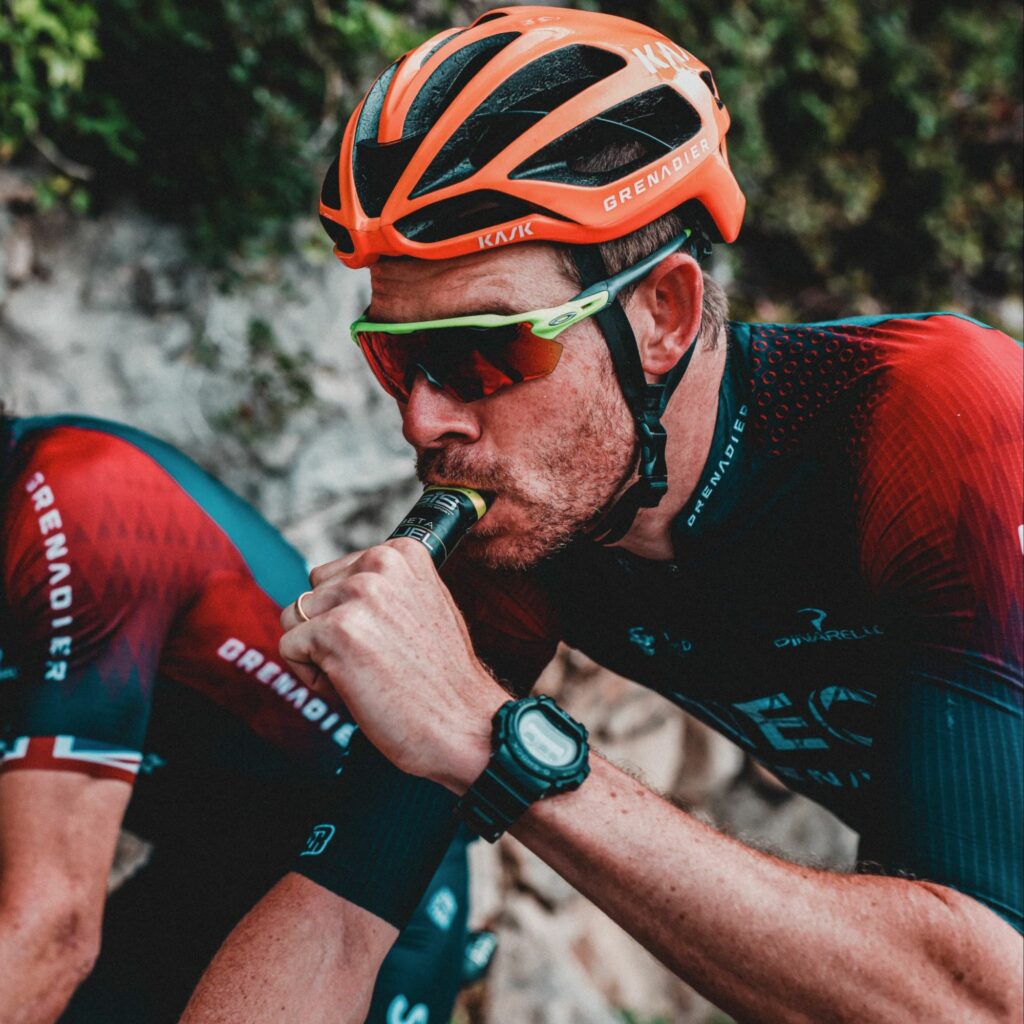
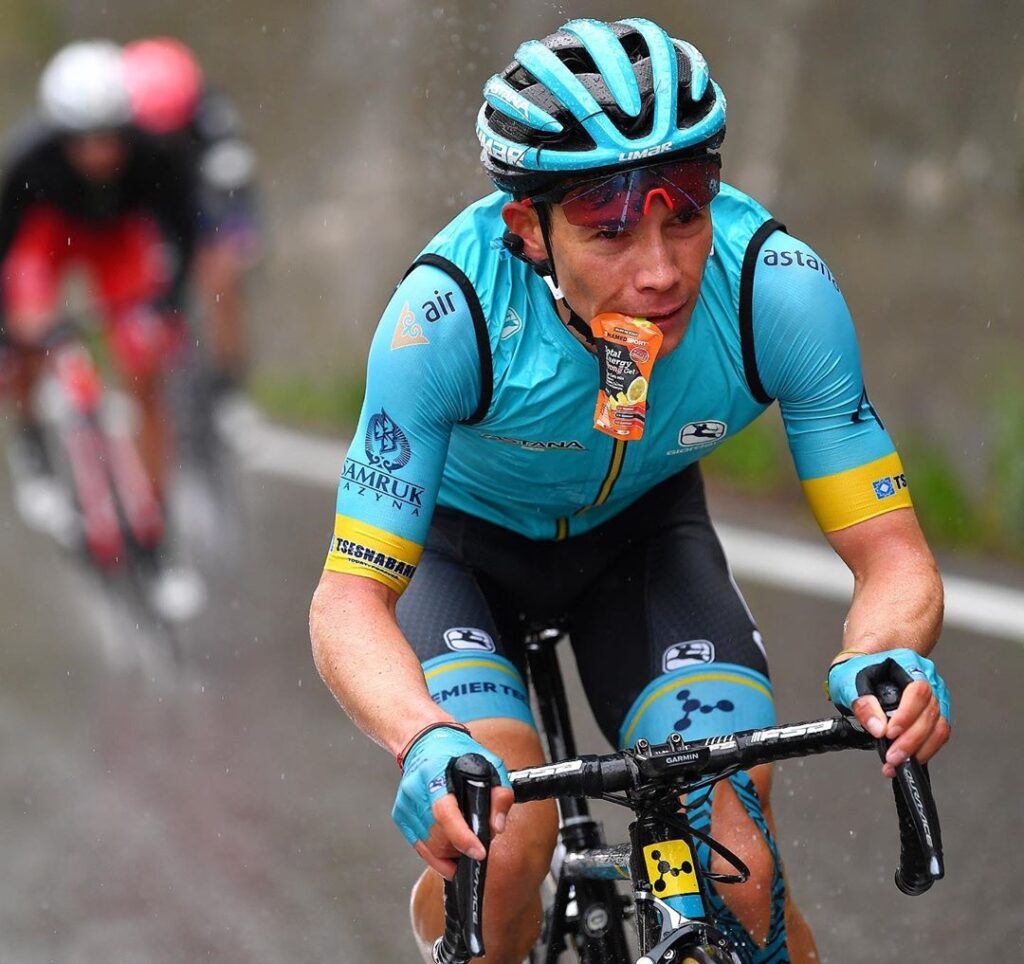
“During a stage, the riders consume rice cakes and commercial products, like gels and energy bars, plus electrolyte drinks and water,” says Dr Louis. “They’ll tend to consume around 80g to 120g per hour of carbohydrates.”
This is significantly more than days gone by when 60g was seen as the carbohydrate ceiling, the reason being that transporters in the intestine become saturated at that point and simply can’t carry any more glucose into the bloodstream. But those scientists and manufacturers had made one schoolboy error – their products comprised single sugar polymers like glucose or maltodextrin.
> Fuelling for epic rides — how to avoid the dreaded bonk
Professor Asker Jeukendrup had the idea of adding fructose to the glucose solution because fructose uses a different intestinal transporter – SGLT1 instead of GLUT5. Essentially, he turned the sugar transporter from a single carriageway into a dual carriageway. It worked and laid the foundations for the increase.
Riders are also spending increasing time gut training, so they’re better adapted and trained to absorb more during the race itself.

“Training the gut is literally targeted days of consuming a target amount of carbohydrates on the bike,” says Dan Green, performance consultant at NSN Cycling Team (formerly Israel-Premier Tech). “That might mean up to 100g an hour in training rides on a four- or five-hour day, where the target of that day is not just to get the training done, but to consume that amount of energy in that training ride. It’s been shown that your gut’s very trainable in its ability to absorb during an activity.”
On the bus to the hotel

“The riders eat a lot in the bus after the stage,” says Dr Louis. “But they start by drinking mineral water to rehydrate, plus a soda or fruit juice to ingest sugars quickly. That’s followed by a recovery drink containing proteins and carbohydrates to continue the rehydration, refuel and repair their muscle fibres. After they shower, they have a snack containing lots of carbohydrates. For instance, pasta, rice or potatoes with a small portion of protein such as chicken or turkey, and a dessert such as rice pudding.”
> What should you eat to recover after cycling?
What Decathlon CGA CGM riders don’t consume is ketones. The MPCC (Mouvement Pour Un Cyclisme Crédible or Movement for Credible Cycling) advises its members not to use them due to the unknown long-term health impact, and the French team is one of its members. The likes of Soudal Quick-Step and Visma-Lease a Bike aren’t members and are open about their ketone use.

The benefits of ketones on cycling performance are still being looked into and are contentious, but one of the major findings from Peter Hespel, professor of exercise physiology at Leuven University who also regularly works with Quick-Step, was their benefits to recovery.
“We know that the Tour de France puts riders into a catabolic state (muscle breakdown), so we had trained subjects complete a three-week training programme,” he said at the Science & Cycling Conference in Belgium in 2021. “They trained twice a day. It was brutal, and by the end of week three they were almost dead, physically and mentally.
“After every training session, they received a dose of ketones. One of the major findings was that if you looked at the placebo group, despite training load increasing by 30% over the three weeks, energy intake remained constant. They didn’t increase energy intake to compensate for the higher energy expenditure. However, the ketone group increased energy intake without giving them any recommendations for doing so.”
This is important as insufficient calorie intake and catabolic exercise results in health issues like upper-respiratory infections during the third week of a Grand Tour, plus performance decrements like reduced power output.
“We also observed that the subjects slept better after taking ketones,” Hespel added.
Last October, the UCI released a statement on the use of ketone supplements by pro cyclists, suggesting there was “no compelling evidence” they work and recommending that riders do not use them
> UCI tells riders to avoid ketones as “no compelling evidence” they enhance performance or recovery
Supplement brands immediately hit back. Responding to the claims, the CEO of Visma-Lease a Bike’s partner Ketone-IQ said he disagreed, while the CEO of XDS-Astana and Soudal Quick-Step’s supplier KetoneAid called the UCI intervention “puzzling”.
At the hotel

“Back at the hotel, the riders will continue to rehydrate with mineral water and then have a balanced meal in the evening containing carbohydrates, proteins, fats, vitamins and essential minerals via chicken, pasta, vegetables and smoothies,” says Dr Louis. “The selection of food and the quantities served at dinner will depend on the next day’s stage.”
How many calories do Tour de France riders burn?
One of the great advancements of recent times has been the individualisation of fuelling, which is important as the amount of food a Tour de France rider eats is influenced by several factors, including their body composition, role in the team and on the day, and their energy expenditure (at rest and on the bike).
Gemma Sampson is an Australian nutritionist, based in Mallorca, who works with professional and amateur riders alike. Sampson analysed a Team BikeExchange rider she’d worked with at the 2021 Vuelta a España. It’s enlightening.
“The Vuelta a España 2021 consisted of 3,417km over 21 stages plus two rest days,” says Sampson. “It featured two individual time trials, six flat stages, four hilly stages and nine mountain stages with the following energy expenditure during exercise:
Rest days: 563 kcals
Individual TTs: 1,701 kcals
Flat stages: 3,022 kcals
Hilly stages: 4,040 kcals
Mountain stages: 4,602 kcals
“Through the race, the athlete, performance chef and sports nutritionist used a weighed food diary, recording race foods and sports products consumed during the stage,” says Sampson. “They also took photos of the food.”
Total carbohydrate consumed during riding ranged from 185-508g per stage; carbohydrate intake per hour ranged from 41-106g; and carbohydrate intake consisted of 37% wholefoods, 21% energy bars, 14% gels and 15% high-carbohydrate drinks.
The recovery carbohydrate intake immediately post-stage on the bus reached 189g, which upped slightly to 195g at dinner.
The latest appliance of AI science
Again, all of this is to balance energy intake with the extreme output. It was only five years ago, but Sampson’s analysis seems parochial compared to today. Teams are increasingly tapping into high-tech in search of optimising performance. Visma, co-sponsors of Jonas Vingegaard’s team, are a software company. The Dutch cycling squad utilised Visma’s software know-how to tap into the world of AI.
“The first step was to collect the necessary data,” Visma-a-Lease-a-Bike’s performance nutritionist Martijn Redegeld revealed. “A Garmin device gives us the actuals, like total distance and climbing metres, for each race. A crank-based power meter also gives us a precise calculation of the calories burned. We have a TCX file with GPS coordinates that provides us with metrics on the profile of the race (distance, climbing metres, difficulty, and so on).
“We also have information about riders’ weight, height and role (whether they are a sprinter or a climber, for instance). Finally, we take weather conditions into account. Combining the weather forecast with GPS information and the rider’s location allows us to calculate the wind effect – whether it’s a tailwind or headwind.
“Data gathering and visualisation are powered by Smartbase, a data management and analytics platform for athletes. The coaches use this environment to enter the actuals. We then use this data to prepare the nutritional forecasts.
“The AI model got an accuracy score of between 80-85%, while the manual predictions got a score of about 50%. That means coaches now get the results in a split second, improving accuracy and saving valuable time. The riders then get their individual and optimised proportions for each meal directly in the FoodCoach app.”
As Dr Louis mentioned at the start, the main aim of all of this is “to stabilise the riders’ weight and avoid fluctuations that would either indicate a gain in fat mass or loss of fat mass and/or muscle mass if the weight decreases”.
That means finishing the race at broadly the same weight as at the start. That increasingly happens. But sometimes doesn’t. Thymen Arensman of Ineos Grenadiers (now Netcompany Ineos) revealed that he’d gained 5kg during the 2024 Giro d’Italia, for example.
“It was probably fluid retention,” Arensman said. “My skinfold measurements were very low for me, which accounts for about four or five litres of fluid. It’s something useful to figure out for next time exactly what’s causing that.”
Uno-X’s Moran agrees with Arensman’s assessment and elaborates. “Fluid retention can sometimes happen due to trauma, like a crash, or from inflammation from chronic stress and fatigue, glycogen super-compensation (not eating enough carbohydrates generally and then over-fuelling in the race), constipation and too high a sodium intake. Plus, it’s possible for true weight gain from being in a calorie surplus and actually accumulating body fat, although I’d say this isn’t that common.”
Digging a little deeper into one of those key reasons, too high a sodium intake, we contacted Andy Blow, founder of Precision Fuel & Hydration, a sports nutrition company that caters to Lotto-Intermarché’s nutritional needs.
“If you significantly overdo your sodium intake over a prolonged period of time, there’s a good chance that, as well as trying to pee out excess fluid and sodium, your body might be forced to hold onto some additional extracellular fluid (ECF) to keep everything balanced in terms of its overall sodium content,” says Blow. “For athletes, expanded ECF volume is something of a double-edged sword.
“On the one hand, if it occurs in the blood acutely pre-exercise, it can be a good thing as it gives your body an extra reservoir of fluid and sodium to ‘lose’ through sweating before a level of performance hampering dehydration sets in.
“On the other hand, if this fluid retention becomes more chronic and permeates out of the vascular system into the ECF around the body’s tissues, it can cause puffiness, bloating, weight gain and mild swelling (edema) of some of your body parts (often showing up in ankles and fingers) and that’s clearly not so good. This can happen over a period of a few hours if intake is aggressive enough and urine output can’t keep up. Or it may happen over days or even weeks with lower but consistent levels of overconsumption.”
For Tour riders and amateurs, the aim is to find a ‘sweet spot’ of sodium replacement that meets your needs based on how much sweating you’re doing and how much sodium you lose in your sweat. Precision Fuel & Hydration offers sweat tests around the country. A more rudimentary measure is looking at your cycle top. If it’s covered in the white stuff, you’re a heavy sweater.

Fuelling a Tour de France rider no longer revolves Maurice Garin’s oysters, champagne and cutlets. It’s all about 120g an hour carb feeding, individualisation and AI. It might sound a touch robotic but that’s what it takes to finely tune these engines. Would it work for this gluttonous writer/rider? Not a chance…








1 thought on “How do Tour de France riders fuel their race? Top tricks the world’s best cyclists use to battle through thousands of brutal kilometres”
Fascinating and insightful article, thank you.