


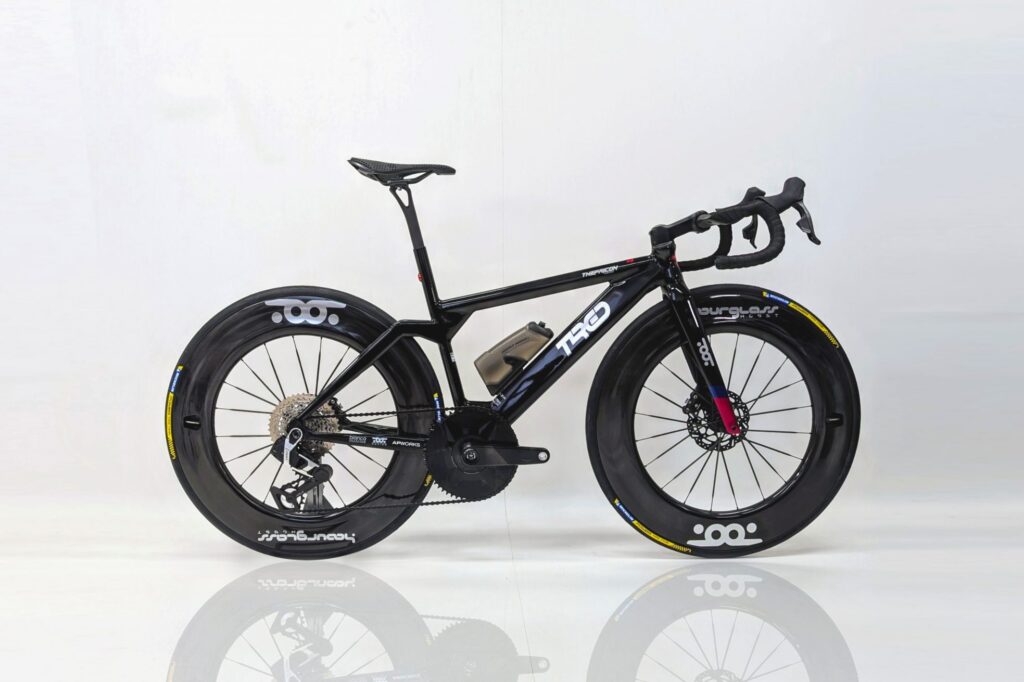

Is the UCI-legal Tred TheFalcon 300 RR SC really faster than top-level road bikes like the Colnago Y1Rs, Cervelo S5, and Specialized Tarmac SL8? Toot Engineering, the Italian company behind the design, claims it is.
We’ve covered Toot Engineering previously when its Tred X23 Swanigami bike was raced at the 2023 UCI Track Cycling World Championships in Glasgow (Tred is the name on the down tube). Further back than that, its Blackfalcon was ridden at the 2021 Track World Championships, and the TheFalcon 300 RR SC is an evolution of that design, transferred from the track to the road.
What are you getting here?
TheFalcon 300 RR SC is made from Toot Engineering’s proprietary AlScaZir alloy, which is a blend of aluminium, scandium, and zirconium. Toot Engineering says that AlScaZir has mechanical properties similar to Ergal, which is 7075 aluminium alloy, while “maintaining excellent weldability”.
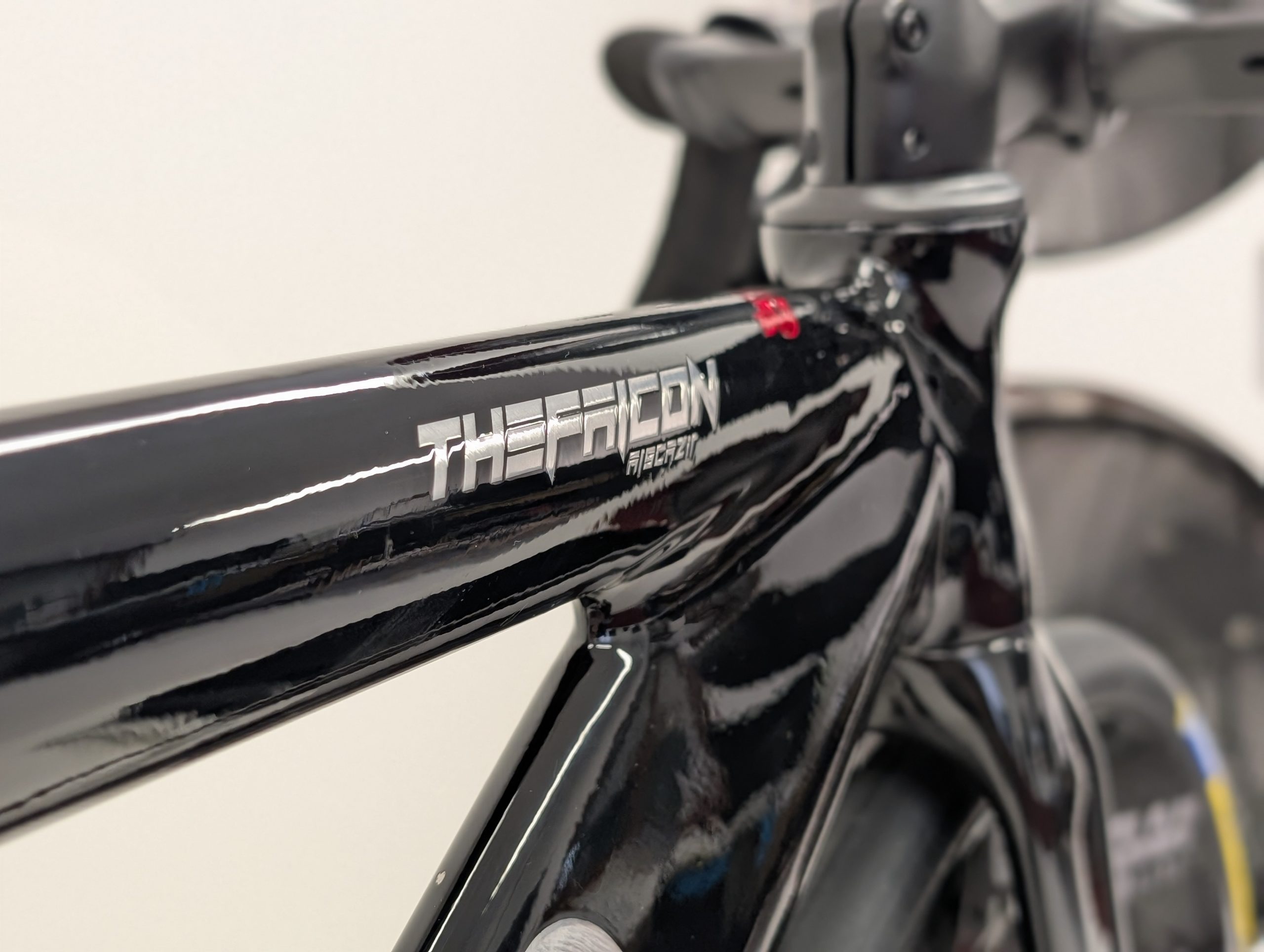
Toot Engineering says, “The frame’s stiffness-to-weight ratio ensures unmatched performance, combining torsional stiffness, power transmission and extreme reactivity.”
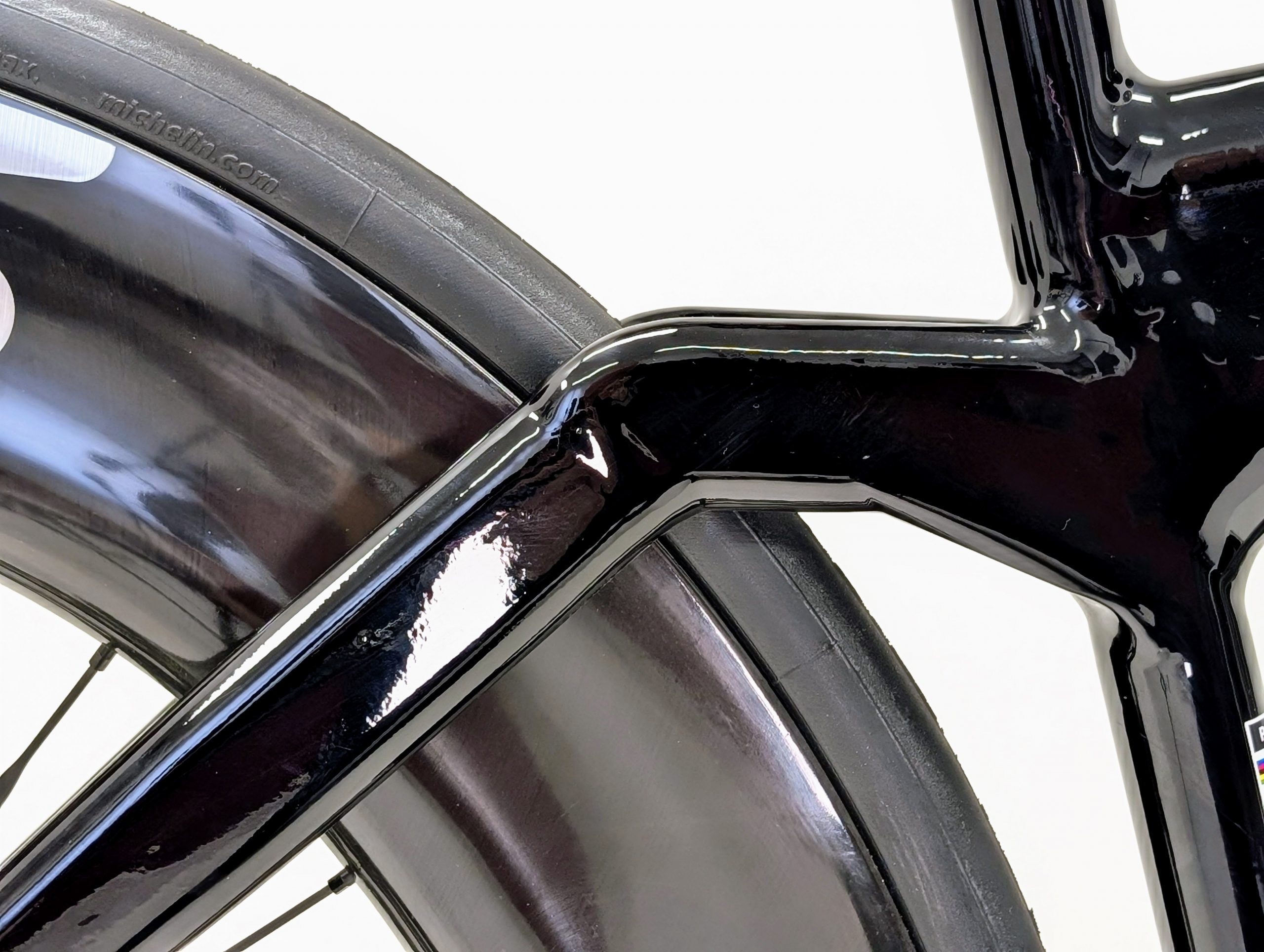
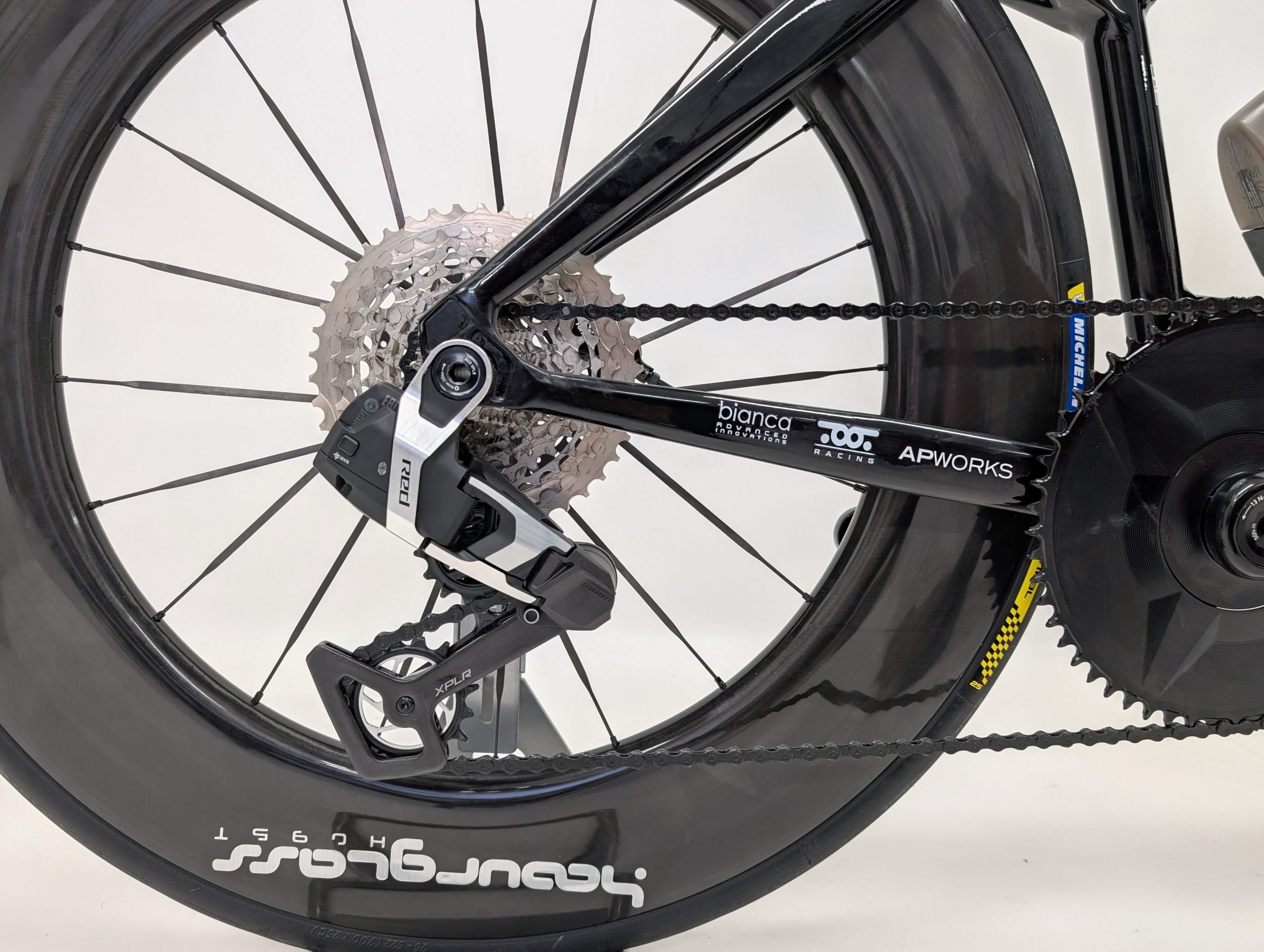
The steering area, bottom bracket and seatstays are 3D printed in Scalmalloy, customised to fit the individual rider.
TheFalcon 300 RR SC is built to what Toot Engineering calls an LSST (Low Stack Small Triangles) geometry that is said to be inspired by the engineering principles of BMX frames. With their small triangles, BMX frames are designed to be stiff and reactive. As well as increasing torsional stiffness, the LSST geometry is also intended to reduce the bike’s frontal surface area and improve aerodynamic efficiency. With each bike built to order, the stack and reach are tailored to the individual customer.
Toot Engineering says that its Blackfalcon track bike achieved an exceptionally low CdA (coefficient of drag), and that it has worked hard to transfer that performance to the road.
According to Toot Engineering, “Wind tunnel and velodrome testing confirm that Thefalcon 300 RR is significantly closer to the aerodynamic performance of track bikes [than road bikes]. With a CdA of less than 0.200 at 0° yaw [with the wind head-on] and an energy expenditure of 361W at 50 km/h, Thefalcon 300 RR offers a performance gain of more than 12% compared to the best competing road bikes and better values than many track bikes used in the recent Olympic Games and not too far from the record figures of the X23 Swanigami.”
Toot Engineering, claims a CdA of 0.196 for its bike at 0° yaw, compared with 0.246 for the Colnago Y1Rs, 0.326 for the Cervelo S5, and 0.340 for the Specialized Tarmac SL8. Of course, it’s more complicated than that in the real world where yaw angles vary, but we’re just reporting these claims here, not endorsing them.
As mentioned above, Toot Engineering claims that Thefalcon 300 RR would require 361W to hold 50km/h (31.1mph) compared with 403W for the Colnago Y1Rs, 534W for the Cervelo S5, and 558W for the Specialized Tarmac SL8.
Toot Engineering says that CDA of TheFalcon 300 was measured in “third-party tests at the Valencia velodrome”.
We all know that bike/component brands are forever saying that their products beat everything else out there in terms of aero efficiency, but are you impressed by Toot Engineering’s claims?
One thing that’s certain is that the buying process for a TheFalcon 300 RR SC is very different from normal. You don’t just walk into a shop and buy one of these. Each bike is built to order, and Toot Engineering says that the customer is very much part of the design process. Also, it’s keen to emphasise that there’s no overproduction or wastage because of this business model.
How much? Toot Engineering is a bit cagey on this one. It says that prices vary but you should expect to pay more than for an off-the-shelf bike. However, it says that it is able to save money by not using a traditional retail model and not having to store stock in warehouses, so you might be surprised at the attainability. Make of that what you will.
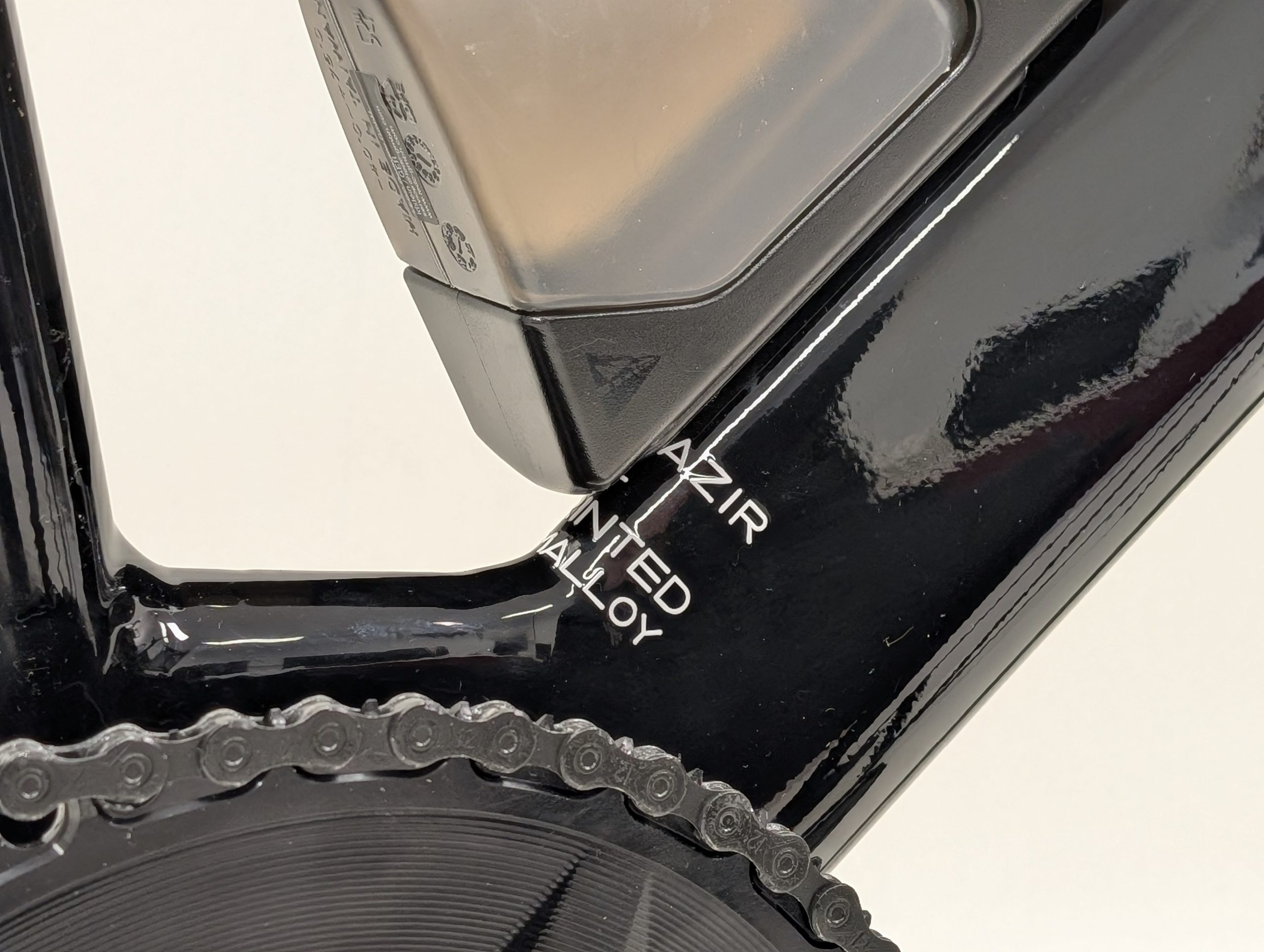
Oh, one small point. The small front triangle can accommodate only one water bottle, but Toot Engineering thinks this is a sacrifice worth making.
“Asking where to put a second bottle on Thefalcon 300 is like asking a cheetah to carry a backpack,” it says. “This is a track-derived machine. If you’re pushing five hours at full gas, mount it behind the saddle. But remember: this bike’s DNA is speed, not convenience.”




















21 thoughts on “Is this the fastest road bike in the world?”
Boss to designer, “Take a
Boss to designer, “Take a toot on the crack pipe and give it some more ugly injections”.
Maybe the look will grow on me, but for now my eyes are stinging and my brain just hurts at the harmful aesthetics of that machine.
The square ‘bars hurt my eyes
The square ‘bars hurt my eyes, but otherwise I think it’s an interesting and not completely design. In particular the seatpost/top tube/seat stay junction looks pretty clevey. Wonder what it would look like with perhaps only 50mm or 60mm deep rims on it. Those monstrosities in the photos are a bit…distracting!
Well… the ‘A’ in CdA stands
Well… the ‘A’ in CdA stands for area, so of course you can make a tiny, tiny bike and claim that it is more aerodynamic. That doesn’t mean it is a sensible or even useable real world design.
The magnitude of the Cda
The magnitude of the Cda values e.g. 0.2 is sufficiently large that its the number for the combined drag of the bike and the rider.
No doubt both Colonago and Specialized could produce much better numbers for their bike/rider combos if they were running the tests and optimising them to favour.
Yeah the wattage figures just
Yeah the wattage figures just don’t add up to me, ~360 vs ~540 watts, for the same rider? just through using a different bike, if this was the case, every world tour team would be knocking on their door to buy them, let alone any kind of sponsorship deal. Those kinds of savings would make every rider on a squad into a race day favourite.
IanMunro wrote:
Yeah – on a bike with a super low front end and ultra narrow handlebar. As I said it’s very easy to simply reduce A in a windtunnel but it’s not necessarily a real world solution.
I think I’ve seen this in one
I think I’ve seen this in one of the Temu ads.
I realise that the photos are
I realise that the photos are only marketing shots, but if they are a truly engineering/ aerodynamics led company, why did they allow the photo above with the bike the wrong way round in a wind tunnel?
The fans extract air out of the tunnel. If you have the fans in front of the object there is no hope of getting a stable airflow to be able to measure anything. Unless of course all their claims are even more impressive as the figures are for riding backwards?
SimoninSpalding wrote:
You will know more than I about windtunnels (you would have to because you couldn’t possibly know less!) but do designers not test their bikes with tailwinds as well to see how they can maximise the advantage when they have one?
Rendel Harris wrote:
No. You pretty much never have a tailwind (relative to the rider) unless you’re on a very steep climb on a very windy day. There would be no point whatsoever in thinking about it during the design process. I think you’re making the mistake of thinking that wing blowing from behind you will result in wind hitting the back of the bike – but that’s very rarely the case.
Imagine you’re riding on the flat going 20mph on a calm day, you’ve got 20mph relative wind hitting your face. Now imagine you’ve got a 20mph surface level tailwind, you should be in a totally calm bubble, right? Well no, because putting in the same effort you’re now going 30mph and still have a 10mph relative wind hitting you smack in the face. Make the tailwind 30mph, you still have a relative headwind because you’re now going 35mph on the road. Make the tailwind 35mph and you actually don’t have a relative headwind anymore because it’s way too windy to go outside on a bike.
Anyway – at no point there has anything happened that makes it worth putting a bike into a windtunnel backwards.
In fact, there is no useable
In fact, there is no useable wind-tunnel in the pictures…
Quote:
Ranging from you’ll have to sell a kidney to you’ll have to sell your house to you’ll have to sell your soul to Satan?
I have questions about the
I have questions about the noise level and uncertainty in the measurements made in their wind tunnel, as well as how uniform the free stream airflow is as it approaches the rider. In simpler terms, I’m not sure if their wind tunnel is a hack or bodge.
On the upside, if fugly was one of their design specs, they nailed it.
Fastest road bike with a
Fastest road bike with a ROUND seatpost??? Impossible.
What an achievement! The’ve
What an achievement! The’ve made a bike in frame-size 32cm produce less drag than one in 56cm. And they found that a rider with a seat that is 25cm too low will require far less power than one that’s correctly seated. They’ve even managed to develop a space saving, well-calibrated wind-tunnel from state of the art ventilators that blow past the bicycle (which is placed between the fans – to record a lower drag force). And don’t ignore the precise wind-tunnel (and bathroom?) scales…
So heavily optimised they
So heavily optimised they forgot how spelling and punctuation works in the brand names.
We have a new BKRY here in
We have a new BKRY here in Cvrshm.
I suppose journalists can
I suppose journalists can just about be forgiven for not knowing the difference between CdA and Cd but supposed Engineers can’t. CdA is NOT the coefficient of drag.
Looks built out of a washing
Looks built out of a washing machine
Mmmm, that quality of finish
Mmmm, that quality of finish
Looks like they just