


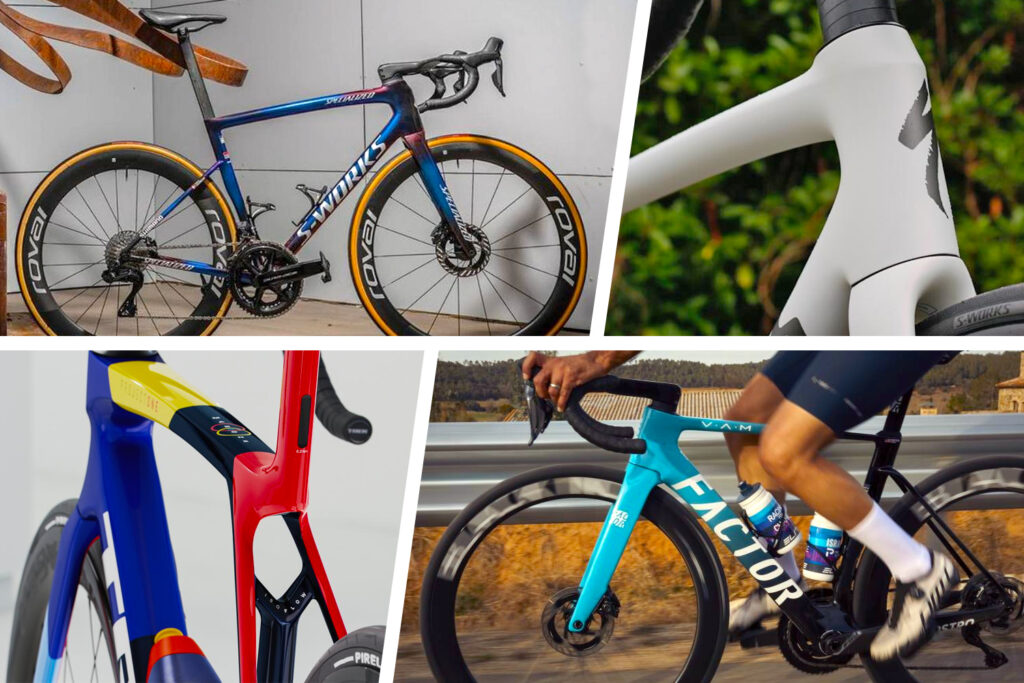

A few years ago, many pro cycling teams started moving away from offering their riders a choice between a lightweight road bike and an aero option, and shifted towards a ‘one bike to rule them all’ approach, but are we now seeing a shift in the opposite direction with specialist aero bikes starting to rule the roost?
During the Tour de France last week, we saw Tadej Pogacar and Jonas Vingegaard leading the race in the Pyrenees, including summit finishes, on aero road bikes – the Colnago Y1Rs and the Cervelo S5. Each of them had the choice of a lighter all-rounder bike, which they could have swapped to for the climbs, but they stuck with their aero bikes.
Have dedicated aero bikes again come to the fore?
Colnago: Pogacar puts his faith in aero
Conago has launched two bikes over recent months: the aero-optimised Y1Rs and the lighter V5Rs, which is designed as more of an all-rounder, although certainly with aero features.
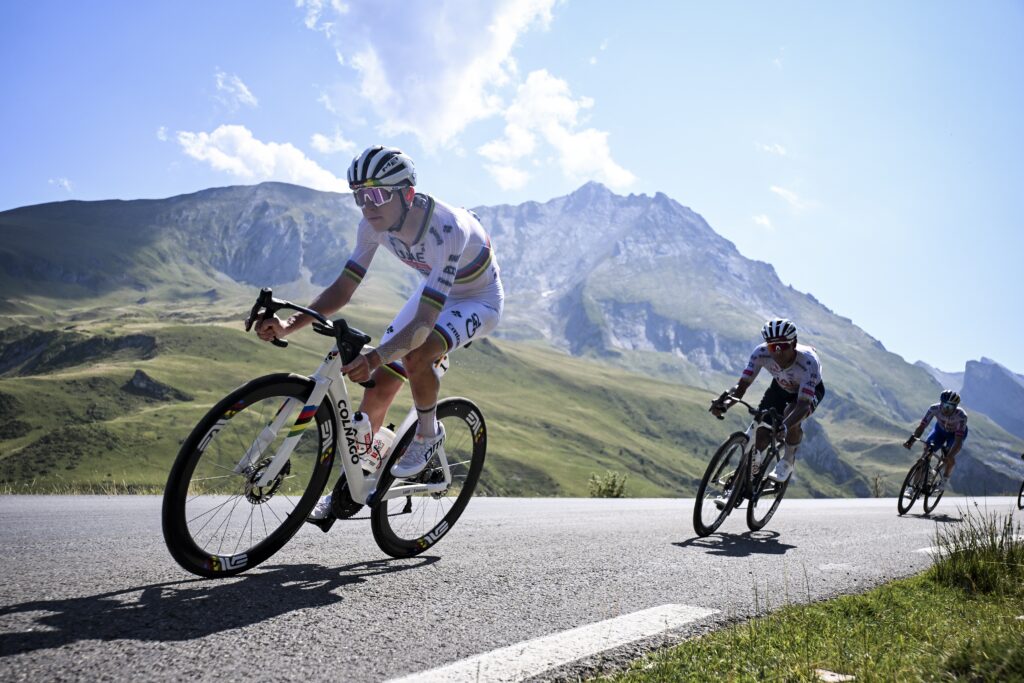
It’s interesting that Tadej Pogacar has favoured the aero Y1Rs in the Tour de France, even in the mountains. He rode the aero V5Rs throughout Stage 12 of this year’s Tour de France, for instance, when he put a significant amount of time into his rivals. The stage rolled along before hitting three categorised climbs in the last 60km, culminating in a Hautacam summit finish, yet Pogacar stuck with the slightly heavier bike.
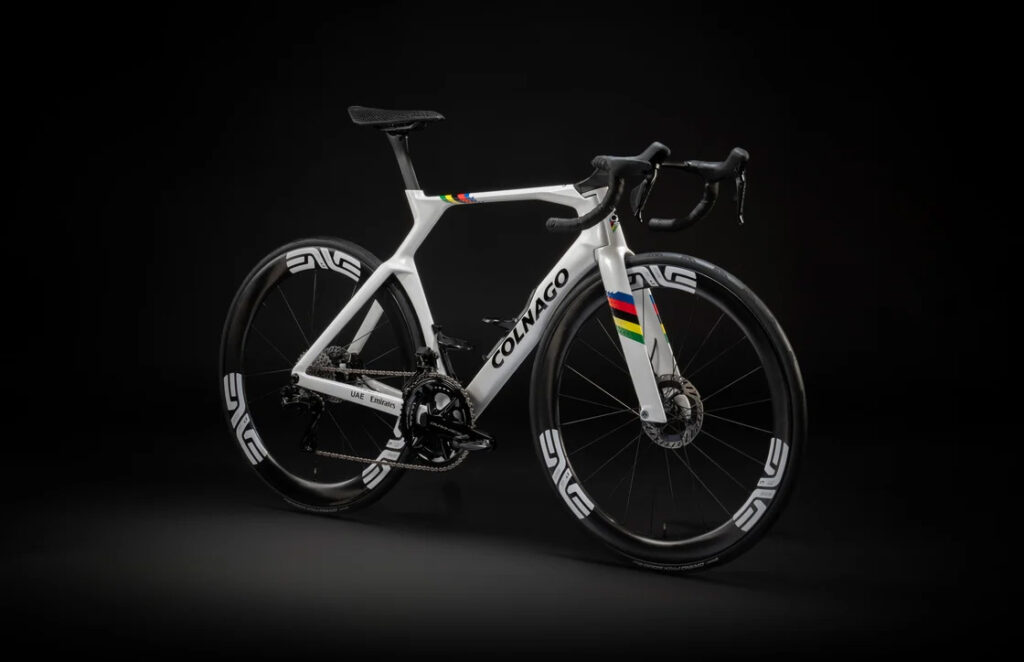
Pogacar also used a stripped-back version of the Y1Rs for the mountain time trial, then a similar bike (see below) with a few usual road-stage features for Stage 16, culminating in a summit finish on Mont Ventoux. Pogacar rode a painted Y1Rs earlier in the Tour de France, but this new version is all about saving weight so it has a thin clearcoat finish.
Colnago says that a Y1Rs in a typical race build weighs around 7.2-7.5kg. The build that Pogacar used for the mountain time trial was a claimed 6.9kg.
Even with things like bottle cages, handlebar tape, 28mm tyres and a 160mm front brake rotor added for the Stage 16 road stage (Pogacar used a 140mm rotor in the time trial), this bike won’t be too far over the UCI’s 6.8kg minimum weight limit for racing.
Pogacar has the option of using the new Colnago V5Rs – a little lighter than and a little less aerodynamically efficient – but he has kept faith with the Y1Rs.
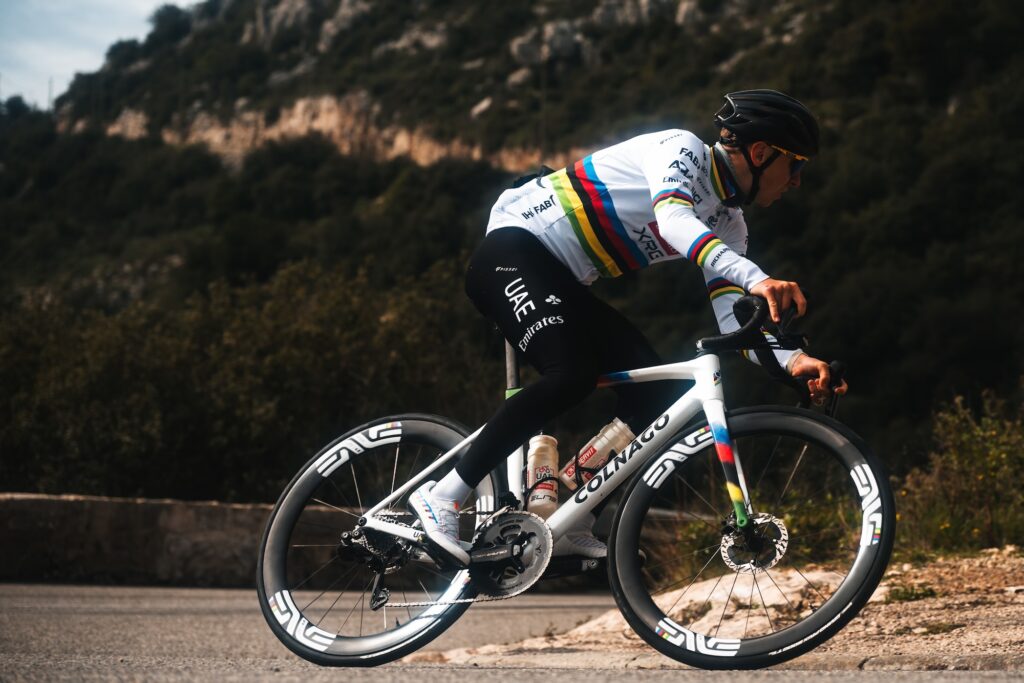
“If a rider is expected to work at the front for most of the stage and isn’t meant to stay with the leader on the final climb, then the obvious choice is the aero bike,” says Davide Fumagalli, Colnago’s head of product.
“Even if the stage finishes atop Mont Ventoux, the extra [weight] of the Y1Rs doesn’t make a meaningful difference if the rider’s primary goal is just to finish within the time cut.”
Obviously, Pogacar is looking for a lot more than that.
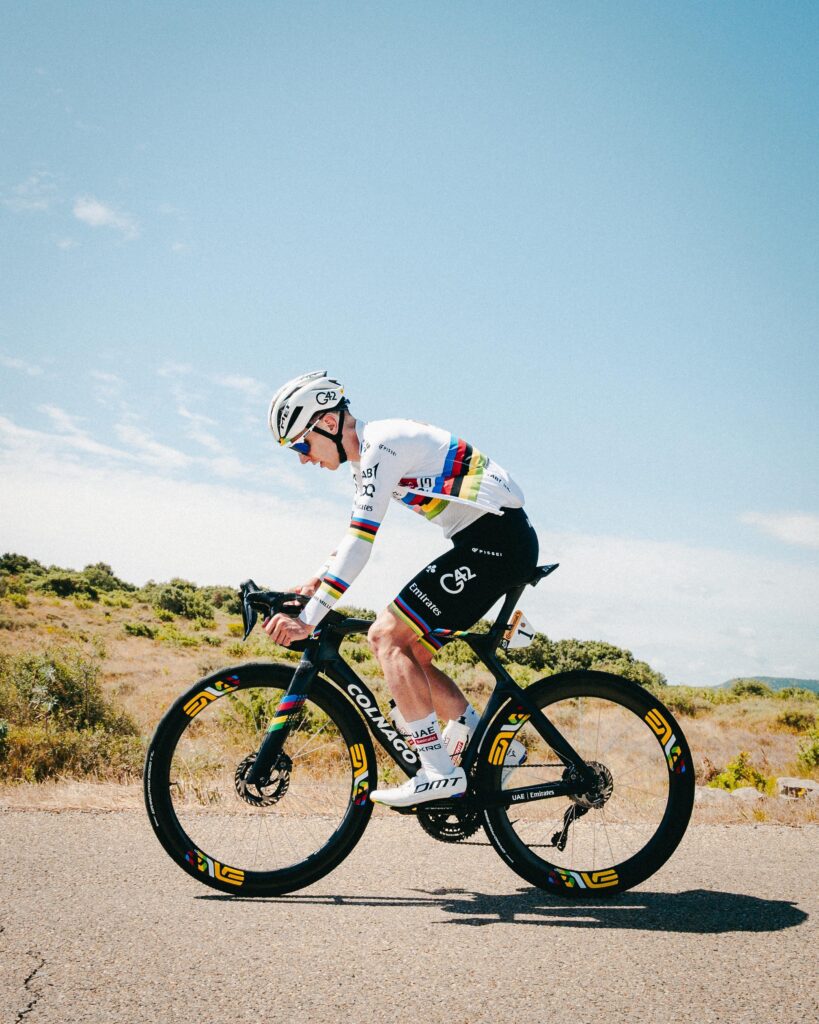
“In stages where a key moment calls for better aero efficiency, like a flat section after an attack or a climb with an average gradient of less than 8%, the team will favour the Y1Rs, even if the rest of the stage suits the V5Rs better, says Davide Fumagalli.
“The team has done its calculations, and the tipping point is around that 8% gradient. Not many climbs are significantly steeper than that on average.
“Take the uphill time trial: although it was a climbing stage, the average speed was relatively high. In that context, the aero bike, especially as it was set up relatively light, proved worth the extra weight.
“Another consideration is how much energy can be saved with the aero bike versus the V5Rs in the lead-up to the climbs. Over longer stages, this can make a meaningful difference in overall freshness at the decisive moments.”
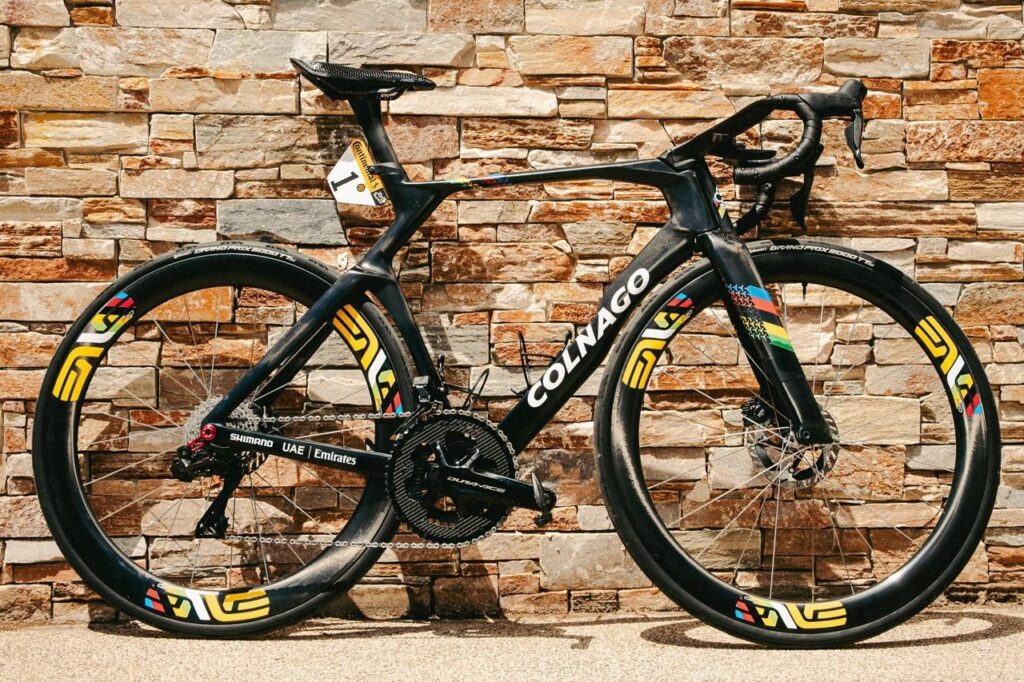
In other words, while the V5Rs would provide a very slight weight advantage, the superior aero performance of the Y1Rs is usually more important.
It’ll be interesting to watch Pogacar’s bike strategy over the rest of the race. There are more summit finishes to come.
Cervelo: Vingegaard goes aero too
Visma-Lease a Bike ride bikes from Cervelo, a brand that has been equally busy lately.
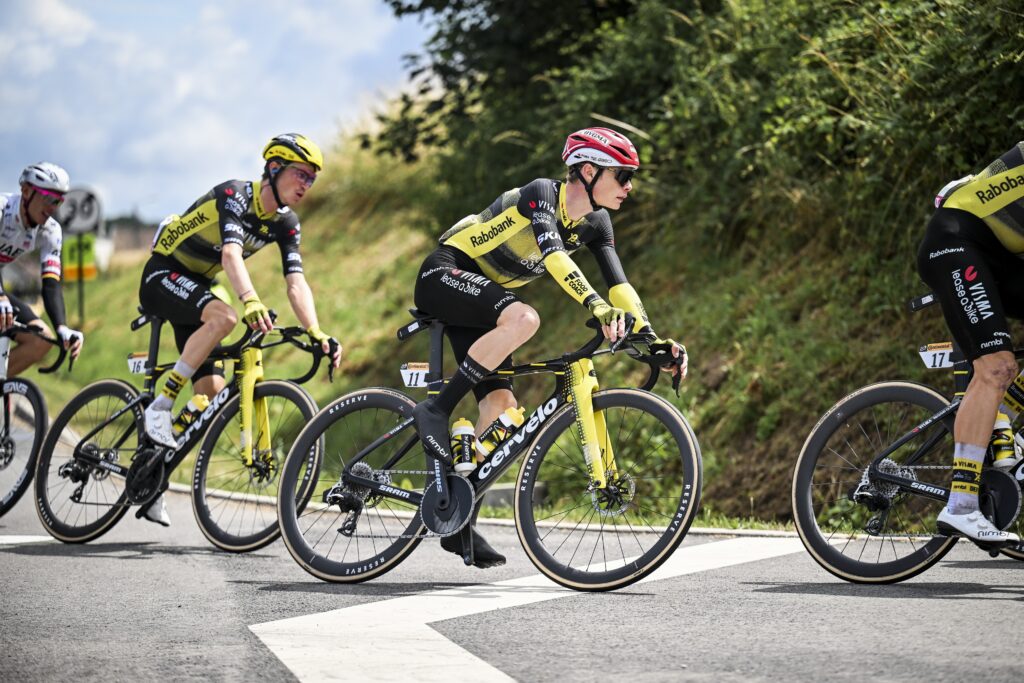
Cervelo provides the team with the new version of its S5 aero road bike, released during this year’s Tour de France although raced for months previously, and the lightweight R5. The updated R5 has yet to be officially unveiled.
Like Tadej Pogacar with his Colnago Y1Rs, two-time Tour de France winner Jonas Vingegaard stuck with the aero S5 throughout Stage 12, including on the Hautacam climb.
> Cervelo says new S5 is “at least 5 watts faster than the bikes of our competitors”
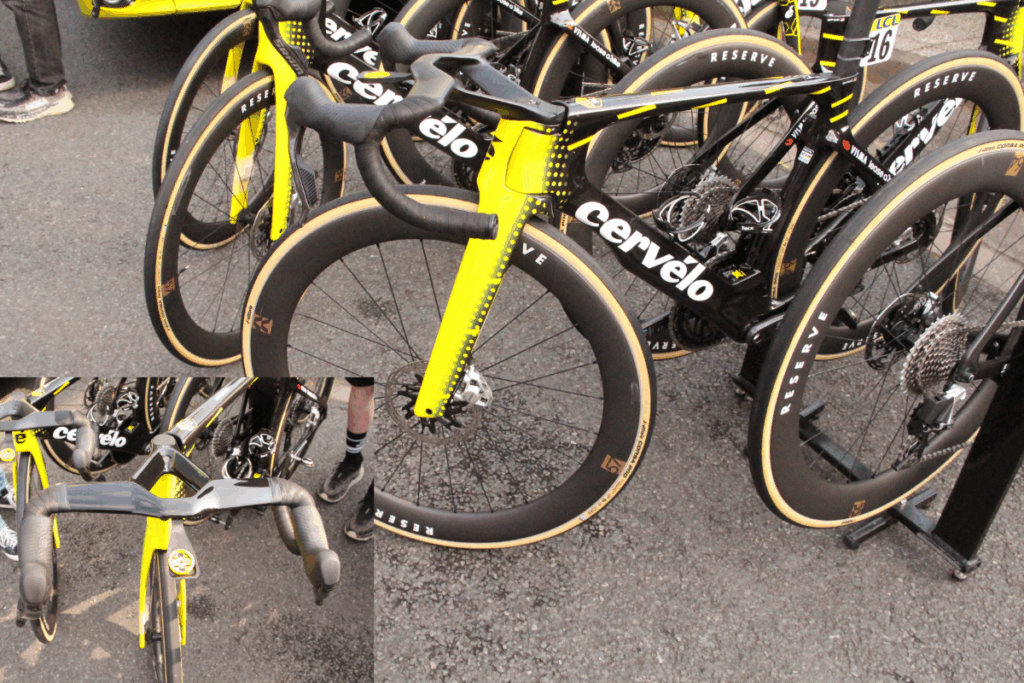
With its latest update, Cervelo says that it has improved the S5’s aero performance, reduced the overall weight by 124g, and maintained stiffness. The frame is now a claimed 1,006g while the fork is 465g.
Cervelo has yet to publish figures for its new R5, but the existing model has claimed frame and fork weights of 703g and 329g, respectively.
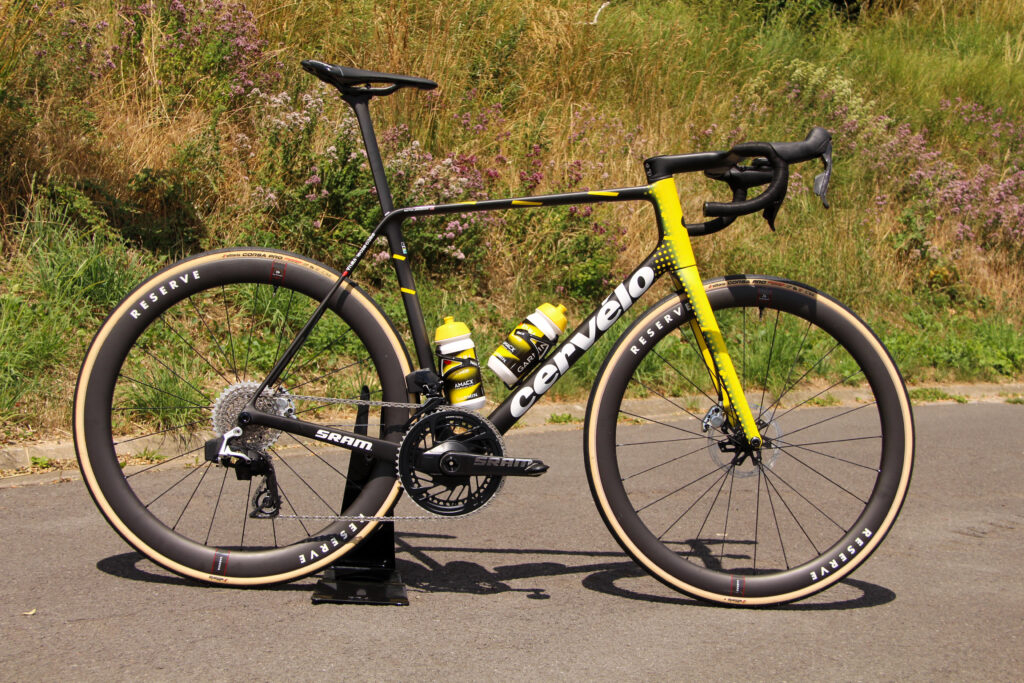
Although we’ve seen Matteo Jorgenson racing on the unreleased R5 in the 2025 Tour de France, we’ve yet to see Jonas Vingegaard on it. He’s so far stuck with the S5 throughout, even in the mountains.
Will that change when we get to the final two mountain stages, with 5,450m and 4,550m of climbing? We’ll just have to wait and see.
Canyon Aeroad CFR: aero or all-rounder?
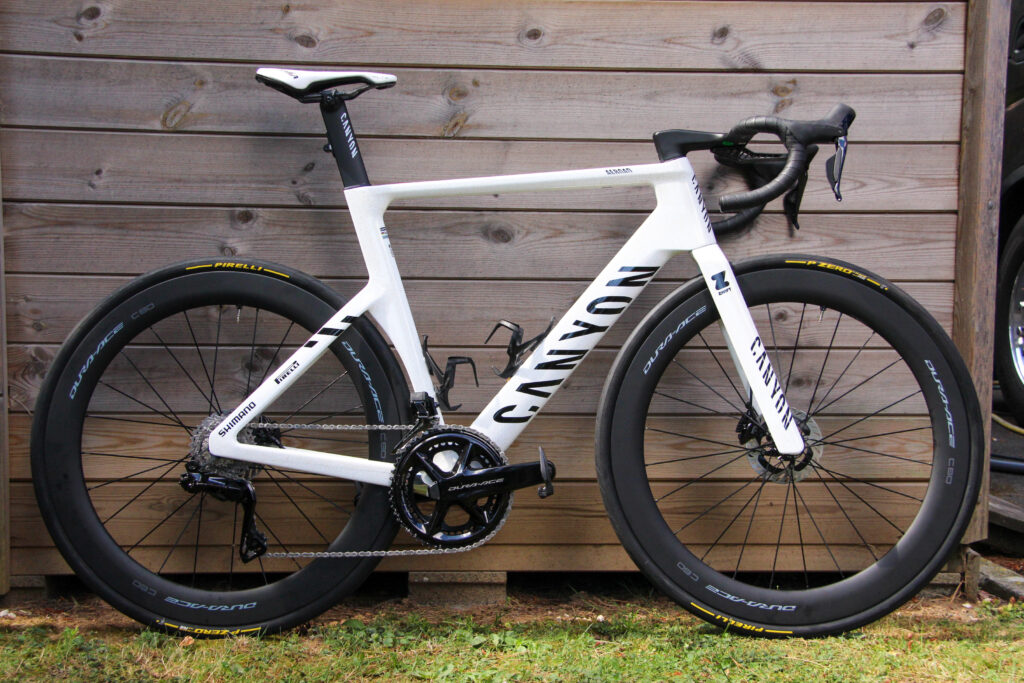
Similarly, Canyon provides Alpecin-Deceuninck and Movistar riders with the Aeroad CFR aero road bike and the Ultimate all-rounder road bike, but it’s the Aeroad that is the pros’ unusual weapon of choice. Even Movistar’s climber Enric Mas opts for the Aeroad in the mountains.
Canyon released the updated Aeroad CFR last year, calling it “the fastest bike in the WorldTour peloton”.

With subtle updates to the components and frame, the 4th-gen Aeroad has a deeper head tube, integrated bottom bracket area on non-drive side chainstay and a broader fork design that tapers to a narrower head tube.
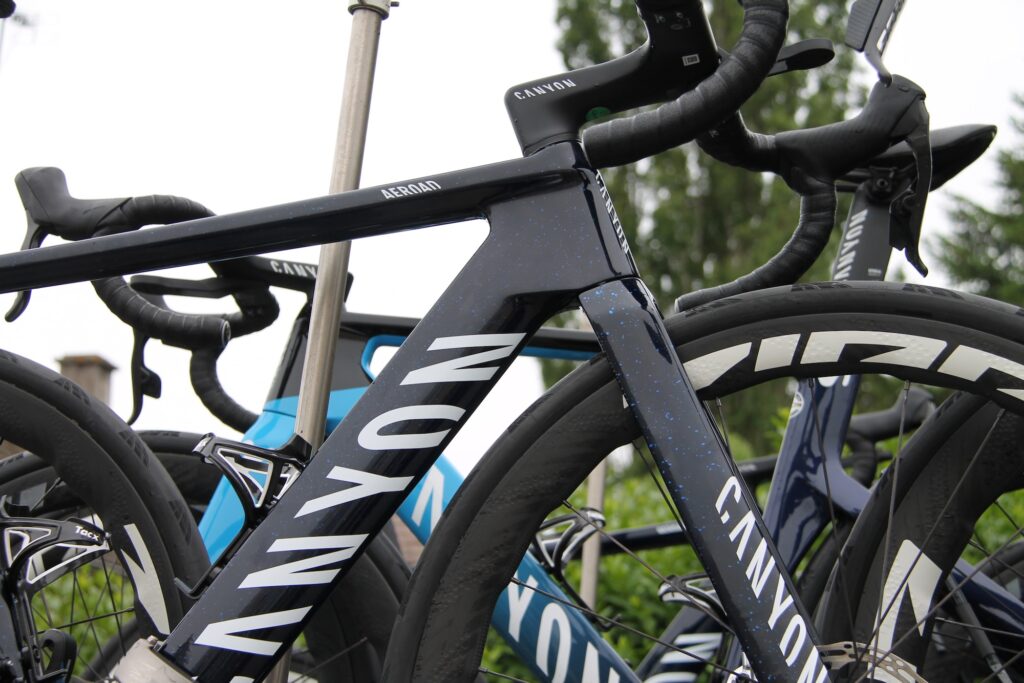
The Aeroad CFR Di2 has a claimed weight of just 7.07kg, yet the frameset is said to tip the scales at 960g, 45g more than the previous Aeroad.
That’s not exactly light by do-it-all race bike standards, with the Specialized SL8 frame weighing 685g, but Canyon has managed to keep the overall bike weight competitive with a new lighter cockpit and shallower wheels.
Van Rysel has a two-bike strategy
Over at the Decathlon AG2R La Mondiale team riders have the choice of the Van Rysel RCR-R, which is said to offer “the perfect balance of aerodynamics, weight and rigidity”, and the RCR-F, which has a greater focus on aerodynamics at the cost of a little weight.
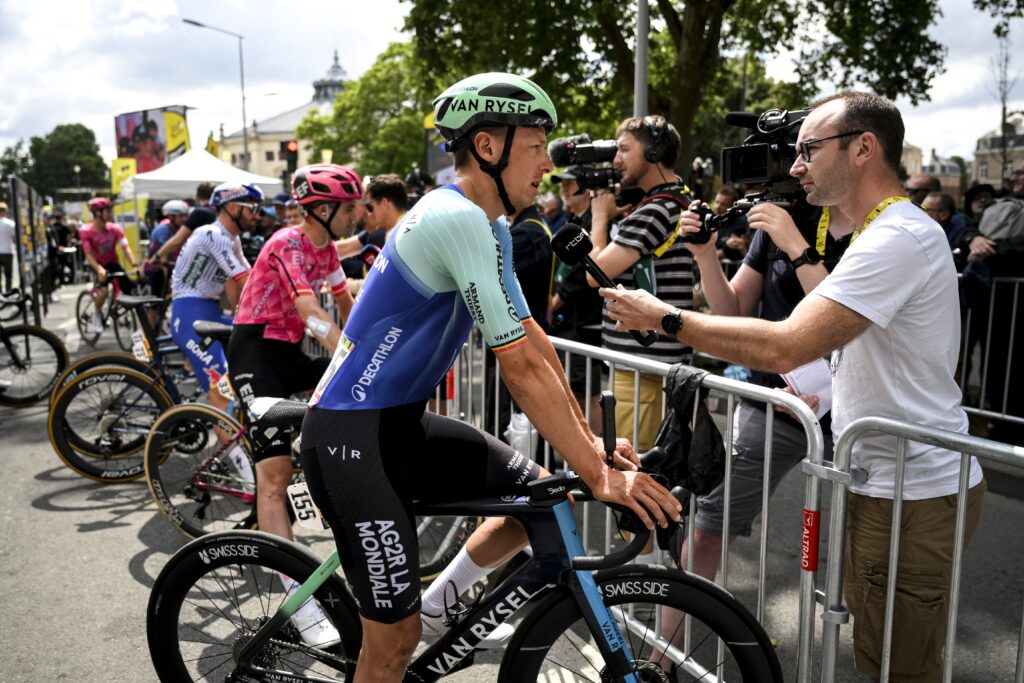
Although Decathlon-AG2R riders such as Sam Bennett have been riding the Van Rysel RCR-F since last July, it was only officially launched in March 2025.
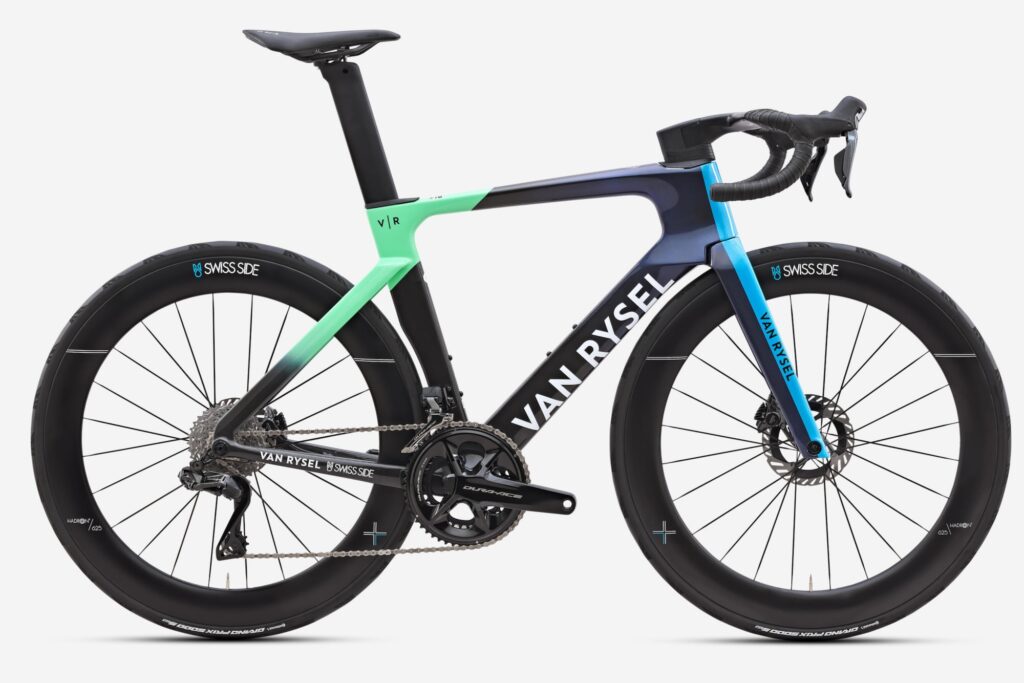
Van Rysel reckons the RCR-F offers an advantage over the RCR-R if the ride has less than 1,500m of elevation gain per 100km (62 miles), and at speeds greater than 35 km/h (21.7mph).
Factor Ostro Vam: faster than the Specialized Tarmac SL8?
All the attention at the 2025 Criterium du Dauphine was on Factor’s unreleased aero road bike that was raced to a stage victory by Israel-Premier Tech’s Jake Stewart.
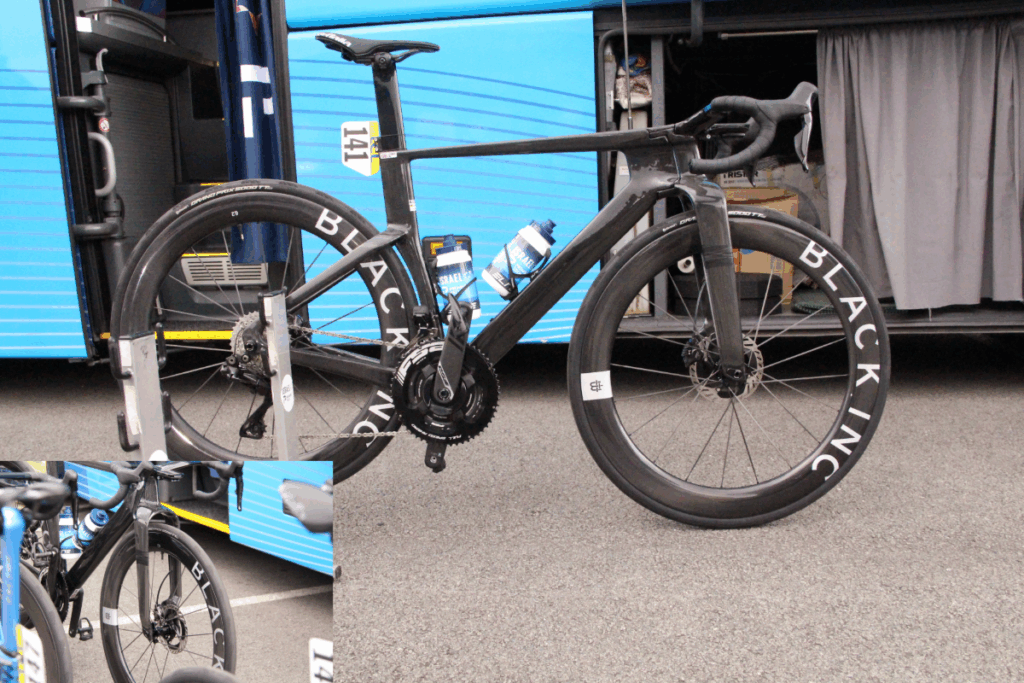
That bike is being ridden in the Tour de France, but the riders are mostly using the Ostro VAM, which the brand describes as “the benchmark aerodynamic, lightweight race bike.”
According to Factor, it boasts better aero efficiency than the Specialized Tarmac SL8.
Will Factor’s unreleased prototype take over more in time or will it be kept just for sprint stages? It’s impossible to say right now because the brand hasn’t released any details yet. We don’t even have a name, weight, or launch date.
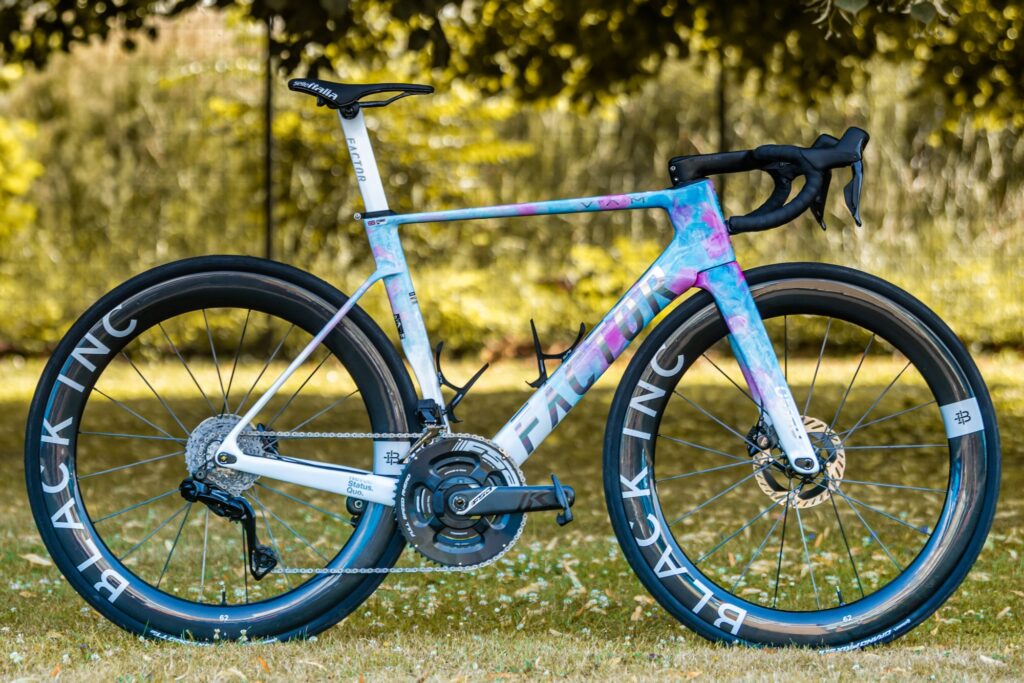
The previous version of the Ostro Vam was said to match the benchmark aero bike on the market at the time (the 2019 Cervelo S5) in terms of aerodynamics while being significantly lighter. So, why did it need redesigning?
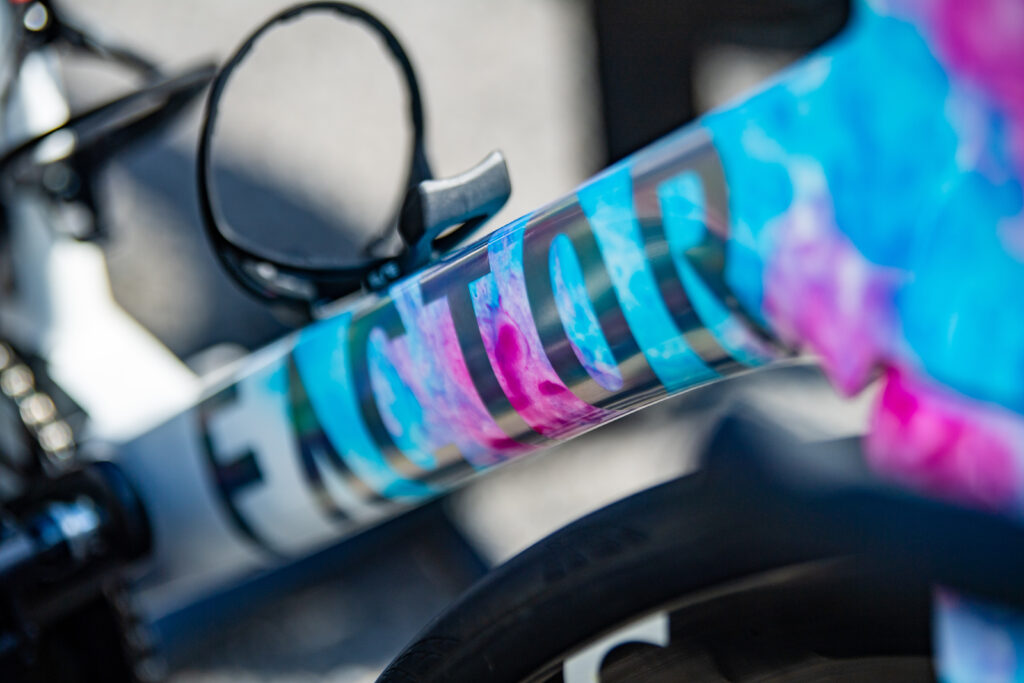
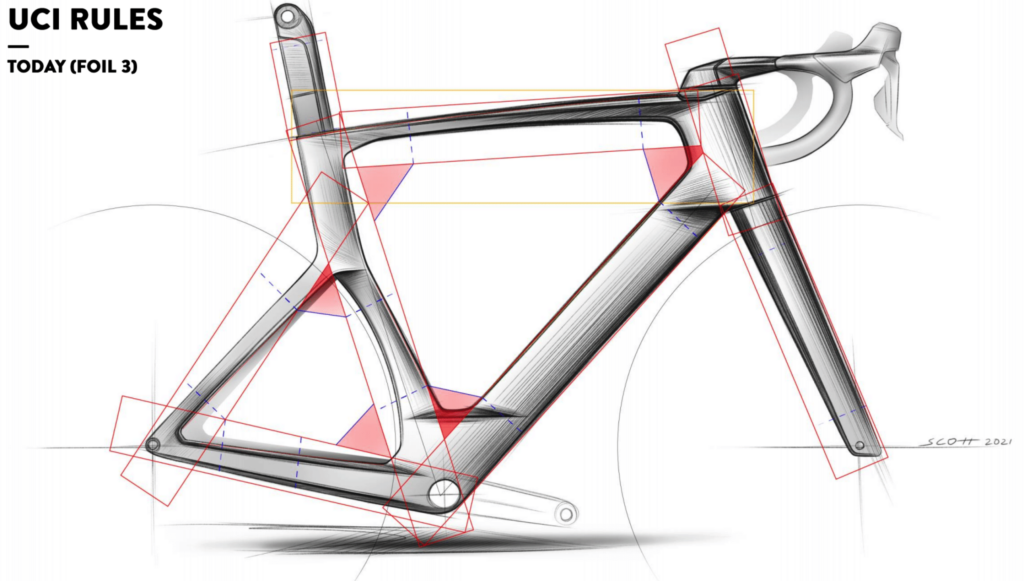
Factor says it wanted to take advantage of UCI rule changes – notably the removal of the 3:1 rule, which limited component depth to three times its width, and the ability to reduce main frame tube profiles to less than 25mm.
> Why the aero road bike is making a comeback
The new design is said to save 7 watts of power at 48km/h (30mph) over the first Ostro VAM, which was launched in 2020. Additionally, it’s 267.8g lighter when fitted with Black Inc wheels, though most of the weight savings comes from the wheels.
Trek Madone Gen 8… and the death of the Émonda
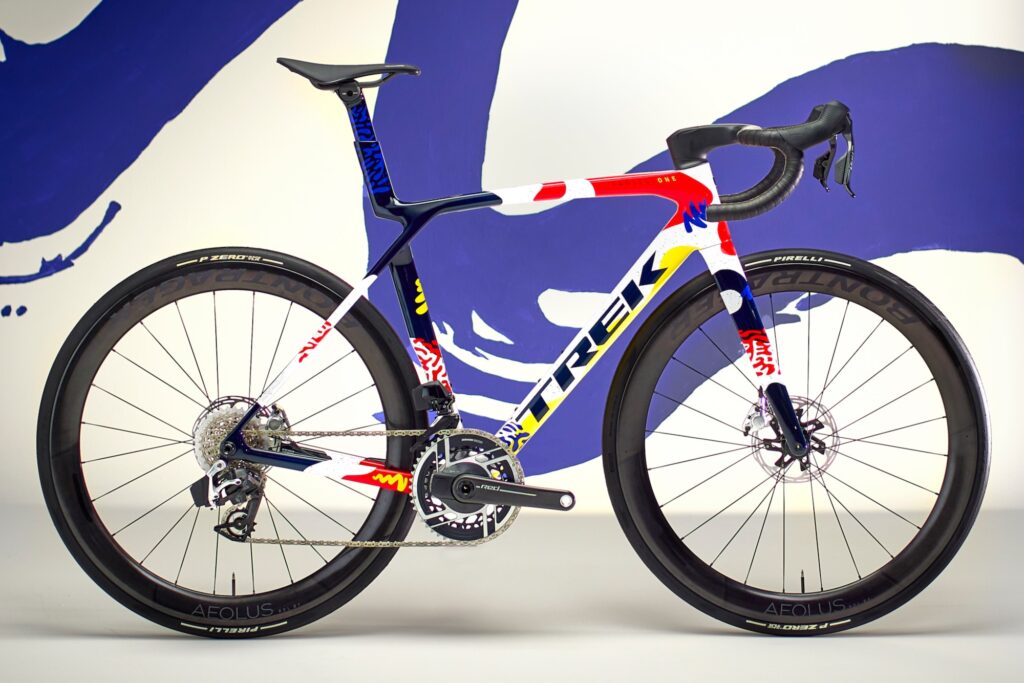
Some teams are certainly sticking with the single road bike approach, such as Lidl-Trek with the Trek Madone Gen 8 road bike we first spotted at the 2024 Critérium du Dauphiné.
Trek claims the latest Madone is as aerodynamically efficient as the previous version and as light as the Émonda SLR. By merging these two top-end road bikes, Trek has adopted a one-bike-to-do-it-all approach. So, how come the new Madone has killed off the Émonda, a very successful bike that presumably didn’t sell badly either?
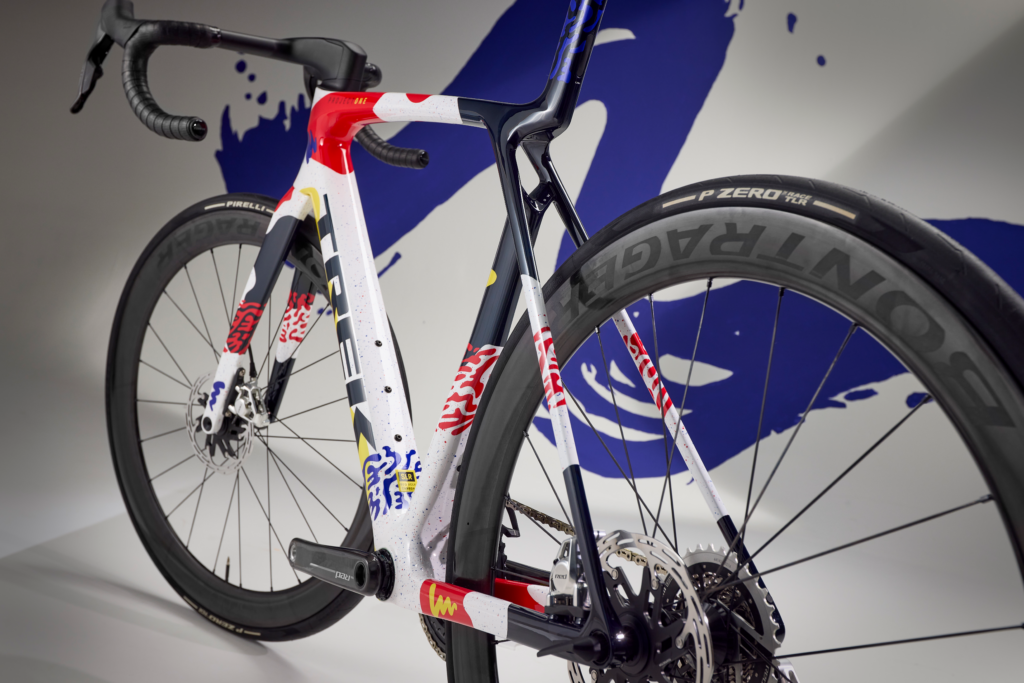
“With a new Gen 8 Madone, you really don’t need two race bikes anymore,” says Trek’s director of road bikes Jordan Roessingh. “It provides that snappiness and lightweight ride of the Émonda, but still provides that feeling of speed that you can only get on the Madone, and encapsulates that into one single bike platform.”
“If you’re an Émonda rider, you’re getting a much, much faster bike with the new Madone, but it’s the same weight. You get a bike that’s much, much lighter than the seventh-generation Madone, but with the same aerodynamics.”
Specialized Tarmac SL8: faster than the Venge, stiffer and lighter than the SL7
Of course, the Specialized Tarmac is a thoroughbred racing bike, and nearly four years after it became the brand’s ‘one bike to rule them all’ with the launch of the Tarmac SL7 and the discontinuation of the Venge, the revamped SL8 continues as Specialized’s do-it-all race bike.

Two teams in the Tour de France ride the SL8 – Red Bull-Bora-Hansgrohe and Soudal Quick-Step – regardless of whether the stage is flat, mountainous, or somewhere in between.
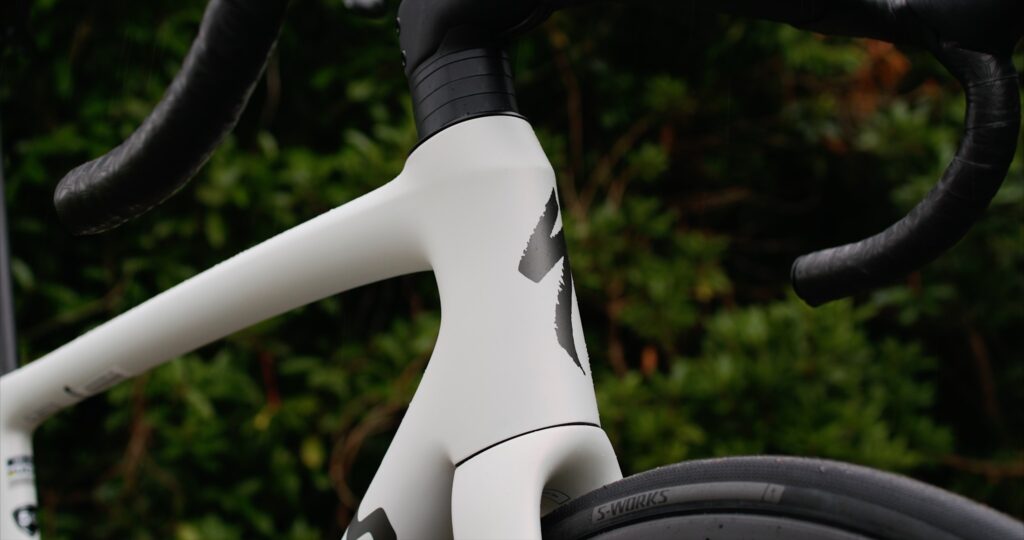
> Specialized Tarmac SL8 vs SL7
Specialized claims the Tarmac SL8 is 15% lighter and 6% more compliant than the SL7, has an improved stiffness-to-weight ratio to the tune of 33%, and is 16.6 seconds faster over 40km (25 miles).
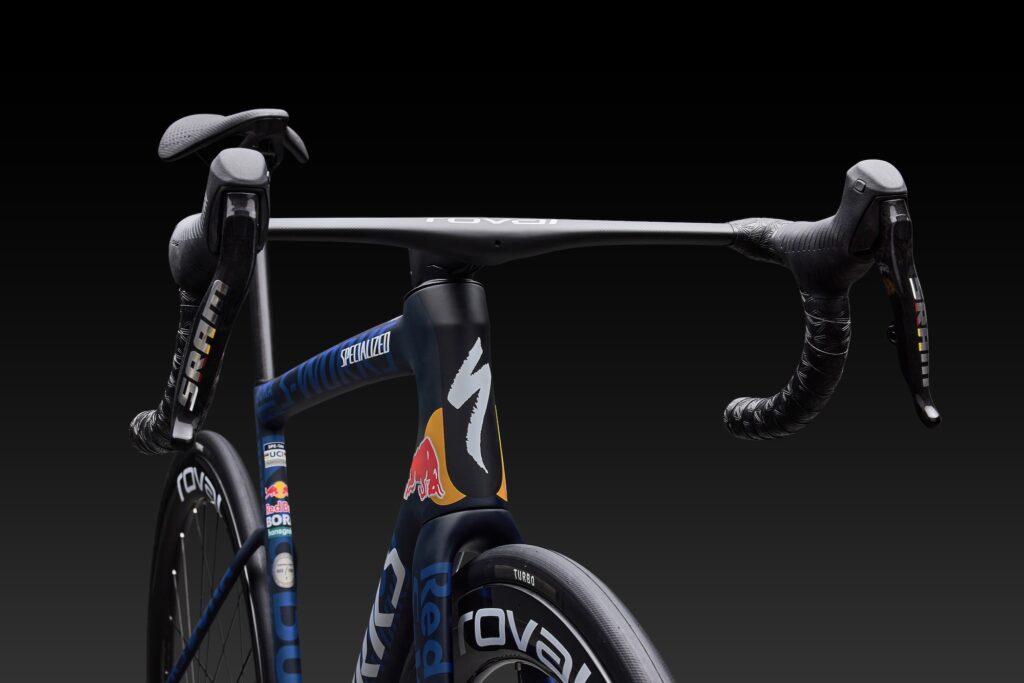
One bugbear that fans of aero might have had with the SL7 was that it didn’t test as fast as the discontinued Specialized Venge at numerous angles in the brand’s own ‘Win Tunnel’. However, according to Specialized, the SL8 is both faster than the 2019 Venge and also the lightest bike in the WorldTour peloton. Those are some pretty big claims.
Pinarello Dogma F: lighter and more aerodynamic, of course
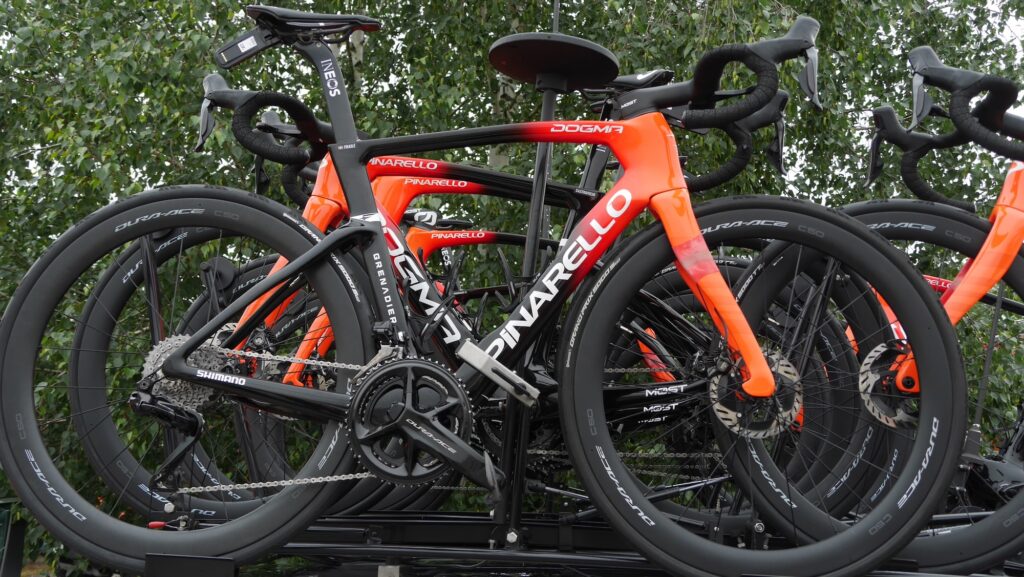
Pinarello has always been an advocate for a one-bike approach, and it has previously paid off. Under Team Sky and Ineos, Pinarello bikes have won everything from Grand Tour general classifications to one-day races and Classics. Of course, it helps to have a talented rider on board.
Pinarello launched the latest Dogma F just before the 2024 Tour de France with claims – naturally enough – that it was lighter (by 108g) and more aerodynamically efficient (by 0.2%) than its predecessor. Pretty much every top-end road bike launch focuses on lower weight and/or improved aerodynamics.
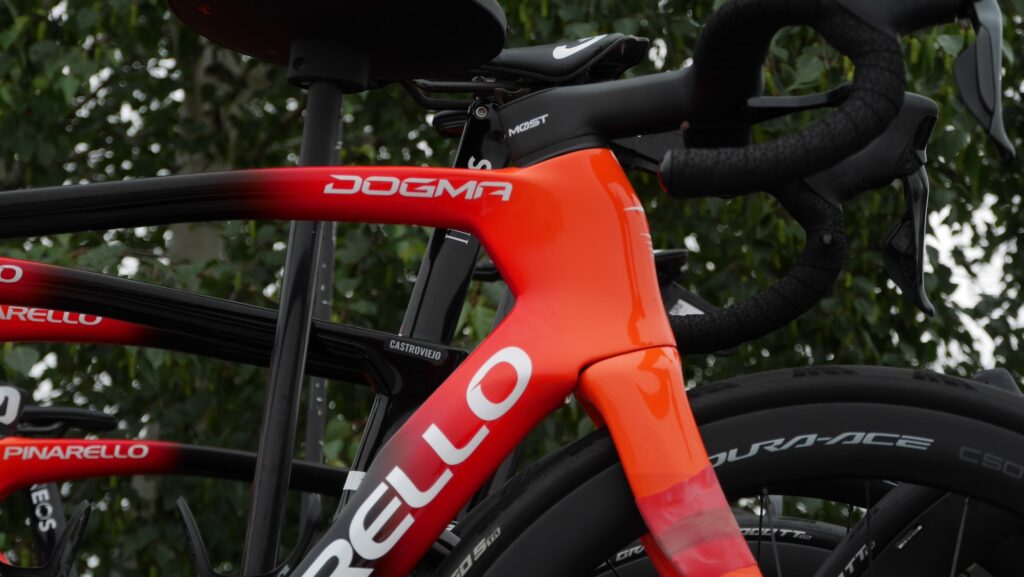
“Over the course of a Grand Tour, a 0.2% improvement in the coefficient of aerodynamic drag (CdA) equates to a 175g saving on the bike,” Pinarello says.

Some familiar features remain on the updated model. The fork and seatstays still wave slightly, the top tube kinks a little, and the seat tube is cut away slightly around the leading edge of the rear wheel. The tabs behind the fork dropouts, designed to reduce turbulence, are still present too. However, the bike now has a deeper head tube, a slimmer down tube, and a completely redesigned section of the frame around the bottom bracket.
Cannondale SuperSix Evo Lab71: the all-rounder for EF Education-EasyPost
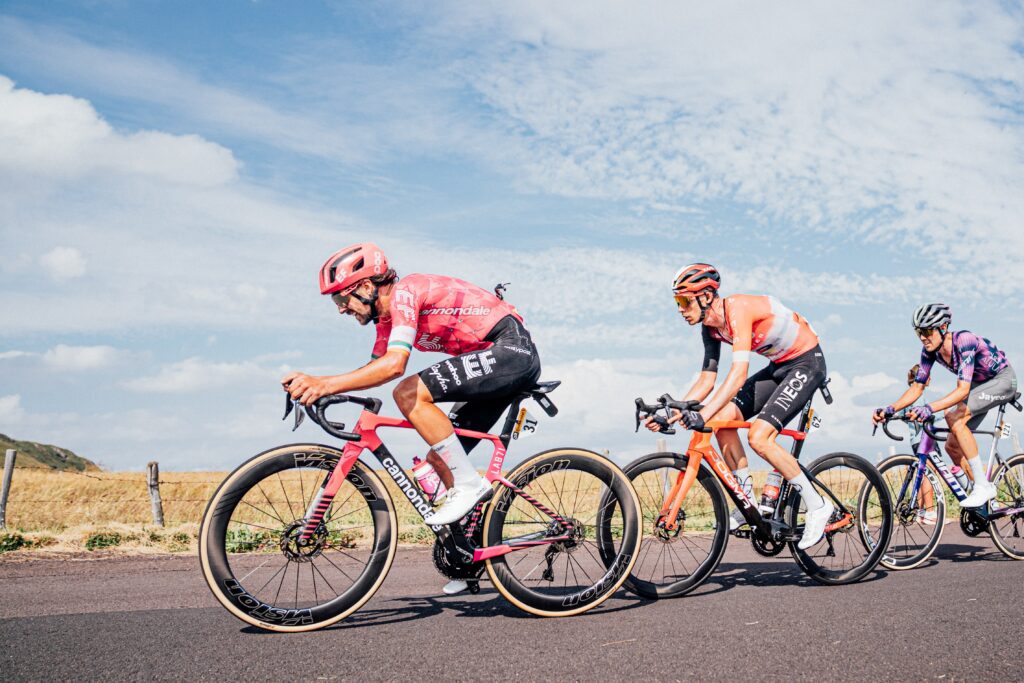
This is an odd one in that although Cannondale offers the SystemSix pure aero road bike, the SuperSix Evo Lab71 serves as EF Education-EasyPost’s one-bike-to-do-it-all.
The SuperSix Evo Lab71 integrates aero features from the SystemSix into the traditionally weight-focused SuperSix Evo, with aerodynamics claimed to be close to those of the SystemSix – and Ben Healy rode one into the race lead on Stage 10 of the 2025 Tour de France.
The frame features an aerodynamically optimised fork, designed without down tube integration for a cleaner aesthetic and a separate crown interface. The head tube houses Cannondale’s Delta Steerer tube, allowing for cable integration.
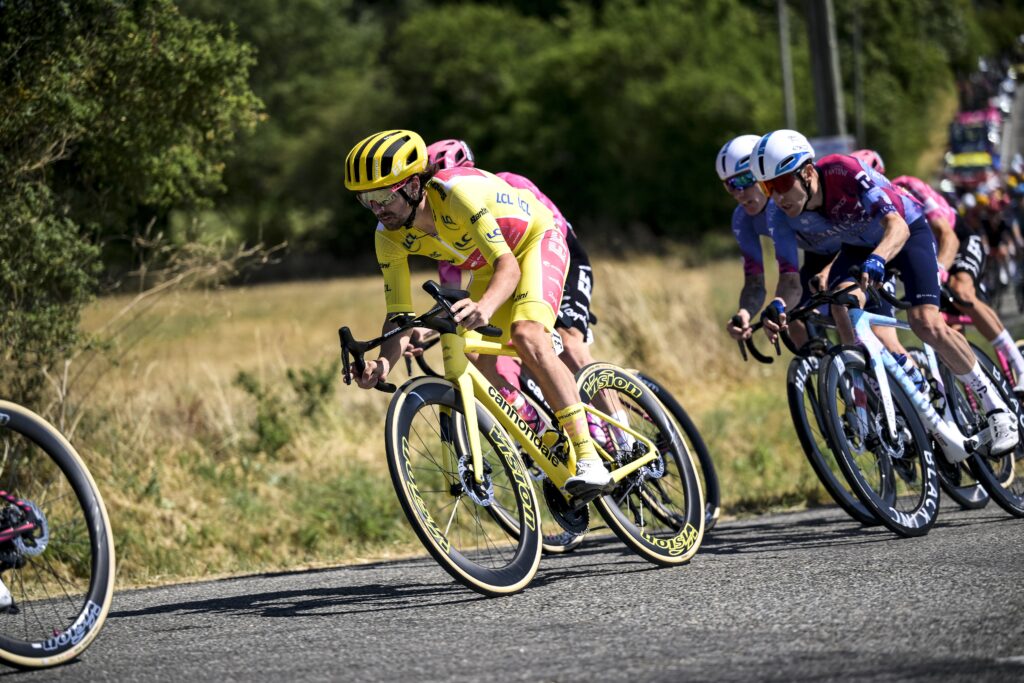
The bike uses a slim seatpost and a seat tube that tapers towards the bottom of the bike. This design is intended to ensure optimal aerodynamics and better compliance.
A fully built Cannondale SuperSix Evo Lab71 tips the scales at the UCI minimum weight limit of 6.8kg and the engineers managed to shed significant weight thanks to a new carbon-fibre layup and some carefully considered component choices. Called Series 0 and only available on the top-tier Lab71 versions, this special fibre and nano-resin composite sheds 40g grams over the Hi-mod version, at 770g for a painted 56cm frameset.
So, has anything changed with the latest crop of race bikes at the Tour de France?
What can we make of all this, then? Well, it’s certainly a mixed picture and you couldn’t say that all teams and bike brands are moving in the same direction. It’s more complicated than that.
Some teams take a two road bike approach, some use a single all-rounder, and some riders have the choice of two different road bikes but, in fact, have spent the whole Tour de France so far on their aero bike. Whether that remains the case in the final stages of the race remains to be seen.
Why do riders with the option of a lightweight bike go for an aero model whatever the terrain?
Well, as races get faster and riders set record times, the need for aerodynamic efficiency grows. These guys are taking the mountains at speeds where aerodynamic advantages are more important than a little extra weight.
Plus, higher modulus (stiffer) carbon fibres are now used, which means that less material can get the same level of stiffness. This means that it’s possible to get a bike with aero tube profiles and features down close to the UCI’s 6.8kg minimum weight limit for racing. Teams can’t go below that weight and there’s very little advantage to be gained by switching to a marginally lighter bike.
What happens next?
This depends a lot on the UCI’s minimum bike weight limit remaining at 6.8kg. If it does, why not stay on the most aero option open to you? Your bike might be a little heavier than 6.8kg, but not by much. Not enough to make switching to a lighter but less aero bike an advantage.
We’ll be especially interested to see if there are any changes to the bike choices in the last couple of mountainous stages of the 2025 Tour de France.
Do you prefer a ‘do it all’ bike or would you rather have a specific tool for a specific purpose? Let us know in the comments below.









23 thoughts on “Is ‘one bike to rule them all’ dead? Why the latest wave of dedicated aero bikes could be leaving superlight all-round race bikes behind”
Having only one bike is
Having only one bike is better for manufacturers; cuts down on costs, etc There’s far too many models of bikes, many are not really needed.
And I firmly believe the UCI need to implement a rule seen in motorsport; you nominate one bike model per team for the season, and that is all you use – no matter what race, whether on road, gravel, cobbles, or even TT, etc
Look at rallying; teams use the same car, and adapt for each surface; they won’t use a racing car for Tarmac, nor an off roader for gravel……
I guess the number of
I guess the number of amateurs willing and able to spend £20k+ on two top-of-the-range road bikes is low, too. n+1 fares better with bikes that are a little more different.
Velophaart_95 wrote:
If you consider that most of them are sold in multiple colour options across 6 or more sizes, then add the spec level tiers (groupset etc) it must be a logistical headache trying to get enough – but not too many – of each model in each size in each colour made available in the relevant markets.
While I understand that some people will want an outright aero bike and others will prefer a lighter model I do wonder if brands can justify the doubling of R&D, marketing/sponsorship and other costs to sell both types in parallel. Now that the new virtually-as-aero models can weigh less than the all-out aero bikes then it really does seem like a good opportunity to narrow the options down to one model.
And it will surely going to be less confusing for customers and means they aren’t weighing up each brand’s 2 models before comparing either with the competition and retailers won’t feel obliged to carry stocks of both models. In light of these developments it will be interesting to see if Giant continue with 3 models – TCR, Propel and Defy.
If I am ever in the position to buy a new race-oriented bike then something that ticks both the areo and lightweight boxes seems like a great idea. But with the state of the roads I’m more concerned about compliance and enjoying the ride than aiming for outright speed while being rattled out of the saddle and the front twitching the handlebars this way and that. Which means that in the real world I should probably look at something like a Fairlight Strael instead.
It’s not too bad. Most just
It’s not too bad. Most just make enough to get by and make people have to accept waiting or a different color. They know people are going to be shopping between brands anyway and some customers they get will come from people that didn’t want to wait for another company to stock something else.
Going from experience ordering inventory for shops, a lot of customers will also buy a cheaper bike, or stretch to the more expensive model solely due to the color options. I know I’ve done that myself too. Buying bikes without a single compenent I want to keep solely due to color availability.
RE Giant – I wouldn’t
RE Giant – I wouldn’t consider the Defy to be a race bike. I would say that only the TCR (light) and Propel (aero) are intended as race bikes, whilst the Defy is an endurance/training bike. In that sense Giant are in line with the several of the other brands listed in the article, who also offer a performance endurance option (Cervelo Caledonia 5, Cannondale Synapse Lab71, etc.)
I would love to see a TdF
I would love to see a TdF where they use one bike for the whole race. Grand tour TTs are dull imo, the kit they use has got ridiculous but a ‘sporting’ TT can be great, more accessible for most of us too. It would be simpler and more interesting from both a bike design and rider participation pov to have one bike that is proven to work in all situations.
Each to their own, I find TTs
Each to their own, I find TTs dull anyway (whilst acknowledging they are a very necessary part of stage racing) and the technical discussions of equipment, position etc add some much needed interest. Peyresourde was a case in point, it made it more interesting to see which riders chose which type of bike and who did better as a result.
Oh FFS!
Oh FFS!
You – the media – make up shit like ‘one bike to rule them all’ and ‘steel is real’ for column inches.
Please, stop making this shit up. Do tell us about the latest tech and trends but don’t frame everything into binary choices.
FOR SALE; one soapbox, like new, only used once.
I have to agree with you
I have to agree with you there.
But Steel is real man!
But steel IS real man!
So do you want to buy my
So do you want to buy my soapbox or not?
For my bikes, titanium is retanium.
Pinarello only have the dogma
Pinarello only have the dogma for years while others were selling the aero vs climbing approach. Then somewhere along the way specialized ditched the Venge and tries to sell the idea that a SLu and SL8 are more aero. They don’t have aero shapes at all, but benefit from optimized frontal area and specially the venge was created on another set of UCI rules. Trek followed suit, and while Cervélo and Colnago still try to play the aero vs climbing game, the professional team riders are not. Climbing bikes are dead in competition. At the speeds professionals climb an aero bike is more advantageous than 500g less.
The BMC team machine R01 is missing on the list, but I suppose it is because it is not on World tour teams. But for me that is the bike that really shook things a little with that fork, bottom bracket area and aero everywhere with a 7kg complete bike system. But then again they launched the new SLR01 as a climbing bike with just 200g difference.
Scott has the foil and the Addict too. I don’t know what’s the Q36.5 team riders (Pidcock et al) using.
For racing aero trumps lightweight. For us mere mortals? Ride what you want, but I’m more on the aero side of things.
For racing aero trumps weight
For racing aero trumps weight up to a certain gradient. That’s why you saw plenty of riders on lightweight bikes going up Ventoux yesterday.
Even for mere mortals aero
Even for mere mortals aero beats weight (just whack 200g of aero bars on pretty much any bike and see). Its a bit like the old motor racing adage (paraphrasing from memory)-
Horsepower wins bragging rights but torque wins races.
Weight wins bragging rights but aero wins races (and even just PR’s)
Except when gravity has a
Except when gravity has a bigger say – watched any of those high mountains GT stages recently? And I don’t mean a short Tour time trial!
Did you miss the bit in the
Did you miss the bit in the article where it’s says the aero bikes have been chosen almost universally?
Here’s a thought – maybe what
Here’s a thought – maybe what the Pro’s are riding has very little to do with what consumers should be riding unless that consumer is also a categorised racer or desperately wants a to splurge their cash on a vanity bike (which is absolutely their choice).
A bikes a bike, that’s all…
A bikes a bike, that’s all…
They got you to sell the Two
They got you to sell the Two Bikes and replace them with One Bike, now they fancy trying to get you to replace the One Bike with Two Bikes again. Better move fast though because there’ll be another One Bike to replace those soon enough
Pinarello only have the dogma
Pinarello only have the dogma for years while others were selling the aero vs climbing approach. Then somewhere along the way specialized ditched the Venge and tries to sell the idea that a SLu and SL8 are more aero. They don’t have aero shapes at all, but benefit from optimized frontal area and specially the venge was created on another set of UCI rules. Trek followed suit, and while Cervélo and Colnago still try to play the aero vs climbing game, the professional team riders are not. Climbing bikes are dead in competition. At the speeds professionals climb an aero bike is more advantageous than 500g less.
The BMC team machine R01 is missing on the list, but I suppose it is because it is not on World tour teams. But for me that is the bike that really shook things a little with that fork, bottom bracket area and aero everywhere with a 7kg complete bike system. But then again they launched the new SLR01 as a climbing bike with just 200g difference.
Scott has the foil and the Addict too. I don’t know what’s the Q36.5 team riders (Pidcock et al) using.
For racing aero trumps lightweight. For us mere mortals? Ride what you want, but I’m more on the aero side of things.
The real problem with aero
The real problem with aero bikes is that they are really uncomfortable. Try to imagine sitting on a Colnago V1Rs, with a seat that’s incredibly short… or on a Cervélo S5, which has such a particular shape that every pothole feels like it’s hitting you right in the soul 🙂 . The only bike that’s extremely comfortable to ride is still the SL8. It’s very expensive, but remains the best compromise in this regard.
So the SL8, expensive carbon
So the SL8, expensive carbon race bike that you own, is extremely comfortable, whereas these other expensive carbon race bikes, that you don’t own, they’re extremely uncomfortable?
Right, got it.
Wrong, I have an old Giant
Wrong, I have an old Giant TCR Advanced SL rim brake . I had the chance to try out a few different bikes I was planning to buy, and initially, the Cervélo S5 was my top choice. But I changed my mind.
How about you? What are you riding?