



In our 2013 cycling trends and predictions article, one of the recurring predictions is the one about disc brakes on road bikes. It's a controversial subject; since the UCI gave the go ahead for disc brakes on cyclocross bikes, many have been asking when discs are coming to road bikes. And the answer is very soon.
Disc brakes represent the biggest development in road bike technology since the advent of the indexed derailleur. No other development is such a radical overhaul of the status quo as disc brakes. And none seems to be unsettling people as much as disc brakes. We asked a handful of industry bigwigs for their views, you can skip straight to their response here. But first, here's why we think disc brakes on road bikes are the future.
It’s important to separate the emotional response from the pragmatic. The debate has to be whether disc brakes are a good thing for road bikes. There have been many technological developments in road cycling over the year. Some have stuck, others have slipped into the history books. One thing every development shares is initial scepticism, before gradual acceptance. Electronic groupsets offer a good example. They were hated by many when first launched, but they've gradually become a standard, and even the most bitter sceptic will today recognise their value.
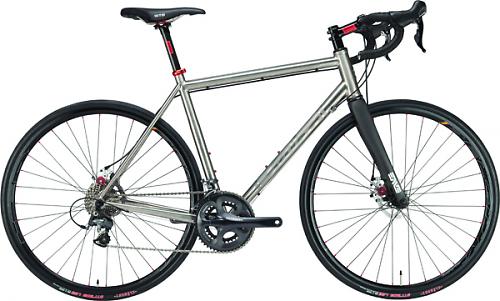
Salsa introduced the Colossal, a new disc-equipped road bike in Ti and steel, last year
So, will it be the same for disc-equipped road bikes? Yes, it is going to happen. What is interesting is that I don’t think this a top down development, like many that are first tested in the pro ranks and filtered down to us. I think this will be a bottom-up development. There’s a groundswell of support for their development from real people who aren’t paid to ride bikes. It’s here that they’ll win fans. But I do think, once all the initial obstacles have been overcome, that we’ll see a professional team on disc-equipped bikes in the next five to 10 years.
You only need to look at cyclocross for an example. Discs have been allowed at the highest level for a couple of years now, but the top cyclocross racers just aren’t adopting them. That’s not at all surprising really, in the rarefied air occupied by the top ‘cross racers they’ll stick with tried and tested until there’s a significant performance increase to be gained by any change. There’s a lot of money at stake, and they’re not going to risk it all. There's also not been a serious hydraulic disc offering yet. Yes there's mechanical, but they offer little extra power over calipers and are heavy. They're on their way though. SRAM have developed a hydraulic disc brake and have been testing it with some top US cyclocross racers. All it takes is one win at the highest level, and the tide will turn.
It’s when you step away from the professional scene that you realise where the interest in disc brakes really is. There’s now a huge choice of disc-equipped cyclocross bikes at affordable price points and we’re seeing them sold in decent numbers. It only takes a tyre change to transform a cyclocross bike into a road bike. Everyday cyclists are cottoning on to the benefits and the interest and demand is just growing. It seems only natural that once such riders have experienced the benefits that they'll want discs on their road race bikes too.
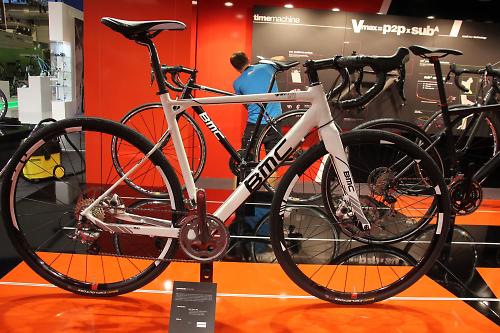
BMC's recently introduced GranFondo updated to take disc brakes, spotted at Eurobike late last year
The discs in cyclocross conversation is rather distracting from the really interesting debate though: that of discs on road bikes. Sure, the tough conditions of cyclocross are a good testing ground for the technology, but the same technology has been well proven in mountain biking for the past decade. The mountain bike industry has long since honed disc brakes to perfection, and in the 10 years since we first saw fat tyred bikes sporting disc brakes they’ve been widely adopted. In fact, it’s hard to buy a mountain bike without disc brakes these days.
They make a lot of sense off-road. But on the road? On the road there’s a lot of argument both in their favour and against them. Often people come out with the comment, “You don’t need that much power,” but that’s not the key point about disc brakes. As is the case with cars, motorcycles and mountain bikes, the power can be easily modulated at the lever. It’s about extra control. Better to have a surplus of power you can easily control, than not enough in the first place.
“But road calipers are more than powerful enough,” I hear you crying out at the back. Plenty of the time, yes they are. Ever ridden in the pouring rain and struggled to slow down on a steep descent approaching a junction? Hurtled down an Alpine descent at 100kph and longed for better brakes as you desperately scrub off speed for a tight switchback? Tried to slow down on wheels with a carbon fibre braking surface? I have, and I can tell you, I longed for disc brakes in each situation.
Which leaves us playing a waiting game. There’s clearly a huge interest in the industry, based on the number of disc-equipped road bikes we’ve been seeing this last year, and from cyclists who are ready to adopt this new technology. When SRAM and Shimano release their disc brakes – which, from the rumours we've heard, could be as soon as spring this year – will send the cycling world into a frenzy of excitement.
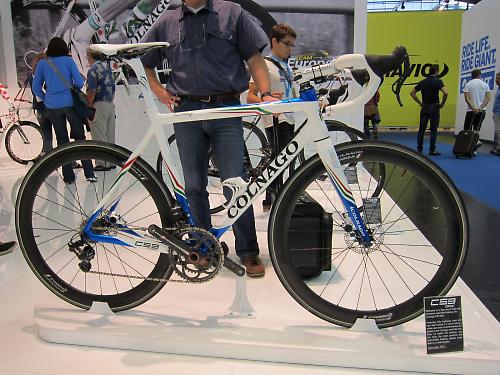
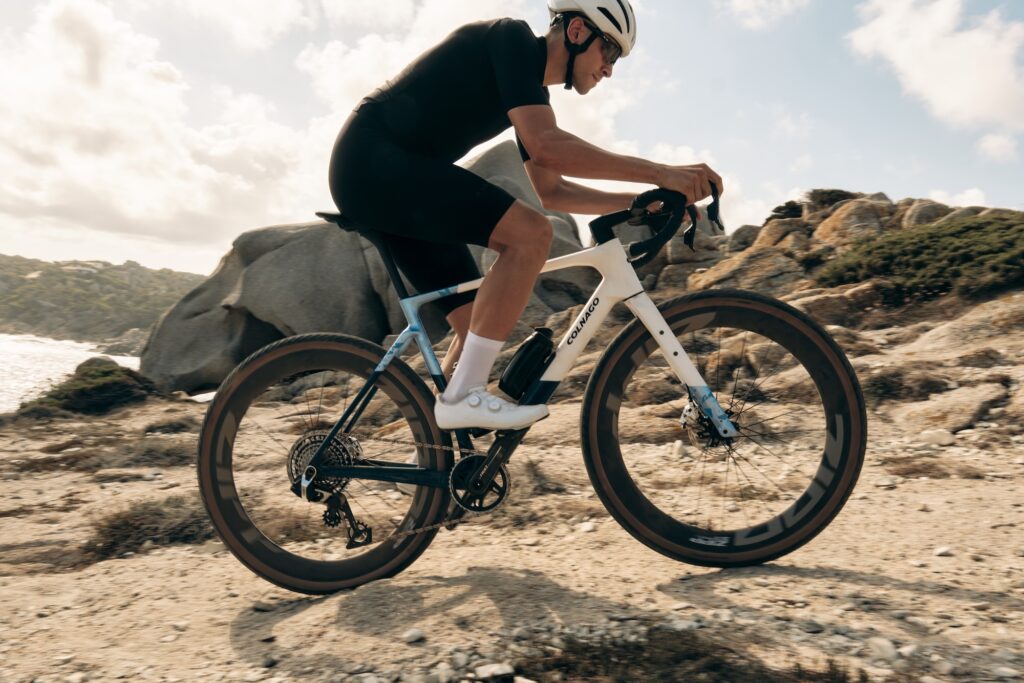
Colnago wowed the cycling world with the C59 Disc, the first serious offering from one of the Big Brands
The technology already exists, it just needs SRAM and Shimano to adapt it for road bikes. Smaller rotors, lighter calipers, reservoirs integrated into shifter hoods. Frames and forks will need new routing or internal hose guides, and disc mounts will need to be designed into forks and rear triangles. And wheels will need to be redesigned too. But these are small hurdles. As we saw at Eurobike last year, there’s clear indication that many bike brands are already redesigning existing bikes to accept disc brakes. Colnago, Parlee, Time, Specialized, Canyon, BMC and Culprit are just a handful of brands that now offer road bikes compatible with disc brakes.
It’s just a matter of time, but disc brakes are coming to road bikes. It’s going to be an interesting few years and, I like to think, exciting time as we see which way the industry and market shifts.
The industry speaks…
We asked a handful of industry insiders if they think disc brakes are the future, here are their responses:
Keith Bontrager
“Given the inherent braking limitations with light carbon rims, discs are necessary, certainly for pros. If you were to study the thermodynamics in detail you'd come to that conclusion very quickly.
“The obstacles are simple, but not trivial. Structural issues are understood and at least partially sorted with cyclocross bike development.
“I'm guessing, but I think Shimano and SRAM will decide when to implement the changes on the road. It'd be the wild, wild west technically otherwise. Electronic shifting frees up lots of space in the brake levers, so it should be simpler now.”
Paul Lew, Director of Technology and Innovation Reynolds Cycling
Disc brakes hold promise for both cyclists and manufacturers for many reasons. As a designer and manufacturer of carbon fiber wheels, disc brakes create new opportunities for performance improvement and safety. The expectations for disc brakes however can be excessively exuberant. I am not a fan of the idea that disc brakes will solve all of the problems; they may bring problems of their own. As an example, the aerodynamic penalty associated with a disc brake system may not be favored by triathletes, but road cyclists may find that a disc brake system is an ideal solution. The additional mass and form factor of a traditional disc brake system may look appropriate for a cross or mountain bike, but is the look appropriate for a road bike? I am a fan of disc brakes because they represent advancement, a reason to try something a different way. The execution and the integration will play a large part in determining the long-term success.
As far as regulations governing competition permitting disc brake systems, namely UCI regulations: I am one of a handful of industry representative who regularly interface with UCI in a formal setting. I have been told directly that the acceptance of disc brake systems in UCI competition is a minimum of three years away. There are a number of concerns from the perspective of safety and fairness. For example, can cyclists who compete with rim brakes safely compete in a peloton with cyclists using disc brakes? Is there a danger that a bicycle outfitted with disc brakes can stop in a different way than a bicycle outfitted with rim brakes creating a higher-than-normal risk for a crash in close riding conditions? How does this scenario change with weather conditions? These types of questions are at the forefront of concern for the rule-makers. Both cyclists and industry will be required to weigh-in on all benefits and risks before UCI will make any decision regarding disc brakes in competition. How will UCI regulations steer the marketplace?
I don’t think disc brakes are THE solution to specific shortcomings. For example, there is so much discussion about the risks of heat build-up on carbon fiber rims as a result of friction from rim brakes. Disc brakes are the solution, right? Disc brakes are A solution, but not THE solution. We can build carbon structures that can withstand heat from re-entry into the atmosphere. It’s not really a problem building a higher temperature carbon rim structure; the problem is building a higher temperature carbon rim structure for an affordable price. Is this additional price increase to build a higher temperature rim solution more than the additional cost of a disc brake system? These types of questions are now being considered.
In the final analysis, I don’t think disc brakes are necessary, but for the sake of continuing to look for better ways, and for the sake of advancing technology they have a place on the road. The details of where will play out in the coming years.
Dom Mason, Kinesis Bikes designer
“Yes. I think that we will look back with disbelief at the days when we used to squash rubber against alloy/carbon in an attempt to scrub off speed…sometimes our rims even had grit and grime smeared over them to add into the retardation mix!
“Discs make total sense for road bikes and as soon as they get light enough and all the mechanisms are housed in the hoods, then I'm sure we will see them being accepted. Rims can lose some weight because they won't need to be squeezed and have material built in for wear, so the overall weight of the system can be reduced.
“Braking in the wet with carbon rims is a little hit and miss, disc brakes solve this and of course there are the issues of rim wear, melting sidewalls, and brake rub with untrue wheels that discs negate. Disc brakes for 'winter' bikes also make huge sense.
“I realise there are issues surrounding heat build up in small/lightweight rotors and that the force induced on a small diameter road disc with a high friction coefficient riding surface is huge, but these problems will be dealt with and then, we will see disc brakes in the Pro-Tour.”
Ash Clark, Charge Bikes
“There is a genuine argument for having disc brakes on road bikes, they are more powerful than road caliper brakes and they work in all weathers, however, they are not without their cons. They are currently heavier and less aerodynamic than current road brakes and performance orientated frames are going to take a backward step in order to allow discs.
“Ultimately, disc brakes are and aren't the future. The better all round performance of disc brakes will be of genuine value to a certain sector of the road bike market… namely sportive and cyclocross / commuter bikes.
“I don't think we are going to see disc brakes in the peloton for a good few years, if at all.”
Dan Jones, Colnago UK distributor
“Yes, disc brakes offer a proven advantage in every other application they are used in, it was only a matter of time before they found their way on a road bike. “
Ben Coates, Trek Product Manager
“Whether or not disc brakes are the future of road bikes is going to be up to the riders. Obviously, riders don’t ‘need’ disc brakes. We’ve done without them so far. I think we need to consider what a braking system does for a rider in order to understand if it’s something riders will demand.
“Let’s consider the needs of a performance road rider. I believe a brake has three jobs, first and foremost is to be safe and usable in all conditions. Second is to allow the rider to manage their speed. Third is to help the rider go as fast as possible.
“Today, the disc brake options for road do not do any of these things as well as they need to in order to make them viable for this segment. There are a ton of things that need to be considered and addressed before disc brakes can be suitable for performance road use. Weight, aerodynamics, heat dissipation, modulation, and traction on the road are a few that come to mind. If you look at another industry for guidance in disc brake use you can quickly see what challenges might lie ahead.
“Motorcycles have a similar differences in speed, weight, and aerodynamics between road and dirt use. In road motorcycles, you see multiple discs, huge rotors and large calipers to deal with the increased speed, compared what you see on dirt bikes. For bicycles, the expectation of making a compact package with super small rotors using available technology today, isn't likely and definitely isn't ready or an advantage at this point.
“Today, if you want disc brakes on a road bike you are either using mechanical disc brakes with a reduction in performance (in most circumstances but not all) and an increase in weight. If you want hydraulic disc brakes, you are looking at a converter box or some barely existing prototype and taking a big risk that the system you use can dissipate enough heat to be safe.
“In general, I think there needs to be enough demand from riders to warrant the investment into product development. I don’t think we’re there yet. “
Mark Reilly, Enigma Bikes
“I think disc brakes for road are inevitable at some point in the future. As soon as Shimano, SRAM and Campagnolo start making road disc brakes that’s when we’ll see things change.”
So…
The opinions of just this small selection of industry insiders offers an interesting glimpse into the minds of those in charge of designing, speccing and marketing road bikes. While most are in universal agreement with my prediction that disc brakes are coming to road bikes, Trek's Ben Coates signals a more cautionary approach, telling us: "There are a ton of things that need to be considered and addressed before disc brakes can be suitable for performance road use."
Meanwhile, Keith Bontrager answers such caution by saying: "The obstacles are simple, but not trivial. Structural issues are understood and at least partially sorted with cyclocross bike development." Dom Mason supports this, saying: "Discs make total sense for road bikes and as soon as they get light enough and all the mechanisms are housed in the hoods, then I'm sure we will see them being accepted."
All things considered, I feel Ben hits the nail on the end with his final comment: "I think there needs to be enough demand from riders to warrant the investment into product development." So, do you want disc brakes on road bikes?










68 thoughts on “The disc brake revolution is coming + industry insider comment”
My reservations are the same
My reservations are the same as with electronic shifting – that self maintenance becomes much harder. I’d ride a single speed if I could get it up the hills!
30 years ago most people could tinker about with their own cars. If something goes wrong now with a car it needs a specialist to plug a laptop into it. Personally, I’d rather bikes didn’t go that way – part of their appeal for me is their simplicity.
‘So, do you want disc brakes
‘So, do you want disc brakes on road bikes?’
No. HTH.
The comparison with road vs
The comparison with road vs dirt motorbikes is interesting. Heat build up on the very small surface of a rotor is going to be an interesting issue – having a tiny rotor doesn’t seem to help, but a bigger rotor causes more issues with aerodynamics and weight.
Personally, I’m interested in the development – not so much for the braking itself as the ability to make lighter, more aero rims with no rim wear. No more wearing out the rims on a high end wheelset? Yes please!
How can people say discs wont
How can people say discs wont work for road bikes, nonsense. I’ve been riding mounting bikes with discs for over ten yrs. not once had over heating, or modulation problems, or any maintenance issues at all, despite riding in tough muddy, wet conditions in uk. I have also used discs for 3 hrs descents in rocky mountains and no issues either, so cant say descents not long enough to challenge mtb discs. Shimano solved all these issues yrs ago and I still ride same rims as they don’t wear out (most spokes, hub and bearings changes over yrs of course). Only issue is integrating into shifters all other issues raised nonsense.
Heat dissipation is a real
Heat dissipation is a real issue. Road bikes typically go a lot faster than MTBs, kinetic energy goes up as the square of velocity, road discs are typically smaller than MTB ones — you’ve got a lot more energy to get rid of and fewer places for it to go.
I’m sure they’ll sort it out, though 🙂
Maintaining hydraulic disks
Maintaining hydraulic disks really is very straightforward, my MTBs have Shimano SLX brakes and other than a periodic clean and pad swap they are fit and forget. No cables to fiddle with, no need to adjust them as the pads wear and faultless stoping. Every time. Even when completely caked in mud on what passes for a trail in this weather.
Even shortening hoses on a new build is pretty straightforward if you follow the instructions.
And if someone would like to send me that Parlee in XL for testing that would be great.
I worry about the twist
I worry about the twist torque on weight-pared fork legs. Not a problem with a twin-disc setup though. 😀
A few years ago I got back
A few years ago I got back into road after years of Mtbing and using a disk brake Mtb for the commute. I decided to use my new road bike to commute and got caught in a heavy downpour. I remember scaring myself witless when there was no response from the rimbrakes for about 25m. Disc brakes are surely better. I’m sure they will overcome many of the heat issues. Also, if a wheel goes out of true; no real problem with a disc brake.
I don’t see a significant
I don’t see a significant risk that frame manufacturers couldn’t already be putting some mounts into new frame design and tooling.
I have a hybrid with discs
I have a hybrid with discs and a road bike with rim brakes. Lent the road bike to my son for 6 months and it came back with gouged rims because he failed to change the brake blocks when they wore out. The discs on the hybrid are more reliable, less prone to wear (although the pads are less visible so in fact more likely to cause disc damage if they do wear out), and a better engineering solution overall, IMHO.
“… in the rarefied air
“… in the rarefied air occupied by the top ‘cross racers they’ll stick with tried and tested”
I would have thought the reason that top racers aren’t using discs is because they don’t buy their own kit, they have to use what the sponsor provides.
Quote:Heat dissipation is a
Well, first, you don’t need to brake as much on a road bike as you do on a MTB.
Typicaly if you take a descent from a col, you’ll actually need very little braking. Go fast, brake hard before switchback and let go. Repeat until the end. Between switchback, you’ll build speed and therefore will cool your brakes.
MTBing needs a lot more of speed control and brake dragging. Again on an Alpine descent you remove brake pressure a lot less than what you’ll do during the same descent on a road bike. Plus as general rule for the same set up, the weight (ableit less important than speed) MTB + gear is about 10-12 kg more important on MTB (got figure that a typcal road bike is not 8 kg, typical mtb 14kg and you carry a big pack with 3L of water, pads, gear and mutlitool and spares).
Brakes in MTB as said several time are now very very mature. Basically I will buy a kona rove frame this spring and put a horn bar with some very very old hope XC4 brakes (close system so no problem in putting them sideways or upside down) and I am confident that I will have no problem whatsoever (and we’re talking 10 years old brakes)so the issue of ‘maintenance’ is just not valid.
juan wrote:Well, first, you
This is true, although a less confident rider might brake less hard for longer. When I say “it’s an issue” I mean exactly that — an issue, not a deal breaker 😉 Like I say, I’m sure it’ll come. I’m in the “bottom up” camp, for what it’s worth — I think the advantages (at the current state of play) are more compelling for utility/leisure bikes than race bikes (even ignoring issues like UCI regs and the implications for neutral tech support and fast wheel changes).
What you are forgetting (and
What you are forgetting (and pretty much everyone who thinks road disks are a no brainer seems to be forgetting) is the HUGE difference in speed. E=1/2MV2, so a road bike that is going say 4x the speed will need 16x the heat disippation. I doubt anyone has ever been 100 kmh on an MTB but this is common downhill speed on a RACING bike. I use the word racing, because I think disks are fine for commuting or puttering around but if you want to go as fast as possible with a bike that is light and aerodynamic as possible (which most people who race do) then current disk technology cannot compete with rim brakes. It’s going to take a game changing technology to enable hydraulic disk brakes that are lighter (or at least as light as) rim brakes but never boil their brake fluid. Nothing I have seen here suggests anyone is about to do this.
I do love this disk brake
I do love this disk brake debate, and good to see it will be a bottom up revolution!
have been running them on my cross bike since 2006, they are practically manitnance free! Recently got some tub rims built on hope hubs, no worries about melting the glue on those bad boys!
Avid carbons on my Mtb are even better, same age only as much as a pad change. Oh and didn’t a certain mr jebb just win the toughest cross race in the uk on them;)
I can’t wait personally. I
I can’t wait personally. I don’t think smaller disks are appropriate, but everything else has already been solved/proved in MTB and cyclocross. I also reckon that Parlee is the best disk-equipped road bike we’ve seen yet.
I tinker with the disks on my MTB less than the calipers on my road bike, and even on the very rare occasions I have to bleed the hydraulic fluid it’s relatively easily done.
I put disc brakes on the road
I put disc brakes on the road in 2007 – The Factor 001.
I undertook extensive tesing with input and technical support from AP Racing and can happily report that, yes they do work.
And as I predicted in initial technical meetings in 2004, disc braked road bikes are indeed the way forward.
Neil Batt
Genesis croix de fer has been
Genesis croix de fer has been my weapon of choice for the last year for commuting and some light touring.
Discs are the way forward it’s just a matter of time….
caliper brake rub, 10
caliper brake rub, 10 seconds, fixed by me, tool free. Worst case, new cables, 10 minutes and done, no special tools, just an allen key and a cable cutter.
disk brake rub, who knows. My pistons will suddenly decide not to retract, and then I have constant brake rub till I get a big screwdriver and an old pair of pads out. Even then there is no guarantee how long that fix will work for. It sometimes doesn’t work first time anyway. They will often squeal incessantly for no apparent reason, then equally mystically stop just as I’m preparing to ditch the bike in the hedge and walk home.
For me maintenance and reliability are big issues. I spend longer trying to maintain the mountain bike brakes than I spend maintaining the whole road bike, despite using the MTB for less than 10% of the mileage of my road bike. I dread ever having to bleed them or replace the fluid. Pads do not last well, and any accidental contamination cannot simply be cleaned off, it’s a new pair of pads or your disk brakes provide precisely no stopping power.
To put it bluntly I find them hateful things and they are never going near my road bike until:
Interesting how maintenance
Interesting how maintenance isn’t mentioned by any of the experts in the article yet it seems to be the number one concern in the comments (and mine too).
I’ve been running them for 2
I’ve been running them for 2 years on a Kinesis Tripster.
I went to the Alps in September and the discs were fine. The longest descent was around 6000ft with speeds up to 45mph and I had no fade or heat problems whatsoever.
This was with 160mm rotors and BB-7’s (normal pads).
Theres a lot more air flow, and none of the constant brake-dragging (for up to 30 minutes) that tends to happen on MTB’s.
Found maintenance quite easy.
Heat isn’t as much of a
Heat isn’t as much of a problem with mechanical discs. The only thing that would really happen is glazing of the pads, which reduces overall general performance, but not significantly.
Heat is an issue with hydrualic brakes due to boiling of brake fluid behind the piston. Which could happen fairly quickly if you’re dragging your brakes constantly, down a mountain pass at 70kph or more.
That being said, I’m a huge fan and can’t wait for a dedicated hydraulic system like the Hywire or whatever Sram has up their sleeve. I currently run the Hope V-twin, and although the lever feel is a little vague (cable routing issues to the master) the power and modulation is excellent and have had no issues. Brake late and brake hard is key.
Re. top level cyclocross –
Re. top level cyclocross – although the Belgians don’t use them more disc-equipped bikes are surfacing at UK national and regional races and the riders really rate them. MTBers have been running discs for years but you don’t hear the owners yearning to go back to cantis or V-brakes.
Adoption on road bikes is likely to be a ground-up move because the benefits for commuters and amateur racers who buy their own race wheels are much more obvious than for sponsored / supported riders as things are, though Shimano & SRAM will went to sell shedloads once they are ready. Trek’s man looks at it purely from one angle (and the “less aero” argument is weak) but a large proportion of the cycle market is not driven solely by the fashions of pro racing.
The people who most dislike the idea are either hung up on some aesthetic norm or worry about the complexity while ignoring the complexities they have already accepted. Discs seem an obvious move and commenters above have shown that maintenance is not the hurdle one might imagine.
YES! Simon E
YES! Simon E
Disc’s are on the way!!
Disc’s are on the way!! maintainence issues are no more than calipers. cars and motorcycles have been using them reliably for many years…how many times have your car brakes required anything other than a rare pad change…exactly,probably once every 4-5years. the same will apply to hydraulic cycle brakes.
Mtb discs and pads do require regular cleaning purely because they are clogged with mud,but if you do motocross,rallying etc,it’s pretty standard practice from a safety point. I can’t wait for the fully developed future calipers and discs on road bikes,long term it will be a good investment,expensive rims dont last more than a few years with caliper brakes! As the dragons say…I’m in!!!
Once road disc brakes are
Once road disc brakes are made to look less clunky, more aerodynamic, lighter & have better modulation than at present, then we might begin to see a bottom-up movement towards them in amateur road racing perhaps, but there’s some major technical challenges still to match traditional calipers imo. Also, in a nervous peloton, brakes that don’t stop you too quickly or lock your wheels up too easily in a panic moment when someone has crashed a few wheels ahead of you in the bunch is actually a good thing in terms of being able to control a road bike on wet greasy tarmac! Not having everyone locking wheels and trying to steer too, keeps more people upright!
I’ve used a fair number of
I’ve used a fair number of road and MTB brakes in the last 20-odd years of riding and Avid BB7s are the lowest-maintenance brake I’ve ever used, by a considerable margin. Personally I don’t find hydraulics easy to fettle to the same degree that I can in a couple of minutes with a BB7.
I’m at the point now where I’m never buying a new bike with rim brakes again.
Disc brakes hold promise for
Disc brakes hold promise for both cyclists and manufacturers for many reasons. As a designer and manufacturer of carbon fiber wheels, disc brakes create new opportunities for performance improvement and safety. The expectations for disc brakes however can be excessively exuberant. I am not a fan of the idea that disc brakes will solve all of the problems; they may bring problems of their own. As an example, the aerodynamic penalty associated with a disc brake system may not be favored by triathletes, but road cyclists may find that a disc brake system is an ideal solution. The additional mass and form factor of a traditional disc brake system may look appropriate for a cross or mountain bike, but is the look appropriate for a road bike? I am a fan of disc brakes because they represent advancement, a reason to try something a different way. The execution and the integration will play a large part in determining the long-term success.
As far as regulations governing competition permitting disc brake systems, namely UCI regulations: I am one of a handful of industry representative who regularly interface with UCI in a formal setting. I have been told directly that the acceptance of disc brake systems in UCI competition is a minimum of three years away. There are a number of concerns from the perspective of safety and fairness. For example, can cyclists who compete with rim brakes safely compete in a peloton with cyclists using disc brakes? Is there a danger that a bicycle outfitted with disc brakes can stop in a different way than a bicycle outfitted with rim brakes creating a higher-than-normal risk for a crash in close riding conditions? How does this scenario change with weather conditions? These types of questions are at the forefront of concern for the rule-makers. Both cyclists and industry will be required to weigh-in on all benefits and risks before UCI will make any decision regarding disc brakes in competition. How will UCI regulations steer the marketplace?
I don’t think disc brakes are THE solution to specific shortcomings. For example, there is so much discussion about the risks of heat build-up on carbon fiber rims as a result of friction from rim brakes. Disc brakes are the solution, right? Disc brakes are A solution, but not THE solution. We can build carbon structures that can withstand heat from re-entry into the atmosphere. It’s not really a problem building a higher temperature carbon rim structure; the problem is building a higher temperature carbon rim structure for an affordable price. Is this additional price increase to build a higher temperature rim solution more than the additional cost of a disc brake system? These types of questions are now being considered.
In the final analysis, I don’t think disc brakes are necessary, but for the sake of continuing to look for better ways, and for the sake of advancing technology they have a place on the road. The details of where will play out in the coming years.
Paul Lew, Director of Technology and Innovation
Reynolds Cycling, LLC
Disc brakes are, however, the
Disc brakes are, however, the only solution to having manky grey brake residue sprayed all over your wheels and frame and fork and transmission and brakes on 90% of your rides. That’s one of the biggest wins for discs in my book: they’re pretty much zero-muck.
We’ve added Paul Lew’s
We’ve added Paul Lew’s comments to the main article – to save wear and tear on your scroll bar and because they are so interesting and well informed that it seems crazy to leave them out.
Oh please, yes, can we have
Oh please, yes, can we have hydraulic disk brakes now please.
As someone who rides and commutes on some very muddy country lanes, which eats brake blocks and rims in record time, I’m desperate for the change. I was an early adopter on the MTB as the consistent performance, low maintenance and lack of rim wear made it a no-brainer. I’m in the same position on the road.
I’ve a CAAD10 that I love and have kept an eye on what Cannondale have been doing with the CX lineup, with their heritage I’m sure they’ll have a frame sooner rather than later – I’ll put my order in now!
I think it’s going to happen
I think it’s going to happen sooner rather than later at the top end of the market. The only thing stopping disc brakes being introduced is weight and cost. But the top end bikes are coming down to 5Kg now and up to £11K. So the extra weight and cost of disc brakes on a top end bike is not an issue
What a lot of people don’t
What a lot of people don’t see is the extra benefit if integration. That’s the Next Big Thing in road biking as aerodynamics becomes the driving force (rather than weight reduction as previously).
Electronic shifting and full hydraulic braking allows everything to be routed internally. Hoses and wires can do 180 degree bends without any problems (unlike cables which need straight line routing. You’re looking at a cable-free bike. Internal hydraulic hoses which pop out at the bottom of the fork leg and the back of the frame. No clunky brake calipers on the frame/forks, nice clean lines, everything tucked away. It would even be possible to make a nice little removable carbon shroud to cover the disc calipers if you want cleaner aesthetics.
Maintenance simply isn’t the issue – the technology has been tried and tested in the far harsher conditions of MTB and CX for the last 10 years.
YES! crazy-legs.
YES! crazy-legs.
Why do some people want a
Why do some people want a “perfect” solution from day-one ?, come on guys this NEVER happens, its called R&D, you have to build and design a product and for some early adopters to use it, from this the design will get lighter, better, cheaper and more usable, this is how ALL product design works.
Disc brakes require no more maintenance than rim brakes, they can be harder to set-up initially but once set-up they take even less maintenance than rim in my view, never need to change the cable inners/outers, they self adjust etc., the guy who talks about his issues about maintenance is all down to incorrect installation.
Hardly anybody talks about the safety aspect, disc brakes are safer, that is a fact, they stop you quicker, performance doesn’t change when its wet and they are more controllable (I’m talking hydraulic here not cable operated by the way).
In terms of weight, this will come down, but any designer will tell you that rim weight is more important than the weight of a disc as it has more rotational mass, wheel builders will start to build rims which weight less and more importantly will perform better than the current rims, so at worst performance wont be affected, at best it could even help !
Nobody is saying you have to
Nobody is saying you have to buy them right? If you dont like them, dont buy them, simple.
Just think how much longer
Just think how much longer your rims will last, and how good they will look in months/years to come.
My mountain bike wheels are 8 years old. Still true, and still going strong.
Buying an expensive pair of carbon wheels will now be more affordable as they will last much longer.
Roll on Disk brakes on road bikes….
I think it’s going to happen.
I think it’s going to happen. I reckon that road bikes with smaller disc rotors than MTB’s as the bike ‘sans disk’ weights less. The calipers will also be less powerful than on MTB’s for the same reason. This would also save weight.
I think that aerodynamics rather than weight will be an issue. It is relatively easy to build a bike below the UCI weight limit if you have got the cash. It then would not be a problem to get the bike back up to weight using heavier disc brakes.
I suspect only time will tell an to begin with it will be a consumer led revolution rather than Mamils trying to emulated the pro’s. (anyone remember how Cinelli Spinaci bars disappeared overnight on Joe Public’s bikes once the UCI banned them for Pro use).
That’s by totally uneducated half baked hunch of the day anyway !
I get the feeling that the
I get the feeling that the disc brake dissenters (generally) have little experience with discs on the road.
My views:
[b]Maintenance[/b] on hydraulic systems is more onerous than cable, but still well within the capabilities of a home mechanic. But crucially that maintenance is required much less often and hydraulic systems are much more reliable.
Also worth adding that MTB (and cross) put disc brakes in far more difficult operating conditions than the road – if disc systems are reliable for MTB and cross, I can’t see why there should be problems for the road.
[b]Heat dissipation[/b] for MTBs is a great deal more onerous than for road bikes (the motorcycle analogies simply do not apply – just look at relative power outputs of dirt and superbikes for a start!). MTB tech in heat management is thoroughly applicable and should allow smaller rotors on road machines – but my expectation is that 160(f)/140(r) would be the norm (as 180(f)/160(r) is an MTB “norm”).
[u]Aero[/u] is certainly an issue for road racing machines – not sure how we will get around that one, but I’m sure there will be a way.
Perhaps I have missed it in my quick skim, but surprised that brake drag hasn’t been mentioned. A small amount of drag can be found with disc set-ups and can be difficult to avoid – this is certainly one area that will need resolving in a watt obsessed road world.
All that said, rain and cols aside, I see the advantages of discs to be marginal at best on road race machines. But for road bikes that we ride everyday or train on, rim brakes are simply a crazy anachronism.
“A small amount of drag can
“A small amount of drag can be found with disc set-ups and can be difficult to avoid – this is certainly one area that will need resolving in a watt obsessed road world.”
Zero drag on a BB7 🙂
Can’t see how it isn’t easily avoidable on a hydraulic system either – just needs a tiny leaf spring between the pads and an appropriate resting position for the pistons… (?)
Practical disc brakes for
Practical disc brakes for road bikes have been around for a fairly long time now. I’ve been running them on my work/touring road bike since 2003, and I’m not exactly an early adopter when it comes to new cycling technology. The take up has been limited only because the options in terms of brakes and frames have been relatively limited until recently.
I decided to move to discs because rim braking really punishes wheel rims if you commute through the winter. Discs perform consistently and you don’t get that heavy duty brake pad crud all over your frame. Discs work fine on a road bike; I’ve never encountered the mythical problems of “too much power” or overheating/brake fade (despite descending alpine passes with full camping kit).
I’ve used Avid BB7s, but I’m looking forward to hydraulic options for improved braking and reduced maintenance once these are more available and affordable.
For road racing and TT bikes, I think the weight and aerodynamic disadvantages of discs and beefed up frame and forks mean that rim brakes are still ahead, but I assume that will change as road specific technology develops.
I think discs are already the best solution for utility/commuting/touring road bikes, and agree that they will become a practical option for other road applications at some point in the future.
For those worried about
For those worried about maintenance issues with disc brakes … I’m sure there will still be plenty of options available with standard rim brakes, particularly at the lower end of the market. Cable-operated discs are also a good option for low maintenance (BB7’s are fantastic). I love my disc brakes…
Any disc equipped bike in the
Any disc equipped bike in the UK will have a default cooling system anyway. It’s called ‘the weather’
Here is a great podcast on
Here is a great podcast on the very subject of road discs by the way, interesting stuff:
http://velocastcc.squarespace.com/tech5
I too was really looking forward to the prospect of discs on my road bike, especially in wet weather — rim brakes just seem crazy in those circumstances — when they work so well for MTB.
However, reading, researching and thinking some more leads me to have some reservations.
There are some really big forces involved in slowing down a road bike — in many cases considerably larger than in the MTB world — especially when you take into account sticky tyres, grippy road surfaces and long fast descents.
Those forces together with very light and trimmed down frames, wheels and components is, well, trouble. Torque frame failures and boiling fluid are a real worry.
Oh, and here is an article mentioned in the podcast from a Bike Rumour journo who dabbled with a disc setup on the road:
http://www.bikerumor.com/2012/02/14/road-bike-disc-brakes-are-coming-but-will-they-work/
Personally, i’d love to have the all-weather abilities and modulation finesse/feel of a disc on the road — but catastrophic failures, not so much. Adding the extra weight to cope — and generally poorer aero performance — and it becomes a lot less attractive.
A long way to go yet I think.
Jim
i figure that disc brakes are
i figure that disc brakes are going to become something of a vogue at the very least in the peloton – think about q-rings and hydraulic callipers or electronic shifting for instance – and will either become widely adopted at the pro level which will lead to trickle-down as an option OR they won’t take and will be less widespread. they will however continue to be an option for cross, commuting etc. at the very least, there will be a few different disc-equipped bikes available. i don’t think that calliper brakes, mechanical shifting or any of the other slightly more old-fashioned tech will ever be completely eliminated though.
I’m at a loss as to why cable
I’m at a loss as to why cable disc brakes should be less powerful than hydraulics. The force applying the pads to the discs is still that of the riders grip on the lever.
Cables stretch under extreme
Cables stretch under extreme tension hence a small and noticeable loss of force plus they have to move a lever of some sort at the caliper to operate the pads causing more mechanical loss of force. Hydraulic fluid does not compress and operates a piston to push the pads together hence no loss of force.
As an example, on motorbikes, cable drum brakes were never as good as hydraulic drum brakes for the reason I have given. No one ever bothered with cable-pull discs on motorbikes as cables had already been determined as inferior to hydraulic fluid during the drum brake era.
If I switch to disc brakes,
If I switch to disc brakes, how the hell will I know when my wheels go out of true? 😀
To robdaykin
I had the same
To robdaykin
I had the same experience as you with my first set. Hours spent in the garage fettling, bleeding and replacing parts in the hope of curing sticky pistons. They were expensive and looked the business but didn’t live up to expectations. People told me how great this brand was and that the availability of spare parts made them simple to look after. In the end I got rid of them and replaced them with some fairly cheap Avid Juicy ones which have never caused a moment’s bother. They are still going years later. I’m sure there must just be some rogue ones out there. The moral of the story is don’t persevere. Ditch them and get some new ones. Use all that fettling time riding instead. I don’t need spare parts on most the bits of my bike as they work. The same should be true on the brakes.
Thank God for Paul Lew – at
Thank God for Paul Lew – at least some informed comment here.
I think the development is an interesting one. I’ve have that pant destroying sensation of having no braking capability with my caliper brakes, but this has been about my tyre skidding, rather than any issues with the brakes not working. I am therefore not sure that having a disc brake would have helped in those situations.
It’s true that a good cyclist (road, cyclo or mountain) does not require to use his brakes much. But ultimately most cyclists (by which I really mean bike owners) are not great bike handlers. For them, going down a descent is a full on white knuckle ride. And given the way I see all sorts of bikes with suspension, it would not be long before this became the norm on all manner of bikes.
Road bike descents are probably a lot longer due to the straight ‘track’ that we ride, speed is probably more quickly acquired too given that road bikes are more stream lined, giving rise to more braking power required, equalling hot/hotter wheels. Heat dissappation is likely to be a real issue given that the brake maybe applied for longer (by some). I’ve been down some Pyrenean descents, and in fact the person who used my loan bike had used up the brake block on a brand new bike in one week – something that I only realised mid-way through my first ride. If I was pro, or anyone else for that matter I’d wait till conclusive testing had proved their worth.
Can only imagine that the weight of them, if you are rarely using them, does not help alot. Braking is much more of a factor in mountain biking anyway, and not road biking, so unless it gives you added performance through a mountain descent.
But it sounds like a great adaptation for expensive carbon rims. But do you want your top-end bike carrying extra adaptation screw holes for it and want the hassle of changing brakes in and out for different rims…..perhaps if you are a pro.
It sounds like I’ve convinced myself out of it…..but I may well change my mind on some experiential evidence.
At the end of the day when
At the end of the day when bike manufacturers decide to go with discs as standard the choice will be out of everyone’s hands.
For me personally i’m all for advancement in technology and if i have any problems with maintenance there is always the LBS…
This subject always seems to
This subject always seems to generate theoretical discussion of the potential limitations in performance of disc brakes on road bikes. I can’t comment on the theory, so I’ll leave that to the technical experts. All I can offer is 10 years experience of using mechanical road discs for commuting 5 days a week in all weathers, and several months of cycle camping, including fast, fully loaded descents of long passes in the Dolomites and Alps (Galibier, Stelvio, etc). The brakes have peformed reliably and consistently in all conditions – no fade, no skidding.
I cannot comment on road specific hydraulic systems, but properly spec’d hydraulic brakes with an appropriate frame should be just as effective. If you drag your brakes all the way down a hill I guess your braking performance could be compromised, but that also applies to rim braking, and would be an unusual way to brake on a descent (tandem drag brakes excepted).
Most of peoples actual
Most of peoples actual experience of using the disc brakes do seem to be very positive.
The bikerumour journo was using exceptionally lightweight minimalist rotors (ashima ai2) which actually contain warnings on the packaging about possible heat build up.
Tried to stop my roadie in
Tried to stop my roadie in the rain at an intersection the other day and it just shot out past the stop sign.Bring the disc brakes on much safer I also thing they will reduce a lot of shimy you get when wheels are not properly balanced.
Nobody seems to have
Nobody seems to have mentioned the most serious problem with disc brakes as currently implemented – that of front wheel ejection due to braking torque.
Wheel ejection does happen – I’ve seen it right in front of me. Fortunately for the rider concerned it wasn’t at much above jogging pace, and within walking distance of Briancon bike shop (for new forks) rather than half way down the Galibier.
If things progress as it seems likely they will, I foresee a rash of fairly serious crashes. The ignorant WILL do things to provoke the problem, such as file off lawyer lips or use lightweight QR skewers.
See this 2006 link for details of the problem
http://www.ne.jp/asahi/julesandjames/home/disk_and_quick_release/index.html
You’ll notice that since then most mountain bike forks have acquired through axles or forward facing dropouts. Only Cotic seem to have taken the simple step of mounting the caliper on the front of the right-hand fork blade rather than the back of the left blade.
Forward facing dropouts
Forward facing dropouts negate the ‘wheel ejection’ problem andrew_s.
That’s a good observation
That’s a good observation Andre, but one that has cropped up quite seriously in mountain biking already. A few years ago I went to the high court case in which Russell Pinder was trying to sue the makers of the suspension fork he was riding in which the front wheel ejected, leaving him paralysed. Since then, fork manufacturers have changed the angle of the dropout, so even if the quick release lever is loose, the braking forces push the axle into the dropout, rather than causing the wheel to pop out.
And as yet, I’ve not heard reports of any current disc-equipped road bike riders experiencing such an issue.
Can I just throw hub brakes
Can I just throw hub brakes into the mix? If bikes for us normal folk were designed with mono blade forks & cantilevered rear wheels we could all run hydraulic hub brakes. Aero? Yes. Clean lines? Yes. Minimal maintenance? Yes. Thank you Mr Burrows, your time has come (again), it just took a little time…
Who cares what the pro’s HAVE to ride? We could have much better…
Read Mike Burrows book. Who is he? The REAL genius behind the Lotus bike.
A footnote about disc brakes
A footnote about disc brakes in top level cyclocross: top Italian MTB/cyclo-cross racer Marco Fontana took third place in Rome World Cup riding a disc-equipped Cannondale (and dedicated his third place on the podium to Burry Stander).
Photo gallery from Rome by Balint Hamvas.
a pair of 1200g carbon wheels
a pair of 1200g carbon wheels from china for £400 are the reason to go for discs. A compelling reason in my view.
I have discs brakes on my
I have discs brakes on my cyclocross and there is no going back to a bike with rim brakes. I have actually sold that rim brake road bike. The discs give me more control to brake in bends and I can always modulate braking power properly, no matter what environment conditions. My “aha moment” was when a friend ran into a tree after not being able to brake from having dripped his drink on the rim brakes. Was so slippery with water and old brake rubber on the rim that it felt right like there were no brakes. Luckily came out unharmed – helmet!
An observation of David Arthur does not hold in my experience:
“It only takes a tyre change to transform a cyclocross bike into a road bike.”
Unfortunately, this is not the case. road tyres typically come in 23mm width. Most cyclocross wheels come with 19mm inner width rims (19C). You should not put 23mm tyres in 19mm rims, even 17mm (17C) rims are a bit of a strech for bumpier road conditions. I know of only a handful 15mm inner width (15C) disc-ready road rims that are ready to use for 23mm racing tyres. (e.g. Alexrims Black Dragon). Many other wheelsets are V-brake rims with disc hubs. A most unfortunate looking idea!
And then, of course, there is the issue with matching hubs and the 130mm vs 135mm fitting width of the rear wheel. Most cyclocross hubs are 135mm wide, for a roadbike most need 130mm hubs. But I guess this will either change with road bike disc adoption or there will be disc hubs with 130mm width. I don’t expect that 5mm more width in a road bike would carry much of a weight penalty though…
Any thoughts on curreny 622-15C disc rims or wheel sets?
I would say a new fork re
I would say a new fork re think would be required for the Pro option re. aro/weight and for safety. A mix of disc and caliper in the peloton would just not work either. As for me i’d love discs for the all weather performance with commuting and touring/fun riding :B
I would happily trade some
I would happily trade some weight on my road bike for the same feel and modulation that disc brakes give me on my mountain bike. I ride a pretty heavy Orange Five (and have ridden disc brakes for about 15 years now) off road and a pretty light S-Works Tarmac on the road plus a Litespeed for commuting. Even on the steepest, muddiest, longest alpine descents off road my discs have never let me down. I wish I had the same confidence in the rim brakes on my road bikes.
Maintenance isn’t an issue – modern discs are a doddle to bleed and service. When discs come to road bikes, I’ll be waiting with open arms!!
Forks are going to have to be
Forks are going to have to be beefed up considerably. Currently braking forces are applied right next to the bottom race, the main pivot in what is essentially a long lever (the fork). By moving the braking to the hub, you come up against the laws of levers – you’re making the lever much longer, so the force applied to the fork that will need to be resisted will be far greater.
If motorcycle forks can flex far enough under braking to touch the tyre to the engine (had a friend who raced professionally in the ’80s who regularly melted his tyre on his engine…) then a piddly bicycle fork is going to be hugely challenged. Assuming the tyre holds on to the road long enough…
Bigfoz wrote:Forks are going
Yeah, the cycling industry has really not had about 10 years of experience with forks with disc brakes attached. Really, they are now going to look at motorcycles for learning. /irony off – sorry, could not resist.
I have a carbon fork with mech BB7 discs attached. It brakes very happily without ruining my fork. The fork seems not much beefed up either, since there is no weight penalty over other competitive forks, except that maybe the disc brakes weigh slightly over the weight of RR/V-brakes.
After several alpine style climbs and decends, I am not particularly worried that I might hit a tree or miss a bend because my fork breaks from braking. A good manufacturer does not sell their stuff untested either, and my bike’s fork (exact one, have it from there) is used on a competition level cyclocross bike. I doubt if it fares well enough there, it will have problems on the road. To me road bike and disc feels like a perfectly natural combination and there is no going back. Period.
There is no doubt disc brakes
There is no doubt disc brakes will be better than any other type currently available for bicycles. The question is why would a bicycle need them? I am not anti-disc brakes per se but I do think they are a specialist solution being applied to general cycling when they are not really necessary. Even when they are used I would suggest they are only needed on the front wheel and not necessary at all on the rear.
My starting point is as a motorcyclist who has ridden motor bikes with drum brakes and disc brakes for over 30 years. When disc brakes were fitted on motorbikes it was a revolution in performance. The old drum brakes were rubbish by comparison. Brake fade was a thing of the past. As a consequence the overall performance of motorbikes improved. Today a top of the range motorbike is as fast as a Formula 1 car with superb brakes. However ask most motor cyclists and they will tell you that they only rely on the front brakes and the rear brake is hardly ever or, indeed, never engaged. When the front brake is engaged fiercely the m/bike will do a Stoppie (front nose wheelie) that shows how powerful they are and how sticky m/cycle tyres have become.
And so to bicycles. No doubt discs are better than rim brakes of any design but are they necessary? Most cyslists do not travel very fast, even down hill they will rarely exceed 40mph. Rim brakes can cope with that perfectly well. The average bike is lighter than a single m’cycle wheel so braking does not need to be excessive and certainly not at the back wheel. In addition, unlike modern m/bike tyres, bicycle tyres have massively less frictional grip and so any excessive braking will be translated into a loss of traction at the tyre and more accidents will probably result. Cyclocross Pros still use cantis and, I understand, will continue to do so, not because of some wierd sense of nostalgia but because they don’t use their brakes very much in competition anyway; so why change to a system that is heavier but essentially surplus to requirements?
I’ve pondered the idea of getting a new front fork for my Surly Cross Check that accepts a disc but on reflection I can’t see the point. They are more difficult to maintain, they will definitely have a small amount of drag (motorbike discs have drag too but with an engine supplying the power who cares?), and they are heavier than rim brakes. Yes, their stopping power is better but even on that basis you only need a front disc, so a rear disc can only serve the purpose of providing cosmetic symmetry, which no reason at all. I may eventually fit a front disc if I go touring, fully loaded, as I can definitley see an advantage there. It’s no pleasure going down a very steep hill with 80Kg of extra ballast and realising your cantis are not doing the job.
It seems to me that the marketing men have pulled a fast one again. Lets face it MTBikers’s and BMXers seem to relish emulating their motorbiking cousins, whether they are trail bikes, or motocrosser’s and cycle manufacturers have merely introduced a braking system they feel will enhance the emulation. Has the bicycle disc system been developed because of an obvious need as it was for cars and m/bikes? I would suggest not, otherwise we would have seen it introduced in the UCI Pro Tour years ago where speeds are high and downhill braking would definitely benefit from improved performance, at least from a spectators view. I can’t see the Pros using them and if they dont see the need then anyone else using them is just following a fashion trend.
I like the idea of disc
I like the idea of disc brakes, I really do. In fact, I’m thinking of getting a Croix de Fer. But one or two “uncertainties” are keeping my credit card in my Rapha jersey pocket.
Firstly, there’s the cost. Brake pads seem to cost ten to twenty quid a pair, and yet the last pair of brake blocks cost me 99p, admittedly a couple of years ago. And those pads seem to be much slimmer than brake blocks, so I’m wondering if they won’t last as long. So we could be taking 30, 40, maybe even 50 times the cost per mile, when compared to brake blocks.
Secondly, and maybe this is only because I don’t know much about disc brakes, the rumour is that the pads are actually touching the rotors, and that doesn’t sound sound like good news, given my limited ability to produce watts these days. In my racing days, I was always paranoid that my brake blocks were rubbing, but I could always look down and check. How could I do that with disc brakes? And are they indeed scrubbing off some of those precious watts as one rides?
Thirdly, given that I can make my tyres lock up with sidepull brakes (even with wet rims) is there any need to have a heavier braking system, with a heavier frame and forks to accommodate the extra forces. And, given that every watt counts at my age, would I really want to impair my overall aerodynamic efficiency, as indeed appears to be the case with disc brakes, at least currently?
And finally, with my current road bike, I know that I could nip into any “fish and chipper” bike shop and sort out my current brakes, but would they know how to fix disc brakes? And even if they did, would they have the right pads in stock? And what if I needed a new wheel, right there and then? Would they necessarily have the right wheel just for my bike? After all, there seems to be a trend towards planned obsolescence that makes me more than a little risk averse when it comes to choosing a new bike.
Ok, perhaps I’m painting an unneccessarily pessimistic picture, but the queries are valid enough for anyone tempted to take the plunge into the seemingly complex world of disc brakes. I’ll think I’ll sitt on the fence for a while.
It is about time to update
It is about time to update this article. Lots have happened including UCI allowance for disc brakes in mass start road races. It would be good to hear from the engineers and riders again as to how brakes, bikes and especially wheels are progressing.