


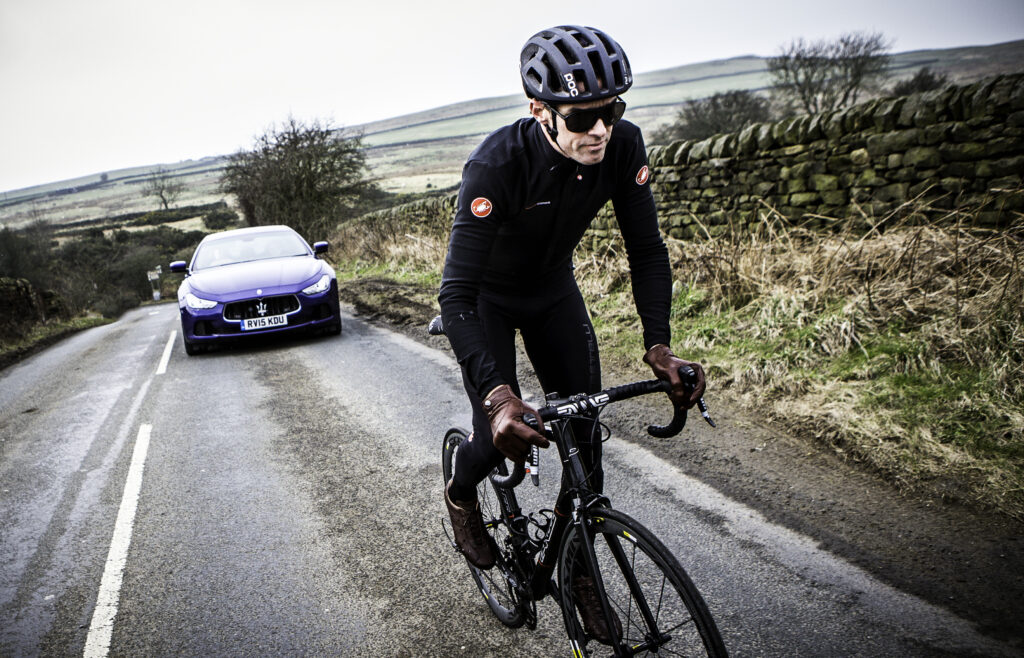
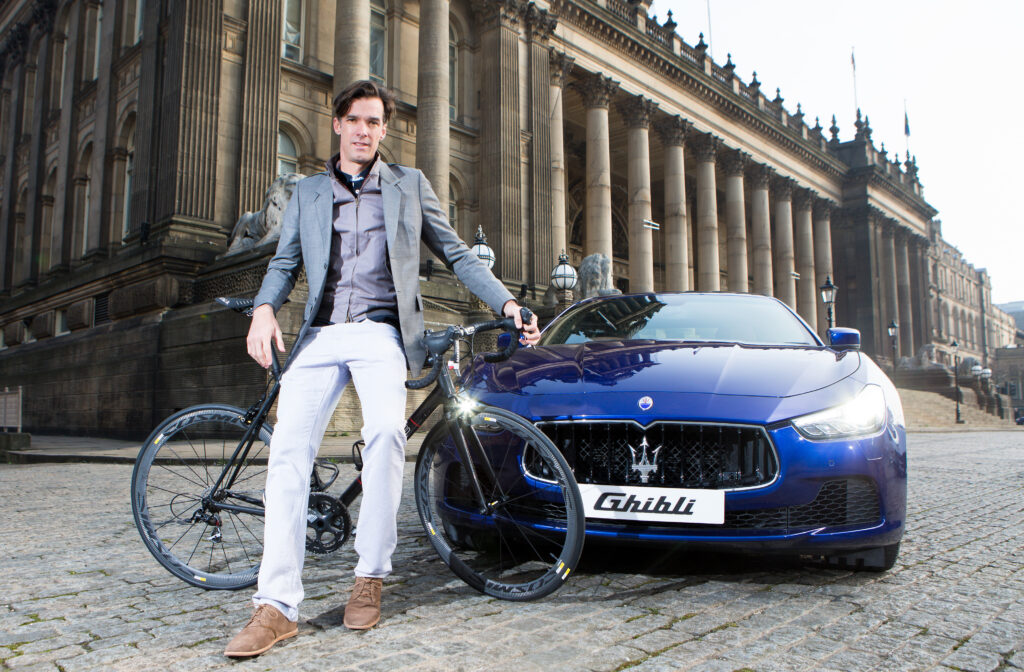
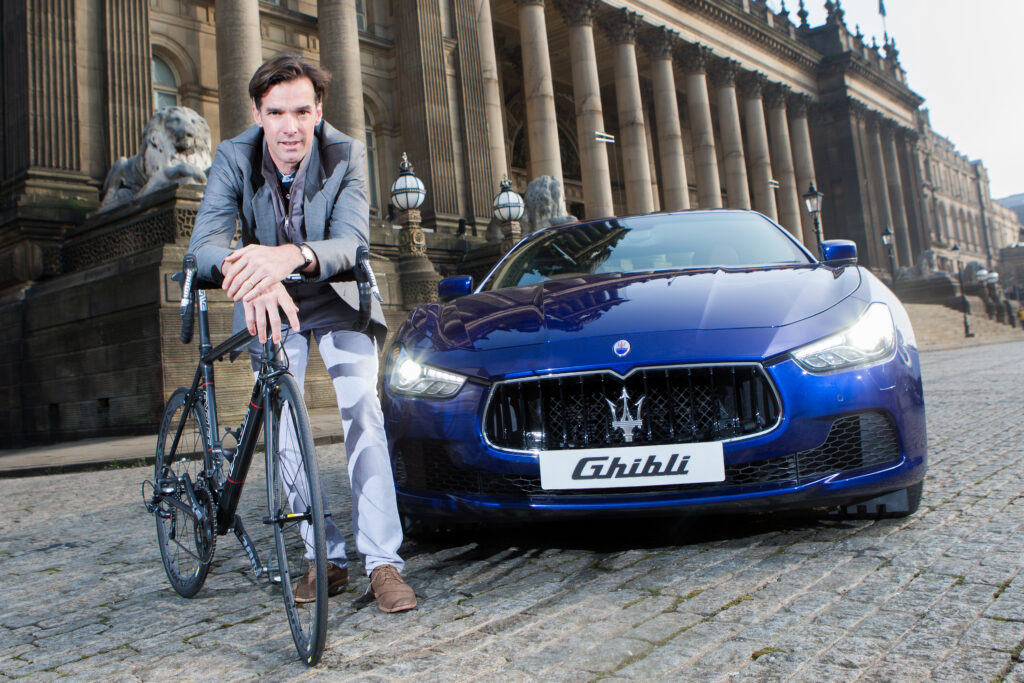
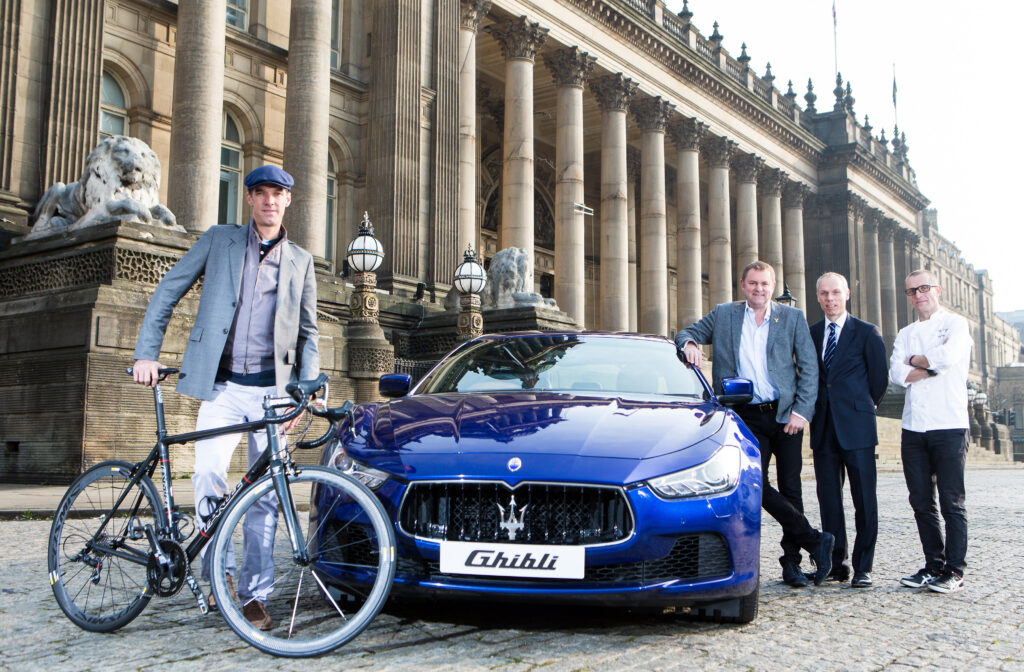
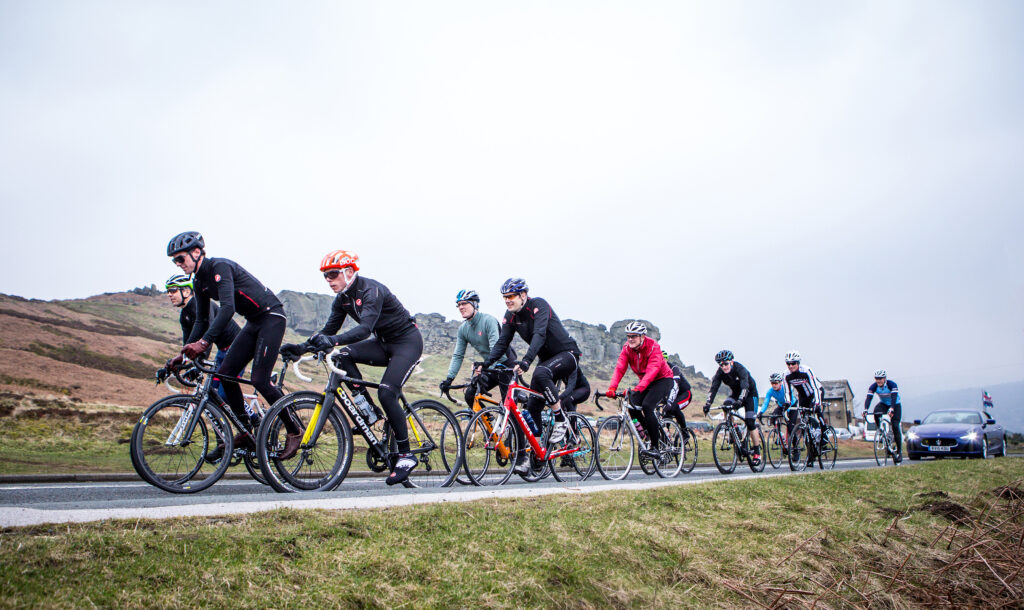
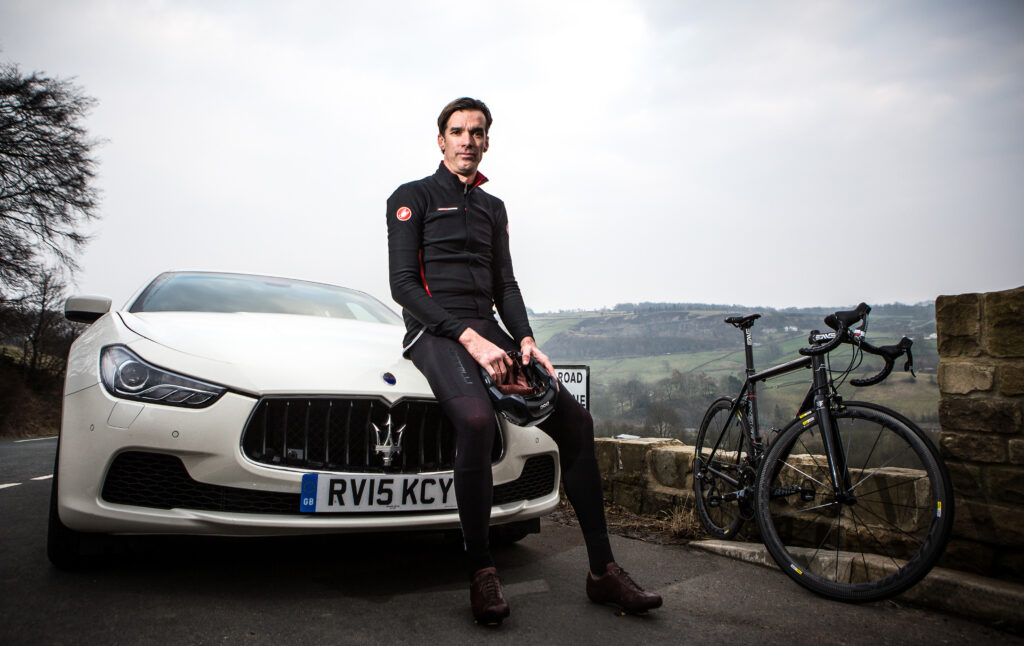


After 17 years as a professional racing cyclist, David Millar retired at the end of last season after a career which saw him win stages in the Tour de France, Vuelta a España and Giro d'Italia and wear the leader's jersey in all three – the first British rider to do so. He was also British national road race and time trial champion. Far from slipping quietly into retirement, Millar is remaining involved in cycling and will participate in this weekend’s inaugural Maserati Tour de Yorkshire sportive in his new role as a cycling ambassador for luxury car brand Maserati.
road.cc caught up with him at a recent press event to launch Maserati’s new involvement in cycling, a sign of how mainstream cycling has become in recent years, and sat down with him for an alloted ten minute interview to talk about the technological changes in cycling spanning his 17 year career and how bikes, equipment, training and coaching have played a part in modernising the sport.
road.cc: You were a pro for 17 years and have seen the sport change significantly, what have been the biggest technological changes in your opinion?
David Millar: Electric gears and carbon fibre. Those are the two things that had the biggest effect.
What impact did they have on the sport?
It’s hard to tell the performance impact they had, but I think the technology now has levelled the playing field. Whereas before, when I started, it was only the big teams that could get the most amazing time trial bikes or super light climbing bikes, they’re now available to everyone and even neo pros can come onto a WorldTour team with essentially the same time trial bike and skin suit that the Tour de France winner is going to get, which was never going to happen ten years ago. So it’s democratised the sport, the prevalence of technology, the advance of it, and mass manufacturing .

Is there equipment you had at the end of your career that you wish you had when you started out?
Nice time trial bikes. I used to find it hard to get good time trial bikes, to get all the right stuff, and the skin suits, those are the two things that I always fought so hard for, yet never really got, so those two I would have killed for.
You mention skin suits, there have been big advances in clothing now as well?
Oh yes, that’s the biggest. That’s been quite a recent development though, it’s been quite a gradual process with the actual hardware, we can see that, the curve, it’s quite a linear line going up diagonally as the advancements get better. But I think wirth clothing, it’s only been the the last three or four years, primarily with Castelli. They’ve been pushing it along so much.
You say technology has levelled the playing field, is this really the case?
With Garmin-Sharp, that was our mission objective at the beginning, that was our edge if you like. It was a passion, a drive we had to get the best equipment, and the science, and I think we led the field in that, it was always our mission statement. If we were going to do this clean, and say we were clean, we were going to give our riders other advantages, so they could really buy into what they were doing. So the best hardware, the best clothing, the best nutritional support, science and coaching. I think we dipped off a bit in recent years and everyone else caught up.
Do you think the UCI have held technology back too much?
Yes, I don’t think they’ve kept up with the times. The 6.8kg weight limit definitely had a time and a place, because I mean I was a pro when bikes were breaking because they were too light, but carbon fibre technology has caught up and now you can easily do it under 6.8kg. So yes, I think they’ve been a bit off the back on that one. But I think with everything else, they handled it very well. Last year with the time trial bikes, finally they modified the positioning, that’s something that had been a battle for years and had to be understood. I do see and understand what the UCI are doing, it’s having to have perimeters otherwise it would go apeshit, then you would end up with what’s happened on the track.
There’s new technology on the brink of entering the pro peloton, namely disc brakes. What’s your view on disc brakes?
You don’t need them. It’s a stupid thing, it doesn’t matter about the performance because the tyres can’t handle them. So you’ve got a disc brake and you're going down a wet descent, you’ve only got maximum four square inches of rubber on the floor, with the disc brake the tyre can’t handle it. Already the brakes are too good on a normal bike when it’s wet, for the tyre and the amount of surface area you have. You’ve got about 80-85 kg with the bike with four squares inches of rubber, you’ve to brake gently in the wet. That’s what everyone forgets, you’ve got to brake gently, very gradually when it’s wet. With a disc brake, you're down. I think disc brakes have a place in the sport, but it’s not in the pro peloton. The Shimano caliper brakes are incredible now, they’re bonkers, they’re far too strong. If we have disc brakes, maybe we think about having aluminium rims in the wet or getting better carbon braking surface.

You say technology has levelled the sport, but do you think there’s still an unfair advantage for the bigger and better funded teams?
I don’t know if it’s so much about the money, it’s desire, you choose the right sponsors, have the right contracts. It’s lazy, uneducated team bosses that haven’t understood that. You can’t just blame it on Team Sky as it’s not a budget thing, that’s just a will to have the best equipment and make sure the sponsors supply it, which is their right, and if they’re sponsors, they’re stupid if they don’t do that anyway, that’s what they’re there for. I’ve seen it happen so many times where team bosses just don’t care enough.
Do we risk all this new technology overshadowing the purity of the sport and the simplicity of racing?
I don’t think so, I think there’s so much going on with training methods, the sport's changing, all sports are, it’s just the way it is. The whole world is changing, the whole sport is evolving, it’s going to be completely different in 10 years to what it is now. It’s completely different now to how it was 10 years ago. It’s always like that.
Nutrition is an area that has expanded quickly, it seems unimaginable now that I did a tour without a team chef. To not have control of the diet, what were we thinking? Now every team has a team chef. That’s a good thing to come out of the anti-doping culture, people had to take control of everything else. Having a no needle policy meant that you now care more about nutrition.
WIth so many changes in the technology in the sport in the past 10 years, what do you see changing in the next 10 years?
I think it it’s just going to refine. It has to reach a ceiling, and it’s getting pretty close now I think, which in a way is good, it just means more people will be doing what Team Sky are doing, and I think the top guys are already doing what is cutting-edge and it works. The guys are going almost faster now clean than guys that were doping 15 years ago, and that’s because the sport had modernised, with training methods and nutrition. Probably the next big step will be body analysis, actually being able to tell what is going on with athletes, Star Trek-like technology to find out if an athlete is tired and see where they are, and what is going on with their body.
David Millar will be taking part in the Maserati Tour de Yorkshire ride alongside his father this weekend. If you're taking part in the sportive, David has produced the route preview video below highlighting some of the key parts of the ride.



















62 thoughts on “David Millar on changing technology in the pro peloton – and whether disc brakes have a place there”
Did anyone proof read this
Did anyone proof read this article?
Does David realise that, with
Does David realise that, with disc brakes, in the wet, you can stay upright by PRESSING LESS HARD.
bender – I suspect he has
bender – I suspect he has never ridden a bike with them (in fairness, why would he have?)
ddraver wrote:bender – I
Because he has a viewpoint. If he has not he would be better saying that he has no idea.
ddraver wrote:bender – I
quite. if disk brakes where so off/on they would be useless MTBing where traction can often be marginal at best.
bender – I suspect he has
bender – I suspect he has never ridden a bike with them (in fairness, why would he have?)
What’s clear is that the
What’s clear is that the entire peloton needs to be on the same level of brakes to avoid mishaps. I agree that brakes are very strong already, I wonder if the real benefit is going to be in wheel design? For example can they be made lighter as there is no braking surface…. or does the strength of the braking require stiffer heavier spokes and wheels? Ouch!
Brian Steele wrote:What’s
But they’re not anyway. Some of the direct mount jobs are horrible and vastly underpowered compared to standard calipers, so that argument’s moot.
Chasseur Patate wrote:Brian
The reason the whole peloton needs to be on discs, or not, has nothing to do with potential differences in braking performance between riders and everything to do with neutral service.
joules1975 wrote:Chasseur
The reason the whole peloton needs to be on discs, or not, has nothing to do with potential differences in braking performance between riders and everything to do with neutral service.— Brian Steele
One or two classics aside, Neutral Service doesn’t get used nearly as much as they’d have you believe and carry way in excess of what they dish out. They could 50/50 disc specific and rim specific wheels and still have a bunch of unused wheels at the end of the day.
That the premis of brakes
That the premis of brakes they must be able to override the mechanical grip of the tyres whether car, truck, motorcycle or cycle!
The advantage is consistency of braking regardless of weather and finer control of modulation.
I really like David Millar
I really like David Millar and agree with him on a lot of stuff, but he seems to have missed the point about disc brakes (like so many others).
Disc brakes are not about the power, they are about the modulation – the fact that they allow you to get closer to the braking limit (i.e. closer to the tyre skidding without it skidding), and it is this that allows you to brake harder and later.
Disc brakes will also allow other advances – predominantly rims but also a bit with frames.
And disc brakes should eliminate tyre and rim blow out due to overheating and/or rim wear.
Hurrah!
Yet another thread
Hurrah!
Yet another thread for the disc brakes advocates to tell us all how great they are, while everyone else gets on with riding bikes…
Like ’em, have ’em, don’t like ’em, don’t.
crikey wrote:Hurrah!
Yet
Which one are you referring to as great? The disc brakes or the advocates? Or both? The latter is, of course, correct.
I assume, when you typed that response, you weren’t cycling 😉
When I squeeze my (rim)
When I squeeze my (rim) breaks in the wet… usually nothing happens.
.
.
.
.
.
for quite some time
.
.
.
until they slowly clear the muck of the rim
.
.
and start to bite
..
and very gently slow me down, while the pads do their best to grind the rim to powder.
And I understand carbon rims are even worse.
I’m not completely sold on the look of disk breaks – or the weight/aero penalties – but for me the ability to stop in the wet is a big draw.
no one noticed this comment
no one noticed this comment from an ex doper ?
“The guys are going almost faster now clean than guys that were doping 15 years ago, and that’s because the sport had modernised, with training methods and nutrition.”
When he was doping the same was said then and how wrong people were, why is someone I do admire for his doping stance actually burying his head in the sand ?
ianrobo wrote:no one noticed
Possibly because he’s one of those to benefit from that increased performance, while knowing in his own head that he was riding clean…?
Tell you what’s fascinating
Tell you what’s fascinating mind. For years we’ve been buying (by and large) what the manufacturers deem is worthy of the pro peleton.
Now, the pro peleton is getting what, for the last couple of years at least, the manufacturers have already been selling to us. It’s an interesting reversal.
bendertherobot wrote:Tell you
Good comment. I’ve had mechanical discs on my touring bike for years i’m always surprised how good they are (though, I still can’t adjust them without rubbing). Although there is more difference between my single speed with basic tektro brakes and my roady with ultegra direct mount callipers.
When you think my tourer is a 2010 model, and my road bike is a 2013 madone, it’s strange how it’s still behind on the brake front. A new bike would have discs, but i’m in no rush. And I do still like the simplicity of rim brakes.
To the people complaining about the opinion being given on discs or not. Why are they reading a website which is basically a forum for debate??
Not forgetting that replacing
Not forgetting that replacing a worn rotor is less faff and far cheaper than rims.
Notsofast wrote:Not
And when you’ve had a rim blow out at high speed because there was a scoring mark in the rim from a stone in a brake block I can assure you disc brakes suddenly look a whole lot more attractive!
AJ101 wrote:Notsofast
I love these sort of stories. ‘But what happens when you’re attacked by an owl?!! You’ll look pretty silly without disc brakes then!”. I’ve been riding callipers since 1970. I look after them and I’ve yet to have a stone fly up and score the rim – let alone cause a blow out. Sounds like poor maintenance to me.
As for replacing rims: If you buy proper UK built wheels instead of factory built you can source new rims for a decent price.
I suppose it, ;s each to their own on looks. Personally I prefer frames with brakes on them rather than lumped around the axles.
Interestingly (?) I WAS
Interestingly (?) I WAS attacked by an owl on a ride a couple of weeks back. Well swooped at rather aggressively. Bloody great thing it were. If only I’d known that disc brakes would protect me, I’d have used my MTB. 😀
Guanajuato
Haha, that’s funny…er, hold on a minute, actually no it wasn’t…I bet it didn’t even happen.
Of course it didn’t happen.
Of course it didn’t happen. Guanajuato is having you on.
It was a lesser spotted woodpecker, not an owl.
The clue is in the behaviour of the avian assailant: lesser spotted woodpeckers are well known for swooping aggressively. 😀
Notsofast wrote:Not
Until you discover the bolt holding the rotor on was made of cheese/corroded into the hub or you discover the thread in the hub has been stripped.
(just pointing out shit happens, so don’t expect perfection!)
Discs do have benefits, next bike will have them, but I wouldn’t buy a bike to just to get discs, MTB and Road differ in that MTB the rims will get covered in crap they will get destroyed, 9 months is my personal record to wear through the sidewalls.
Current calliper brakes are
Current calliper brakes are absolutely top notch and we don’t need disc brakes. They’re ugly and should be kept where they have benefits in cross or mountain biking.
wingsofspeed68 wrote:Current
They have benefits in road cycling, full stop. What we have to remember is that 99% of the time most road cyclists aren’t emulating the pro peleton. They are, even as disc advocates, getting out on their bikes and riding.
I have 3 bikes now. All disc. In fact I rode my best bike in today, despite it being showery and a bit damp. The rims, of course, are still mint today because no road debris has been scored against them. So they’ll last years.
bendertherobot wrote:
I have
Until the spoke bed fails through fatigue…
mrmo wrote:bendertherobot
Until the spoke bed fails through fatigue…— bendertherobot
I hope not. They’re tubeless and weren’t cheap. 😉
wingsofspeed68 wrote:Current
Are disc brakes uglier than calipers? I think it’s similar in looks stakes overall, and disc only frames look better.
As for rest of your comment, clearly not tried shimano hydraulic road discs or trp spyre cable brakes have you.
what is with the bender
what is with the bender comment? Is casual homophobia now OK at road.cc?
BigAl68 wrote:what is with
Quite probably a casual shortening of the previous posters on-line name – ‘bendertherobot’?
BigAl68 wrote:what is with
No, that was a reply to @bendertherobot, which is a reference to the character Bender from Futurama.
cheers for sorting that out.
cheers for sorting that out.
I ride up to three times a
I ride up to three times a week in all weathers and can honestly say I would never go back to normal caliper brakes. All through wet weather rides, I use my disc brakes knowing they will give exactly the same performance every time, whilst my fellow club riders can be heard braking early to ensure they actually have some braking force by the time they reach junctions etc….. and the noise of grinding rims is not a good sound!!
I have discs on my commuter
I have discs on my commuter and rim (brakes) on my road bike. I went out cycling in the rain on my road bike… once. During an extremely heavy downpour I decided to take cover under a tree, so I pulled my brakes on, nothing, pulled as hard as I could, barely any use at all…
On my hybrid however, huge amounts of braking, we or dry and also very easy to modulate. My disc brakes do occasionally make a bloody racket though and they are a real faff to set up perfectly. Rim brakes never make any noise and are always set up right.
Pretty sure my next road bike will have rim brakes (I only ride it when the weather isn’t too wet)… Plus I just prefer the look and the ease of servicing rim brakes. Disc brakes any day for my commuter/foul weather trainer though!
The best and newest of any
The best and newest of any components should be on the pro first and then trickle it down to the consumers, not the other way around. Shows UCI is way backward. Racing is about going as fast as possible testing out the most innovative components.
Anyway I am disappointed with his comment about disc brakes because again its not about power. You not supposed to press it so hard that you fly over the bar. Just like driving a car you gently press on the brake for control and not step on it as hard as you can.
I feel a lot more confident on my road bike with disc brakes commuting to work than my old caliper brakes.
Every time I brake it brings smile to my face unlike before it causes my heart racing because in the wet it just wouldn’t stop unless I squeeze the brake lever really hard.
hsiaolc wrote:Racing is about
Yes but pro racers would probably use them to eek out any possible advantage descending at speed. As you say, racing is about going as fast as possible, and he probably knows what he’s on about in respect of safety in a fast moving peleton. He’s not saying don’t use them for your commute, he’s saying they do in fact have their place – so no need to be disappointed in his comments after all!
The reality is that when 90
The reality is that when 90 blokes are hooning down some monstrous mountain in the wet, and some numpty pulls the lever just a bit too hard, a lot of pro cyclists are going to taste the tarmac. So yes, the absolute power of disc brakes IS an issue, irrespective of “modulation”, they can overwhelm tyres, especially in the wet. Racers are riding faster and closer than any of us commuting, and the loads they put through the tyres etc are much higher – they’re far closer to the edge than we are (an should be too!). I’d use discs for commuting because I rarely do hard / late braking so the chances of overbraking are lower.
As an old codger who survived the cross over between drums and discs on motorbikes, this is a concern. People (including me) crashed more on discs until the tyre technology caught up with much wider / softer tyres for exactly the same reason – the brakes were better then the tyres.
Bigfoz wrote:The reality is
Well 25 is the new 23, and wider rims seem to be available so It might just all work out in the end.
Bigfoz wrote:The reality is
And how is that different between discs and calipers? You can lock up plenty easy enough with calipers, which is why a lot of people think discs are unnecessary, but only because they are missing the point that disc brakes allow easier modulation. You just have to get used to using one finger to brake when using discs instead of your whole hand.
Us MTBers had to do this over a decade ago, and now no-one has a second thought about it.
The pro’s are always going to have an issue with people reacting a little too aggressively to someone braking in front of them regardless of brake type due to how close they ride.
And they are pros for gods sake, they should be able to adjust their braking styles easily enough to cater for a new brake style – in fact they will be doing it anyway for the different type of rim brakes used in the peleton.
Hahhahahahah. That laugh was
Hahhahahahah. That laugh was for the bore who came on the club run in March with his £6k Trek fitted with disc brakes and went on, and on, and on, and on about how we will all soon have them as the pros will.
I’m such a prissy aesthete that I don’t even allow black Campag brakes and stick to the chrome ones. Nothing like a fine chrome caliber brake to show off a carbon fork in my opinion.. With Dave’s opinion on disc braking in the wet it seems that caliper brakes have some life left in them yet!
Mind you. What does that David Miller know about pro cycling? Not as much as that bloke on my club run for sure… (|:
Just because it reinforces my
Just because it reinforces my own prejudices, I’m 100% with Mr Millar.
Rims that wouldn’t be
Rims that wouldn’t be considered so disposable.
Brakes that work wet or dry.
Clean looking rims to match the rest of my bike.
Anyone not like the above?
I have a few sets of wheels for caliper brakes, but next bike I buy will have discs though. I do try and avoid the rain sometimes, but when it’s autumn/winter, and it’s been raining on and off for days, sometimes I get stir crazy and head out in the rain. When you’re going downhill 40 MPH+ it’s not very bright not being able to slow down. One would not have thought this point is debatable.
ronin wrote:Rims that
Hmm. Yet to wear through a rim (although I have trashed a few on potholes), yet to have my rim brakes not work in various weather conditions. Rim look is fairly unimportant to me. So no, as I am not a shareholder of a company which manufactures disc brakes, I see no point in them.
I do, however, agree with you that it’s not very bright not being able to slow down. Anyone with this issue should try having *brakes* on their bikes.
andyp wrote:ronin wrote:Rims
Hmm. Yet to wear through a rim (although I have trashed a few on potholes), yet to have my rim brakes not work in various weather conditions. Rim look is fairly unimportant to me. So no, as I am not a shareholder of a company which manufactures disc brakes, I see no point in them.
I do, however, agree with you that it’s not very bright not being able to slow down. Anyone with this issue should try having *brakes* on their bikes.— ronin
Well if you’re ‘yet to have my rim brakes not work in various weather conditions’ – it’s not something you can really comment on. I have, especially in the rain. Especially when cars stop in front of you, not caring that you’re on a bike because they’ve decided to let someone out, or going downhill etc, etc. I just like things to work. In the summer it’s fine, but get caught in a downpour miles from home it’s not.
I have dura-ace 9000 calipers with Kool Stop Salmon pads for the rainy season, the most effective combo I could find, and while good they have their limit. Whereas, I can hop on my mountain bike, riding though snow and still be able to stop with disc brakes.
ronin wrote:Well if you’re
I once got caught in the absolute pouring rain about 20 miles from home and it persisted all the way back. The last two miles are a long fast downhill stretch. I had a car overtake me at a stupid point on the road and then have to slow down ahead of me because the car in front of them was turning left. I pulled on the brakes and absolutely NOTHING happened. I sailed past one of my riding mates and clipped his bars, though mercifully he stayed on, and just about managed to slow down before the overtaking car moved off again. Probably about the scariest moment I’ve had on a bike.
andyp wrote:
yet to have my
Not work at all, maybe, not work as well though, I bet you have!
If you haven’t, then you must be going really slowly or brake very early and not very hard.
Rim brakes always need a wheel revolution or two to ‘clean’ before the brakes start working anything like normal when riding in the wet.
Disc brakes work normally with no ‘lag’ regardless of conditions.
So better brakes and total consistency, or brakes that only really work as they should when it’s dry and don’t offer as much modulation?
I know which ones I’d want, and therefore which ones I have!
Not always a fan of Millar. I
Not always a fan of Millar. I think his doping past taints everything he says.
But he says exactly the same as I do, almost word-for-word, on disc brakes, so I am happy to hear his opinions on them specifically.
Disc brakes are great for
Disc brakes are great for road transport, but as DM says, a bit irrelevant in racing with light weight riders.
In California where I ride I
In California where I ride I don’t have to worry about wet roads very often. Calipers are fine with me except on hot days with long technical descents where I do worry about overheating rims. I’m a bigger rider though and I hear disks can overheat and fail also.
My understanding about disks is that a primary benefit of them is to keep carbon rims from delaminating under high heat loads as they are prone to do with calipers. Aluminum rims obviously don’t have the same concern.
I descended at 65-70 kmh
I descended at 65-70 kmh recently with a club mate in the wet. He’s generally faster than me. I was on my wet bike, at least 3 kg heavier than his bike. It was twisty with gravel build up along the centre of the road. I had shimano hydraulics, he had dura ace and Zipp 404s. I’d dropped him after 2 turns without trying . I didn’t lock my wheels because the control of discs is greater than with rim brakes. This is even more significant in the wet . And why would pros jam their brakes on? Discs on road bikes intended for the UK weather are absolutely transformative.
I read the interview and I
I read the interview and I read all the comments but still could not find one comment to state the obvious: Dave has no idea what he’s talking about when talking about disc brakes. Has he even tried one in the rain?
With any barely decent tire you can slam the front brake as much as you want to on a wet road as long as you’re going straight and the tire won’t skid. You will endo and go over the bars if you don’t loosen the lever once the rear wheel comes up but the front tire will not skid a single inch.
I’ve tried it numerous times when bedding in new brakes on customers’ and my own bikes and it’s universally true on road bikes with 23 mm slicks as on mountain bikes with 2.25″ nobbies.
It’s a shame that Dave thinks he has to utter a opinion when asked although he knows that he should probably hold back since he has no experience with disc brakes on the road.
Check dem bling brown leather
Check dem bling brown leather driving/riding gloves. Millar does style.
– Road discs are here to stay
– Road discs are here to stay – for the guys who want them.
– Road discs make no sense in the pro peleton, too dangerous in mass crashes. Trying to go downhill faster still due to late braking is a perverse idea.
– The closest thing to discs performance on road bikes is the hydraulic rim brake due to it’s formidable modulation. Ask Cavendish why he stopped using them in anger.
– Disc brake technology was here for decades and is completely proven and well developed, why do you think the UCI needs a trial phase of close to one and a half years? Because they want the protagonists in the pro circus take the responsibility for negative consequences. The UCI has also the minimum card to play: should it be lowered, the disc brake will be even further away for being implemented.
– Rim brake freaks should go tubular, if they’re serious roadies.
– Carbon rims with tires is an accident going to happen.
Walo wrote:- Trying to go
I think, like many, you’re missing the point.
Walo wrote:- Road discs are
1. Why too dangerous in crashes? Big spikey chainrings don’t seem to be something people are concerned about, and if it’s fingers into spinning discs that are the concern, have solid discs.
2. Why is going faster due to late braking perverse? Think you’ll find fair few pro riders make up time trying to do just that now.
3. The hydraulic rim brakes still suffer from the same issue as caliper rim brakes …. They are rim brakes! It won’t have been the modulation that cavendish didn’t like, but likely the similar modulation as caliper rim brakes but with more power – not a good combination. They cannot therefore be compared to disc brakes in the slightest, which have more power but also much more modulation and feel.
I believe it’s the hydro
I believe it’s the hydro stuff which is responsible for the unsurpassed modulation, paired to the correct leverage. Nothing to do with the braking pads, I guess.
Want some ‘wirth clothing’
Want some ‘wirth clothing’ 😉
It’s a shame Millar wasn’t
It’s a shame Millar wasn’t asked for his views on helmets as well. Could we all agree to not say anything about discs again for 3 or so years? Solely to avoid half of us looking very foolish indeed.
He He
Ranting on about looks.
He He
Ranting on about looks. Since when has a modern frame looked nice?
As for shiny polished brakes on a carbon fork! The brakes I agree but the forks tend to be great bulging things. Look at that mess of Portes bike on the news page. Ug.
Point is , looks don’t matter. It’s obvious that unless you agree with my tastes you will be wrong. 🙂
Millar may have a point and within pro racing I suppose he has more idea than anyone here ( any other recently ex pros lurking?) but has he ridden extensively with discs? I won’t go back to rims on the road bike, but with 5 years of using them on the road and 30,000 miles I know what I like.
As Millar pointed out the Shimano brakes are so good and the limits of adhesion have been exceeded. Why worry about more then?
Noticed how the thing about discs being a problem with crashes is never actually done in detail. There are no dangers worth worrying about. The odd tiny burn isn’t worth the ink it takes to mention it.