



When I think of electric road bikes, I think of brilliant, lightweight machines that level the playing field for many riders. I think of riders gliding over undulating terrain with smiles on their faces, legs free of lactic acid.
E-bikes have come a long way in not a great deal of time, with several disciplines, types of motors, sizes of batteries, and various standards we as consumers all have the pleasure of choosing from.
But the reality for electric road bikes is that, actually, this great deal of choice hasn’t really trickled into this area of e-riding. And it’s unlikely that it will in the UK without serious improvement within the cycling industry as a whole, as well as changes in the legislation surrounding e-bikes.
We all know how Covid impacted the bike industry, and how it and other unforeseen global issues continue to impact it. But has the electric road bike market been unfairly hit? And did it ever really get going in the UK?
E-road bikes can be tools for change
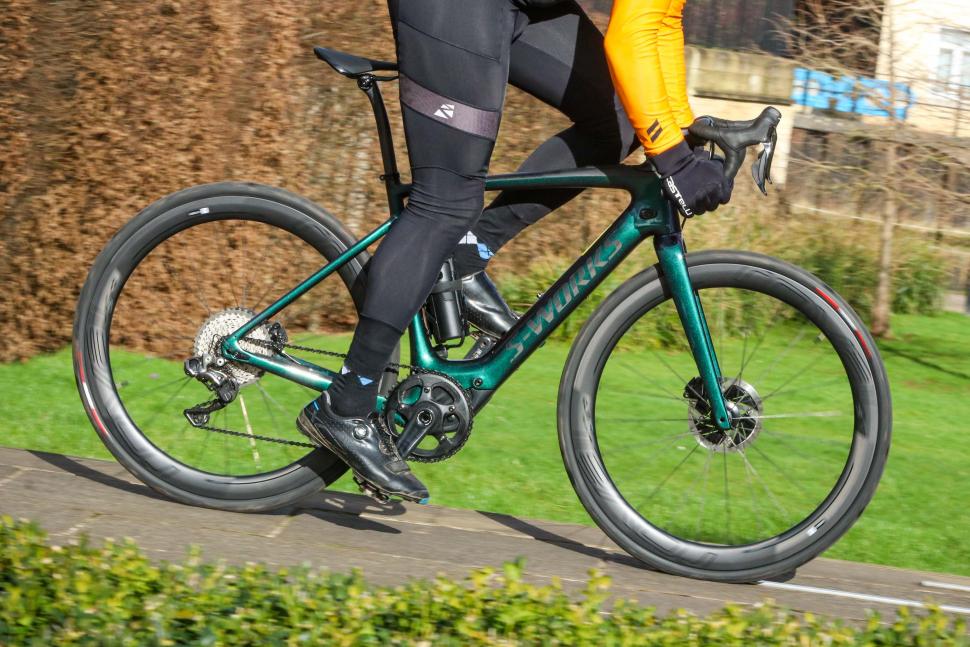
E-bikes on the whole are great for many reasons, and suit many different types of people. And electric bike hostility often comes from two camps: people who don’t use them and don’t know how fun and encouraging they are, and people who don’t understand what the difference between a Sur-Ron electric dirt bike and your hub motor-powered shopping bike is.
Non-cycling media has certainly not helped with the amount of misinformation being spread around electric bicycles, labelling many of these motorbikes as e-bikes (which technically, they are, but a term that has been made popular within the e-cycling world) rather than specifically, e-motorbikes. But I digress.
There’s also the matter of e-bike restrictions. To be classed as an electrically assisted pedal cycle (EAPC) in the UK, an e-bike can only have a motor capable of 250W continuous power (not maximum power), and can only assist up to 15.5mph. The assistance can also only be activated through pedal power, so no throttle-only activation.
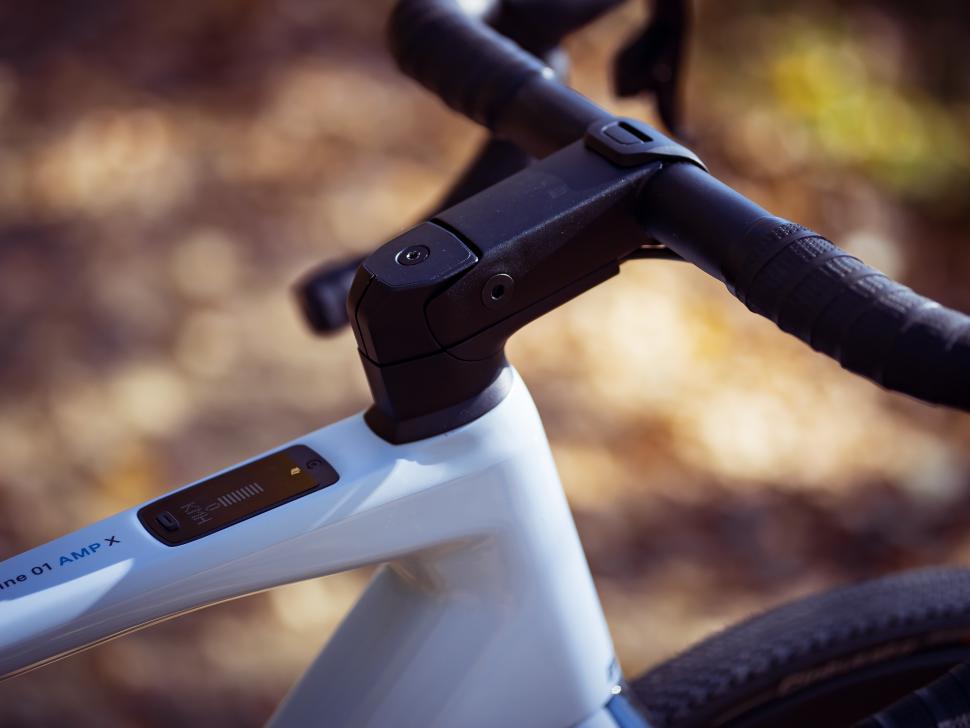
With these restrictions in place, I fear that electric road bikes are a great idea in premise, but not so much in execution. Think about the average club run speed, or how fast you can go in the city. It’s not implausible to think many riders are likely to go over 15.5mph for a fair whack of their ride, so having something with a motor that offers no drag resistance when you’re riding over the limit is key; but perhaps a bike that could assist up to around 20mph – like the current legal limit in the US – would be far more beneficial?
That’s not to say they’re all terrible wastes of money. I know a few people who have bought various models, and enjoy them as tools for riding in hilly areas now they’re a bit older or dealing with health issues.
And that’s the main point of an e-road bike, isn’t it? It’s not really designed for the Lottte Kopeckys of the world – although I’m sure she would enjoy an active recovery ride on one.
They’re ideal for taking the sting out of climbs, or for those who perhaps can’t ride as far as they used to and would appreciate a bit of assistance to do what they used to – but I can’t help feeling that they’d be even more attractive to more people if they, and e-bikes across most categories, were able to legally assist up to 20mph rather than 15.5mph.
Unlike the cookie monster, the UK doesn’t have an appetite for, er, e-road bike cookies?
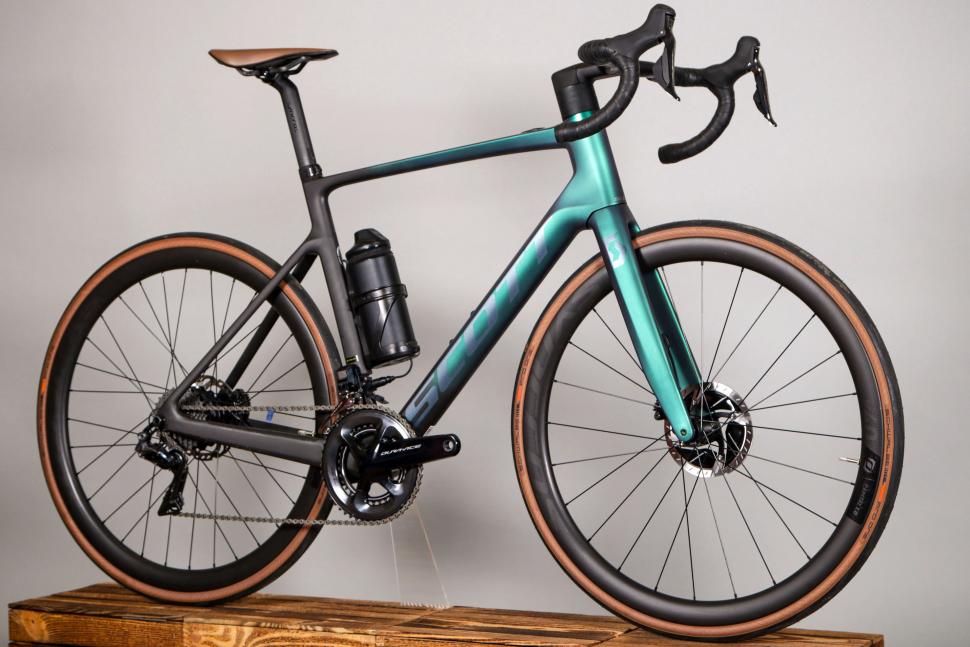
Another area of concern with the e-road category in the UK is appetite, or more specifically, the lack of it. Brands are unlikely to develop new e-road specific bikes if there is no customer demand, and why would they?
And when there isn’t that much choice, customers will look at other products.
If you look across the industry at the moment, brands across the globe are downsizing their offerings and becoming far more selective about what markets they target.

Whether that’s specifically within the electric category, or across several, there simply isn’t enough development in the electric road world to warrant investment in a category that won’t yield much return.
My fear is that while the other categories benefit from developments in motor technology and frame design, the e-road category is being left behind. Perhaps there really won’t be a market for them even if they were able to assist up to 20mph – perhaps I really am way off the mark.
But, it seems a shame to have to point people in the direction of say an e-gravel bike or an urban, flat bar bike, when what they might really want is an Italian designed, sharp edged e-road bike with drop bars and a sublime look about it.
Or maybe… I’m just talking out of my behind
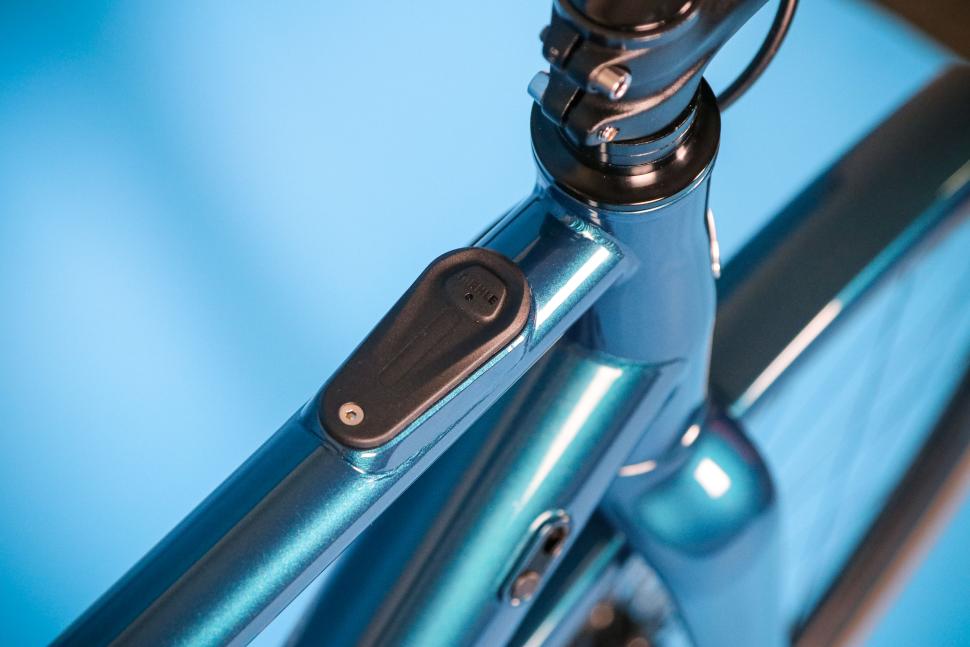
Or perhaps, I’m being too narrow-minded, and forgetting what cycling is about. Not everyone cares about max power or torque numbers, or even what gear they’ve got on their bike.
Like when many people buy a car, they just want something that works, and works for what they need. So perhaps my idea of a really good electric road bike is similar to that of a car enthusiast’s idea of investing in a Porsche GT3 – overcompensatory for what we need.
And I’m not saying there aren’t fantastic e-road bikes out there. The previous model of the Specialized Turbo Creo was a personal favourite for tackling the gritty Yorkshire climbs. But the choices available aren’t always indicative of what I think we as an industry can really do for e-road.










127 thoughts on “Just like wool jerseys and leather helmets, electric road bikes are dead*”
When I upped my commute from
When I upped my commute from 12km to 20km each way, I decided to get an electric bike to help take some of the strain. I can happily get up to 20mph under my own steam and didn’t want to be slowed down by a more utilitarian e-bike.
I therefore opted for an electric road bike (technically an adventure bike, to get clearance for mudguards and mounts for a rack). At first it seemed like a good balance – the assist helped with the hills and getting up to speed off the lights.
But despite the urban environment, I found myself above 15.5mph too much of the time to make significant use of the assist. Absurdly, I now mostly ride it without the assist turned on.
Upping the limit to 20mph would make sense for my particular case, as it would more closely match the speeds I can attain unassisted. But cyclists like me are not typical of “people on bikes”. Do we want 20mph Lime bikes?
Out of interest, have you
Out of interest, have you ever done the longer commute on an acoustic bike? Would be interesting to know how it compares to riding the ebike with the assistance actually or effectively off.
Yes, I did it on my old
Yes, I did it on my old carbon gravel bike last week. The difference between that and the e-bike without the assist wasn’t massive – maybe a minute or two over an hour (hard to directly compare as my luck with the lights makes the biggest difference!). The thing I noticed most was lower back fatigue from using a rucksack instead of a pannier TBH. The e-bike has a Fazua motor with a freewheel built into the crank, so there’s no drag from the motor.
Interesting. Yeah, I was
Interesting. Yeah, I was mainly thinking of the perceived effort / fatigue difference between (a) unpowered but presumably lighter bike and (b) powered but heavier bike that helps with accelerating but isn’t providing assistance for faster parts of the journey.
My only experience is a 30kg e-cargo bike, which I use mainly in Eco mode in the interests of battery life. In practice I rarely exceed the cut off speed on the flat, but I’d never really considered if that was coincidental, or because of the jump in effort required to exceed it.
I’ve thought about one for
I’ve thought about one for commuting. It’s only about 10 miles each way. The problem is the stop/start at lights. Getting that boost to get back up to speed would save a lot of effort and mean I’m not too knackered to enjoy weekend riding. I can handle the acceleration from 16 to 20moh but a bit of help before then would be good.
That was my reasoning, but I
That was my reasoning, but I found it didn’t make that much difference. But then I tended not to use the maximum assist. I’d recommend borrowing or hiring one for a few days before taking the plunge.
They can only have limited
They can only have limited appeal which may be enough to kill them off. Even e gravel bikes only have so much use. If you are riding with others on the same sort of bike then things are fine. In a mixed group it is not so. On the hills the eriders will be off the front and on the flat they will be off the back if the riding gets a a bit spirited. Last night on my club gravel ride we did the last 3 or 4 miles flat out plus other bits during the ride. I was graddualy dropped as I could only maintain about 22 mph. But then I am 62 and waiting for a new knee. We all are happy with this, it’s part of the challenge. Normal flat gravel speed is around 17mph. To much for the ebikes. Nowt wrong with the ebikes, I use one to ride sociably with my wife, but the road side of cycling, at least the sporty side will have limited use and for better or wose we live in a commercial world where luxuries have to be justified.
I don’t know if I disagree,
I don’t know if I disagree, or if I just don’t understand the article. (I certainly don’t understand the random appearance of cookie monster in that sub-heading, where did that come from?). The main (only?) point seems to be that there’s not enough assistance for riders who are used to riding at 20mph+ under their own steam, but I don’t understand why that should be the benchmark. Believe me, I understand the frustration of not being as fast as you once were – when I hit hills now I have to slow it right down to keep the HR under control, and sometimes wouldn’t mind some e-assist for reassurance that I’m not going to grind to a halt and topple over up steeper climbs. But if you’re capable of propelling an ebike faster than its existing 15.5mph assistance cut off for extended periods, then you’re still at the fitter end of the population – does it matter if it’s a bit slower than you were? But then I’m usually a solo rider – maybe I can see the point if you want to keep pace with riding buddies.
PS: woollen jerseys – niche, maybe, but not dead: https://cimacoppi.cc/en/13-custom
That’s still a strong “no”
That’s still a strong “no” from me for electric assistance over 15.5mph, (I think we’ve already copied too many things from the US around roads which turned out not to be a good idea…)
Yes, that limit is arbitrary, and frustrating for some cyclists who want both to do the club run AND have assistance. And the UK is still the land where “roads are for cars” almost everywhere, so cyclists tend to feel the need to go faster even if not racing. (Spoiler – even if you can get to “car speed” they’ll still want to get in front, even if that means breaking the speed limit).
…But … on balance (various reasons, too many for comment here) 15.5mph seems to be the best compromise that also supports casual mass cycling. And without that “cyclists” will only ever comprise a tiny band of road warriors, a slightly larger group of touring / trails / “utility” cyclists, all the food delivery folks (but they ignore the rules anyway…) … and far more of everyone else, driving.
So I feel it’s “sorry – we can’t have all the nice things we want whenever/wherever we want”.
BUT there’s nothing to stop folks finding a more relaxed group to go out with (they do exist!). Or getting whatever e-thing they like and riding it on e.g. closed circuits like motorists with some sports cars. Even better – no worries about getting close-passed! Or perhaps at willing velodromes?
Or – for somewhere without hills – a velomobile?
But … on balance (various
But … on balance (various reasons, too many for comment here) 15.5mph seems to be the best compromise that also supports casual mass cycling
Couldn’t agree more!
Agreed Chris. Now in my 60s I
Agreed Chris. Now in my 60s I still enjoy group rides. But with people with a similar level of fitness, due to age or otherwise . When I look at the end of ride average speed compared to a few years ago I sigh but accept that’s life
A few take part with E road bikes and they’re a great aid to them on the uphill sections allowing them to still take part. Which is brilliant. The last thing we need is someone starting an arms race with a 20 mph capable e bike killing us on the flat never mind the hills.
I generally agree, although
I generally agree, although being able to ride at 20mph would allow riders to keep up with drivers (law-abiding ones, at least) in urban areas. Given that being overtaken is probably the most dangerous part of cycling, this is quite a strong argument.
AidanR wrote:
Do you have figures on that? I know it may be perceived as such but that’s not the same. Not sure about the UK but certainly in NL I believe the majority of crashes (by some distance) are “single-rider” e.g. people falling off / crashing on their own. Adding more speed would certainly not make those less likely or reduce the consequences.
Returning to the UK I don’t know the proportions but would guess quite a lot are “driver pulled out on cyclist”. Again – not something which is helped by more speed – in fact probably the opposite.
If crashes are caused by drivers overtaking a) how much does going faster help prevent overtakes? We all know that some drivers MGIF no matter how fast the cyclist, and in the UK there are lots of 30mph speed limit roads (or more) – should we raise the assistance limit accordingly?
Then b) if you are hit by an overtaking driver does the extra speed help you reduce the consequences? e.g. is the reduced mutual speed more helpful than it perhaps being harder to keep in control, or greater kinetic energy if you do come off and hit something?
“Faster powered bikes” strikes me as something that does as much or more for drivers than cyclists…
chrisonabike wrote:
Do you have figures on that? I know it may be perceived as such but that’s not the same. Not sure about the UK but certainly in NL I believe the majority of crashes (by some distance) are “single-rider” e.g. people falling off / crashing on their own. Adding more speed would certainly not make those less likely or reduce the consequences.
Returning to the UK I don’t know the proportions but would guess quite a lot are “driver pulled out on cyclist”. Again – not something which is helped by more speed – in fact probably the opposite.
If crashes are caused by drivers overtaking a) how much does going faster help prevent overtakes? We all know that some drivers MGIF no matter how fast the cyclist, and in the UK there are lots of 30mph speed limit roads (or more) – should we raise the assistance limit accordingly?
Then b) if you are hit by an overtaking driver does the extra speed help you reduce the consequences? e.g. is the reduced mutual speed more helpful than it perhaps being harder to keep in control, or greater kinetic energy if you do come off and hit something?
“Faster powered bikes” strikes me as something that does as much or more for drivers than cyclists…— AidanR
You seem to be suggesting that cycling ought to be arranged, basically, to suit the various prejudices and whims of motorists. It’s one thing to recognise that these prejudices and whims exist and must be factored in to how one rides a bike but its another thing to cater to them to the point of encouragement. Personally I’d prefer the law to eliminate them – the compulsive overtakers, speeders, tailgaters and severl other dafty-driver modes.
Cugel wrote:
No, I’m suggesting that something new(ish) – powered cycling – be managed (like other powered transport) to benefit safety. And (selfishly) because I think the current limit not a higher one is ultimately more likely to work well together with many other changes to make cycling better for us non-powered cyclists.
And for us when we’re pedestrians. And indeed for those folks of a certain age (younger children or older people) who get a powered bike because that’s what everyone is doing and then suffer because the higher speed (they weren’t used to) made it more likely they crashed and the extra kinetic energy (velocity squared) made the outcome worse.
chrisonabike wrote:
You seem to be suggesting that cycling ought to be arranged, basically, to suit the various prejudices and whims of motorists. It’s one thing to recognise that these prejudices and whims exist and must be factored in to how one rides a bike but its another thing to cater to them to the point of encouragement. Personally I’d prefer the law to eliminate them – the compulsive overtakers, speeders, tailgaters and severl other dafty-driver modes.
— chrisonabike No, I’m suggesting that something new(ish) – powered cycling – be managed (like other powered transport) to benefit safety. And (selfishly) because I think the current limit not a higher one is ultimately more likely to work well together with many other changes to make cycling better for us non-powered cyclists. And for us when we’re pedestrians. And indeed for those folks of a certain age (younger children or older people) who get a powered bike because that’s what everyone is doing and then suffer because the higher speed (they weren’t used to) made it more likely they crashed and the extra kinetic energy (velocity squared) made the outcome worse.— Cugel
Please see my reply to Rended, which disputes your rather over-egged notion of ebike power and its effects. Effectively I’m suggesting ebikes be more restricted power-wise but less restricted in assisted- speed wise. The power restriction auto-ensures that the speed is automatically limited by the same factors and to the same degree that speed is limited in ordinary but fitter cyclists on non-motored bicycles.
The extra kinetic energy of an ebike that you mention is a red herring. Its no more, typically, than a pannier rack and panniers filled for touring; or the difference between a big lad or lass and a less big one.
I should add – I suspect this
I should add – I suspect this leads down a route (like mass motoring) which looks good initially but leads to serious problems when it becomes common. And is then is hard to move beyond to somewhere better.
For a handful of cyclists on UK roads of the present it’s probably no biggie. BUT if we’re interested in getting better conditions for cycling (which I would contend requires moving towards mass cycling) then I think that faster powered things * more of general populace = everyone doing 20mph.
At that point we have a still embryonic mass cycling culture – but where cyclists are colliding with each other at speeds approaching 40mph. Injuries in general (from loss of control / greater crash speed) go up. Pedestrians are *really* unhappy – even if we start getting more properly separate cycle infra not just shared use paths they still have to cross it.
Oh and lots of commercial enterprises get very keen on sending their “cycles” transporting goods down the cycle paths to beat the traffic…
Some of this may happen anyway regardless of speed of course( e.g. NL has seen a massive rise in e-biking, albeit mostly EPAC I think). It’s just not helped by a greater average speed.
E-road bikes … carbon fibre
E-road bikes … carbon fibre, no anchor points for guards or racks, skinny tyres with no real clearance… the e-bike equivalent of what used to be called ‘a racer’?
For me – nah. It has no place.
Even before I was made disabled, my average was only 16.5mph on a club run … and I was happy. Overweight dude banging out 40 – 60 miles in his mid-forties .. I was *happy*.
I didn’t want to go faster [although up hill would have been nice] … I wanted to go further.
Even then, the sleek, but single use lines of a CF road bike didn’t appeal. So I road aluminium in summer and steel in winter.
Had I have known that your not considered a road cyclist until your average hits 20mph – a memo I didn’t get until I read this article – I doubt I would have bothered.
Now I’m disabled, I ride an e-bike.
It’s still not a CF speed machine.
It’s got drop bars, mounting points for guards and rack; it gets used with 34mm slicks and 45mm gravel.
It gets used for commuting, shopping [with a trailer], gravel riding, edurance building, and club road riding.
My average is 13.8mph over a 75mile, 4500ft ride … and I don’t fecking care.
I certainly don’t give a feck about being able to go 20mph, and if that doesn’t make me a cyclist … I’m happy not to be one.
I’m not sure the point of
I’m not sure the point of this article, was it written with chatgpt or was it just to fill some space?
The only point seems to be you don’t like the 15.5 mph speed limit which applies to all ebikes.
If you ride in a hilly area e Road bikes seem a great option, i can’t really figure out why you are putting a downer on them.
Mtbmonkey wrote:
I didn’t want to be unkind, but I did wonder that.
Edited to add – though of course the point of an OpEd is to generate debate and engagement, in which case it seems to have worked.
Sorry but i completely
Sorry but i completely disagree with this point, e-bike means more weight to move, and to justify this the engine should assist you over that limit.
Not saying we all should go over 50 mph, but at least 20-25 is acceptable value.
Also we shoud consider the type of road you are going to hit, because so many ciclist can go max 6 mph in hills over 6% of gradient and still thinking the e-bike is for loosers…
My opinion is the e-road bike has the possibility to lower bpm and risk of heart attack while mantein normal speed in hills, but limited to 15 mph is crazy affair.
Road bike in flat can hit that limit easy with no effort.
Cloud89ge wrote:
Why?
I’ve paid (relatively) lots of money for a recumbent which is quite a bit heavier than a road bike. I demand to go 10mph faster than I normally would as compensation!
Road bike in flat can hit that limit easy with no effort.— Cloud89ge
So fit an exercise bike / treadmill in a car then. That way you can adjust your bpm and speed entirely independently.
Or get a (modern carbon-fibre) velomobile and fit electric assist to that. Now even someone like me can get up hills at a reasonable speed and easily go at 20mph+ under my own power. Though probably not on the flat any more though, due to an extra wheel (usually) and the weight of all the kit. But on a slight down-grade, I can kiss goodbye to most of the club!
chrisonabike wrote:
Isn’t that exactly how recumbents work?! (except uphill)
quiff wrote:
That’s how it was in my head…
I got one I could afford (nth hand). Might have been nearer the truth if I’d bought e.g. one of these.
Still – mine gets comfier every mile though, and on a moderate downhill I’m at least keeping up with the roadies.
The legislation and this
The legislation and this article both miss the point. It isn’t speed per se that should determine the addition of a small motor to aid those lacking a full fitness for cycling but the addition of power. And therefore any limiting tech applied to the e-bike performance should be a power restriction rather than a speed restriction.
Rather than the 15.5mph cut-off in power (going from potentially 250 watts to zero watts with no in-between as this speed limit is reached) the restriction should be a gradual reduction in motor power as there’s an increase in rider power. For example:
Max motor power allowed = 250 watts when rider power < 50 watts
Max motor power allowed = 0 watts when rider power > 300 watts
Between the two, a gradual & automatic decrease in motor power as rider power increases.
That means the bike can only ever be powered above 300 watts if the rider is supplying all the power with none from the motor. If necessary, the rider power cut-off for motor power to cease could be a little lower (say 200 watts) or even a little higher (say 320 watts).
Effectively, this makes an e-bike behave much more like an ordinary bike. The difference is that a rider not fit enough to produce fit-person watt levels themselves can have more from the motor whilst a fit rider applying their power gets less or none from the motor.
An e-bike is then exactly like an ordinary bike powered by a fitter rider – no more and no less. The speed it goes is limited in the same way as with a non-ebike ridden by a fitter rider.
At present, an e-bike rider who is still fit can have 250 watts of bike power plus, say, the club-average personal power of 200 – 300 watts – a max of between 450 – 550 watts. That’s too much power for all but racers in the TdF and probably more than most of them can manage, certainly at a steady pace.
Lovely idea. The only teeny
Lovely idea. The only teeny tiny problem is the existence of hills.
For this to work it’d have to
For this to work it’d have to factor in rider and bike weight plus luggage. 300W to me might be a very dfferent speed to 300W for someone else. It’d mean that practical cargo or load-carrying commuters would be too variable in their useable output.
e-bikes aren’t about power anyway, they never were – most will peak at well over 250W for short periods.
And as you say, your suggestion would “makes an e-bike behave much more like an ordinary bike” – but the average e-bke buyer doesn’t want somethingthat behaves like a bike. They want something that does what a bike doesn’t do.
james-o wrote:
How do you know what all ebike riders want? As it happens, I want an ebike that only enables me to go about on a bike at the pace I used to 40 years ago. And no more. There are many and various motivations for wanting an ebike. It varies with bike type as well as with several other factors. There’s no such thing as an “average” ebike buyer.
Those who want, effectively, an emotorbike …. well, let them buy one and be subject to the appropriate legislation as applied to other motorbike riders.
Cugel wrote:
Sounds like a mightmare to ride, imagine you’re riding along at 300 Watts and see a possible hazard ahead, you ease off the power to slow down and the motor kicks in to keep you at 300 Watts so you ease off a bit more and the motor ramps up the power!
Backladder wrote:
You misunderstand the concept of an ebike motor. Ebike motors generally respond to the pedalling effort of the rider, dropping to zero power if the rider stops pedalling.
Software controls the response of rider power variance to motor power variance. Most ebikes have several profiles (eco, cruise, rocket or whatever the daft marketeers want to call them). These alter the variance of rider power to motor power as well as factors like the ramp-up/down of the motor power as rider power is applied or withdrawn through the pedals.
Cugel wrote:
I know how ebikes currently work having borrowed one while recovering from abdominal surgery, but you are describing something different and as I understand your description the motor would be keeping power output at 300 Watts for most of the time because you have motor power as the inverse of the rider power.
So basically you want to
So basically you want to design a system that would penalise fit riders who want to use an ebike. Why? Why do you care what level of fitness someone choosing an ebike has? The 25km/h cutoff is perfectly sensible and works well, or it would if it was properly policed.
Lots of people who are very fit for cycling use ebikes for a wide variety of reasons, carrying kids, heavy loads, commuting long distances on hilly roads to workplaces with no showering facilities when they don’t want to arrive covered in sweat and so on. I happen to have a case study very close to home: Mrs H is enviably fit, has a BMI of 19, BP 105/65, resting heart rate 58. She does yoga three times a week, swims regularly, frequently accompanies me on unpowered rides of 100kms+ at weekends and in the holidays and is looking forward to a one-day ride around Loch Ness we have planned for next month of 100 miles with 1800m+ climb. In other words, you’d be hard pressed to find a fitter woman of her age (60). Yet she uses an ebike to commute to work, a mere 30kms round trip (a distance she normally would cover with consumate ease on her race or gravel bike), why? Well firstly the school in which she teaches has no showering or even changing facilities for staff, so she doesn’t want to spend a day teaching sweated up and/or in sweaty clothes. She frequently has to carry two large full panniers and a large rucksack of kids’ books and practical work that she’s brought home to mark, often amounting to around 30kg+ of extra weight. Finally, she teaches a practical subject (design and technology) that means she’s on her feet eight hours a day (it’s a rare day she doesn’t rack up a 20,000+ step count on her Fitbit) and for which she has to be fresh and sharp for health and safety reasons (making sure the little loves don’t drill into themselves, or each other) as well as offering the best possible teaching. In that context (oh and her full working day is about eleven hours 7AM-6PM, not counting the work she does in the evenings at home) a forty-minute unpowered bike ride in stressful stop-start London traffic just demands too much energy and so she uses an ebike.
Stop this snobbish nonsense of talking as if ebikes should only be/are only used by people who aren’t fit enough to ride unpowered bikes. It’s silly, it’s patronising and simply not true.
Remember though that the
Remember though that the article was about road bikes and the speed limit being too slow – not about other use cases for ebikes like loaded commuting.
quiff wrote:
Yes indeed, but Cugel is making a case for limiting the power rather than the speed, which is not only creating a problem looking for a solution but simply wouldn’t work because it would mean heavier people or those carrying loads wouldn’t be able to reach the current speed limit and lighter people would surpass it ease. I don’t have an ebike at the moment – battery failed and I’ve decided not to replace it for now – but I found 15 mph limit perfectly acceptable. What I think could be changed is the maximum power, it’s daft to restrict a heavy cargo bike to 250W and it severely limits their utility in hilly areas. As long as the top speed of a bike is limited it doesn’t really matter how much power it has except for those people who for some reason get apoplectic at seeing people going more quickly than them up hills.
Rendel Harris wrote:
I’m not necessarily sold on the specifics, but I think there’s a reasonable idea at the core.
There are two slightly different effects of having the assist – you can crank the power up, spin the pedals, and more or less let the bike power itself up to the limit and stay there, or you can dial the power down and let your pedalling dictate the speed of the bike but with it just being a little easier – like going down a slight slope or having your own personal tailwind.
I think what Cugel’s aiming for is to be able to have that latter ‘a bit easier’ effect at higher speeds rather than the current hard cut off giving you nothing, but while also avoiding people being able to power all the way up to high speeds on the ‘assist’ and effectively having an e-motorbike.
It seems like a reasonable thing to want, just hard to acheive.
The_Ewan wrote:
Why is it reasonable? Someone doing 20 mph is someone doing 20 mph on an EPAC, whether they are getting 80% of their power from the motor or 20% of their power from the motor. I can’t see why it would bother anyone as to how much power the motor is providing as long as the rider is putting in some effort. There seems to be some sort of moral disapproval here of people not putting enough effort in so they are not allowed to go at 20 mph with assistance but someone putting a bit more effort in is. In my opinion the current speed limit of 15 mph is fine and I don’t care whether people are just turning the pedals over in order to activate the motor or putting 200 W in themselves and getting 50 W from the motor, I don’t really think it’s any of my business and it certainly doesn’t do me any harm either way.
Rendel Harris wrote:
An ebike is meant to emulate the properties of a bicycle. A fundamental property of the bicycle is that the rider puts in the effort to make it go.
An ebike retains that fundamental purpose. No rider effort, no motor power. The motor is added to enhance the rider’s power, not to replace it. If you want to replace it, get a motorbike.
Notice that the above doesn’t mention speed or its limits. The basic idea of ebikes is to enhance the power of the rider, not the speed of the rider, even though one side-effect of more power can be more speed.
Many bicycle riders want to retain the ability to ride a bike as they always have. The only significant change has been their reduction in personal pedal power, so that’s what needs enhacing. It needs enhancing for all cycling conditions, not just those below 15.5mph. And it only needs enhancing up to a better cycling ability, not to a motorbike ability.
Some people cycle unpowered
Some people cycle unpowered at 90mph *. Should that be available to all (perhaps including children) because “pedalling and moving is the principle of the bicycle”?
Going fast without pedalling is the principle of the motorbike. Why have speed limits?
Of course – the real issue is the number of people and the average speed. It’s likely little change in eg. rural Wales (you know the risks / your limits). But I don’t think sending a pro cycling race through city streets and cycle paths is a good idea (which would be general public times the availability of higher speeds than most could *maintain* without power assist).
andystow’s idea sounds more reasonable (power taper off more important than speed limiting) … except that would be even harder to keep an eye on than current EAPC limits. So I don’t favour that (for UK).
The 15.5mph minute is arbitrary and perhaps most understandable for a country with mass cycling (NOT the UK currently – outside of a handful of areas). But I don’t want to be walking on shared paths with all people on bikes doing 20mph (which would likely be the result).
* 89.59 – per here https://www.ihpva.org/whpsc/
The_Ewan wrote:
I’m not necessarily sold on the specifics, but I think there’s a reasonable idea at the core.
There are two slightly different effects of having the assist – you can crank the power up, spin the pedals, and more or less let the bike power itself up to the limit and stay there, or you can dial the power down and let your pedalling dictate the speed of the bike but with it just being a little easier – like going down a slight slope or having your own personal tailwind.
I think what Cugel’s aiming for is to be able to have that latter ‘a bit easier’ effect at higher speeds rather than the current hard cut off giving you nothing, but while also avoiding people being able to power all the way up to high speeds on the ‘assist’ and effectively having an e-motorbike.
It seems like a reasonable thing to want, just hard to acheive.— Rendel Harris
Rendit often finds it difficult to think outside of the status quo. 🙂
As you surmise, what I’m trying to envisage is an ebike that effectively allows those who lack their own pedalling power to cycle about on, so to speak, a level playing field. An ebike configured to merely bring the abilities of the rider up to those of an average fit cyclist and no more means that the ebike remains a bicycle rather than becoming a motor bike.
Bicycles with no motors are often and commonly pedalled about at 20 – 25mph by the fitter riders and no one worries about their speed. A power-limited ebike can enable the less fit to merely keep up with a fit-cyclist pace, whether up hills, on the flat or in any other circumstance.
There’s a case for a higher total power limit in different bike types. A cargo bike might allow a total/max combined power of 400 watts to enable heavy loads to be carted up hills. The legislation could easily cater to different total power limits for different bicycle types. 200-250 watts total for a racing-style road bike seems reasonable. An ebike made to carry two children and the weekly shop might have a total power limit of 500 watts. Will would-be racers-about buy the shopper just for the power? Seems unlikely.
I would probably commute more
I would probably commute more with an ebike that could do 20mph because that is slightly faster than I’m fit enough to average. Riding at 15.5mph means it takes another 10-15 minutes to get to work than me pedalling at 18-19mph.
But off road the extra distance and exploring you can do with assistance is fantastic when the speed isn’t an issue.
Riding at 15.5mph means it
Riding at 15.5mph means it takes another 10-15 minutes to get to work than me pedalling at 18-19mph.
The bike doesn’t stop at 15.5mph.
It’s the assistance that stops.
You are free to keep peddling.
Rendel Harris wrote:
How are fit riders “penalised”? Are you suggesting they’re abused because they aren’t allowed to add their own 300 watts to the 250 watts of the motor? What exactly is the point of all that power if they’re already fit enough to ride a bike fast? What’s the point if the motor, anyway, cuts out above 15.5mph.
I care about total ebike power only if the speed limit is taken away. Effectively I care about too much power causing too much speed. How fast could a 300 watt club rider go if adding 250 watts of motor power? Too fast.
Ad hominens already? 🙂
If your wife is fit but needs more than human fitness to get about as she wishes, I advise a motorbike or car. One can get electric ones now, you know.
Mind, I wouldn’t be agin’ cargo-style bikes having a greater total power limit. But perhaps those are the ebikes that would then also need speed limiting? A cargo bike, fully-loaded, on a slight downhill with 550 watts pushing it along! Could be problematic when the taxi pulled out or the gizmo-gazing ped steps off the curb.
“But yer honour, I needed to go at 43 mph to keep up with the taxis and SUV-hooligans”.
Have you ever thought of having your pompoid-juice drained? Its the fitbit boasting that gives you away. And its not even your fitbit! 🙂
Cugel wrote:
What a good idea, everyone who doesn’t use an ebike the way you think is right should get a car, that’ll help the traffic problems and make life much better for cyclists with more cars on the road.
You can fit the car in your
You can fit the car in your flat !
Hang it from the ceiling!
Rendel Harris wrote:
<sigh> Must I remind you of the definition of a bicycle? It’s a human-powered machine not a motorbike.
Now, modernity has found a way for unfit would-be cyclists to ride a bike about at traditional cycling speeds without having a heart attack or otherwise failing to manage the physical processes of cycling – that small assistance motor in an ebike. The purpose of the motor is to make unfit people (for whatever reason they’re unfit) able to cycle like fit people – and no more.
But you can have “more” if your want. However, the line between assisted cycling with a small motor and “more” is the same line as that between bicycles and motorbikes. Is this too difficult for you to grasp? It’s based on how much power is involved in driving the back wheel.
You’re accurate to describe me as one wanting to define what an ebike should do and not do. This is generally the procedure when one wishes to define a thing (ebike in this case) and to differentiate it from other things (such as motorbikes). Duh.
This definition and demarcation of bicycle from motorbike doesn’t prevent your wife or anyone else from going about on a more powerful vehicle. If they want that, let them conform to the various laws and requirements involved.
My suggestion would, then, prevent ebike cyclists from having more power than they can handle in a bike (see hacked ebikes for details) but it would also allow those ebike cyclists to more exactly emulate the abilities and behaviours of not-unfit bike riders, whereas presently ebike riders aren’t allowed to emulate fitter cyclists as soon as they go above an arbitrarily-chosen 15.5mph.
The purpose of the motor is
That isn’t the purpose of the motor. That’s just what you’ve decided the purpose of the motor ought to be.
mdavidford wrote:
That isn’t the purpose of the motor. That’s just what you’ve decided the purpose of the motor ought to be.— Cugel
Would you like to offer your own definition of an ebike then? You can do the postmodern/Rendy thing you accuse me off and say something like, “It’s whatever the buyer/user says is the puprose, a purpose that they want” or you could try (as I have) for a more objective, single and shared definiton – you know, the kind that allows us to have meaningful conversations about things because we all mean the same thing by the same word.
Cugel wrote:
We don’t need your definition, my definition or anyone else’s. We have the accepted legal definition of an EPAC not only in our law but across most of Europe: a pedal cycle with a motor of no more than 250W continuous rated power, speed limited to 25 km/h and only operating when the pedals are turning. It works fine and doesn’t rely on petty snobs telling people they should only ride the way they think is correct, which is a jolly good thing.
Cugel wrote:
It’s a bicycle fitted with an electric motor that can augment the power supplied by the rider.
That’s not a particularly useful question when it comes to its purpose or how it should be used, though, because, as Hume observed*, you can’t get an ‘ought’ from an ‘is’.
[*OK – he was talking about morality, rather than ebikes, but the broad principle applies.]
Um, I don’t recall anyone accusing you of being ‘postmodern’. As far as I’m aware, it’s only you that’s introduced that term now. And you haven’t offered any reason why one shouldn’t take a postmodernist perspective.
I any case though, there’s nothing particularly ‘postmodern’ about the teleological debate and extrinsic vs intrinsic purpose – they go back to at least the classical Greeks.
Except you haven’t offered anything objective or shared. You’ve not given any external reason for accepting your idea of an ebike’s purpose – simply your own opinion. And as the rest of this thread amply demonstrates, that’s very much not unanimously shared.
Your attempt to impose it is simply begging the question.
Cugel wrote:
Hard disagree.
I totally agree. The US limit
I totally agree. The US limit of 20 mph / 32 kph makes SO much more sense. 25 kph is pretty easy to hit on an unassisted road bike on the flat. The motor and battery cost a LOT of money, so if you can’t use it more than half the time then what’s the point of spending the money? I have NEVER seen a 15 mph / 25 kph speed limit for motor vehicles anywhere, in any country, so who came up with this idea? 20 mph or 30 kph would at least correspond to some actual speed limits already in use. It makes sense to limit power – e-bikes are already more than powerful enough, but the unnecessarily low speed limit really bothers me. It encourages people to modify the bikes (often in more dangerous ways) and break the rules. Also, most bikes currently on the market could easily be switched to a new limit with a firmware update because they’re already designed to be sold in N. America with the 32 kph limit set, so there are really no barriers.
I doubt that raising the
I doubt that raising the speed cut-out would make much difference at all to take-up. I would guess that the limiting factor there is much more the persistence among road bike users of the rather silly idea that using an ebike is somehow ‘cheating’.
Just wondering of the folks
Just wondering of the folks posting negative comments for increasing the assistance cut off from 15.5 mph to 20 mph how many have actually ridden both restricted and unrestricted 250W rated bikes and what the real world experience actually is?
I’m not a roadie , we have had for 3 years now 2 , I guess they are classified as e-suvs. Based on mountain bike styling, full suspension, mudguards, rack, lights and tyres that are designed for mixed surfaces (road to light gravel).
We purchased them as a do anything bike, use them for quick shopping trips into town to going out all day for a leisure ride. Our longest ride has been around 65 miles.
They are Bosch CX motor based bikes.
We don’t often use the highest Turbo mode, usually in the middle range assist Tour or E-mtb.
Around town (especially in the 20mph limit areas) maxing out at the 15.5mph assistance, all the cars do overtake you, but if I go out on my very old analogue bike and cycle along at around the 20mph mark, I find I’m riding with the traffic and get overtaken far less.
Trying to ride the Bosch CX based ebike above its 15.5mph cut off under my own steam isn’t a pleasant experience, there is drag from the motor and the tyres are draggy too, it kind of feels you are trying to ride with your brakes on. You are also self powering (in our case) a bike that weighs around 32kg (it has dual batteries)
Bear in mind this is only a 250W rated motor and isn’t hugely powerful like many on the market.
This bike is also made to an EU regulation specification that has a 28mph cut off instead of the 15.5mph, but is still rated at the same 250W.
I had the opportunity to take one for a ride when we were over visiting a friend who lives in Switzerland and my real world experience was that it was far far nicer to ride.
The big thing to bear in mind is that it’s still only a 250W rated motor and found myself cruising along on the flat in the 17-19 mph range. If I pushed on a bit I would get up to around 22mph, so similar to an analogue bike. On any gradients I was dropping down the gears into 4th (out of 14- Rohloff in both examples).
I wasn’t going any faster up inclines on the EU spec bike because the motor has the same power.
It was just simply a lot nicer to ride all the way up to 20mph without hitting the “I’m riding through treacle” barrier at 15.5mph
Keeping the same 250W power rating we have now, but increasing the speed cut off to 20mph would put ebikes more on par with analogue bikes.
I joined a gravel ride group for a ride out last year. The shop had advertised the ride as being at “a leisurely” pace. I called the shop beforehand and asked if “your leisurely pace” would be suitable for my UK legal ebike to tag along – Yes they said. On the day, I was dropped off the pack within the first ¼ mile as the group were cruising along at around 18-19 mph and along the flat (which most of the ride was) I was trailing way behind all day having to drop down below 15.5mph to get out of the “treacle band”
I have no experience of other motor brands and what they are like to ride above the 15.5mph threshold, but the Bosch motor makes for an unpleasant ride when trying to ride above 15.5mph.
Jimney wrote:
above the cut off threshold you’re having to push the full weight of the bike (32kg is plenty of weight), the change in effort would probably be more pronounced when using one of the higher power settings as the amount of effort needed to maintain your speed increases significantly
It has very little to do with
It has very little to do with the weight, mid mounted motors like the Bosch require a transfer box (type of gearbox) with no power from the motor the rider has to drive the gears through leg power alone, it’s like trying to push a car whilst in gear compared to pushing a car in neutral
Sorry davz that’s nonsense
Sorry davz that’s nonsense
My commute is 22 miles each
My commute is 22 miles each way and I normally average 17-20mph on a road bike. If I use my EMTB I arrive at work exhausted because I’m tyring to push over the 15.5mph limit, with a 20mph limit I doubt I would do that.
Riding slower is just not easy, or I count this as an extra hard training session. Fortunately I don’t have to do this every day…
Raising it to 20mph is a good
Raising it to 20mph is a good idea IMO. There’s a friendly older gentleman on one of my group rides who has a bike has a bike that’s unnofficially capable of doing that and does a lot of good work with the beginners but in the flat fens 15.5mph wouldn’t be apt at times, and its great to see something that has kept him cycling longer and helped us to encourage new cyclists too.
Unfortunately that means
Unfortunately that means someone in your group ride is using an illegal moped/motorbike and I’d not want t be the one who’s liable for the group if there was an accident and injury that went down that route. It sucks, as I’m sure he’s just enjoying the ride with the group, but that’s how it could pan out.
Technically yes, but it just
Technically yes, but it just demonstrates a reason why the 15.5mph limit is assinine. I’m not going to stop him leading/ encouraging beginners 😉
You wouldn’t be liable.
You wouldn’t be liable.
An e-bike doing 32 km per
An e-bike doing 32 km per hour is less annoying to motorists than one doing 25
No negativity from me
No negativity from me regarding e-bikes, nor those that ride them. But I’ve no idea how they feel to ride, as I’ve never so much as swung a leg over one. Reasons?
I don’t feel like I need the assistance.
I don’t want the additional complications of the mechanics and electronics.
I race (off road) occasionally, so any e-bike would have to be in addition to my current gravel bike.
As for road cyclist “snobbery” about e-bikes being “cheating”? I don’t think that’s true. I believe that, by the time you are in a position where you would desire the assistance of a motor, you are also in a position where you also desire additional comfort. So 40mm to 50mm gravel tyres, suspension stems, suspension seatpost, mudguards, etc. And if you’re coming from experience with all day rides, you’re probably not going to want to compromise on your hobby just because you need a boost on the inclines. So fatter tubes are preferable to sleeker frames, simply down to larger capacity batteries being able to store more ampere hours, and therefore are capable of delivering assistance for longer. That’s my take on it, and I think gravel, and “adventure road” bikes already have that covered, so manufacturers will point you toward those types of bike in their ranges rather than risking £$€s on development of “road” e-bikes. Sorry, but I think they’re a solution looking for a problem.
The assistance speed/power cut-off, though? I’m not sure about that. I can’t speak from experience on whether it is frustrating to “run out of” assistance, so that’s a topic for riders with e-bike experience and experts in the field of road safety. I’ll butt out of that conversation, for now. Although that might change if/when I turn to the dark side and start riding an electronically assisted bicycle.
yellowjack wrote:
I think there might be something in this. Road bikes tend to have (within a spectrum) relatively extreme positions, components etc to maximise the results of human propulsion. Once you add some assistance though, there isn’t quite that same imperative, so why not do it on something more comfortable?
IMHO -… e-road bikes were
IMHO -… e-road bikes were always a product development cul-de-sac. The entire concept was (to me) a non-starter. Like fixed-gear freestyle bikes they have design or spec limitations that mean they can’t function in the way their intended use would need them to, they can’t fulfil the promise the marketing would make.
So the idea of “an Italian designed, sharp edged e-road bike with drop bars and a sublime look about it” seems daft to me, personally. I know Lamborghini started with tractors but … it sounds like wanting Ferrari styling and badge on a tractor.
An e-gravel or adventure bike, why not? Take the drop bars off and it gets even more useful..
If you can accept that road riding isn’t always about speed and club runs and pro rider cosumes then any electric bike might be just fine for keeping riding as the hills get harder.
As a 60 year old former road
As a 60 year old former road racer in the 80/90’s and a person with cancer, I have to disagree. In the US e road bikes are quite a hit among the older roadie population. Ride the same or similar geometry, albeit with a higher stem stack and tackle the same rides with your buddies or club, keeping up, not being dropped and not backing out of the sport. Come to the West of the US and you will find these all over. I am in the market for one myself in the nest year or so, I hope they don’t go away. Flat bars? pish posh. I’m not dead yet.
If they’re making group rides
If they’re making group rides work then that’s great, I’m all for that and all power to you on and off the bike. It’s getting over 15.5mph on the flats for UK/EU law that is the main issue (I was only thinking UK/EU with what I posted). I think you get a higher limit in the US which would make it viable more often or over a wider average speed range.
Pinarello e7 Road. Check one
Pinarello e7 Road. Check one out. Love mine. All the best brother
There is no point saving
There is no point saving weight on the bike if they can be easily overcome by a motor. My converted e-bike weighs 30 kg but I don’t care because I have a motor.
Er, wool jerseys aren’t dead,
Er, wool jerseys aren’t dead, so the winter mornings summer afternoon thing has meant having to carry more options on my commute, ss merino base, which has not quite been warm enough for the journey home, I dislike cold arms, so I’ve added my newish endura ls baa in orange, wool with high merino, or my Rapha brevit merino with wind resistors on the fronts.
Reading some of the comments
Reading some of the comments on this thread make me wonder just how many people have actually ridden an ebike?
There seems to be an undertone that life stops at 15.5mph.
It doesn’t.
You, the rider, is free to go faster than 15.5mph … you just have to peddle harder, as the assistance has stopped.
If you want to ride an ebike at 20mph, there’s nothing stopping you … you just have to put that bit of effort in.
I think that’s precisely the
I think that’s precisely the objection though – in order to go faster than 20mph on an e-bike, you’re probably expending more effort than you would be to do 20mph on an unassisted bike, which makes them of limited use for a particular niche who want to keep up on the club run / with motor traffic etc. But as I’ve said, I’m not sure I really understand the argument.
The answer to that would be a
The answer to that would be a lightweight CF Fauza drive at less than 12kg and pants range.
quiff wrote:
Well, not hugely in my experience, most of the effort expended in riding at 20 mph is in getting up to speed, when you’re there the effort required to maintain the speed along the flat is reasonably low. Being a sad nerd I once fitted the power meter crank from my race bike to my ebike and compared the Garmin results: it was a while ago now but as I recall on a flat road with little or no wind the ebike needed about 12 more watts to sustain 20 mph compared to the road bike, almost exactly as predicted by the weight differential (road bike 7 kg, ebike 13.5kg). 12W extra isn’t really a great problem even on a long sustained ride, in urban riding the extra wattage needed for 20mph is more than compensated for by the lower wattage required to pull away from the lights et cetera. In my opinion the differential is not really big enough to justify changing the speed limit for ebikes.
Fair enough. My only e-bike
Fair enough. My only e-bike experience is a cargo bike of double that weight, so I definitely feel the effort needed to exceed 15.5mph!
Try that on a mid mounted
Try that on a mid mounted motor, powering the transfer gearbox with your legs is not fun.
You obviously have never
You obviously have never ridden a mid mounted e-bike, a hub motor sure you can pedal to increase your speed but a mid mounted motor has a transfer gearbox which you have to power with your legs, it really is like hitting a brick wall at 15.5mph. I don’t understand your resistance to motor assistance when fit cyclists can easily pedal at 20mph+ what’s the difference? A week ago I rode downhill at 61mph on a restricted full suspension emtb, so what’s wrong with me doing 20mph on the flat?
davz-cinelli wrote:
That’s not the case in my experience with mid-mounted ebikes (I have Specialized Turbo Levo and Turbo Vado), my understanding was that the Brose motors in these have sprag clutches fitted to disengage the drive when pedalling above the limit.
Yes, as before I find the
Yes, as before I find the transition on the Creo to bearly noticeable and no issues above the limit.
davz-cinelli wrote:
I’ve done over 70mph in a car (I’m not proud) and flown at some speed I have no idea of. What’s your point?
Overall – a tiny percentage of people already carrying out some niche activity doing so in a different way (but within their – or their peers’ – capabilities) is usually no big deal.
BUT … that was essentially “motor vehicles at the start of the last century”. Now look what’s happened.
I don’t have a problem with power assist per se – just the top speed. And I guess people can take the position “I’m just concerned about my own interests – everyone else can look out for their interests”.
I would suggest however – like mass motoring – it’s wise to consider the implications of this beyond just the current “cyclists” (a tiny percentage of the population). True – the numbers cycling in the UK are unlikely to be affected now by the presence of faster ebikes. But will us having them already help other efforts to improve things for cyclists, or the opposite? And will it give us more pleasant places (e.g. for those walking) and better public safety?
One thing I have noticed with
One thing I have noticed with some ebike riders, especially on the declines is that they ride to the limiter. Getting passed on the ups, and then passing them on the down as they only pedal up to 15mph, and then freewheeling until their speed drops until they can get the extra push.
I think in the UK at least,
I think in the UK at least, if you’re allowed to ride an ebike everywhere you can ride an unassisted bike then the 15.5mph limit is sensible. If we had better infrastructure – wider cycle lanes that aren’t shared with pedestrians then 20mph would be OK.
Well … you can test that
Well … you can test that out! Take a trip to NL – they have:
– “Snorfiets”: mopeds with a maximum design speed of up to 25 kmh / 15.5mph. Generally restricted to bike paths and roads with a maximum speed limit of 30 kmh / 20mph.
– “Bromfiets”: mopeds (or now “speed-pedelecs”) with a maximum design speed of up to 45 kmh / 28mph. Allowed to travel on roads, and some bike paths.
– Unapproved e-whatevers, conforming to no rules whatsoever!
– (Slightly different thing but FWIW e-scooters (“step”) – apparently the government wants them but some places like Amsterdam say no).
The first two are historic but increasingly disapproved-of and have more restrictions in some places. I think that’s more for the noise / smoke / social disapproval of the kinds of people who are believed to ride them.
I’m not sure if many Dutch cyclists like having them whizz by – but some folks from NL post here – perhaps they have a view on 25kmh or greater?
I would be happy if e-bikes
I would be happy if e-bikes could do 32 km/h on the road.
No to any change to our
No to any change to our sensible EAPC Regs, which makes such a beast still a bicycle – which anyone can ride without a licence or insurance, etc. You can ride a larger motored electric bike if you have it registered, taxed, insured and wear a motorcycle helmet, so there is that choice. Please keep bicycles and proper e-bikes for the majority who don’t want all that lycra and super expensive rip off gear, you can keep that for your type of riding, which surely is for exercise anyway, doh !
They are not very sensible
They are not very sensible though, just overcautious. I wouldn’t have entertained one, and probably thought along the lines of you. Until 6 years ago when I was hit by cancer in my early 40s. Overnight I was facing not being able to socialise with the groups I ride with and being a single person with all my family 400miles away that would have been hard. I investigated then e’bikes then. Fortunately an operation sorted me out quickly and chemo wasn’t as bad as the nurses feared.
They are not really that
They are not really that sensible when a fit road cyclist can ride at 25-30mph on the flat. As for ‘that type of riding’ I was out on a ride a while back when a fairly fast training group ride came past, I jumped on the back and asked if they minded if I mix in with them to which they were happy with.
There was a woman in with the group, I could tell she was a good rider by the way she handled herself in the group but I had to do a double take on her bike and realised it was an e road bike.
Chatting with her afterwards she had not long since had a baby and had lost fitness but her bike (which was illegally chipped) was capable of assistance up to 25mph and allowed her to ride and train with her husband and mates.
“allowed her to ride and
“allowed her to ride and train with her husband and mates.”
And this justifies riding with no insurance, VED, MOT, type approval?
So you should have insurance
So you should have insurance if you do this speed on an e-bike but not if you do it on a regular bike. What’s the difference? Personally, I would be happy if all e-bikes were registered but that’s another story
The difference is being
The difference is being motorised; the trouble with allowing a certain type of motorised bicycle to be treated the same as a normal bicycle is human nature; that given an inch will take the whole mile..
Oldfatgit wrote:
Yes
OnTheRopes wrote:
But why should that be the yardstick for the assistance level of all ebikes?
OnTheRopes wrote:
That’s a really vast oversetimation, a 75kg rider on an 8kg bike needs 674w – 9W per kilo – to ride at 30mph on the flat with no wind. That’s not “a fit road cyclist”, that’s pro level power on an attack/sprint. Pogacar’s peak 20 minute power is around 430W, 6.9 w/kg.
Where is your source for that
Where is your source for that data? I would challenge those numbers as completely wrong. At 66 years old (very fit though) I can maintain 25mph for some time and in a fast group or with a tailwind it can be as much as 30mph on occasion, however I certainly cannot put out those numbers.
I have several sources suggesting on a flat road with no wind most people need less than 300w to ride at 25mph and that would mirror my own experience.
In addition, many riders complete 25 mile TT’s in less than an hour even on a standard road bike and they certainly aren’t producing 9w/kg
OnTheRopes wrote:
You said 25-30 mph, I’ve given you the figures for 30mph. The wattage gap between 25 and 30 mph is massive as nearly all your effort is going into overcoming wind resistance, for the rider I suggested (75 kg, 8kg bike) 30 mph needs 674W, 25 mph needs 404W. Most club TT riders doing under an hour for a 25 mile TT will have done so with at least a slight tailwind and don’t forget the boost passing vehicles supply – I was riding on a path alongside the A3 (three lane carriageway, motorway in all but number) yesterday and the push I got from the stream of vehicles to my right was huge, I was riding at 35-40kmh with about the same effort 25 kmh would take me on a quiet road with no traffic.
Lots of online calculators for speed and power, I use https://www.omnicalculator.com/sports/cycling-wattage
ETA when considering how easy it is to ride at 30mph you might like to reflect that Chris Boardman’s world hour record in 2000 was 30.72 miles…
Stop putting the facts in the
Stop putting the facts in the way….
I have the turbo creo
I have the turbo creo mentioned at the bottom of the article.
At 15.5 kg it’s ok on the flat unassisted and I have always had dropped bars, so wanted that.
I have a knee problem so the assistance is good for uphills and for headwinds in stopping me putting too much stress on the knee.
The changeover from assisted to unassisted is hardly noticeable much less than changing from level3 to level1 assistance.
I saw one of those in the
I saw one of those in the bike rack at the supermarket last week, and now I want one! Take your word for it how it rides, for an ebike its looks are fabulous.
Another plus is that I reckon
Another plus is that I reckon you could sneak it past the TfL restrictions – no one would know at cursory glance !
Should have mentioned it enables me to tow a trailer which I could not do on a normal bike.
I wonder if the ebike ban
I wonder if the ebike ban will expand out from the capital, the escooter ban seems to be enforced, but being already illegal, though with subtlety and a bin liner the scooter does becomes luggage…
I did an e-bike conversion
I did an e-bike conversion because I could do 35km/h on the flat. I could go faster but 35km/h is plenty. Sydney is more like Los Angeles than Copenhagen so 32km/h should be the limit.
I wanted a Road Bike. Usually
I wanted a Road Bike. Usually ride Specialized. Spec Creo is nice, but a Gravel Bike. Pinarello e7 Road. Enough said. Beautiful, great ride. Only assists if pedaling. On board power meter, so yes, can get a workout by maintaining power level I know I am capable of. It just scoots you along faster than the MeBike. Nice addition to the stable. It’s my work commuter mostly
How about to help people keep
How about to help people keep up with their roadie friends as they lose fitness, a more limited assist but unlimited speed?
A smooth ramp down in allowed assist from:
0 MPH – 250 W
15 MPH – 100 W
Then 100 W continues to be available at any higher speed. You won’t be able to soft pedal and go 30 MPH on the flat, but 100 W will more than overcome the motor drag, and there’s a big difference between a rider who can hold 120 W for a while, and one who can hold 220 W.
On a typical bike it’s only going to take someone from 20 up to 23 MPH on the flat, which isn’t a huge difference from the point of view of being a hazard to pedestrians (and themselves), but will take minutes off a ten mile commute, and also make them be less likely to be dropped on a group ride.
andystow wrote:
IMHO that’s a great idea 🙂
I disagree with the author of
I disagree with the author of this article. I live in a hilly area and many club members now ride e-bikes, as we’re not as young as we once were.
My thought is that if you’re fit enough to keep up with a club run that’s often exceeding 15.5mph, then you’re probably young and fit enough not to need an e-bike at all.
On slower club rides an e-bike is ideal.
The speed limit of 15.5mph is
The speed limit of 15.5mph is absurd. Of course it should be 20, as in the States. That’s the difference between an efficient no-sweat commute, as opposed to be slow and frustrating one, or having to pedal a heavy unassisted bike along . If we are serious about getting peolpe out of cars and onto bikes, this is a no-brainer.
Exactly. 32km/h keeps up with
Exactly. 32km/h keeps up with the traffic and annoys the motorists less.
diggler wrote:
They’ll still want to get in front because “cyclist” I think…
If you want to go
If you want to go consistently at 20 mph then get a moped or light motorbike.
If the bicycle is too heavy unassisted, then I’m afraid you have the wrong ebike.
North America has 32
North America has 32 kilometres per hour. Is there any evidence of this not working?
How is that relevant to the
How is that relevant to the UK ?
The UK has pedestrians to consider for a start.
diggler wrote:
Not working – for who?
There are lots of differences in transport patterns between the US and UK in terms of use of cars, walking and cycling (mixed bag but generally much more of the former and less of the latter).
Plenty of things “working” in the US I don’t feel would be a good idea to import. Better to examine the merits of each idea in a UK context.
In this case – “shared-use” paths and other interactions with pedestrians, plus the UK’s often 3rd rate cycle infra (narrow and sometimes incorporating hazards) and 30mph urban speed limits suggest to me this isn’t a good move. It’s not considered a good move where the infra is great!
Might look good in the context of a handful of “keen experienced cyclists” (the likely users in the US as they are even further from “mass cycling” than the UK) – but as far as I understand nobody is planning to restrict “20mph for anyone” to them?
Bigtwin wrote:
I think this is starting to edge into “20mph speed limits are absurd! Too slow!” I think with your argument there’s no obvious reason why you could not replace 15.5 with any speed at all. Of course I think there are other reasons why that is not a good idea for higher speeds.
None of that follows from “cut assistance off at 20mph instead of 15.5mph” as far as I can see.
Again – I see no evidence for this. In fact, the opposite: ebikes have been around for ages, light-weight / longer range modern ones have been around for years – and yet most people don’t cycle.
This is absolutely not going to get more than a tiny fraction of people out of cars and onto bikes. Even if it did, I suspect that in the long run having a substantial fraction of the population going faster than many now do on bikes may well work against the attractiveness of active travel e.g. make pedestrians feel less safe and reduce the safety of cyclists on cycle infra in general.
Getting people to cycle some trips rather than drive them is hard – especially in car-dependent places like the UK. It needs a range of measures (some are necessary, but not sufficient). That includes making people feel safe while cycling (which apparently most simply don’t while cycling with much motor traffic), making cycling convenient (not the case where e.g. people have to keep stopping at traffic lights), providing a range of alternatives to driving and also making driving less attractive. None of those are fixed by “my bike now goes 5mph+ faster”.
20mph should be the speed
20mph should be the speed limit because that is the speed limit of many roads now in the UK.
There are also lots of roads
There are also lots of roads with higher speed limits which cyclists can legally cycle on. Why stop at 20mph?
Of course … we are where we are in the UK. Almost nobody cycles for transport, the default option for many trips is driving, 20mph limits are sometimes contentious, in some places the majority of drivers do not stick to them although they do bring the average speed down.
But … I hope we can follow up on declarations that we do indeed have a problem and some (currently tepid) moves towards “nicer places”, safer streets, alternatives to driving etc.
Faster e-bikes at best don’t appear to do much to assist that.
If we are serious about
If we are serious about getting people out of cars and onto bikes, this is a no-brainer
Correct– people who really believe that increasing the legal-ebike limit to 20, 30…mph will increase cycle journeys/ miles at the expense of car journeys in comparison with the present 15.5mph ‘limit’ have no brains
The 15.5mph limit is of
The 15.5mph limit is of course too slow for the road but at the same time it’s too fast for narrow shared use paths – the same criticism given to normal cyclists…
ChasP wrote:
Indeed … but (barring historical tangles over (ICE) motor scooters / “speed pedelecs” and the increasing lobbying from sellers of “more like a car” things) even on sensible-width cycle-specific paths in Europe the feeling also seems to be that in practice assistance up to 15.5mph is overall the best compromise.
Almost nowhere in the UK has such cycle infra of course – but I hope (dream?) that we might see more provision (including facilitating mixing on streets by removing and slowing motor traffic). And thus more folks empowered to cycle occasionally.
I don’t think letting the genie out of the bottle now * when – if “having more people cycling” succeeds – we will want to put it back in again is the way forward.
* Yes, I know – and I’m also not happy about the government’s (and via them, the police’s) complete lack of interest in tackling “go any speed you’re prepared to pay for” e-vehicles. Whether two wheels or four…
I agree it’s the best
I agree it’s the best compromise for now and I’m happy with the utility e hybrid I have (amongst other bikes). I do think there’s a lot of potential for something between that and a full on e motorcycle, (similarly with 3 or 4 wheels) the difficulty is legislation making them more available but keeping them off shared use paths.
(Aside – even though “I’m
(Aside – even though “I’m alright Jack” as a lifetime UK cyclist I do think it would ultimately be to our selfish benefit to move toward “mass cycling”).
It’s all a balance. And as soon as something new becomes possible – never mind “normal” – people will explore it for different ways of doing things which may be more convenient / beneficial to them. And companies will do also – pushing to exploit the letter of the law or even go beyond the boundaries where those are not sufficiently enforced. Because of course that is where the competition isn’t yet!
It seems this is the case even for the limited UK market for “non-car/non-full-motorbike wheeled things” and on the extremely limited UK walking-and-cycling-infra space.
So I’m quite skeptical of “we have made nice things … look at all these deserving people who now want our nice things, why shouldn’t they have them?” AFAIKS there’s no reason to expect businesses in general to be more interested in the bigger pictures of sustainability, public safety and “nicer places” than e.g. motor vehicle manufacturers are and have been.
I’m happy for people to benefit from current EAPCs – even though if we did provide for cycling (and implement measures reducing the attractiveness of driving etc.) e-bikes might well become the dominant mode. And it’s very likely we’d have strong lobbing by the companies producing them for “why not a bit faster? A bit more powerful? A bit heavier? A bit … more like a car?” (IIRC road.cc has reported on this already both abroad and in the UK).
I don’t think higher speed EAPCs would get a significant number of people onto bikes who now drive (they already can! Not legally but AFAIKS without much risk).
I do think it might be an issue for people walking / wheeling / riding without power if the average speed of (more people) cycling goes up to 20mph+. I think that direction rather leads back towards “cars and their down-sides”, and is detrimental for the “active” part in “active travel”.
Of course there are arguments for “it’s harm minimization” and beyond that perhaps expecting much to change is naive / unrealistic? Perhaps now people have had mass powered (private) transport it will be very hard to persuade more than a few to choose more active modes?
Drop bar road bikes are too
Drop bar road bikes are too expensive for what they are. I’m in the market as a 50-something bloke coming back from a chronic illness which has destroyed my fitness. The cheapest quality bike out there is from Decathlon at a shade under £2k. In contrast the flat bar market is full of excellent bikes and you’ll get a mid motor for the price of that Decathlon bike. I prefer the multiple hand positions of a road bike but something like a Cannondale eQuick (quickie? 🤣) with a swap to trekking bars might be an option.
I have no experience of
I have no experience of electric bikes but it seems to me that a front wheel motor is the way to go. It would even out tyre wear, put less strain on the drive train and be relatively cheap to convert back to pedal power when your fitness returns.
As I said, I have no experience of electric bikes but I as I get older I have been thinking about getting one when the time comes and I would love to hear what is wrong with my thinking before I make a costly mistake.
My concern is extra weight
My concern is extra weight affecting the steering but I guess it’s no different to using a bar bag or porter rack so I’m probably overthinking it
I’d advise against front
I’d advise against front wheel motors, it’s the simplest conversion but imo ruins the handling of the bike. Unless it’s a very low power and weight conversion a specifically designed ebike will be much better to ride and safer.
Bungle_52 wrote:
I have quite a lot of experience of ebike types, apart from cargo bikes and MTBs. After trying front hub, rear hub and mid (BB) motors I’d say that the mid-motored versions are generally a better option for most ebikes.
The reasoning is that:
As another notes, front hub motors affect the handling of a bike too much. They’re also least like how an ordinary unmotored bike works, in which the drive is always via the back wheel.
A rear hub motor is less efficient than a mid-motor at low speeds as most of the rear hub motors don’t operate via any gears. They’re least efficient when going slowly, such as up hills where you need them most.
A mid motor can be kept in a performance condition that’s optimum because it oprates via the bikes gears. It also feels very natural if the mid motor is using strain guages to change assistance levels gradually with the riders own power output at the cranks. It lowers the centre of gravity of the bike, which tends to improve the handling.
All mid motors are not equal. Some have an inherent drag from their gear train when the bike is pedalled without power (e.g above 15.5mph). Some greatly increase the weight of the bike. Those with a high torque can wear chains and other bike gear parts more rapidly.
But some mid-motor ebikes are designed to avoid these and other drawbacks. I chose to buy Fazua-equiped ebikes because the system enables a lightweight bike (lightest with motor in that I have is 13.5kg) and is also very configurable. For example, the battery & motor module comes out for charging away from the bike. One can also substitute and empty module case, removing 3kg of weight and turning the bike into just-a-bike, with a large storage container for cake in the downtube! (Mine then weighs 10.5 kg). There’s no gearbox drag when the motor isn’t on. The software governing power levels, ramp-ups, user-to-motor power ratios and so forth is very versatile.
A heavier ebike of higher torque & beefier motor/battery can be good for commuting, shopping, touring and so forth. The main drawback then is carrying it if you have to or loading it on to a bike carrier well above ground level. And pedalling it above 15.5mph. 🙂
I have a mid drive. Most
I have a mid drive. Most regular cyclists prefer that
I ride a Orbea Gain road
I ride a Orbea Gain road ebike for a long commute so have experience. 15..5mph works ( just) but an increase would suit most people I suspect, It was a covid era buy and i hummed an hawed for a long time as to whether the 15.5mph limit meant it was a waste of time to me , as a decently fit middle aged sports cyclist with other light road and MTBs . I took the gamble and it is still just about worthwhile , but I still think a 20mph or perhaps a 17.5mph limit would be better / more flexible for many people other than myself . For context i occasionally use mine for a 31 mile ( each way) commute into London and very occasionally use it on a chilled club run if feeling lazy or other bike is out of service . On the inward leg of the commute I cycle above the limit without assistance for probably 2/3 – 3/4 of the journey . It’s pretty heavy – alloy version, 2 panniers with work stuff and clothes , mudguards and Marathon tyres etc . But , I was surprised how little the weight actually matters on the flat – holding 20mph is pretty easy ( but might not be for everyone) The real benefit of the motor is obviously on the bigger climbs and the efforts of taking off from a standing start . When i ride this bike it’s just flattening off the peaks in energy required, so you feel fresher and less fatigued after a longish ride. Roughly speaking, it feels like it drops my heart rate by something like 10-20 beats. If the limit was 20mph , sure I’d be faster and using the motor much more and would probably need to charge up after 30-40 miles too . I also think 20mph would be too fast for me if going on a club ride , unless in an especially quick group.
No firm conclusions – just a perspective that might be useful to some . 17.5 or perhaps 20mph would provide greater flexibility for less fit people – but to what end ? Perhaps only if they want to join a club ride with reasonable fast people ? Comuting ,solo and social rides are fine with 15.5mph . And even on a club ride on undulating terrain the 15.5mph gives me a net unfair advantage . Only prolonged flats or false flats would mean i may get dropped, but on the hills I leave most folks behind