


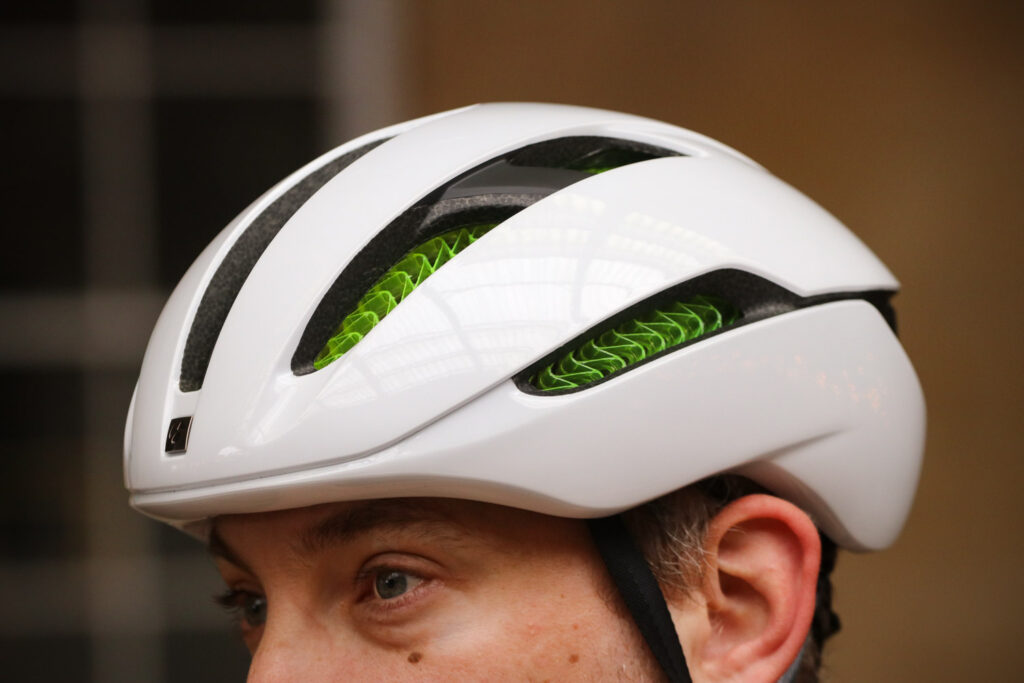

Trek and its sub-brand Bontrager have unveiled new helmet technology called WaveCel, which they claim is “proven to be up to 48 times more effective than standard EPS (expanded polystyrene) foam at preventing concussions from common cycling accidents”. More on that claim in a mo.

Although they don’t say it directly, WaveCel is intended to compete with MIPS (Multi-directional Impact Protection System), a safety system that is designed to reduce rotational motion transferred to the brain in the event of certain types of impact.

WaveCel is a collapsible cellular material developed by orthopaedic surgeon Dr Steve Madey and biomechanical engineer Dr Michael Bottlang. They have collaborated for the past 25 years and have worked with Trek and Bontrager’s Research & Design teams on the creation of the WaveCel helmets over the past four years.
Most helmets are designed to protect against direct impacts whereas WaveCel is also designed to deal with “twists, turns, and angled impacts”, according to Bontrager.
“WaveCel absorbs energy in multiple ways. On impact, the layers of the WaveCel material move independently and flex until the cell walls crumple and then glide, actively absorbing direct and rotational energy and redirecting it away from your head.
“This three-step change in material structure—flex, crumple, glide—is remarkably effective at dispersing the energy from an impact. Nearly 99 times out of 100, WaveCel prevents concussions from common cycling accidents.”
Okay, so about these safety claims – they’re based on AIS 2 Injury (BrIC) at 6.2 m/s test at 45° comparing a standard EPS helmet and the same helmet modified with a WaveCel insert as described in detail in Evaluation of a Novel Bicycle Helmet Concept in Oblique Impact Testing, the authors of which include Dr Madey and Dr Bottlang.
What the hell is an AIS 2 Injury (BrIC) when it’s at home? AIS is short for Abbreviated Injury Scale and BrIC means brain injury criteria. AIS 2 refers to a moderate injury. Oh, and 6.2m/s is about 14mph.
By the time you read this, the full paper, published in Accident Analysis and Prevention, should be available at trekbikes.com/wavecel. You can read an abstract here.
The researchers compared traditional EPS helmets to helmets with a MIPS slip liner and helmets with a WaveCel cellular structure. To cut to the chase, MIPS and WaveCel helmets reduced headform rotational acceleration by 22% compared to EPS helmets at a 6.2 m/s impact speed on a 45° anvil.

“In this impact scenario, [MIPS] helmets and [WaveCel] helmets reduced the AIS 2 brain injury risk to 34.2% and 1.2%, respectively, compared to [EPS] helmets,” according to the researchers.
“Results of this study are limited to a narrow range of impact conditions, but demonstrated the potential that rotational acceleration and the associated brain injury risk can be significantly reduced by the cellular WaveCel concept or a MIPS slip liner.”
MIPS last week said that it is concerned by the lack of an industry-wide standard for the testing of rotational motion in the event of angled impacts to the head.
Bontrager says that every model in the WaveCel helmet lineup received the highest marks in Virginia Tech’s five-star ranking. The full results will be published here.
Bontrager is keen to distance WaveCel technology from the honeycomb shaped materials used in some helmets. That’s presumably a reference to Koroyd, as used in Smith and Endura lids.
“[These materials] primarily address linear impacts to prevent skull fractures,” says Bontrager. “These systems usually include a slip liner to the helmet to address rotational forces. WaveCel addresses both linear and angular impacts but also flexes to make a uniform dome shape that wraps mostly around the inside of the helmet.”
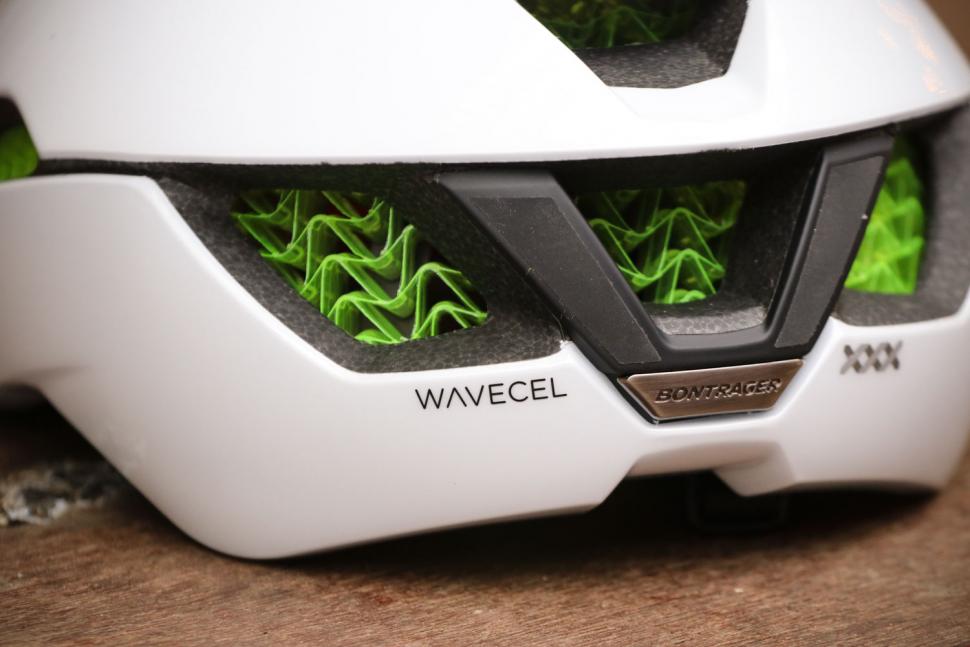
The Bontrager lineup currently contains helmets that feature MIPS, and that is set to continue. WaveCel helmets come in at the top, indicative of the way Bontrager regards its new technology. The range will follow a good-better-best structure, ‘good’ being EPS helmets, ‘better’ being MIPS, and ‘best’ being WaveCel. The addition of MIPS tends to increase the full retail price of a helmet by around £20.
There are four WaveCel helmets in the range:
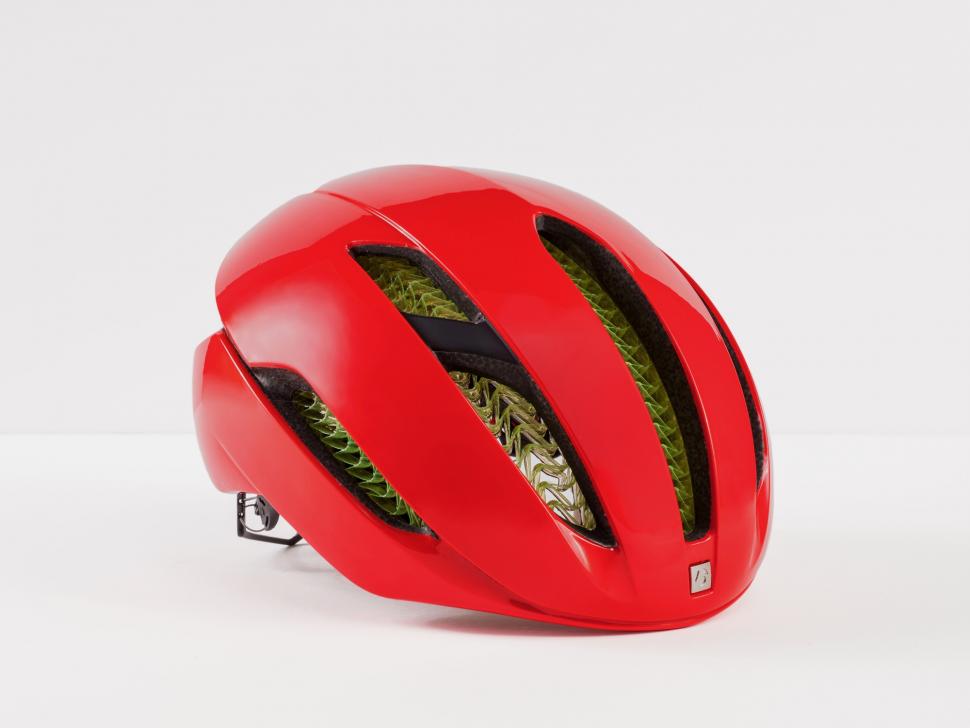
Bontrager XXX WaveCel (above), for road riding, £199.99
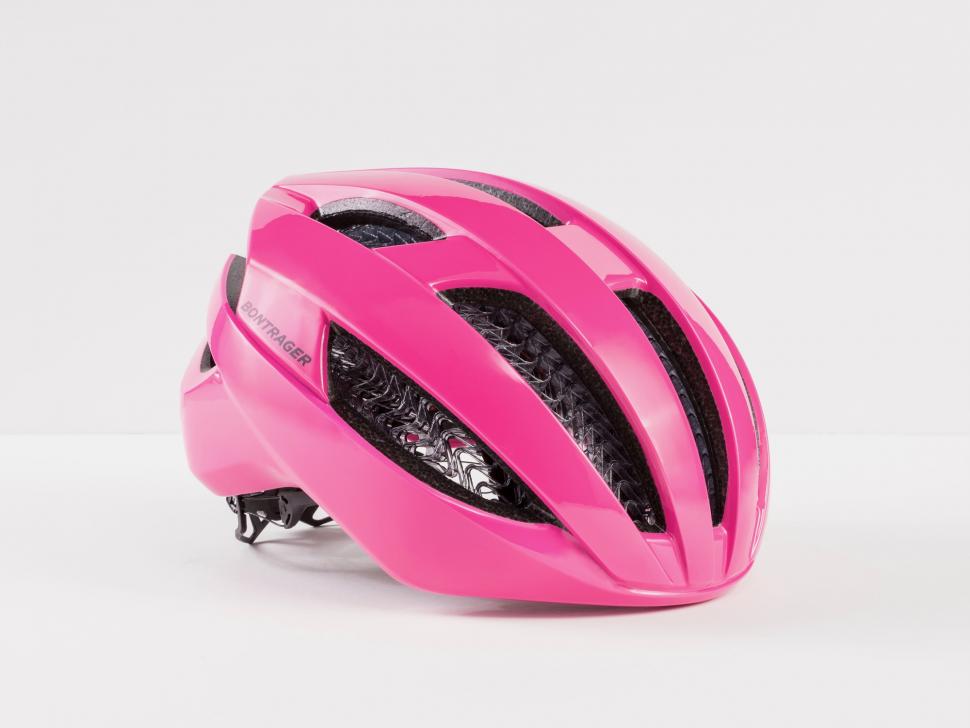
Bontrager Specter WaveCel (above), an all-rounder, £129.99
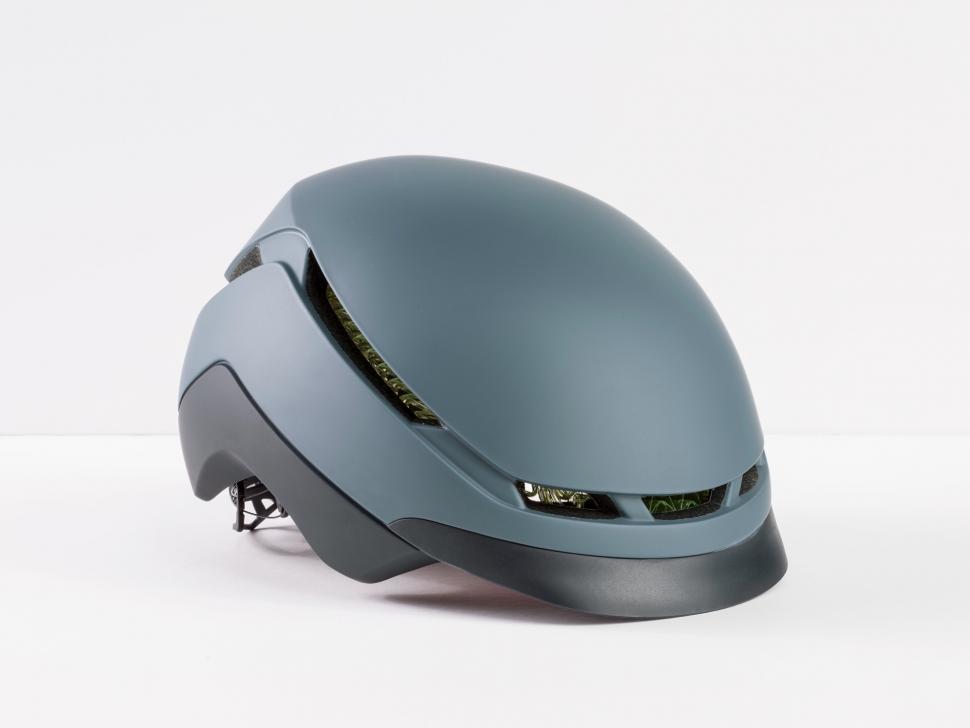
Bontrager Charge WaveCel (above), for commuting, £129.99
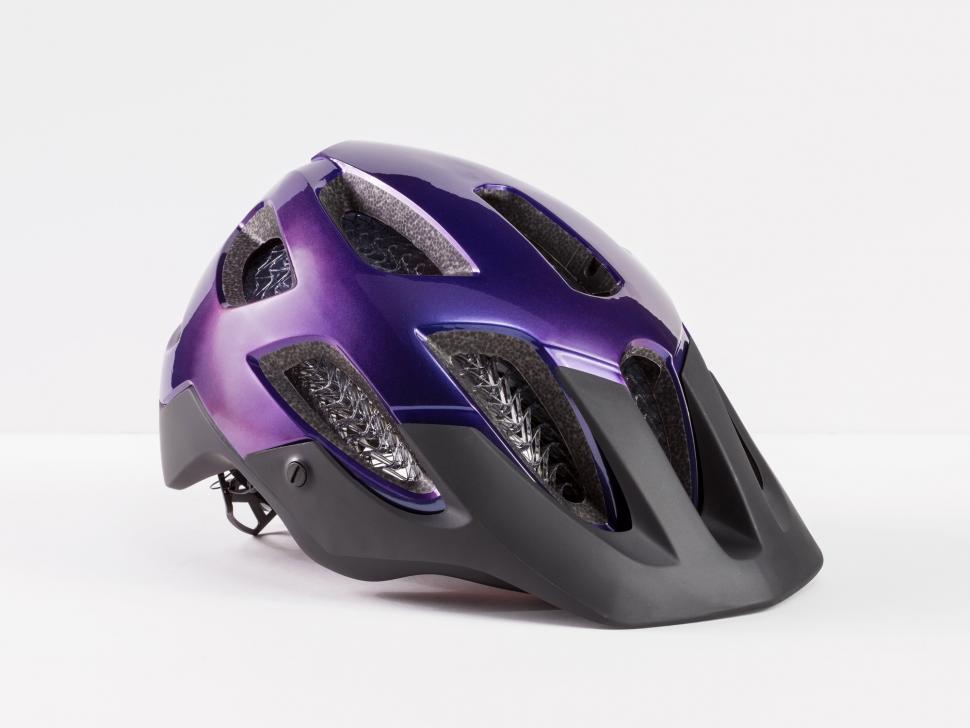
Bontrager Blaze WaveCel (above), for mountain biking, £199.99
All are available in various colours.
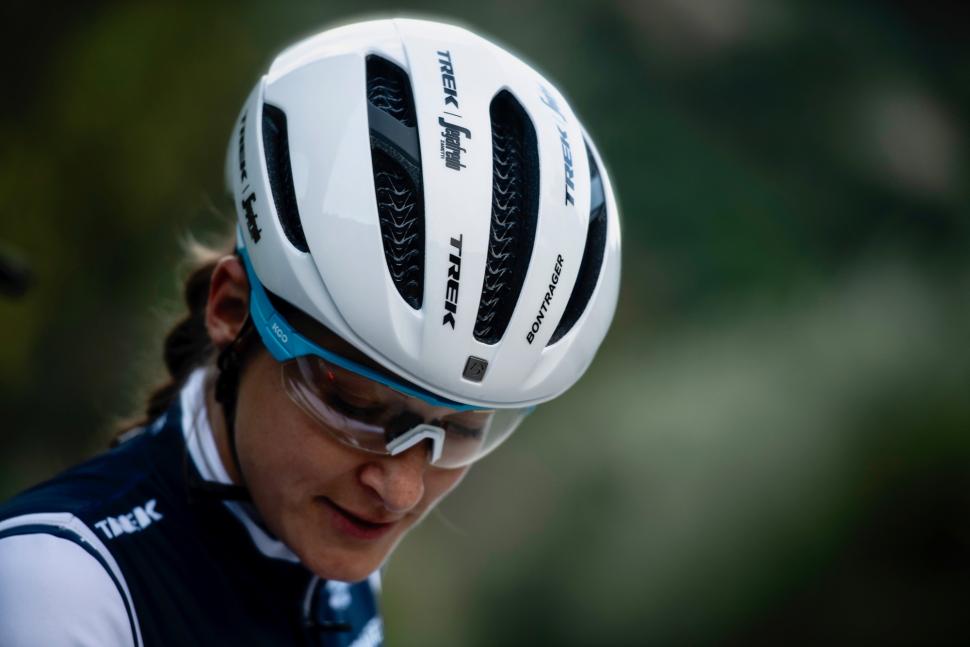
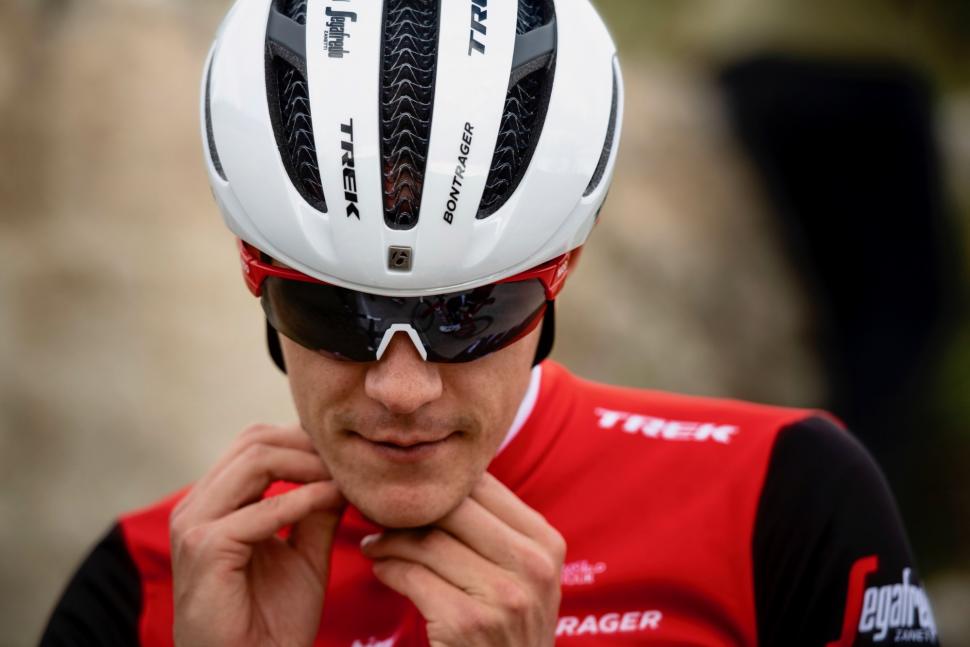
The Bontrager XXX WaveCel is the high-end road helmet in the range, as worn by the Trek-Segafredo men’s and women’s teams, and features a fit system that’s controlled with a Boa dial, as do all of the other WaveCel models. The medium sized version has a claimed weight of 352g. The one we have in for review came in at 361g on the road.cc scales. Bontrager reckons that on average WaveCel adds 53g to a helmet.
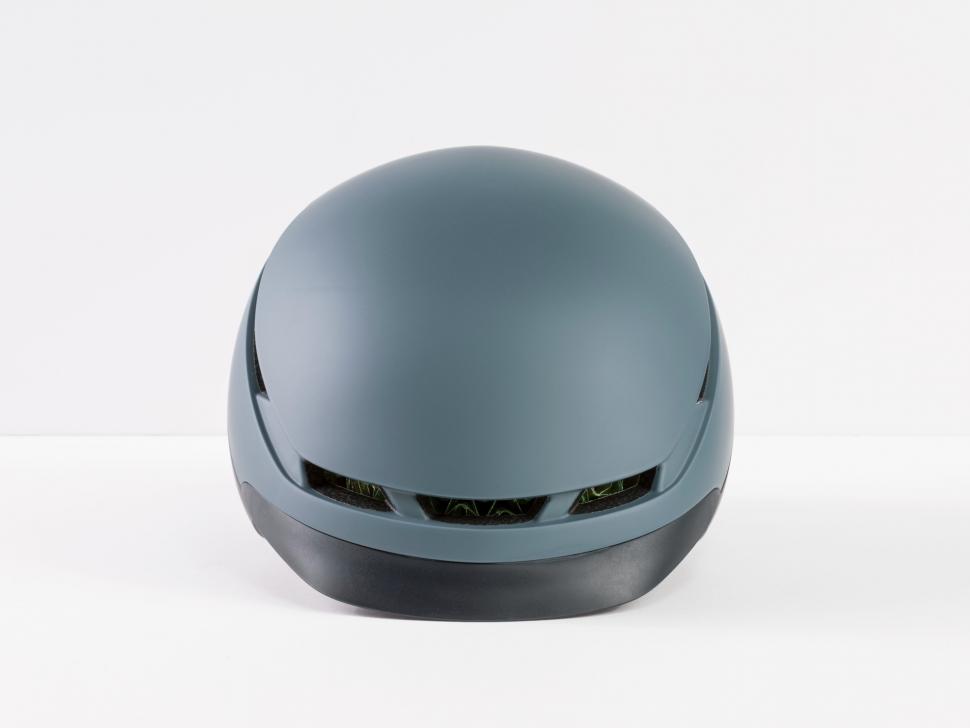
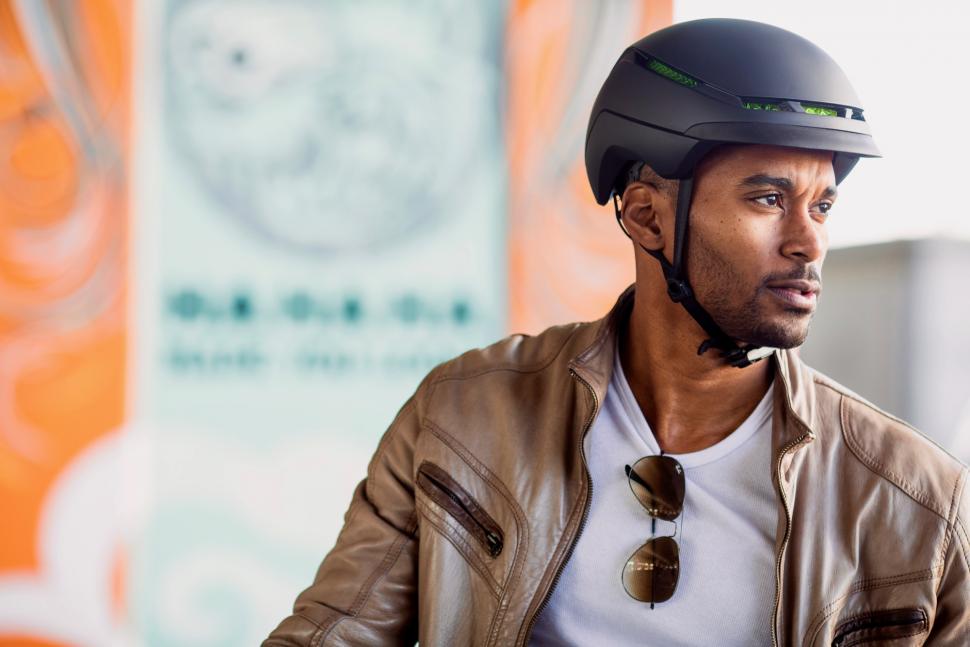
The Bontrager Charge WaveCel commuter helmet features a Fidlock magnetic buckle, a rear mount for Bontrager light accessories, and a short peak. The claimed weight for a medium is 428g. Our scales showed 445g for the one we have in for review.
All come with a crash replacement guarantee that entitles you to a free replacement if the helmet is damaged in a crash within the first year of ownership.
WaveCel is exclusive to Bontrager, the brand having no plans to license it.
For more information, visit trekbikes.com/wavecel.






24 thoughts on “Bontrager claims WaveCel helmets set new standards in safety”
So is this Trek’s “Cycling’s
So is this Trek’s “Cycling’s most important change in 30 years” that’s supposed to come out on the 20th?
longassballs wrote:
Not unless the most important change in 30 years is ‘announcing things a day early’.
simonmb wrote:
Not unless the most important change in 30 years is ‘announcing things a day early’.— longassballs
Bizzarely it appears to be exactly that
What kind of impact does this
What kind of impact does this wavecel layer have on ventilation?
I sweat a lot and anything that prohibits ventilation would make this helmet too uncomfortable for myself.
Also if this really is a revolutionary new development then surely Bontrager would be morally obliged to licence it out to other manufacturers?
Joe Totale wrote:
Dunno, but it looks a hell of a lot airier than Koroyd – guess we’ll find out when it’s reviewed…
Very clever. Will it stop
Very clever. Will it stop drivers knocking us off?
burtthebike wrote:
No, it’s a helmet. I was equally disappointed in the ’70s when my Rector Protectors didn’t stop me coming off my ‘board.
They should sell loads of
They should sell loads of these to pedstrians and motorists given their so called additional protection, they’re precisely the market these would be useful for, basically it’s just more marketing bullshit. They haven’t actually made any substantial claim as to safety, they’ve picked a singular in lab test that as per is narrow in extremis, they’ve used one of the lowest levels that is still well short of the old test.
What evidence do they have to prove that the test for which they say their helmet is 45x better than a std helmet, is ‘common’?
IF it’s 45x better than surely this will save a cyclists life and prevent serious TBI, even when struck by a motorvehicle at speed, why aren’t they making those claims of safety, as usual it’s all totally fucking bogus! Oo, it’ll prevent a low level concussion …maybe and only maybe IF you are struck by an anvil at a certain angle and at a nhead tripping up whilst walking and hitting the deck speed.
FAAAARK OFF BULLSHITTERS!
Cars have internal protection
Cars have internal protection already and lack of it, or lack of use of it, is correlated to injuries. Pedestrian KSIs are predominantly due to impact with vehicle, which a helmet is unlikely to help with.
The ‘up to 48x’ quote from the article is relating to reduction of concussion risk, and not some general protection rating. The link the results is in the article, their test methodology is here
https://vtechworks.lib.vt.edu/handle/10919/83760
‘Helmet manufacturers never
‘Helmet manufacturers never make safety claims because helmets don’t work’
Helmet manufacturer makes an explicit safety claim.
‘Thats not a safety claim!’
Rich_cb wrote:
Well, it’s a claim, I’ll give you that, but like the previous claims of 85% reduction in deaths to cyclists claimed by helmet proponents previously, it has yet to be proved in practice. All previous claims of massive reductions in deaths and injuries to cyclists made for helmets have proved to be false, so should we be just a little sceptical when more such claims are made?
burtthebike wrote:
So repeated false claims should lead us to greater scepticism of all future claims…
A very interesting suggestion Burt.
Laughing at the Flat earther
Laughing at the Flat earther saying helmets dont work! but the45 times is marketing overreaching.
10n impact with my Giro is the same as a 450 n impact with this?
Freddy56 wrote:
Assuming that you’re new to the GHD, not just a troll, take a look at cyclehelmets.org
Then you can tell us that the Earth is flat.
burtthebike wrote:
I went to that site and it is clearly written by someone with a bias against helmets. I can give you an example if you like.
Also, quoting population statistics all you like isn’t going to make any difference to whether someone wears a helmet or not, they want to know if their brain is better off if they hit a car or the road with or without one on. The theory on the site as to whether helmets help/do not help in crashes refers to EPS liners and their inability to deform on impact, which is irrelevant in this case as the Bontrager helmets don’t use EPS.
Population statistics are in fact interesting and thought provoking but there is a word for focussing on some evidence and ignoring or dismissing other evidence. I’m sure you know what the word is!
abrooks wrote:
Please do
“Pro-helmet”, I think

brooksby wrote:
As a start, their ‘Helmet saved my life’ page has a number of partial facts, inferences, whataboutery and even down-right wrong statements. There’s some useful stuff on there, as always, but it’s hardly what one might call ‘neutral’.
Edit : I’ve not an axe to grind one way or another, and don’t want to get dragged into yet another slanging match with folk with entrenched positions – I just have a thing for using data and science in general in an unbiased fashion, it’s often enlightening and not what you think you want or expect; i’ve had that when I was in research and outside and makes for an easier, and often more illuminating, life.
fukawitribe wrote:
So no actual examples, just your opinion?
And you’ve no axe to grind but you are happy to accept the evidence of one side, but not the other?
burtthebike wrote:
I gave you an example from the site – go and read and digest that page, and then in a first instance you decide whether you believe it to be entirely factual – in particular in light of this article and related subjects. The wording, in context, regarding the childrens helmet paper is also interesting.
I accept data from all sides, and there is some useful data on that site as i’ve already said. My opinion, and it is that, is that the manner of it’s presentation is not without a certain bent. I’ve said as much about publications that, in my opinion, have a contrary bias e.g. a number of recent papers regarding the accident statistics in Australia.
fukawitribe wrote:
You gave no example of any factual error and still haven’t, just your opinion.
burtthebike wrote:
I asked you to go to that page and see what you thought, and said that this article was relevent – you either haven’t, or you have and haven’t seen any errors, i’m interested in which.
Here’s a quote from that page
brooksby wrote:
I think we can all agree that the ‘evidence’ on both sided is fourth rate at best. My only strong conviction, give that fact, is that helmets should be optional. I do wear one though.
No, there is a risk reduction
No, there is a risk reduction claim under similar conditions, not that it will perform the same under an order of magnitude greater impact.
The Earth is certainly not
The Earth is certainly not flat. I distinctly remember cycling up a hill this morning on the way to work.