


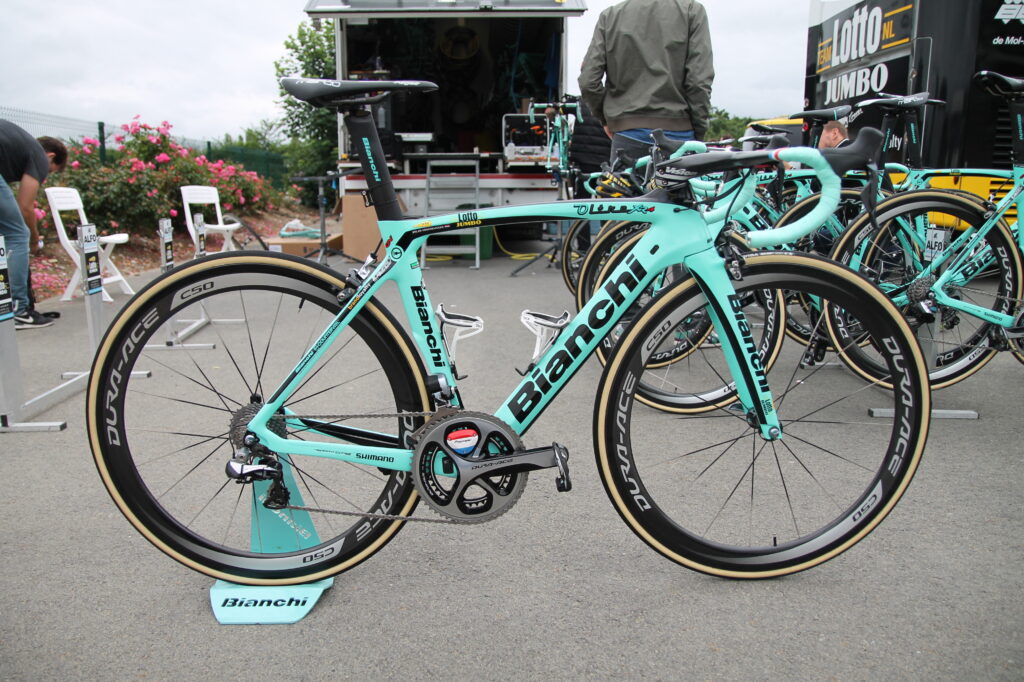

We’re expecting Bianchi to make an official announcement on the launch of its Oltre XR4 CV aero road bike any day, and in the meantime we can have a good look at the models ridden by the Lotto NL Jumbo team in the Tour de France.
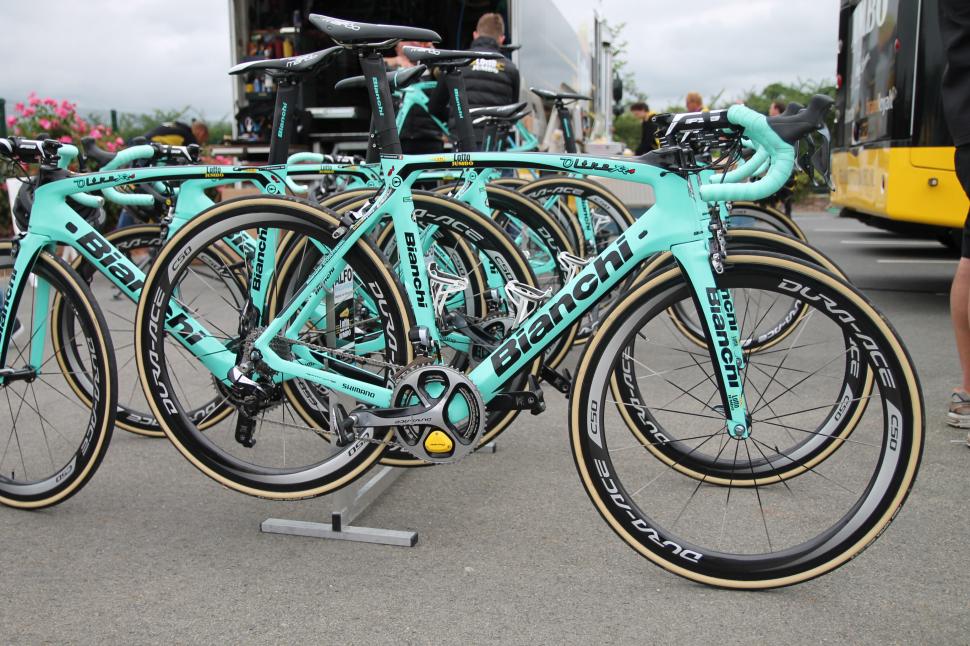
The Oltre has been in the Bianchi range for a few years now, and we’ve reviewed each of the previous versions on road.cc in the past. We’ve always been hugely impressed.
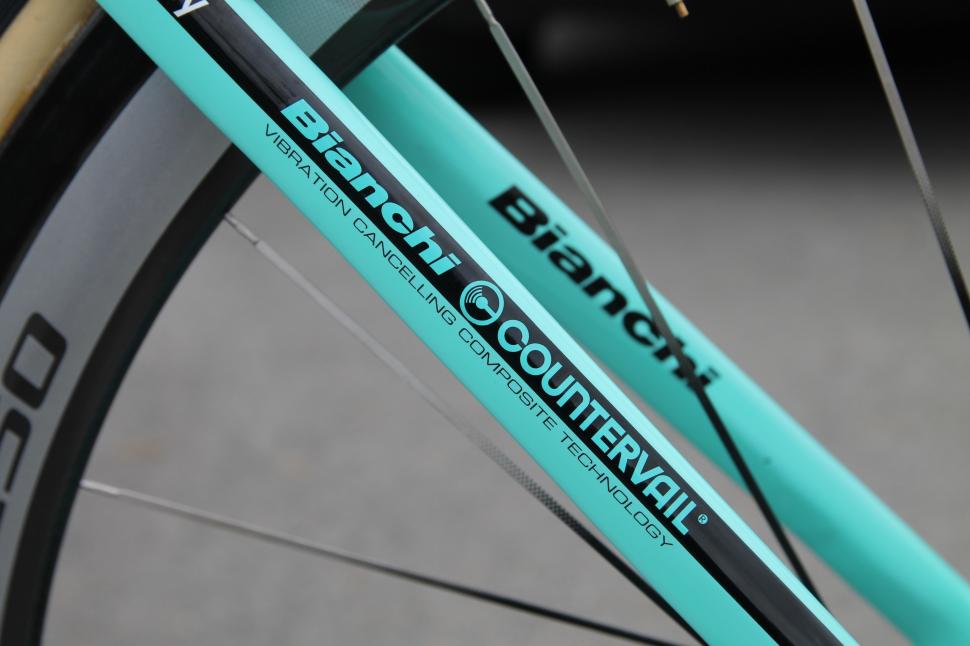
One of the big differences with the XR4 – there is no XR3 – is that this version incorporates Bianchi’s CounterVail technology, something that already features in its Specialissima, Infinito (road) and Aquila (time trial) models.
CounterVail is a viscoelastic carbon material from Materials Sciences Corp that’s embedded within the frame’s carbon layup. The idea is that it reduces high-frequency road vibration compared to a regular carbon-fibre frame by as much as 75%, helping to lower muscle fatigue and save energy while improving handling and control.
It’s quite difficult to compare the XR4 to the XR2 by eye, but it’s clear that the differences amount to more than simply a change of material. Although the two bikes look essentially the same shape, the profiles of most of the frameset elements appear to have been altered.
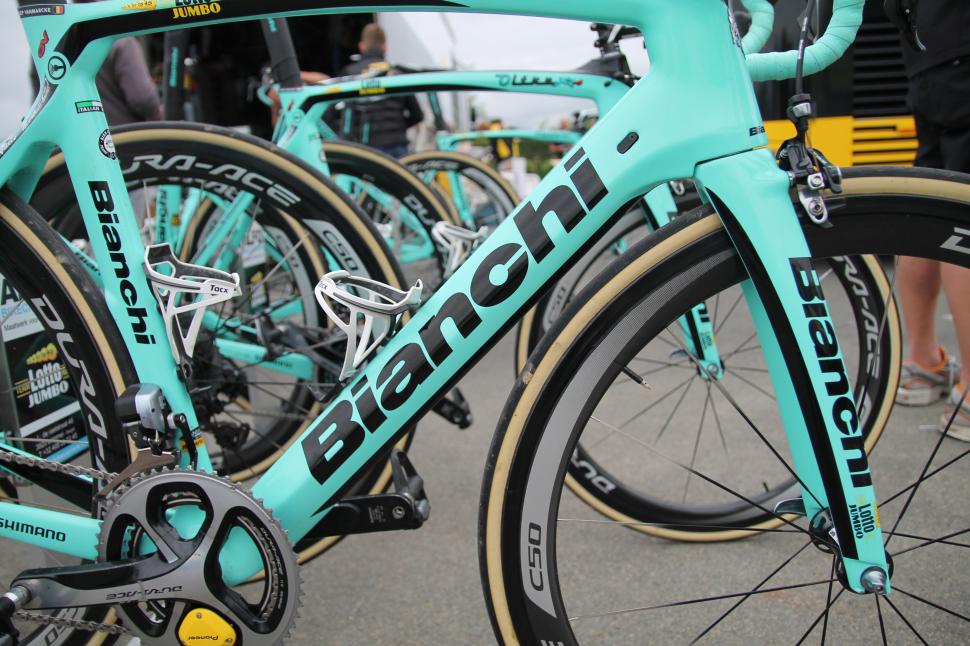
The down tube, seatstays and fork legs look deeper than before, for example, as do the chainstays which now feature a kink towards the dropout.
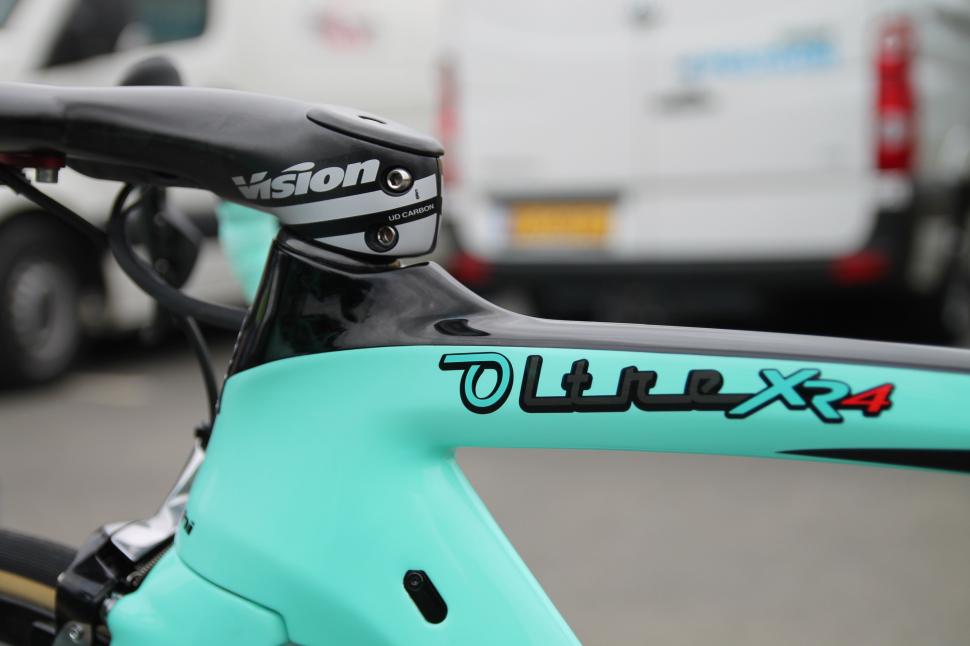
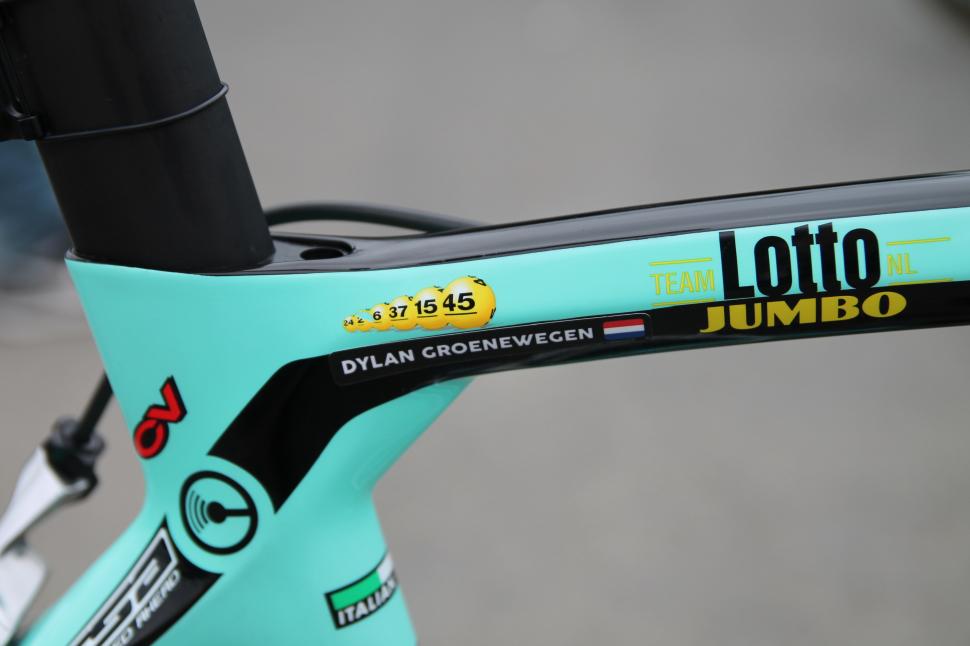
Check out the top of the head tube too. Whereas the top of the headset sits above the top of the frame on the XR2, the headset is integrated within the head tube/top tube junction on the XR4. In other words, the headset doesn’t increase the size of the bike’s frontal area. Other brands do similar things to improve aerodynamic efficiency.
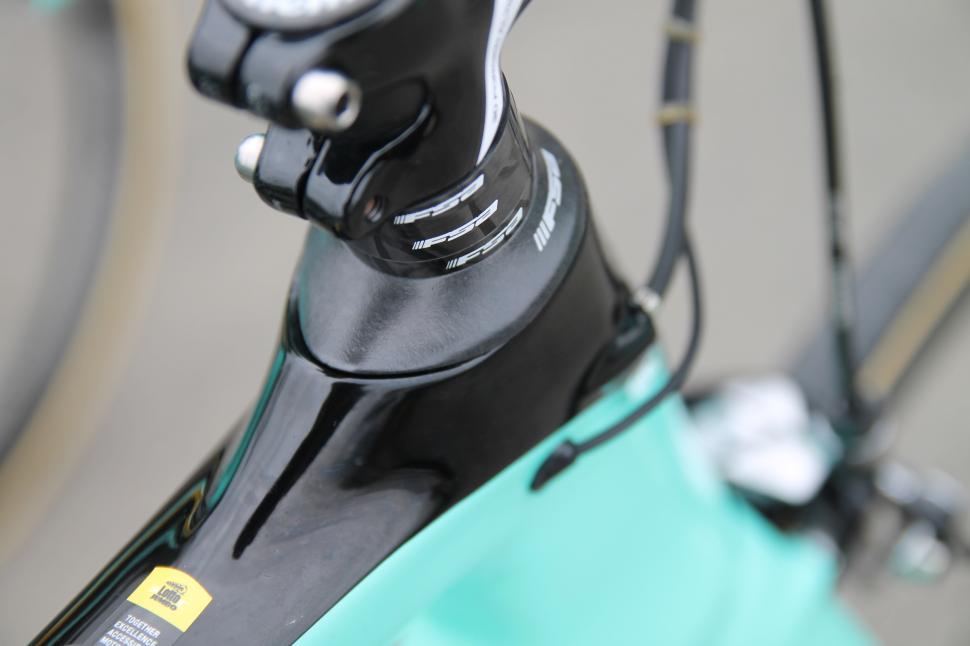
On this example (above), where the rider wants a higher front end, the top of the headset gets what looks like a bespoke cap.
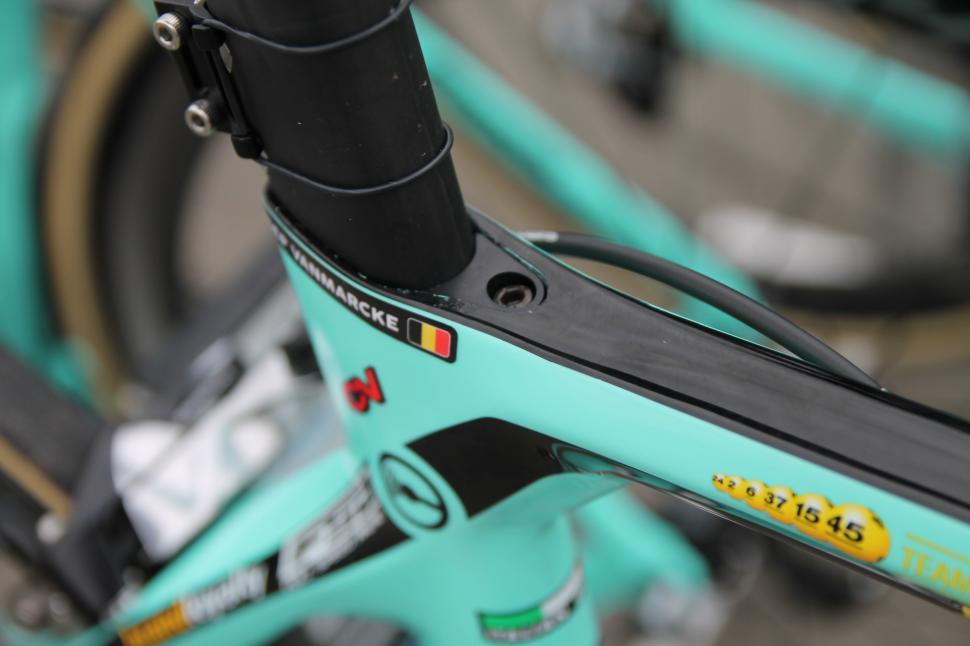
The seatpost clamp has been altered too. Previously it was external, flush with the frame, but now Bianchi is using an internal wedge-type system.
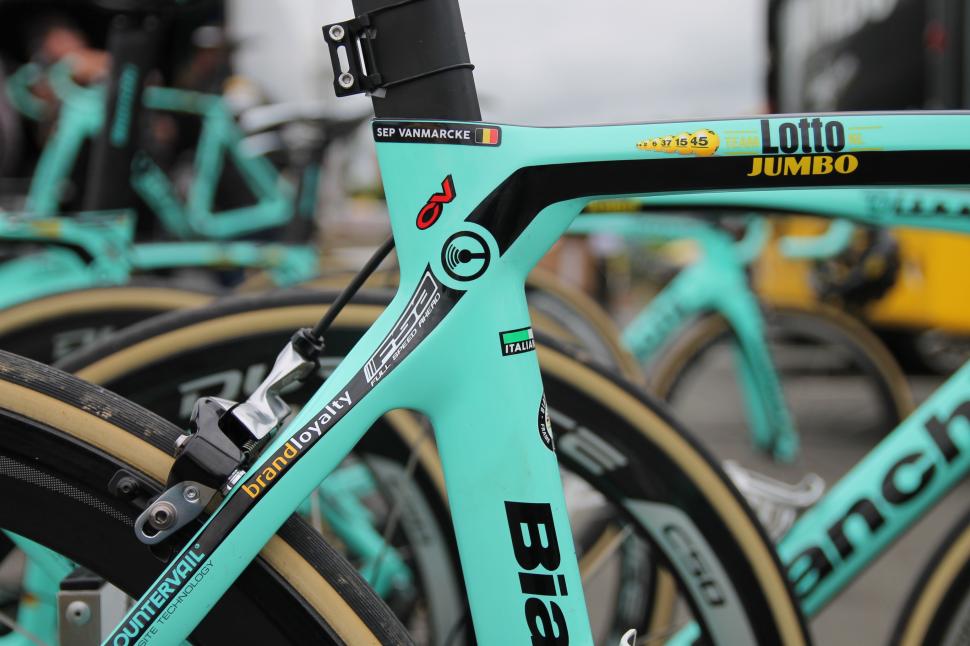
It looks like the seatstays meet the seat tube a little lower than before too, reducing the frontal area a touch and perhaps dropping the weight.
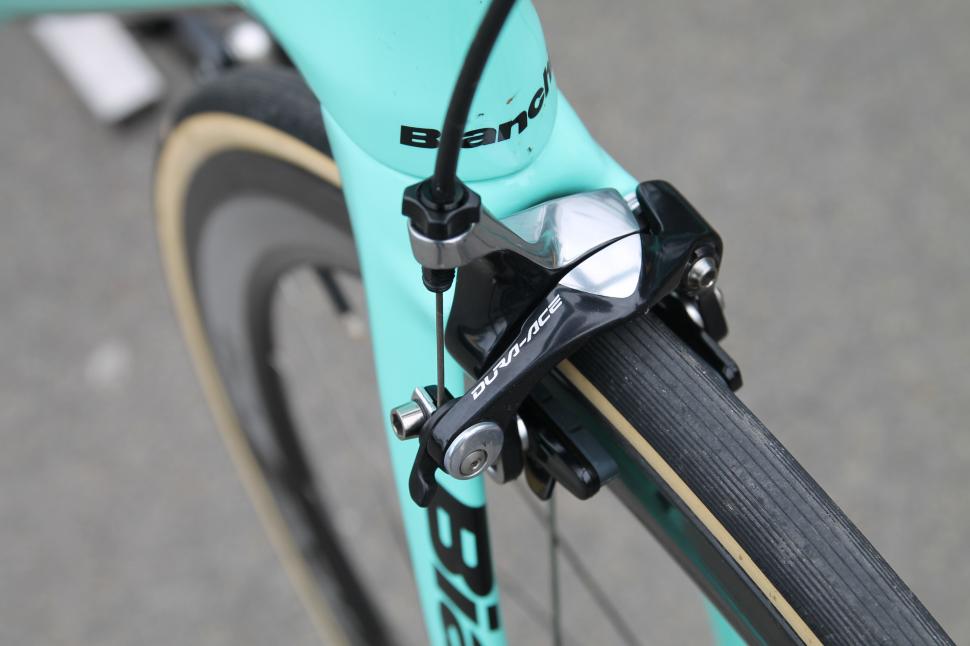
Bianchi has made the switch from standard dual pivot callipers to direct mount brakes (where each brake arm is bolted directly to the frame/fork rather than via a central bolt). Quite a lot of brands have done this on high-end race bikes recently in order to improve the performance.
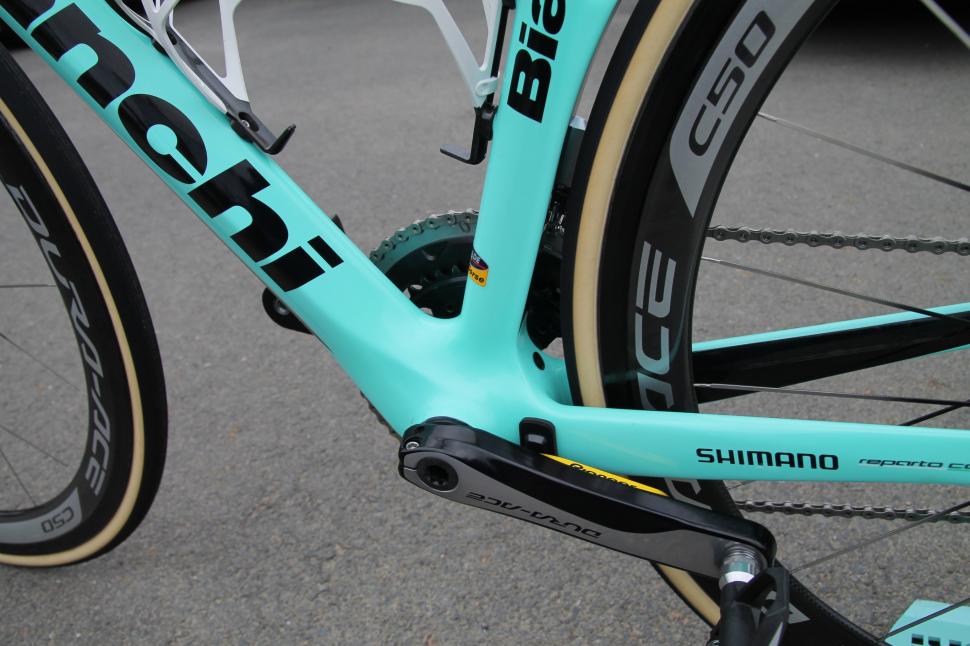
It looks like Bianchi has stuck with a BB386Evo bottom bracket.
Bianchi has a press event scheduled for next week so we can expect more details then.



13 thoughts on “First Look: Bianchi Oltre XR4 CV”
Wow, that’s a good looking
Wow, that’s a good looking bike .
.
Want it so bad that I feel
Want it so bad that I feel like crying
Lotto-Jumbo NL better win some stages. Shame on them if they can’t on this gift from the Gods.
Really, the Di2 version of
Really, the Di2 version of this bike should have been called the XR4i, likewise with the XR3i, XR2i . Deeper shade of blue required too!
shutuplegz wrote:
Ford have the copy right
no campag no want
no campag no want
Bob Wheeler CX wrote:
That’ll be a blow to them. Lotto NL Jumbo are a Shimano sponsored team however Bianchi will inevitably sell you a Campagnolo kitted one when they’re publically available, assuming you have the cash.
Bob Wheeler CX wrote:
No worries he can post a pic when he gets his campag XR4 after release. Wonder what he’s riding now eh.
Bianchi Ouitre
Beutiful bike, gorgeous colour. Why not Campag? Please keep it Italian.
Oh FFS, please can we get
Oh FFS, please can we get away from the same old inane bleating every time we get an Italian bike on here. This one, it’s a bike from a Shimano sponsored team… probably going to have Shimano kit on it. Sheesh.
People will undoubtably be able to instantly unload their clearly over-strained wallets on a Campag shod one when they became publically available – same as with most of their bikes.
Still no press release. Maybe
Still no press release. Maybe waiting for a stage win on it first
What are the bars on the bike
What are the bars on the bike in the main image?
Love the traditional round bend.
matthewn5 wrote:
FSA Energy Traditional
(Pretty cheap too. Loved the look of them myself and was riding them until last month. They do look dead cool, but ended up changing them out for Ergo Zipps which are a tad more comfortable.)
unconstituted wrote:
Cheers!