



An appeal to increase the prison sentence of a Yodel delivery driver who killed a cyclist while driving under the influence of cocaine and cannabis has been rejected by the Attorney General’s Office.
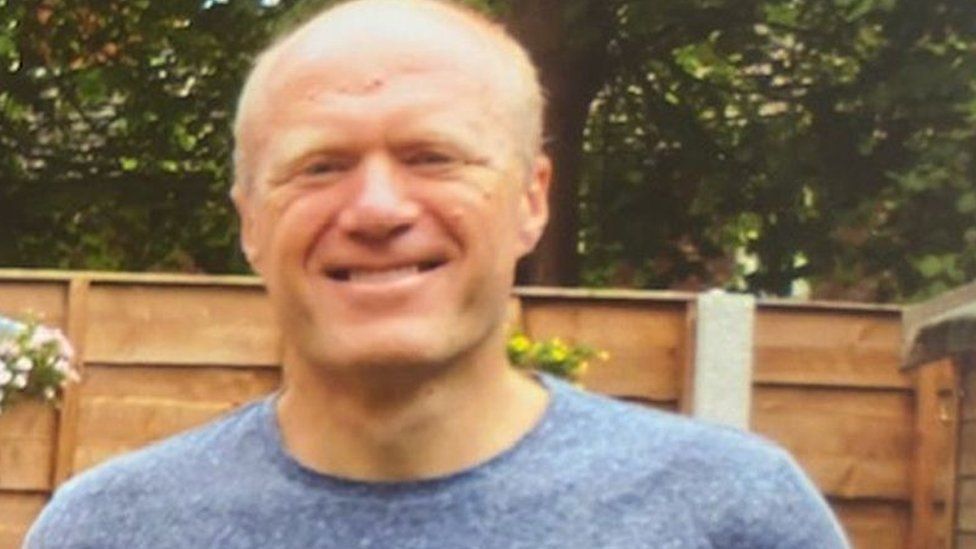
In May 2020 Jonathon Ramsbottom, 37, collided head-on with 54 year old father-of-two Stephen White (pictured) in Todmorden, West Yorkshire. White, who was training for an Ironman event, suffered serious head injuries and died in hospital shortly after.
Ramsbottom, a delivery driver from Rochdale, was found to have 200 micrograms of Benzoylecgonine – a metabolite of cocaine – per 100 millilitres of blood, and was on bail for drug offences at the time of the crash.
He pleaded guilty to causing death by careless driving and was jailed for seven years at Bradford Crown Court in October 2021. He was also banned from driving for 11 years.
A challenge was later made to increase Ramsbottom’s term under the Unduly Lenient Sentence Scheme. However, according to the Bradford Telegraph and Argus, the Attorney General’s Office reviewed the case and decided against referring it to the Court of Appeal.
The decision by the Attorney General’s Office comes almost eight years after the government promised a review of motoring offences and sentences, and over nine years since representatives of national cyclists’ charity Cycling UK (CTC at the time), British Cycling and Road Peace met with former Justice Minister Helen Grant to discuss a potential overhaul of the criminal justice system in cases where a cyclist is the victim – a meeting British Cycling then described as a “significant step forward.”





















13 thoughts on “Attorney General refuses to challenge sentence of delivery driver who killed cyclist while high on cocaine”
My futher condolences to the
My futher condolences to the White family on this travesty.
As I understand it, careless
As I understand it, careless driving (max sentence 7 years) entails driving that falls below the standard expected of a careful and competent driver, whereas dangerous driving (max sentence 14 years) falls “far below”. How does driving around coked off your face not fall “far below” the standard of etc etc?
Exactly. What does that say
Exactly. What does that say about the Attorney General’s office?
Surreyrider wrote:
I think it says they don’t like to get involved in judge’s decisions unless there’s a big public outcry.
It says that they can only
It says that they can only challenge a sentence where the sentence for the charged offence was too lenient; you cannot choose to impose a sentence for a higher offence without that offence being brought before the court. The judge has to start at the ‘starting point’ sentence before taking into account aggravating and mitigating factors, as well as being obliged to award a discount for the guilty plea. You can’t start at the max and work down, or at the min and work up.
However, the sentencing range for “Causing death by careless driving when under the influence of drink or drugs, etc” is pretty much the same as for death by DD (although much easier to prove), so that’s largely a moot point. AFAIK, there is no higher offence of death by DD due to drink/drugs.
The max starting point (for 71ug+ and “Careless/ inconsiderate driving falling not far short of dangerousness”) is 8yrs with a max sentence of 14yrs for this offence. So the combination of factors pushed the sentence up from the applicable starting point to 10 years, before applying a 3yr discount for the plea.
https://www.sentencingcouncil.org.uk/offences/crown-court/item/causing-death-by-careless-driving-when-under-the-influence-of-drink-or-drugs-etc/
So, IMO and from the limited info we have available, the CPS chose the correct charge; the judge presumably started at 8 years and added aggravating factors, before applying the discount. So without full access to the evidence (and examination of both aggravating and – if any – mitigating factors) we can’t state that it’s obviously lenient.
If anyone’s “to blame” for the sentence here then it’s the independent sentencing council.
Rendel Harris wrote:
Simple; it was only a cyclist. If he’d killed anyone else, that would be dangerous.
eburtthebike
eburtthebike
‘Simple; it was only a cyclist. If he’d killed anyone else, that would be dangerous’.
Gosh, that’s a cynical comment. But I agree unfortunately.
He was charged with causing
He was charged with causing death by CD whilst unfit – a different offence with the same 14yr max sentence, and much easier to prove than DD; there’s also no death by DD whilst unfit offence.
Why is it that British
Why is it that British Cycling and other cycling groups are so easily fobbed off by career politicians? After 9- years since the meeting with Helen Grant and the non-delivery of the significant step foreward you would have thought these organisations would be shouting their outrage from the roof tops! My heart goes out to the family of Stephen White, it could so easily be any cyclists family suffering as they are. The attorney generals office is clearly unfit for purpose! 7yrs really means 3yrs, it’s a disgraceful situation, Every cyclist needs to write to their MP, perhaps road.cc could organise a national al campaign.
well he could have only got
well he could have only got 12months for it, so the 7 years probably does take account of the drugs part.
https://www.eadt.co.uk/news/crime/hgv-driver-killed-elderly-cyclist-in-bungay-8556900
No. The charge of “Causing
No. The charge of “Causing death by careless driving when under the influence of drink or drugs, etc” (RTA s3A) takes account of the drugs part.
And the minimum for that level of intoxication is then 5 years (with a max of 10) if it’s “momentary inattention with no aggravating factors.”
we are talking about people
we are talking about people who have been killed, families who have lost loved ones, it seems a bit disrespectful to argue the absolute details of charges like it matters that much, ultimately the end outcome in jail time is all people are concerned with, not what section of the road traffic act it came under.
It sort of does matter when
It sort of does matter when you’re discussing whether or not the sentence was too lenient. A court can only pass a sentence for the charged offence.