



As the Tour de France reached the end of its first week of racing in Mûr-de-Bretagne on Friday afternoon, two starkly contrasting images from today’s stage neatly summed up the opening seven days of racing. One, of course, was the now customary sight of world champion Tadej Pogačar raising his arms in celebration at a finish line, the Slovenian easily sprinting to his second win of this year’s race, and the 101st of his career, in the Breton town.
The other was the more sobering image of Pogačar’s key UAE Team Emirates domestique João Almeida, bloodied and battered, rib broken, jersey torn, one of the ten victims, alongside Jack Haig (who failed to finish the stage), Guillaume Martin, and Eddie Dunbar, of the latest high-speed crash at this year’s Tour de France.

Unsurprisingly, the chaotic, fraught start to the Tour – a defining characteristic of the race’s first week, often synonymous with tension and crashes – has ensured that rider safety remains at the top of the cycling agenda, after a year marred by injuries and tragedy, as well as plans to overhaul equipment standards and reduce speeds in the peloton.
Earlier this week, Israel-Premier Tech’s Michael Woods criticised Tour organisers ASO’s pre-race safety presentation, which he claimed appeared to lay most of the blame for crashes on the riders themselves, telling them that they “must also take greater measures to reduce risks, and if they don’t, they may have to be forced to wear protective equipment in the future”.
In a lengthy blog post, former Tour stage winner Woods also devised his own four-point plan to make cycling safer, including scrapping the relegation system, which he says increases stress in the bunch, and reducing the size of the peloton, noting that the smaller bunch featured in the Olympics road race made it the safest event of last season.
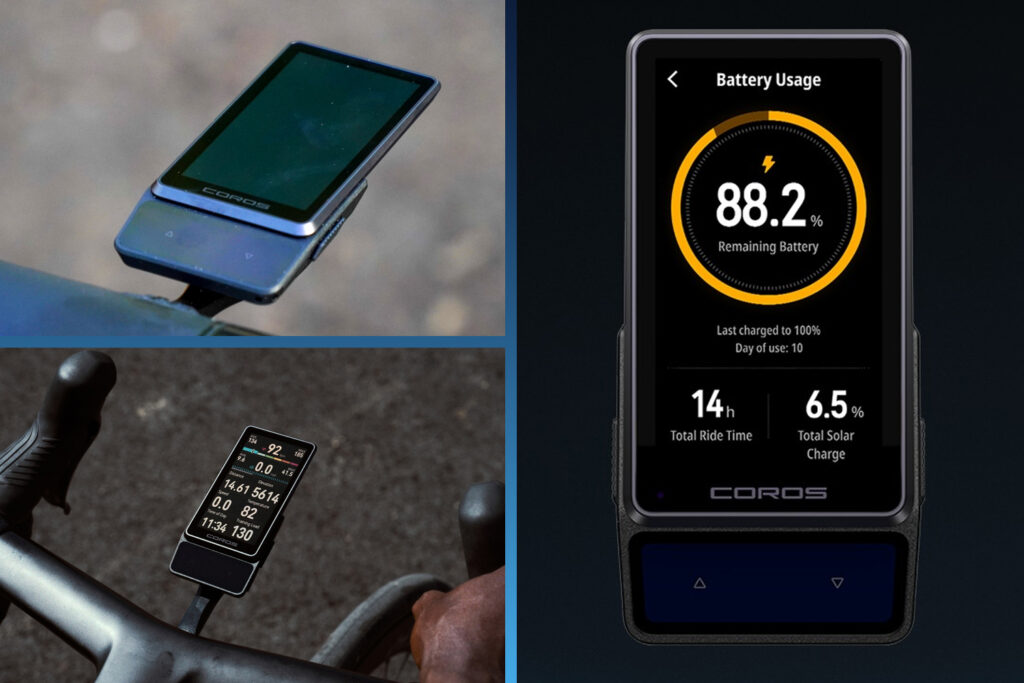
The 38-year-old argued that speeds could be lowered by restricting bike and equipment design, and that steps should be taken to “reduce distractions”, such as the use of race radios and the modern trend of riders constantly looking at information on their bike computers.

The build-up to the Tour was also punctuated by the UCI’s decision to introduce a raft of equipment changes, introduced ostensibly to deal with the “safety implications” of the increasing speed of professional races and thus increase safety.
The new rules – most of which are set to come into effect from next January – will see time trial helmets banned in road races, a maximum rim height set, a new fork width limit introduced, and, most controversially, the implementation of a new minimum handlebar width of 400mm.
Meanwhile, the governing body also announced that it will trial a new maximum gearing rule at the Tour of Guangxi in China in October, in another attempt to limit top speeds in the peloton.
This junior-style gear restriction, suggested by Wout van Aert earlier this year, will cap riders at a 54×11 gear ratio on 700c wheels, potentially hitting SRAM-sponsored teams hardest, as their 10-tooth cog setup will exceed the new limit.
> UCI to trial maximum gearing rule — but will it really make racing safer?
However, speaking in Lille this week at the Tour de France’s Grand Départ, the head of engineering at one of those SRAM-equipped squads Red Bull-Bora-Hansgrohe, Dan Bigham, argued that restricting gears will have no impact on speeds during races.
During the Science and Cycling Conference in Lille, reported by BikeRadar, Bigham – a former Hour Record holder and team pursuit world champion, famed for his understanding of aerodynamics and tech gains – presented his own analysis of the planned gear restrictions, which he argued were a distraction from the real changes that could be made to improve safety in pro cycling.

“If Wout van Aert, Tadej Pogačar or Mathieu van der Poel have a life-changing injury, or worse, we will have blood on our hands,” the 33-year-old said.
“We have the power to make changes. But restricting gear ratios simply distracts from making meaningful changes to rider safety.
“From my analysis, for reducing ratios to have an impact, we need to presume professionals would adhere to unrealistic cadence limits that aren’t supported by the literature.
“It’ll impact on as little as 0.01 per cent of a race and will arguably reduce speeds by no more than 0.5kph. All of this to change entire groupset design? It really doesn’t seem effective to me.”

Referencing recent research by Kurt Bergin-Taylor, which showed an elite riders’ maximum cadence can reach over 200rpm, Bigham continued: “Whether you’re a GC rider or sprinter, if you want to limit a rider to 75kph and they can pedal at 200rpm, that means a gear ratio of three or less.
“So, will riders have to ride with – solely – a 30-tooth chainring? Even dropping cadence to 130rpm with a UCI ratio of five, you’d still ride at 80kph. But we know riders can do much higher than that for shorter periods.”
Assessing files from GC contenders at last year’s Giro d’Italia, Tour de France, Vuelta a España, and Tour of Guangxi, Bigham found that, at the 5.0 gear ratio stipulated by the UCI as part of its trial, riders would be gear limited – compared to a 5.6 ratio – for 1.1 per cent of the race at 120rpm, 0.34 per cent at 130rpm, and 0.1 per cent at 140rpm.
“What do we see? That riders don’t spend much time at high speed!” the Olympic silver medallist said.
He then pointed out that the highest speeds in races often happen on descents, where gravity – not gearing – is the most important factor.

“The huge speeds happen on descents where you have huge input from gravity. If you’re on a 15 per cent descent and you weigh 80kg, that’s around 4,000 watts from gravity alone,” he said.
Riders descending at 75 to 90kph, Bigham noted, are putting in a maximum of 100 watts, which won’t be affected by gear restrictions, which will likely only affect an extremely small percentage of the race.
Bigham continued by arguing that the UCI’s gear restriction plan has the potential to focus solely on one small aspect of racing, without making any meaningful impact. Instead, the British engineer says cycling’s stakeholders should instead focus on four main “pillars” of safety: course design, bike design, rider protection, and medical response.
“We must use data to improve the situation,” he said. “Cycling is close to its Ayrton Senna moment. Ayrton died, and it changed things because he was a superstar.
“The FIA took it upon themselves to use science and data… Formula One has a lot to teach road cycling about going faster, but also about teaching us about safety.
“Take rider safety. We should have race-relevant helmet standards. But road-race helmets are tested at 20kph impact speeds. That’s not relevant or good enough.”






52 thoughts on ““Cycling is close to its Ayrton Senna moment”: Dan Bigham says “we will have blood on our hands if Pogačar or Van der Poel have a life-changing injury”, branding UCI gear restriction trial a distraction”
I used to think that people
I used to think that people calling for a ban on race radios were just a bit old fashioned and technophobic but having read Sean Kelly on the subject I’ve changed my mind. As he points out, riders used to make their own decisions within the peloton, now they’ve got their DS screaming in their ears to move up, back, across etc and that leads to panic and rash decisions that lead to crashes. Race radio does have its uses for safety purposes (warning of hazards etc), maybe it’s time to restrict broadcasts to messages from the commissaires of time gaps, upcoming hazards etc or have “radio silence” zones at pinch points and, say, 15km out from the finish. Someone mentioned elsewhere how the Olympic road races last year were notable for the lack of crashes, attributing it to the smaller peleton, but another factor may have been that they didn’t have race radio and they don’t in the Worlds either.
And the radios are a
And the radios are a distraction at times.
I seem to be quoting ex pros
I seem to be quoting ex pros alot, but theyre the ones who should know I mean, but Michael Matthews said they make no difference, they ride Olympics, World Champs & nationals without them, there are still crashes,and the same riders generally come out on top in them still.
stonojnr wrote:
But Michael Woods, a current pro, says they’re a distraction. Romain Bardet, Marc Madiot, Lotte Kopecky and others have also spoken out in favour of not having radios, and they’re the ones who should know as well, aren’t they?
Different riders have
Different riders have different views for sure, I’d find radios very distracting and uncomfortable and probably would think theyre unnecessary, you hear some of the rubbish DS’s shout on them and think I do not know how that is supposed to be helpful.
But the point is dont just echo the negatives, there’s not a consensus among riders who’ve used them, and evidence from when they dont use them don’t show any gains in rider safety.
Not convinced that removing
Not convinced that removing race radio is that right call. Its a tactical race and the riders need that help and broader view they can get from their team. I think the simple issue is that the peleton is too large and the courses are badly designed.
There have been a lot of crashes this year and I think most of them have happened due to course design or sheer volume of riders. Most of the ones I have seen haven’t even happened when you might think they would. They weren’t going super fast, they weren’t doing anything silly. It was just a dense pack and someone makes an error and down they all go.
mctrials23 wrote:
They don’t “need” that help, I am unfortunately old enough to have been watching racing since before radios were introduced in the early 90s and everybody managed perfectly well then, indeed it is arguable that the racing was more exciting because riders and teams had to make up their own tactics on the fly with a certain amount of guesswork as to what their competitors were doing rather than continually being fed updates every second of the race. At the moment you’ve got staff in the team cars watching the TV and telling their riders exactly what is going on everywhere on the road, is that really a necessary part of bike racing? Race radios aren’t allowed in the Olympics or world championships and we still get pretty good racing there. As I said, I wouldn’t object to them being retained for safety purposes but just limit the amount of information and instructions they can be used for and so stop riders taking foolish risks to force their way through the peloton because their DS is screaming at them that they must be in a certain position. Perhaps there would be fewer crashes if riders had to learn their trade better and make assessments and decisions for themselves instead of riding to their power meters and continually being told what to do by the DS.
Rendel Harris wrote:
+1.
Seeing yesterday’s downhill
Seeing yesterday’s downhill crash made me wonder if disc brakes are a factor. Are riders anticipating to a lesser extent and braking later and more violently.
Mr Blackbird wrote:
They do seem to be sometimes, however yesterday the crash was on a nice straight bit of road and it was either a touch of wheels or some outlets are reporting that Almeida’s tyre came off the wheel and that brought him down. If you look at the slo-mo, disc brakes were probably an advantage for Ben Healy and the riders in front as he locked up and with some amazing bike handling skidded right then left and hit the pileup at relatively low speed, with weaker brakes he might have gone in a lot hotter and done more damage to himself and others. I don’t think riders are any closer to each other than they used to be (they couldn’t be unless they were sitting on each other’s bikes) but in bunch crashes like yesterday’s I think discs mitigate rather than exacerbate the damage.
Robbie McEwan explained it
Robbie McEwan explained it perfectly, the crash happened whether wheels overlapped, touched or a tyre came off, because the riders in that group felt the hard bit of the stage was done, they could relax abit, switch off, lost a bit of concentration, and bamm, its what happens in a group of riders if one of them goes down.
its got nothing to do with discs, or race radios or speed or any of the other stuff people always bring up.
if you are in a tight group of riders and someone goes down, you are crashing, thats just group riding 101 and the risk of riding so closely together, which is why teams put alot of effort into keeping their lead riders out of such groups or protected by not riding in them slap bang in the middle.
The general question is why
The general question is why do more crashes seem to be happening. And my suggestion is that disc brakes may lead to less anticipation by riders, because they can slow quicker (and as a someone who regularly rides both rim and disc they certainly do slow quicker).
Not all crashes are a result of wheel touching or tyres coming off.
stonojnr wrote:
Much as I respect Robbie’s views and experience, it was pure supposition that the riders losing concentration was the cause of the crash and it’s nonsense to say that the riders would have said the hard bit of the stage was done when they still had another ascent of the Mur to do. Almeida in particular had hopes of a high finish, maybe even a podium, on GC for himself so he certainly wasn’t saying ho hum, let’s coast it home. The video evidence (well analysed here if you’re interested) points to a catastrophic high-speed tyre failure for Almeida, impossible for him to control or for those riding behind to avoid being involved in the crash, no loss of concentration involved.
Rendel Harris wrote:
Not conclusive but it prompts the question are they having more crashes because they are riding tubeless rather than tubs?
Almeidas tyre however it goes
Almeidas tyre however it goes, it’s one of those things it happens its unfortunate, but he was over to the far left side of the group iirc, yet that triggered a crash extended across the whole width of the road the group were using. Why ?
Because the event happens and everyone was just in tap to the finish mode, and can’t react in time to it happening so can’t avoid the clash of wheels and brings them all down in a big heap.
Almeidas tyre goes 1km from the start, it probably wouldn’t even get mentioned in dispatches as a thing because theyd all be riding and focussed 100% and react to a rider suddenly going down near them and avoid it .
That’s what Robbie was saying when you’re tired and just rolling in, the unexpected always catches you out.
They were not “tired and just
They were not “tired and just rolling in”, Almeida was a serious contender for a podium place on GC and certainly a top five finish and would not have allowed any time gaps to open between him and the other GC contenders, they were on the back of the peloton which was going like the clappers as they approached the second ascent of the Mur. If they had just been tapping in to the finish they would not have been so closely packed together. You’ve totally misread the race situation I’m afraid. Furthermore although Almeida was indeed on the left of the group, when his tyre blew it threw the bike to the right so that he fell right across the riders directly behind him and those to his right. Robbie’s assumption that this was a lack of concentration was voiced before it was suggested that Almeida’s tyre had blown. The crash was nothing to do with riders lacking skill or concentration, or relaxing, it was caused by a tyre blowout in a closely-packed group who were fully focused and racing full gas for the finish and the pileup was unavoidable, no rider was to blame.
Agreed. So many of the
Agreed. So many of the crashes have happened out of the blue. If you asked 100 people to say “what happens next” just before these crashes, they would all say “….nothing”. Yes there are plenty of things the UCI needs to get in order on their side of things but too many of these crashes are happening at very dull points in the race due to rider error.
Mr Blackbird wrote:
Why would disc brakes make any difference?
Riders crash going uphill, downhill, in sprints, at high and low speeds and in between. They can misjudge a corner, go for a non-existent gap, slide out on gravel or hit a pothole. After all, they are racing – for money and glory, they are not recreational riders.
Gear restriction might help in a few high speed situations but the reason it has been suggested is that it is a very easy thing to implement. And SRAM can easily make 11-up cassettes and different chainrings.
But it’s only a small thing and won’t tackle the main issues. Mike Woods’ post is a really interesting read, he has unsurprisingly put a lot of thought into it.
I’d like to see them all ride on 45mm+ gravel tyres with puncture protection and a max pressure of 30 psi, wheels with 36 round spokes, flappy clothing and non-aero equipment plus a huge, flat number/name plate on the front of the bike (good for rider ID and a great sponsorship opportunity).
Mr Blackbird wrote:
I’m convinced this is a factor, they ride closer knowing they need less distance to stop. Also see the last rider in this group, he locks his front wheel and crashes all by himself.
I think the worst case was in the Tour de Basque last year, when Tesfatsion crashed (supposedly bumps on the road, but entering a bend, everyone was braking) and took all the bunch with him.
I remember very clearly when I got my first disc brakes not so long ago, I immediately started to ride closer to the rider/vehicle in front of me, but it was much easier to lock the front wheel in emergency situations!
More performances, but maybe more focus needed…
S.E. wrote:
That really is nonsense. They don’t ride any closer to each other than they did when I first started watching forty years ago. The braking distance for a bicycle on a good dry road at 50 km/h is around 14 metres, it doesn’t matter what type of brakes you’re riding, if you’re in any sort of peloton and someone crashes in front of you you are not going to be able to stop before you get to them. If they were riding closer together than they used to, which as I said I don’t believe they are, an extra 50 cm or a metre behind is going to make no difference whatsoever. The reaction time of the average human is about 0.25 of a second, which at 50 km/h is about 4 m, so unless they were more than 4 m apart they won’t even have had time to think about hitting the brakes before they hit the crashed rider in front. There is a valid argument that riders are descending faster because of disc brakes because they can brake later and harder into corners, but they are not riding closer because of disc brakes and it wouldn’t make any difference if they were.
Again, nonsense. That rider (Ben Healy) did amazingly well, the crash was about two bike lengths ahead of him and he managed to react incredibly quickly at 70km/h+, he locked up the back wheel (not the front), released it before he was high sided then locked it up again so that he slid relatively gently into the pileup in front of him. It was an incredible piece of bike handling to stay upright and scrub off so much speed so quickly and it undoubtedly saved both him and his fellow riders more serious injury. Suggest you go and have a look at it here and think about your ridiculous statement that “he locks his front wheel and crashes all by himself.”
UCI claims riders’ own
UCI claims riders’ own mistakes are “most common cause” of crashes.
I think this is true – far too often we hear it is “just a touch of wheels” between two riders which ricochets through the peleton, and this is something which these UCI proposals will have zero effect upon.
Maybe the riders would be more wary of mistakes if the UCI banned helmets, instead of relying on the illusory protection of piece of plastic designed for impacts at less than half the average of the pro peleton ?
It worries me a little bit
It worries me a little bit that the public (which, frankly, includes the non cycling authorities as well as the Headspace type groups) might look at the debate about safety in road racing (which bears very little resemblance to general day to day bike riding) and go, “Aha! We told you that cycling was dangerous! We need mandatory helmets and registration NOW!”
Dans got a point but surely
Dans got a point but surely the first thing to do is collect the data that actually shows there are more crashes and more severe ones?
Dan’s point about a “Senna
Dan’s point about a “Senna moment” bugs me alot, because that imo totally distorts what happened at Imola in 94, what the sports governing bodies and people were doing with safety back then, there were lots of good people working to make F1 safer back then, it didn’t take losing one of the sports stars to change that attitude, it simply gave more impetus to the work they were already doing.
And its totally not where we are in cycling as a sport today.
It’s a dangerous game that
It’s a dangerous game that they get paid well to play. In the past many riders have tragically lost their lives playing. If we are going to remove all danger and consequently remove viewings figures then move the entire circus into a large hall and ride the route virtually on a std turbo. Hell rouvy etc al even recreate drafting. Just another death knell in the pursuit of a woke agenda.
Just another death knell in
Just another death knell in the pursuit of a woke agenda
Just another reader of the hyper-junk press on here a-trolling-o
Not really, just fed up, soon
Not really, just fed up, soon the tour won’t be worth watching in the pursuit of health and safety. Fine, I get it riders don’t want to risk injury, like I say, eventually it will become exclusively an esport. Having said that with the increase in street furniture and what appears to be the deteriation of the driving in the tour, how long as the tour got left on public roads?
Tazwaz wrote:
Might one just enquire, are you deliberately trolling or just extremely stupid? Or is it a bit of both?
Tazwaz wrote:
And – sympathy for the devil
And – sympathy for the devil – though little to do with “sport” I do think Phillippe Petit had something with his “I demand the right to die for my art” (or something like that, from memory from his book “On the High Wire”).
Of course in the more regimented and externally driven sport world just how much considered choice athletes make (that won’t be regretted later when there’s time to think) is a question.
Man’s got a point they
Man’s got a point they removed oil slicks and flamethrowers from Wacky Races, might as well watch tiddlywinks now.
OTOH “professional sport” so it will be almost entirely dictated by who’s paying – and bigger sponsors tend to be more risk-averse.
Flip side – I guess in the unlikely event that several nations / sponsors went full Starship Troopers / Norsefire with these changing times … we might look forward to witnessing cycling on ice (with narrower tyres), or open-road urban crits. Or perhaps bringing back some of the “original spirit” of the Tour (a la Enhanced Games)?
Plus – nothing to stop them looking up their nearest alley-cat, or tuning in to some MMA if they want more blood and guts…
Sorry, tiddlywinks must be
Sorry, tiddlywinks must be banned. It is an extremely dangerous game… you could lose an eye or worse, a counter (or whatever you call those wee plasticky thingies).
Besides, the riders should be
Besides, the riders should be focusing on what’s going on around them in the peloton – not where their winks* are going.
[* to answer your question]
Something that occurred to me
Something that occurred to me ref bar minimum widths. Canyon have a system that allows the bars to be widened or narrowed. What is stopping them moving them out before and after the race? So long as the bar tape isn’t stopping them moving a cm in either side isn’t much to push it in or out by. How do the UCI enforce that?
A lot of crashes are caused
A lot of crashes are caused by the managers telling the riders to ‘get to the front, get to the front’, and when they do that, the riders often look behind and hit a wheel in front, also they use those disk brakes going round bends, that causes a lot of crashes because it locks up the wheels when they lean over.
kingleo wrote:
Really?!!!
The whole “disc brakes are dangerous” argument was lost a long time ago. There’s really no need to keep flogging that dead horse.
In fairness, I’ve not seen
In fairness, I’ve not seen this ‘disc brakes can’t go round corners’ variant before.
mdavidford wrote:
Stands to reason – if you turn one on its side you need a wider space for it to pass through…
Though I don’t agree with
Though I don’t agree with Kingleo’s assesment (disk brakes can be modulated just fine, and most pro riders will have a pretty good feel on how hard they can brake without the wheel locking), I very much disagree that ‘the disk brakes are dangerous argument is lost’.
In a packed peloton, with high speeds, disk brakes are more dangerous than rim brakes used to be because disk brakes are better.
With rim brakes, riders were very aware of their limitations, and they rode ackordingly. Lower speeds in wet conditions, some more space between riders at high speeds etc.
Now, with disk brakes being so powerful, many have so much confidence in being able to slow down/stop super fast, in all conditions, that they take more risks. Riding super compact, but forgetting that it barely leaves any time to react when something happens. Riding fast in wet conditions, but forgetting that their brakes may work well, but braking power is still limited by how much traction the tire has on the road.
The highest average speed of
The highest average speed of the Tour (non-DQ winner) before discs were introduced was 40.8 km/h in 2014 and the fastest Tour since they were introduced is 41.8 km/h in 2022. The idea that the riders are going massively faster because of discs simply doesn’t hold up. It’s harder to say whether they are riding closer together or not but as I said below, from 40 years of watching both on TV and roadside they don’t seem to be to me and in any case reaction times are the same no matter what brakes they have: a reaction time of 0.25 seconds means 4 m at 50 km/h so unless they are riding more than 4 m apart at that speed (which they definitely never did) if the rider in front crashes they don’t even have time to pull the lever before they’re on top of them. The statement that the most experienced and highly skilled bike riders in the world are “forgetting” what their stopping distances are and the traction their tyres have is of course ludicrous.
There’s nothing ludicrous
There’s nothing ludicrous about that: the crashes prove it.
In the heat of the moment, with all racing’s pressure and expectations, yes, riders do behave in dangerous ways, and the idea that their brakes are super powerful boosts their confidence too much.
Of course they don’t literally ‘forget’ it, but they do put that ratio aside, consiously or not.
Anyway, I never said riders are going ‘massively faster’ (and average speeds of course don’t tell the whole story). I said they ride faster in wet conditions.
And lastly, I don’t know, aside from watching racing on TV and road side, what your own cycling experience is, but I know that when I did descends on my early 90s mtb with cantilever brakes or on a rim brake road bike, I stayed well away from the limits, knowing full well my brakes had their limitations.
On current day disk brake bikes, people tend to ride much more on the edge (bit figurativly as literally). Not me by the way, as I still only – happilily – ride rim brake bikes.
Sredlums wrote:
Where is the evidence that there are actually more crashes or that they are more serious? I haven’t seen a single piece of research or analysis that proves this. It’s certainly easy to get the impression that there are more crashes but that’s at least partly due to the rise of personal video recording on phones and social media so that we see every single crash in inglorious technicolour. Furthermore, even if it were proven that there are more crashes, which it isn’t, it’s a big leap from that to saying that you know that it’s the brakes causing the problem because you know what’s going on inside the rider’s heads to say that they are relying too much on their brakes.
I try to keep within safe limits on descents whether I am on one of my rim-braked bikes or my disc-braked ones but I’m not a professional rider. They will always push right up to and indeed over the limits in the pursuit of victory whatever type of brakes they have.
You haven’t answered my point by the way that given the distance travelled for the average human reaction time at 50 km/h riders have no chance even to deploy their brakes if the person in front of them crashes unless they are at least 4 m behind, which they never are and never have been, which makes the question of which type of brake they are using academic.
There’s a lot more road
There’s a lot more road furniture these days, which adds to the crashes.
And the reason for this? Speeding french drivers…
They work a lot better and
They work a lot better and quicker than the calliper-type brakes. When the riders panic brake when they are going too fast into a bend, the wheels lock up when they lean over. I’ve seen and heard them braking on wet roads going round a bend!
If you’re hearing a noise
If you’re hearing a noise from them then the wheel is still moving and hasn’t locked up.
I don’t feel more crashes are
I don’t feel more crashes are happening, what ACTUALLY HAPPENING is the media are getting more sensationalist, more pretentious…it’s analysed now more than ever! Tnts aftershow is exactly that, it’s a SHOW, we now have big stars who CAN’T CRASH event though they’re traveling not unusually at over 40k, usually about 60, now due to stiffee frames discs allow later braking skin suits, dietary advancements…soo much has happened in the laat 5yrs, if that and that’s the due cause. Take it all away, put them back on steel frames no ear pieces no sugar diet, no carbon…etc etc and it’ll slow! maximum of a 53-12 gearing too, it’s not difficult 😎
Absolutely,people should go
Absolutely,people should go back and watch the Team Sky documentary about their 2010 TdF debut, there was a whole piece about how getting through the first week of Le Tour was difficult because its always dominated by crashes.
uci changes will do little to
uci changes will do little to make the sport safer, the need to focus on courses and danger points, crash the other day going round a rich hand bend that suddenly the road was cordoned off on the left reducing the width of the road by half on the outside where you would usually end up after a RH bend, that’s a poor / dangerous course feature. Focus on that, you can’t stop a touch of wheels
Elephant in room ; hookless
Elephant in room ; hookless wheels.
You cannot take safety talk seriously without looking closely at this ridiculous ‘new’ tech that deliberately excludes a major safety feature from your wheels.
In the Almeida crash at least one wheel can be seen with no tyre anywhere near it. Not saying this caused the crash but it sure doesn’t help.
Having your tyre blow off at high speed or on impact does nothing for safety.
Elephant in room ; hookless
Elephant in room ; hookless wheels.
You cannot take safety talk seriously without looking closely at this ridiculous ‘new’ tech that deliberately excludes a major safety feature from your wheels.
In the Almeida crash at least one wheel can be seen with no tyre anywhere near it. Not saying this caused the crash but it sure doesn’t help.
Having your tyre blow off at high speed or on impact does nothing for safety.
Please stop using ‘kph’ as if
Please stop using ‘kph’ as if it’s an abbreviation for kilometres per hour! ‘Kilo pico hours’ is not a thing. The ISO abreviation is km/h or kmh-¹.
The ‘-1’ is superscript, but this board doesn’t support superscript properly.)
Just wait till you hear how
Just wait till you hear how the cycling community refers to aluminum bike frames