


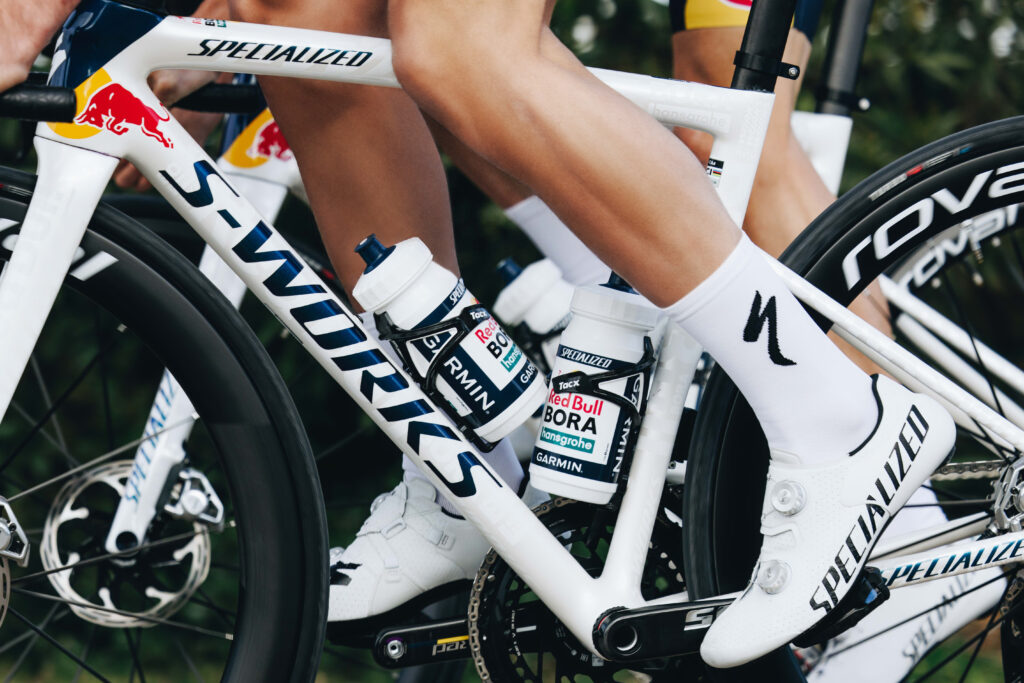

While Donald Trump’s global trade war is currently if not entirely on hold, after the US president last week triggered a 90-day pause on his threatened higher tariff rates for most countries, American brand Specialized is already preparing for the potential impact of the new import taxes – by adding a 10 per cent additional surcharge on its bikes for US customers.
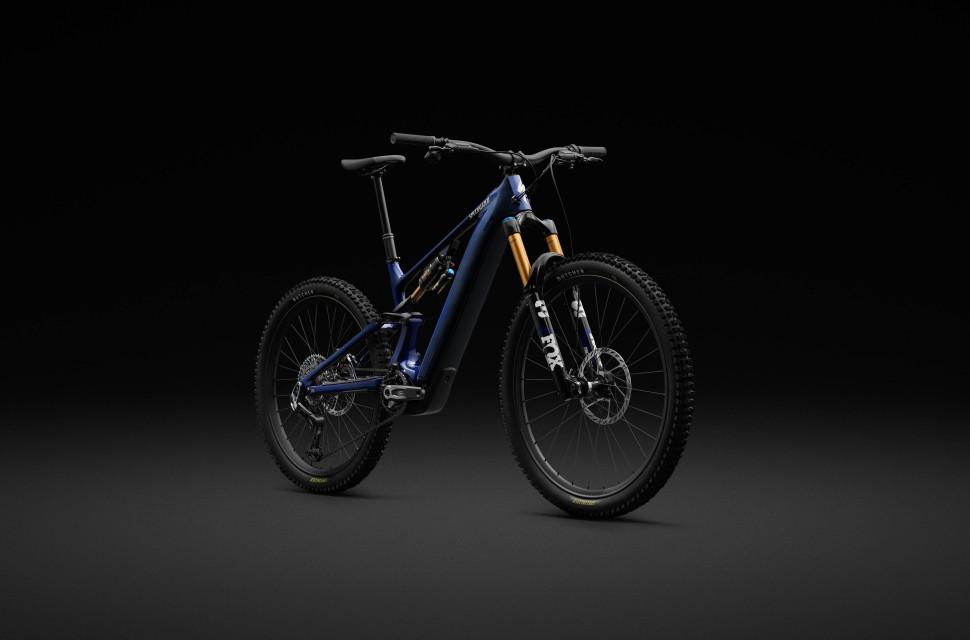
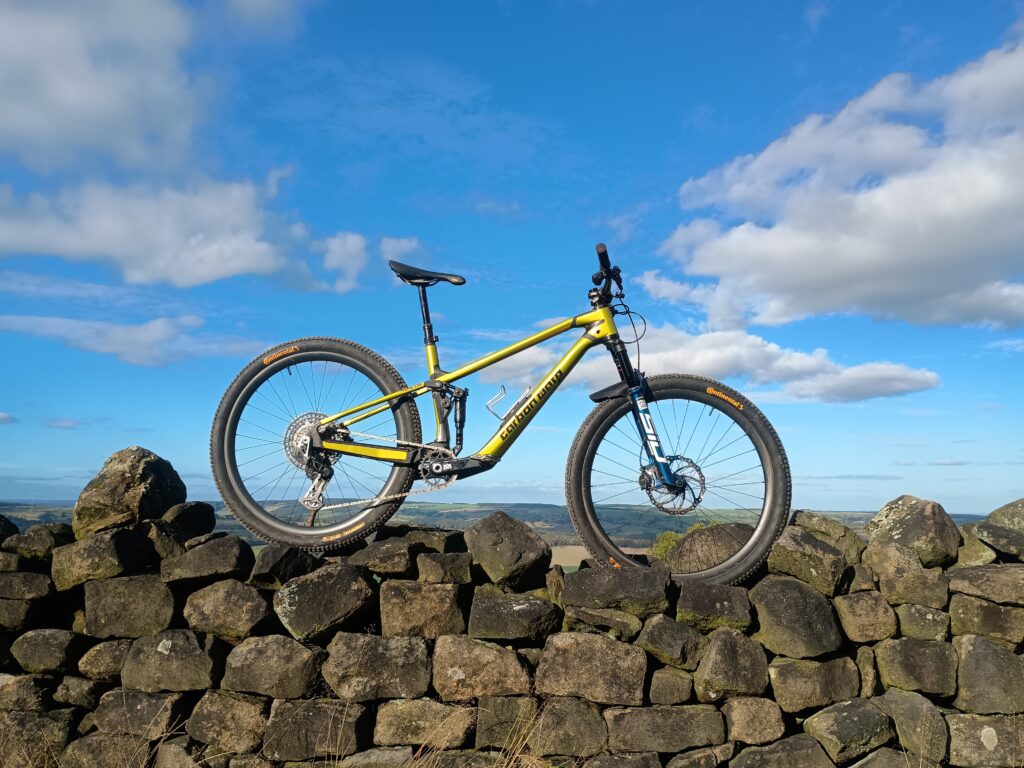
According to a report by Bicycle Retailer and Industry News, California-based Specialized told US retailers last week that it will list a 10 per cent additional tariff surcharge on a separate line item on business-to-business invoices for the brand’s new Turbo Levo 4 e-mountain bikes, ordered after 1 May.
The Turbo Levo 4 was released last week, with prices starting at £6,800. In email sent to retailers in the United States by Specialized’s North America regional leader Jesse Porter on 9 April, the company said that online checkout for the bike will list this new surcharge from the beginning of May.
Porter pointed out in the email that retailers should pass this surcharge “directly to the consumer”.
> Specialized’s Levo 4 sets its sights on Amflow’s PL
The email also noted that Specialized, which bases most of its manufacturing in Taiwan – which Trump announced on 2 April would face an additional 32 per cent tariff on imports – will increase the cost and retail pricing across its range of bikes and equipment in the United States from 1 May.
After confirming its final pricing structure in light of the tariffs, the company said it will share these details with retailers, informing them that they should list the tariff charge separately.
By doing so, Specialized says, “there’s no need to update signage or marketing assets at launch” and “riders clearly see what they’re paying for – not at a hidden cost”.
The brand also said that the sperate tariff surcharge means “we maintain flexibility to update or remove the charge if government tariffs change”.
road.cc has contacted Specialized for comment.
Of course, the Californian brand isn’t the only bike manufacturer attempting to adapt to the shifting sands of Donald Trump’s economic policy.
Last week, the US government announced that the heavy tariffs imposed earlier this month on a range of countries, including most of the big bike manufacturing nations in Asia, such as Taiwan, Cambodia, and Vietnam, will be suspended for 90 days, with a “lowered reciprocal” rate of 10 per cent on all products entering the United States authorised instead.
But despite this, possibly brief, reprieve, one of the biggest suppliers of bicycles to the United States, Giant, said that the US president’s attempt at reordering global economics is “absolutely not positive” for the cycling industry.
The Taiwanese brand, which last month revealed that its profits had been slashed by 62 per cent in 2024 as heavy discounting and inventory challenges hit the company, has also warned that if the high tariffs previously threatened by the Trump administration return, Giant “will inevitably be forced to reflect the cost”.
While the United States’ so-called reciprocal tariffs on most of cycling’s Asian manufacturing hubs returned last week to 10 per cent, at the same time Trump announced that tariffs on goods from China – which supplies 87 per cent of bikes in the US – would be increased to 125 per cent, after the US president accused Beijing of a “lack of respect” for imposing a retaliatory 84 per cent tariff on US imports.
That decision prompted one major US bike manufacturer to warn, as companies and consumers struggle to ascertain the extent to which the industry will be hit by the current economic turmoil, that the price of bikes in the United States could rise by as much as 50 per cent thanks to the tariffs.
Arnold Kamler, the chair of New Jersey-based Kent International, revealed that his company has already increased their prices by 12 per cent this year, thanks to Trump’s initial 20 per cent tariff on China.
Meanwhile, industry lobby group PeopleForBikes’ Matt Moore also warned that higher import costs as a result of the tariffs could force many companies either into insolvency or into mergers with rivals.
“The mood in the industry is fairly grim because we are facing a potentially existential threat,” Moore said.
“Companies with better access to capital and operational advantages will raise prices to cover costs and preserve margins. Companies that cannot do that may succumb to this new trade environment.”
PeopleForBikes says it is currently lobbying for relief on duty for frame and component imports, as well as low-interest loans for manufacturers to build factories in the US.
It joins the National Bicycle Dealers Association, a group representing cycling retailers, which is exploring the possibility of lobbying politicians for the first time in decades, with the aim of convincing them to oppose the tariffs or at least explore some alternatives for the industry.
Jay Townley, a founding partner of the cycling industry consulting firm Human Powered Solutions, conceded last week that “we’re out of business because nobody can afford to bring in a bicycle product at 100 per cent or more in tariffs”.
“We do not know how to make a bike,” Townley said. “When it comes to manufacturing, all of that knowledge resides in Taiwan, China, Vietnam. It isn’t here.”





10 thoughts on “Specialized reportedly set to increase pricing on all bikes and equipment for US customers to counter Trump tariffs”
Theres a lot of money
Theres a lot of money sloshing around in the US. Will be interesting to see how much this affects sales. People doing crits on £15k s-works bikes seems pretty common over there.
You can bet if the US market
You can bet if the US consumers absorb a 10% price rise due to tariffs this year, they’ll take that as a sign that they can put up prices here by 10% next year, even if there is no tariff, and pocket the difference.
I think it’s about time
I think it’s about time americans had to pay more for their stuff. I’m so sick of them bragging about never having to pay sales tax on online purchases because the system can’t agree on which state the money goes to. While we’re paying 20% VAT on everything and earning less at the same time. Once this settles down and americans are paying an extra 20% tax/tariff on bikes everything should feel a little bit more right with the world.
thrawed wrote:
Do you have any motivation for wanting our US brother and sister cyclists to have to pay more for their gear other than thinking it’s not fair that we pay more? If that’s the case that’s just spitfeul, wanting them punished with higher prices just so they match us. It would be of no benefit to us if people in the US had to pay more tax on their bikes. They live under their tax regime, we live under ours. Personally I prefer ours where we get the NHS and so forth in return for paying higher taxes, the US has far lower levels of state provision in that field and others and so it’s natural that their tax rates may be lower.
Isn’t ‘envy’ one of the
Isn’t ‘envy’ one of the Orange One’s primary motivations?
Not sure – but one of the
Not sure – but one of the “founding principles” of the US has been the pursuit of
Happy Meals ™happinessimproving your standard of living. Clearly lots of people feel they’re not doing that.I would suggest that is at least partly because advanced capitalism as practiced in e.g. the US creates lots of races – and those leave lots of losers,. And wealth / status is a relative measure. And that there seems to be something in the US character which gets nervous if it’s merely winning, as opposed to smashing the competition completely. (Sometimes literally, if they take against a place…)
Hence the remarkable admission that apparently (and despite them being the richest nation *) capitalism isn’t working for Americans! “We buy more of your stuff than you buy of ours – that’s an atrocity! We’re being ripped off!”
* By GDP, or by “total weath”, or by that to GDP – however adjusting that to GDP per capita they drop down a bit behind trade hubs.
thrawed wrote:
The underlying issue is the the western countries collaborating to try and isolate China and reduce China’s income and productive strength.
What it means is that if you live in Europe, your own governments are also committed to doing the same, to one degree or another. Its not planned to be of benefit to you in any way. You pay the price too.
I
Sam3 wrote:
This utterly simplistic description of a complex set of economic interactions would have as many economists rolling in their graves as Trumps tariffs do.
.
.
Elon won’t be pleased – he
Elon won’t be pleased – he was hoping to outsource their profits there.