



The ADO Air 20 Ultra is a good value folding bike that’s made more useful across a wider range of terrain by the addition of an automatic three speed Bafang motor, without adding significant extra weight or complexity. It’s good value too.
> Buy here: ADO Air 20 Ultra V2026 Folding E-Bike
ADO Air 20 Ultra – the ride
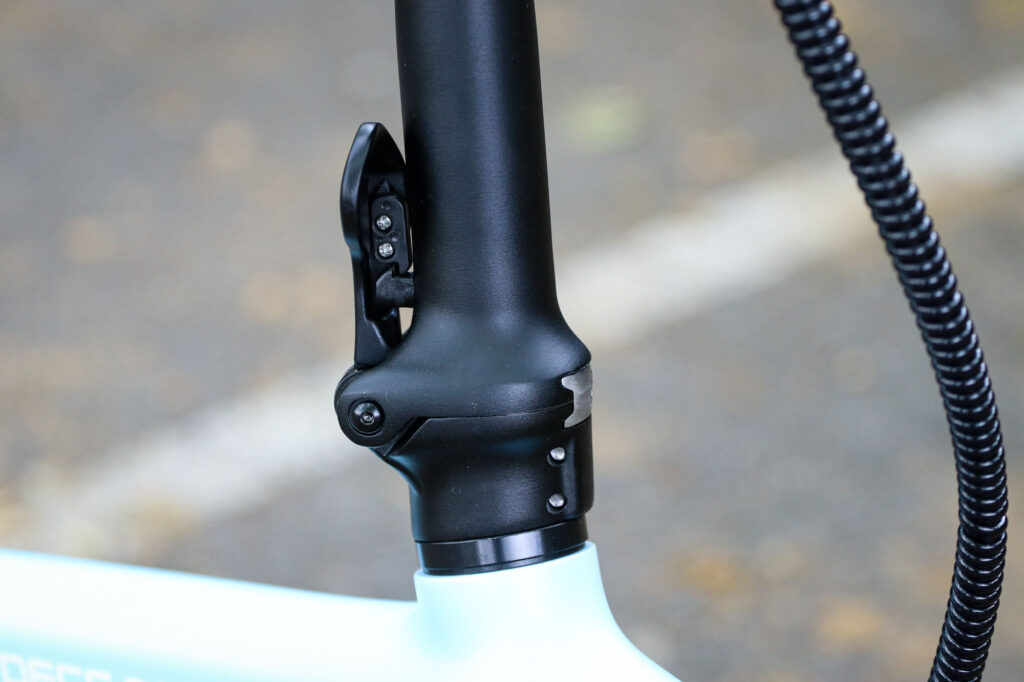
The Air 20 Ultra is a nice bike to ride, especially given how much it costs. There’s a solidity to it that’s very reassuring, and nothing feels cheap. Both the main folding hinges are well-engineered with locking catches and that inspires confidence.
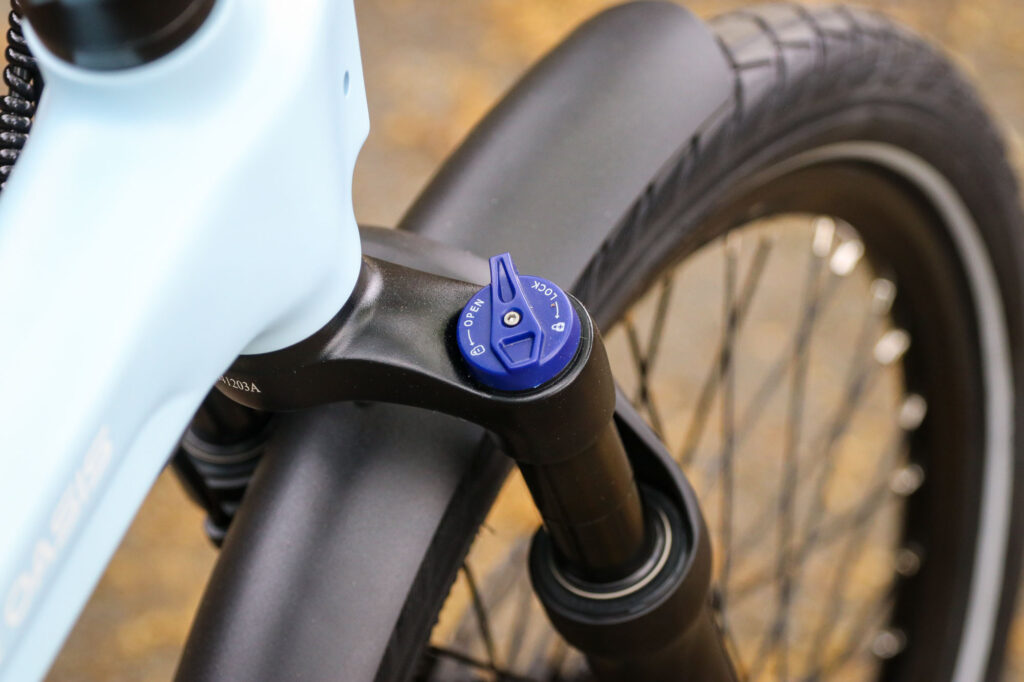
Even the suspension fork – which I’m usually happy to moan about at length on bikes at this kind of price – isn’t bad, and it has a lockout if you do find it a bit wallowy and soft. I did, but I’m heavy, and there’s not much flex in it so it feels nicely planted at the front.
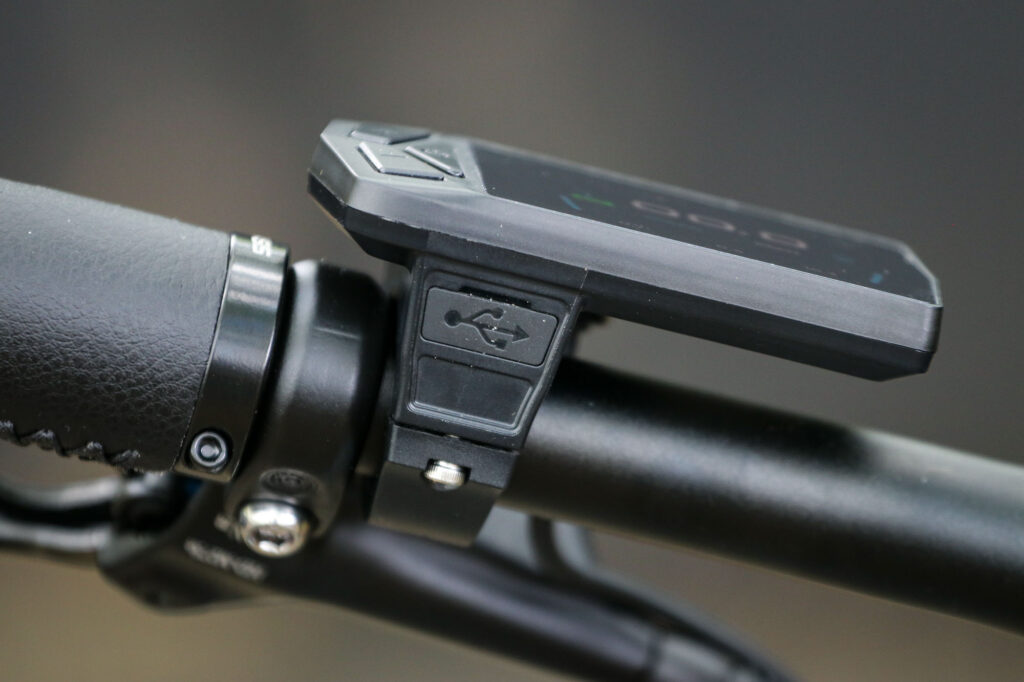
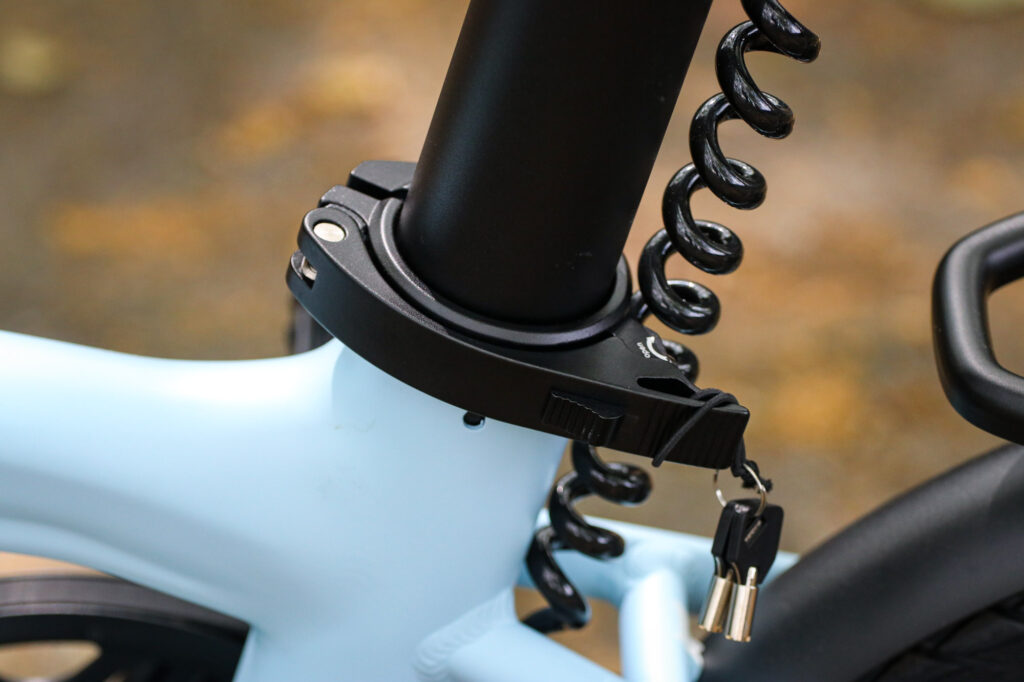
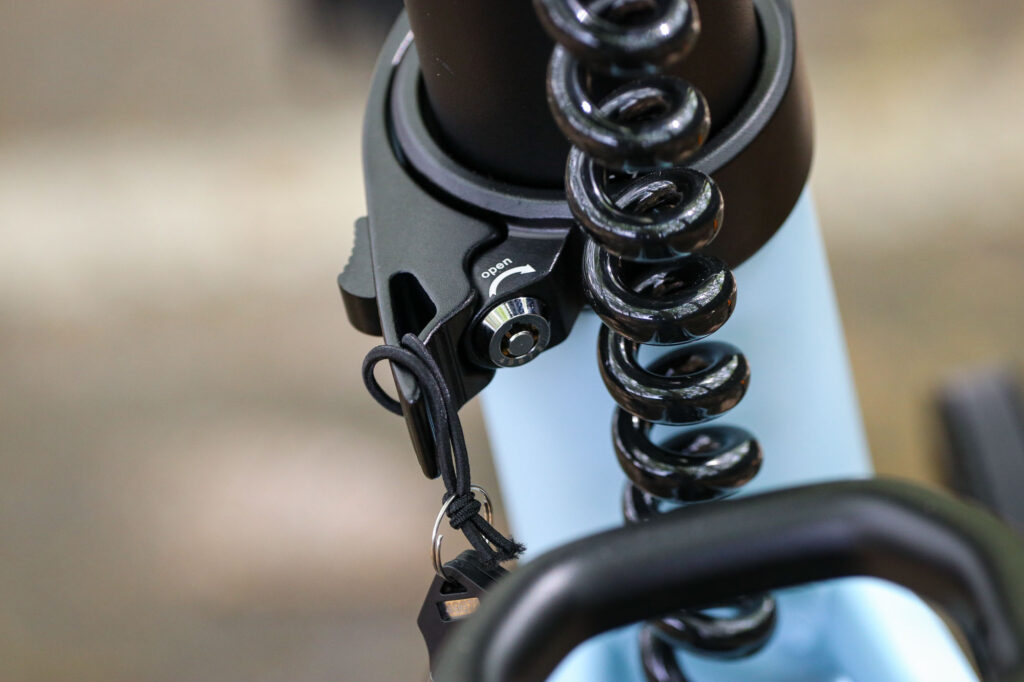
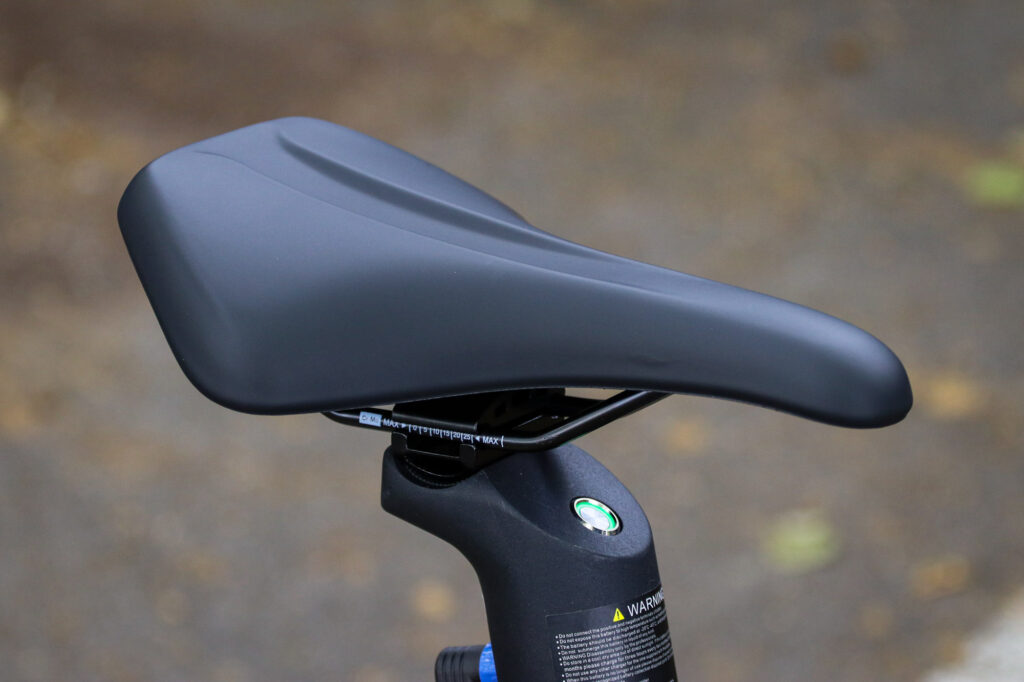
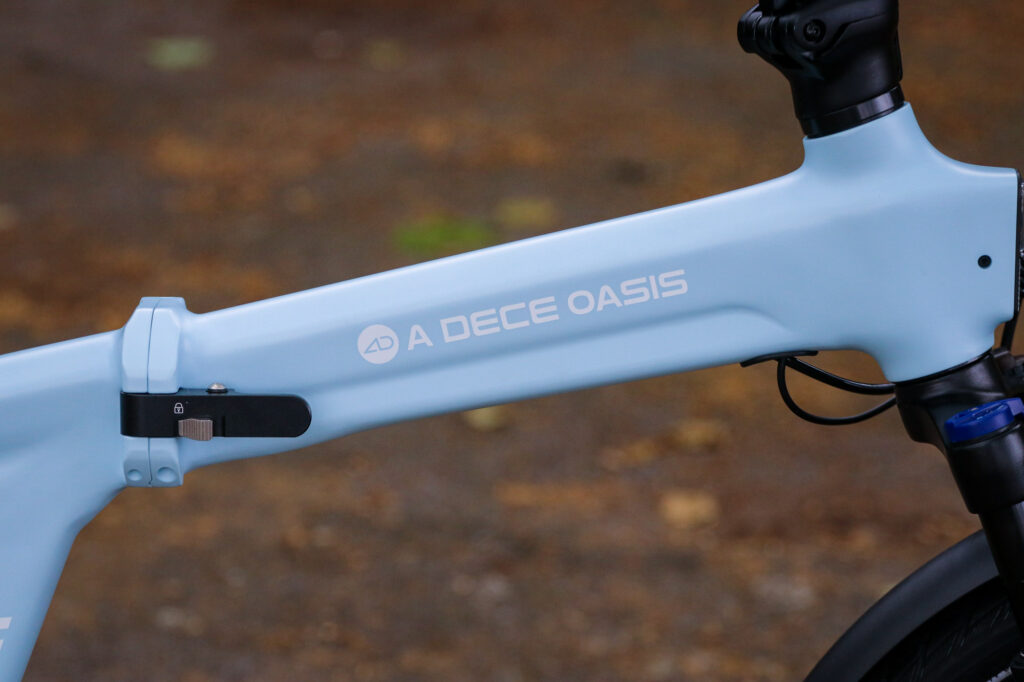
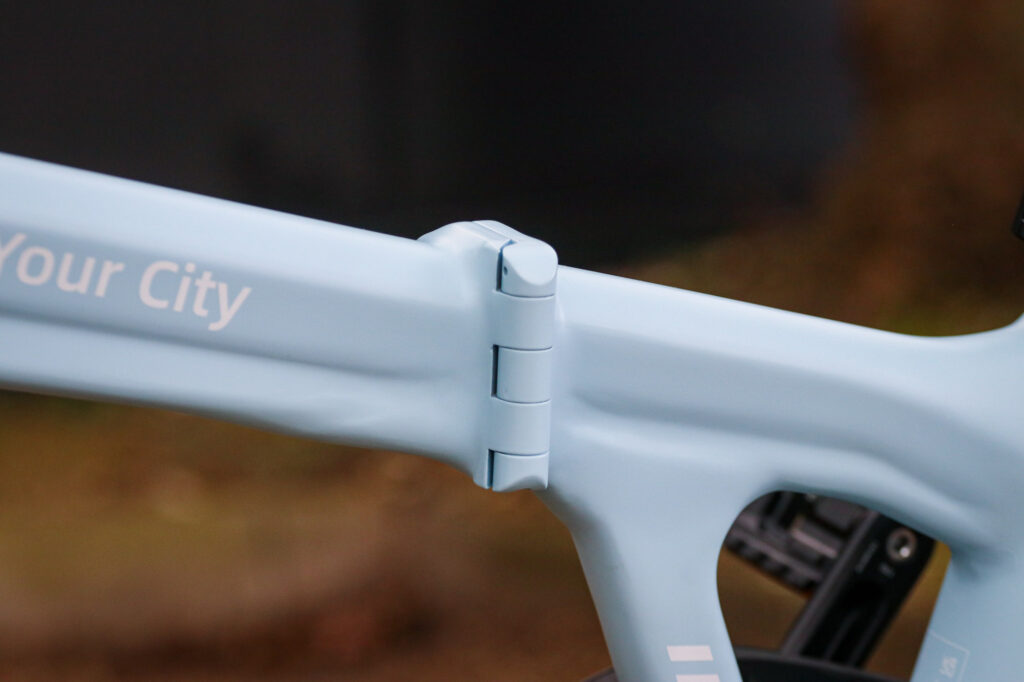
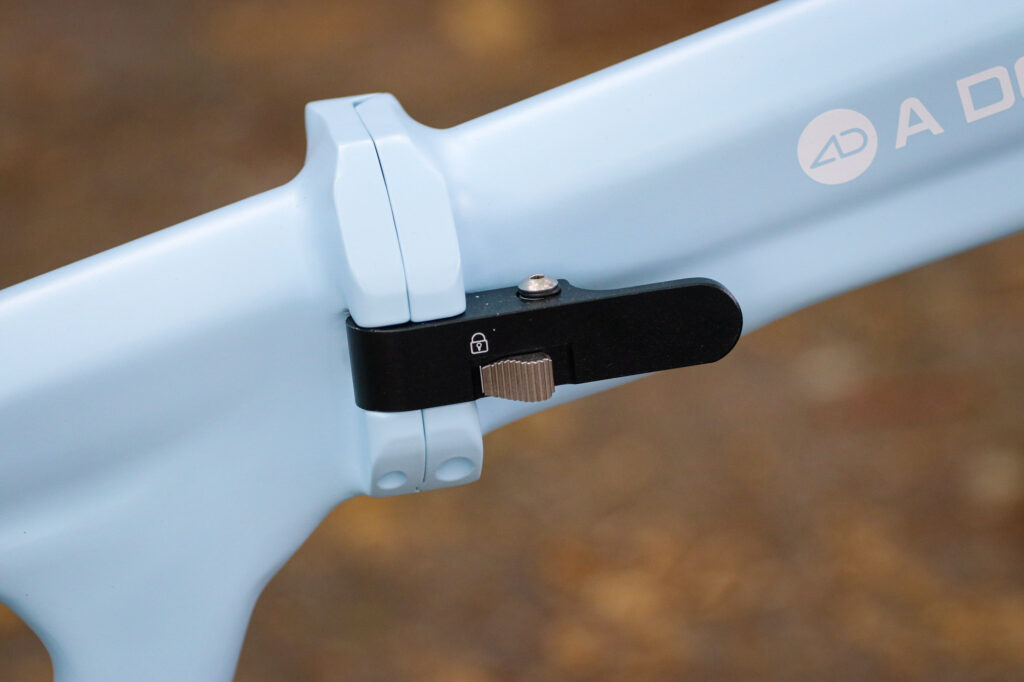
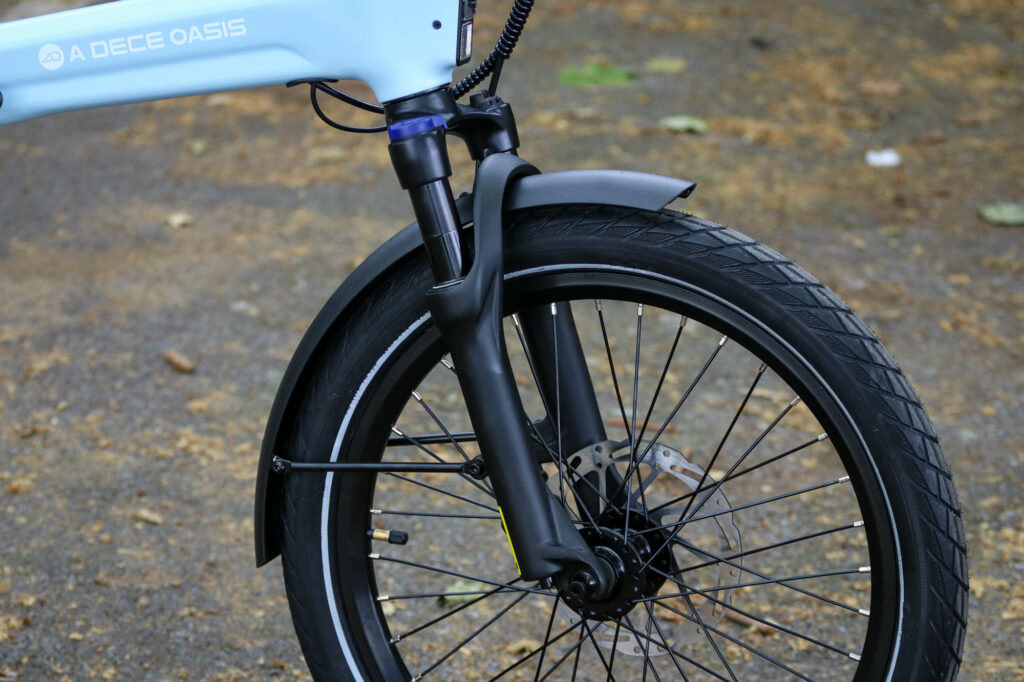
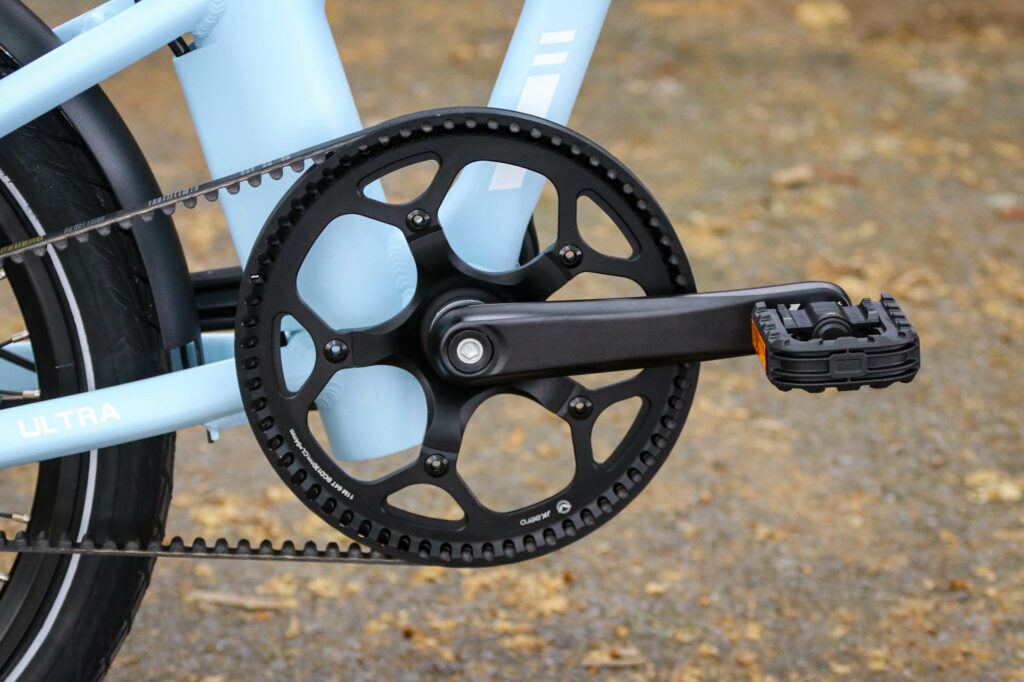
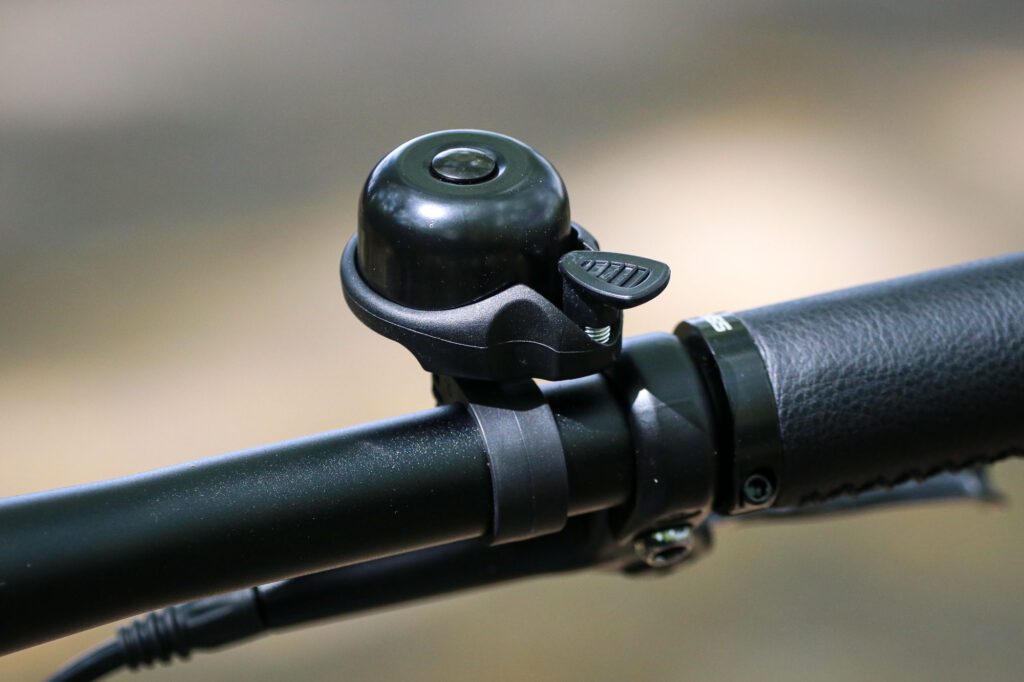
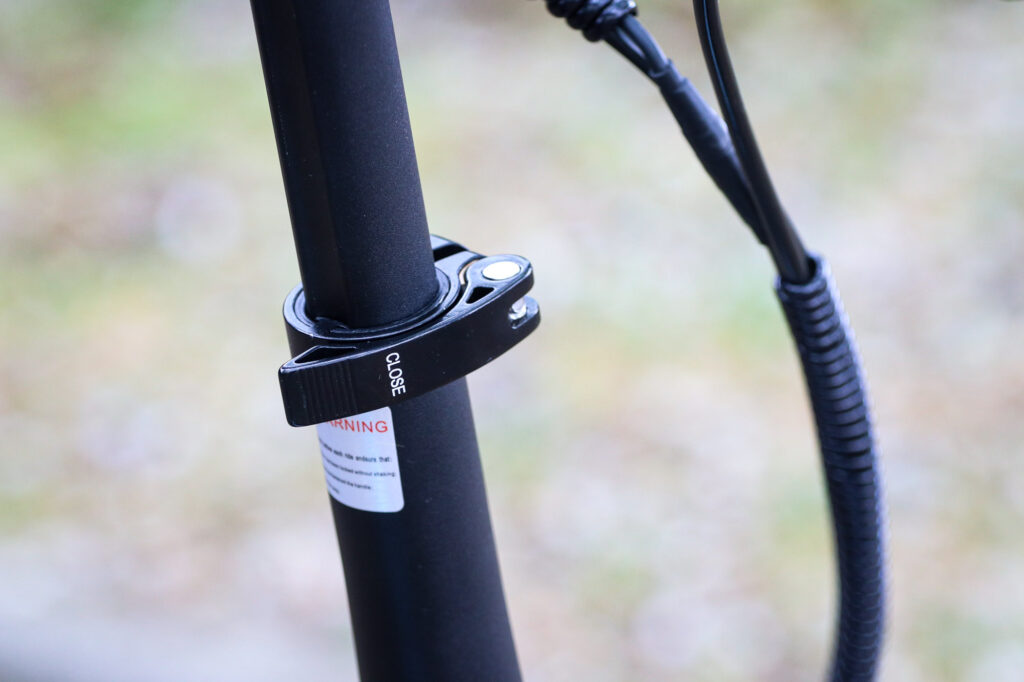
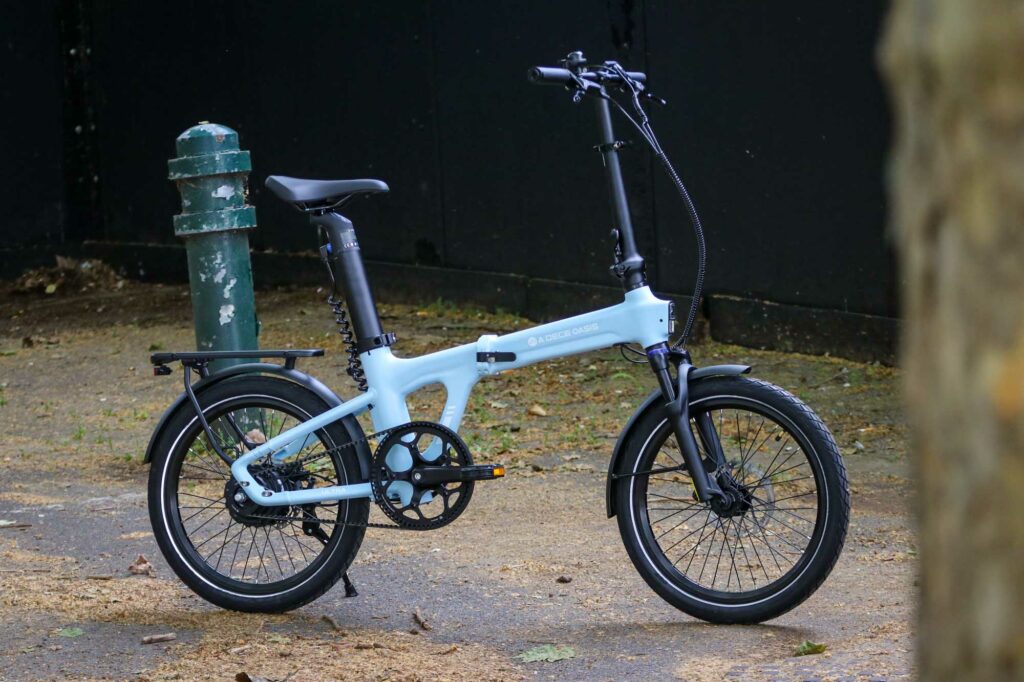
Clearly the enormous seat tube will give a solid ride at the rear, but it isn’t uncomfortable, and the saddle is about right for shorter journeys: not too soft, and not too hard. The grips are pretty good too. I would have liked them to be bigger and ergonomic, but they’re nicely made and fairly comfortable.
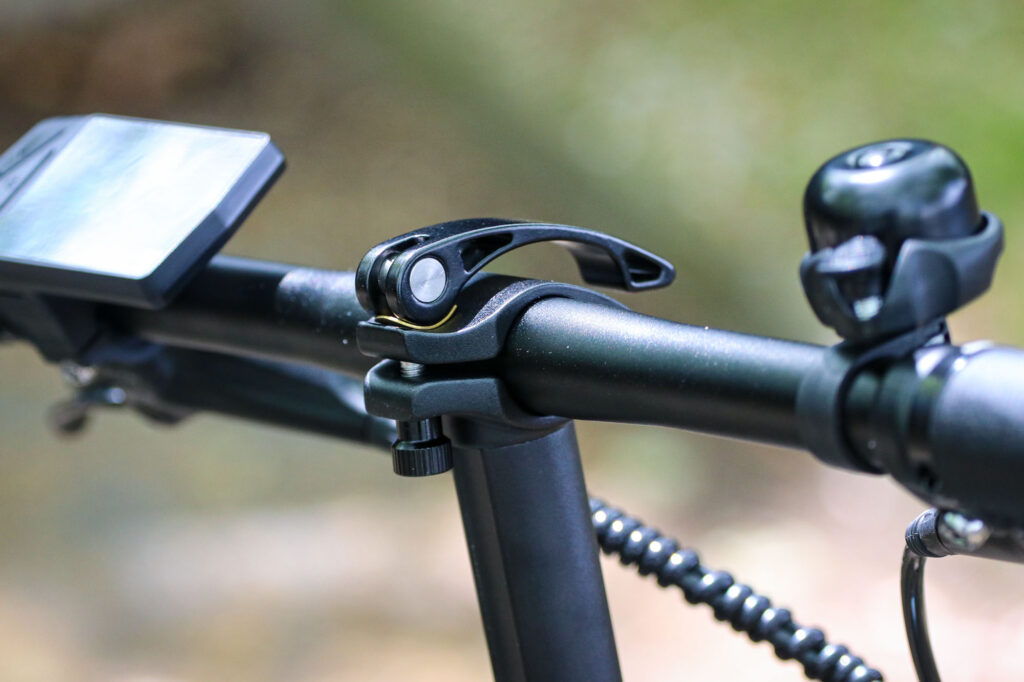
Everyone gets more or less the same reach from saddle to bars, so it’s tighter for larger riders like me, but I didn’t find it uncomfortable or especially cramped. The steerer is extendable and you can make the bike VERY upright if you like, especially if you’re smaller and have the saddle lower. I found I didn’t need to extend it at all.
ADO suggests that riders from 150-200cm will be able to ride this bike. I’m 1.90m and I can certainly ride it fine, although the seatpost is at the limit and even then isn’t as high as I’d normally have it, so I’d say I’m more or less the limit.
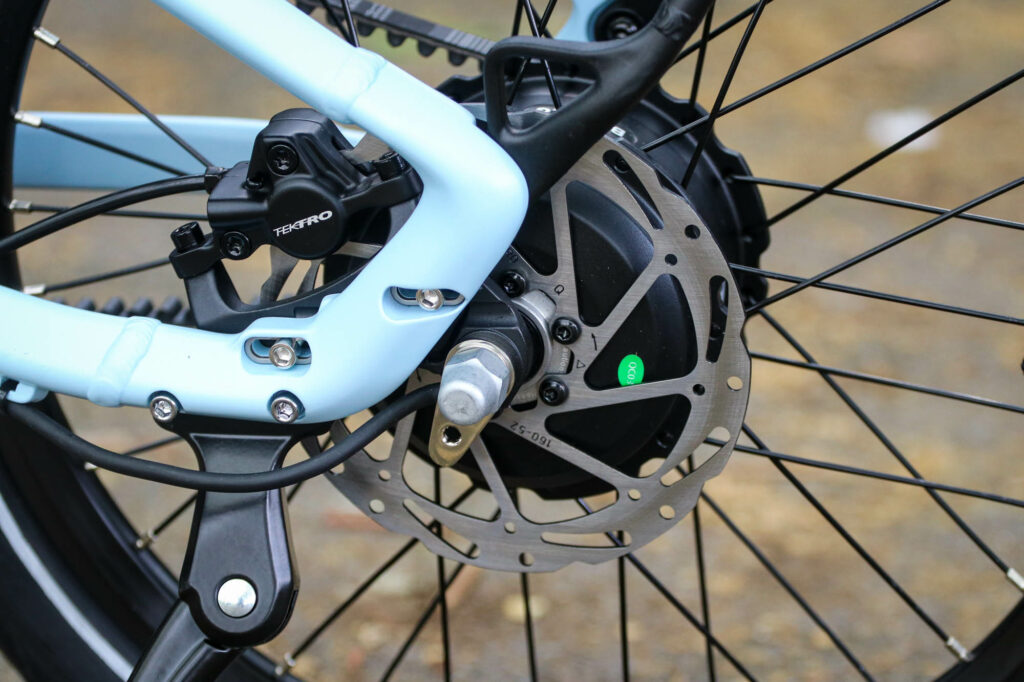
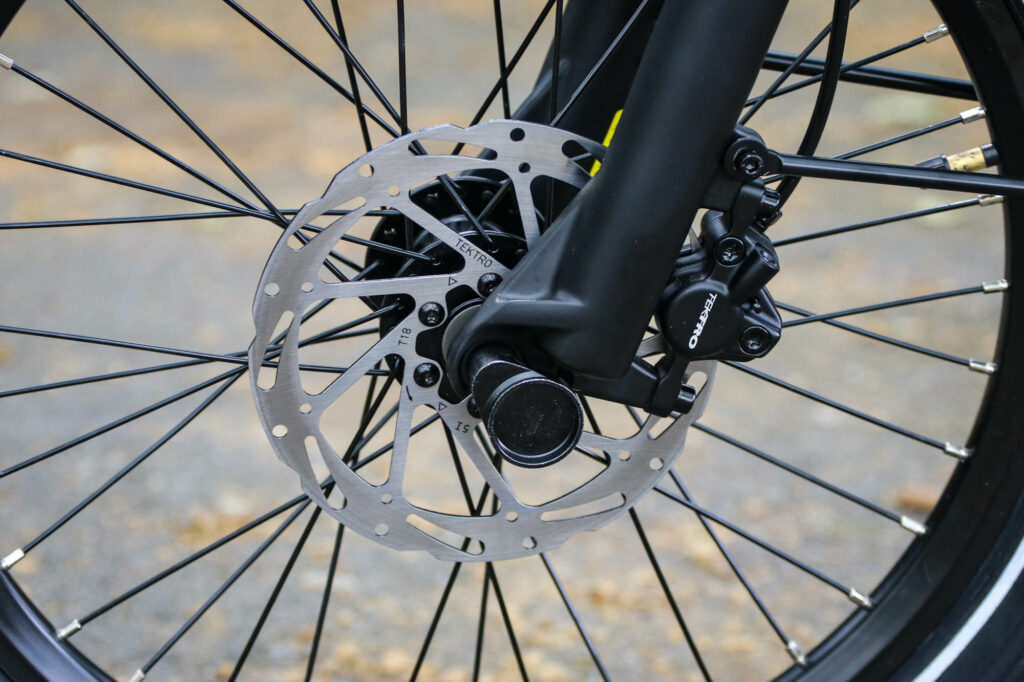
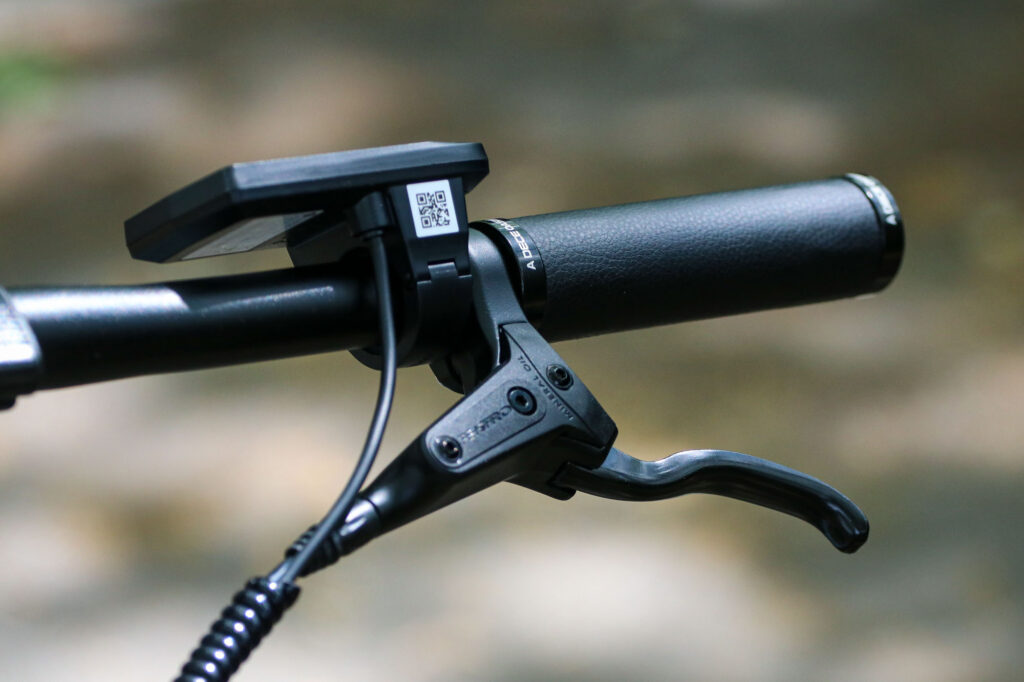
The bike rolls on decent CST city tyres with a reflective strip, and they’re not the most supple things ever, but they’re nice and big and they have plenty of grip. The Tektro hydraulic disc brakes are hard to fault: loads of power and a high-quality build.
Overall the impressions of riding the bike are that it punches well above its weight: It feels smooth and responsive, with a solidity that suggests it’s more expensive than it is. The handlebars are pretty narrow, but the bike isn’t especially twitchy while remaining nice and responsive at low speed for sneaking through gaps in the traffic.
ADO Air 20 Ultra – the fold
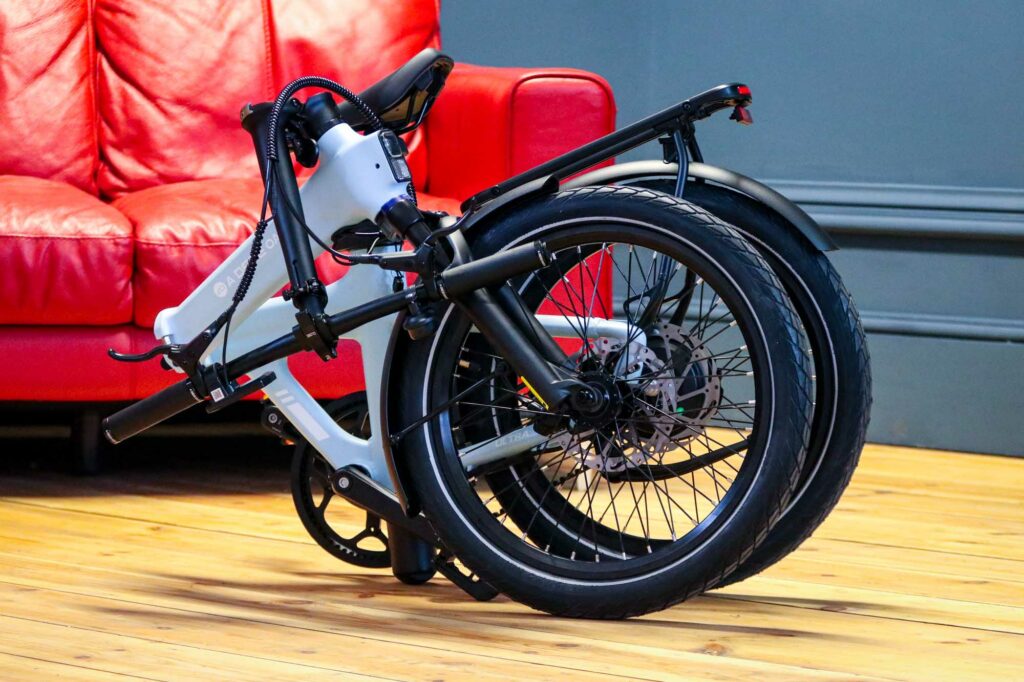
The ADO Air 20 fold is pretty standard stuff. There’s a hinge in the main beam of the frame which effectively folds the bike in half, and then the steerer folds down to make the package smaller.
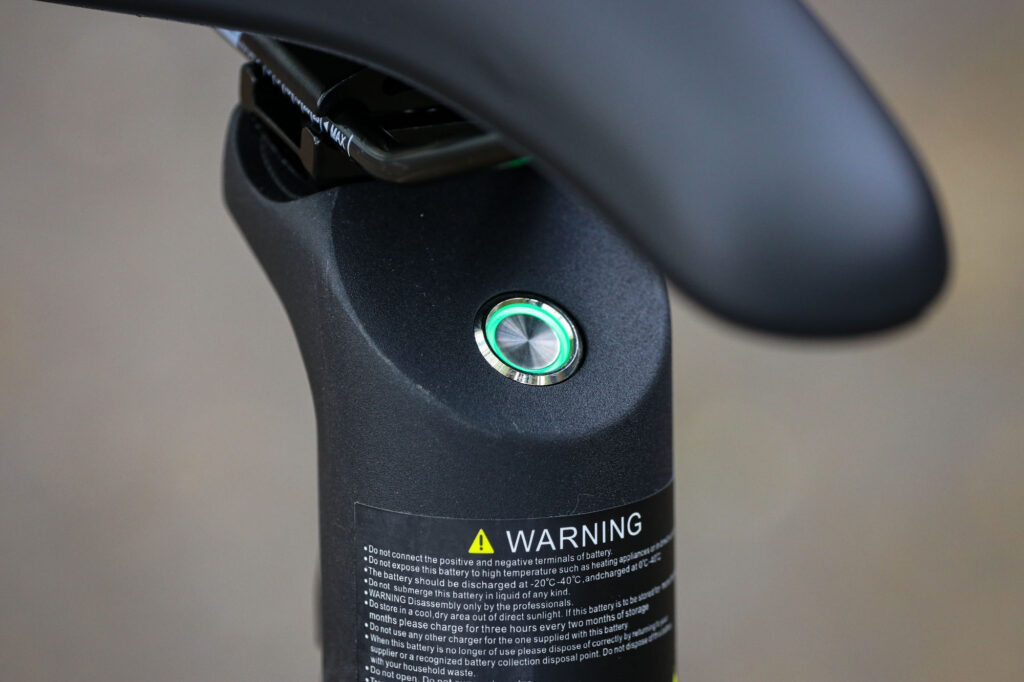
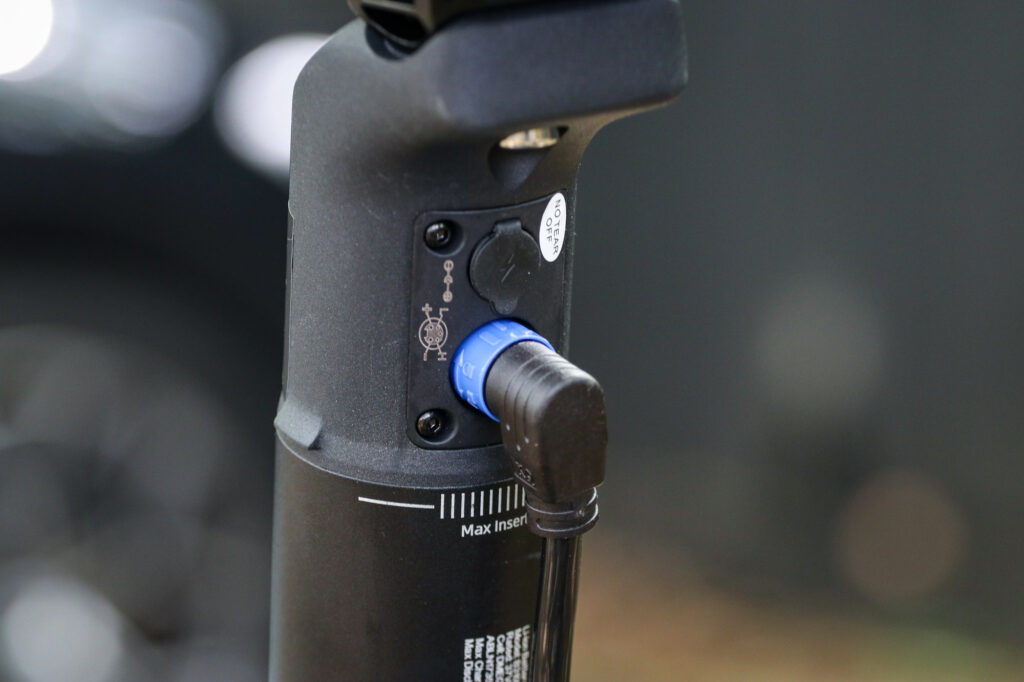
You can also drop the seatpost, which of course is also the battery, or you can just remove it and carry it separately. This will help if you have to lift the bike into a car boot, or carry it up the steps from a station underpass, as there’s significant weight in it. You can’t do that once you’ve folded it though, because the seatpost quick release won’t open. There’s a magnet to hold both ends together, and as usual it’s not really strong enough, so take a ski strap if you’re moving the bike about when it’s folded.
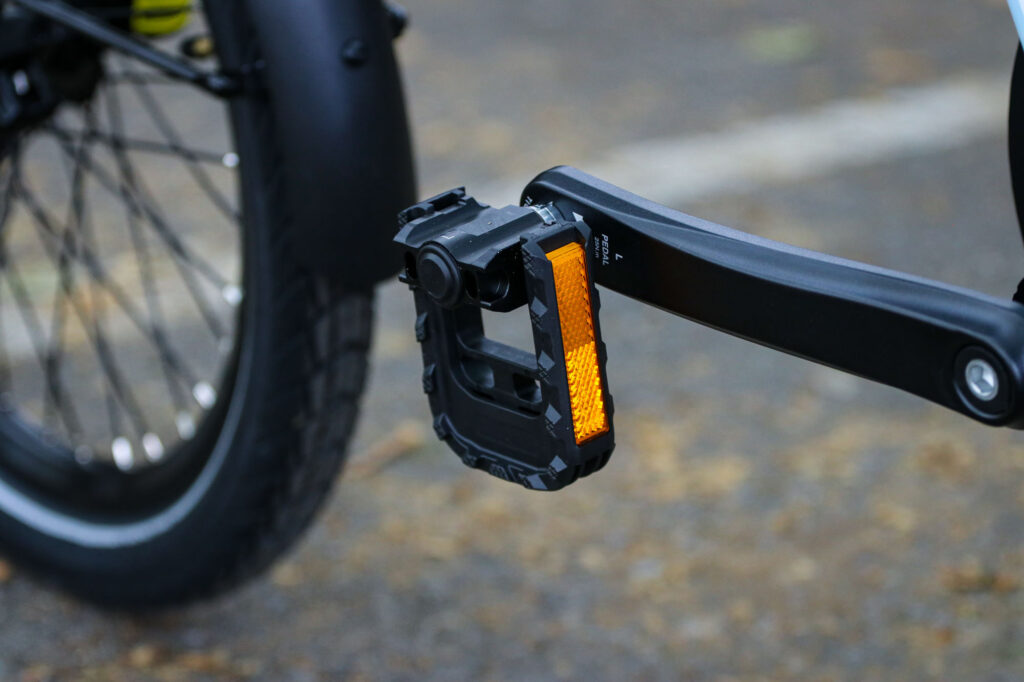
Both pedals fold, and the bike will roll on its wheels when folded, albeit maybe not as gracefully as some. As a folded package it’s small enough for the boot of pretty much any car, or the luggage rack of a train.
ADO Air 20 Ultra – the motor system
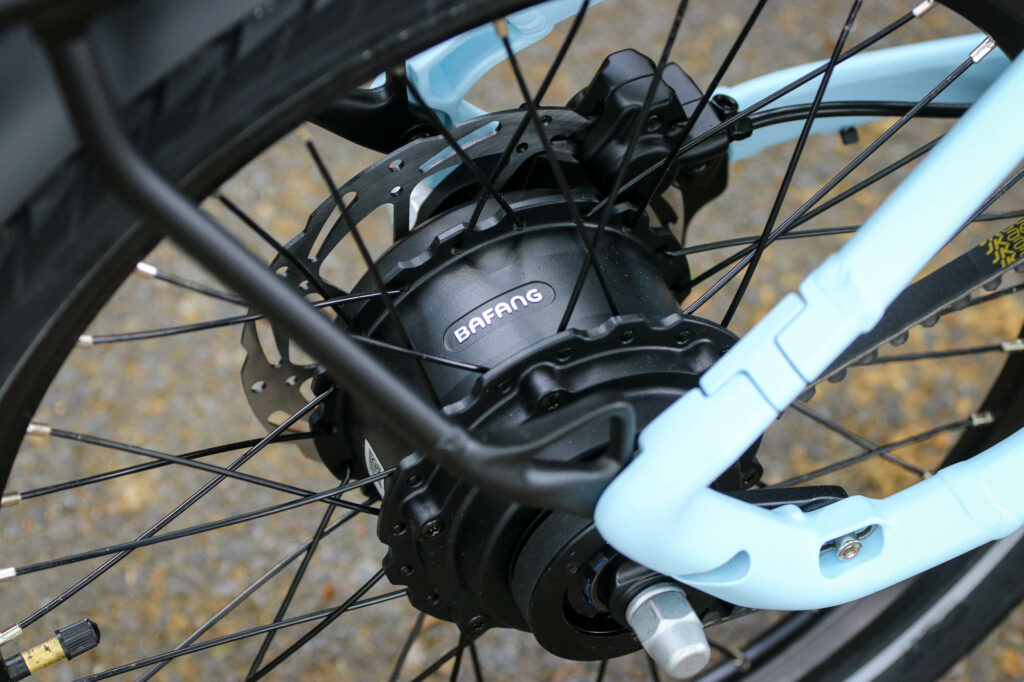
This is the first bike I’ve used with Bafang’s automatic three speed hub. There’s an epicyclic gear system inside the hub, and at two predefined speeds the forces of rotation cause pawls to engage in different parts of the hub and alter the drive ratio. So you start off in the lowest gear (direct drive) and when you’ve picked up enough speed (which isn’t much, about 13km/h) it switches to second gear (1.33 drive ratio) and up again to third (1.65 ratio) at about 20km/h.
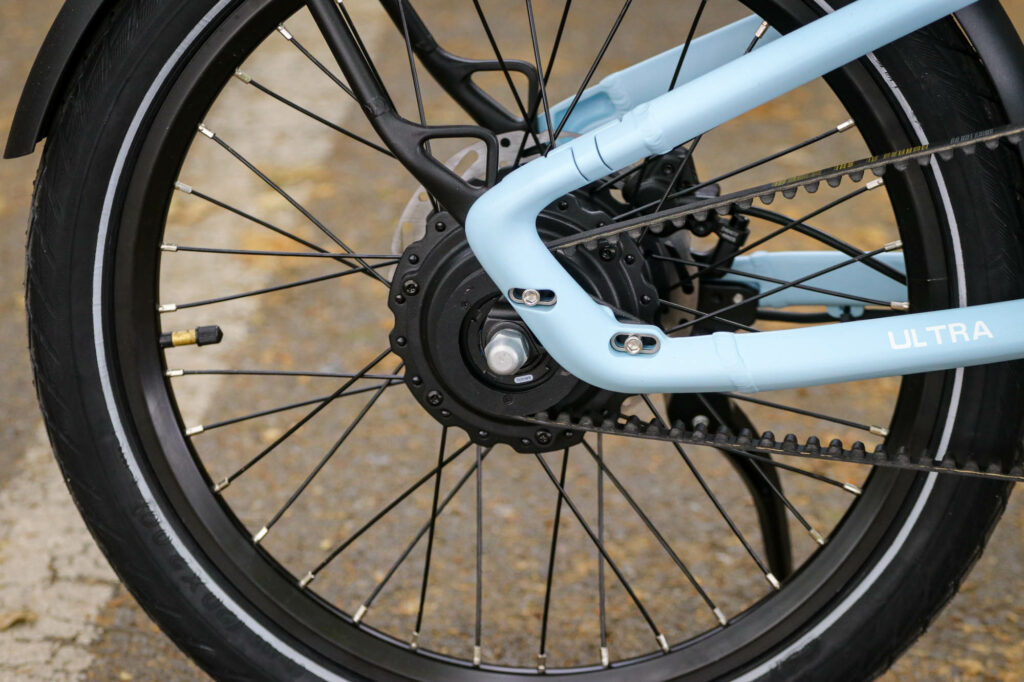
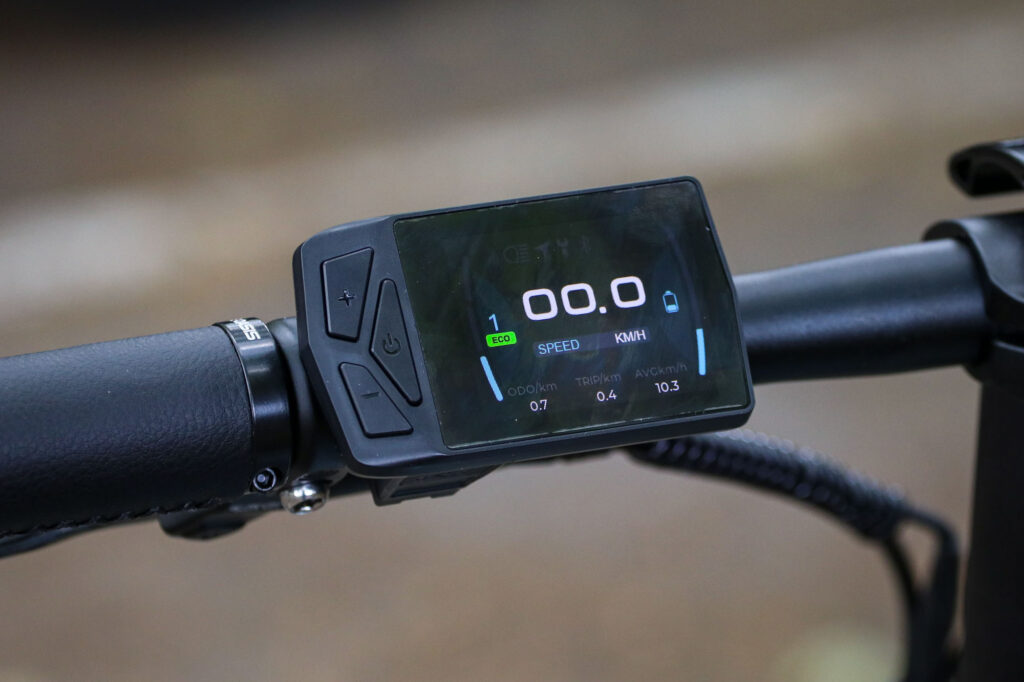
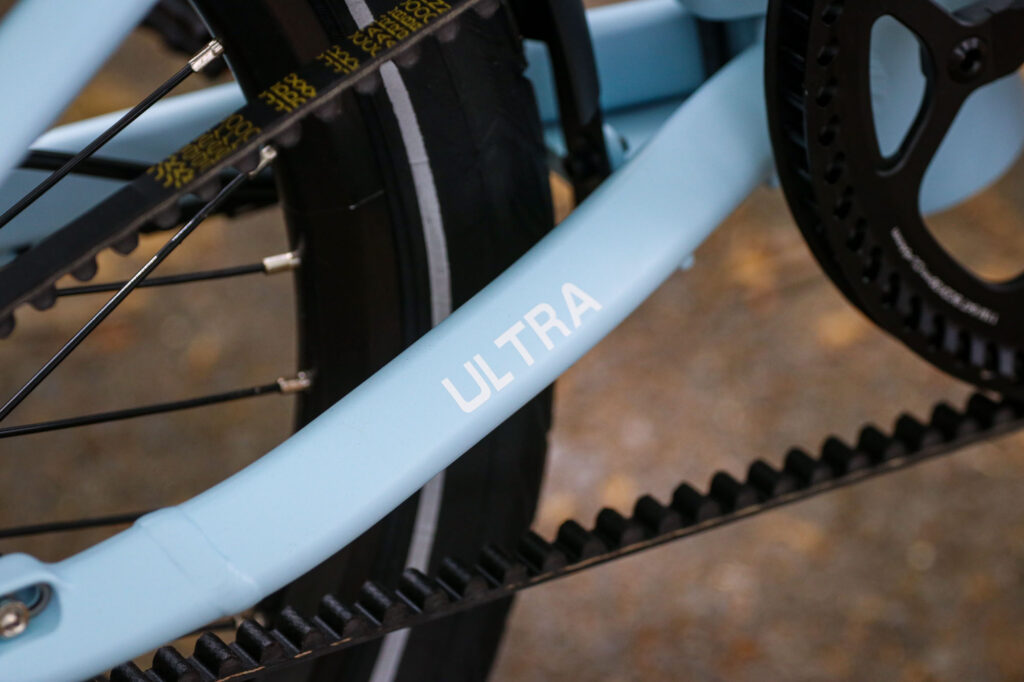
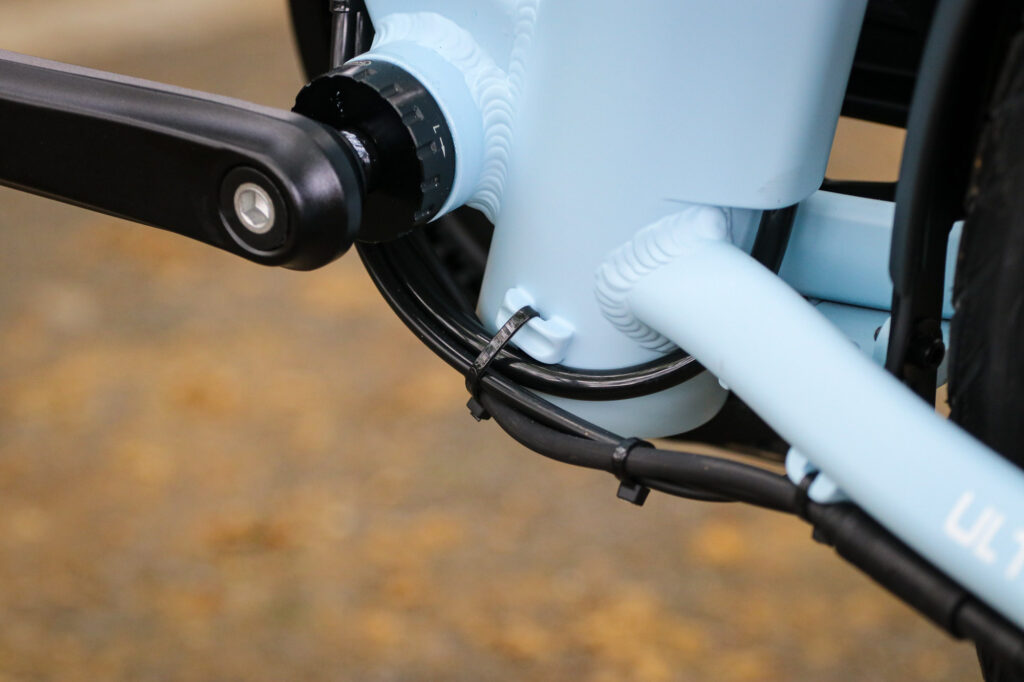
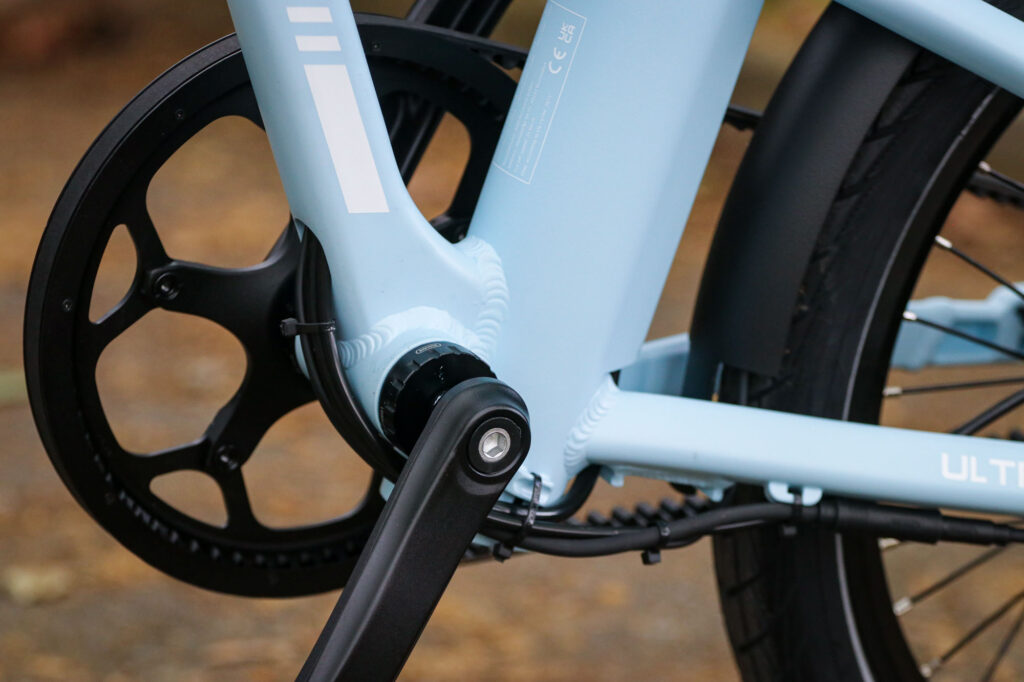
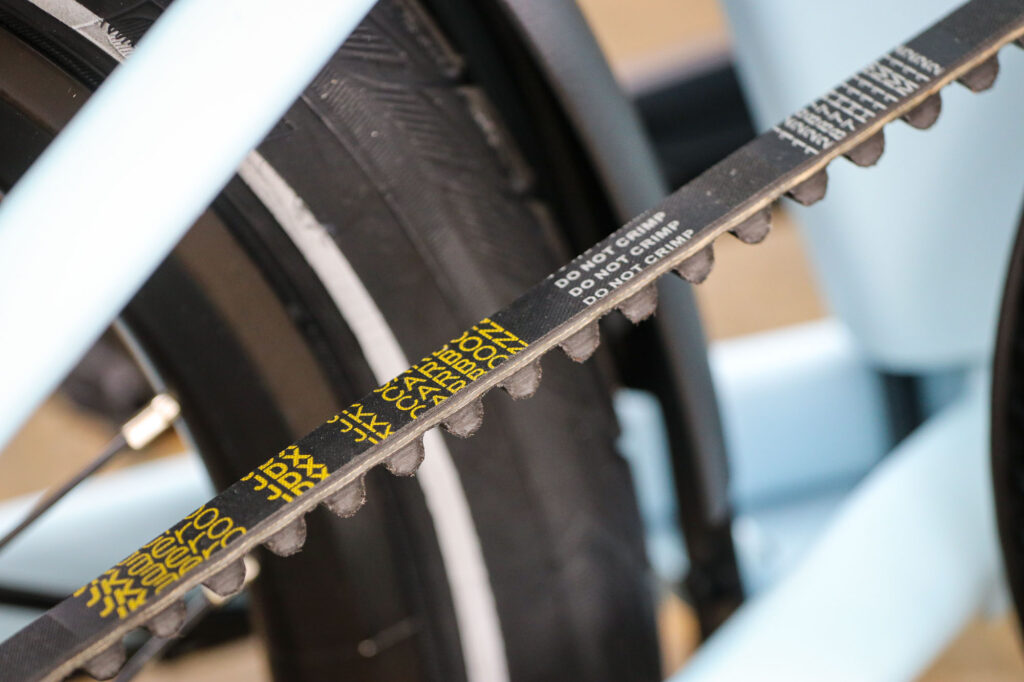
The Air 20 Ultra uses a JK Carbon belt front to back and there’s a removable chip in the frame to get it in and out if you need to change it. There are three or five levels of assistance depending on how you configure the system from the bar-mounted control panel, and you can elect to run in either Eco or Sport mode (clue: you want Sport mode). The assistance levels don’t cut out at lower speeds at lower assistance, which is how it should be.
There’s a lot to like about a system like this on a bike like this. Everything’s contained, and there’s no maintenance to speak of. Because there’s no external shifter, you don’t need to worry about the cable from the hub to the bars, which can be an issue on folding bikes. Also, you’re always in low gear when you start off. With a normal hub gear you can shift down to the lowest gear at a standstill but here you don’t even need to do that, it just happens automatically. As a transmission option for a bike like this, which wants to be as simple and clean as possible, it’s a great fit and much more versatile than a singlespeed, which is okay for a flat city but not great if you have significant hills like we do here in Bath.
It’s not without its downsides, though. You don’t have any control over when the gear is going to change. That’s okay when you’re darting away from the lights, but in other scenarios it’s not so good. If you’re climbing a hill, for example, you need to take care not to go past the shift point so you can stay in an easy gear for climbing: that takes a bit of getting used to.
Also, the nature of the shift mechanism means that it won’t shift down under power, because the force you’re putting into the gearbox holds the bits responsible for the shift in place. That means if you’re charging along on the flat and you suddenly hit a steepish hill, you’ll eventually grind to a halt in top gear unless you back off to allow the hub to change down. That robs you of speed you’d rather keep. It only takes a momentary pause in pedalling, but again, it’s a skill you need to learn.
You also need to learn what the shift speeds are so that you can change down as effectively as possible. The change points are determined by speed, not by cadence, but I found the cadence to be too low. When it steps up a gear, you’re grinding round at about 60rpm. I’d prefer a smaller chainring or bigger sprocket and my legs spinning faster.
The motor is rated at 50Nm, and I found that on my benchmark climb (1.5km at 5% with a 12% steep section) I could easily keep the wheels turning, but up above maybe 8% of gradient I needed to start adding a noticeable effort to help the motor out, even in sport mode.
The usual limitation of hub motors applies here: power is a product of torque and rotational speed, so if the speed drops then the power does too. A mid-motor can mitigate that with gearing to keep a higher motor speed even when moving slowly, but a hub gets less powerful as it slows. The Bafang is no worse than motors of a similar rated torque in that regard. For most riding it’s fine, and if you have steep hills in your life you’ll need to put a bit of a shift in yourself.
> Hub motor v mid motor? What’s the difference? (+ video)
ADO Air 20 Ultra – range
ADO gives this folder a maximum stated range of 100km. As is often the case, this is a fanciful number that bears no relation to its actual real-world range, and also 100km in one go on this bike would be unpleasant. The real question would be: is the range enough for the use cases for which you might be buying this? And the answer, in nearly all cases, would be yes.
The battery is in the seatpost of the bike and the stated capacity is 36V/9.6Ah, or 345Wh. I would expect that battery capacity to allow me to do my 9km commute, which is down a big hill and then up it later on the way home, at least twice at maximum assistance, and the ADO did not struggle to achieve that. It is worth pointing out that the power does tail off a bit as the battery depletes, so you’ll want to keep the battery full if you have any particularly challenging stuff on your daily rides.
I’d also expect it to easily get me to Bristol along the flattish, 25km railway path, and indeed that was not a problem either: there was even enough juice left for the hill back home after catching the train back to Bath.
If you’re looking at a bike like this, you might be thinking of it for a mixed-mode commute with the car or the train, or maybe as a runaround to stick in the boot of your car or the hold of your camper van. Or it might just be a commuter you can bring into the office, or store easily at home, if you don’t have secure storage. For any of those scenarios, the range of the Air 20 Ultra is more than enough.
Charging is simple, and the battery is removable if you want to bring it inside to charge at home, or at work. If you’re parking in the street, that will also make the bike significantly less attractive to a potential thief. ADO says to allow 4-6 hours for a full recharge and that’s in line with my experience.
ADO Air 20 Ultra – equipment
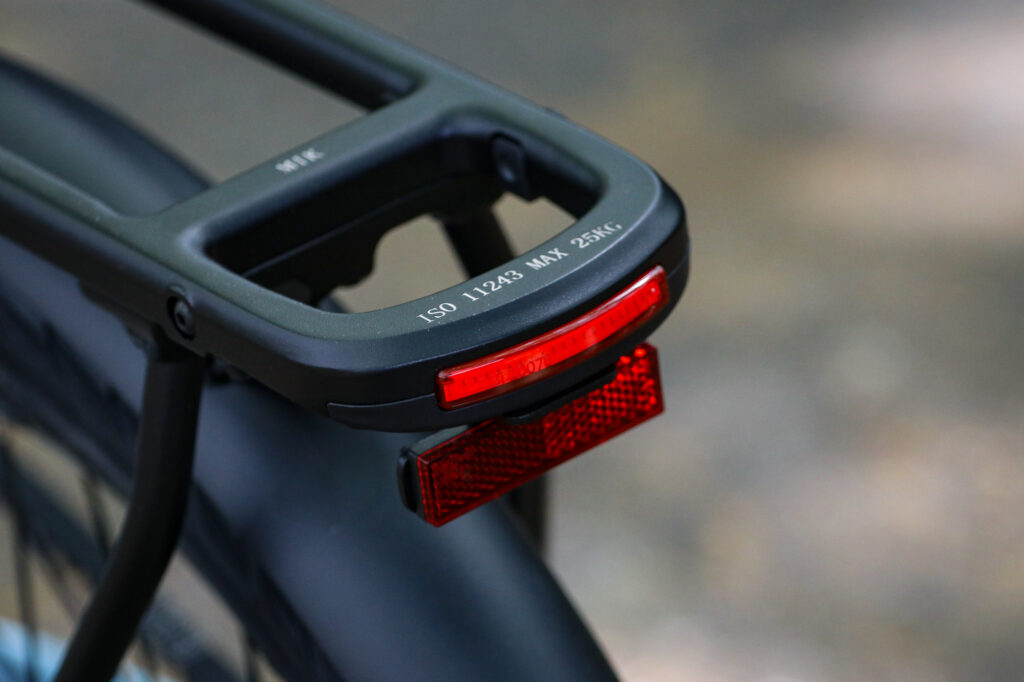
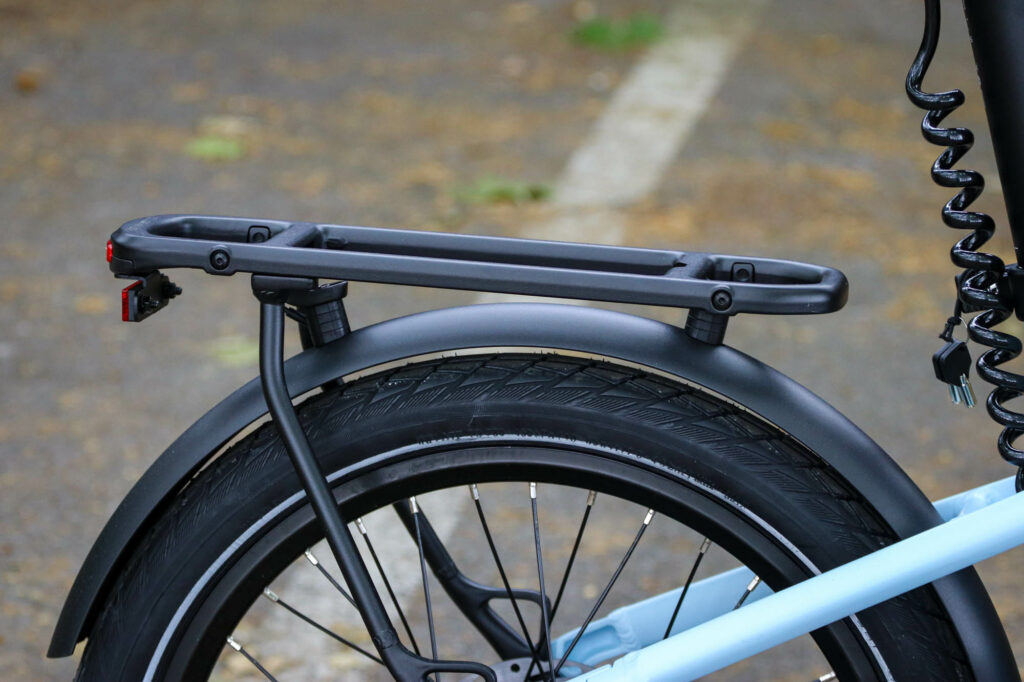
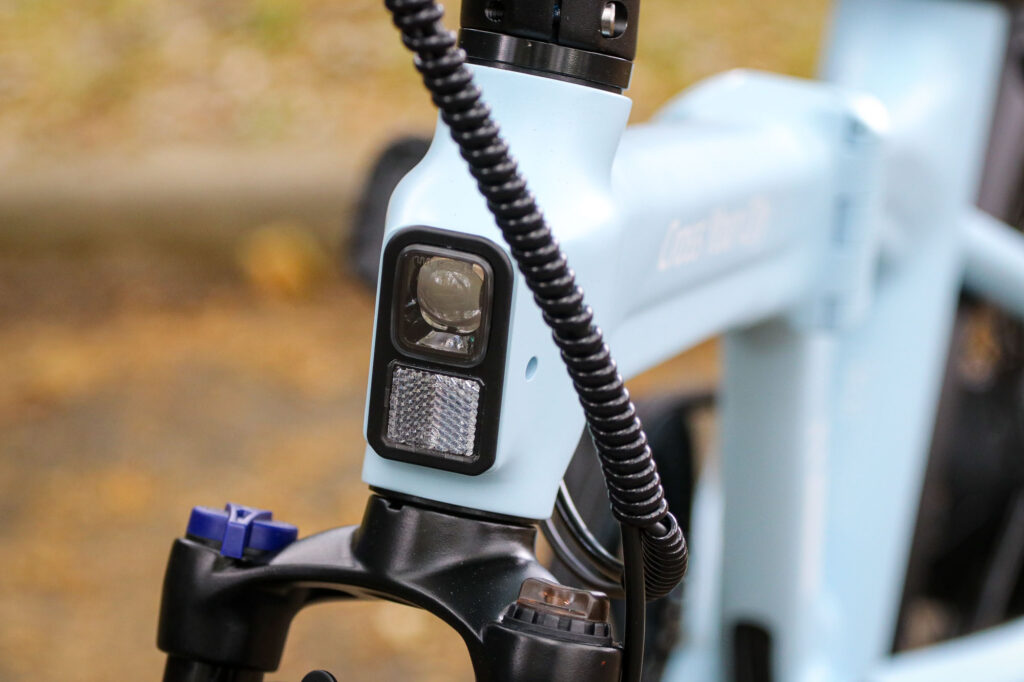
The Air 20 Ultra is a fully-equipped city bike. There’s fully-integrated lighting, with the front light in the head tube and the rear in the luggage rack at the back. It’s decent lighting, and plenty to get yourself seen about town. Out beyond the streetlights the front light is enough to make progress even in very dark lanes, although the beam is quite compressed with a sharp cut-off, and it isn’t adjustable. Also, it’s a bit weird when you’re turning a corner, as the light doesn’t follow the wheel into the turn.
The bike also sports exceptionally solid metal mudguards, and the rear rack is rated for 25kg with an MIK-compatible top plate so there are any number of bags and other accessories that will fit.
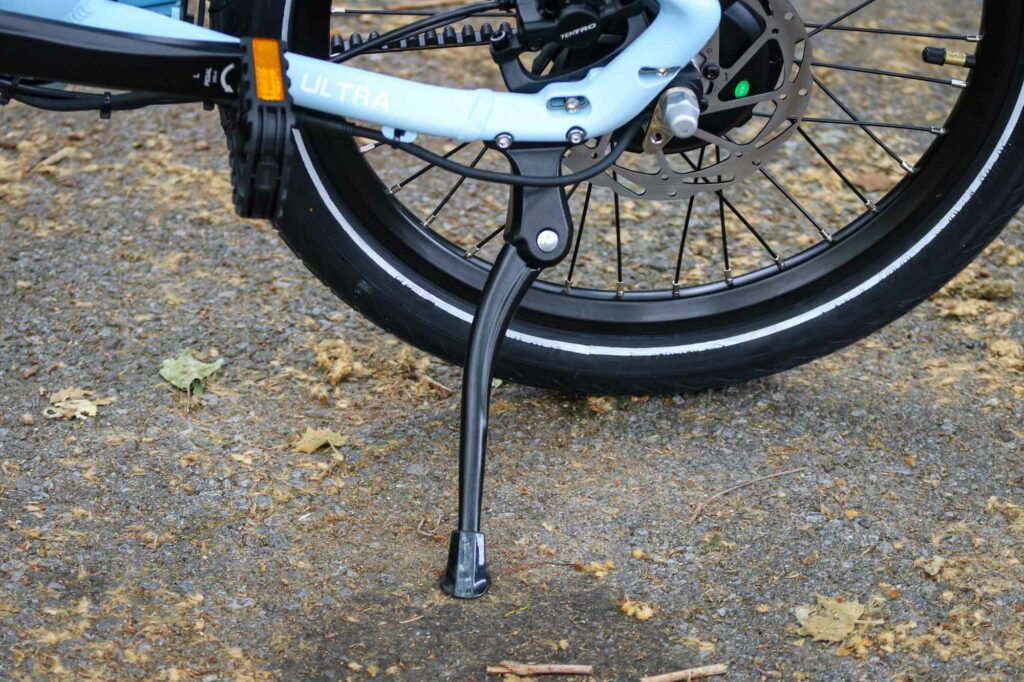
There’s a standard single-sided kickstand which is fine for general use. The pedals are folding plastic units, but they spin well on the bearings and the quality again looks to be decent. There are no cheap steel bits anywhere; everything metal is powder-coated aluminium alloy. You get a key which locks the battery seatpost in place so it’s not removable when parked. There’s nothing missing, and nothing that looks like it’s going to need replacing in short order either.
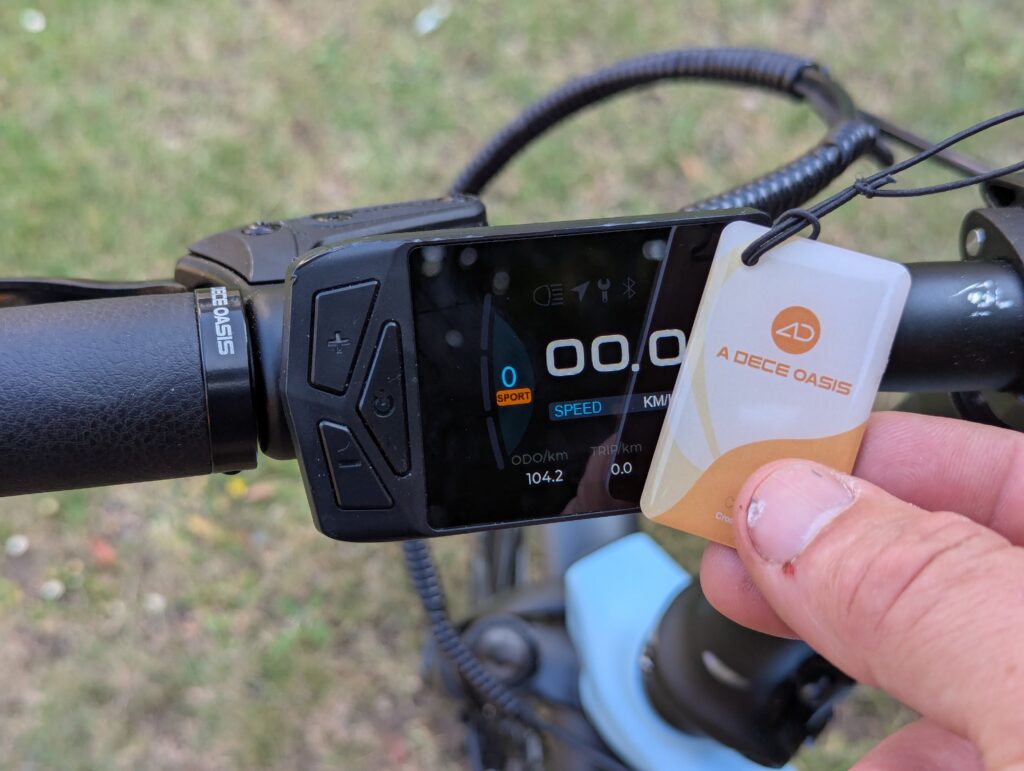
Obviously the best security for your bike is locking it with a sturdy lock to something immovable. But the ADO Air 20 Ultra has a couple of other security features that are useful. It has the option to pin-lock the bike with a four-digit number, which is OK, but entering the number is a pretty laborious process of clicking up and down as obviously there’s no keypad. However, once you’ve set it up you can bind the supplied NFC card to the bike and that allows you to turn it on and off with a single swipe. This works really well and means the bike is easy to power up, but also protected if someone else tries to do it.
ADO Air 20 Ultra – value and overall
At £1,499 for this three-speed Ultra build (there are cheaper singlespeed and two-speed bikes built around the same platform), this represents good value for money. It’s nicely built; maybe not quite as nicely as something like the Eovolt Afternoon Pro (now renamed the UTO Pro20) but for half the money it stacks up very, very well.
Against bikes of a more similar price like the Ampere Alter and the Pedibal Navigata it’s certainly a class above in terms of the quality of the build and the components – although the latter is also available with a legal throttle, if that’s something you’re looking for.
> Best folding e-bikes – our favourites from those we’ve ridden (and folded and unfolded)
Okay the Air 20 is a bit heavy to be lugging up and down stairs or into the boot of a car if you’re slight of build, but the removable battery goes a way to mitigate that. And while the three-speed automatic hub definitely has its quirks and some people probably won’t get along with it, it has definite advantages on a bike like this and the learning curve isn’t exactly steep. There’s plenty to like here, and if you want a fairly inexpensive folding e-bike then it should certainly be on your list.
Test Report
What does the manufacturer say about this product?:
Based on the Air 20 foundation, it offers enhanced performance and refined details, making it an ideal commuter folding e-bike.
Tell us some more about the technical aspects of this product:
Marked Power: 250W
Peak Power: 250W
Battery: 36V/9.6 Ah
Charging Time: 4-6 hours
Display: IPS Color Display
Torque: 50Nm
Range: 100km max range
Certificates: SGS CE
Suspension: Adjustable front fork
Transmission:Automatic three speed
Tyre Size: 20*1.95 Inch tyres
Pedal Assist: Torque sensor
Assist Intelligent: 0-3 level pedal assist
Rider Heights: 150cm-200cm
Waterproof Rating: IPX5 (Display IPX7)
Working Temperature: -10~50°C
Net weight: 22kg (Including standard accessories)
Permissible Max. Weight: 120 kg
List the components used to build up the bike:
BAFANG auto-shifting motor
Dual-sided torque sensor
Carbon belt drive
Range up to 100km
Lockout suspension fork
Supports ADO smart app
Portable battery
Hydraulic disc brake
Tell us what the bike is for and who it’s aimed at. What do the manufacturers say about it?:
It’s a folding electric commuter. Mixed mode, short-distance stuff.
Where does this model sit in the range? Tell us briefly about the cheaper options and the more expensive options:
This is the top of the Air 20 pile, you can get it as a two-speed or a single speed too
Tell us about the materials used in the frame and fork:
Aluminium alloy
How was the bike in terms of height and reach? How did it compare to other bikes of the same stated size?:
It was okay, but as a tall rider (1.9m) the saddle wouldn’t go as high as I would have liked
Was the bike comfortable to ride? Tell us how you felt about the ride quality:
Generally fine. It’s plenty comfy for the kind of short rides you’d do on it
Did the bike feel stiff in the right places? Did any part of the bike feel too stiff or too flexible?:
No issues
Was there any toe overlap with the front wheel? If so, was it a problem?:
No issues
How would you describe the steering? Was it lively, neutral or unresponsive?:
Fairly lively but not worryingly so
Tell us some more about the ride experience. How did the bike feel overall? Did it do particular things well or badly?:
Folding bikes tend to feel quite lively at the front, but I had no qualms about descending quickly on this one
What kind of motor is it? :
Bafang 3-speed hub motor
What are the stated motor system specs? (Torque/power/maximum assistance speed):
250W/50Nm
Tell us some more about the motor. How did it feel overall? Did it do particular things well or badly?:
The power is adequate, the internal gearing system has positives and negatives
How did the motor perform at low speed? (e.g. on steeper climbs or setting off with heavy loads):
It’s fine on the flat and starts to struggle a bit around 8-10%
How did the motor perform at higher speed? Was it noisy? Did assistance cut out smoothly/abruptly at the 25km/h assistance limit?:
Fine at speed, pretty quiet, cut-off feels natural
What type of battery is it? Is the manufacturer named?:
Li-Ion battery
Where is the battery on the bike? Is it removable?:
In the seastpost (removable)
What are the stated battery specs? (Capacity/voltage):
36V / 345Wh
Tell us about charging the battery. What’s the charger like? How long does it take?:
Takes about four hours with the supplied charger
Tell us about the assistance levels. How many are there? Are they all useful?:
Selectable 3 or 5, with Eco and Sport options
What do the manufacturers say about the range of the bike?:
Up to 100km
What was your experience of the operational range of the bike?:
It’s fine for the type of riding it’s designed for. You could rely on at least 25km even on really hilly terrain
Tell us some more about the drivetrain. Anything you particularly did or didn’t like? Any components which didn’t work well together?:
Carbon belt is nice and quiet and low-maintenance. The 3-speed automatic hub is a bit idiosyncratic.
Tell us some more about the wheels. Did they work well in the conditions you encountered?:
No issues
Tell us some more about the tyres. Did they work well in the conditions you encountered? Would you change the tyres? If so what for?:
They were fine
Any comments on brake performance?:
Very good hydraulic disc brakes
Any issues with brake durability?:
None
Tell us some more about the brakes. Did they work well in the conditions you encountered? Would you change anything? If so, why?:
About as good as you can expect on a bike at this price
Does the bike have a maximum luggage weight, or a maximum gross weight?:
25kg on the rear rack
Anything else you want to say about the capacity of the bike?:
Good rack, good options for bags
Did you enjoy using the product? Yes
Would you consider buying the product? Maybe
Would you recommend the product to a friend? Yes
Use this box to explain your overall score
It’s a good folder with an interesting spec and it’s good value
About the tester
Age: 53Height: 189cmWeight: 104kg
I usually ride: whatever I’m testing…My best bike is: Dward Design Custom Audax, Lauf Úthald, Cannondale Topstone
I’ve been riding for: Over 20 yearsI ride: Every dayI would class myself as: Expert
I regularly do the following types of riding: Road racing, Gravel riding, Indoor riding, Indoor racing, Bikepacking, Commuting, Touring, Club riding, Audax, Fitness riding, Leisure riding

-300x200.jpg)