
Once you’re over the £2,000 mark you start seeing a lot more choice in electric mountain bikes that are fully trail-capable. Realistically, you’re looking at a mid motor bike with a decent groupset and suspension fork if you want to hit the technical trails. And in most cases, that means forking out two grand or more. Considerably more, if you want.
For this kind of money you’re likely to be considering something from a brand that has a mountain biking heritage, and that is used to building trail-ready bikes. There’s a good range of bikes available and you can opt for hardtail or full suspension depending on your preference.
Motor
You’ll be getting a mid-motor bike if you spend £2,000 or more on an e-MTB. The mid motor configuration is used almost exclusively on trail-capable mountain bikes. It places the weight of the motor centrally and low, giving better handling, and lighter wheels mean less stress on the bike when you hit rocks or roots. On a full suspension bike the extra sprung mass in the middle of the bike actually helps the suspension to perform better.
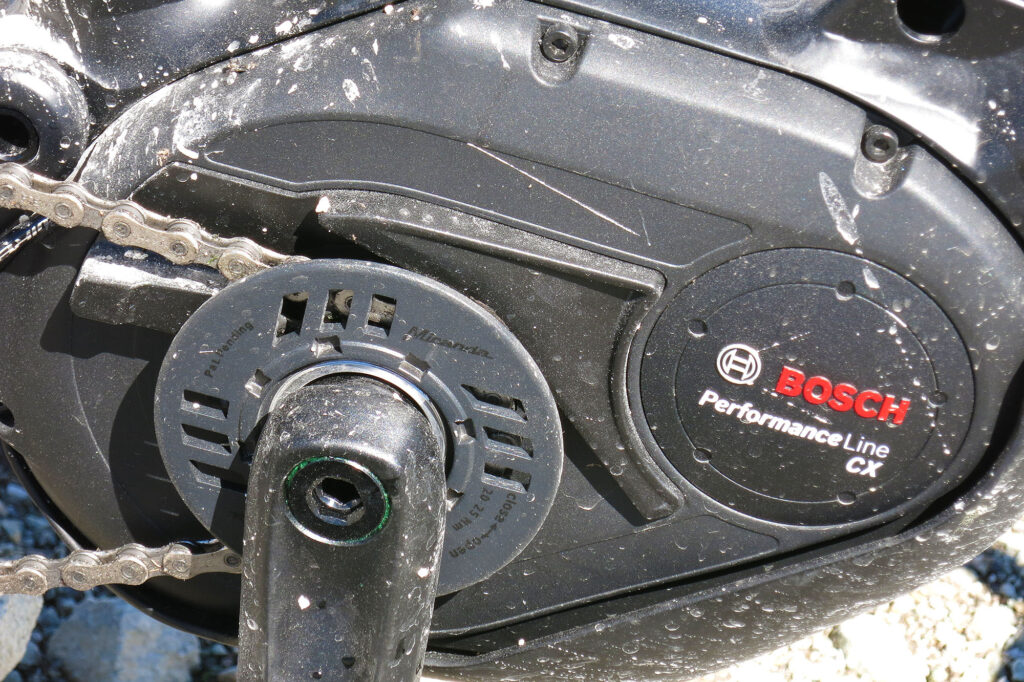
Bosch dominate the e-MTB market at the moment: their Performance Line CX motor has been available for a few years and is perfect for the job. Shimano’s STEPS E8000 system is appearing on 2017 bikes but we’ve mostly seen it on higher-spec bikes so it’s more prevalent in the price ranges above this one. Similarly, the Brose system is gaining ground but it’s generally a bit more expensive than Bosch. There are Brose-powered bikes at this price point though. Yamaha also feature, chiefly on Giant bikes who use the motor in their SyncDrive system.
Hardtail vs full suspension
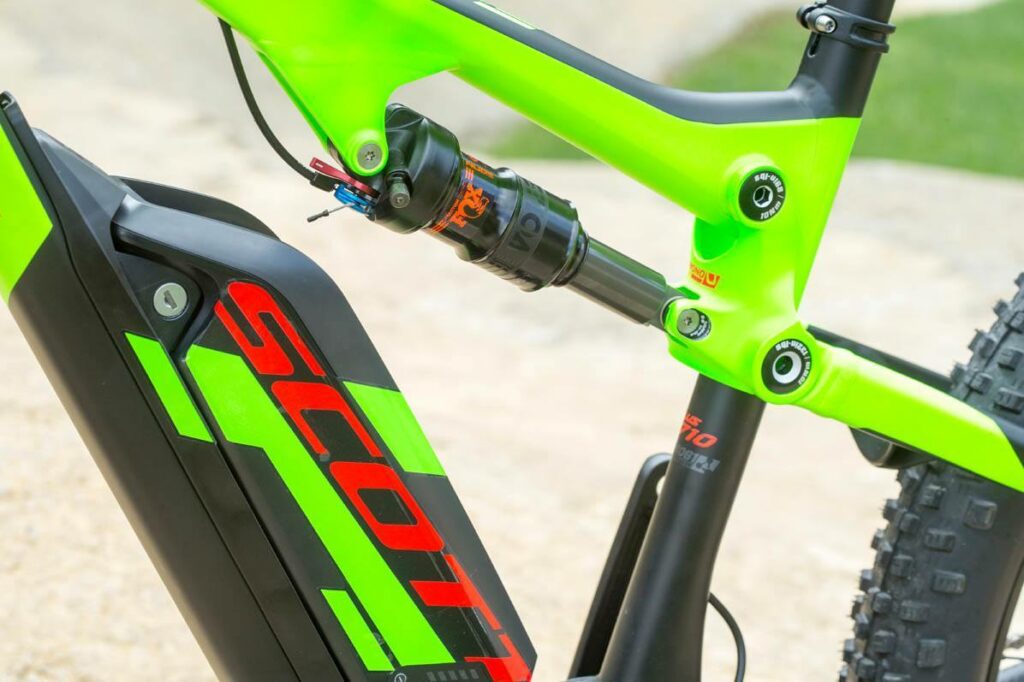
There are some good full-suspension bikes available under £3,000. The rear suspension adds cost, so you can expect that to get recovered in other areas: a downgraded groupset, wheels, fork or possibly battery. Whether you need a full-suspension bike is up to you, and how and where you’ll be riding. If you’re seeking out more technical terrain or eyeing up the black runs at your local trail centre, you’ll probably be glad of a bit of bump-soaking at the rear. And as we said above, the extra central weight of an e-MTB tends to make the suspension a bit plusher and the bike feel more planted on the trail than a non-powered bike.
Equipment
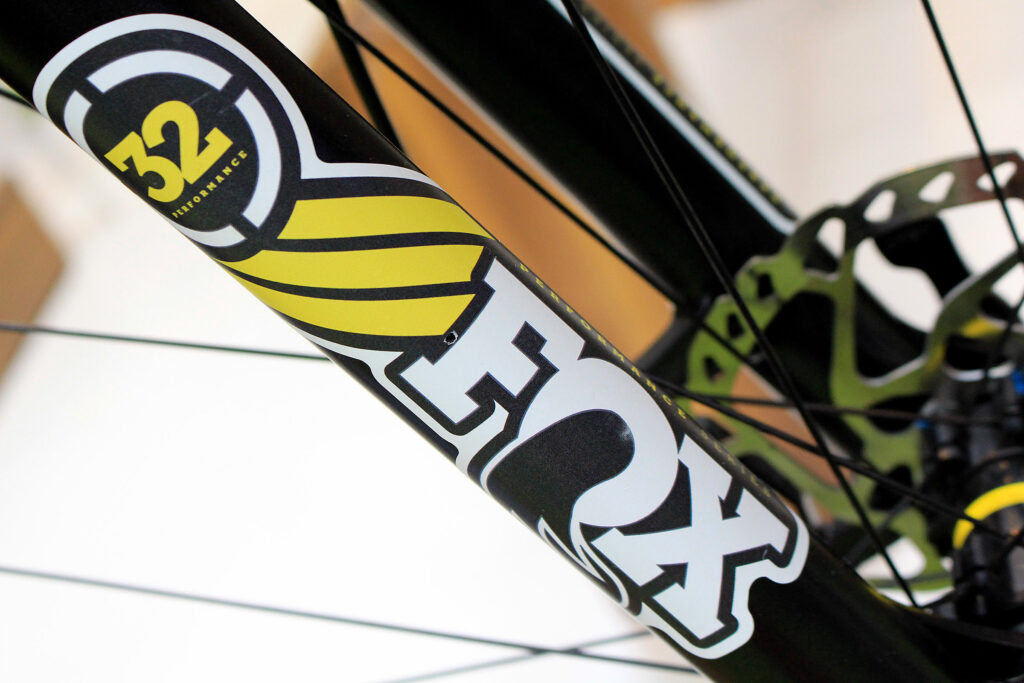
Expect a decent suspension fork up front with at least 100mm or travel. You’ll most likely be getting a Rockshox Reba or Recon fork (Reba is better than Recon) or possibly a Yari (even better). Fox forks also feature, with the number indication the stanchion size: bigger is better, so the 32 is entry level and the 34 higher spec. SR Suntour forks feature too, mostly XCR units. Most forks will have a lockout, a bar-mounted remote is useful.
Brakes will be hydraulic discs. Really you want at least 180mm rotors front and rear for stopping the bulk of an e-MTB, and many manufacturers use a 200mm disc on the front. Tektro, Magura, Avid and Shimano all make disc brakes that will be fitted to bikes for this kind of money.
You’ll likely be getting a single-ring drivetrain. It’s a necessity with Bosch motors because of the motor design, and Shimano, Yamaha and Brose tend to follow suit. That being the case, the extent of the rear cassette is the extent of your gears, so the wider the ratios the more you have to play with. Expect at least an 11-40 or 11-42 cassette as standard.
Wheels will be 27.5” or 29” depending on the bike, and many manufacturers are using plus-sized rims and tyres to get a bit more damping and traction over rough and slippy terrain. The best way to decide whether you prefer standard or plus-sized tyres is to try them both; in either case, look for good quality tyres from the likes of Maxxis and Schwalbe, and well-built wheels. Tubeless compatibility out of the box is a plus, though bikes generally don’t come set up tubeless from the factory because it’s a messy job and the tyres can deflate and leak sealant while they’re being shipped.
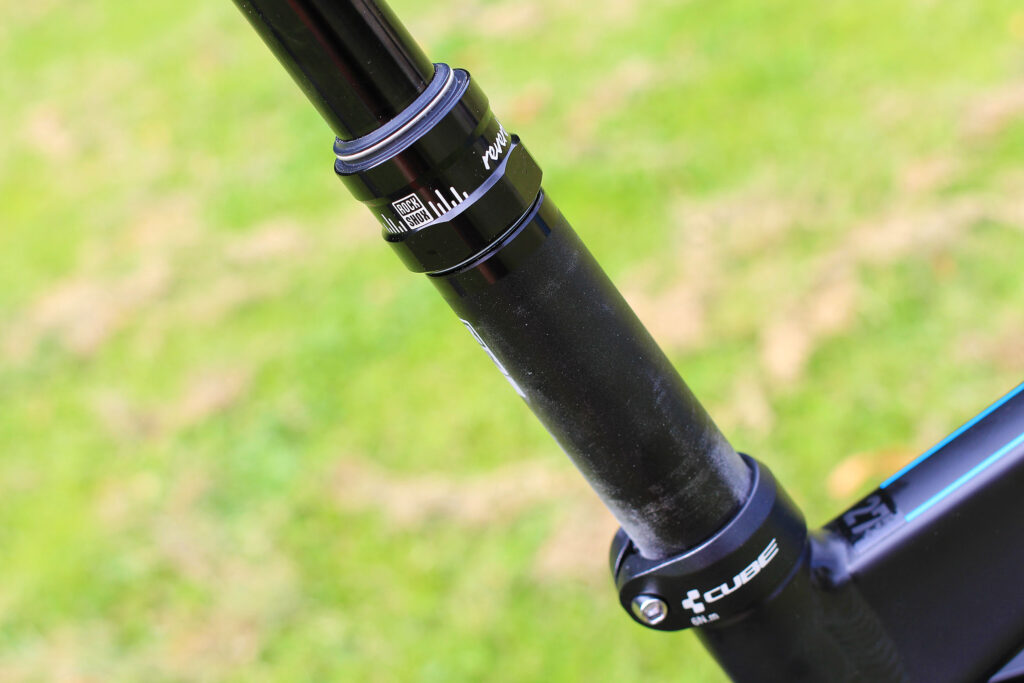
A dropper seatpost is a useful addition to any trail bike; the only penalty is weight and that’s not really an issue with a 20kg+ electric mountain bike.
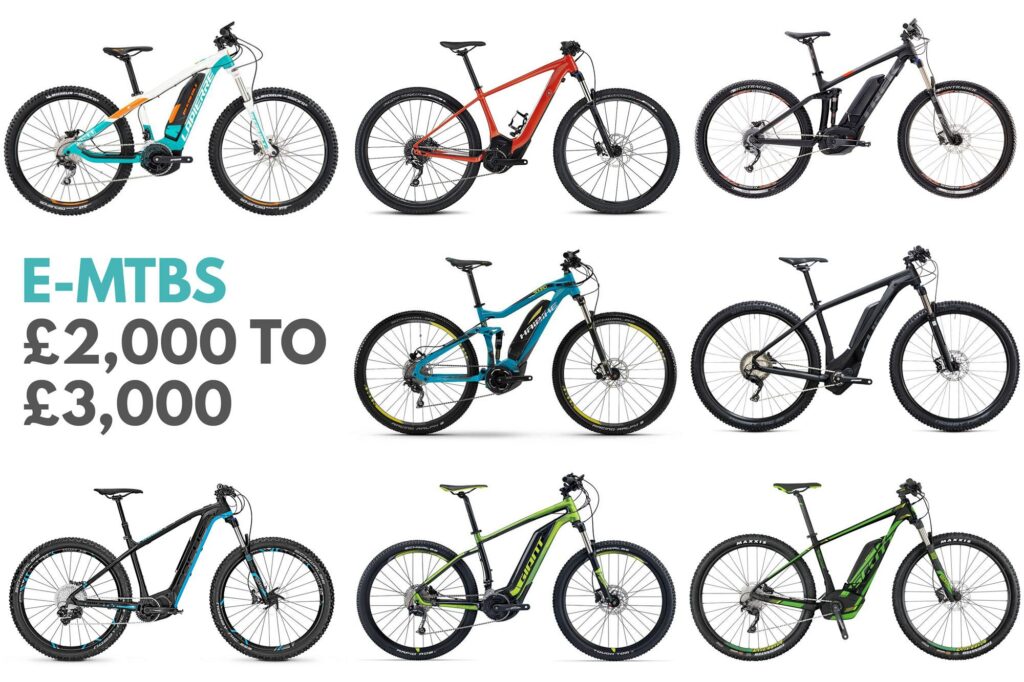
Eight picks from £2,000 to £3,000
Right, let’s dive in to the details. Here are eight picks from some big manufacturers, covering all of the £2k to £3k price bracket. Enjoy!
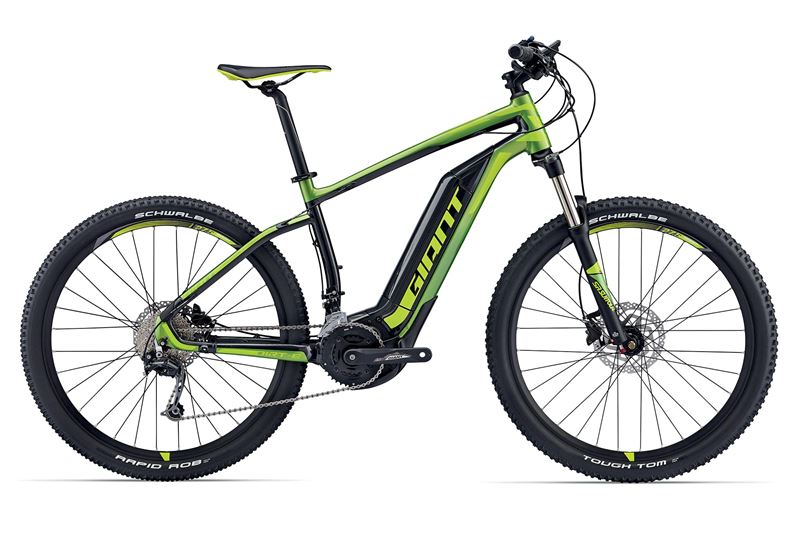
Giant Dirt-E+ 2 £2,299
The lowest spec of the Yamaha-powered Giant bikes is this Dirt-E+ 2; the range goes up to the Full E+ 0SX that we tested which is well north of five grand.
The Giant is unusual in that it has a double chainset. That means you get a much bigger range of gears than you would from the 11-36 cassette if the bike was running a single ring. Front and rear derailleurs are both Shimano Deore, with Acera shifters. You get Shimano disc brakes, too. Front bump-soaking is handled by an SR Suntour XCR32 120mm fork with a remote lockout.
Giant’s Yamaha-based SyncDrive system puts out 80Nm of torque; this bike understandably has the lower-spec 400Wh battery which is neatly integrated into the frame. www.giant-bicycles.com
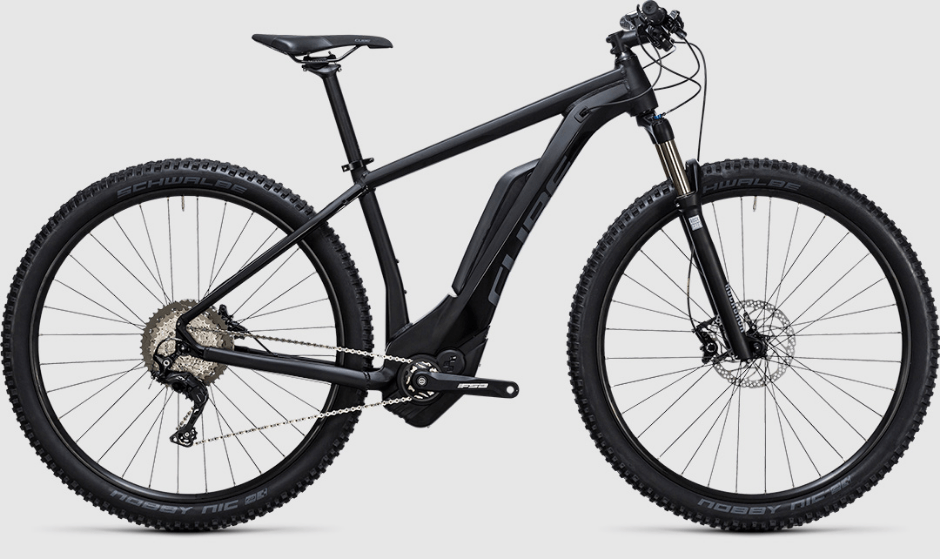
Cube Reaction Hybrid HPA SL 500 £2,499
The Reaction Hybrid has a new frame for 2017 that uses a gravity-cast downtube to partially enclose the battery. It makes for a very clean look, and Cube also get a custom Performance Line CX motor from Bosch with a housing designed to integrate with the frame. This SL build gets a 100mm Rock Shox Recon Silver TK Air fork and an XT 11-speed drivetrain with 11-46 cassette. Wheels are tubeless-ready, and like many Cube bikes the wheel size is dependent on frame size: smaller riders get 27.5” wheels and bigger frames roll on 29s. You get the higher-capacity 500Wh battery for more trail bashing, too. www.cube.eu
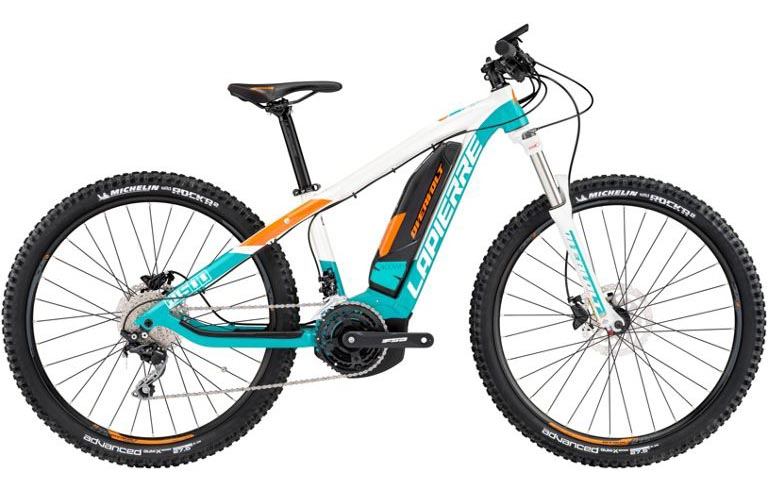
Lapierre Overvolt HT 500 Women’s £2,549
There’s quite a few women-specific e-MTB builds between £2,000 and £3,000: this Lapierre has frame sizes down to 40cm for more petite riders. It’s a fully trail-ready machine with a 120mm SR Suntour XCR Air fork and a Yamaha power system with a 400Wh battery. You get Shimano Deore transmission components, and a double chainset at the front for a wider range of gears. The bike comes with standard width tyres but it uses Boost standard axles so it’s ready for Plus-sized wheels and tyres if you prefer. www.lapierre-bikes.co.uk
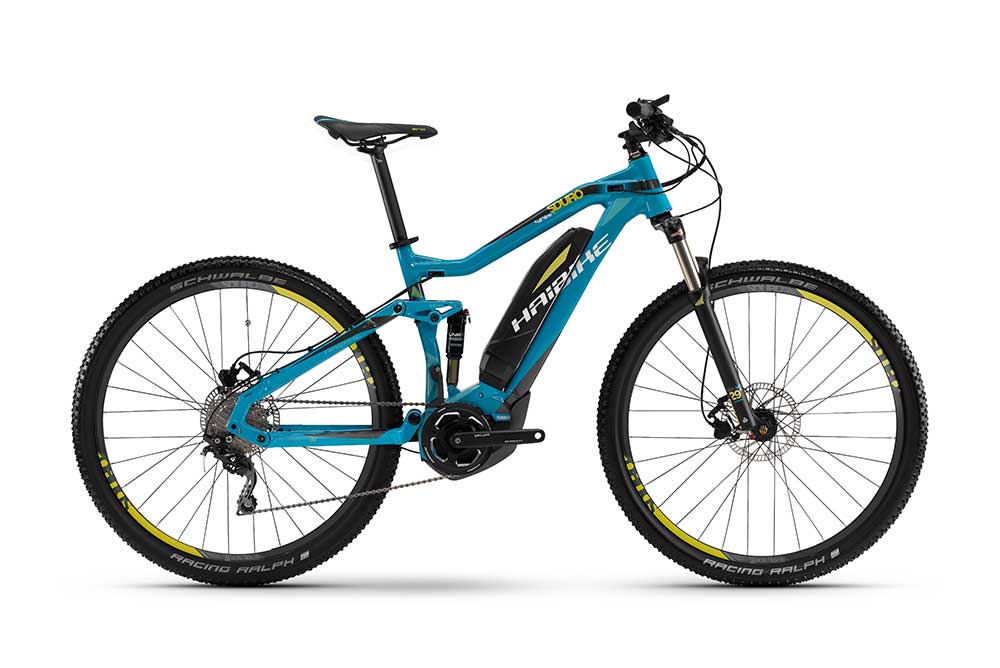
Haibike Sduro FullNine SL £2,750
Haibike make a huge range of electric MTBs topping out with the £9,450 XDuro FullSeven Carbon Pro. The Sduro FullNine SL is one of their most affordable full-suspension bikes, using a 100mm travel frame (with Suntour RS6 DuoAir shock) and a 100mm SR Suntour XCR Air fork. The power comes from a Yamaha motor with a 400Wh battery and you get a Shimano Deore 10-speed transmission with an 11-36 cassette. Tektro provide the hydraulic brakes and 180mm rotors. The FullNine SL gets 29” wheels and Schwalbe tyres. www.raleigh.co.uk/haibike
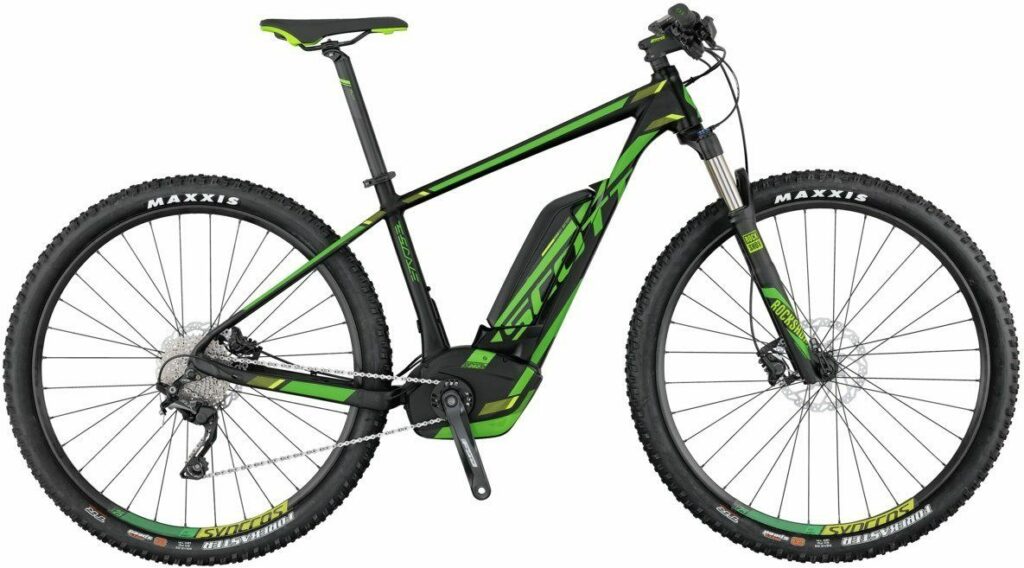
Scott E-Scale 920 £2,799
If you’re looking for a good quality trail-ready hardtail 29er then the Scott E-Scale ticks the boxes: A Bosch Performance Line CX motor, 500Wh powerpack, new Purion display, good quality Shimano SLX/Deore 10-speed gearing and tubeless-ready wheels and tyres. Braking is handled by Shimano M506 discs with 180mm rotors front and rear, and a Rock Shox Recon Silver TK Solo Air fork takes the sting out of hits at the front. The bike’s branding continues over the battery and motor to help give an integrated look. http://scott-sports.com
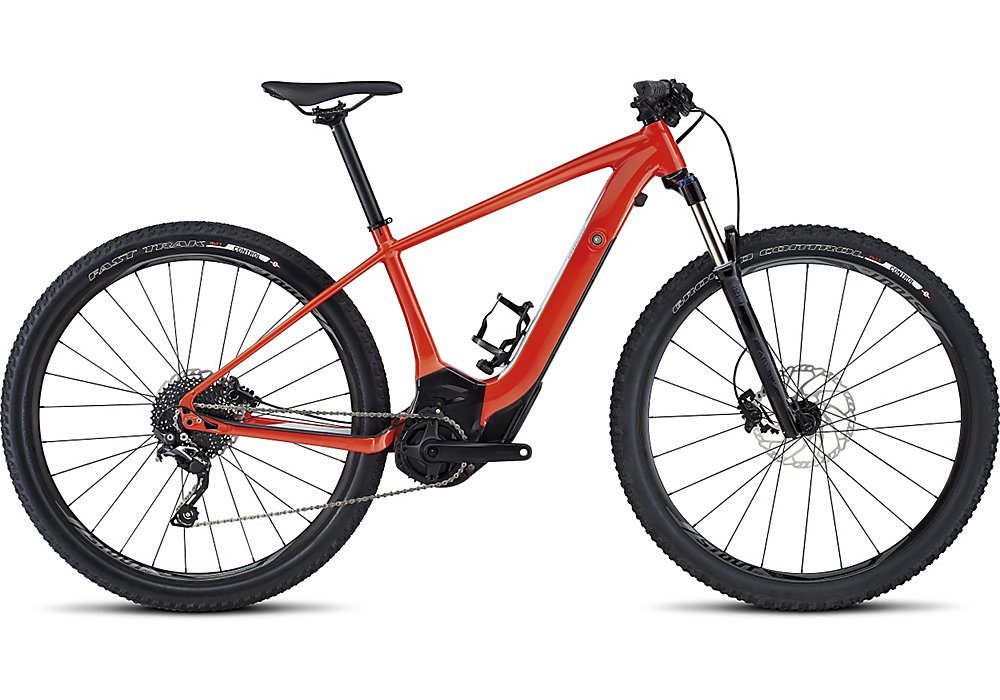
Specialized Turbo Levo Hardtail 29 £2,800
The Specialized Turbo Levo bikes are sporting some of the most interesting tech out there at the moment. The custom power system uses the excellent Brose motor and a fully integrated battery in the down tube for a very clean look. There’s no display, just a button on the frame to turn on and off and switch modes. The bike can also be controlled by a smartphone app which gives access to a range of other features. The most interesting is intelligent battery management: tell the bike how far you want to ride, or for how long, and it’ll manage the power to get you there before the battery dies.
This build gets a RockShox Recon Silver RL 29 fork, Shimano Deore/SLX drivetrain, Deore disc brakes with a 200mm front rotor and an 11-40T cassette for a good range of gears. www.specialized.com
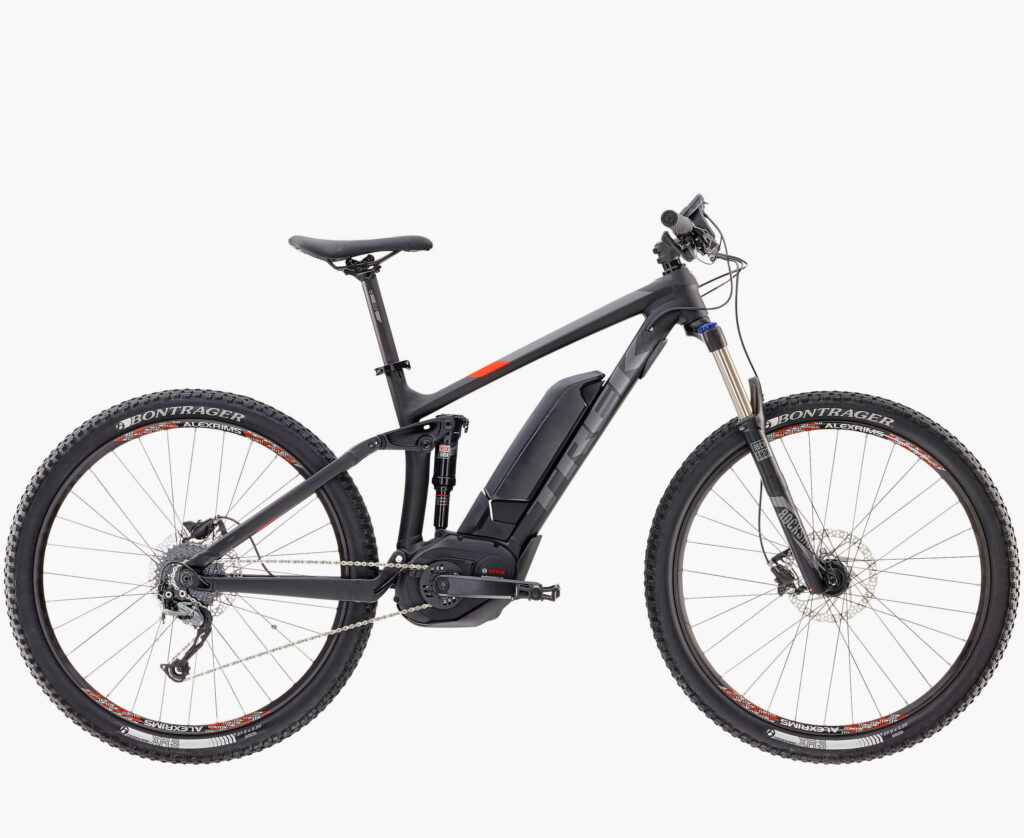
Trek Powerfly 5 FS £2,950
Sneaking under the three grand mark by £50 is this Trek, the little brother of the Powerfly 9 FS Plus we’ve reviewed this year. That was a fantastic bike; this model gets a much lower spec but it’s also £1,300 less expensive, so swings and roundabouts.
What you do get is 130mm of travel front and rear from Trek’s Active Braking Pivot frame (with a RockShox Deluxe RL shock) and a RockShox Sektor Silver RL fork. Trek use Boost standard wheels for their e-MTBS; they’re wider, which makes for a stiffer wheel build. This bike has standard 27.5” wheels with 2.2” Bontrager tyres. You take a hit in the drivetrain to squeeze the full suspension in under £3,000: it’s 9-speed Alivio/Altus with an 11-34 cassette. But there’s no skimping on the power: a Bosch Performance Line CX motor with a 500Wh battery. www.trekbikes.com
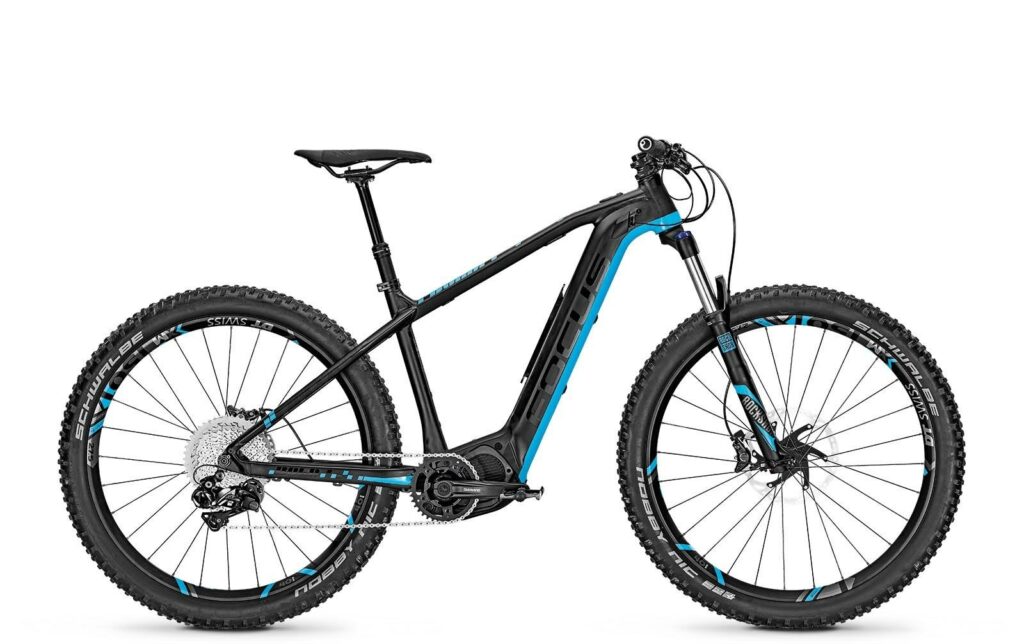
Focus Bold2 29 £2,999
This Focus hardtail features the new Shimano STEPS E8000 MTB motor, which we’ve tested and we really like. It also has an ingenious system called Tailored Energy Concept (TEC) which allows you to fit a second, external, battery to a special rail on the down tube. The integrated frame battery is reasonably small, at 378Wh, but the piggy-back battery doubles that to 756Wh for epic days on the trail. If you’re not using the rail for a battery you can fit a rack which incorporates a bottle cage and inner tube holder. The second battery costs extra, obviously.
The Bold2 Gets a Rock Shox Recon Silver 120mm fork, a Shimano SLX/XT 11-speed drivetrain with an 11-40 cassette, a dropper seatpost with remote switch. There’s a version of the bike with Plus-sized tyres (pictured above) for another £100. The highest spec Bold2, the Plus Pro, gets Di2 gearing and costs a cool £4,499