


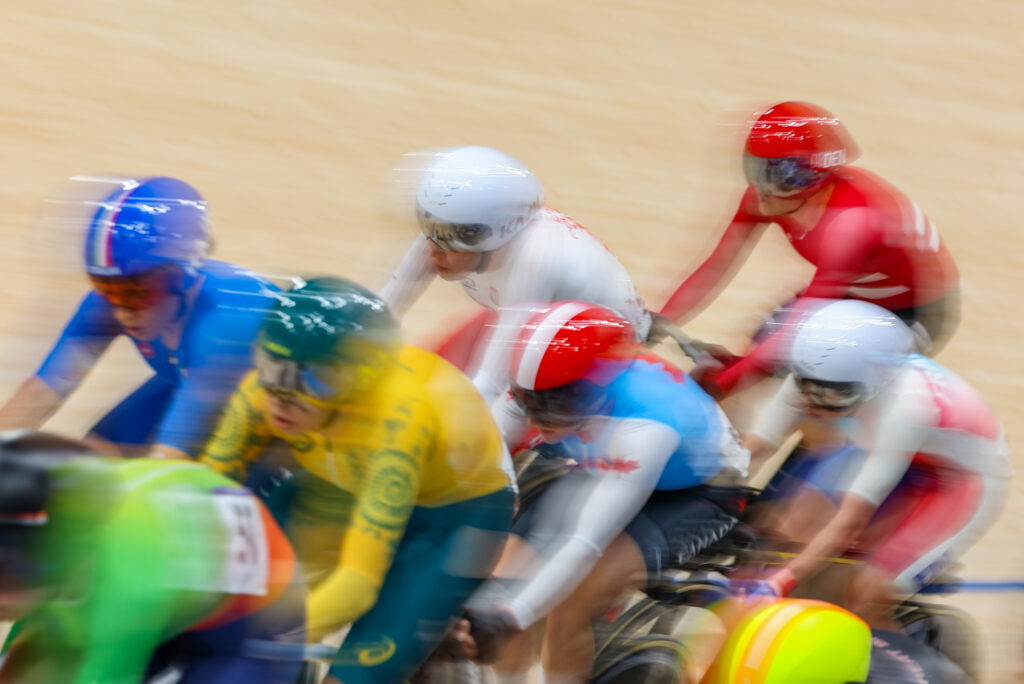

The track cycling at the Paris Olympics was pretty good, wasn’t it?
Even for a committed roadie like myself, whose interest in the fine art of riding around in circles only rears its head once, maybe twice, a year, there was plenty to feast upon during what was a frenetically fast week of racing at the stinkingly hot Vélodrome National de Saint-Quentin-en-Yvelines.
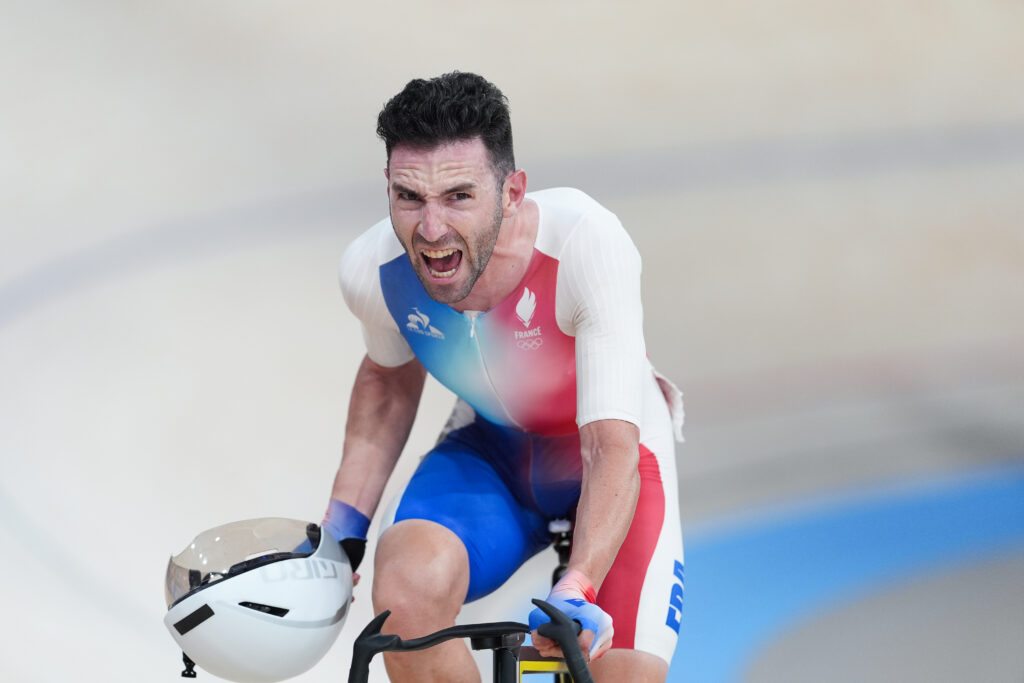
There was the nail bitingly tense men’s team pursuit final between GB and Australia, decided by Ethan Hayter’s devastating last-lap slip. Harrie Lavreysen and Ellesse Andrews’ coronations as the undisputed king and queen of sprinting. Jack Carlin’s emotional rollercoaster ride to bronze in the individual sprint. The USA’s dramatic team pursuit victory over New Zealand, sealing Kristen Faulkner’s road and track gold double. The world records that dropped like flies in the sprint competitions. The British women’s epic team sprint win. Benjamin Thomas’ joyous omnium victory in front of a raucous home crowd (and that spine tingling rendition of La Marseillaise).
(Zac Williams/SWpix.com)
But…
When it comes to a handful of the events, on sober reflection, a day or two after staggering home from such a heady banquet, perhaps it was all a bit too much, a bit too chaotic.
(And no, I’m not talking about the officials’ failure to ring the bell signalling the final lap on two separate occasions during the Games. But that didn’t help.)
The men’s omnium, for instance, was marred by a series of delayed decisions and fudged rulings in both the tempo and elimination races, as the officials struggled to discern through the melee who had crossed the line first or last, so in some cases just made no decision at all.
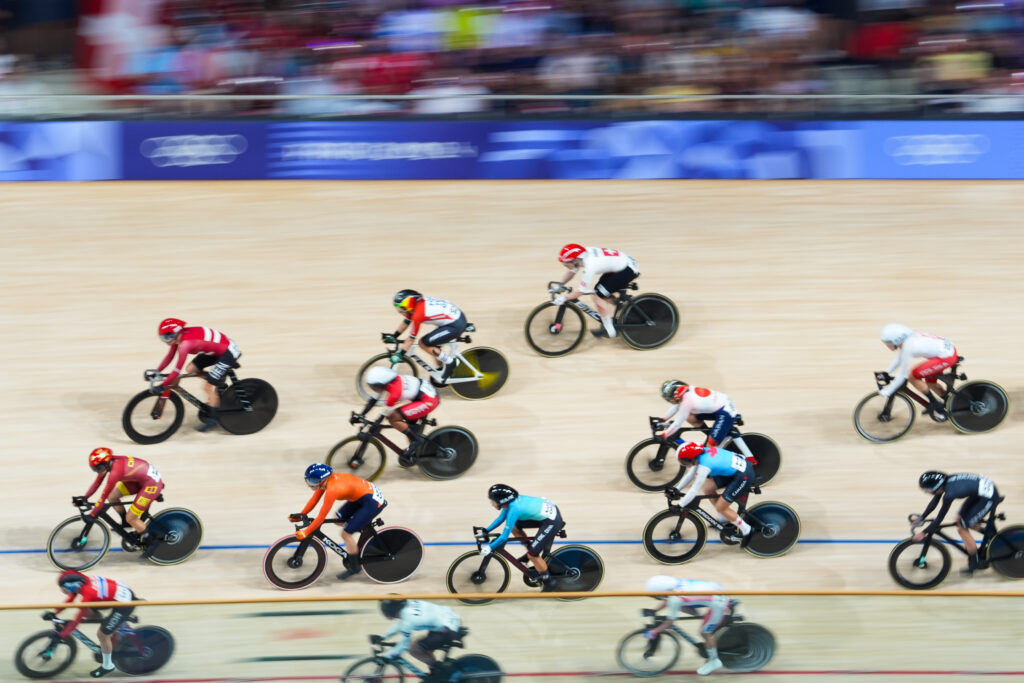
And I can only imagine the look of confusion etched on the face of a track cycling newbie, flicking over from the trampolining to watch the Madison, and what appears to be a cross between an unruly creche and a complicated maths problem, while trying to work out where the front of the race is, what constitutes the main group (something even seasoned commentators struggle with when it’s time for a team to complete a lap), and which half of the riders on the track are even racing at any given moment.
(Zac Williams/SWpix.com)
Of course, the Madison and the omnium can and do provide some great entertainment, don’t get me wrong – and they make for exhilarating viewing from the trackside – but do they belong at the Olympic Games, when a number of track cycling’s most iconic, historic events are left out?
Before I get on to that, let’s trace the history of why they’re there in the first place.
Two decades ago, to facilitate the introduction of BMX racing (a very positive step for the sport, before anyone accuses me of being anti-BMX), one of track cycling’s blue riband events, the 1km time trial, was pulled from the Olympics, forcing Kilo specialists like Chris Hoy to refocus on the sprinting events that remained, such as the keirin.
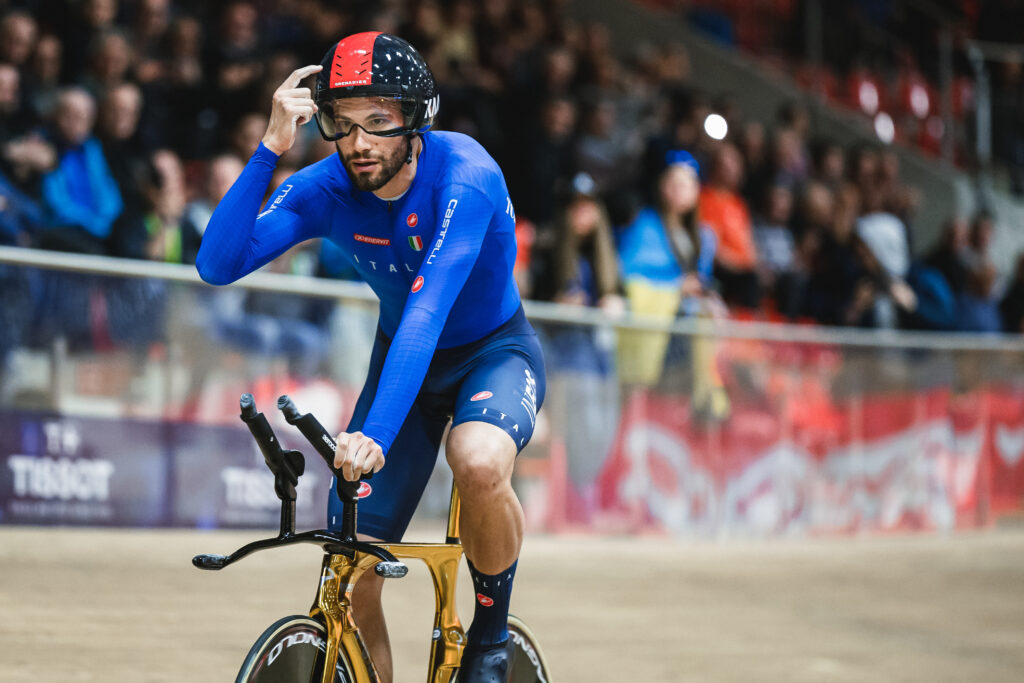
And after Beijing, as part of the long, long overdue move for gender medal equality, perhaps the greatest and most iconic of all the velodrome-based races, the individual pursuit – an event synonymous with Coppi, Burton, Moser, Boardman, and Wiggins – was given the boot.
(Alex Whitehead/SWpix.com)
In its place for 2012, the endurance side was reduced to just the team pursuit and the omnium, a hodge podge of endurance, sprint, timed, and bunch events that rewarded consistency and the ability to stay out of trouble and avoid disaster over excellence in a specialist field.
So, not exactly the greatest choice to represent track cycling’s sparse pickings at the Olympic Games, the pinnacle of the sporting world, then.
To underline the folly of the omnium’s watered-down programme and pursuit of reliability over brilliance, Denmark’s Lasse Norman Hansen took gold in the event, following one first and two second places finishes over the six events. Ed Clancy, with two firsts and a second, got bronze.
By Tokyo, the omnium – still the only endurance event for individuals at the Olympics – was revamped into its current bunch race-only format, now containing four varieties of the same points-accumulating, mind-bending madness.
To further aid the confused masses tuning in for their quadrennial fill of track racing, the UCI – granted a sixth event by those philanthropists at the IOC – opted for the return of the Madison, cycling’s version of a psychedelic rock concept album played at the wrong speed (with the occasional punk-style headbutt thrown in for good measure), albeit one at least rooted in the sport’s history.
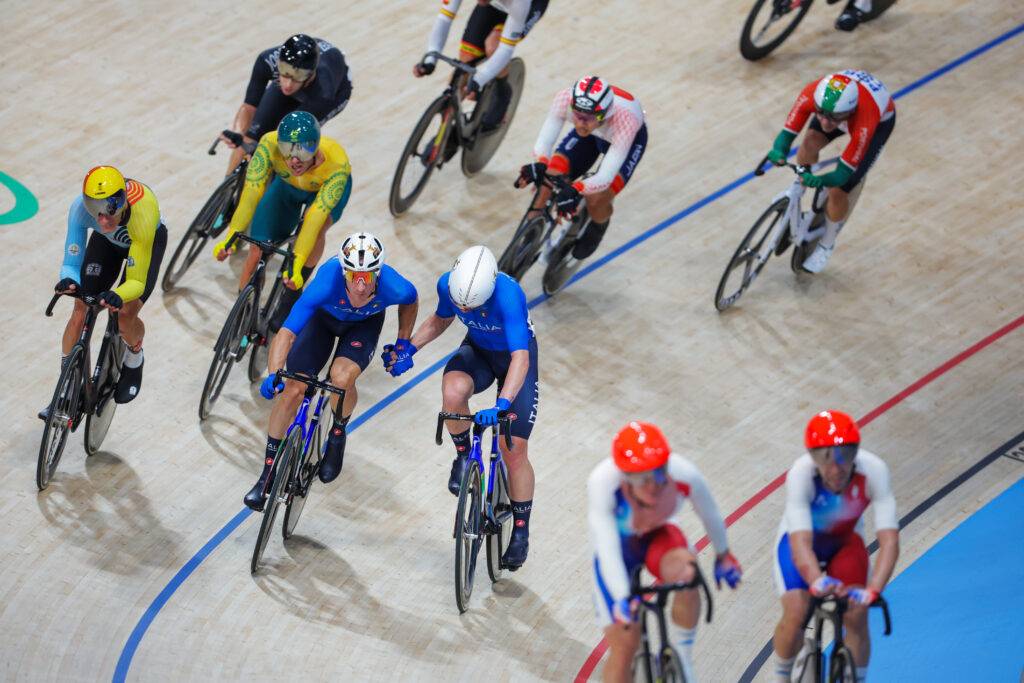
(Ed Sykes/SWpix.com)
As I’ve said before, these races – especially the Madison and the devil take the hindmost elimination – make for brilliant viewing at a six-day, or world championships, or evening track meet.
But to make them part of an extremely narrow programme at the Olympics, thereby forcing riders to focus on them in every other championships during the four-year cycle, is perhaps doing track cycling a disservice, and ridding fans of the best of the sport.
For example, cycling’s ‘stakeholders’ are forever banging on about making road racing – a discipline that is on the surface extremely simple (get to the finish line first), but where the baffling complexity lies in its nuances and subtleties – accessible to the masses, through half-baked ideas for new formats and season-long leagues to changing how the races are viewed on TV.
But these same stakeholders seem to have no qualms about two of the six Olympic track events requiring eyes like a hawk and a Masters degree in mathematics to keep track of what’s going on.
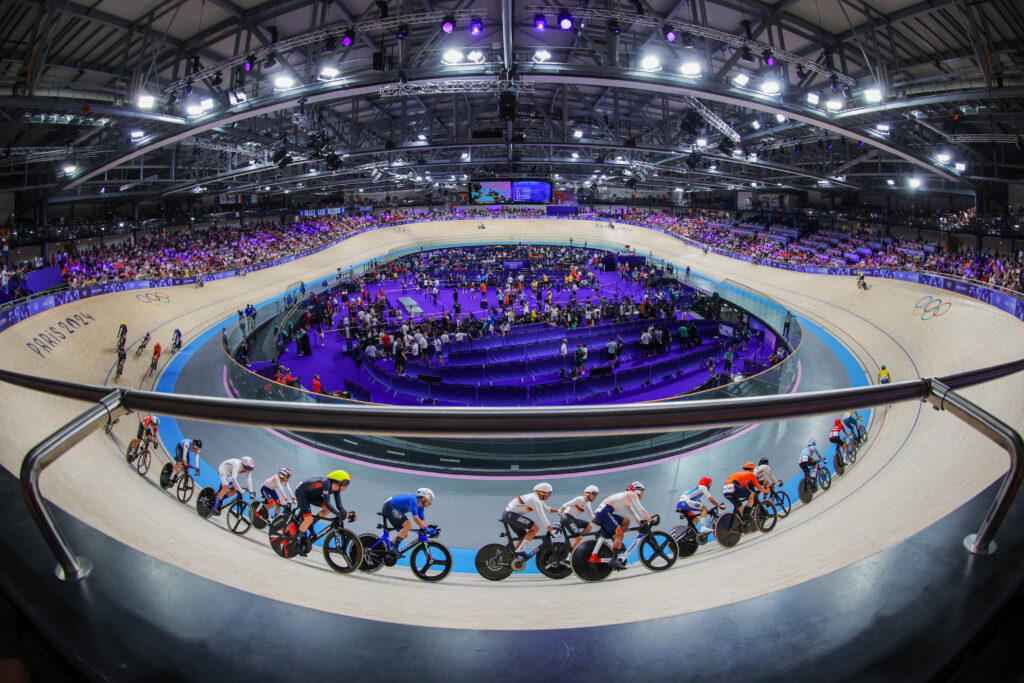
(Ed Sykes/SWpix.com)
To the general public, the Olympics represent the height of sporting achievement, where the best athletes in the world prepare for four years to produce their best performances. So why doesn’t track cycling, with its reputation for dialled-in nerdiness and super-round wheels, lean into that aspect of the Games?
Almost every other cycling discipline is defined by its in-built potential for chaos – in the likes of road racing, mountain biking, and BMX, being the best doesn’t automatically guarantee you a medal (just ask Beth Shriever).
But in the controlled, numbers-based world of the velodrome, road’s glasses-wearing, geeky cousin, perhaps it should. Instead of the untameable chaos of the Madison or omnium, the return of the individual pursuit at the Olympics would treat us all to riders, specialised and prepared, setting new standards for the sport on the occasion it matters most.
Of course, things can go wrong at any moment even in a pursuit – something Ethan Hayter knows all too well now – but it’s clear the current programme, especially on the endurance side, relies too much on chaos, eschewing the preparation and fine-tuning associated with the track.
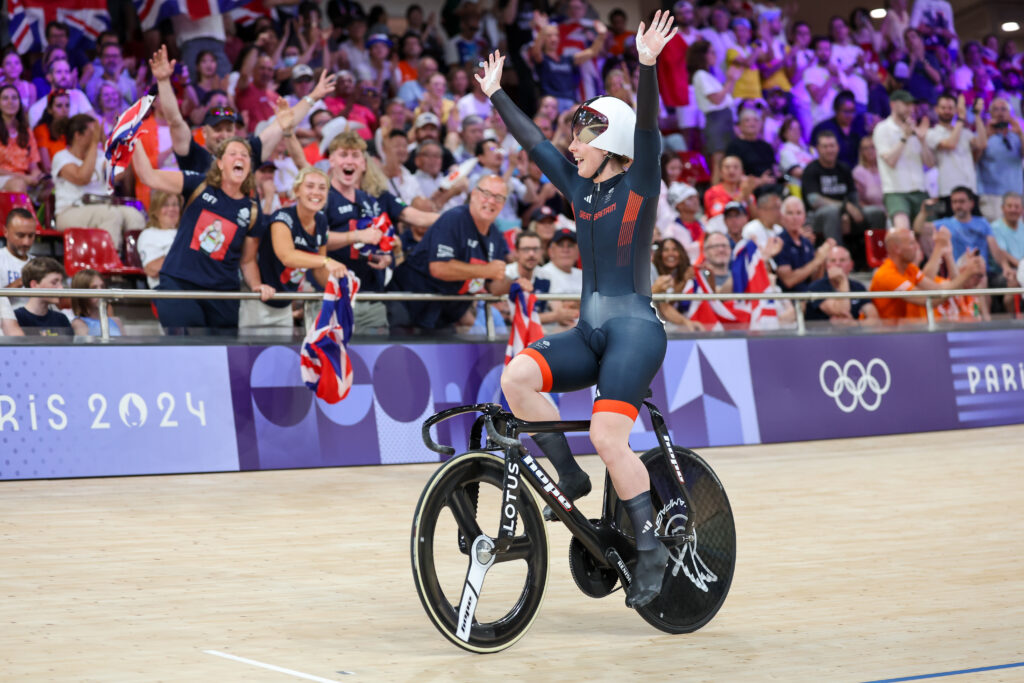
(Alex Whitehead/SWpix.com)
What’s more, the loss of the individual pursuit and kilo at the Olympics has robbed us of some potentially era-defining duels on the biggest stage.
Filippo Ganna’s last-gasp victory over Dan Bigham at last year’s Glasgow worlds was one of the most enthralling sporting moments I’ve ever had the pleasure of watching live – now imagine that repeated at an Olympics. Or how good the internecine conflict between Laura Kenny, Katie Archibald, and Jo Rowsell could have been if they’d all focused on their own pursuiting ambitions. Or imagine the Dutch ripping the boards apart during the kilo, or Emma Finucane and Ellese Andrews breaking new ground for women’s sprinting.
The return of these historic timed events (which, in this case, would necessitate the current women’s 500m time trial jumping to the kilo for some obvious parity) would not only reintroduce some compelling narratives and rivalries currently lost in the haze of the Madison, but also reposition world records, fundamental to the stories crafted at every Olympics, at the heart of the track agenda.
While records tumbled on the superfast Parisian track last week, with the exception of the team pursuit and team sprint, they were largely meaningless. For example, Olympic and then world record after record was smashed in the flying 200m that constituted the qualifying round of the women’s individual sprint – but then that was that, as the tactics of the sprint took precedence when it really mattered.
In athletics, the battle for gold and the establishment of new performance boundaries go hand in hand. In the current Olympic programme for track cycling – the only cycling discipline where such records can even be accurately assessed – only a third of the events possess this dual intrigue. Which, again, is desperately underselling the sport’s potential for casual fans.
In fact, having the omnium and Madison at the expense of the kilo and individual pursuit is a lot like if athletics scrapped the 100m and 1,500m and replaced them with a track-only heptathlon and a pairs relay steeplechase.
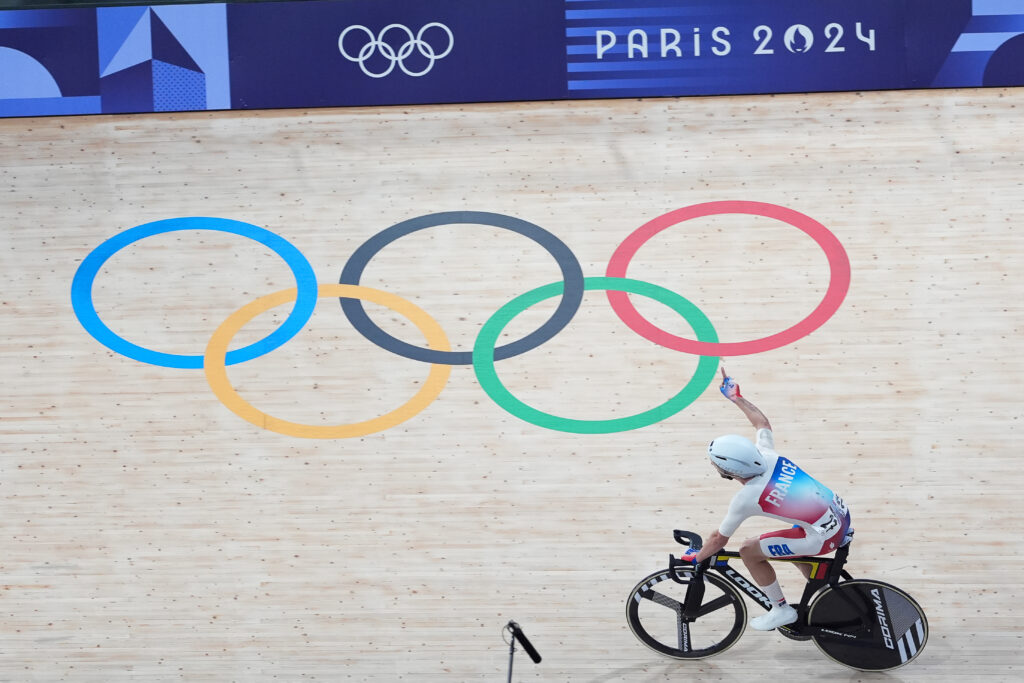
(Zac Williams/SWpix.com)
So, I hear you cry, what’s my alternative Olympic track programme after all this whingeing?
Well, I’m glad you asked. Keeping the six-event format, three each for endurance and sprint, I’d opt for the individual pursuit, team pursuit, points race, kilo, team sprint, and keirin.
In my alternative Olympic track week, the events would be rejigged so the majority are weighted towards individuals, while the individual sprint drops out for the kilo (the keirin nicely fulfils the duty of tactical sprinting against rivals, without the need for all that track stand nonsense).
Also, I think the points race would provide a clean, but still nicely complex version of bunch racing for the endurance scene’s bike handlers and fast finishers. And most importantly, the individual pursuit would be back, which is what this has all really been about anyway.
Of course, there is another solution.
Swimming currently has 37 events at the Olympics, with six more rumoured to be added for LA ’28 (and all but two of them take place in the same pool).
Cycling, meanwhile – across road, track, mountain biking, and BMX – has 22 events.
So, hey IOC, how about throw us a few more races and we can have the best of all worlds, the chaos and the control, eh?




















29 thoughts on “Chaos, carnage, and confusion: Why the Olympic track cycling programme needs a rethink”
Whilst I respect your
Whilst I respect your knowledge and expertise Ryan, and you are of course entitled to an opinion, I am afraid I could not disagree with you more on this.
The Madison races were the absolute highlight of the track programme for me, and my family who have minimal interest in track cycling were fascinated by it and watched both races in their entirety.
The original omnium with 6 events was great as it did reward the best all round cyclist – I would liken it to the GC in a grand tour, a pure climber or timetriallist will never win, someone who is extremely good at everything will come out on top. I am not convince by the revised omnium which is too endurance focussed in my view.
I would agree that the qualifying for the sprint is odd because it doesn’t really reflect the head to head match sprint format of the latter stages, but it does at least ensure that riders are seeded so that it is a combination of speed and tactics that wins out. Again the match sprints were fascinating to my kids (and I remember them being my first entry into track cyclings as kid – back when they were allowed to stop completely and the race could include several minutes of 2 riders track standing and staring at each other!)
I really enjoy watching the individual pursuit, but the team pursuit is a spectacle on another level and so if time really is limited then I would sacrifice the IP.
I do agree with you and question why time is limited? The velodrome is not a multi purpose venue, so based on the opening cerermony on Friday evening, racing could start on the Saturday (it always used to be a first week sport) and run for 2 full weeks if needed.
So , in summary my ideal programme would be:
Team events: Madison, team pursuit, team sprint
Individual: Old 6 event omnium, individual sprint, keirin, individual pursuit
I have to say I am not that fussed for the kilo TT – and to an outsider when they are doubling up in the earlier rounds it does look a lot like a pursuit.
I think what we can all agree on is the more cycling the better!
It’s not velodrome time that
It’s not velodrome time that is limited but the number of track (or overall) cycling events and medals that the IOC allows the UCI(?) to award. As Ryan says in the article, the addition of a male and female BMX event entailed a reduction of 1 track event overall.
I don’t know why the IOC takes this stance for cycling when, again as mentioned in the article, World Aquatics gets to contest all 4 strokes over nearly all the distances along with medleys, single-sex relays and the latest addition, mixed-sex relays. The addition of open-water swimming didn’t affect anything in the pool, AFAIK.
Similarly, mixed-sex 4×400 relays have been added to the last 2 Olympics by World Athletics without anything being dropped.
I think Ryan’s overarching
I think Ryan’s overarching point is that the Olympics shouldn’t simply be about what is most entertaining or fascinating to watch. No one is arguing that the madison/individual sprint aren’t great spectacles, but I can see the argument that something like the kilo TT is a more pure test of athleticism, and the ability to set World/Olympic records in a standardised format is a boon too.
I have no idea how fully utilised the velodrome is – my understanding is that in addition to the actual race sessions, it is used by the riders for practicing etc. So that might pose a limit on the time available for racing.
The other thing to consider with increasing the number of track events would be the athletes themselves – are you expecting riders to participate in more events, and (if so) how would that affect their ability to peform? Or would there be more athletes, and would that favour countries (probably including the UK) that can afford to develop more riders and provide equipment for them?
I disagree with you
I disagree with your disagreement.
One thing you mention right at the start – ” I would liken it to the GC in a grand tour, a pure climber or timetriallist will never win, someone who is extremely good at everything will come out on top” In fact you will find the total opposite is true if you watch enough road cycling. The GC in inveriably won by the best climber who is usually also smashing the TT stages too. Poggy did it twice, Vingegaard did it, Wiggo did it, Froome did it. Thats what really difines the GTs above most other tour races. If youre a spinter your fighting for scraps on flat stages and the all rounders – Sagan, Cancellara, Van Der Poel are usually contesting the classics and one day stages.
The Olympics should be about the best in discipline. The track cycling has swung towards ‘whats entertaining’? That isnt what the olympics is about. Most of the sports are pretty dull. Is weight lifting or shooting edge of the seat stuff? Not a chance. There are really entertaining bouts of drama but it still usually confirming who is the best bar a fall or buckling under the pressure etc.
If the Olympics is going to follow its moto – Faster, Higher, Stronger – it needs to hold them values over what makes good viewing. This is a 4 year cycle of sports. Thats a long time to wait to show your talent on the world stage and it shouldnt be built on a game of chance like many of the cycling events are. If your chance of winning a medal are based on something happening completely out of your control then that is not in the spirit of the games.
There have been some odd
There have been some odd choices across the Olympics in how the structure of events reflects what the organisers are looking for from athletes.
There inclusion of more athletes at the qualifying level means there have been generally more rounds to get to the finals, which drives for athletic consistency rather than absolute peak performance.
Similarly in subjective scoring type events, execution has a larger bearing on result than difficulty, so competitors pushing the limits of their sport are punished compared to someone who plays it safe.
Finally, as mentioned, the events where there is a large degree of competitor interference (but it’s not the direct focus if the event) and where there no opportunity to recover, have been largely a single throw of the dice in finals, so one cock-up from a 3rd party ruins 4 years of preparation and countless rounds of dominance theough the qualifying, quarters and semi finals.
There has been a lot of the
There has been a lot of the ‘extra’ rounds etc which is only there to accomodate more athletes at the games and really doesnt do much for the sports in question if the added competitiors are never even close to being good enough – not that that should matter. But when better athletes are left at home because they are 4th or 5th best for their nation and instead another nation brings their best who are nowhere near as good, Its not about the best its more about inclusiveness. Its a fine line and it been great at these games to be so many different nationalities winning instead of it all been the US or China etc.
I have always been sceptical about sports that are judged. Gymnastics, Diving, even boxing which leaves a certain level of artistic license in the marking – if its all about hits landed there would never be a discrepancy in the score cards. Although with gymnastics and diving they still have to complete recognised moves with graded tachnical difficulty to get points. The better gymnasts/ divers will do them with amazing agility so its easy to see who the true winners are. Sometimes it gets close and a half point here or there will call it but it is still usually the best athlete winning.
You do get flukes, ie the speed skater who wins from last place as everyone else in the race collide and take themselves out leaving the straggler the only one to cross the line. but does that make them the ‘best’?
I watched the BMX and the British womens rider won every single round and then was pretty much closed out in the final as if it was done purely to ensure anyone but her won. If that can happen in a race I dont want to see it in the Olympics. I want to know the racing or competitons are won fair and honest.
Ryan wrote:
I imagine much the same as the look on confusion on my face if I flicked over from the cycling to the trampolining…
Speaking to the none cycling
Speaking to the none cycling people at work, the few that watched the track cycling didn’t have a clue what was going on in some of the races. The only bit they really got was the either the sprints where the two riders fought it out side by side, (as long as they went for it and there wasn’t a slow stand-off, that completely confused them), or the pursuits where the two finish lines showed the state of play at each lap as they crossed the line. Even then one of them said, ‘does that bloke that pulled out half way round (in the team pursuit) still get a medal?’ I got a similar comment after one of them watched a sprint stage of the TdF and the bloke said, ‘that guy in red was doing really well but then just gave up’.
The general public have been conditioned for fairly simple first past the line wins results and complicated scoring events, the concept of a lead out man or domestique just doesn’t occur to them.
Out of interest, is there a
Out of interest, is there a reason why the team pursuit result is based on the 3rd rider? It would seem more satisfying (IMHO) to base it on the fourth rider – it’s a team event, so surely the aim ought to be to get the whole team across the line as quickly as possible?
Why does it need to be an “or
Why does it need to be an “or”, it could be an “and”. The Olympics is 16 days long, the track cycling only ran during the second week. It could start earlier by a day or two, to include the other disciplines.
Timings could easily be worked through so that those doing the road races and time trials could still do the track events they currently do without a clash.
So given the IOC’s current
So given the IOC’s current approach to cycling events (and I agree it seems daft given the proliferation of swimming events) then in theory if we were to see a more diverse cycling programme (sounds good to me) then the track programme would inevitably suffer.
Hypothetically, if gravel racing, four-cross, downhill MTB, trials or slopestyle events were introduced to the Olympic programme, then velodrome action would be down to like one event. So there’s actually an opportunity here: Olympic 6 day anyone?
I do wonder why swimming gets
I do wonder why swimming gets so many different medal races when cycling is a much more accessible sport. Track cycling aside its a damn sight easier to get on a bike and ride in any country or community than pay for swimming time. My partner was a very good swimmer in her youth and should have been a potential champion at some level were it not for injuries and she agrees its still quite an elitist sport to get into compared to many. cycling can be done anywhere and is easier to get into. You dont need a £15k Pinarello to do so. You can ride at the gym or at home now with Zwift or similiar alts.
Zwift! I’d forgotten about
Zwift! I’d forgotten about that (I prefer the outrdoors myself so am a non-user). So the IOC could eliminate track riding completely…..
Careful what you wish for. I
Careful what you wish for. I feel e-sports could sooner or later be part of the olympics.
I for one would love a gold medal in hypersports. I was shit hot at that game in the 80s
I loved Hypersports. A gold
I loved Hypersports. A gold in Daley Thompson’s Decathlon (or the latter Supertest) would be awesome.
Smoggysteve wrote:
I would guess that although what you say probably holds true for the UK swimming’s extra share of the medals (37 versus 22 for this Olympics) might reflect the global popularity of swimming and particularly its popularity in China? Also swimming is quite unique in that there are four very different ways of racing over the same distance, so it’s inevitable that they will get more events.
Actually I would suggest the
Actually I would suggest the UK along with most Westen Europe, the US and China its more accessible than many poorer nations. You dont see many African swimmers. In fact you dont see many black swimmers full stop. And they are more likely to come from poor backgrounds (Not being racist, its statistical fact) Same could be said for cycling but its still a lot easier to get a bikeand ride than get to a pool and do quality swim training.
And 4 swimming strokes vs, Mountain bike, BMX, Road race, Time Trial, track sprint & endurance, There is more variety in cycling than swimming. And You would never get a Michael Phelps in cycling. Great you get the same 4 strokes at different distances then 1 single guy wins half the bloody races anyway.
If you applied swimming
If you applied swimming categories to cycling it would look like:
kilo MTB bike
Kilo BMX bike
Kilo Road bike
Kilo Track bike
Kilo unicycle
Kilo recumbent
Kilo medley
4x kilo medley
10k BMX
10k MTB
10k road
10k track
10k uni
10k recumbent
10k medley
4x 10k medley
Etc..
Maybe ditch the unicycle and recumbent, don’t want swimming to get ideas about olympic doggy-paddle
Personally, I’m looking
Personally, I’m looking forward to the mixed-medley rescue a brick from the pool floor whilst wearing pyjamas in 2028. The brick gets chucked back in after each retrieval by a Welsh geography/PE teacher in a red Adidas tracksuit.
Straight knock out format with the brick getting chucked ever closer to the deep end in each round – ending up in the diving pool for the quarter finals onward. Quickest set of 4 retrievals (one by each team member) wins. In the event of a tie they all tread water – last man standing/floating wins.
I can see this being a
I can see this being a contraversial event. No doubt there will be lots of DQs for not walking through the freezing cold foot wash or failure to wear a verruca sock.
Another team event could be teams of 5 battling out to segregate an opponent and capture their swimming shorts. They then get throw them to each other while the naked guy has to retrieve them before the whislt blast and they all have to get out.
I would pay 100 x the entry
I would pay 100 x the entry fee to see a unicyclist in a velodrome go high up on the banked sides
ROOTminus1 wrote:
The UCI did already!
Also surely “doubles” e.g. tandems?
Don’t forget Synchronized
Don’t forget Synchronized Cycling!
Looking at that video I can’t
Looking at that video I can’t help thinking “they could cut the drops off”.
I agree with you, I was just
I agree with you, I was just suggesting a reason, no approval implied.
I get where yor were coming
I get where yor were coming from.
Smoggysteve wrote:
I’m not convinced cycling is more “accessible”, especially for children (and let’s face it, anyone who is competive at the Olympics probably took up the sport as a child).
Schools are required to teach swimming, and in most towns and cities there appear to be abundant opportunities for further children’s swimming lessons, often relatively cheaply. The big plus for parents is that they don’t really need to be involved or know everything – there are instructors, lifeguards etc. all provided.
For cycling, the parents need to, at least, supply and maintain a bike (and if children are still growing, potentially replace it regularly). Indoor cycling requires further equipment (i.e. a turbo trainer). Whilst neither bike nor turbo trainer needs to be hugely expensive, neither is cheap – and the parent needs a degree of knowledge to buy something usable and not a BSO. Then on the safety side of things, some schools offer “bikeability” training but it’s not mandatory and seems pretty patchy. Even if the child has mastered the basics, is the parent going to let them cycle on the roads on their own? Some cycling clubs have youth sections, but they don’t seem especially common. Yes Zwift is an option, but I can’t imagine many people wanting to start out by only ever turbo training – people use turbo trainers to supplement real-world riding.
My hunch would be that if competitive swimming appears more “elitist” that’s because it is more accessible as a sport and so there is much more competition – and so in order to be actuallty competitive, you need an extra edge, and that edge comes from 1-on-1 coaching, unlimited access to a private pool etc. Cycling, on the other hand, has so many barriers to entry that if a kid manages to overcome them and take up cycling as a sport, that is sufficient to compete.
Swimming for school children
Swimming for school children is only mandetory to be taught to swim 25m at Key Stages 1-2 that is it. https://www.swimming.org/schools/swimming-national-curriculum/
Plus far fewer swimming pools exist than you may think. outside cities and large towns, the nearest pool could be miles away. If your a member of a fitness club like David lloyd you might have access but only at certain times as they run a lot of childrens private swim lessons so you need to work around them
Cycling, you can make a bike go a long way, they are easy to fit a child to as they grow. seat posts go up, stems extend reach, they can go for years on the same bike, and even if its old and heavy, its the power to push the pedals that matters. The roads are free and easy to find safe areas.
You mention turbos, Zwift etc, they can help develop but how did we ever produce cyclists before the existence of such things? Kids got out and rode. Bikes are cheap and plentifull from new to ebay easy to mantain. You dont need a carbon disc brake bike. it just has to be fit for purpose.
Where I live in Scotland, my kids have had more cycling training than swimming. The school regularly do bike handling and road sense skills, the youngest in hs last year at primary hasnt done any swimming in school at all this year.
Madisons are dead easy to
Madisons are dead easy to follow races, it’s the presentation of them on TV that’s all wrong, because tv directors think viewers have the attention span of a gnat and some crazy 120lap race sounds boring, so they focus on the wrong aspects and interject slowmo replays and more cut angles than a Hollywood blockbuster.