


Professional cycling’s longstanding obsession with reform has been given another makeover this week, thanks to the advent of the Collective Cycling Group, the latest coalition of teams and ambitious billionaires seeking to overhaul the sport’s calendar and economic model.
The merits and aims of the new group, however, have been questioned by former UCI president Brian Cookson, who believes there is nothing “fundamentally different” between this latest initiative and the litany of reform proposals and breakaway leagues that have emerged, and failed, over the past 20 years.
Speaking to road.cc, Cookson also argued that the group’s ambitions for reform are based on a flawed understanding of cycling’s unique appeal, as well as its sporting and economic structures.
The Collective Cycling Group was launched on Wednesday evening with the support of 24 teams from across the men’s and women’s pelotons, rising from the ashes of the ultimately unsuccessful One Cycling project, which was rejected by the UCI last year.
Like One Cycling, the team-led CCG reckons it can unlock cycling’s “value potential”. To do so, it has proposed streamlining the sport’s calendar of top-tier races (which could include shortening the Giro d’Italia to 16 days) and ensuring the best riders in the world race against each other on a more regular basis.
The group also aims to make the sport – where teams have been financially reliant on external sponsorship for over a century, effectively serving as pedalling billboards – more economically sustainable by opening up new revenue streams and potentially negotiating a share of television rights.
Unlike One Cycling, which was backed by Saudi Arabia’s Public Investment Fund, the endeavour is not reliant, at least initially, on external funding.
13 men’s WorldTour teams, 11 Women’s WorldTour teams, and two ProTeams signed shareholder agreements in Brussels this week, accounting for 95 per cent of the company (though the women’s squads not affiliated to a men’s team are set to receive a reduced share).
The remaining five per cent belongs to the five seed investors – the owners or paying agents of Pinarello-Q36.5, Visma-Lease a Bike, EF Education-EasyPost, Lidl-Trek, and NSN – who have together invested €25 million in the group, currently led by Oliver Cielsa, the former CEO of the US-based Motorsport Network.
The initiative has gained the support of race promoters Flanders Classics and Giro d’Italia organisers RCS, who say they are willing to share some of their TV revenue with teams provided that they send the best riders to their events.
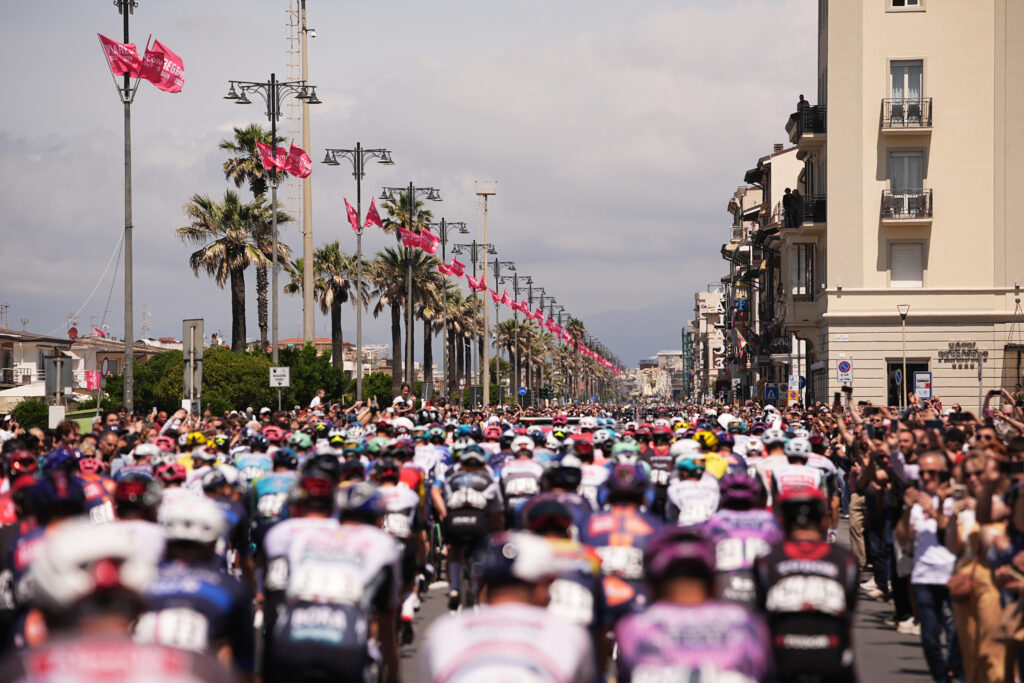
Speaking to Domestique, Giro race director Luca Guercilena, a former member of One Cycling while manager of Lidl-Trek, said he was willing to enter an agreement with the CCG, emphasising that both his grand tour and cycling in general needs to “develop a different model and look at things differently”.
Netcompany-Ineos, Red Bull-Bora-Hansgrohe, and Demi Vollering’s FDJ United-Suez are all said to be supportive of the project, though they are yet to join as shareholders.
The group’s unveiling comes a few weeks before the UCI, cycling’s governing body, is set to reveal its own outline for reform in Benidorm on 9 December, following months of consultation with various stakeholders.
According to the press release issued by the CCG, a UK-registered company, on Wednesday, the group’s creation “marks an important step forward and reflects the growing momentum behind a shared ambition: to unlock the value potential of professional cycling, elevate the product to better serve a global fan base, and address the need for a more sustainable economic model in professional road cycling and the broadening of its global reach”.
“This broad and inclusive initiative by so many teams represents a significant milestone in the long and proud history of the sport,” Ciesla added. “Teams carry much of the sporting and financial risk in professional cycling, while many of the sport’s commercial opportunities remain fragmented.
“The UCI reform process creates a first opportunity to address these challenges together. Through a closer cooperation with organisers, the UCI and other stakeholders, teams can create products that none could offer alone, enhancing the experience of fans worldwide, increasing the sport’s visibility, and contributing to a sustainable economic model.”
“Cycling isn’t like other sports”
This week’s announcement has been met with considerable excitement in certain sections of the cycling world, where it has been branded by some as the most significant political move the sport has seen for a generation, thanks to the sheer number of teams taking part and the central role of Pinarello owner Ivan Glasenberg, the 239th richest man in the world.
However, while this widespread team participation will likely put considerable political pressure on the UCI, support for the project is far from unanimous within the cycling world.
For starters, UAE Team Emirates-XRG (home of the sport’s biggest star, Tadej Pogačar), Jayco AlUla, and Groupama-FDJ United have no intention of signing up, while the opposition of Tour de France organisers ASO will once again represent an almost insurmountable barrier when it comes to overhauling the sport and its existing power structures.
Another dissenting voice is that of Brian Cookson, a former president of both the UCI and British Cycling. That’s largely because Cookson has seen it all before.
After all, the 75-year-old became president of cycling’s governing body in 2013, shortly after the demise of plans for a Rothschild-backed ‘World Series Cycling’ breakaway league, while he was in charge of the UCI at the advent of the Velon project, which is set to be folded into the Collective Cycling Group.

In the past 20 years, Wouter Vandenhaute and CVC’s Cycling 2020 project in the late 2000s, One Cycling, Change Cycling Now, and a number of other ill-fated ideas have also emerged with the aim of modernising and reforming professional cycling.
Each of these initiatives, to varying degrees, wanted the same thing: more revenue for teams, a streamlined, ‘coherent’ racing calendar, and a more accessible way of selling the sport to non-fans, largely inspired by the likes of Formula One and Premier League football.
For Cookson, therein lies the problem. Speaking to road.cc, the former UCI president repeated a quote usually attributed to Albert Einstein to summarise his thoughts on cycling’s latest reform effort: “Insanity is doing the same thing over and over and expecting different results.”
“I don’t see anything fundamentally different about this compared with all the previous failed initiatives,” he said.
Cookson also criticised the apparent desire in all of these reform projects to follow the lead of other sports, such as Formula One, with past initiatives calling for the creation of an easy-to-understand calendar and ranking system, building to a crescendo at the end of the year when a ‘number one’ rider would be crowned.
Instead, Cookson believes cycling should emphasise the aspects of the sport which make it unique.
“I don’t understand people who discover cycling, fall in love with it, and then want to change it to be more like another sport, such as F1,” he tells road.cc.
“Cycling isn’t like other sports. It’s quirkier and requires some intelligence and patience to really appreciate it. In an era in which popular media increasingly assumes we all have the attention spans of a goldfish, that’s an advantage not a flaw.”
Cookson also argued that the desire to ensure that the sport’s biggest names constantly race against each other is overegged and fundamentally flawed.
“This idea that it’s a bad thing that the best riders don’t face each other week after week in every race, and that it’s a problem not found in other sports, is a nonsense,” he says.
“The world’s best football teams rarely face each other, and when they do, that enhances the occasion enormously, like in the Champions League.”
Finally, he also pointed out that cycling’s sponsorship model may not be the inherent problem the sport’s reformers make it out to be.
“Why is it perceived as a problem that pro cycling teams change sponsors every few years?” he asked. “Naming rights are the teams’ USP. They are businesses, the sponsors are their customers, and no business has the same customer in perpetuity.”
A former UCI president may not be convinced of the merits of the Collective Cycling Group, but it remains to be seen whether that caution extends to the governing body’s current administration. We’ll find out in Benidorm in December.