


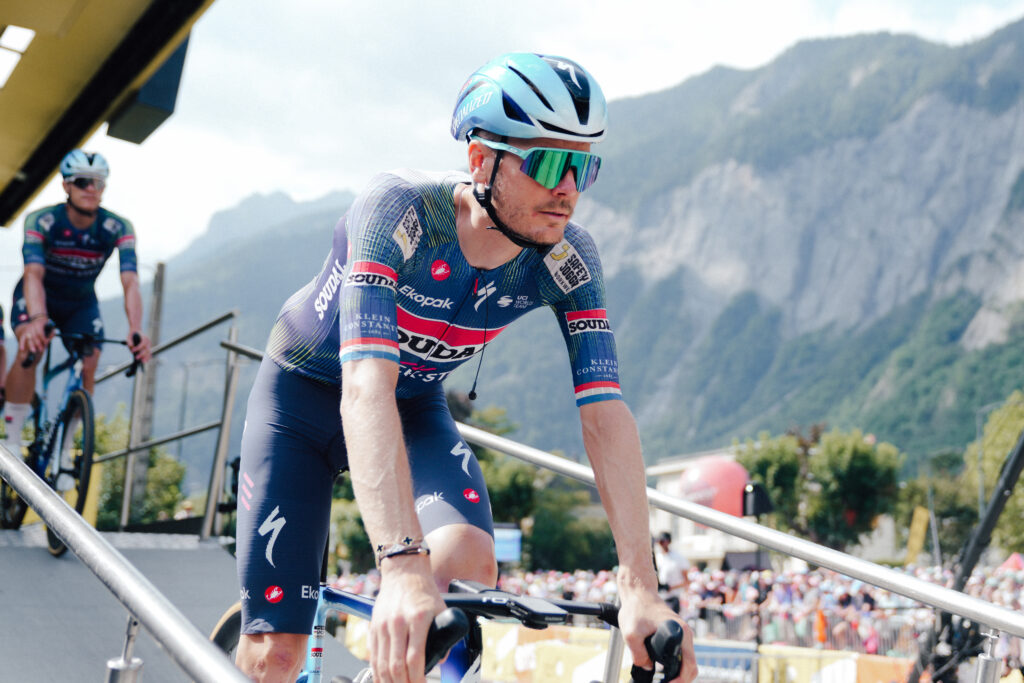

Soudal Quick-Step’s Dylan van Baarle suffered a fractured wrist and a blow to the head in a collision with a motorist in the Netherlands yesterday. According to his fiancée, 2025 Tour de France Femmes champion Pauline Ferrand-Prévot, his cycle helmet “definitely saved his life.”
The collision occurred on Wednesday morning in the town of Tiel while Van Baarle was out on a training ride.
Het Laatste Nieuws reports that the Dutch rider, a former winner of Paris-Roubaix, was taken to hospital where a CT scan was conducted, revealing no damage to his skull or spine.
Writing on Instagram, Ferrand-Prévot went so far as to credit his helmet with saving his life.
“Dylan got involved in a car accident while he was training this morning,” she said. “He got immediately transferred to hospital.
View this post on Instagram
“He got a big impact on his head, the helmet definitely save [sic] his life. He got a broken arm as well, and the surgery will take place tomorrow (thanks Soudal Quick-Step for the quick care).
“I’m really grateful that things turned out pretty well.”
The two riders are due to marry in a matter of weeks and Ferrand-Prévot added: “I’m going to sleep alone for a few nights, but that [sic] the tradition before the big wedding day I guess.”
Public reaction
Given there are almost no details on the specifics of the collision, some may feel that highlighting the contribution of the helmet encourages a perception that this was somehow the most significant element of the incident.
This interpretation is something TV presenter Dan Walker happened upon when he was hit from behind by a motorist while cycling in 2023.
> Dan Walker “glad to be alive” after being hit by a driver while cycling
“The helmet I was wearing saved my life today so – if you’re on a bike – get one on your head,” he commented on the day of the collision.
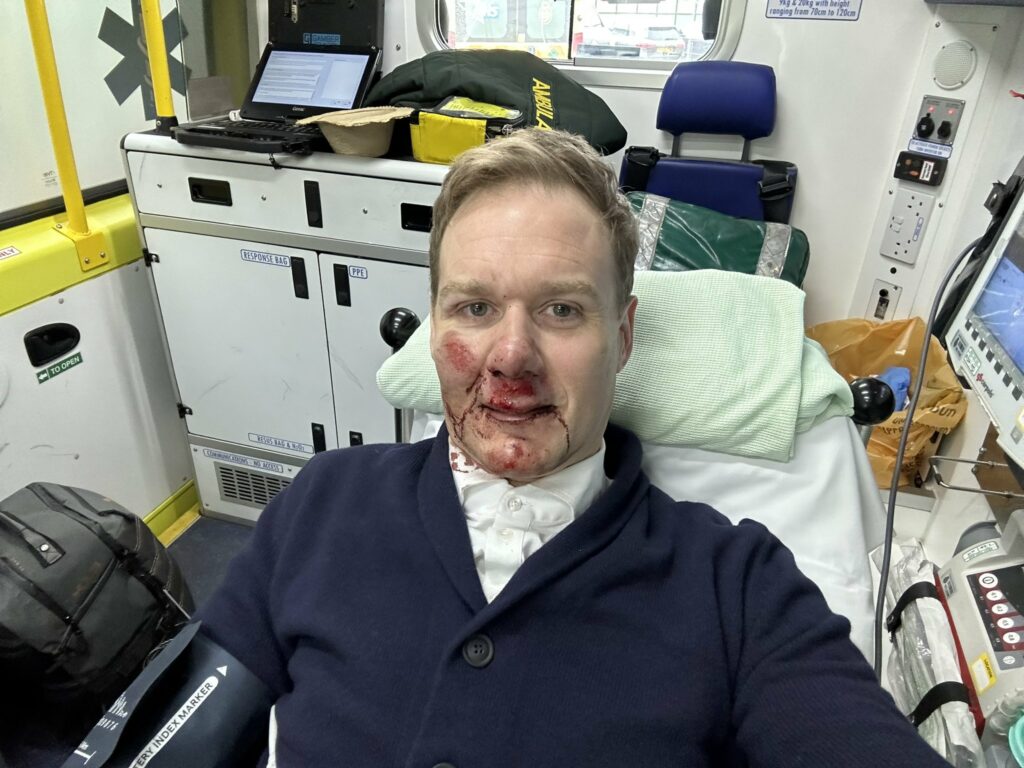
A social media storm ensued. The ins and outs of it were well covered by Ryan at the time, but the crux of the criticism was that by making a point of emphasising the contribution of his helmet, Walker was diminishing – perhaps even distracting from – more significant aspects of road safety.
In 2014, National Active Travel Commissioner, Chris Boardman – at that time British Cycling’s policy advisor – described the “helmet issue” as a “massive red herring” which was “not even in the top ten of things you need to do to keep cycling safe or, more widely, save the most lives.”
Summing up his position on the matter, he said that, “People who are wearing body armour get used to being shot at, when it’s the getting shot at that’s the problem.”
> Chris Boardman: “Helmets not even in top 10 of things that keep cycling safe”
Boardman in fact referenced the Netherlands to make his point. At the time, just 0.8 per cent of cyclists there wore helmets, yet the Dutch had the lowest rate of cycling head injuries thanks to the levels of segregated cycling infrastructure.
Writing in the Sunday Times in the wake of his crash, Walker expressed similar sentiments. “I have cycled in Amsterdam where ‘hardly anyone wears a helmet’ and it’s great, but the whole transport culture revolves around two wheels.”
There has however been a shift in emphasis in the Netherlands in recent times. Last year the ‘Put It On’ campaign was launched, urging people to voluntarily wear helmets after new road safety statistics revealed that 17 per cent of all cyclists involved in crashes in 2024 suffered brain or skull injuries.
The campaign is initially aimed at children, commuters, and elderly people with a goal of 25 per cent of all cyclists opting for a helmet within ten years – a 600 per cent jump on the situation now. Most sport and fitness riders – such as Van Baarle – already routinely wear helmets.
-1024x768.jpg)
Speaking at the launch of the campaign, intensive care neurologist Marcel Aries alluded to some of the reasons why serious cycling injuries continue to rise. He said the country needed to be open to new rules and better infrastructure, “because cycling traffic is so different from 10 years ago, with speed pedelecs that go at 40kph, e-bikes, and normal bicycles all on a relatively narrow cycling path.”
Dutch emergency department data indicated that injuries involving e-bikes doubled between 2020 and 2024. E-bike riders are 1.7 times more likely to be injured in a crash than pedal cyclists and the risk doubles for riders aged 50 or older. The report attributed this to higher average speeds, heavier bike weights, and greater speed differences in traffic.














1 thought on “Bike helmet saved Dylan van Baarle’s life says Pauline Ferrand-Prévot after Dutchman’s collision with car driver weeks before their wedding”
Chocks away…