
Crashing is an unfortunate part of professional cycling, and nowhere are the consequences greater than at the Tour de France. A touch of wheels or being caught behind a crash can cost a rider precious time, leave them injured, or end their race altogether. But what actually happens when a rider crashes?
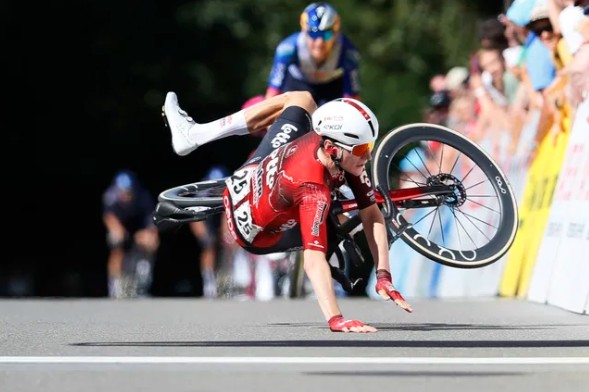
We’ve already seen our fair share of crashes at this year’s Tour de France, with almost every stage featuring a touch of wheels or a moment of misjudgement.
Even so, crashes have still had serious consequences. On Stage 6, race leader and yellow jersey wearer Torstein Taeen crashed on the descent of the Col du Tourmalet. Although he finished the stage, the Norwegian was later forced to withdraw after being diagnosed with concussion and a fractured rib.
So, what happens immediately after a crash? When a rider crashes, they have two choices: get back on the bike and continue, or abandon the race. The decision is often made in a matter of seconds, with riders quickly remounting their bike due to not wanting to lose any more time.
Sometimes a rider will pick themselves up, while on other occasions a teammate, race official or spectator may help them off the ground. Once upright, they will quickly check themselves, their helmet and their bike to see whether they are able to continue.
> Get to grips with the new UCI rules — changes to look out for in this year’s Tour de France
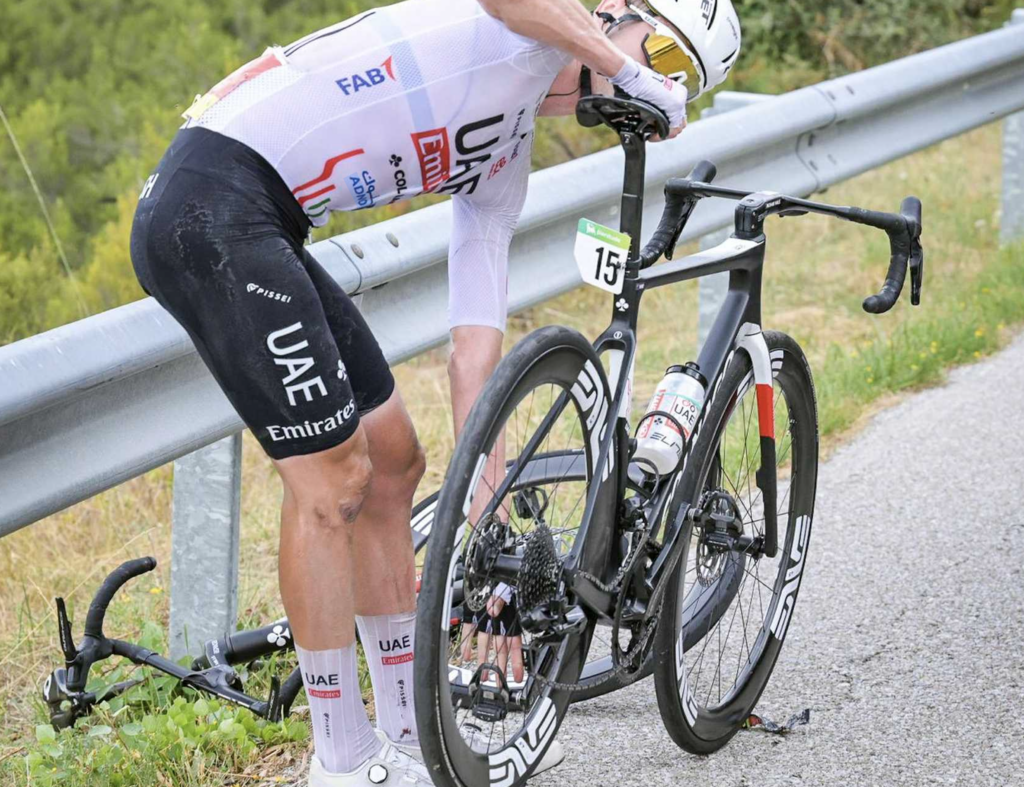
If the bike is damaged, the rider will wait for the team car and mechanic, who will provide a spare bike if needed. This is often the rider’s own bike, but in some cases, it can be a bike from a teammate if that’s the quickest option. If the team car isn’t near the rider, they can get assistance from the Shimano neutral service vehicle which carries spare bike for riders.
Can riders get medical treatment?
The race medical car follows directly behind the peloton, meaning it’s usually one of the first vehicles to reach a rider after a crash. However, in many cases, riders are already back on their bikes by the time the medical team arrives. They will then receive an assessment while continuing to race, sometimes holding onto the side window of the medical car as doctors and staff check them over.
It’s not uncommon to see medical staff treating riders on the move, spraying antiseptic onto wounds or applying bandages and mesh coverings to help protect injuries. In a sport where every second counts, riders are often eager to get back into the race as quickly as possible.
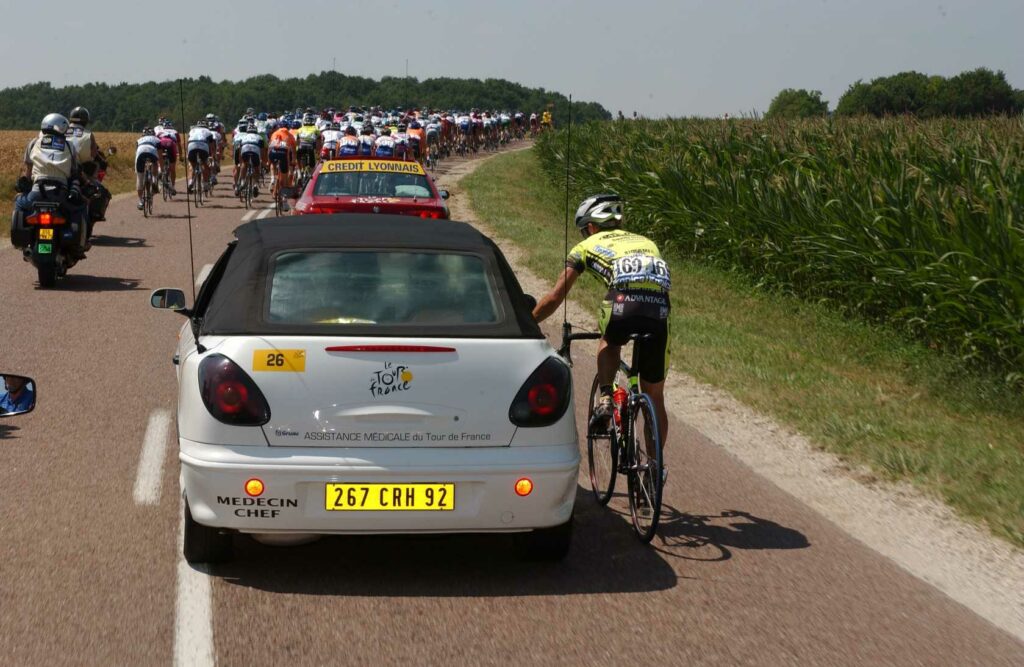 Tour de France medical car (Image Credit: ASO/Bruno Bade)
However, injuries such as concussion present a more complicated challenge. The UCI introduced a concussion protocol at the start of the 2021 season, designed to ensure riders showing signs of a head injury are removed from the race.
Under the current procedure, a crashed rider is assessed by the first person who reaches them. If that person identifies at least two observable signs of concussion – such as nausea, head or neck pain, weakness in the limbs, disorientation or impaired balance – the rider must be withdrawn from the race.
If no clear signs are detected, the rider can continue but must undergo a further assessment during the race, either from the medical car or a team vehicle. This involves answering questions about the race situation and their surroundings, with medical staff still able to recommend that the rider is removed if concerns remain. If concussion is suspected, a more thorough assessment is then carried out after the stage.
> 12 cycling trends NOT to copy from the Tour de France pros
Some teams have also introduced their own additional monitoring systems. Uno-X Mobility, for example, has used helmet sensors to track impacts, allowing the team to carry out a more detailed assessment after a crash if needed. For example, Torstein Taeen passed the roadside concussion test when he crashed on the Tourmalet, but the team said that after analysis of the data from his helmet sensor, he was diagnosed with concussion and withdrawn from the race.
What happens if a rider can’t get back to the peloton?
Often, riders get back into the race quickly, either because they are able to pick themselves up immediately or because a teammate has waited for them and helps pace them back to the group. However, riders cannot receive a tow from their team car to regain contact with the peloton after a crash.
If a rider is unable to reconnect with the main bunch, the next goal is simply to reach the finish within the time limit to remain in the race. The allowed cut-off varies depending on the stage, ranging from around 7% to 30% of the winner’s time. To calculate the time limit, the UCI assigns each stage a difficulty rating from 1 to 6, which is then combined with the average speed of the winner to determine the percentage applied.
View this post on Instagram
Finishing the stage, however, does not always guarantee a rider will continue. More serious injuries may only become apparent after the race, and riders can be withdrawn following further medical assessments or hospital checks once they reach the finish.
What happens if a rider crashes near the finish line?
If a rider crashes, or is caught up behind a crash, in the final three to five kilometres of a stage (excluding summit finishes), they are given the same finishing time as the group they were riding with when the incident occurred. Traditionally, this rule has applied only within the final 3km, but the UCI has designated selected stages where the protected zone is extended to 5km.
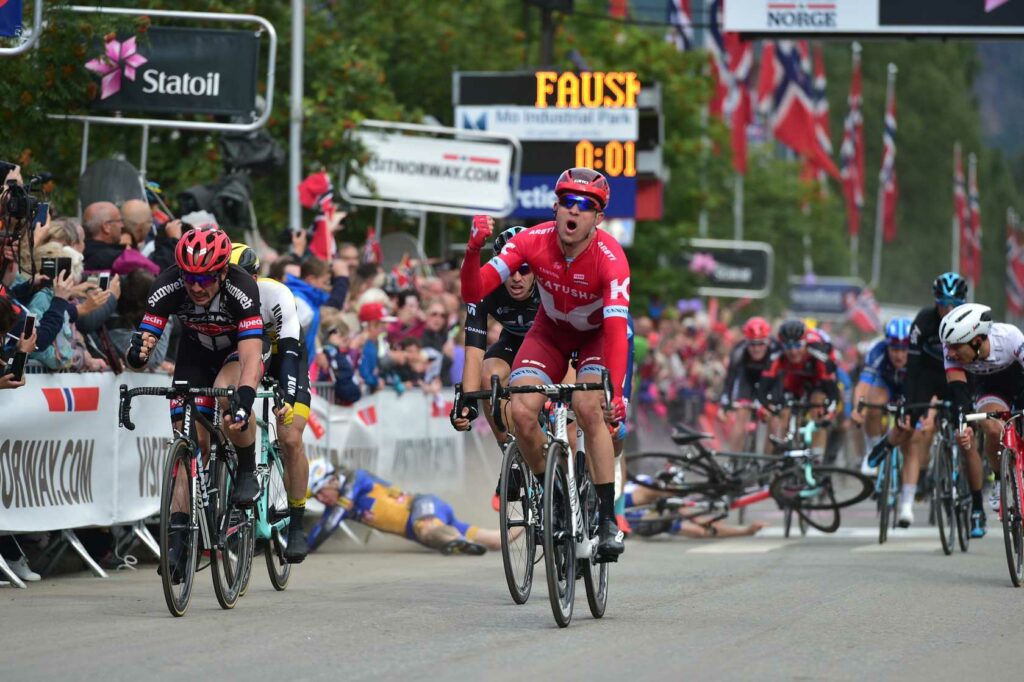
This year, the extended 5km rule applies on Stages 1, 3, 8, 9, 17 and 21. “The aim of this measure is to take account of the increasing number of traffic calming devices (e.g. speed bumps, curb extensions, road narrowings) – sources of danger for the peloton – within an ever-greater radius of the race finish sites in urban centres. Extending the zone in which the rule applies reduces the pressure on riders during the phase of the race leading up to the final sprint”, says the UCI.
Ultimately, what happens after a crash depends on the severity of the incident. Some riders can quickly remount and return to the race, while others require medical attention, lose time or are forced to withdraw.