


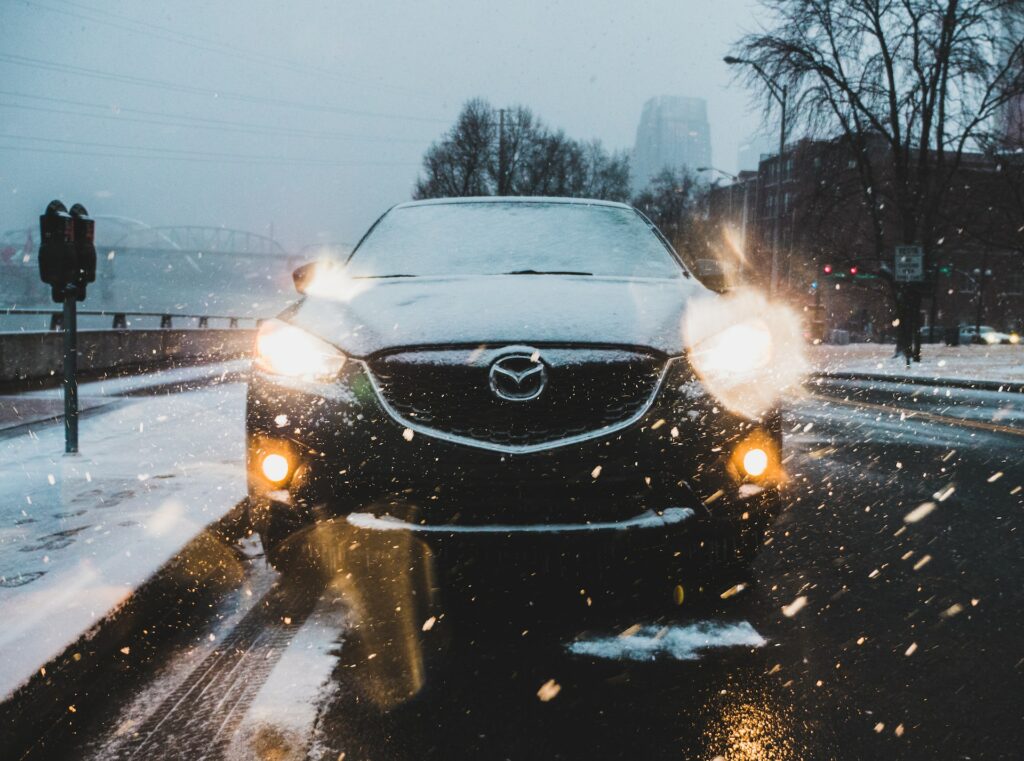

Motorists who are warned about the dangers posed by SUVs to cyclists and pedestrians on the road are very unlikely to be deterred from buying one, according to a new study.
The study, conducted by researchers at Swansea University, was carried out to test what effect recent evidence highlighting the safety risks associated with sports utility vehicle (SUVs) and other oversized domestic vehicles has had on drivers’ buying habits and attitudes towards other road users.
Last year, research into 35 years’ worth of road traffic collisions found that cyclists and pedestrians are 44 per cent more likely to be fatally injured when struck by an SUV or light truck vehicle (LTV), compared to a smaller passenger car.
That study, carried out by the London School of Hygiene and Tropical Medicine (LSHTM) and Imperial College London, analysed real-world collision data from over 680,000 crashes and found that larger vehicles caused significantly more severe injuries.
For children, the risk was even greater, with a child hit by an SUV or LTV was 82 per cent more likely to die than one struck by a smaller car, with the risk increasing to 130 per cent among children under the age of 10.
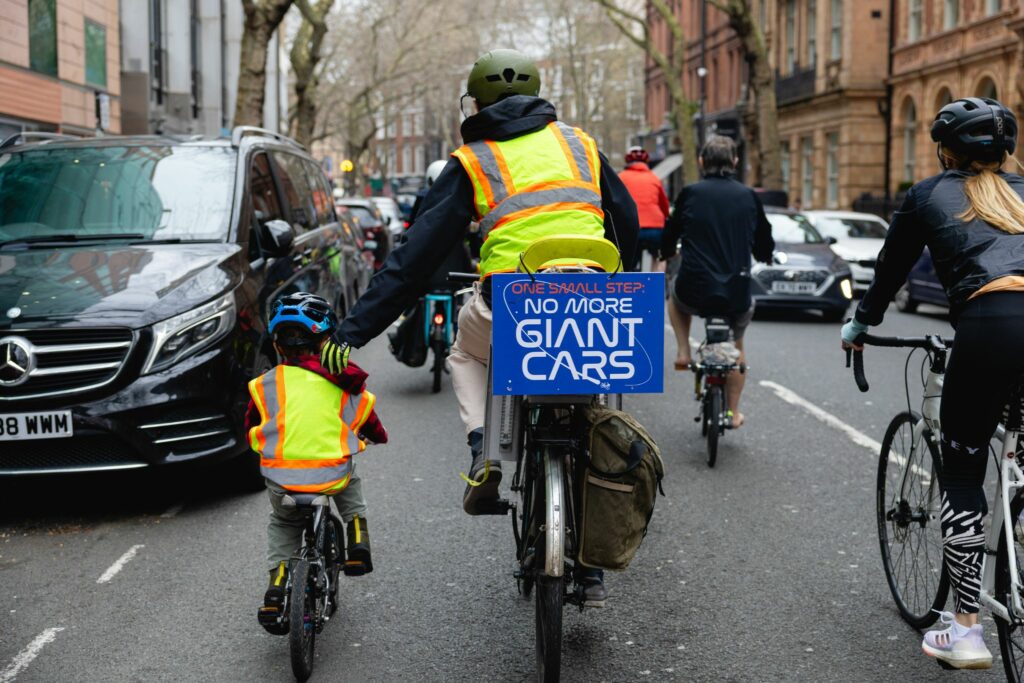
To assess the extent to which other road users’ safety plays a role in what vehicles motorists choose to purchase, psychologists at Swansea University took a UK-wide sample of over 2,000 people, including drivers and non-drivers, splitting them randomly into two groups, the Guardian reports.
Half of the participants were shown one of three mocked-up SUV advertisements, which featured a warning that the vehicle posed a “significantly higher risk of fatality” to pedestrians and cyclists. The other half of the sample was shown the same adverts, but without the attached safety warnings.
Both groups were then asked questions about their awareness of the risks of SUVs before and after viewing the adverts, with the awareness of those who saw the warnings rising from 35 per cent to 54 per cent.
However, despite the level of awareness rising considerably, when the same group was asked if they intended to buy an SUV as their next car, the percentage of those who said they would buy one only dropped slightly.
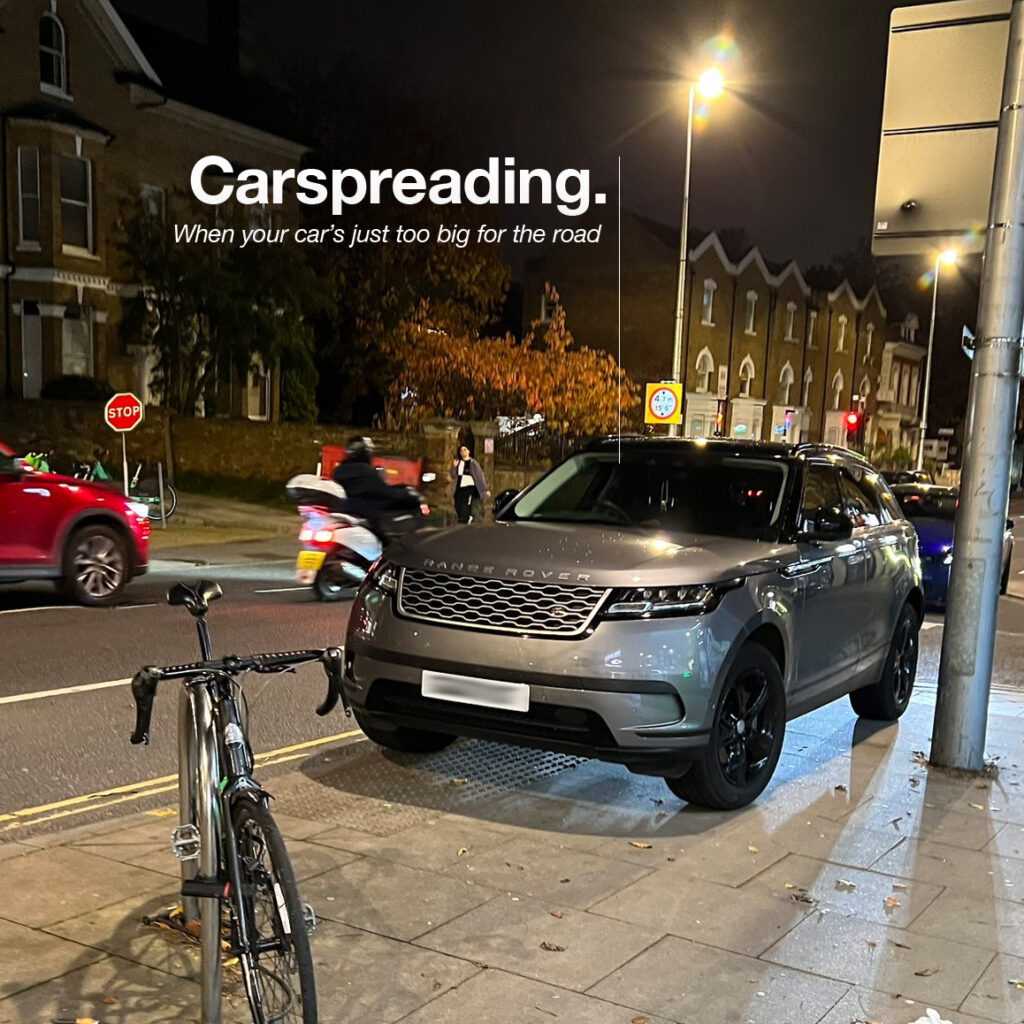
In fact, they were only 3.7 percentage points less likely to buy an SUV than the group which hadn’t seen the safety warnings. Overall, 95 per cent of people who said they wanted to buy an SUV stuck with that choice at the end of the study.
Perhaps even more worryingly, among the subsection of participants who claimed that the safety of vulnerable road users was an “important factor” in what car they decided to buy, 86 per cent said they still wished to purchase an SUV as their next vehicle.
According to one of the study’s authors, Ian Walker, an environmental psychology professor at Swansea University, this new piece of research is proof that the desire to drive whatever car you want, regardless of its consequences for others, has become “normalised” in society.
Walker also noted that the study demonstrates the need for governments to intervene, even through financial penalties, if they want to reduce the number of large, dangerous vehicles on the roads.

“Buying whatever vehicle we like, and driving it wherever and whenever we please without having to think about the consequences for other people, has become normalised and ingrained across our society over decades,” Walker said.
“As such, it’s not surprising there’s a growing body of evidence that says asking or encouraging people to drive differently doesn’t work, and that stronger interventions will be needed if governments want to get serious about the issue.
“This almost certainly includes having a more honest conversation about how driving, no matter how useful to the person doing it, imposes harms on to other people.”
> Britons have in-built acceptance of driving’s dangers, study suggests
Another study, conducted by Walker in 2023, also found that British people are more accepting of issues and dangers caused by motor vehicles that they otherwise would not be accepting of elsewhere.
Describing the attitude as “motonomativity”, Walker along with co-authors Alan Tapp and Adrian Davis suggested that the “motonormative thought style is as endemic amongst government and the medical profession as in the general population”, with potential implications for policy.
In the study, 75 per cent of people agreed that ‘people shouldn’t smoke in highly populated areas where other people have to breathe in the cigarette fumes’, while only 17 per cent agreed with the same statement changed to ‘people shouldn’t drive in highly populated areas where other people have to breathe in the car fumes’.
Likewise, 37 per cent believed the police needed to take action if someone left their belongings in the street leading to them being stolen, but 87 per cent agreed with the word ‘belongings’ replaced by ‘car’.
And finally, while 61 per cent of people agreed that risk is a ‘natural part of driving’, just 31 per cent agreed that risk is a ‘natural part of work’.




34 thoughts on “SUV drivers don’t care about danger posed to cyclists and pedestrians, new study finds”
[Surprised face]
@Pub bike Indeed. Too many drivers don’t give a shit about pedestrians and cyclists no matter what car they are in. Why would they care if they are in an SUV?
A few years ago cars were being designed with low front ends to minimise injury to pedestrians; causing them to be rolled over the bonnet rather than struck by a slab front or dragged beneath the vehicle.
Every new car you see these days, large or small, has a square slab fronted bonet. EVs seem particularly prone to this design style.
SUV drivers feel powerful and invincible in their vehicles that have the size of assault tanks. Yup, they absolutely don’t care. The billion-quid question is – why do manufacturers design bigger, wider and taller “cars”, and why are they approved by regulators?
And why are they not heavily de-starred by NCAP? The rot started with the Nissan Qashqai which used loopholes on bonnet safety regulations that didn’t adequately include the headlight lenses, they put deep soft tissue penetrating ridges into the lens mouldings that increased their height and the aggressiveness of the look of the car but made it much more dangerous to any vulnerable roaduser. Unfortunately the raised stance and batmobileish looks appealed to buyers, particularly women and the whole industry surged in that direction. Now much worsened with the seeming unstoppability of the Range Rover look.
@MaxiMinimalist
If it was to do with a new cycle lane or quiet way, we could easily point to the Evil Cyclist Lobby Inc. But as this is the sweet & innocent auto industry (with the shallowest of pockets & no vested interest) I’ve absolutely no idea how this could have come to pass….. One of life’s great mysteries.
Per the comment on Friday’s Live Blog, this doesn’t necessarily tell us much about the effectiveness of these statements on those who haven’t already made a decision on what they’re likely to buy. The protocol primed participants by asking them about their views before seeing the statements, creating a psychological commitment to their decision, and thereby making them less likely to be susceptible to pay attention to information that might otherwise have influenced against it.
@mdavidford you could regard the whole paper (preprint only for now)
https://papers.ssrn.com/sol3/papers.cfm?abstract_id=6915851
as a case study in cognitive bias.
It does note that 3/4 of participants do not have and do not want a SUV and were reinforced in that view by the study (or at least, more often agreed with the SUV danger statements).
I’m not sure there are dangerous cars, just dangerous, complacent and poor drivers.
I get more grief on the road from tradesman in vans on their phones, more close passes from octogenarians in their Honda Jazz and the arsehole car of choice seems to be a slammed diesel BMW or Mercedes with the DPC removed.
For sure I’d rather be hit by a Renault 5 than a Defender, but I’d rather not be hit at all. Give me a decent driver every day, I don’t care what they drive.
Imagine this was your PhD. One dimensional drivel.
@iatr Of course there are dangerous cars. Look at the tiny women who sit in their massive SUVs and can barely see over the steering wheel. I would wager that a child under 5 foot wouldn’t be visible to them unless they were quite a way away due to the angles.
https://i.dailymail.co.uk/1s/2025/06/12/14/99255087-14801205-Analysis_carried_out_by_Loughborough_University_on_behalf_of_T_E-a-458_1749734116894.jpg
“Tough titties losers. It’s natural selection. I am a high achieving go-getter and can afford a huge high up SUV to keep me and my family safe. My kids will no doubt go on to be high achieving go-getters with even bigger SUVs. Anyone who is not a high achiever deserves a bit of jeopardy to spur them on. Bring back Margaret Thatcher! Although, I have a lot of time for Farage!”
In other news, researchers prove beyond doubt that water is indeed wet.
Ridiculous. Because someone is not deterred from buying an SUV it does not follow that they don’t care about cyclists or pedestrians!
@psyrog Yes it absolutely does. If you’re told that a particular vehicle has a much higher chance of causing a fatality if it hits a cyclist or pedestrian and choose to buy it anyway, despite perfectly good alternatives for your use case being available, then your desire to own a “prestigious” vehicle is greater than your concern about causing fatalities to those groups. It’s hard to imagine a more egregious example of not caring about a particular group than not caring that you are putting them at greater risk of being killed.
@Rendel Harris Sorry, I normally agree with much of what you say but not on this. I think we have disagreed on cars before. I own a Hyundai Tucson which, although classed as an SUV, I wouldn’t say is a prestige vehicle and every school holiday/half term we drive from Somerset to Liverpool or Kent (not for cello lessons!!!) As a cyclist as well, I drive carefully around town but would hate to do 200+ mile journeys in a smaller car on a regular basis.
As much as I hate “all cyclists do xyz” it annoys me when I then hear “all SUV drivers are a bunch of???”
@kinderje Well, I’m not very well versed in automobiles but looking at the Tucson that looks like one of the less offending vehicles, not that different to an estate car; that’s very different to the rib cage or higher height square bonnets of a Range Rover and a world away from obscene shoulder height bonnet of a Ford Ranger*. If (as I believe there should be) a limit was set on bonnet heights I think your Tucson would be just about acceptable; anything that hits an average size person at the hip or lower so that they go over the bonnet instead of under the wheels should be the aim, in my opinion.
Part of the problem is with manufacture nomenclature, because SUVs are seen by many people as the thing to have they call a lot of things that, as above, we used to call estate cars SUVs now.
*According to t’intenet the leading top edge of a Tucson’s bonnet is around 85 cm from the ground, whereas a Range Rover is 108 cm, doesn’t sound like much but the difference in a collision with a pedestrian or cyclist could be huge. I can’t find the figure for a Ford Ranger but I am 6 foot tall and when I stood next to one recently the top of the bonnet was about level with my armpit, so I would guess about 140 cm high which makes it a killing machine.
@Rendel Harris maybe we should stop referring to certain cars as SUVs and go back to ‘W**kpanzers’ and ‘Chelsea Tractors’ but then going back to your info that wouldn’t include the Ford Ranger (although that’s a pick-up truck not SUV)
I don’t think the research stands up to the highest levels of scrutiny but the long notjusbikes video about this issue (“these stupid trucks are literally killing us”) references some things like companies effectively “marketing towards arseholes” and a version of the common “roadkill experiment” by Mark Rober which had “SUV” drivers as the biggest (fake) animal killers.
Now that these things are everywhere * perhaps this effect would be smaller.
But perhaps it’s not shocking that “less pro-social types” might be more likely to get a big mean car (and drive aggressively) than a 2CV…
* What exactly is an “SUV”? Is it more “bigger car” plus the “look”?
@chrisonabike
I think its defining features are that it has nothing to do with sport, and very little utility.
@psyrog Oh, yes it does! GrossPanzers are bought by people who couldn’t care less about anybody else and who believe the Untermensch should get out of the way if they know what’s good for them!
There’s an important factor missing, it seems.
I suspect the drivers weren’t swayed because they didn’t believe that it could be them hitting the pedestrian/cyclist.
I wonder whether the ad had an impact on whether ‘bad’ drivers shouldn’t have SUVs. No-one believes they are a bad driver, so it’s ok for them.
Also, there is a factor about feeling safer in a big car – protecting them from those aforementioned bad drivers.
We need to take different driving tests to be able to operate different (larger/more dangerous vehicles).
Should we have a much longer learning period (including requiring cycling on roads so they become aware of the dangers) and tougher test for people who want to drive them?
This is a flawed article and creates a polarization between those that drive an SUV and people like us that ride bicycles. There’s a premise here that if somebody drives an SUV they don’t care about cyclists or pedestrians. All motor vehicle/cyclist/pedestrian accidents aren’t caused by SUVs. While it’s clear that driving an SUV might create a greater risk. It does not take into account the size of the SUV or the quality of the driver. Is it a teenage driver? An adult? Are they an extremely careful driver? Are they under the influence of anything? Is our cyclist behaving responsibly? Do they have adequate lighting and a helmet? If you were about to buy a car. Any car. And I came to you and I said your buying this car increases the risk that you will have an accident and severely injure a cyclist would you still buy the car? So I think the research is flawed. I think if they had asked the person purchasing the SUV, on a scale of 1-5 how concerned are you with harming a cyclist you would have a better picture. I just don’t think you can conclude somebody doesn’t care at all because they buy an SUV. Just as I stated earlier that you could not surmise that if somebody bought a convertible. I am HO it is articles like this that creates such a clarity between cyclists and motorist. For example, if I believe this article and I am out on the road and see an SUV I will assume they don’t care about me as a cyclist or a person.? So I don’t think this kind of article really helps to bridge the gap between motorists and those more vulnerable. I lived in Houston, Texas for many years and commuted to work on highways, freeways and beltways. Belonged to a large organized cycling group. My view is I’m a motorist that loves cycling. Now I live in Colorado and even when people scream at me as they pass, they do it from a safe distance. These are not my enemies. They’re just people doing what they do.
So much to unpack here.
Are you perhaps another example of the armed cyclist? And if so, is the reaction because you rode in with big iron on your hip?
(I know, it’s the Arizona ranger… 😉)
Nope. I don’t carry. Just probably desensitized. Being angry or scared is too mentally exhausting.
Clearly it’s hard not to do so – indeed you seem to have separated “us that ride bicycles” from others already…
Ultimately concentrations of people – that is, urban spaces – work best when there is indeed a (physical) separation between quite different modes of transport *. Trains, motor vehicles, “cycles” and pedestrians.
And bigger, heavier vehicles (driven by the same indifferent drivers) just make things more dangerous / put pressure on authorities to allocate even more space for their use etc.
* Or as eg. the Dutch sustainable safety principle has it – homogeneity of speed / mass. And “combine where possible, separate where necessary”. Note that means it *can* be sensible to share space but only where speeds / volumes of the more dangerous mode(s) are suitably controlled.
Of course – “different roads for different modes” “doesn’t work” if we start from the assumption that motoring is *and will/must be* the predominant mode, so that should get the existing direct routes and everything else must then be designed around it…
I agree. As you stated there are indifferent drivers. However, an indifferent driver doesn’t necessarily mean they are a poor driver or threatening to the cyclist. When I lived in Houston, Texas and commuted to the medical Center I had to either ride on the freeway or the highway. On the highway there were stretches that had no shoulders so I had to take the lane. Houston is not known for being bicycle friendly, but I have to say for the most part I was treated with respect and kindness. On two occasions, I was endangered with one person actually hitting me. And you’re right I did use the term “us“. Just trying to blend in as best I can. Have a great day and I do appreciate your response.
“However, an indifferent driver doesn’t necessarily mean they are a poor driver or threatening to the cyclist”
Semantics? “You can slice it as thin as you like but it’s still baloney”
An indifferent driver is a threat to everyone, including themselves and their passengers.
They may not *mean* it (likely most don’t)… doesn’t change the outcomes. (well … it might for them, in court – we have sympathy for incompetent drivers!)
Given increasing motoring the only reason most countries don’t have road deaths at higher levels than the 60s is we’ve fixed it for there to be less consequences for indifferent or indeed poor drivers *.
(And per “sustainable safety” we should continue to make consequences less harmful – but that must apply to *all* road users!)
Thanks for the comment – it’s hot now, but maybe a cycle will help me? Ride on!
* lots of reasons: better trauma medicine / faster response times, much more protection in-car, driving aids, better motor infra that helps keep things safer for motorists … and at least in the UK also pedestrians, but partly by making it so inconvenient to get about that they don’t bother so aren’t there to be in collision with motor vehicles.
@psyrog This is a flawed article and creates a polarization between those that drive an SUV and people like us that ride bicycles
No, what created the antipathy was them (SUVs, twin-cab pickups, Audis, BMWs, white vans, they’re all the same type of driver) driving in such a way as to create the fear that they’re trying to kill us
There’s a premise here that if somebody drives an SUV they don’t care about cyclists or pedestrians
Yes, that’s pretty much it.
even when people scream at me as they pass, they do it from a safe distance. These are not my enemies
Oh, yes they are!
@psyrog
So a cyclist who is not wearing a helmet is not only being irresponsible but may be contributing to accident?
I think there are some countries where cyclists don’t even need to wear helmets because of barriers separating them from motorists. And also the motorists respect for those that ride alternative forms of transportation. Here in the US a helmet is highly recommended. What I find perplexing is that I will see cyclists out on the road, in traffic, without lights. Anybody riding in traffic would be smart to have lights that could be seen clearly in the brightest part of the day. But to answer your question. No. I do not think a cyclist contributes to an accident by not wearing a helmet. Do they bear some responsibility if they hit their head and they do not have one on? Yes I think so. But I would not blame the cyclist for an accident, regardless of whether they are wearing a helmet or not.
@psyrog given that most helmets are at the scale of protection (eg. suited to protect when you fall off your bike at no / relatively low speed) I’m not sure that “…countries where some cyclists don’t even need to wear helmets…” makes sense.
(Certainly in those places people clearly don’t *feel* they need a helmet – but humans are pretty poor at actually calculating risks).
That would need examination of how people were getting injured or killed. But also the profile of the cyclists eg. by age etc.
Maybe the places where there is 8-80 cycling would benefit from protecting the very old and the young a bit better in “single vehicle crashes” (eg. they just fell off)?
Maybe wearing a helmet actually isn’t so important in those more motor-traffic heavy places – because when cyclists and motor vehicles collide the injuries may more often be unsurvivable, helmet or no *?
Or perhaps they are more useful where there’s more interaction with motor vehicles because people are getting (survivably) knocked off / swerving to avoid motor traffic / coming off on infra damaged by motor vehicles?
* Indeed while the head is a vulnerable point, so is the neck… and chest / internal injuries can do for you in higher speed collisions.
(But that’s quite enough on helmets for one day).
One of the parents at our kids primary school has a “VW Amorak”. The size of the bonnet is ridiculous!
I used to work on car safety stuff like pedestrian detection. USA was one of the most important markets, due to poor visibility of their SUVs they often ran over their own children when leaving their drive, yet they still bought them!
The accident was so common they have a specific name – BackOvers.
There is little surprise in the results. How often do you come across somebody who admits to being a bad driver? “Accidents are caused by other people, so those other people should drive small cars. I’m a good driver, I won’t have an accident, so I will drive what I want”. We have no problem admitting if we are not good at football, or DIY, or cooking, or whatever. We all think we are safe drivers, so why should risk of accident affect our car choice?