



Looked at from outside the UK, it may seem bizarre that we have a 19th Century law here, nowadays most usually used against cyclists, that prohibits “wanton or furious driving” (under the Offences Against the Person Act 1861). While reform of the legislation to bring it into the 21st Century has long been promised by the government, there’s little sign of that happening just yet. Other countries though have their own laws regarding cycling that viewed from here, seem equally strange. Here’s a selection of some weird and wonderful ones that we’ve found.
> Is there anywhere cyclists are required to be licensed?
Can you ride tandem? Well you couldn’t in Tokyo – until now
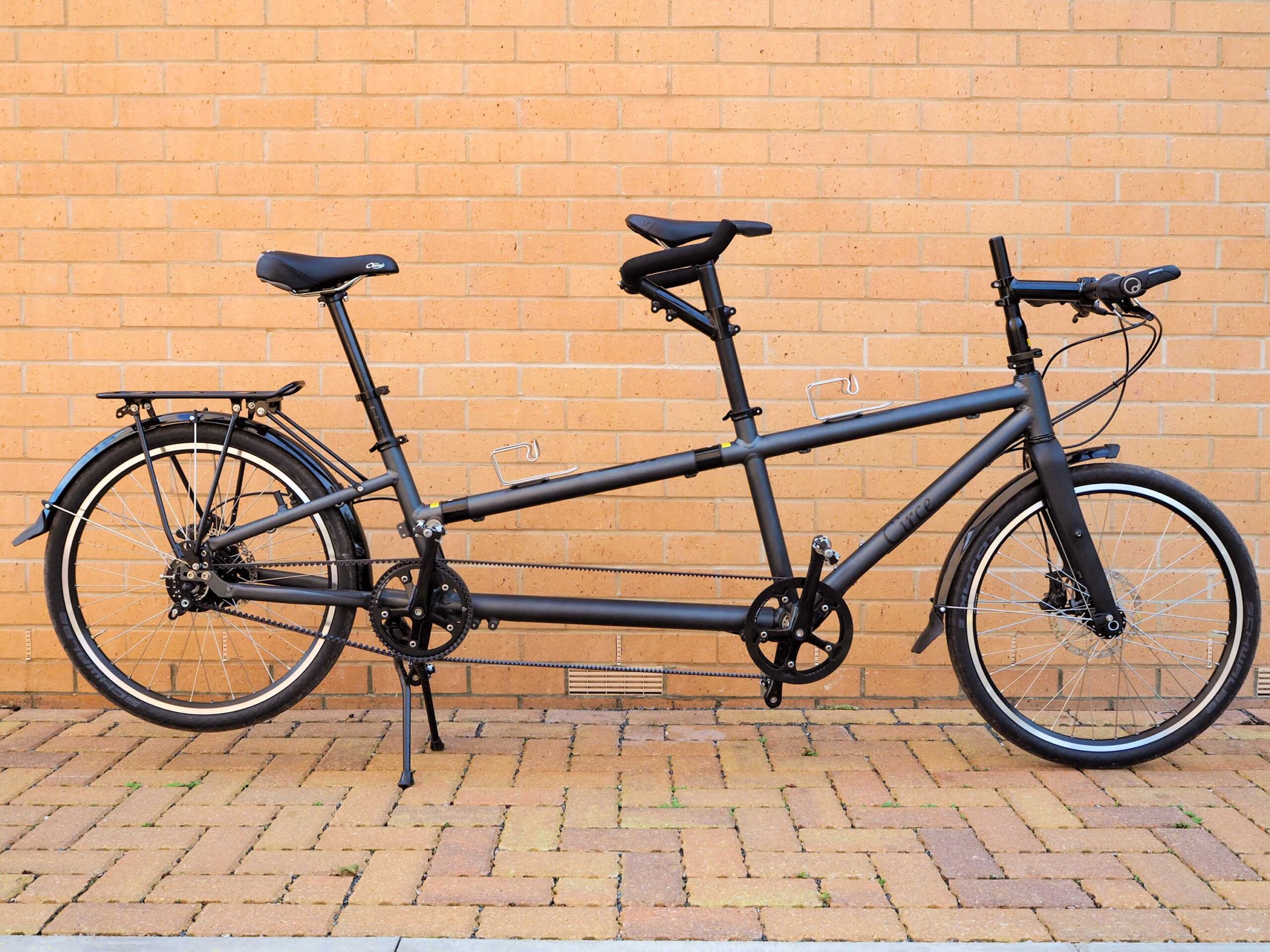
From July 2023, tandem bicycles are now legal across Japan, with the scrapping of a law that prohibited them from the streets of Tokyo, the last place in the country where they had been banned.
Campaigners have hailed the move as enabling blind and partially-sighted people, as well as those with various other disabilities and some elderly people, to be able to enjoy cycling.
Riding while drunk in Germany can lead to driving ban
While it is, quite sensibly an offence in the UK to ride a bicycle while under the influence of alcohol, police officers cannot force a cyclist to undergo a breathalyser test – and because the lack of a test result may make successful prosecution tricky, a charge of careless or reckless cycling may follow instead.
Moreover, since it is not considered a driving offence, even if a conviction for drunk cycling did result, it would not lead to penalty points on a licence or even disqualification from driving.
We are certainly not saying that is crazy to have laws against riding a bike after a few drinks, but some of the punishments in other countries for doing so do seem a bit extreme, as you will see below.
Drunk cyclist in Germany gets 15-year ban from driving…

Not so in Germany, however, where people riding bicycles are subject to the same traffic laws as everyone else, including those related to drink-driving, and they can lose their driving licence, should they hold one.
One young man, riding his bike home from a student party back in 2009, didn’t have a driving licence, but was three times over the limit – and found himself banned from cycling, skateboard, or any other licence-free vehicle for the following 15 years … just another 12 months or so to go, then.
Curiously, the law does allow him to ride a horse – though given that the protagonist here, nowadays no doubt older and wiser and probably fed up of explaining to people why he doesn’t drive a car or ride a bike, is allergic to horse hair, that’s probably not much use to him.
… but across the border in Poland, he could have been jailed

But don’t even think of riding a bike in Poland while drunk – also back in 2009, the country’s constitutional court ruled that cyclists convicted of riding while drunk should be treated the same way as intoxicated drivers, and they should be fined or imprisoned, with the latter the most common course of action, and offenders on average being put away for more than 11 years.
Sans-culottes – Paris’s long-standing ban on women in trousers, unless in the saddle
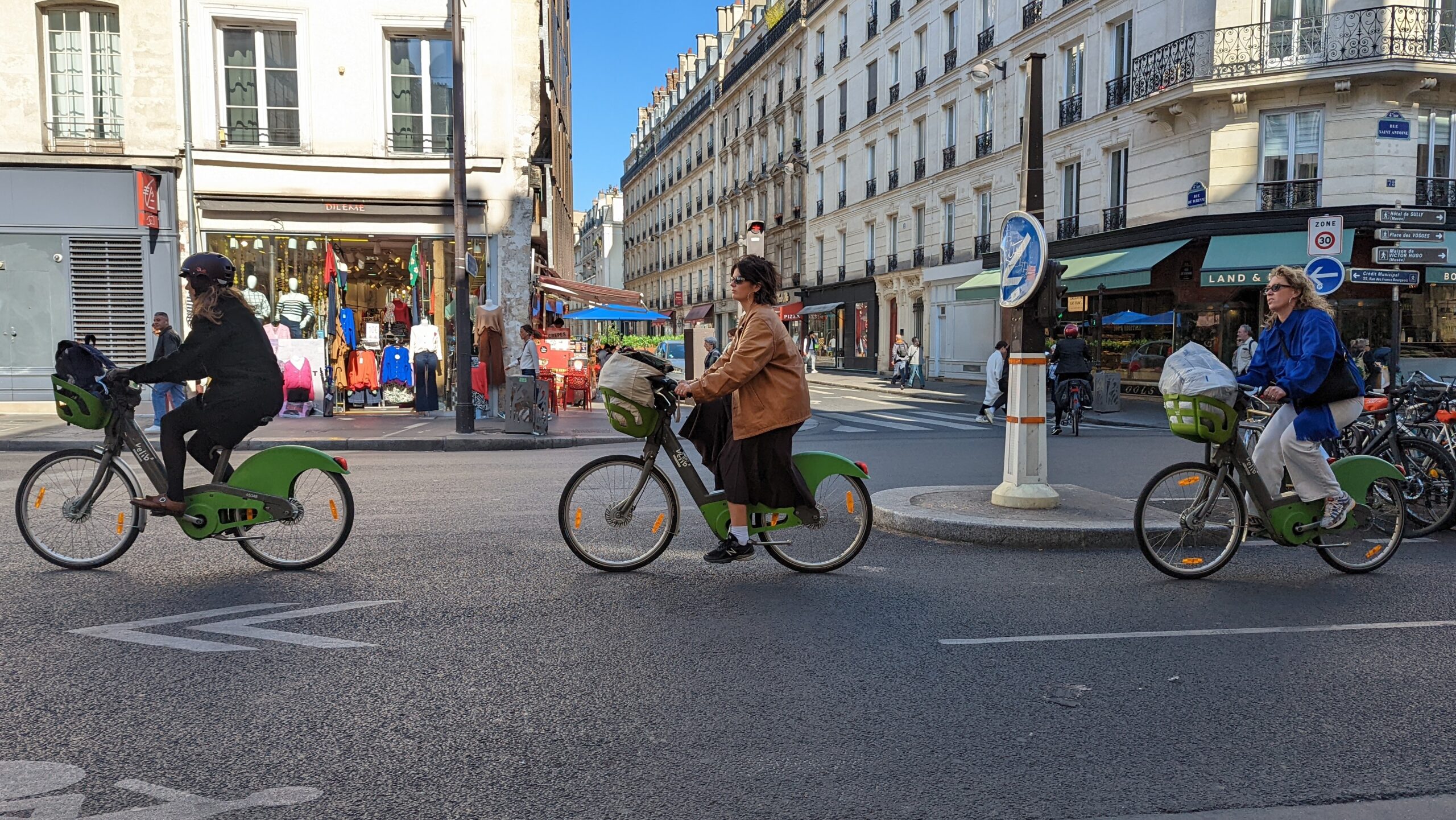
Paris, undoubtedly, is one of the world’s fashion capitals – making it all the more bizarre that from 1799 until just ten years ago, there was a law forbidding women from wearing trousers, initially enacted during the revolutionary period since presumably you couldn’t have women in culottes showing solidarity with those lacking said garments – although if you visited the city a decade or more ago, you’d never have known that such a law was in force in the first place.
There was however one exception, made in 1909, and which permitted women to wear trousers if they were riding a horse or a bike, all in the interests of decorum, naturally, although it doesn’t seem to have actually been compulsory to do so.
No winking at women … and no moustaches
While laws in many countries are set nationally or perhaps regionally, in the United States, besides federal and statewide legislation, there is a plethora of local ordinances in force, often at town or city level, that provide us with some of the more bizarre examples of legislation governing behaviour on bikes.
Much of the law that made it onto the statute books (and which in many cases has since been repealed) regulated what women were permitted or forbidden to do on a bike, while other legislation dealt with the relationship between the sexes when it came to bike rides.
For example, the town of Newport, Vermont in the north east of the country, permitted married women to go for a bike ride alone on a Sunday, while married men were not allowed to do so (whether a married couple could go out on a ride together, on a bicycle made for two, for instance, is unknown).
A Sunday cycling ban in Ogallala, Vermont, meanwhile, meant that women who were unmarried, widowed, or divorced, were breaking the law if they were found cycling on the Lord’s Day (in passing, we should mention that male or female, reading a newspaper while riding a bike – a rather singular skill, one would have thought – was banned in Woodbridge, Virginia on Sundays during times when church services were being held.
As far as interaction between the sexes is concerned, men in Ottumwa, Iowa, risked falling foul of the law if they winked at a woman while riding a bike, while in Oklahoma, the town of Lugert had a law preventing men sporting a moustache from going for a bike ride with a woman.
No cycling in swimming pools

Baldwin Park, California, regularly makes lists of bizarre cycling laws through a local ordinance that bans people from riding bikes in swimming pools – often prompting the observation of why on earth someone would want to get their bike, and themselves, wet?
In fact, there’s logic to the local legislation, and it dates back to the skateboarding and BMX boom of the late 70s when during the cooler months, kids would sneak into properties and use empty swimming pools to perform tricks (the city itself went on to build them a skate park).
Do Missouri cyclists really have to fit a 15-foot flagpole on their bikes?
Finally from the US, a bit of urban myth-busting. Back in 2016, a member of Missouri’s state legislature tabled a bill proposing that all cyclists riding on a “letter country road” – the US equivalent of B roads in the UK – should have to fly an orange flag from, get this, a 15-foot pole attached to their bike.
In response, one St Louis bike shop even rigged up a bike to highlight the ridiculousness of what was being proposed by then Representative Jay Houghton (who, it goes without saying was a Republican), as shown in the Twitter post below.
@cyclelicious — the folks @StlBicycleWorks made a 15′ pole today to show ridiculousness of MO bill. pic.twitter.com/FAjeCB0XvV
— Carrie Z (@velo_city) January 13, 2016
The bill, unsurprisingly, didn’t make it onto the statute books – but that hasn’t stopped the crackpot idea regularly featuring on lists of weird cycling laws since the idea was first floated.
Saudi Arabia relaxes ban on women cycling … slightly
The part the bike played in enabling women in western countries to assert their independence in the the late 19th and early 20th centuries in western countries is well-known, and in recent years we have also seen women in Middle Eastern countries including Iran take to the saddle – and social media – in defiance of the country’s ban on them riding bikes as a way of asserting their independence.
In Saudi Arabia, a total ban on women cycling was partially reversed as recently as 2013 but with strict conditions imposed – it is only permitted in recreational areas, under the supervision of a male relative, and riding must be done while wearing Islamic dress.
The country may be engaged in a sportswashing offensive right now, ranging from golf to football, but we’re not sure we’re going to see a women’s version of the Saudi Tour any time soon.
No topless riding in Thailand
On the subject of what not to wear (or rather, not wear), it may get humid in summer in Thailand, but forget riding a bike around without a t-shirt on if you want to avoid a fine, albeit one that for a western tourist is unlikely to trouble the bank balance too much, clocking in at under a fiver.
The law presumably was brought in as a response to tourists riding from the beach to the bar in a state of semi-undress, and as to what is acceptable as clothing on your upper body goes … well, the King of Thailand has been spotted in the past pedalling while wearing a rather fetching crop-top.
Mind you, he’s the King, so maybe that’s not a precedent to argue over with the Thai police if you get pulled over while riding with a skimpy top on, plus he was in Switzerland, not Thailand, at the time.
Great Britain: Bikes don’t have to have a bell, but cannot be sold without one (and your clipless pedals are felonious)
And finally, we’re back home for a couple of rules and regulations that may seem strange to people beyond these shores.
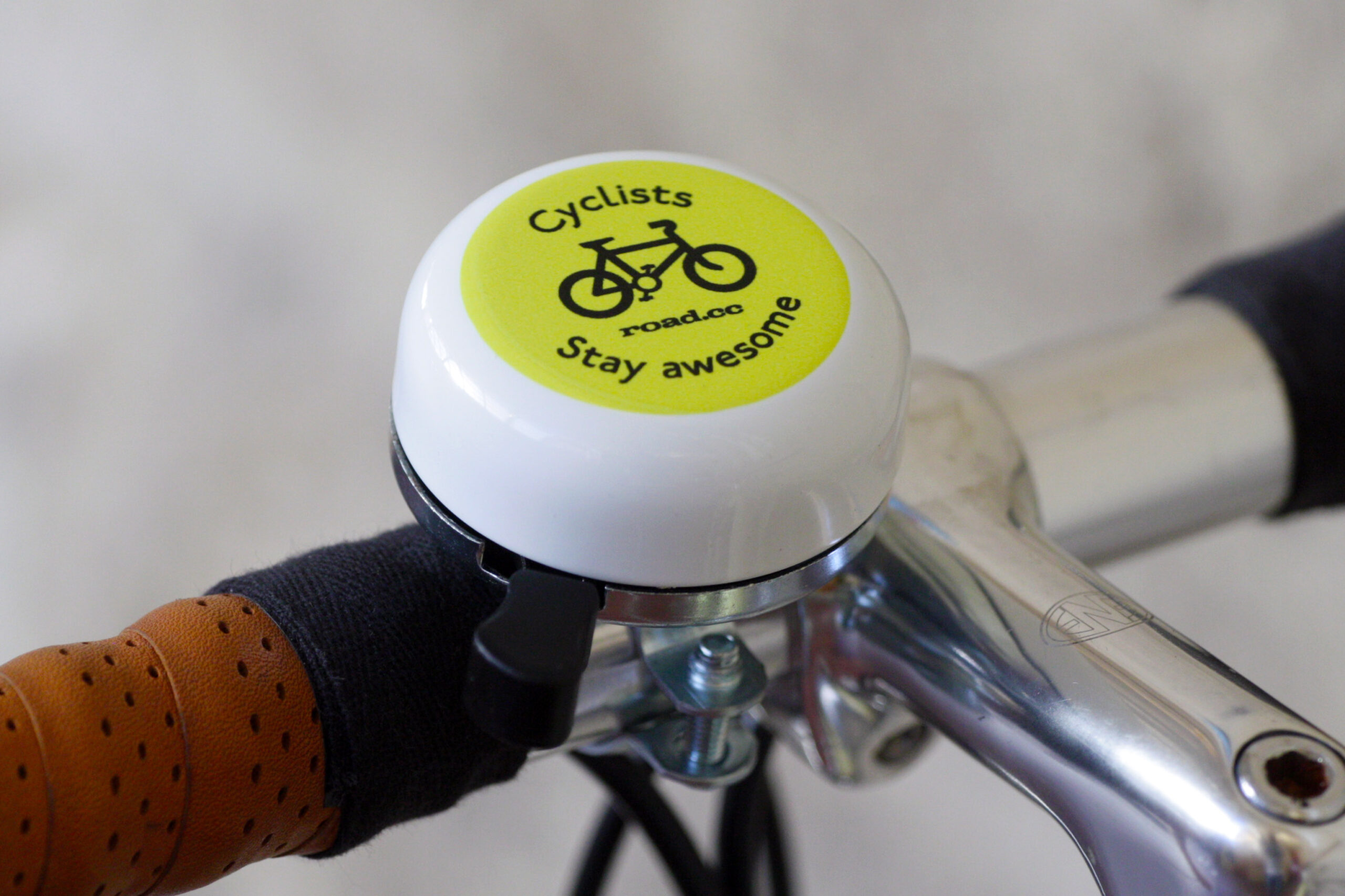
Since 1999, there has been no legal requirement for cyclists in Great Britain to have a bike bell fitted – although whether it’s a budget bike from a big box store or a sleek racing machine from a high-end dealer, the Pedal Bicycles (Safety) Regulations 2010 is that one has to be fitted when it is sold, and often the first bit of fettling a new bike is having the bell removed.
We mention Great Britain specifically because the rule applies to England, Scotland and Wales only – in Northern Ireland, which has its own version of the Highway Code, cyclists “MUST ensure a working bell or horn is fitted.”
It’s also worth noting that legally, all bikes sold in Great Britain must be sold with wheel reflectors and “a red wide-angle rear reflector and amber reflectors front and rear on each pedal”, and technically you have to have the pedal reflectors fitted outside of daylight hours – which may seem a little pointless now that you can pick up positively blinding rear bike lights for about twenty quid.
So indeed, if you’ve recently moved here and happen to spend several thousand pounds on a shiny new road racing bike, it’s completely normal for the shop to throw in some of the very cheapest reflector-shod pedals and a bell with your purchase. It would have to be a particularly vindictive police officer to pursue the bike shop if they forgot, and it’s rather unlikely you’ll be penalised for not having pedal reflectors at night if you’re running a decent set of lights.
Back to bells, and to a country that never seems to miss an opportunity to hit cyclists with stonking fines (most usually for riding without a helmet), riding your bike without a bell in Australia will land you a hefty fine – up to A$2,200 if you decide to challenge it in court.
Are you aware of any other bizarre pieces of bike-related legislation that you think deserve a place on our list? Let us know in the comments below…






43 thoughts on “Crazy cycling laws from around the world — no pedalling in swimming pools, no winking at women and more strange cycling customs”
Simon MacMichael wrote:
I believe Poland has rowed back on the severity of its drink cycling laws, with offenders most likely to get a stiff fine or 14 days in jail for the most severe cases, but even at the height of the crusade I think it’s probably unlikely that drunk cyclists were getting an average of eleven years in prison? Months maybe?
Personally (and I speak as a cyclist who is probably far too fond of the ale), and while I generally don’t support more restrictions on cyclists, I would be all in favour of the UK falling more into line with some of the laws described here regarding drinking and cycling. It seems absurd that cyclists are exempt from being breathalysed and I would be perfectly happy to see the same sanctions applied to drink cycling as to drink driving, including licence suspensions. It shocks me sometimes to see otherwise perfectly sensible people, who wouldn’t dream of driving drunk, saying, “I’m going to have a few pints so I’ll take the bike.” By all means ride your bike to the pub – I do – but if you’re going to have more than a pint, push it home.
Rendel Harris wrote:
Not sure about that … it is one of the ways that the law in this country acknowledges that a cyclist is essentially a pedestrian on wheels, and is not the driver of a motorised vehicle. By all means, sanction drunken cyclists in an appropriate way but if we start to blur that legal line we pretty much get into “giving the Daily Mail what they want” territory.
I agree, the cyclist is much
I agree, the cyclist is much closer to a pedestrian than a motorist in terms of danger to others. How many people have been killed by intoxicated cyclists? I believe if there are such accidents, the probabilities will be equal to be struck by lightning or attacked by angry cow.
Jetmans Dad wrote:
The law in this country does not acknowledge “that a cyclist is essentially a pedestrian on wheels”, cyclists are regarded as road vehicle users and are constrained by nearly all the road rules that apply to the drivers of motorised vehicles. Driving any vehicle, including a bicycle, on the highway whilst intoxicated is incredibly dangerous not only directly for the rider/driver and anyone they might hit but also for all those who may become involved in crashes attempting to avoid people who are not improper control of their conveyances. Cycling drunk is against the law, so why is it not “an appropriate way” of sanctioning them to apply the same testing and sanctions that apply to all other drunk vehicle users?
I can be accused of many things, probably quite rightly, but I don’t think you can accuse me of being anti-cyclist or politically aligned with the Daily Mail!
Rendel Harris wrote:
The danger posed by drunk cyclists is minimal and to be honest, I’d rather that really drunk people just cycled home rather than swaying across pavements and attempting to interact with any other pedestrians. If they’re too drunk to cycle, then they’ll soon find out.
hawkinspeter wrote:
Unfortunately they might find out when they sway into the path of a car that swerves to avoid them and hits an innocent bystander, or when they get hit by a car, smash through the windscreen and the car crashes as well, injuring or killing the occupants. I can’t quite believe that people like yourself, who generally exhibit a good deal of common sense, believe that it’s okay and not really dangerous for people to be riding bicycles on the highway, mixing with cars and other high speed traffic, when they’re pissed. It just isn’t.
Rendel Harris wrote:
That’s an unlikely hypothetical situation and one that could also easily happen if a sober cyclist had a mechanical issue and loses control. I don’t see much benefit in getting police to lock up tipsy cyclists unless they’re exceptionally drunk – they should treat them in a similar fashion to drunk pedestrians (who are also capable of swerving into the path of a car). There’s laws that police can use to deal with drunken pedestrians and cyclists and I don’t see much benefit in changing the law – the police should be able to continue using their judgement on which drunks need to be dealt with.
hawkinspeter wrote:
Research in America demonstrated that cyclists with a blood alcohol level over the legal limit for driving are six times more likely to be involved in a crash or other incident, and that 20% of cyclist fatalities involved the cyclist being over the legal alcohol limit. It’s neither unlikely nor hypothetical, when I cycle home late (and sober!) on a Friday or Saturday night in London I see plenty of cyclists who are incapable through drink or drugs of controlling their machines (this has become a particular problem with Lime and other electric hire bikes I’m afraid), veering all over the road causing other road users to take evasive action. I haven’t seen any cause a car crash yet but I have seen several crash into pedestrians crossing the road, fortunately without serious consequences. Riding a bicycle on the highway when drunk is a fantastically stupid thing to do and the police should have proper powers to prevent it.
Rendel Harris wrote:
Maybe it is a serious problem in some areas and if so, then the police do have powers to stop them.
I do consider that powered vehicles (whether via battery or ICE) are far more dangerous when someone has little control over their facilities as the feedback loop of being able to balance and pedal is disrupted, so they can still pick up speed by twisting the handlebar or pressing the button. In a similar fashion, it’d be tough for a drunk to go very quickly on a manually propelled scooter.
To be clear – I don’t have any problem with obviously drunken cyclists being stopped and dealt with appropriately. I do have a problem with police being able to stop otherwise normal cyclists on the pretense of breathalysing them, but most likely due to the police not liking the look of the cyclist (wrong colour skin, or a bloke wearing lipstick etc).
hawkinspeter wrote:
Of course drunken car/ other motorised vehicle driving is far more dangerous, where have I suggested otherwise? That doesn’t mean that drunk cycling isn’t dangerous or that it can’t cause serious incidents. The police don’t, in reality, have the powers to stop drunken cyclists due to the fact that they can’t be breathalysed, so unless someone is barely able to stand or form a coherent sentence it’s very difficult to prove anything. There are four questions here, really, and if the answer to the first two, is it dangerous to cycle on the public highway when drunk and is it illegal to cycle on the public highway when drunk, is yes, which I believe is indubitably the case, then it’s hard to see why the answer to the other two questions, should the police be able to breathalyse cyclists and should cyclists have to adhere to the same alcohol limits as drivers, is no.
Rendel Harris wrote:
It’s a question of degree of danger.
If the police don’t have powers to breathalyse cyclists, presumably they also don’t have powers to breathalyse pedestrians? That doesn’t seem to be an issue though, as the police can use catch-all laws such as disturbing the peace (or whatever the actual law is). As there isn’t a stated maximum level of blood-alcohol for either walking or cycling, it makes some kind of sense that the police shouldn’t have much requirement for measuring intoxication – they should be able to use their judgement so that a ped or cyclist weaving across a busy road can be detained due to their obvious intoxication.
In answer to your first two questions:
Is it dangerous to cycle on the public highway when drunk? It depends very much on the nature of the road and the degree of intoxication. Some people would consider riding a bike at all on some roads to be dangerous even when the cyclist is sober.
Is it illegal to cycle on the public highway when drunk? Depends on how “drunk” is defined, but yes it’s generally illegal to be out in public when drunk whether on a bike or not.
Breathalysing only makes sense when there is a stated maximum measurable limit, so I think your question should be whether a national cycling blood-alcohol limit should be introduced (and thus allow police to breathalyse). I don’t think it’s worthwhile introducing it as there’s much better targets for the police to be pursuing if they want to reduce dangerous traffic. I can’t see any major benefit to it, but it could be abused by racist/sexist police.
hawkinspeter wrote:
As I said above, yes I think the drink/drive limit for cycling should be the same as that for driving a motorised vehicle. If you look at the figures I quoted above regarding likelihood of accidents I believe it is entirely worthwhile introducing deterrents to cycling drunk.
I don’t feel your comparison to pedestrians is apposite, pedestrians aren’t generally mixing with vehicles doing 30mph downhill, are they? Some cyclists will be and I really can’t see why it’s at all contentious to advocate measures to dissuade them from being drunk when doing so.
Rendel Harris wrote:
I just don’t see that it would make any real world difference. If a cyclist is happy to be going 30mph downhill when drunk, then either they have competent bike handling skills when drunk or they’ll very quickly discover that they don’t. I can’t see that legislation would have much bearing on their decision making.
(Incidentally, the figures you described don’t really paint a full picture as there’s no comparison to base-levels of drunken cyclists that don’t get involved in collisions – maybe some sources would flesh out the details).
hawkinspeter wrote:
So you don’t think that knowing that if the police catch you riding drunk they can breathalyse you and if you’re over the limit you will face the same criminal penalties as a drunk driver, including points on your driving licence, will deter anybody? When the breathalyser was introduced to the UK in 1968 it immediately slashed drink-driving, with 1,152 fewer road deaths and 11,177 fewer serious injuries. Why would the introduction of a breathalyser for cyclists not have the same deterrent effect?
This cyclist who will “very quickly discover that they don’t [have the capacity to cycle downhill at 30 mph when drunk]”, how will they find that out? By crashing, and if other vehicles are driving around them there’s every chance that they will have to take evasive action, increasing the chance that they will injure somebody else. It’s not a victimless crime where only the drunk cyclist has a chance of being killed or injured.
Rendel Harris wrote:
I’d consider that having the same penalties for drunk cycling and drunk driving would be entirely missing the point of the danger that both activities entail. Drunk cycling is by its very nature self limiting due to the need to keep balanced and is also far less likely to hurt someone else.
Also, people are not so motivated by penalties as they are by the chance of them getting caught. If we want to drastically reduce drunk cycling, then getting police to hang around outside pubs would be more effective than introducing lengthy prison terms.
Personally, I’d much rather that people got on their bike after a couple of drinks than get in a car – by having both activities attract the same penalties, it would mean that there’s no incentive for people to take a bike to the pub iinstead of their car. That would be the opposite of improving road safety.
hawkinspeter wrote:
By that logic drunk motorcyclists doing 20mph shouldn’t face the same penalties as drunk car drivers.
And at the moment there is virtually no chance of a drunk cyclist being caught because the police know there’s no point in stopping them because they can refuse to be breathalysed. If they knew that they could be breathalysed and so were more likely to be caught, that would be a deterrent.
I would be well up for substantial prison terms for drink drivers in this country but it’s virtually impossible to be sent to prison for drink-driving unless you cause an incident that harms someone, and even then…
I just don’t get this “oh it’s not as bad so allow it” argument. Murder is worse than GBH, shall we ignore GBH? Cycling drunk is highly dangerous, very stupid and has the potential to cause death and serious injuries not just for the cyclist but for innocent bystanders. It’s also illegal.
Feel free to respond of course but I think I’ll leave it there, we’re clearly not going to agree.
Following our discussion, I’m
Following our discussion, I’m now curious as to how often a major RTC (as in a KSI) was caused by a drunken cyclist. I can’t recall seeing any such report and from a quick web search, all I can find is drunk drivers hitting cyclists.
(Not intending this to be a continuation of our discussion – just curious as to the actual size of the problem)
I can’t find any data either,
I can’t find any data either, but wouldn’t it be quite likely that incidents caused by drunken cyclists often don’t end up recorded as someone swerves round the unsteady cyclist and hits something else, with the cyclist riding off oblivious? I know that’s pure speculation but seems likely to me, I’ve had a couple of near-croppers when I’ve tried to pass a pissed-up rider who’s swerved across me…it’s just not a good idea to have anyone operating machinery on the road in an unfit condition, manual or powered, in my opinion! All the best.
hawkinspeter wrote:
Just to reply to this paragraph which wasn’t there when I originally replied, I absolutely agree that the police should have to justify their reasons for stopping and breathalysing a cyclist in great detail and should face serious sanctions if it is shown that it was a vexatious stop on the grounds of race, sexuality et cetera. The prevalence of in-car and body worn cameras should help to establish whether or not a cyclist’s riding was sufficiently bad legitimately to give rise to the suspicion that they were under the influence.
I agree that operating
I agree that operating anything while gin-happy is a bad idea. In fact, it goes even further:
Friends don’t let friends walk drunk.
(America though – environment may be even more dangerous than the UK because more car…)
There could be some mitigation in having separate, high-quality infra. After some indiscretions in my youth (involving parked cars, ditches…) I became totally “don’t cycle after even one beer” for time (I’m a cheap date). I’ve broken that rule on occasion where I could use the completely separate North Edinburgh paths (normally pretty empty at night also) to return home. It just “felt safer”. (No, that’s not an excuse…)
hawkinspeter wrote:
Which allegedly happens an awful lot in Australia and the US in relation to helmet laws…
brooksby wrote:
I’m sure it also happens an awful lot in those countries in relation to speeding laws, drink-driving laws for motor vehicles, “looking at me in a funny way” and so on. That’s an argument for better training, monitoring of and sanctioning the police where approriate (which I believe is massively necessary in the UK), not for not imposing or doing away with laws because the police might abuse them.
(This is in no way supporting compulsory lid laws, which I don’t)
brooksby wrote:
Exactly. There’s enough bias introduced by mainstream media against cyclists already, so I think we need to carefully evaluate the pros and cons of introducing new laws for cyclists.
Drunk cyclists can cause
Drunk cyclists can cause enormous harm without any need for hypothetical crashing through windscreens to kill innocent car drivers. If you accept that a drunk cyclist is more likely to be involved in a collision with a vehicle then that’s enough to have massive potential impacts, that’s not something you just brush off however blameless you are. It doesn’t involve a cyclist but I have a friend who many years ago (30 plus) was the passenger in a vehicle blamelessly involved in a collision with a red light jumping car driver. The car driver unfortunately died at the scene. The driver of the other vehicle had an immediate mental breakdown as a result. My friend, the passenger, was left to pick up the bits and was subsequently diagnosed with PTSD , had to give up work and still suffers from horrendous flashbacks despite having no physical injuries at the time. The economic impact of them retiring was significant, the mental welfare impact has been huge on them and their family. Nobody should be on the roads whilst under the influence of drink or drugs.
I agree to your overall point
I agree to your overall point. Just make the same point as I raised in response to with Ashley Neal’s tale of the (I don’t doubt) drastic effects on a wider group of people when a driver “innocently killed” someone else.
The “impossible” / “fantasy” truth.
If you don’t want the risk of killing someone while driving and it not being your fault (“there was literally nothing they could do…”)
…don’t drive.
He was being driven, under
He was being driven, under blue lights and sirens, to an emergency call when someone else jumped the traffic lights straight in front of his big red truck. Sometimes you have to drive! A bucket of water on a sit up and beg wasn’t going to cut the mustard here.
Good point – which is why I
Good point – which is why I think the “sustainable safety” approach is something we should look at. (Putting safety *above* capacity – and moving focus from *maximum motor traffic capacity*. Having a greater recognition that humans en-mass will not follow rules / do stupid things – but that that is predictable).
I suspect that there are other people who are driving apart from the emergency services. In fact, I think it’s quite a common activity. There’s a continuum here again isn’t there? Life and death, “essential”, I need to, I want to…. another reason for trying to shift travel away from motor vehicles.
Which might have helped the impatient red-light-jumper in your case – and then spared everyone else affected by that event.
LeadenSkies wrote:
I do agree, but I think drunk cycling is way down the list of priorities when dealing with road traffic especially when you consider that it’s a self-limiting acitivity – people don’t enjoy falling off bikes.
It’s remarkable how much RTCs have been normalised by society and media and how rarely incidents even reach the news, despite the heavy cost paid by society.
hawkinspeter wrote:
They only tend to make the news if they are causing significant traffic delays…
brooksby wrote:
…or if it impacts the wealthy
Two different issues and in
Two different issues and in my opinion it isn’t a case of solving one or the other, we should be sorting both.
The fact is that alcohol inhibits the decision making skills required to be safe on the roads well before you reach the point of falling off.
I read somewhere that it
I read somewhere that it takes ten minutes for alcohol to start affecting your judgement. I remember having a discussion with someone who assured me that he was more than able to drive after two pints (his limit when driving) and couldn’t accept that his judgment was going to be stuffed.
Though technically you can
Though technically you can still be charged for being in charge of a carriage while on the highway under the influence if you end up with an officious constable. I know of a few folk who have been charged for being in possession of their car keys even though they had every intention of walking home. All they did was open their boot to get a jacket out. One landlord I knew had a jar where you ditched your keys to be safe.
A friend of a friend (yes I
A friend of a friend (yes I know so many stories start like that but I did meet this guy) who had had one too many decided to sleep it off for the night in his car; he had heard all the stories of how you can be drunk in charge simply by being in your car and in possession of the keys, so he pushed the keys into the exhaust pipe and settled down on the back seat…a passing patrol saw him doing this and proceeded to pinch him. He was eventually left off the next morning with a warning, but really, a bit overzealous…
Rendel Harris wrote:
You want to be careful with that, they can be a bit tricky to get back. I’ve only tried once though…
Hope they gave him a
Hope they gave him a breakfast for his trouble. We used to have a drunk in our village who would totter home. The police would lift him. Put him in a cell. Give him breakfast and a warning in the morning.
Blah blah blah
Blah blah blah
I’m still cycling to the pub.
Miller wrote:
Which one assumes means you’ll ride home pissed, thereby breaking the law and putting your life and the safety of others in danger. Way to go, big man, ain’t you the dog?
And that’s the unbelievable
And that’s the unbelievable truth.
Simon, you managed to smuggle 2 truths past the readers.
Is there a word or two
Is there a word or two missing from the last paragraph – possibly the word “Australia”?
Sorry, sorted! Also added
Sorry, sorted! Also added some bonus info on pedal reflectors, which on reflection (pardon the pun) we reckon is equally as eccentric as the law around bells…
How badly did that German
How badly did that German drunk student cycle to get a 15 year ban? Here he would have had to have killed at least a few royal family members to get such a ban if he was in a car.
Steady on chaps, we can’t
Steady on chaps, we can’t have civilised disagreement – what happened to the hive mind ?
I think I’m a bit on the fence on cycling whilst under the influence.
An ex copper at work told us drunk in charge of a bike was too much paperwork. His sergeant told him he had 30 seconds to get rid of the bike !