


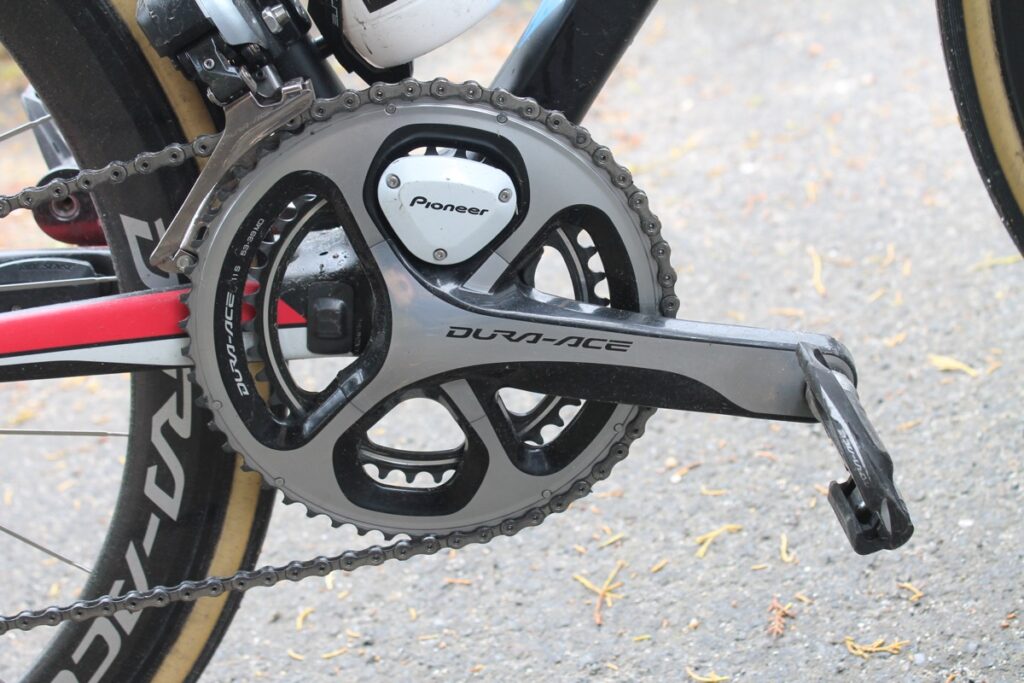

With power meters an everyday feature of training and racing for the pros, we’ve been scouting around to see which models we can find being used in this year’s Tour de France.
If you want more tech info and buying advice, head over to our buyer’s guide.
SRM
Many teams in the Tour de France use SRM cranks which have had a reputation for providing high-quality power measurement for years. SRM takes the original manufacturer’s right hand crank and installs its measurement unit in place of the crank spider.
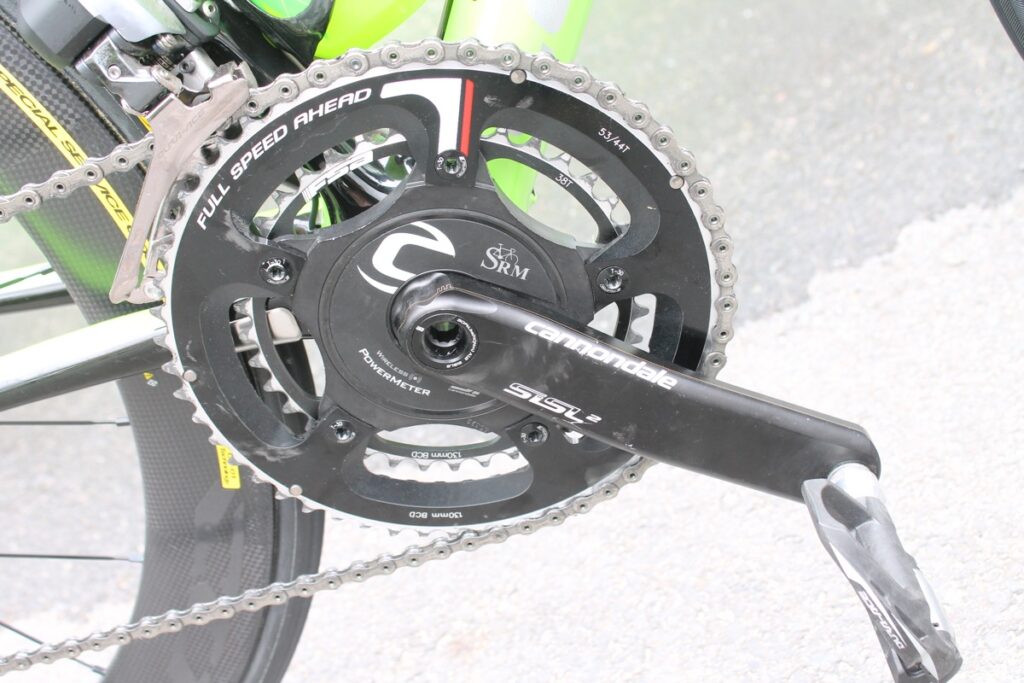
This is a version with a Cannondale crank and FSA chainrings on the bike of Tom-Jelte Slagter of the Cannondale Drapac team.
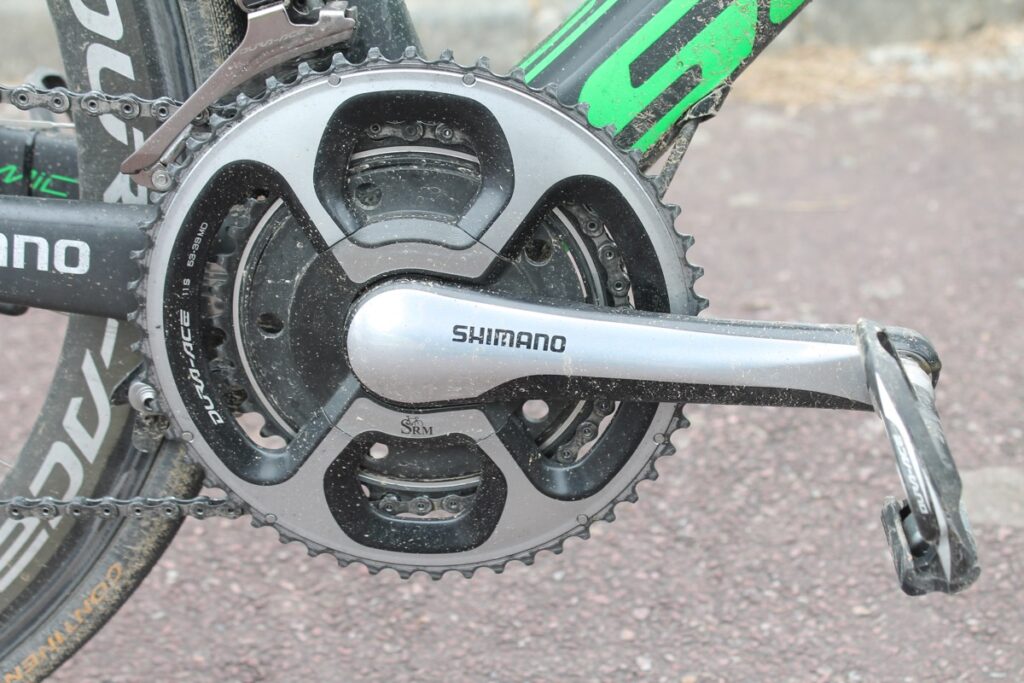
Orica-BikeExchange uses Shimano versions.
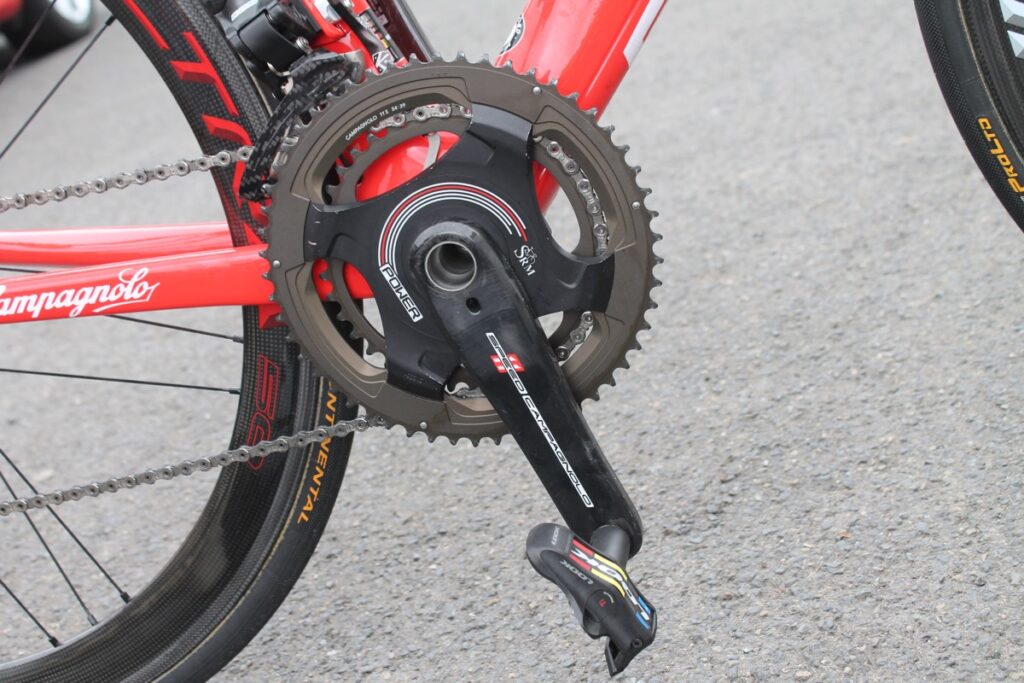
Lotto Soudal riders have theirs with Campagnolo cranks.
Shimano
Shimano recently confirmed that the next generation of its top level Dura-Ace groupset will feature a power meter as an option… something that everyone has known about for many months.
Read all about Shimano’s new Dura-Ace groupset here.
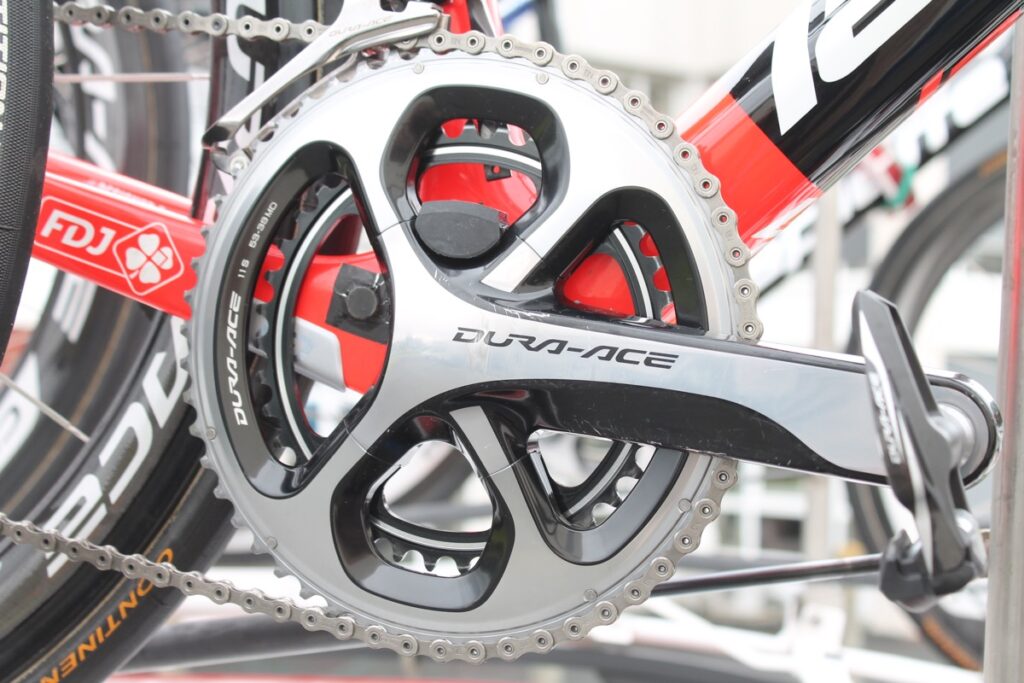
The power meter’s strain gauges sit inside the crank arms to measure left and right leg power while the clever stuff – the brain, if you like – lives inside the spider. It’s compact and very discreet to the point that it’s hardly noticeable, especially if, like this prototype version on an FDJ Lapierre, it is free of logos.
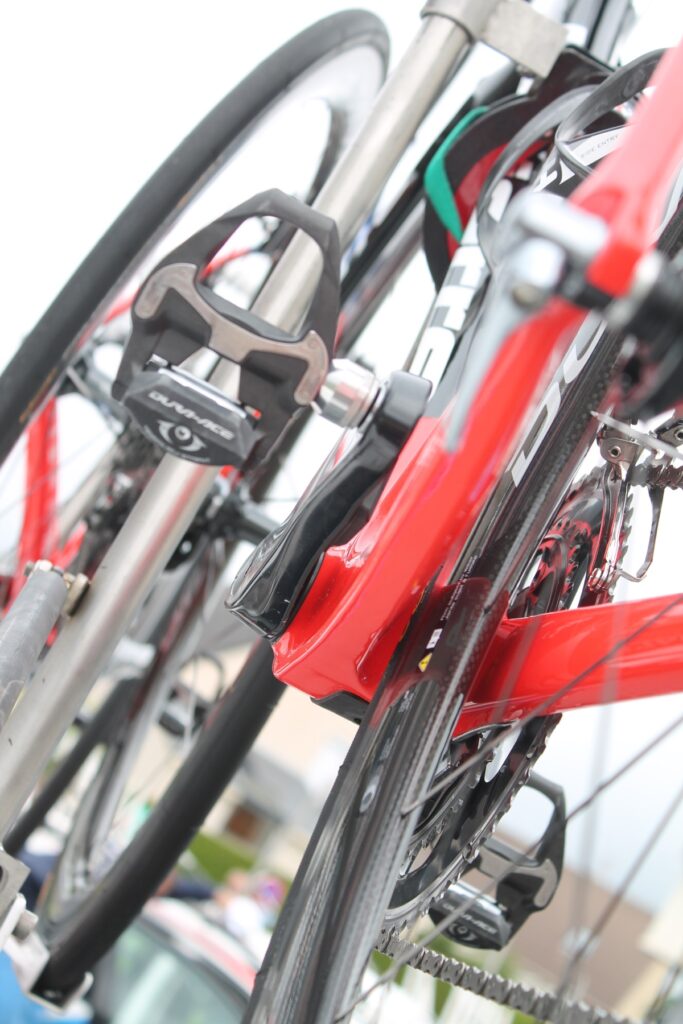
FDJ has been using the new Dura-Ace components over the past few months. You can just see the left side power meter behind the crank arm.
Power2Max
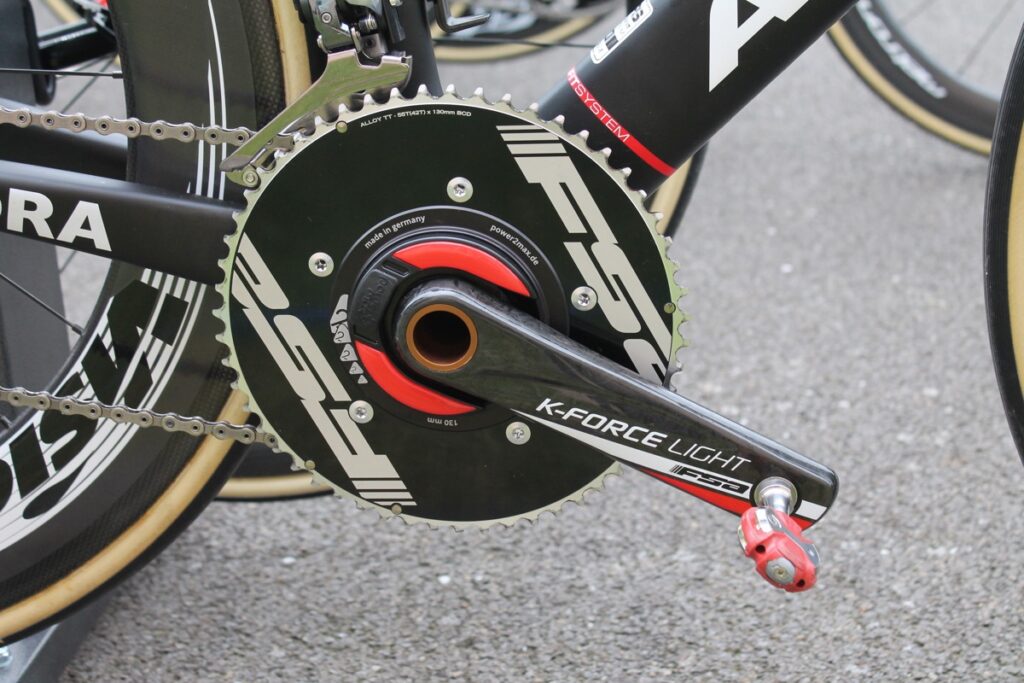
Bora-Argon 18 uses crank based Power2Max power meters. Power2max replaces the spider between the crank arm and chainrings with a unit that measures torque. The data is transmitted wirelessly by ANT+.
Look
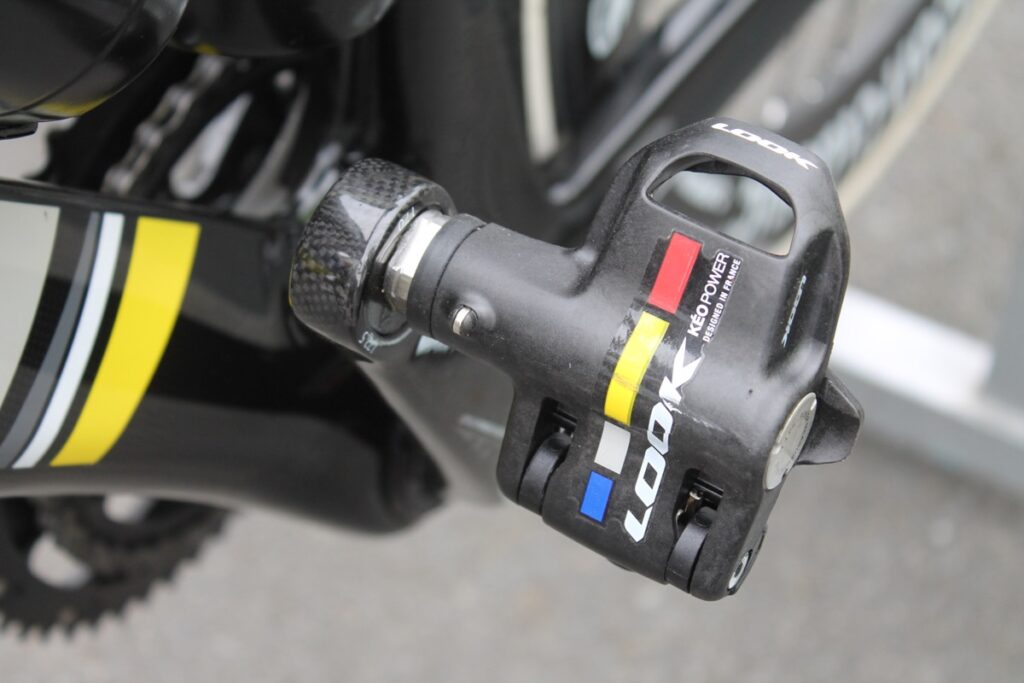
The Look Keo Power system now communicates in both Bluetooth and ANT+. Although this is a Look Power pedal on one of the Fortuneo-Vital Concept bikes, there’s no radio – that’s what Look calls the bit that processes the data and sends it to a head unit – so the rider is getting no feedback here.
Check out our buyer’s guide to power meters here.
Pioneer
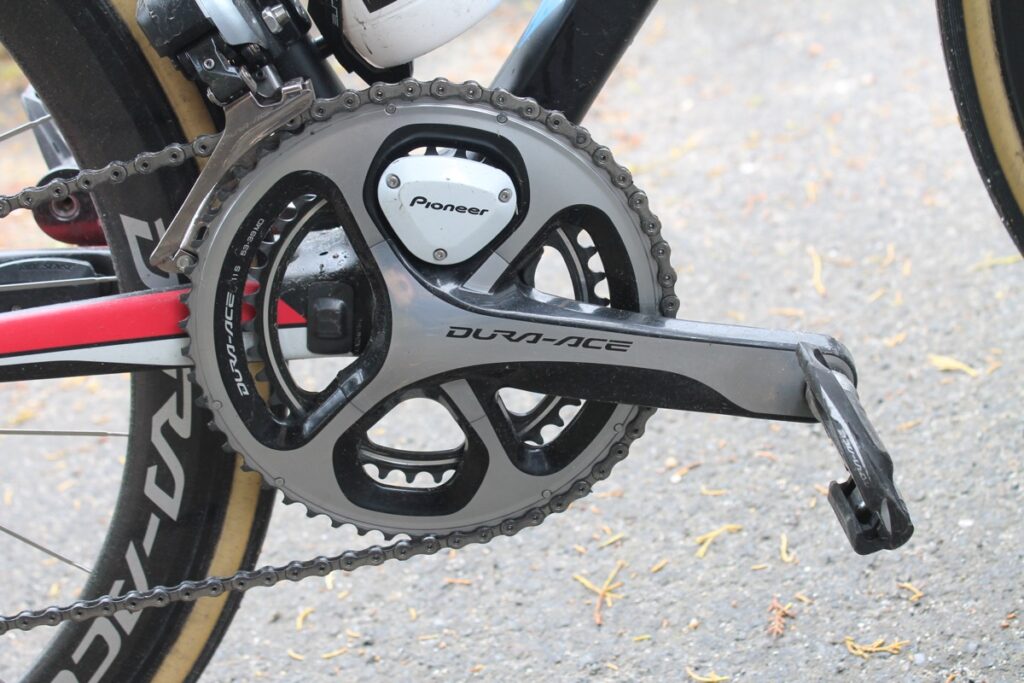
Pioneer supplies power meters to Giant-Alpecin. This is a dual-sided setup on the bike of Laurens ten Dam.
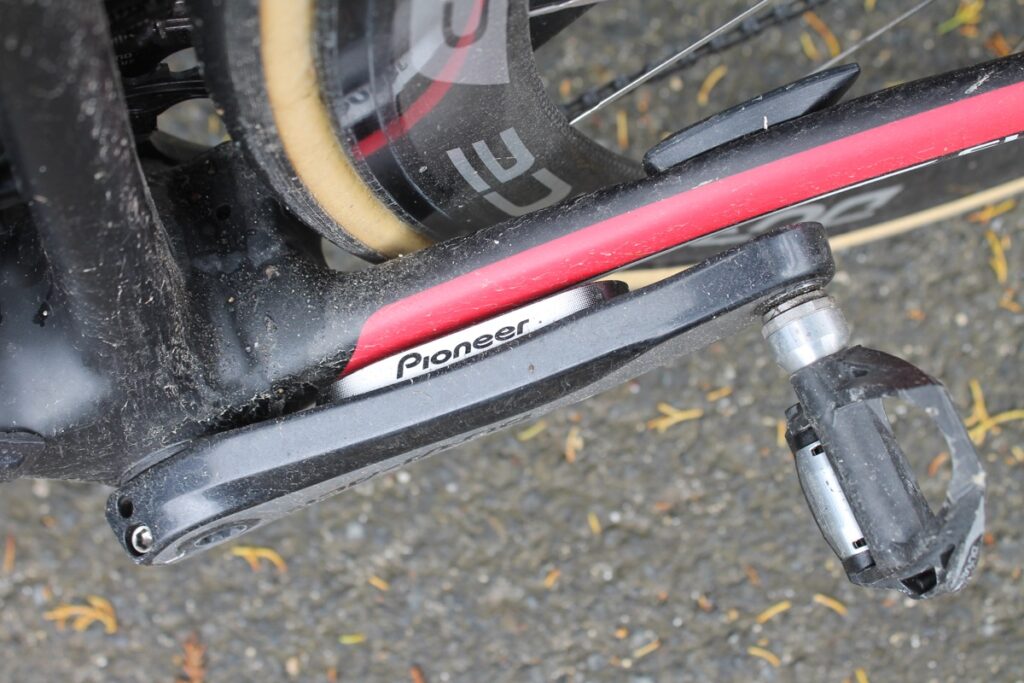
An unusual feature of the Pioneer system is force and direction of force measurement. It measures 12 times per revolution and can display force in real time, so you can use it to analyse your pedal stroke.
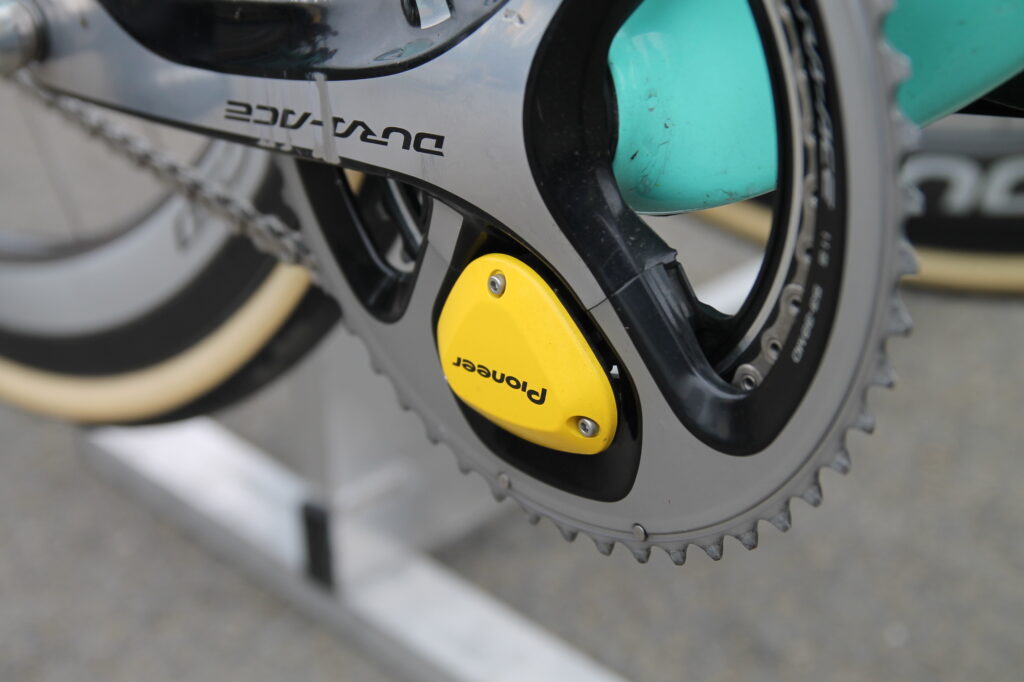
Lotto NL-Jumbo riders have theirs in team yellow.
http://pioneer-cyclesports.com/us-en/
Stages
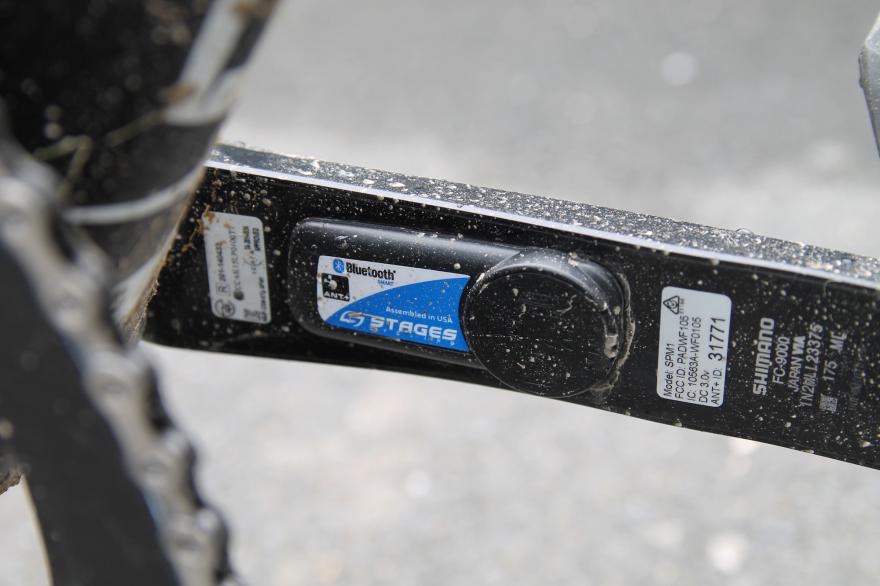
Team Sky (this is Chris Froome’s chainset) uses Stages power meters. These are very lightweight, housed on left crank arms of various types – in Team Sky’s case, on Shimano Dura-Ace cranks.
Stages measures one leg only, assuming your power output is equal on both sides.
http://stagescycling.com/
Rotor
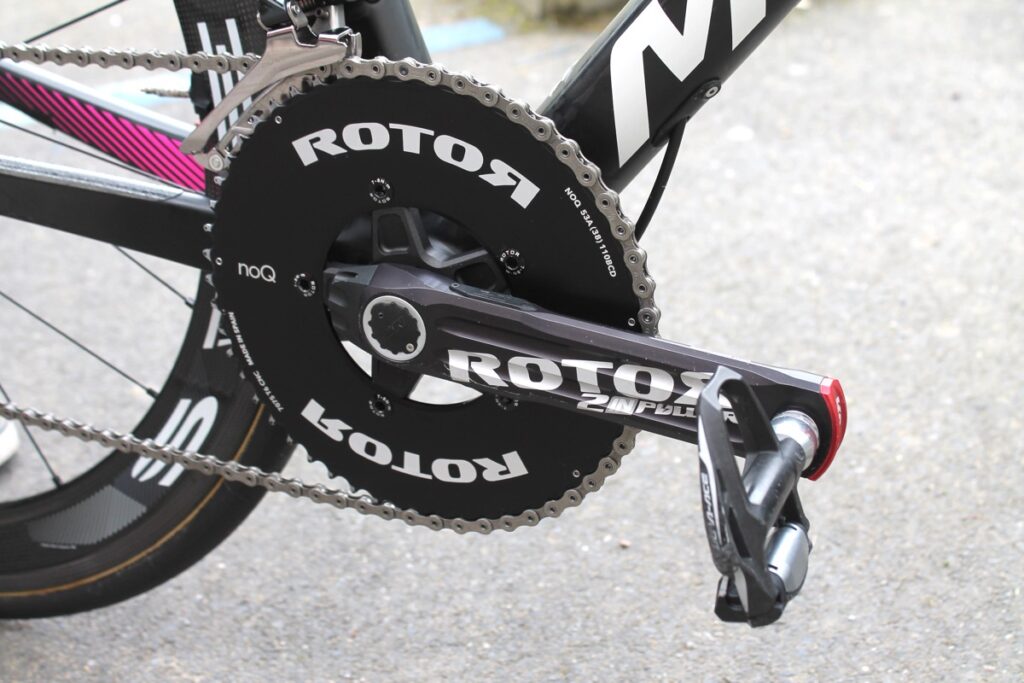
This is the Rotor 2INpower unit fitted to Rui Costa’s Merida Scultura. The system offers double sided power measurement and analytics, as opposed the original INpower that was single leg only. Four strain gauges measure each leg.
2INpower is compatible with both ANT+ and Bluetooth Smart and features a built in battery that offers a claimed 250hrs of riding time before it needs recharging.
Quarq

Alexander Kristoff’s bike is setup with a Quarq SRAM Red eTap power meter. Measurement is made in the chainset spider with power coming from a CR2032 battery that offers about 300hrs of riding time.
Those are SRAM’s Exogram hollow carbon cranks on there.
There are other power meters in the Quarq range.
4iiii
Etixx-Quick-Step uses crank-based power meters from 4iiii. The team is equipped with the Precision Pro which measures each leg independently. This model will go on sale to the public very soon.
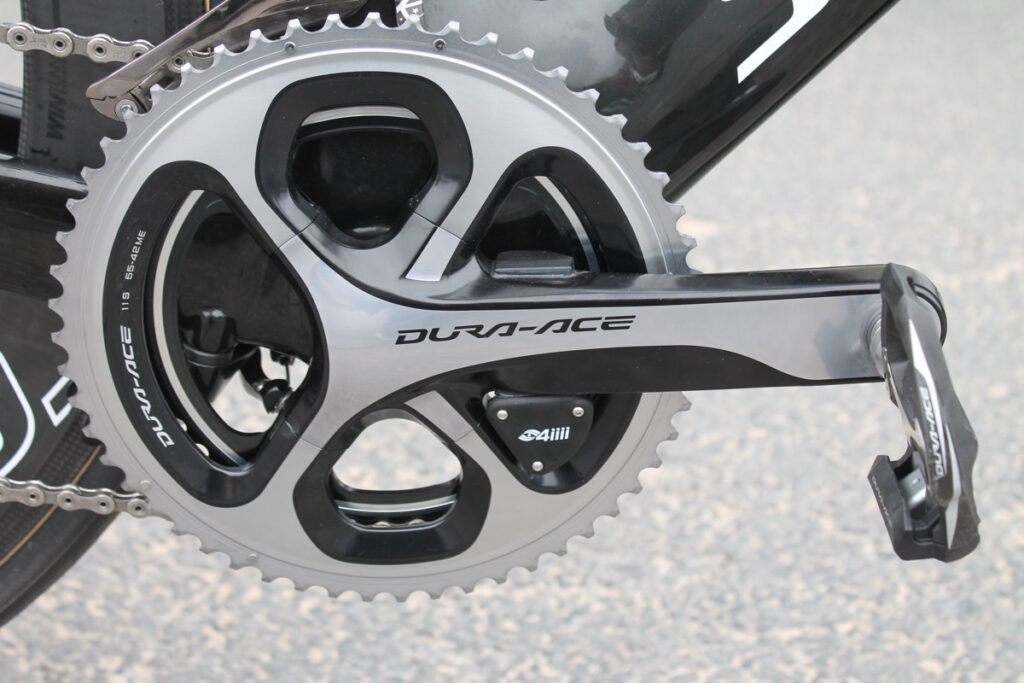
The existing 4iiii Precision measures one leg only.




1 thought on “Tour Tech 2016: Pro’s power meters”
Pros’
Pros’
Not Pro’s.
Spooling chucker on the beach is it? 😉