


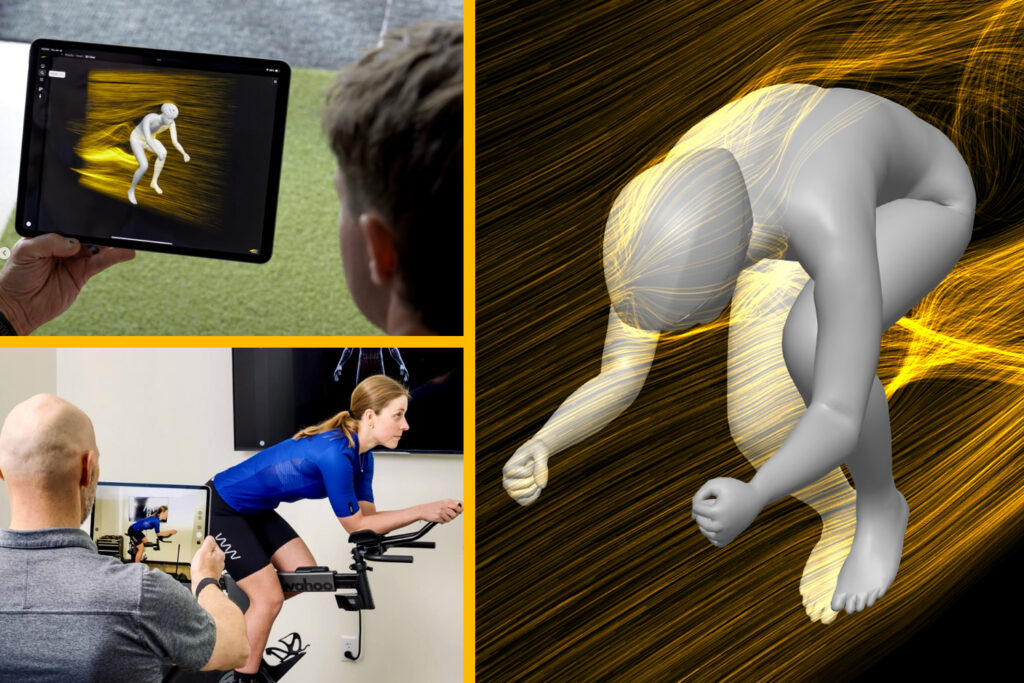

AiRO has launched a new AI physics model for cycling aerodynamics called Vayu that predicts your aero drag and airflow in under a second, and the Netcompany Ineos pro team is about to start using it.
Using a 3D body scan, position, and helmet, Vayu allows bike fitters to see aerodynamic changes almost instantly as they adjust a rider’s position. The idea is that a bike fitter can optimise your riding position aerodynamically in real time, without the expense of time in a wind tunnel.
You’re sceptical? Naturally. AiRO describes itself in this way: “AiRO is the world’s first AI-driven, CFD-modelled bike fit system, designed to bring elite-level aerodynamic optimisation to fitters, coaches, and competitive cyclists faster and more affordably than wind tunnel testing. AiRO combines cutting-edge software engineering with proven aerodynamic science. AiRO delivers personalised, data-backed fit insights through a fast, accessible, and cloud-based platform. Backed by decades of expertise from industry veterans in software and cycling performance, AiRO is redefining what’s possible in rider positioning and speed science.”
AiRO’s founder and CEO is Ingmar Jungnickel, an aerodynamicist who led the development of the third-generation Specialized Venge, for example. You can find out more about AiRO here.
Essentially, AiRO starts from the standpoint that about 80% of aerodynamic drag while cycling comes from the rider rather than the bike and there’s not much opportunity to reduce frame drag further now, so if you’re serious about reducing drag, you need to look at the rider.
AiRO launched last year to provide aero optimisation at a normal bike fit. You go to the bike fitter and they use AiRO to optimise your riding position after using scans to create your ‘digital twin’. What’s new is AiRO’s Vayu software, which massively speeds up the process.
With the previous AiRO platform, each position required a separate CFD (computational fluid dynamics) simulation and took about six minutes to deliver the final aerodynamic analysis. With Vayu, the fitter can move the rider and see the drag number update live on screen. If you’re really interested, interactive position changes update in as little as 0.2 milliseconds.
“AiRO has already made aerodynamic analysis available to riders in a way that simply wasn’t practical before,” says Ingmar Jungnickel. “Now, instead of waiting minutes for each answer, a fitter can move the rider and see the aerodynamic consequence almost instantly.
“That means when you get an AiRO fit, you can test far more positions, helmets and ideas during the session and immediately see what makes you faster.”
Speaking of helmets, Vayu has loads in its database. You don’t have to try each of them on to get the result; the software works out which is best for you and your riding position.
How does Vayu come up with its results?
AiRO says, “Vayu has been trained on more than 30,000 CFD simulations, including approximately 6,900 real customer cases generated through more than 130 AiRO fitters in 26 countries.
“In testing, Vayu selected the faster of two rider positions in 97 of 101 tests, resolving changes to within approximately 1% of drag. In helmet testing, it selected the faster helmet in 72 of 74 certified helmet swaps, with both misses involving differences of less than 1.5% of drag.”
How much does it cost? That’s up to the individual bike fitter. There are 133 AiRO fitters worldwide and only a handful in the UK so far. Find an AiRO fitter here. Coach Joe Beer is a UK-based AiRO fitter and here are his charges.
Vayu will begin rolling out to all AiRO fitters in early November 2026.
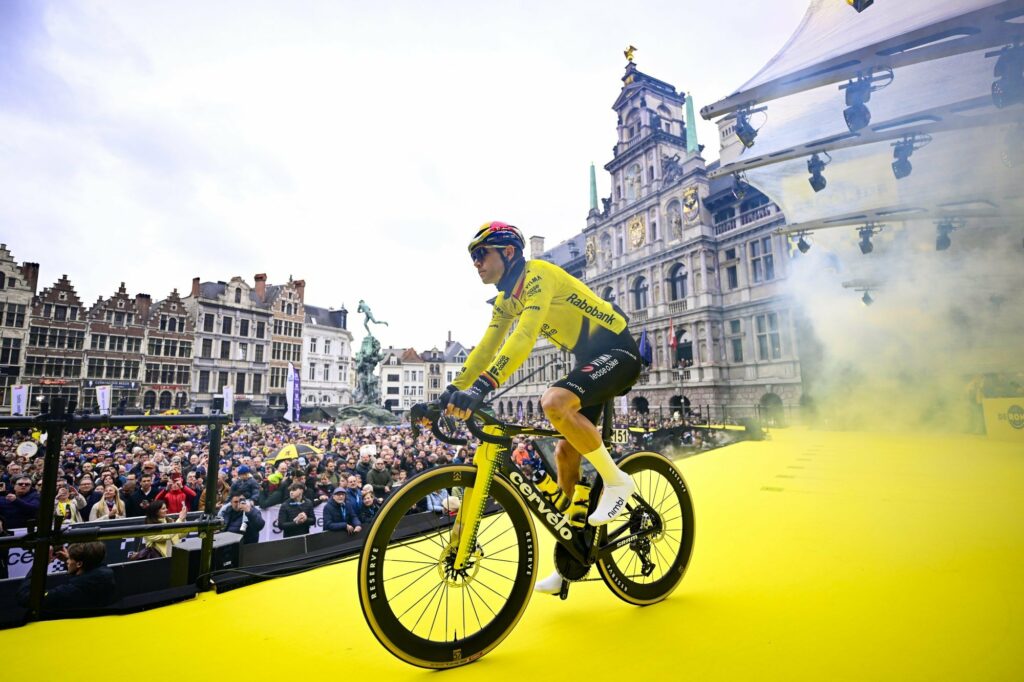
And what about the Netcompany Ineos connection? Details of that arrangement have yet to be fully disclosed, but the team will be using AiRO Vayu for aero optimisation very shortly.






4 thoughts on “Aero optimisation without the wind tunnel: AiRO launches Vayu AI model to improve your cycling aerodynamics in real time – and Netcompany Ineos has signed up”
Vayupourware?
Do you really need an AI tool to tell you that 80% of a cyclist’s drag is the rider or that getting in a more streamlined position you’ll reduce drag etc.? Fabulous for the professional riders who use this site but for the rest of us our money would be better spent on yoga or pilates classes to help you hold a more streamlined position in the first place.
They should get a fairing, then posture will be less significant. Most other road sports have fairings – why not cycles?
@robike “why not cycles”
UCI has entered the chat (in 1914, 1934 etc)
1914 – after riders began experimenting with fairings and a notable fatal crash, UCI banned such things
1934 – they brought in rules to effectively ban recumbents, ostensibly “safety” but possibly because complaints from better riders beaten by a recumbent rider, and vested bike industry interests
Of course there is constant creativity with the likes of shaped helmets etc.
If you care less about the history and just want to be as fast as humanly-powered possible, there’s eg. the British Human Powered Club!