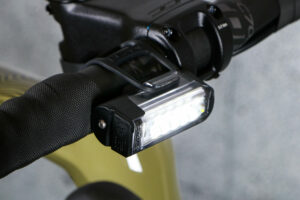
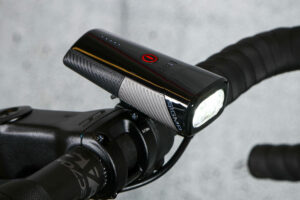
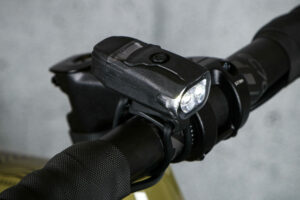
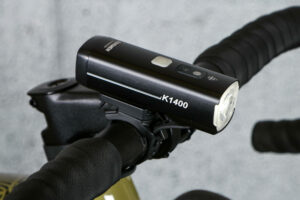
The Moon Titan Max 1700 is a good light for getting you seen and also for lighting the way on unlit roads, and it won’t dazzle oncoming traffic thanks to its beam pattern.
It fits to your bike via a quarter-turn mount that’s similar to one for a Garmin GPS unit, for example. Moon’s out-front handlebar mount will fit round-profiled handlebars only (25.4mm up to 35mm, with shims for different diameters), but I wanted to use it on a Wilier review bike with a Miche out-front computer mount on the handlebar. I used Moon’s adaptor for a GoPro mount on the underside of this and had it up and running in minutes. Pretty straightforward.
It’ll also fit mounts from other brands, including Garmin and Wahoo – although with Wahoo it needs to be a mount where you can change the orientation of the receiving portion, or the beam will head off at a right angle and that’s no good to man nor beast.
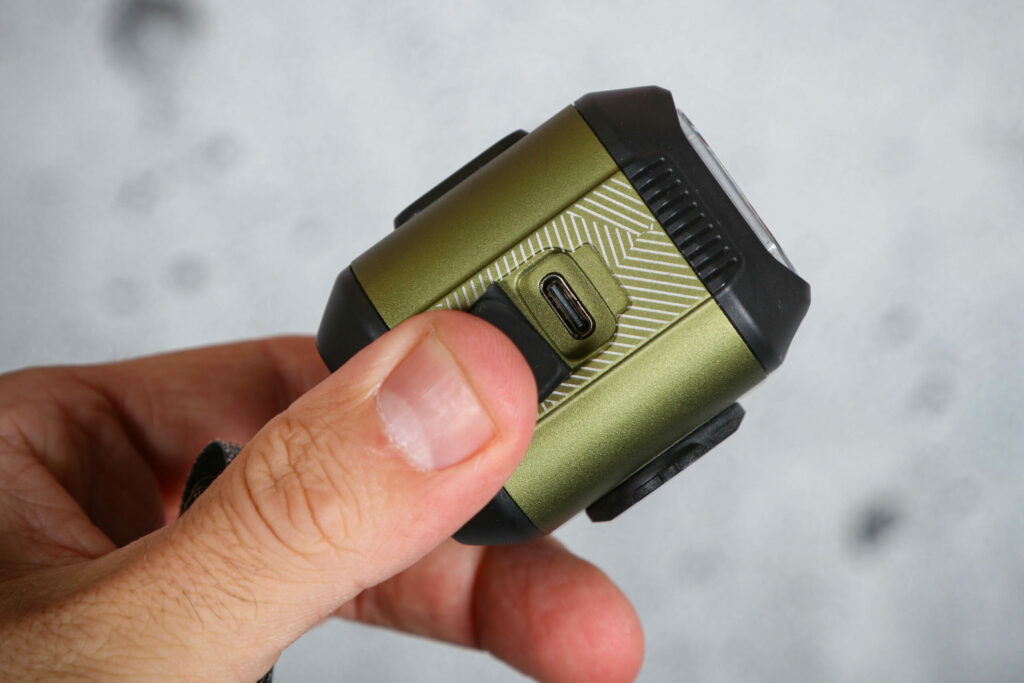
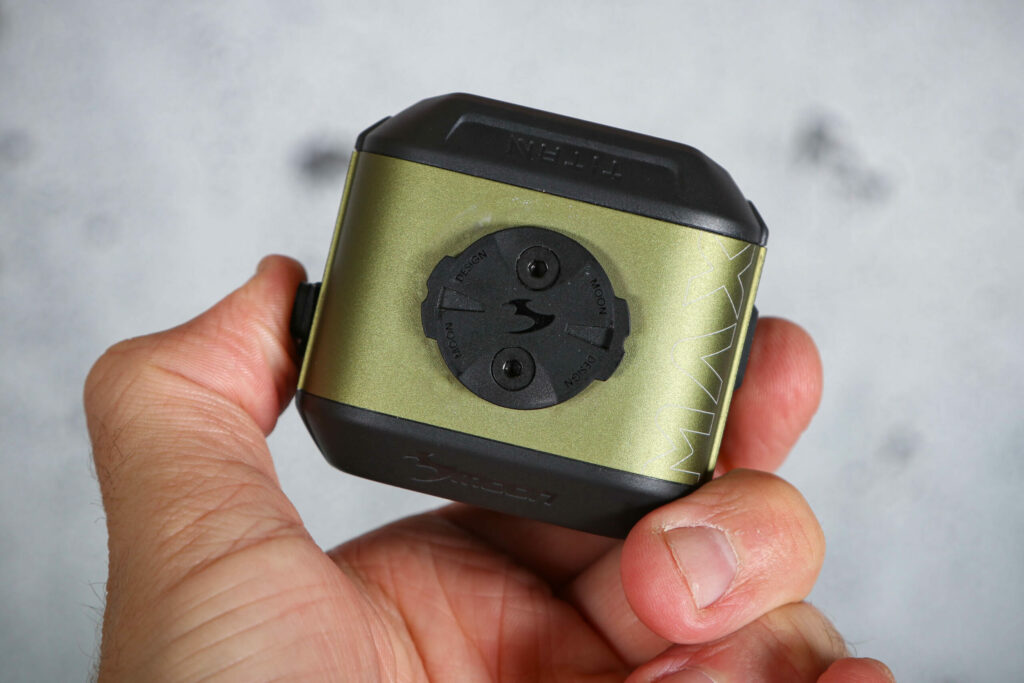
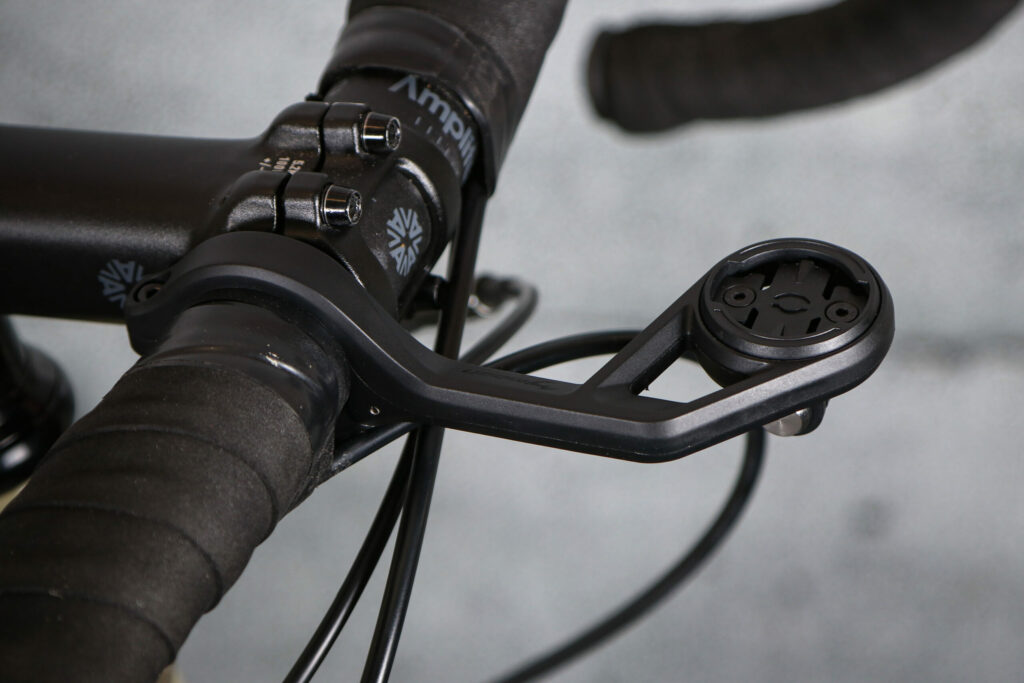
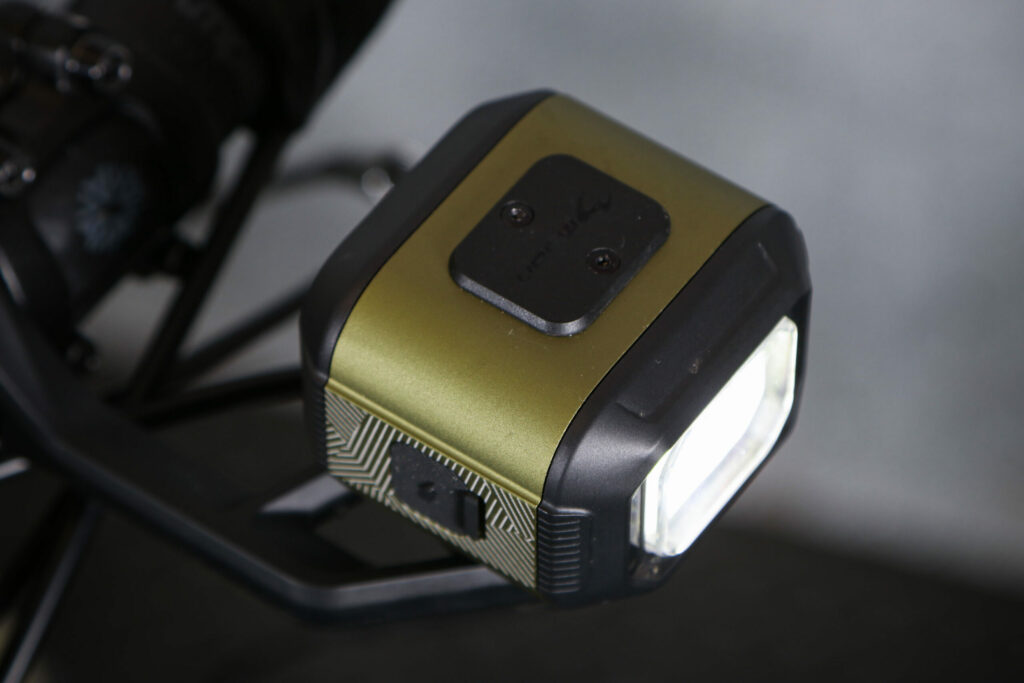
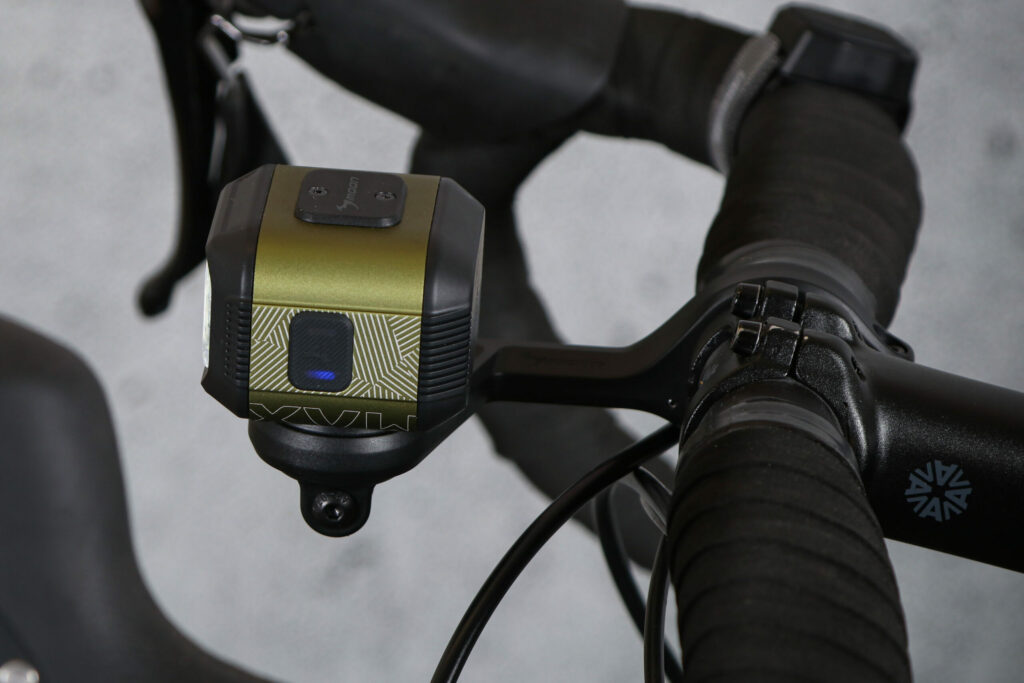
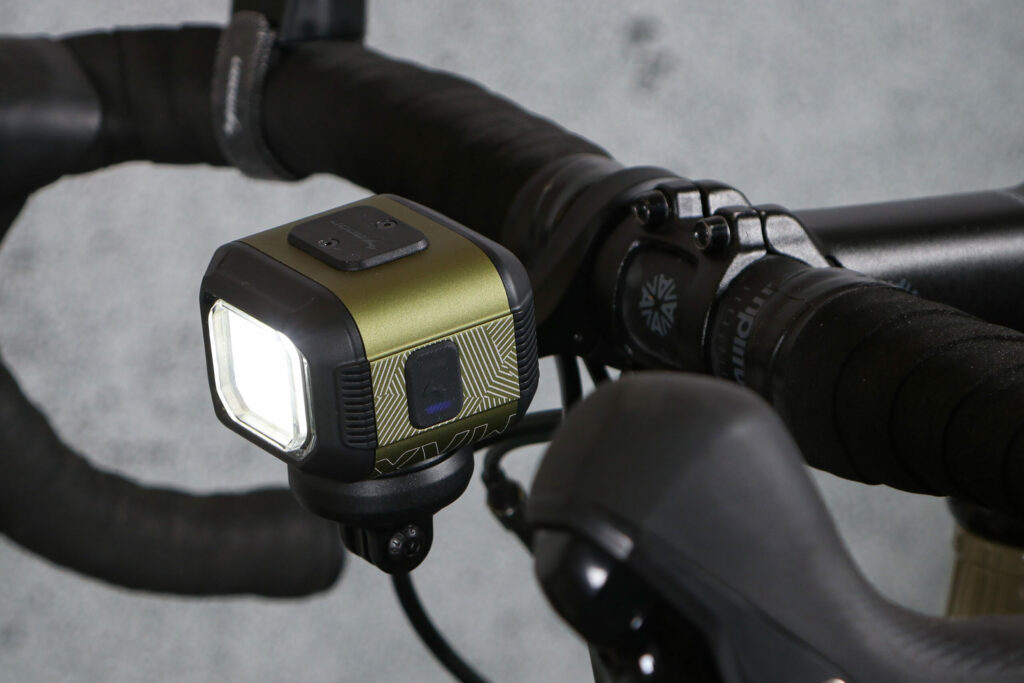
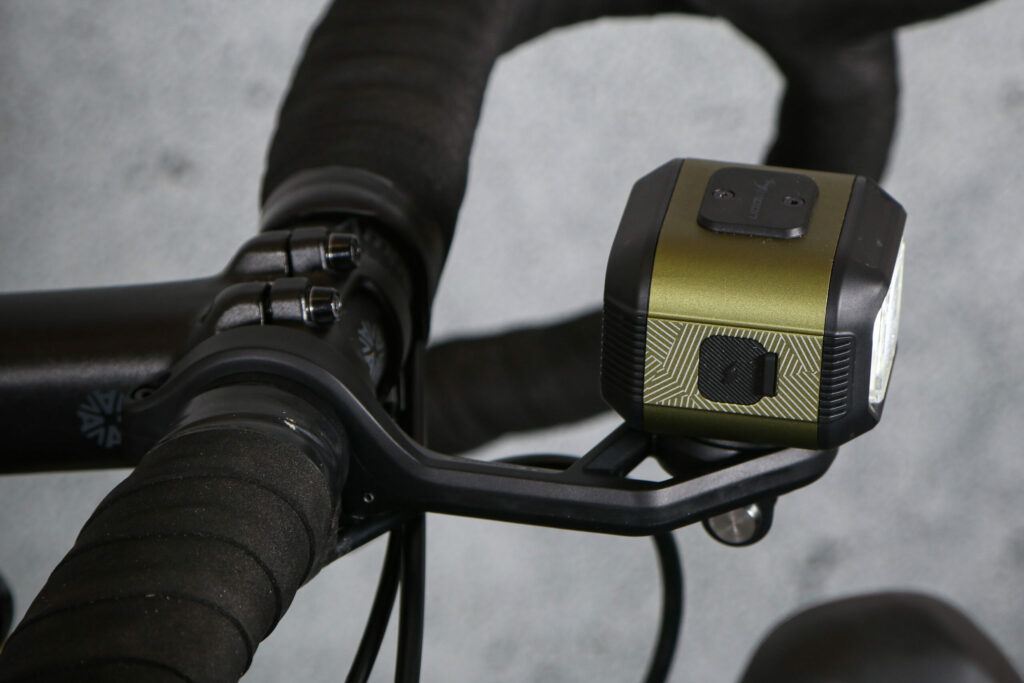
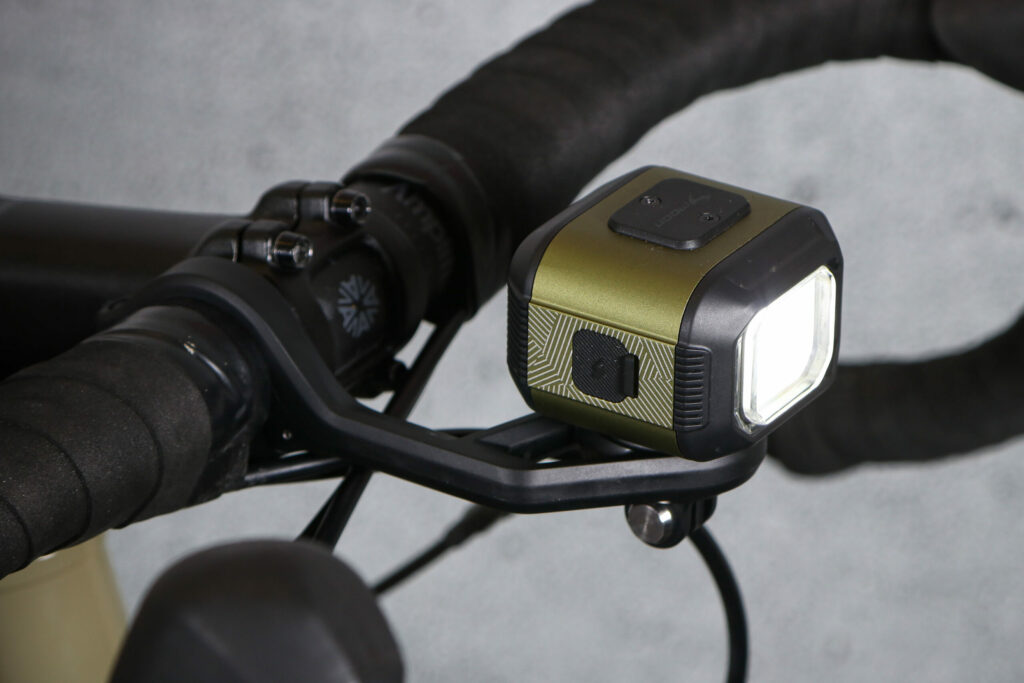

I tried it on various third-party quarter-turn mounts and stability varied considerably. Stability on Moon’s own mount is pretty decent with just a bit of vibration over rough road surfaces, but not enough to be an issue. You get a helmet mount with a Velcro strap as part of the package too.
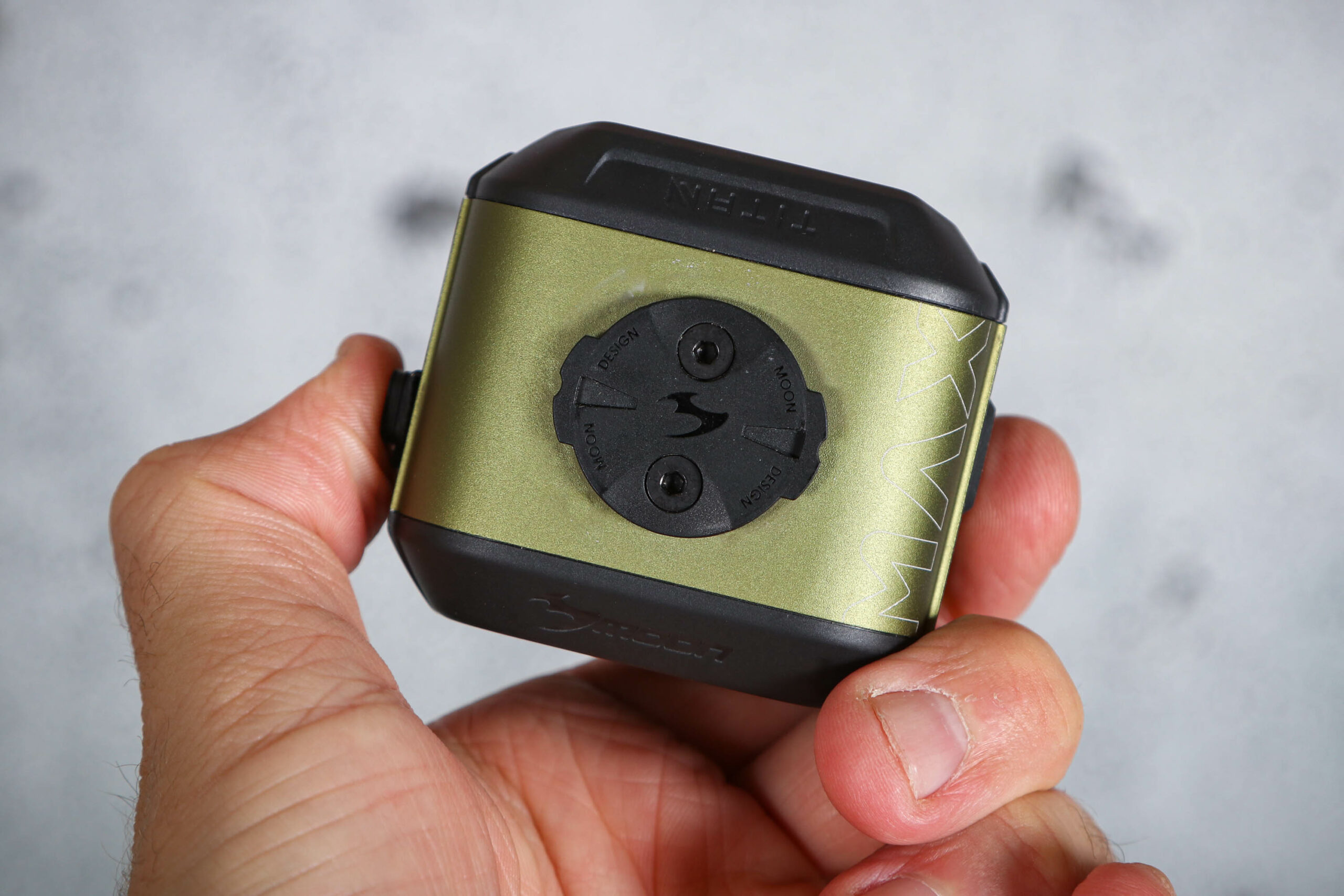
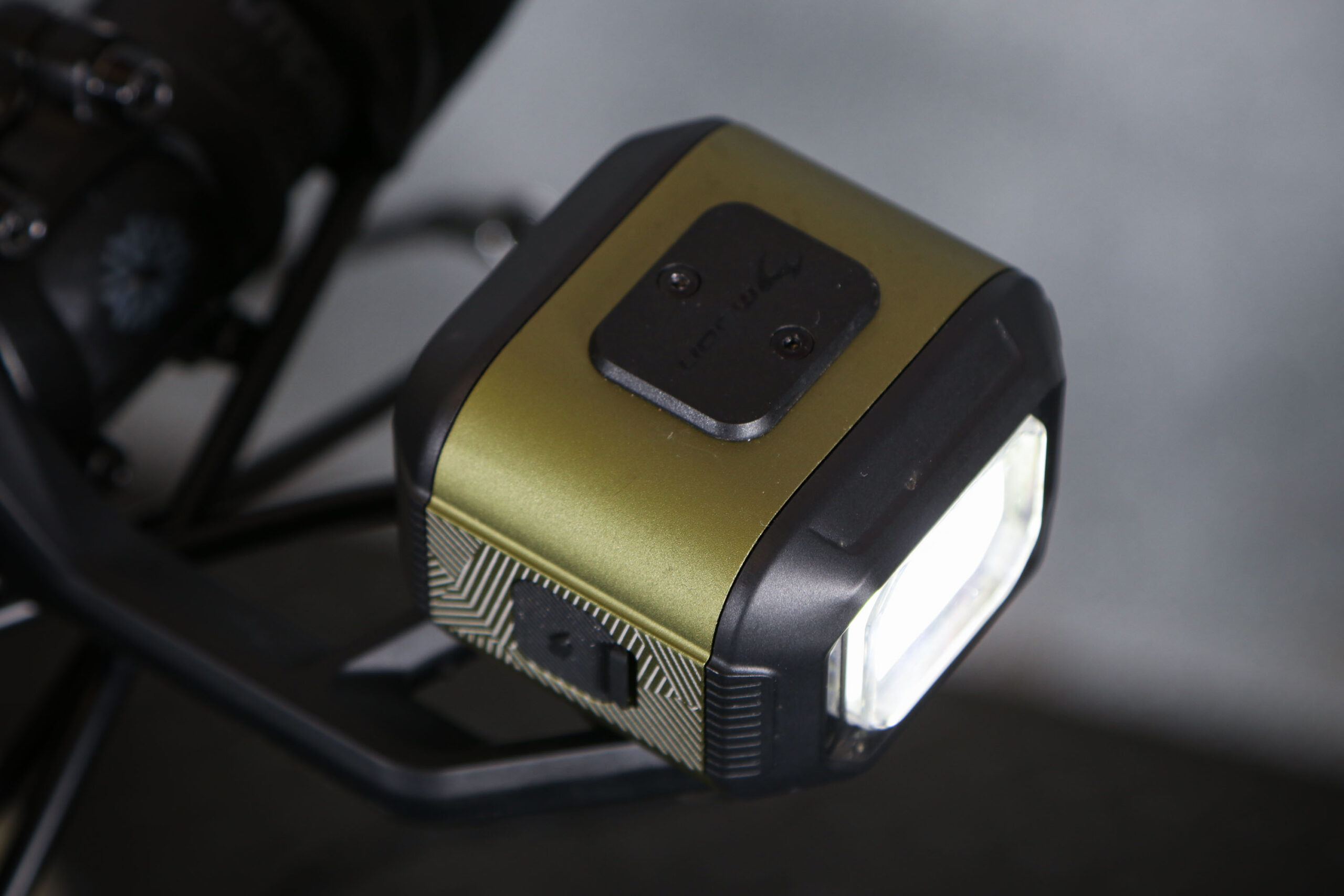
The Moon Titan Max 1700 has a right way up and a wrong way up thanks to a City Beam that’s shaped with a horizontal cutoff to avoid dazzling oncoming road users. You might need to swap the mounting interface (the part that connects to the mount) from the top to the bottom of your light, depending on whether you want to run it above or below the out-front handlebar mount.
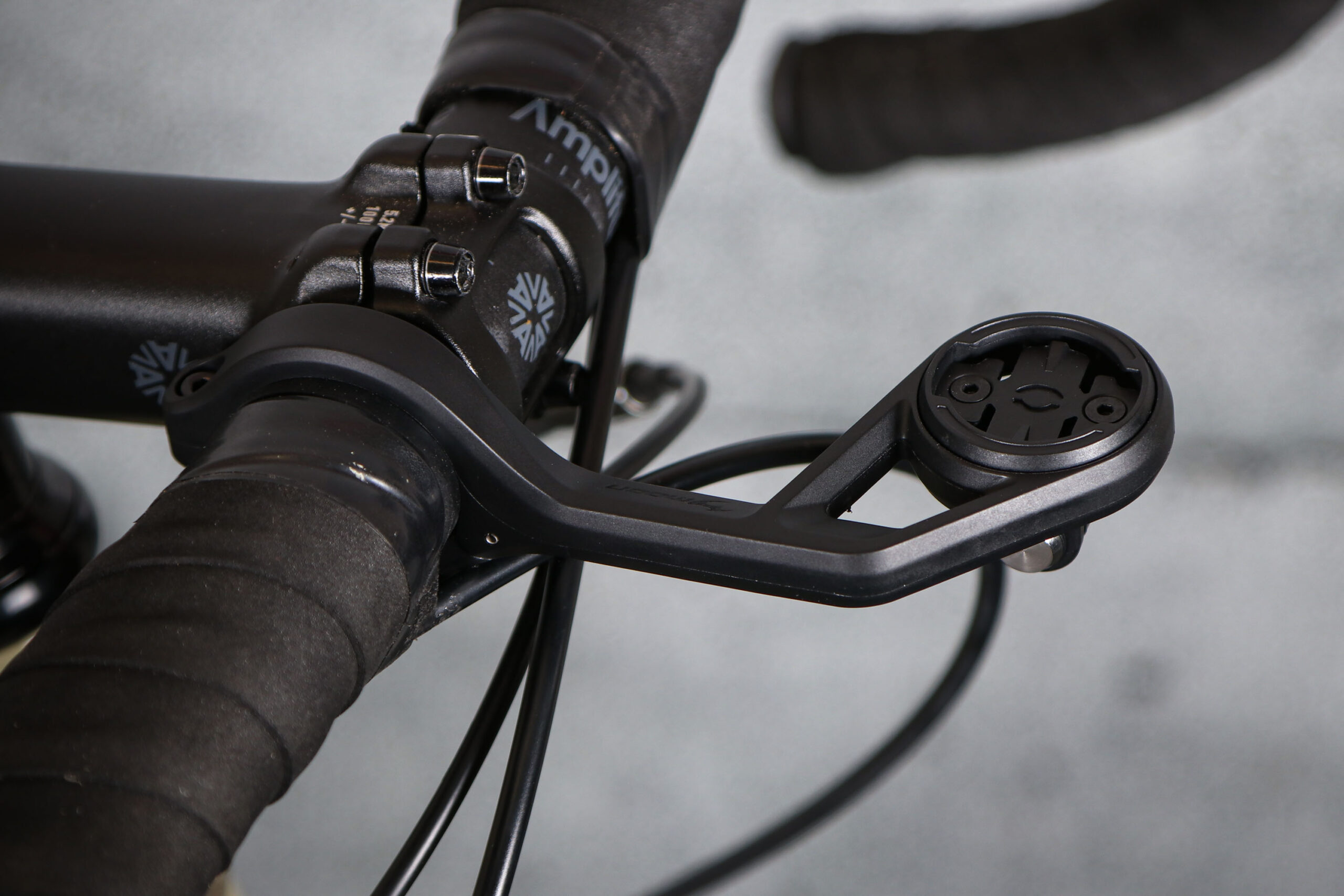
Be warned, shifting that mounting interface requires the use of 2mm and 1.5mm hex keys (they come in the package). In my experience, the heads of 1.5mm hex screws can be really easy to round. They’re the devil’s work – and that’s before you drop one on the floor. Still, you’re unlikely to need to do this job more than once so it won’t be a big issue.
You’ll need to refer to the instructions for a full explanation of how the Moon Titan Max 1700 operates, but you’ll get the idea in no time. All operations are via a single button.
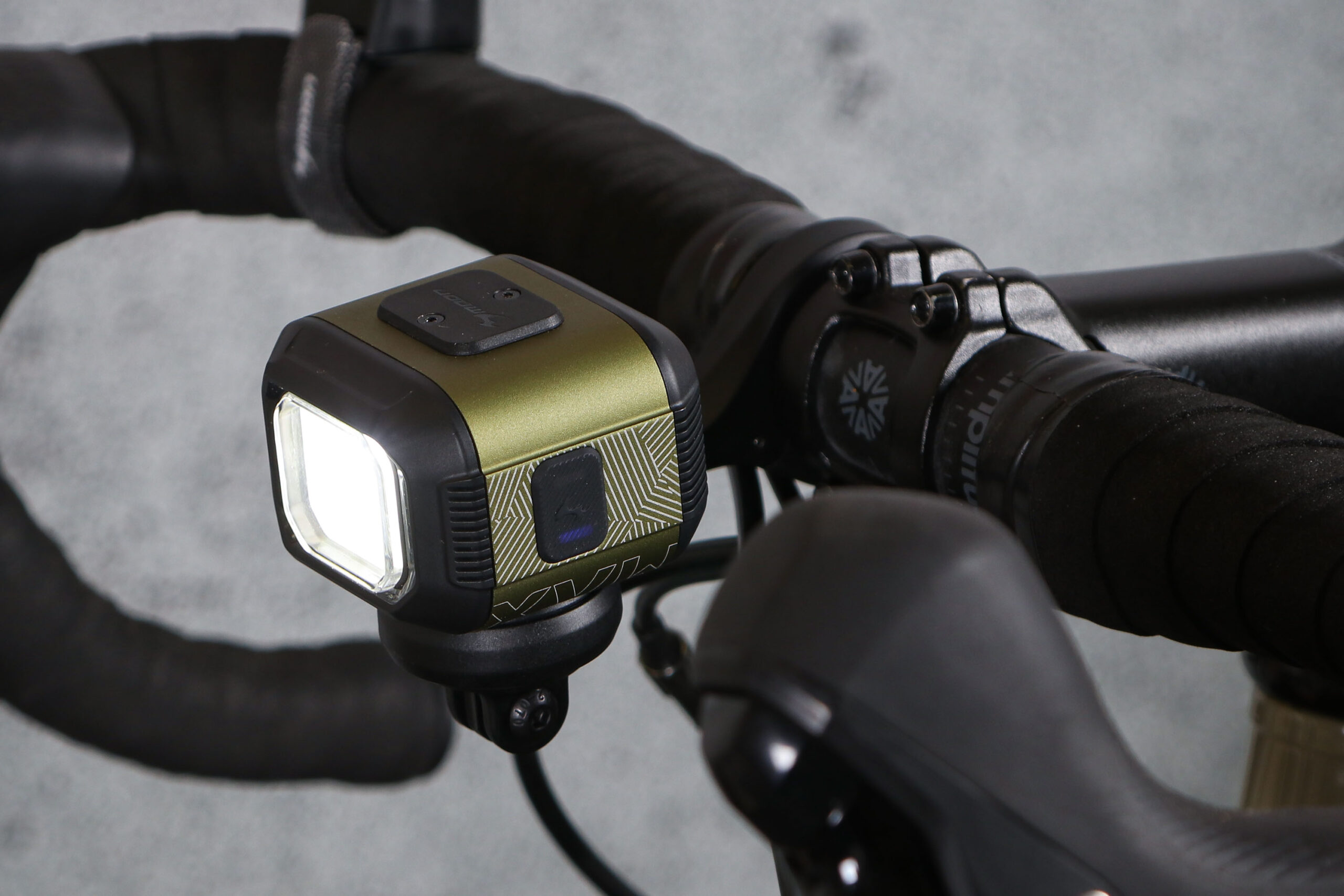
I won’t bore you with too many details, but switch it on and you can either be in ‘City Beam’ or ‘Highway Beam’ and you swap between them by double-clicking the button.
If you’re in ‘City Beam’ (the one with the cutoff top) you can cycle through five different modes – two steady and three flashing – with a single click for each change.
If you’re in ‘Highway Beam’, you can swap between two steady modes – again, with a single click.
You’re unlikely to swap between the various City Beam modes as you ride. Going through those flashing modes would drive you nuts. No, just choose your mode and stay there.
For night riding on unlit roads, I used the Highway Beam, flicking between the upper and lower settings depending on conditions.
By default, Mode 1 gives out 1,700 lumens, while Mode 2 offers 1,000 lumens when fully charged. You get a decent beam – pretty focused with some peripheral lighting to warn you about anything lurking at the side of the road. You also get a small amount of visibility from the sides – not much, just a little – thanks to a slightly protruding lens (the top of the lens doesn’t extend from the body of the light, so it doesn’t distract you).
In Mode 1, you get a good view ahead on unlit roads – easily enough to show the way on tarmac, even when you’re riding at speed. You never find yourself nervously feathering the brakes for fear of what you can’t yet see.
Mode 2 doesn’t offer the same level of vision, but it’s sometimes the more appropriate option, depending on conditions and your speed. Plus, of course, it gives you longer run-times.
I did find that the beam faded a bit just ahead of the front wheel, but not so much as to be off-putting. On the whole, I was pretty happy with what’s on offer here for my evening rides, which are never more than a couple of hours in the winter.
I mentioned that all operations are through a single button (which is also a battery indicator and a mode indicator). Depending on where you have the light mounted, that button could be hard to access, which is where the wireless remote control comes in. Mount it to your handlebar with a hook and loop strap and you’re good to go.
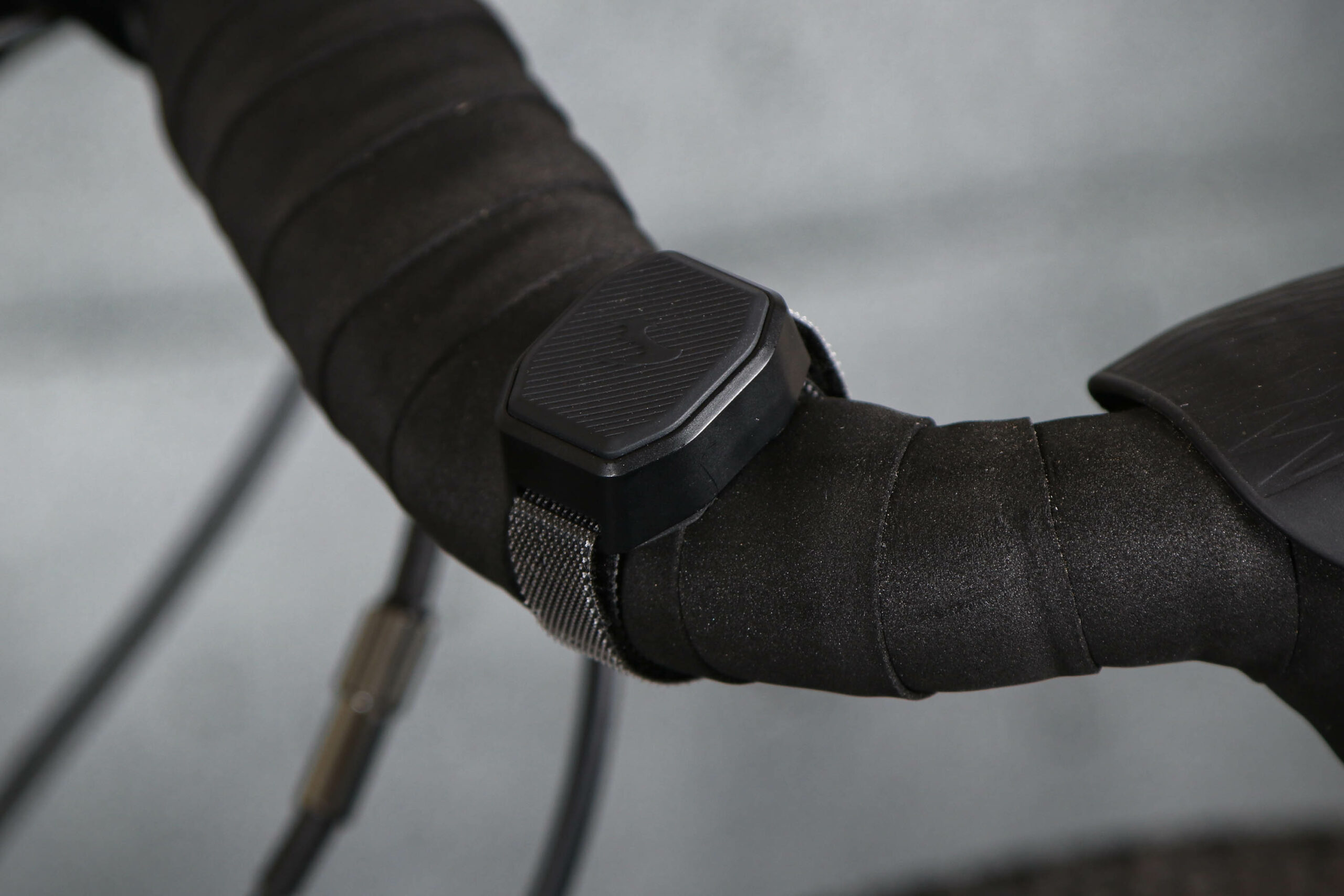
Like the button on the light itself, the remote control allows you to double-click between Highway Beam and City Beam, and to change modes within each of those.
When you swap between Highway Beam and City Beam, you’re first taken to the highest-output steady mode of the new option, so if you’re in Mode 1 of Highway Beam, for example, a single click will take you to Mode 2 of Highway Beam and a double click will take you to Mode 1 of City Beam. Sorry if this is getting a little confusing, but my point is that you can switch between steady modes without going into flashing modes.
I thought double-clicking the remote control while on the move would be difficult – bumpy roads and all that – but this isn’t the case. The button is large and gives a distinct ‘click’ when pressed. If you don’t hear it, you’ll feel it. I never went for a double-click and ended up with a single instead, or vice versa.
When I went to reuse the light after a few days away, the wireless remote control wasn’t working, which surprised me. What I hadn’t done was read the little note on the instruction sheet that says it’ll disconnect from the light after 48 hours of inactivity.
Pairing the remote control with the light again takes seconds; you just need to remember that it’s going to happen. It’s a little bit annoying, but it’s never going to be disastrous. Even if you forget the (very simple) pairing instructions and need to look them up later, you can still use the light without the remote control.
If you want to change light levels, Moon’s Variable Lumen System allows you to do that fairly easily via the Titan Max 1700 itself (there’s no need for a smartphone app). Again, you’ll need to refer to the instructions, but it’s straightforward enough. Naturally, lower lumens equal longer runtimes.
Incidentally, you can’t alter the lumens of Highway Beam Mode 1 – the highest output – which is a little annoying if you don’t want all that power every time you switch away from City Beam. I’d have liked to be able to switch directly from City Beam to a medium-output Highway Beam, but you need to go via the non-adjustable higher setting (so that’s three clicks in all, if you’re keeping up with all this).
You’ll get a maximum runtime of 140 hours if you set Day Flash to 100 lumens. At the other extreme, you’ll only get around two hours in Mode 1 (1,700 lumens) of Highway Beam – the highest output – or around three hours in Mode 2 (1,000 lumens). A steady 800 lumens in City Mode will get you about four hours. Air temperature will come into it as well, and you’ll notice some drop-off in output as the battery runs down.
I’m talking about levels of light you can use for riding here. I ran the light in its brightest setting in 7°C and it was still plodding on at four hours, but you get a usable amount of light for about half that time.
Is that long enough? It depends on the riding you do, of course. For my riding in the dark – to and from work, the occasional evening jaunt – it worked really well. If you’re riding from dusk till dawn, it won’t be.
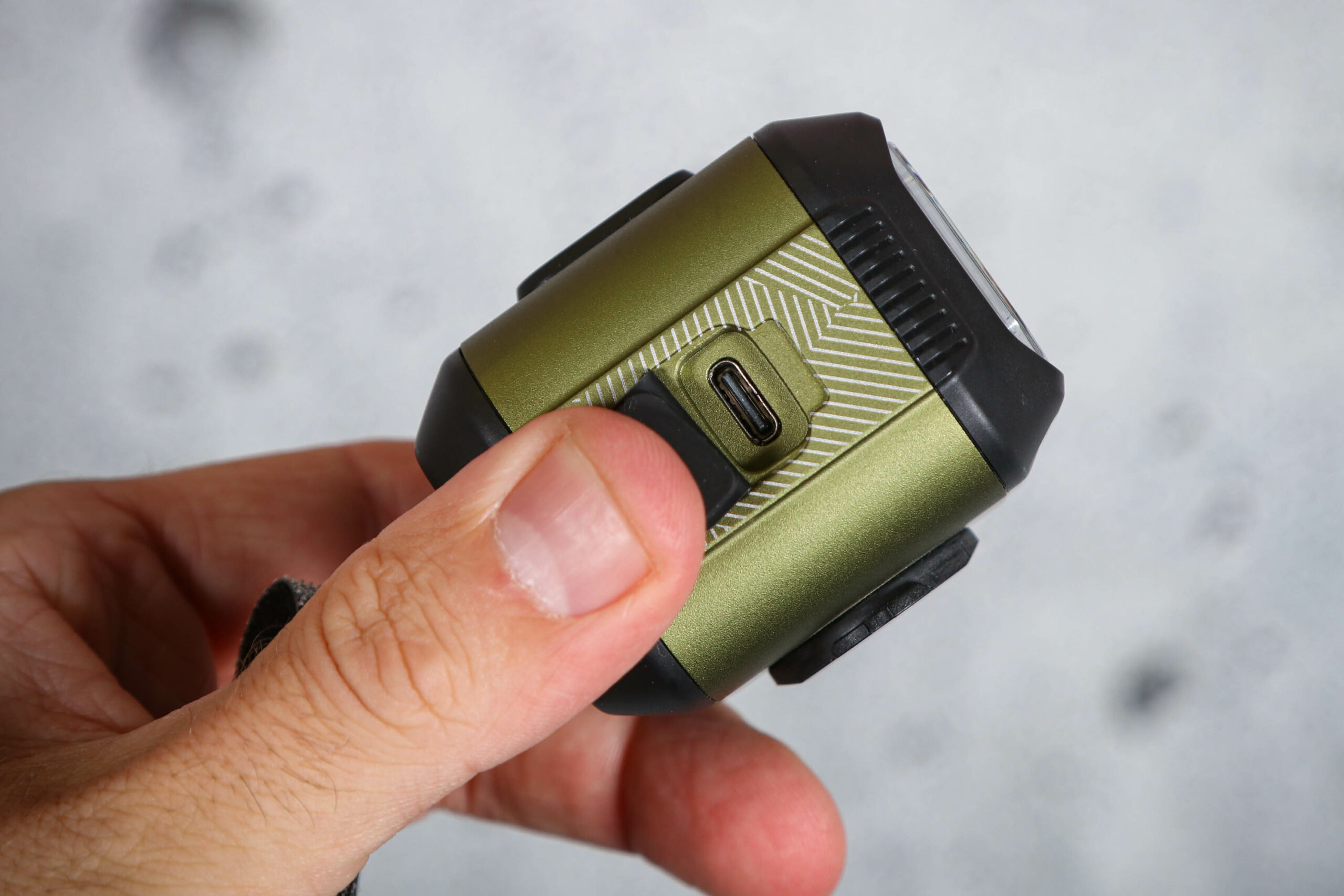
One other feature that might be of use is that the Moon Titan Max 1700 can share battery power with your smartphone, GPS computer or another electronic device via its two-way charging feature. In other words, if you find yourself with no juice in your phone, you can steal some from the Titan Max 1700, as long as you have the relevant cable with you.
Speaking of such things, you can recharge the Moon Titan Max 1700’s built-in lithium polymer battery via USB-C cable or universal wireless charging pads and stations.
The battery level indicator tells you when the charge is 100%, 50%, 25% and 10%, as long as you remember the slightly unconventional colour coding (fully charged is blue, going to green at 50% – I couldn’t get my head around that).
> See and be seen with our top front bike lights for on the road, trail or path
The Moon Titan Max 1700 is well-priced, given its solid construction and power. If you’d like a light for commuting or general evening riding on lit roads, you don’t need to spend as much as this. The £59.99 Knog Blinder 600, for example, does a great job, as does Moon’s own £29.99 Meteor.
Models that show the way on unlit roads are a better comparison, and the Moon Titan Max 1700 is brighter than most at this price.
Knog’s Blinder 1300 (£99.99) isn’t quite as bright (in its brightest setting) but it’s strong and durable, and offers a range of different beams.
Cateye’s AMPP1700 was £139.99 when we reviewed it a year ago, but you’ll find it far cheaper online. It’s well built and easy to use, although we didn’t feel that it stood out. The waterproof rating isn’t that high, for example, and the lowest available full beam mode is 400 lumens, whereas you can set the Moon Titan Max at right down to 100 lumens if you want a long run-time.
As I said up top, there’s a lot to like here. The Titan Max 1700 is compact, the build quality is high, you get the option of a beam pattern that’s specifically designed not to dazzle oncoming road users, and the price is reasonable. The runtime isn’t massive in the brightest mode, but there are plenty of other settings to choose from, and you can customise the output to suit your needs.
road.cc test report
What does the manufacturer say about this product?:
The Titan Max front light comes with ‘Highway’ and ‘City’ beam options, allowing you to adjust the beam shape depending on where you’re riding, plus various flash options (including a ‘day flash’ mode). You can also adjust the output – the strength of the beam – according to your preferences.
A wireless remote control allows you to swap between modes without moving your hands from the handlebar.
You can recharge via a USB-C cable or universal wireless charging pads and stations, and it can share battery power with your smartphone, GPS computer or other electronic device via the two-way charging feature.
The light can be mounted above or below the included out-front mount, allowing integration with computers and cameras.
Available in Black, Army Green and Orchid Purple.
Tell us some more about the technical aspects of this product:
Moon lists these features:
* Dual Range Beam
* Max. lumens: 1700LM (FL-1 tested)
* Intelligent operation (Intelligent Motion Sensing Function)
* Total angle: 46° Spot angle: 30°
* Beam distance: 225M
* Day flash mode
* Light mode memory
* CNC aluminium heat sink casing body
* Overheat protection system
* Quick-release handlebar mount (31.8 – 35mm)
* Water resistant (IPX7)
When Moon says “quick-release handlebar mount”, it means that the light can be removed by hand with a quarter turn. The mount’s attachment to the handlebar isn’t quick-release; it’s bolted in place.
Any further comments on quality?:
The build quality is high, with a CNCed aluminium body (available in three different colours).
Any further comments on performance?:
You’ll turn it on without any trouble, although getting it to do exactly what you want can be a little more complicated. You’ll need to refer to the instructions to find out how to pair the remote control, adjust the light output of each mode, interpret the battery power indicator, and so on.
The instructions are two sides of an A4 sheet of paper, mostly pictorial, so they’re hardly arduous.
The battery indicator goes from blue (100%) to green (50%) to red (25%), which seems counterintuitive to me. Surely it should be green when you’re good to go. Anyway, small point.
How does the price compare to that of similar products in the market, including ones recently tested?:
If you’d like a light for commuting or general evening riding on lit roads, you don’t need to spend as much as this. However, looking at lights that show the way on unlit roads, the Moon Titan Max 1700 is brighter than most at this price.
Any further comments on design and usability?:
You’ll turn it on without any trouble, although getting it to do exactly what you want can be a little more complicated. You’ll need to refer to the instructions to find out how to pair the remote control, adjust the light output of each mode, interpret the battery power indicator, and so on.
The instructions are two sides of an A4 sheet of paper, mostly pictorial, so they’re hardly arduous.
The battery indicator goes from blue (100%) to green (50%) to red (25%), which seems counterintuitive to me. Surely it should be green when you’re good to go. Anyway, small point.
Any further comments on the clamp?:
If you have a round handlebar (25-35mm), it’s very easy to fit the out-front mount that’ll take both the Moon Titan Max and a Garmin, Wahoo, or Bryton GPS computer.
It is a little more complicated if you have a non-round, aero-profiled handlebar, but there are various solutions. You get an adaptor that’ll fit the light to any GoPro-style mount, for instance, and the mount interface will also fit in Garmin quarter-turn mounts.
You can move that mount interface from the top to the bottom of the Moon Titan Max, depending on where/how you’d like to mount it. The tiny screws with 1.5mm hex heads are a bit of a pain, but it’s all doable.
The remote control attaches to your handlebar in seconds via a Velcro-style (hook and loop) strap.
Does the light have a waterproofing rating? If so, what is it?:
IPX7
Any further comments on waterproofing?:
The Moon Titan Max 1700 is rated to IPX7, which means it can be immersed in a metre of water for 30mins with no ill effects. We all get caught out in the rain occasionally, but unless you find yourself at the bottom of a river, you should be fine.
Any further comments on battery life and recharging?:
It’s a lithium polymer battery that’ll last up to 140 hours in the ‘day flash’ mode. That’s getting on for six days.
At the other extreme, if you go for 1,700 lumens (Mode 1 of the Highway Beam), you’ll get about two hours of usable light. I tested this at a temperature of 7°C and was still getting some light out of it at four hours, but by no means enough for riding. It’s a question of judgment, but I’d say two hours at this level is about right for riding.
Come down to Mode 2, about 1,000 lumens, and you’ll get around three hours.
You can adjust the Titan Max’s output via Moon’s Variable Lumen System to get longer runtimes.
You can get between four and 20 hours of steady light in City Beam, depending on the brightness you choose.
As usual, runtimes will depend to some extent on temperature.
Recharging from flat takes around two hours via USB-C.
Any issues with durability?:
The casing is CNC machined aluminium. It hasn’t picked up any noticeable bumps or bruises during the review period.
Any further comments on weight?:
The light itself weighs 150g and the out-front mount is another 40-50g (depending on how you set it up). Pfft! I’m not going to be too concerned about that amount of weight for general riding, to be honest.
Did you enjoy using the product? Yes
Would you consider buying the product? Possibly
Would you recommend the product to a friend? Yes
Use this box to explain your overall score
For general urban use as well as riding on unlit roads, this is a strong proposition, and the price is good too.