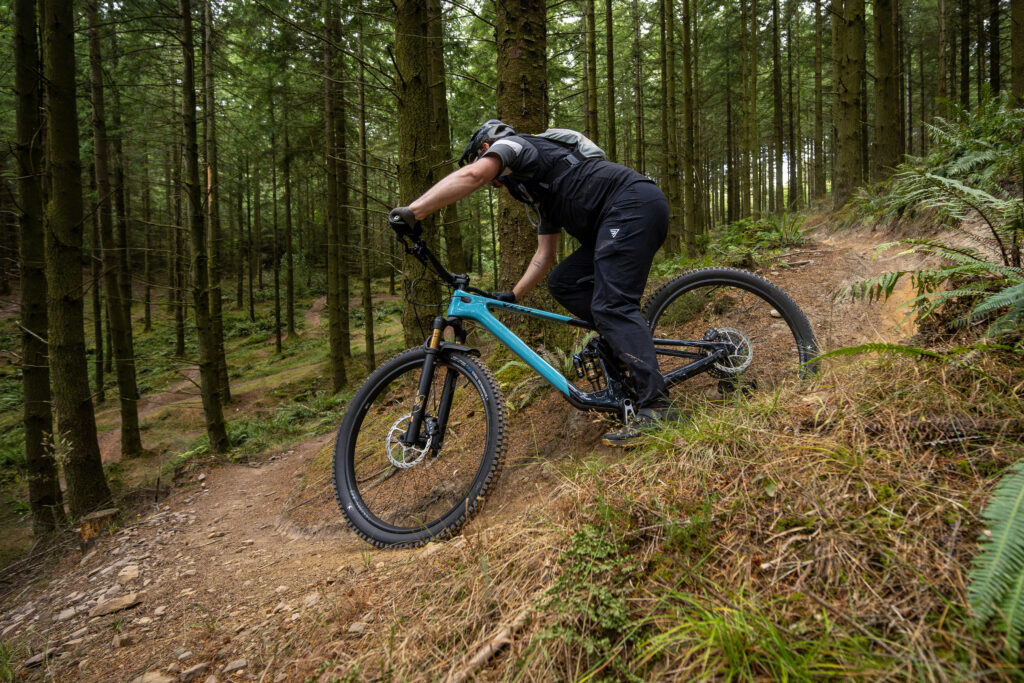

Yeti’s Sixfinity suspension platform has been making its way across the brand’s range, as we saw with the LT just last month. But today, the brand has unveiled the MT, a trail-going machine that whittles the Sixfinity platform down to deliver 140mm of travel. The result is a mega dynamic and impressively versatile machine that’s had me wanting to come back for more.
To get one thing out of the way, the SB140 is no more, as the new MT replaces it outright. Although this bike gets less suspension travel than its enduro-going brethren, it has a very, very similar look.
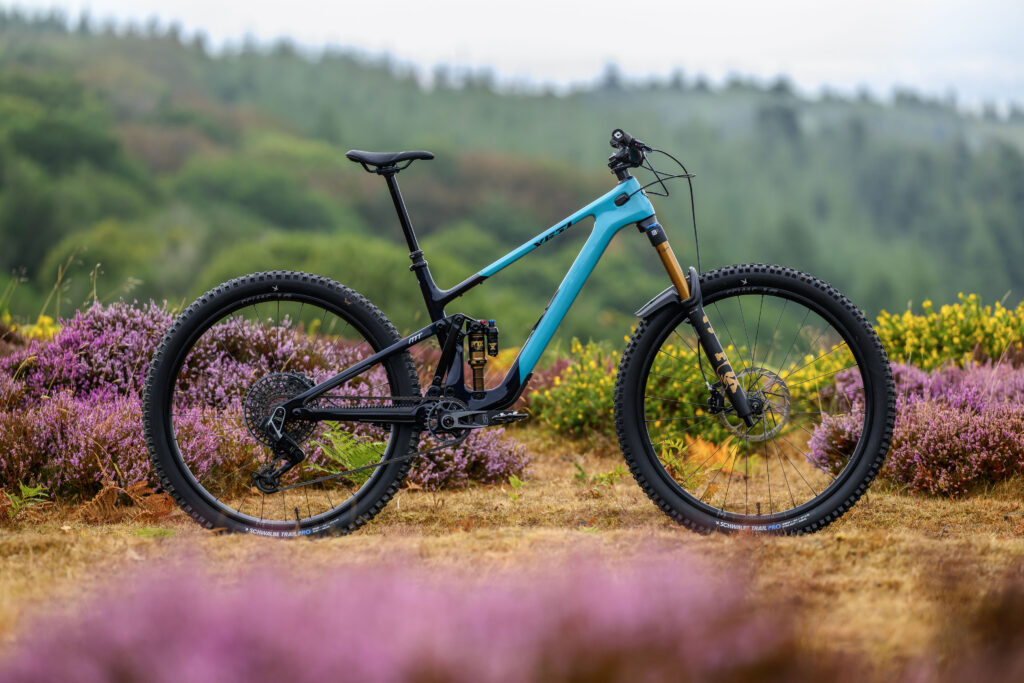
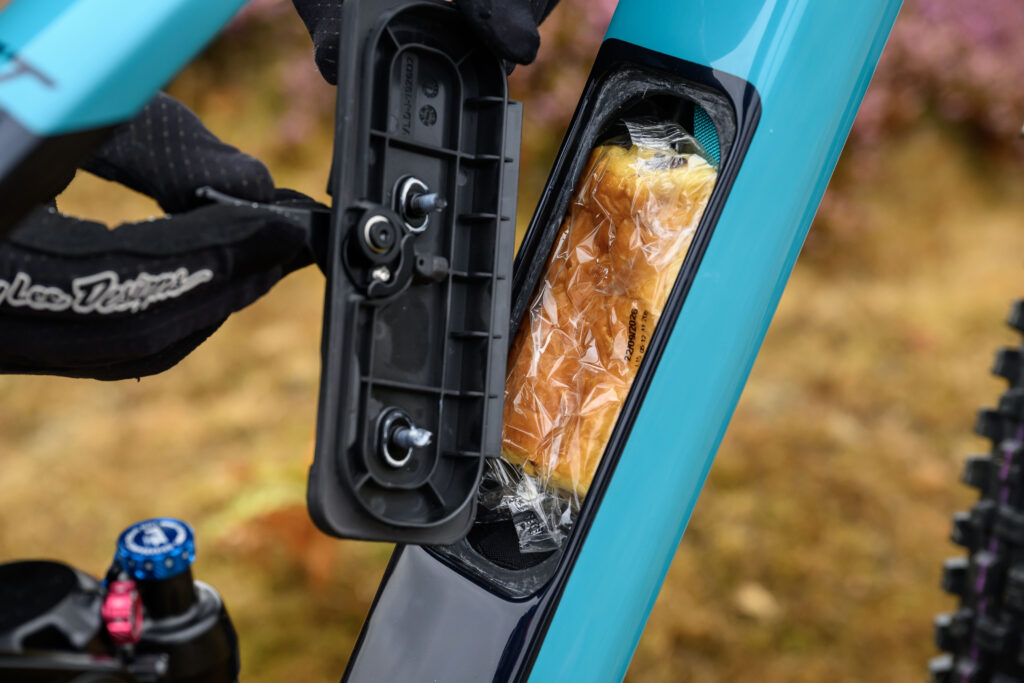
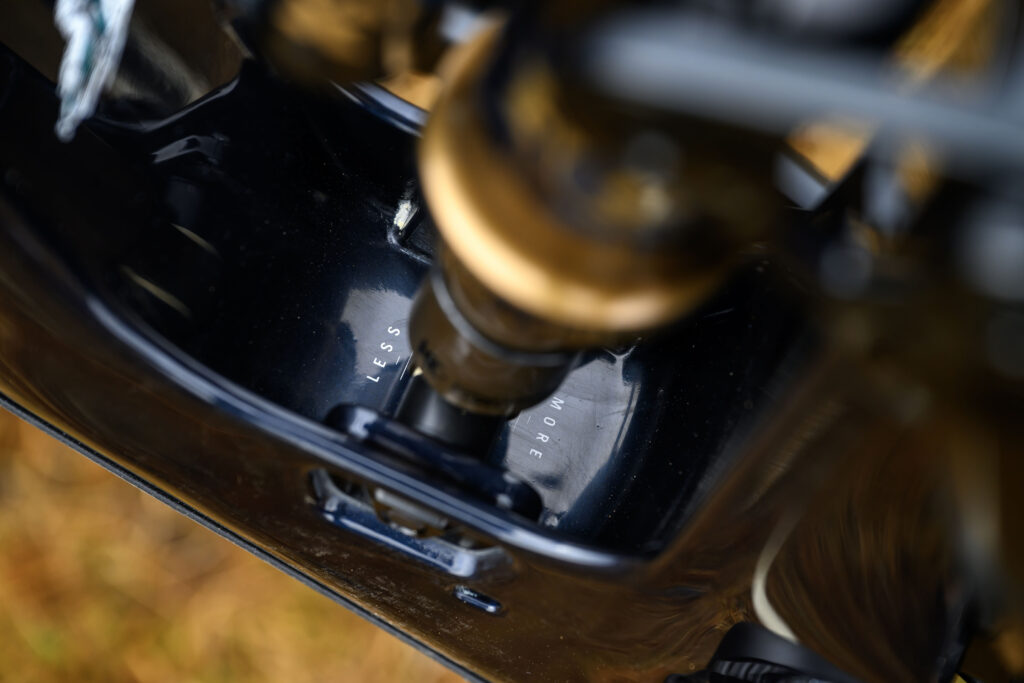
And I’m not just talking the silhouette here; I’m talking features. Each model available dons Yeti’s uber-posh Turq-series carbon fibre frame and, like the LT, the MT boasts storage in the downtube (handy for storing pain au chocolat) and the small flip chip at the lower shock mount that allows the user to dial the rear suspension’s progression. However, it doesn’t get the modular dropouts that allow for chainstay adjustment, nor the geometry-adjusting flip chip, or the ability to swap the 29-inch rear wheel in favour of a 650b wheel.
Instead, the MT has an air of simplicity as Yeti has chosen to forgo the plethora of adjustments for a comparably limited bike, in the adjustment department, that is. But when it comes to trail riding, I’m very much a set-and-forget rider, and I’d go as far as to say that many people are the same; rarely fiddling with flip chips and geo adjustments per trail. Such adjustments make sense on an enduro bruiser, where geometry tweaks could mean the difference between a podium and wasted seconds, but for a trail workhorse, simplicity is no bad thing.
So yes, this is a purpose-built 29er, which I’m sure will put a few off, but it is another move that makes sense for a trail bike that one day might be covering big miles, the other razzing winch and plummet joyrides. On top of those 29-inch wheels, the MT rocks 160mm of suspension at the front combined with 140mm at the rear, so a trail bike, this most definitely is.
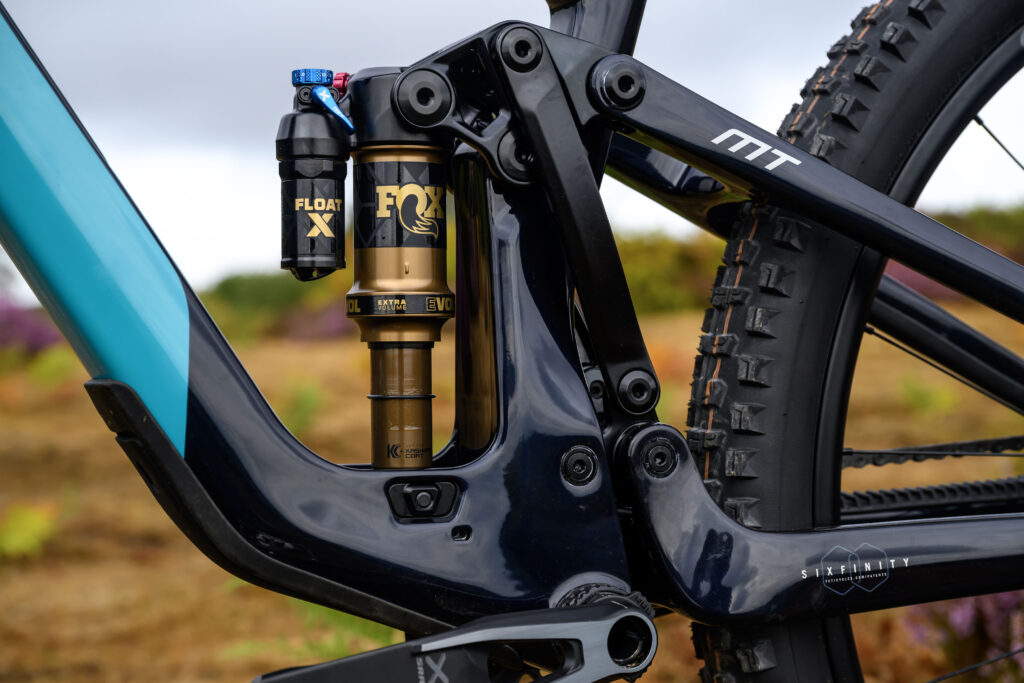
Speaking of suspension, Switch Infinity isn’t a thing for the MT. Instead, it uses the Sixfinity system that we’ve seen popping up on all of Yeti’s most recent bikes, after 10 years in development. It’s a neat system too, as it allows the brand’s designers a greater range of adjustment and suspension tuning before settling on the linkage’s final positions.
As a result of all of that tweaking, the MT produces a mental 204% anti-squat in the lower gears. This does drop after the sag point, thankfully, but rather gradually, compared to the LT. But like that bike, Yeti has also played with the anti-rise to boost traction under heavy braking loads.
Continuing with the frame features, there’s full internal cable routing that doesn’t slither through the headset, and it’s guided by tubes that are moulded into the carbon. So home mechanics will be able to shove a cable into one end of the bike, and it’ll pop right out of the other.
There’s then a threaded bottom bracket, an accessory mount under the top tube and space for an air tag just in front of the BB – handy if you’re spending Yeti money.
As for the geometry, Yeti has got it pretty dialled on the MT. The large frame I rode boasts a 480mm reach, a 64.5-degree head tube angle, a 77-degree effective seat tube angle and a 446mm chainstay. With that geometry, I’ve definitely not found myself wanting for a flip chip.
Yeti MT XO Factory – Componentry
The XO Factory model I rode will set you back £9,099. That’s no small amount of cash, but thankfully, Yeti has loaded it with top-shelf stuff across the board.
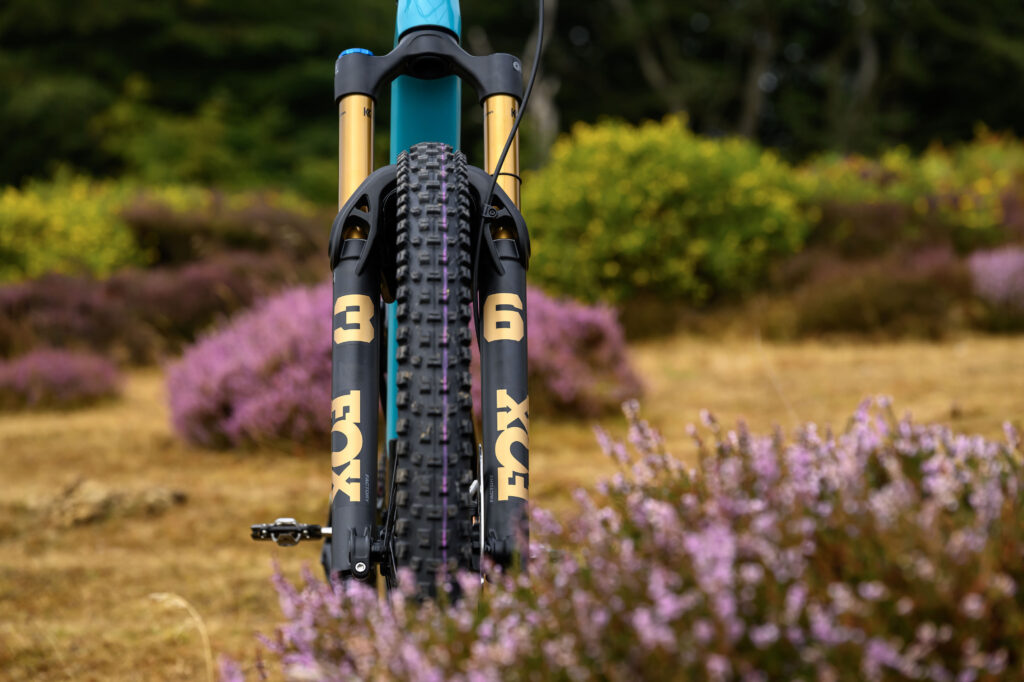
Suspension is damped with Fox’s Factory 36 up front, and there’s a Float X Factory shock. Both of these are in their most modern guises.
Shifting and braking are provided by SRAM with an XO T-Type AXS drivetrain and the Maven Silver brakes. I’m told that the brakes come with the B-spec levers, so they’ll offer more modulation than original Mavens. There’s then a 200mm rotor up front, and a 180mm disc at the rear.
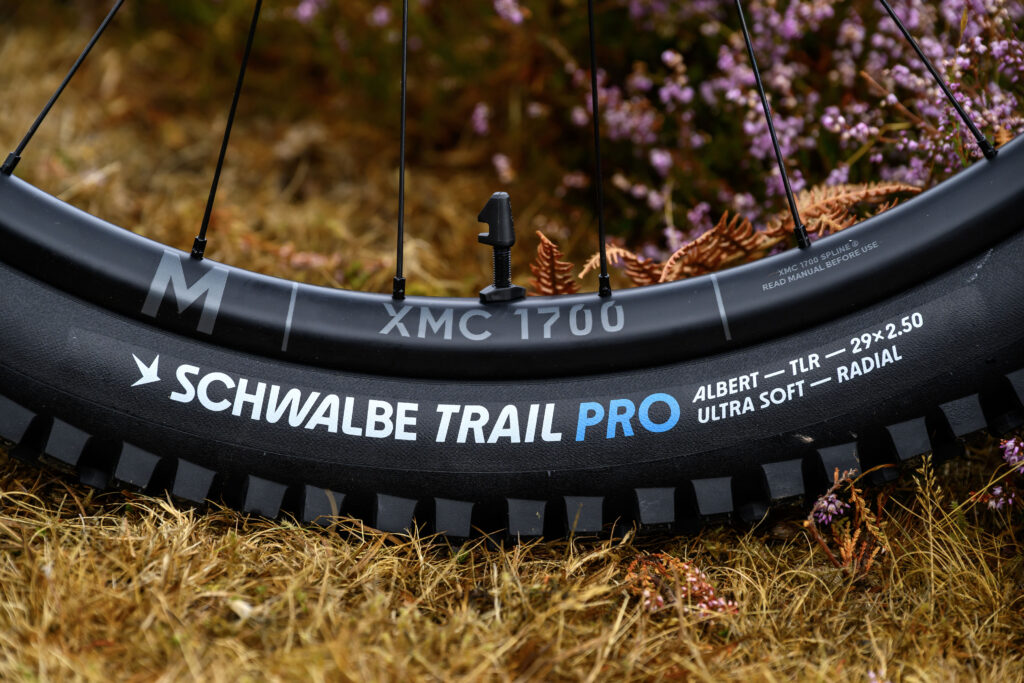
The bike then rolls on a pair of fancy carbon DT Swiss XMC 1700 wheels, Degrees of Freedom included. They’re wrapped with Schwalbe’s Albert up front and Romy at the rear. Both of these come in their Radial Trail constructions, which makes sense for this type of bike. However, I might be one of the only people around who’s not the biggest fan of the Radial tech. It’s nice to see, nonetheless.
Finally, there’s a carbon handlebar from Yeti, a new Burgtech Enduro MK4 stem, and a Fox Transfer Performance Elite dropper post with generous sizes across the board. Large frames, for example, come with 210mm of travel.
If just over £9k is a bit too rich for your blood, the 90/XO Factory build will set you back £7,499, and the frame only is £4,399. Definitely premium prices here, but this is a Yeti we’re talking about.
Yeti MT XO Factory – Early impressions
If you’ve seen any of my first ride reviews on Yeti’s Sixfinity bikes, you’ll already know that I’m fairly fond of the Sixfinity system, to say the least. But I reckon that whittling it down to a 140mm, non-assisted trail bike poses more of a challenge, as a trail bike is arguably expected to perform over a wider range of riding. Good news for the MT is that Sixfinity has most definitely put its money where its mouth is.
When riding the LT, I was blown away by how well it pedals, and the MT takes the same character, but shifts it around a little. The MT is noticeably more comfortable, but that’s because there’s a touch more movement in the suspension under pedalling loads. While this does suck some overall efficiency, again, it makes climbing more comfortable, but importantly, the bike conjures plenty of traction. It also makes the bike comfortable while pedalling over longer distances, so it’s a mild trade-off.
In fact, even when tackling steeper gradients than I usually would, the bike didn’t break grip. It allowed me to keep the pedals turning right up until I lost my balance – no fault of the bike there.
While there is a touch of movement in the suspension’s initial stroke, it firms up beautifully when the going gets tougher. This then delivers an exceptional balance of efficiency and traction that brings something of a cross-country air to the bike, where it made me want to push that bit harder while climbing.
The geometry aids the MT’s climbing performance, too. The seat tube is steep enough to place weight centrally on the bike, and the chainstay pushes the rear wheel out the back just enough to keep both wheels planted on the ground. It’s only when pedalling up much steeper gradients that I found myself really leaning forward on the bike to keep the front wheel in check. Apart from that, the front end was direct and responsive.
The bike’s grippy but firm suspension performance while pedalling translates very well when sprinting over flatter terrain, resulting in a super sporty, spritely and eager feel. It gathers speed directly. While really putting the power down, it complements rider input, rather than works against it.
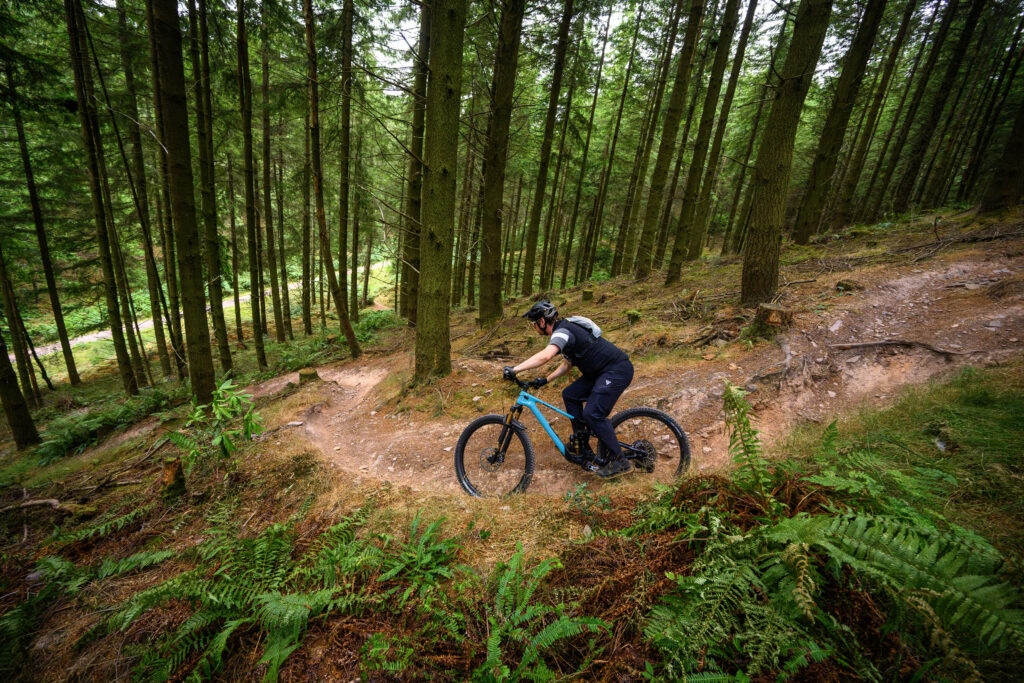
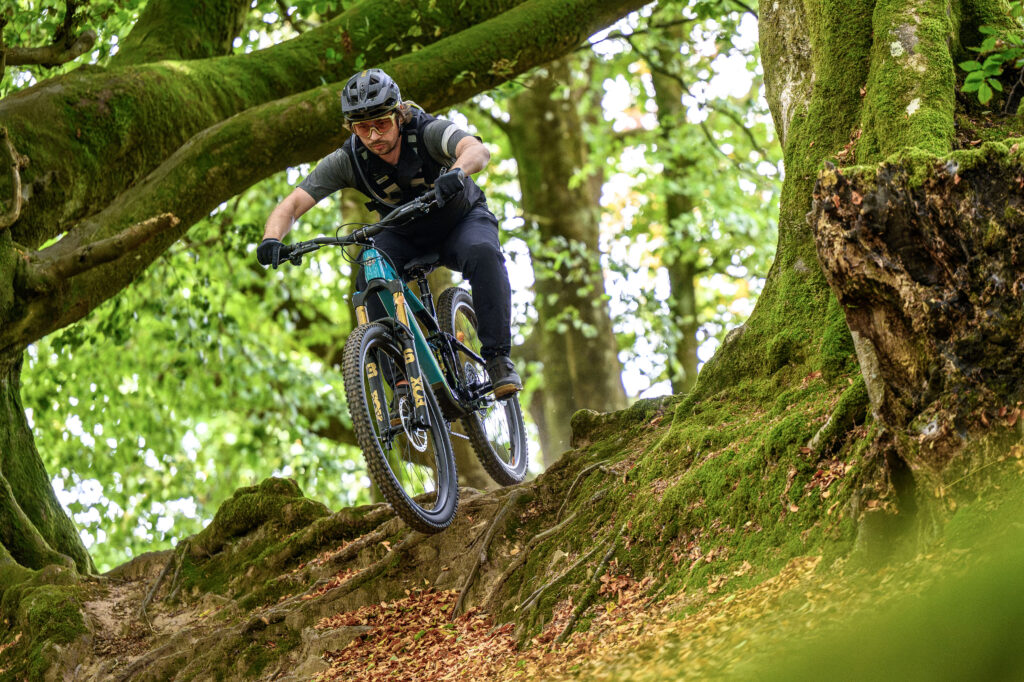
After tipping the bike into my first descent of the day, I was immediately surprised by how light it felt. It’s absolutely no featherweight, but it rides light on its wheels, keen to shift lines and up for a bit of maneuver. This graces the bike with a playful, lively, and energetic feel that felt very ‘trail’, if you catch my gist. The MT isn’t a glued-to-the-ground kind of bike; rather, it’s open to manipulation and manhandling, but without encumbering the rider.
But where Sixfinity shines on this 140mm platform is its super-wide breadth of performance. Yes, it’s great on the pedals, and it can deliver traction where it’s needed, but when smashing root-infested, chundery tech, it shows very little unwilling. That anti-squat drops away consistently and opens up the rear end to help the rear wheel track each and every trail imperfection, delivering impressive grip but, importantly, superb composure, more so than I was expecting of it, to be honest.
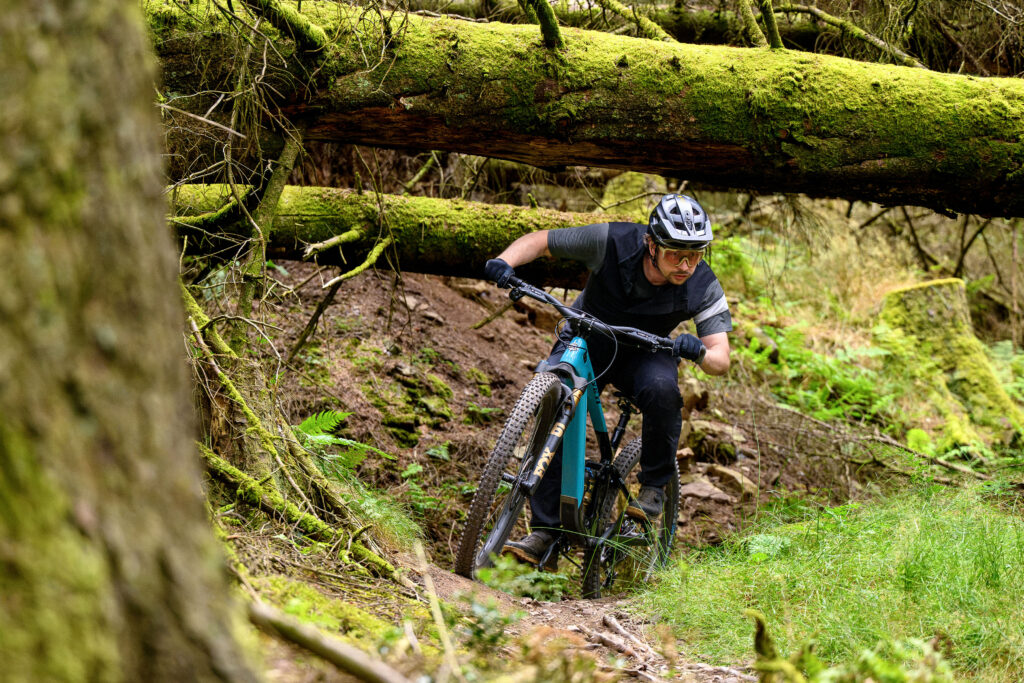
There were some moments when carrying more speed than usual through particularly chunky terrain where I felt that the bike got in over its head a touch, where the rear end felt a little jarring and a little more lairy. However, this is something that I expect can be sorted with a more attentive suspension setup, and maybe a click or two less rebound damping.
Geometry-wise, as I stated before, Yeti’s got it pretty dialled, and I’ve found it really tough to complain about. The front end rustles up plenty of support when things get a bit steeper, and the length of the bike balances stability with agility really well. It’s stable enough to get trucking at some speed, but when things slow down and get twisty, there’s still a good hint of agility and liveliness to swing the bike around. That’s without feeling as if you’re working against the bike.
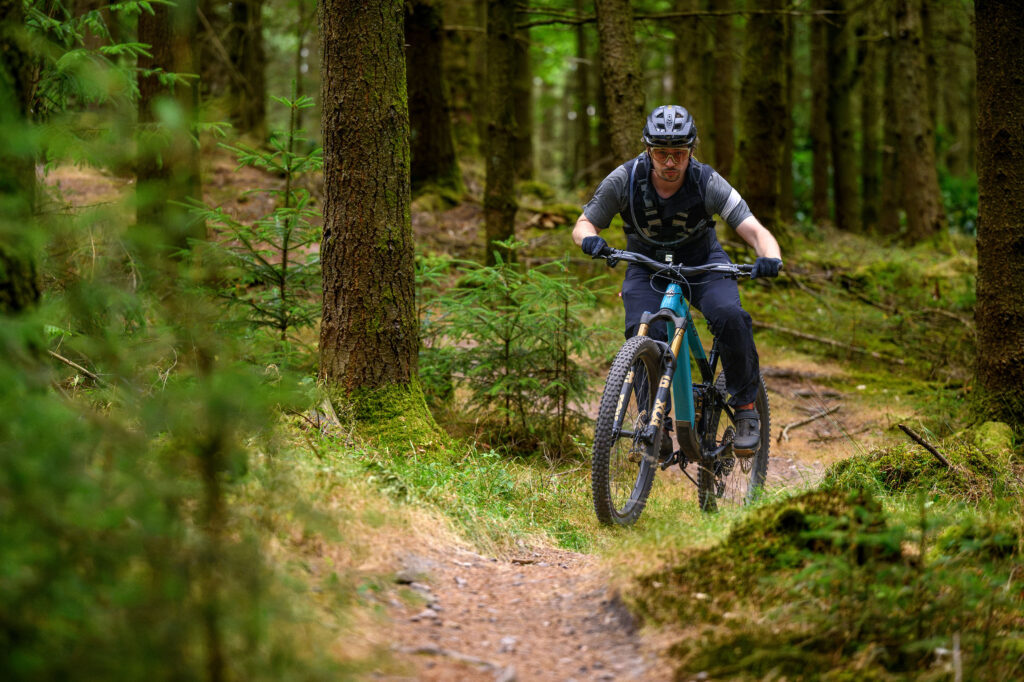
It would be good to see the level of adjustability that the LT has, though. I was a little disappointed, but not surprised to see the modular dropouts were missing, and I imagine that some people may not agree with the full 29er wheel setup, instead preferring to flip a chip, retain the geo, and run a smaller rear wheel for a boost in agility. For me though, these are just ‘nice to haves’ that I might play with once, then never touch again. But that comparably lacking adjustment does nothing at all to diminish the MT’s stellar ride quality.
Yeti MT XO Factory – Early verdict
This is a Yeti, so it isn’t a cheap bike. But here, any potential customer is paying for the performance of the Sixfinity linkage, and to say that I’m a fan is an understatement. As I said in my LT first ride review, it’s a shame that the performance is gatekept behind such a steep price tag, but if it’s performance that you’re after, you’re going to have to pay for it in this case, and if I were in such a position to have such disposable income, I would be very, very tempted.
After 10 years in the making, Yeti has delivered an awesome trail bike experience with the MT. If it hadn’t already, the Sixfinity platform has certainly proved itself to be something rather special owing to the serious breadth of its performance. Usually, trail bikes pose something of a trade-off between pedalling efficiency and all-out descending prowess, but Yeti has managed to roll both into one bike here. It’s comfortable but solid on the pedals. It’s aggressive but easy-going on the descents. Then, it’s shaped well enough to complement its linkage’s character wherever it’s pointed.