


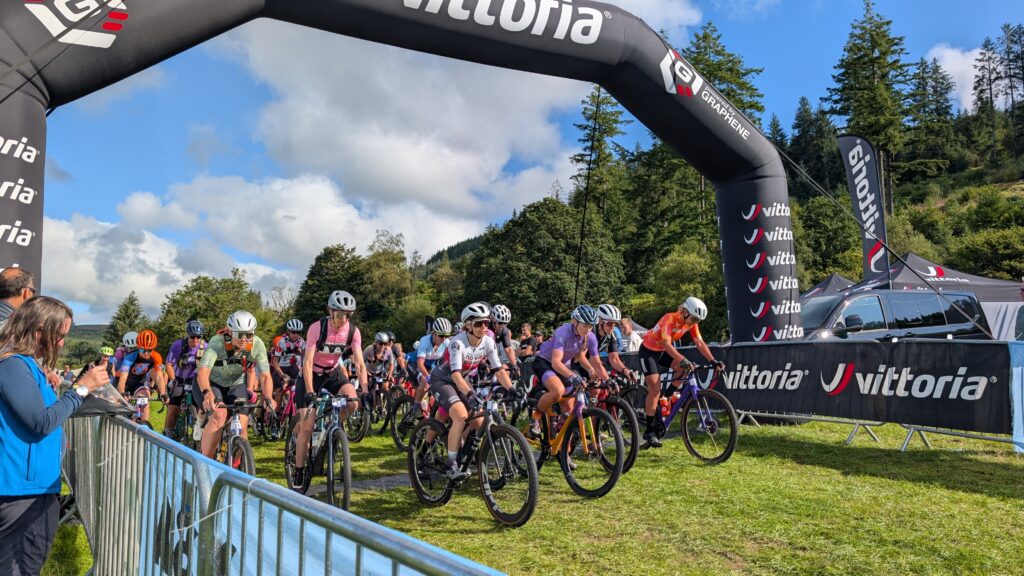

Gravel racing in Britain has its first national champions. Jenson Young (Ribble – Verge Sport) and Sophie Wright (Ribble Outliers) made history at Ae Forest in Scotland last weekend, becoming the first riders to claim the official British Cycling Gravel Championship titles. Young completed the 90km course in 2:38:32, while Wright took the women’s title in 3:09:26. It should be a landmark moment for a discipline that has spent years growing largely outside the traditional structures of British Cycling.
Gravel as a discipline has been growing in popularity for more than 10 years, and as a form of general riding for considerably longer. Early British events such as the Dirty Reiver, which held its first US-inspired event in 2016, helped establish gravel here, while its popularity has exploded worldwide in recent years.
Yet despite that boom, official gravel racing in the UK has been sparse. There are various reasons for this, including British rights of way laws and the limitations they place on course design, but one significant factor is that until mid-2025, British Cycling did not recognise gravel as a racing category. That, in turn, limited the public liability insurance options available to organisers wanting to run sanctioned events.
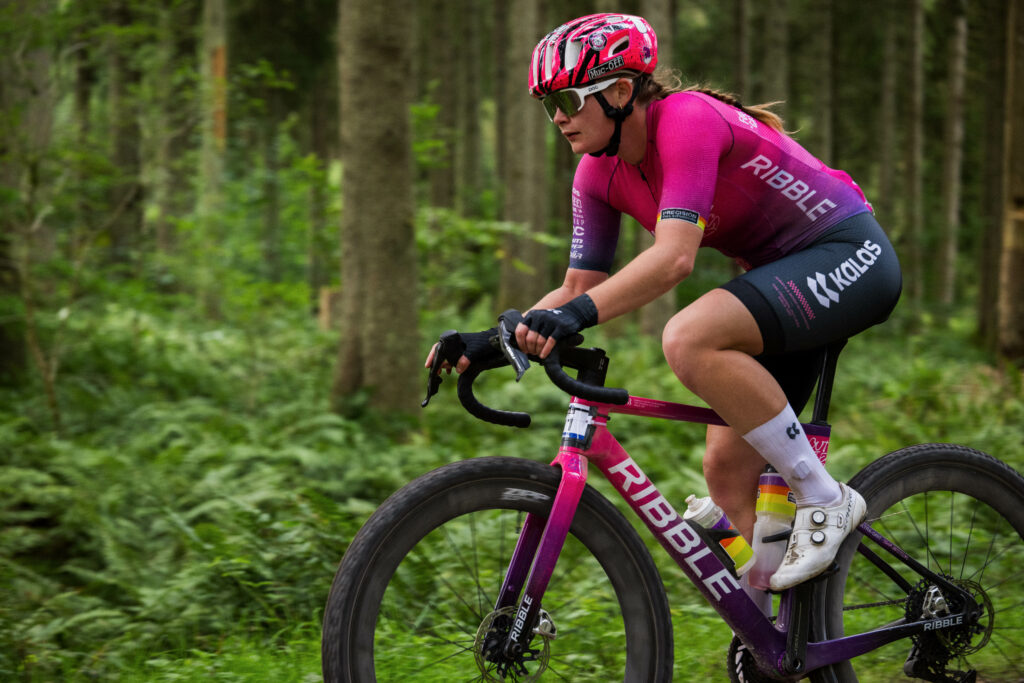
For 2026, British Cycling has finally held its first official Gravel National Championships. The event took place at Ae Forest in Scotland over the weekend of August 22-23, with riders from across the UK competing to become the first official British Champion in the Elite and age-group categories.
Like British Cycling, the UCI was also relatively slow to embrace gravel, holding its first international series and World Championships in 2022. Since then, UCI qualification events have been taking place in Great Britain since 2023, with The Gralloch becoming the country’s best-known example. Yet despite being a UCI qualification event, The Gralloch has no direct connection with British Cycling.
Having just experienced the first British Cycling Gravel Championships at Ae, and as an event organiser myself, working across everything from local events to British Cycling and UCI-standard races, I can’t help but look at the weekend and wonder what the future holds for gravel racing in Great Britain.
So why did it take so long?
I suspect the biggest factor is the maze of laws surrounding rights of way, and the specific difficulties those create for gravel racing. Gravel races generally demand longer distances than cross-country mountain biking, and in England and Wales that means navigating a complicated network of footpaths, bridleways and privately owned land.
In simple terms, it is illegal to ride a bike on a footpath, while cycling is permitted on a bridleway. But you cannot race a bike on a bridleway, even if you apply to close it, whereas you can close a footpath and then race a bike on it. Then add a network of forests with a mixture of public and private ownership, each with its own regulations, permissions and restrictions, and you have a considerable headache for an organiser.
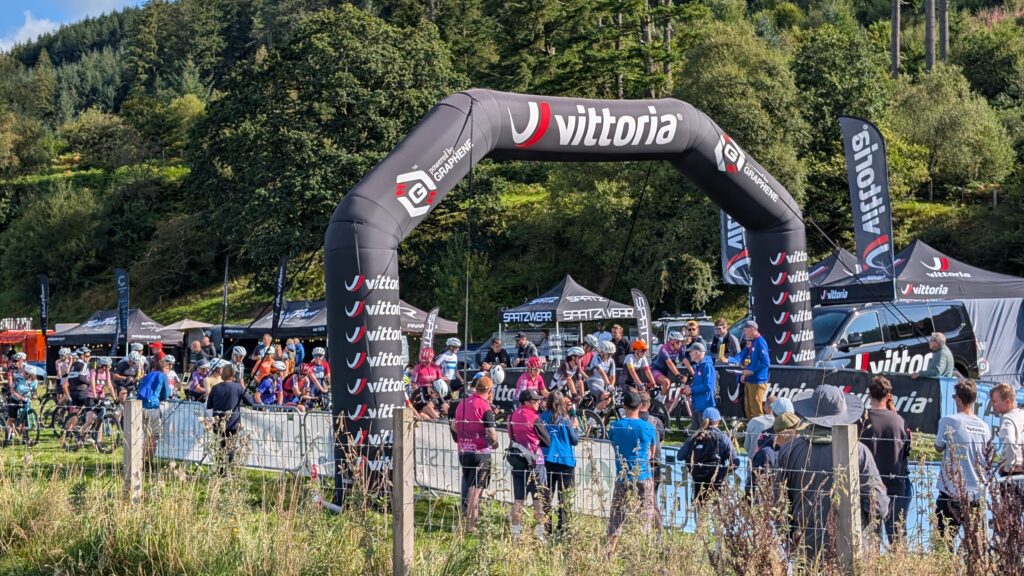
Scotland is simpler, at least in theory. A path is a path, and with landowner permission, it is possible to use it for racing. Confused? You bet.
The result is that most official races in the UK have either adopted an enduro-style timed format or been held over relatively short laps. There are exceptions, notably the Gralloch in Scotland and the Graen in Wales, which make use of a large area of Natural Resources Wales forestry, along with road closures and private land to create a course where riders can be timed competitively. But these are exceptions rather than the rule.
Gravel racing can work in the UK
The event at Ae felt relatively small, despite some fierce competition across all the races. That was probably a combination of factors. Racing was spread over two days, and the majority of those attending appeared to be there specifically to race rather than simply take part in an event. I doubt many riders travelled long distances to Scotland simply to ride 90km around Ae Forest. They came to race it, and to race it hard.
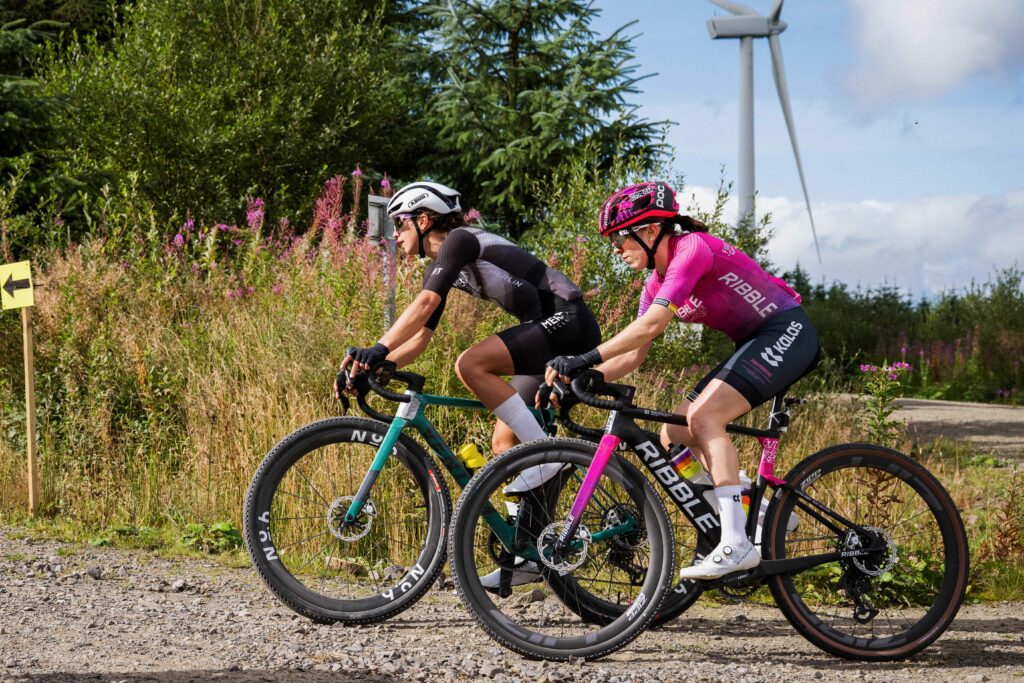
And that is exactly what happened. With some big names on the start line, the racing was fast and frantic, while the event itself was well organised. The course was punchy and technical in places, with a mixture of challenging climbs and twisting descents that felt like a very good representation of what I would describe as British gravel.
Even with a course that packed 1800 metres of climbing over 90 kilometres, Jenson Young averaged 34 km/h on the route that was 100% off-road, and Sophie Wright 28.2 km/h, which are both extremely impressive.
So the weekend proved something important: gravel racing can be done in Britain, and it can be done well. The problem is what happens next.
Where are all the races?
Despite a superb course, hard racing and a well-organised championship, there remains a huge lack of sanctioned gravel events.
Gravel is now officially recognised as a category within British Cycling, yet after this weekend there are no other gravel events listed on the British Cycling events calendar. There have only been a handful throughout the year. That seems strange when you look at what is happening outside the British Cycling calendar.
There are plenty of gravel events taking place across the country, including competitive events where riders are clearly interested in racing each other. The demand appears to exist. The riders are there. The bikes are there. The events are there.
So why aren’t there more British Cycling events?
I suspect the biggest factor is the extra hoops and costs that becoming a British Cycling event brings. Why would an organiser take on additional costs, administration and restrictions when the return from British Cycling can appear minimal, or even non-existent?
Then there are the practical problems. The event-entry system is poor, marketing support appears limited, and communication can be frustrating. For an organiser already dealing with landowners, councils, forestry organisations, road closures, insurance and everything else required to put on a race, adding another layer of administration needs to offer benefits. Otherwise, why do it?
Of course, this assumes an organiser can find suitable insurance and liability cover through another provider in the first place.
Has British Cycling missed the boat?
I think British Cycling can turn this around, but it will require more than simply adding “gravel” to a list of recognised disciplines. It needs investment, organiser support and, perhaps most importantly, a genuine interest in what riders are actually doing.
British Cycling has an enormous amount of experience and expertise, but much of its attention remains focused on the disciplines that have historically delivered Olympic medals on the track. Gravel is different. It doesn’t necessarily need to follow the same model.
The appeal of gravel is partly that it grew organically. It doesn’t need to be polished, controlled or squeezed into an existing structure. Riders can turn up, race for several hours, ride somewhere remote and have an experience that sits somewhere between road racing, mountain biking and adventure riding. Trying to impose too much structure could risk removing some of what made gravel successful in the first place. But there is also an opportunity here.
The top riders will want the chance to win an official national title and wear the British Champion’s jersey. That gives the discipline credibility and gives riders something to aim for. But a national championship cannot build an entire racing scene on its own.
Without enough entries to generate the income organisers need to produce worthwhile events, or some funding and meaningful support to help develop the discipline, there is a danger that the British Championships simply become a race between the handful of riders who are already committed to racing at the highest level.
That would be a missed opportunity. Because gravel doesn’t need to be invented by British Cycling. It already exists.
The question is whether British Cycling can find a way to support it without getting in the way. Perhaps tagging the championship title onto an existing event could work, but I doubt organisers such as Red-On, which organises the Gralloch, are likely to agree to adding extra work and headaches unless there are advantages for them to do so. I’m also a strong believer that a Championship event needs to move location annually and provide a different challenge in the same way that road racing events change, with some suiting climbers, and others more suited to sprinters.
And my race?
As for my own race in the 40-44 age group, I had to dig extremely deep on the first long 5km climb, gradually dropping off the back of the first group as eventual category winner Giles Drake dropped everyone and went on to win solo.
I worked much harder than I had hoped through the first lap, using my strengths on the descents to eventually catch back on after around 30km. But as the effort increased at the start of lap two and we hit the long first climb, I was dropped again. After a full lap largely ridden alone, I eventually finished eighth.
There was plenty learnt about where I need to improve, particularly with the UCI Gravel World Championships in Australia now only around six weeks away. But perhaps the bigger lesson from the weekend wasn’t about my own result.
British Cycling has finally recognised gravel racing, and that is a good thing. Now it needs to decide what it actually wants to do with it. Because gravel racing in Britain isn’t waiting for permission anymore. It is already happening. The question is whether British Cycling wants to be part of it.











6 thoughts on “British Cycling has finally embraced gravel but is it too late?”
There were u14 and u16 races but most gravel races are 18+ and a few are 16+.
There is no gravel series for youth riders (is there for adults? I’m focussed on my son’s riding more than my own). This weird one off championship event makes no sense for them as it has no competive context. There are plenty of youth cyclocross riders who would embrace “the spirit of gravel” but there is nothing offroad for them through the summer if they don’t jump on an MTB – but that is a very different discipline with limited opportunities for practice for most people.
Does “embracing gravel” have similar meaning to “faceplanting”?
Seems impractical anyway – unless maybe you bag it up first.
Seeing as it is a national title for cyclists to compete for across various age groups, I would have thought it hasn’t missed the boat.
Maybe the event could be held over several races on consecutive weekends and the UK gravel title awarded based on the best aggregate points total.
As if gravel cycling is defined by racing 🙄.
Oh that’s right, gravel racing is the end of the Spirit of Gravel, so gravel has finally arrived in Britain? Is it too late? 😂 Hello.
Not sure what your point is here – BC is a race-focused organisation, so obviously any discussion about the relationship between BC and gravel is going to be talking about racing, rather than wider gravel riding.