
Mountain biking has a language all of its own. When initiated into riding groups, Newbie ridders are often bemused but quickly learn the value of knowing what the new terms mean.
- How much do e-bikes cost to maintain long-term?
- Welcome to Electric Week – a celebration of the e-MTB
- Winter mountain biking – your guide to riding in the cold
E-bikes have introduced a range of advanced technical terms and functions to off-road riding. These are from electrical engineering, mechanical design, battery chemistry, and electronic interfacing. And it matters to know what they mean so you can best use your e-bike instead of inadvertently leaving great features undiscovered and unused.
Core attributes
Battery
This is the biggest single component on an e-bike and provides the energy to drive that motor, which amplifies your pedal inputs.
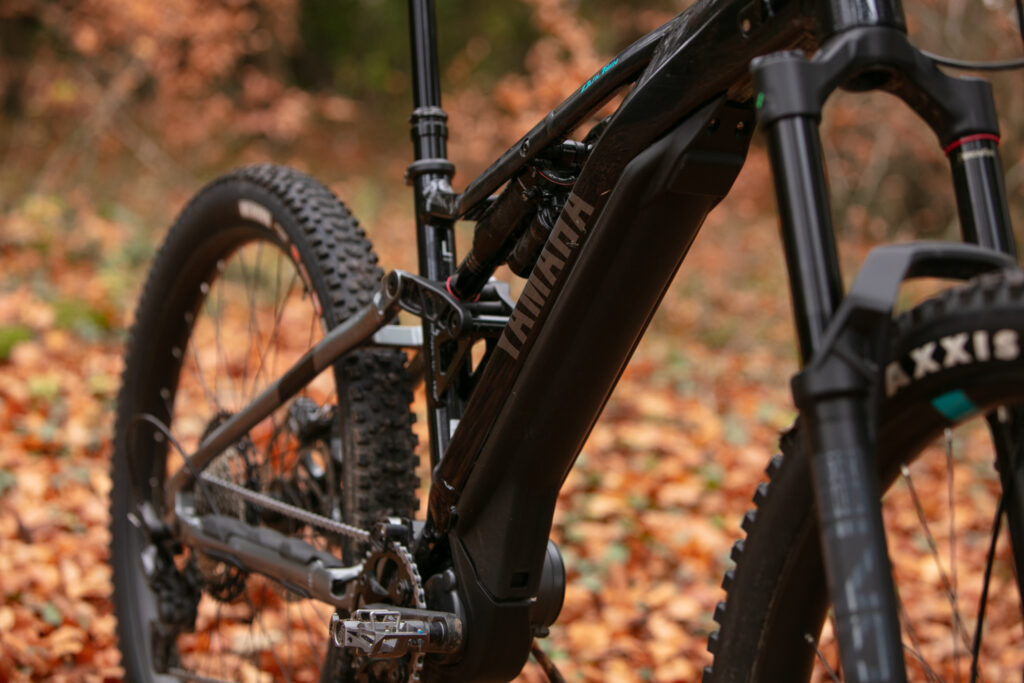
E-bikes need lightweight batteries with excellent power density and environmental sealing. Frame designers and battery integration specialists create fasteners, connectors and structures that help the battery pack live in your e-bike’s down tube without reducing rider confidence – when you need to pedal through streams. Or spend an entire day out riding in muddy conditions in the rain.
Beyond the primary battery, many e-bikes offer an enhanced range option. These are smaller modular batteries called range extenders. They are about the size of a hydration bottle and fit in the space where hydration bottles usually do, plugging into a frame port to give you additional battery range and energy for those huge riding days.
Motors
Energy from the battery flows into the motor, which amplifies your pedalling input. E-bike motors can make each pedal stroke you take up to 400% more powerful.
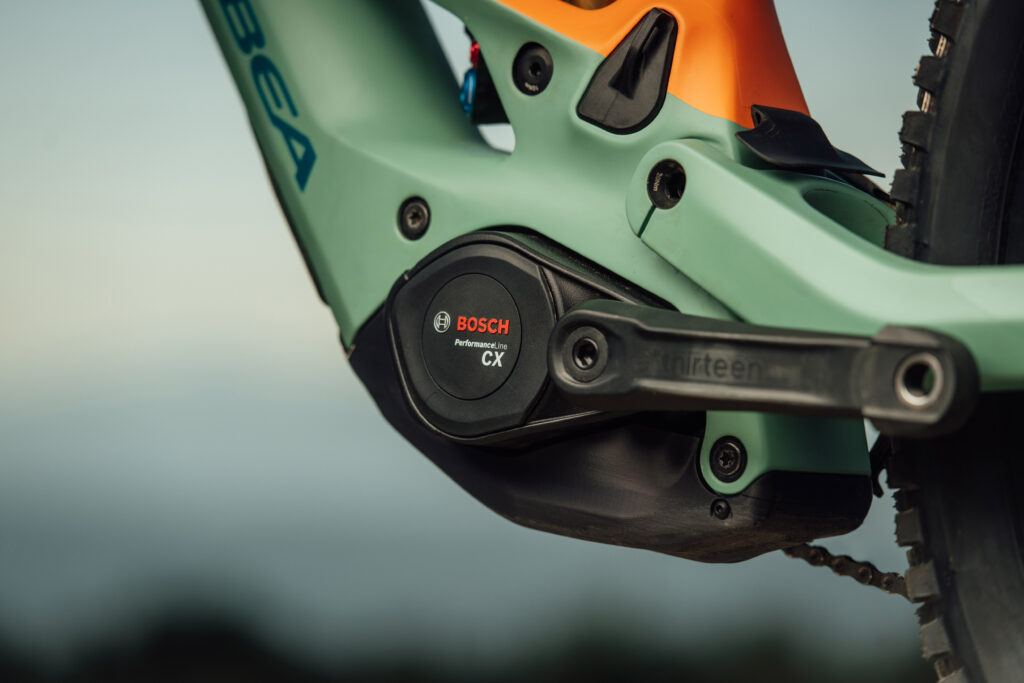
Broadly, there are two motor configurations: mid-drive and rear hub. For mountain bikes, especially dual-suspension e-bikes, the mid-drive motor is superior. A rear-hub motor would be too limiting for rear suspension travel and responsiveness.
Mid-drive motors live in an enlarged frame cavity around the bottom bracket, using several sensors to calculate how much assistance you need, depending on terrain and pedal input. Adjustability is a crucial feature of e-bike motors, with riders being able to select various power modes, from mild assistance to full power, to conquer those steep, fatigue-inducing climbs.
Controller
Selectable power output functions are important. You’ll never use peak battery power when coasting a flat gravel road. The controller unit has simple up/plus or down/minus power buttons and is usually homed on the left side of your handlebar.
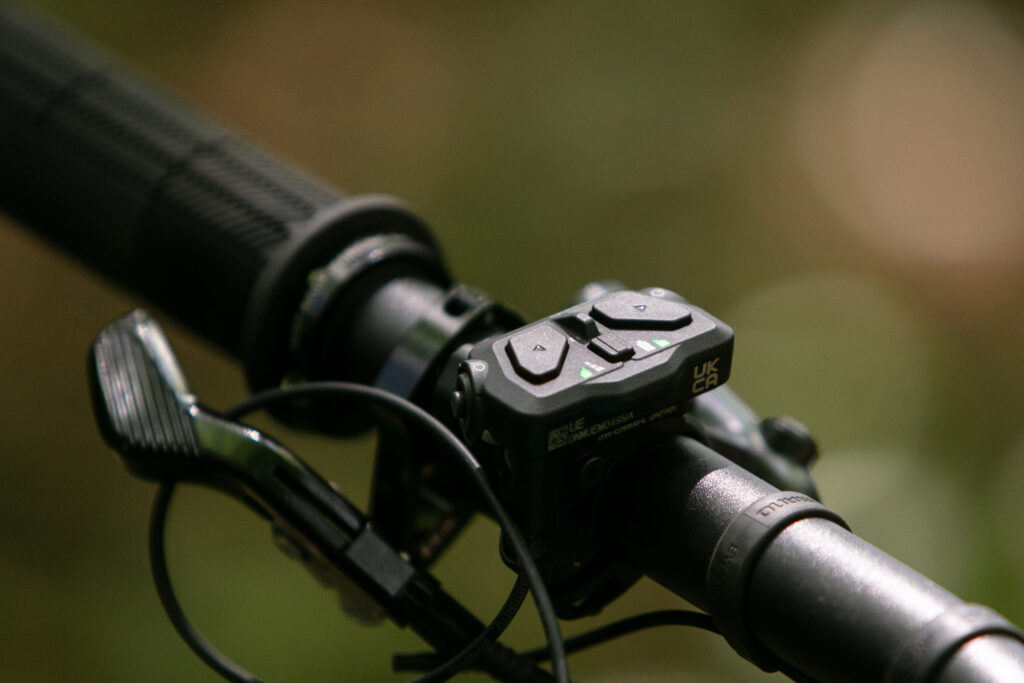
It often features sub-menus, too, and you’ll use the primary power function buttons to toggle between those. Creating a great, intuitive controller requires astute UX awareness and industrial design from e-bike builders.
Display
You need real-time battery health numbers to know how far you can go. This is the primary function of the master display, including range, battery status, and other elementary telematics.
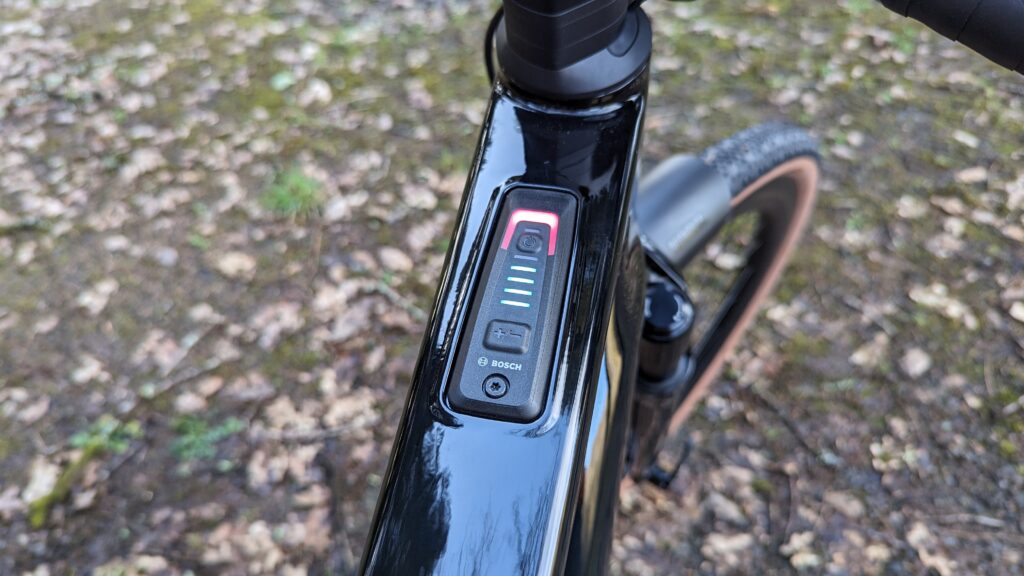
It can be mounted on the handlebar as a separate screen, integrated into the stem, or form part of the top tube.
An underappreciated design aspect of the display is its screen luminosity and finish. Suppose a screen doesn’t feature an anti-glare coating, and has poorly chosen graphics with weak contrast and luminosity. In that case, it becomes annoying to squint and guess how many battery life bars are displayed on a bright sunny day, with direct sunlight pouring onto the screen.
Decoding the functions
Modes
These are your selectable power settings. Pre-programmed software parameters control how much power the mid-drive motor can produce, corresponding to modes, which you can select as required. Several e-bikes enrich this function with their own apps, which allow you to customize mode functions and power assistance linearity.
Overrun
It’s when your e-bike’s mid-drive motor keeps producing some assistance, for a brief moment, after you’ve ceased pedalling. The idea is to conserve forward momentum in technical climbing terrain without risking pedal strikes.
Peak power
Regulations limit how powerful an e-bike can be. Especially for the off-road riding role, which often routes through sensitive nature areas and wildlife reserves. UK and EU laws provide for an e-bike power ceiling of 250W, often referred to as ‘nominal power’.
Several e-bikes produce much more power than 250W, but only for brief surges, when required (peak power), making them still legally compliant within that ‘250W continuous’ spirit of the law.
Pedal-assist/Pedalec
Any e-bike where the rider’s pedalling action is required to trigger the motor’s assistance. This is an important differentiator because e-bikes with some form of hand throttle, aren’t legal on UK trails.
Support percentage
Your e-bike’s motor radically enhances the pedal inputs you make, often more than doubling your pedal effort.
The support percentage is a number that indicates how much the drive unit enhances your pedalling efforts. E-bikes in the trail and enduro category have powerful motors and will often provide up to 400% pedalling amplification.
Torque
This is how much rotational force the mid-drive motor’s output shaft produces. Torque multiplies with rotational speed, for power. Most e-bike motors have a torque rating of 50-120Nm. The higher that torque number, the more potent your e-bike will feel, especially when riding up a steep incline.
Walk assist
Even the most potent e-bikes will eventually encounter terrain you can’t ride up. The walk mode is an assist function where the e-bike will power itself at a very low speed to help you when hike-a-biking up a trail section or portage, which is unrideable.
Pushing a heavy e-bike up technical terrain without motor assistance isn’t fun, which is why designers integrated the walk mode function.
Watts (W) and Watt hours (Wh)
The motor’s output power as symbolized by a numerical value and ‘W’ affix. Watt hours are how much electrical power a battery can store. E-bike battery packs vary in their Wh rating from the low 300s to 900Wh.
As batteries become more advanced, with better chemistries and energy density, future 900Wh batteries will become smaller and lighter, closer to the size of today’s 320Wh batteries.