
[Sponsored by Funn]
Cycling is full of conflict. Whether it’s the wheel size debate, MTB vs e-MTB, or coil vs air, few make quite as big a difference to a whole riding style as clipless and flat pedals. One ties you to a bike mechanically, whereas the other provides superior freedom. Whether you’re firmly in the ‘flat pedals win medals’ camp or you’re looking to eke extra efficiency from your bike, here are the pros and cons of flat vs clipless pedals.
- The pros and cons of tubeless tyres
- Mountain and gravel bike upgrades for less than £50
- Mechanical vs wireless actuation – which is best for you?
Flat pedals are the natural stepping stone
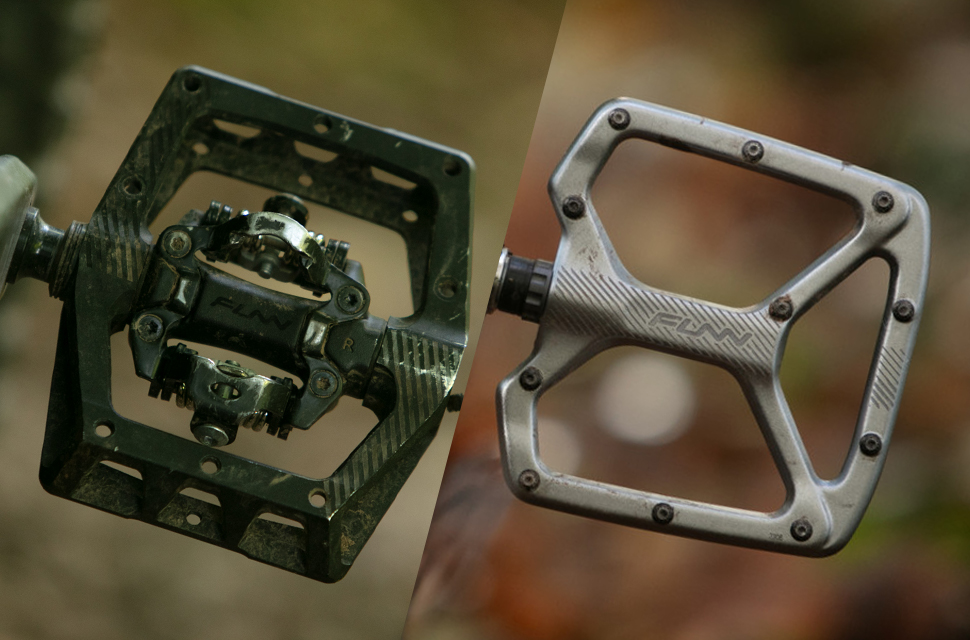
If you’re brand new to off-road cycling, the chances are you’ve ridden on flat pedals already. They’re the kind with a large platform and a bunch of pins that can work with any shoe. Here’s Funn’s Python as an example.
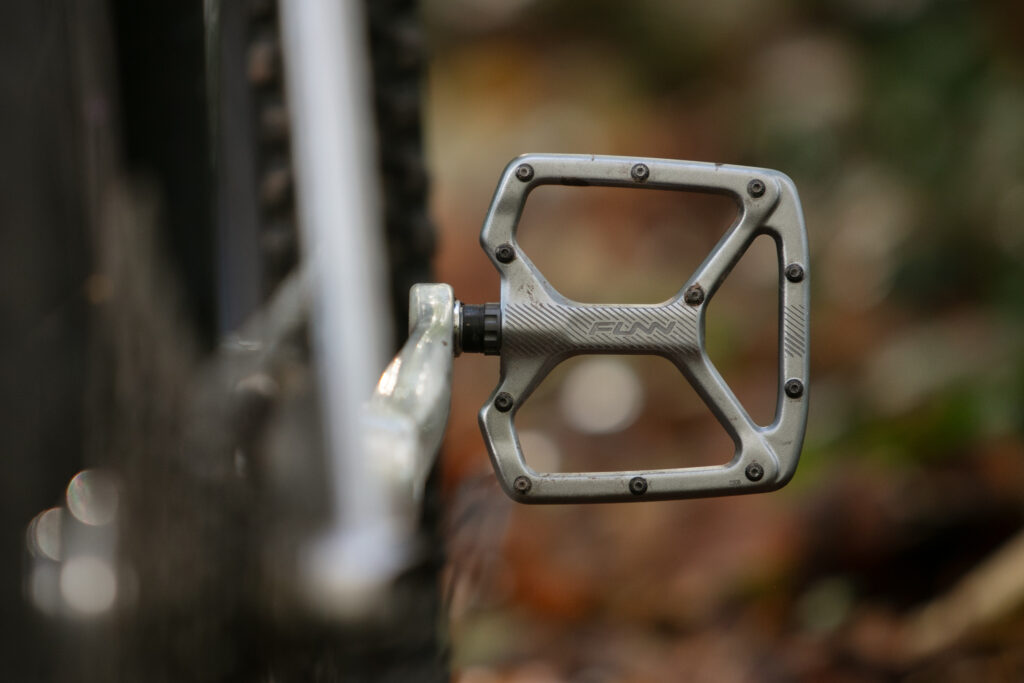
As you bring your tyres off-road, new riders will be faced with a very real learning curve as the uneven terrain bounces a bike’s wheels about. Then, when that terrain gets extra interesting, being able to lift a foot off the pedal, or dab for balance mid-corner, is key to growing confidence on the bike.
Clipless pedals only add to that learning curve, as the movements required to engage and disengage with a clipless pedal are a whole new thing to learn in themselves. If you’re new to mountain biking or simply riding off-road, flat pedals are the best to help you develop confidence and the basic skills you’ll need to get by.
And they’re the best place to start building skills
Since clipless pedals mechanically connect you to a bike, they can encourage poor form when performing any skills that lift your bike into the air. That’s because a rider can force it to happen.
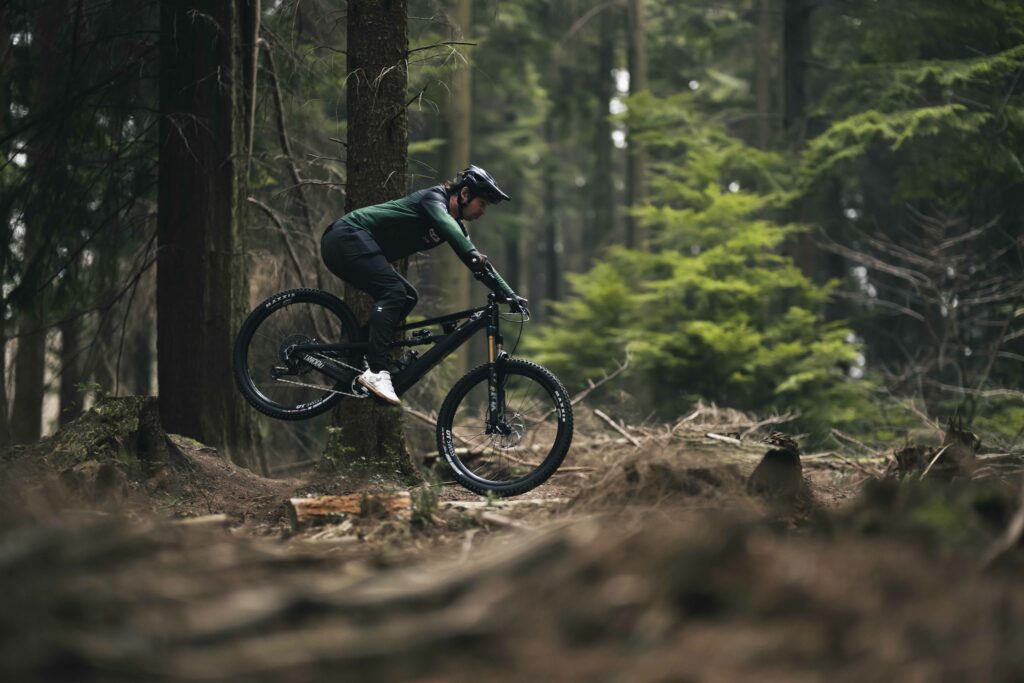
Because flat pedals require rider input for maximum traction (input that quickly becomes second nature), learning all kinds of skills using flat pedals will encourage the rider to learn those skills using proper technique. And that’s without the corner-cutting possible with clipless pedals.
If you’re barreling into a rock garden, for example, and you’re running flat pedals, dropping your heels will keep your feet locked into the pedal while promoting a solid riding and planted technique. Also, when jumping or bunny hopping, you’ll need to scoop on the pedals to lift the rear wheel, which both employs the bike’s natural movement and retains proper body position.
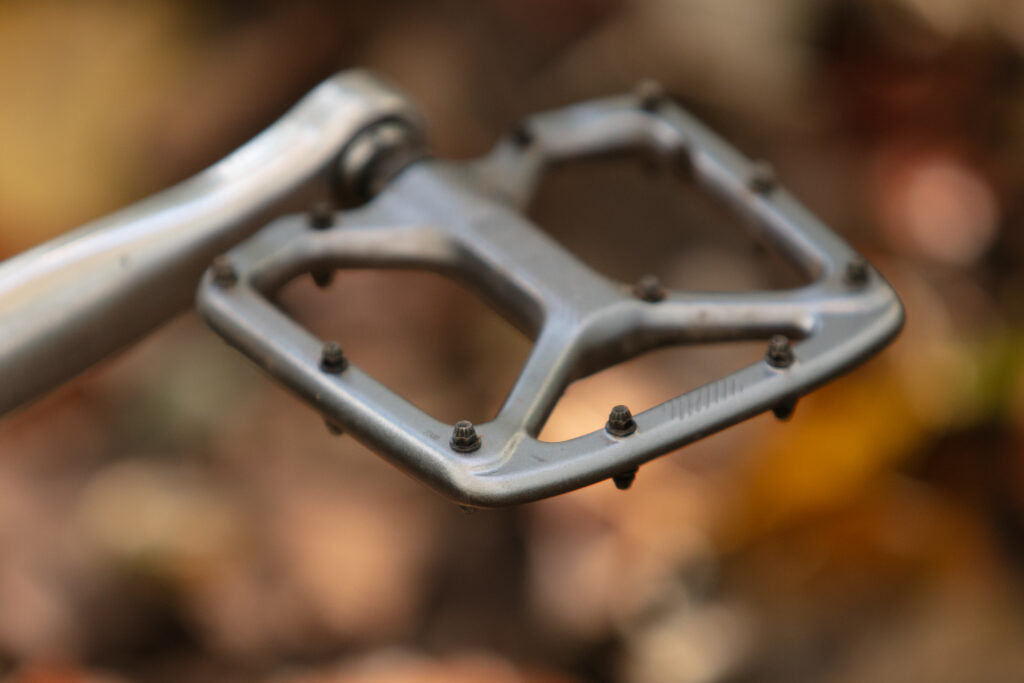
All of this is possible with clipless pedals, but again, as your feet will be tied to the bike, corners can be cut, which may lead to unpleasant surprises due to poor form.
Clipless pedals offer unparalleled security
Clipless pedals are misleadingly named as they utilise a pedal-based mechanism in which a cleat bolted to the bottom of a shoe clips into. The result is a mechanical bind between the shoe and the pedal.
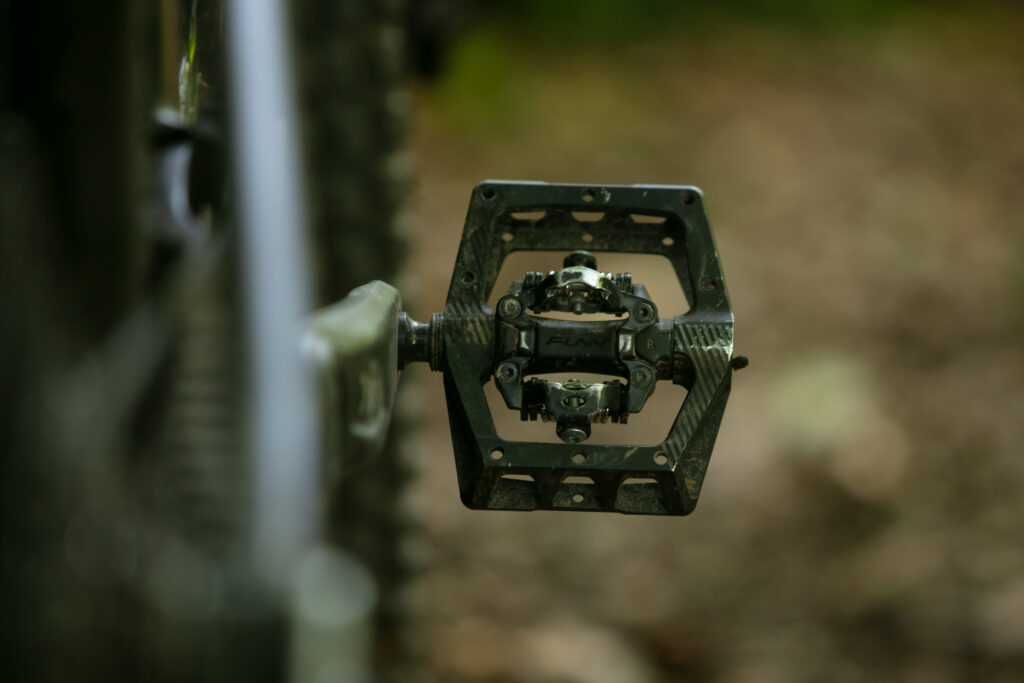
Because of this, a rider’s feet won’t lift from the pedal, and that’s something we can take full advantage of. Riders can engage more throughout the pedal stroke by pulling up as the pedals reach the lowermost portion of the stroke. The result: extra power and a more consistent power transfer. This is why you’ll only see clipless pedals on the cross-country circuit and are favoured by gravel and road riders.
Although the boost in efficiency is a real draw, the extra security provided by the cleat and mechanism can produce more control and confidence when riding technical terrain. Riders can use that mechanical bind, giving them enhanced control over the rear wheel. While this can introduce bad habits as mentioned before, if taken advantage of correctly, clipless pedals can open up new and creative ways of riding.
Then, because your foot won’t come off the pedals, that is, unless you want it to (or if your cleat is worn), they can boost confidence when tackling technical terrain.
But they provide less freedom
The best features of flat pedals are the ability to move your foot all over the pedal’s platform to get the perfect stance over the bike, and the liberating feeling of simply jumping on your bike and pedalling away. Clipping into a clipless pedal requires a specific movement, as does disengaging.
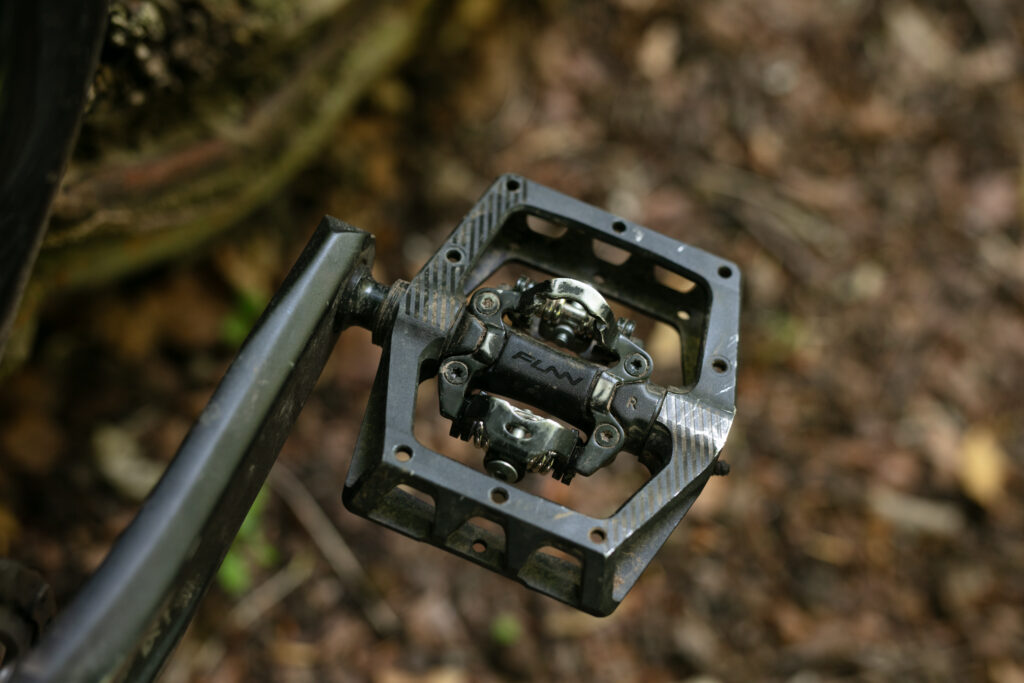
That alone brings some interesting traits to the trail, and they can be good or bad, depending on your perspective. Hasty mid-trail dabs come a little more dubiously, as you’ll have to find that perfect spot to clip back into a pedal after. On the flipside, that does encourage better riding technique.
There’s also the subject of crashing. Although mid-spill, you’ll likely unclip from your pedals without knowing, because the bike is essentially attached to you, you won’t be able to bail from the bike as freely, and there will be some time where the bike is dragged behind you as it’s still joined to the sole of your shoe.
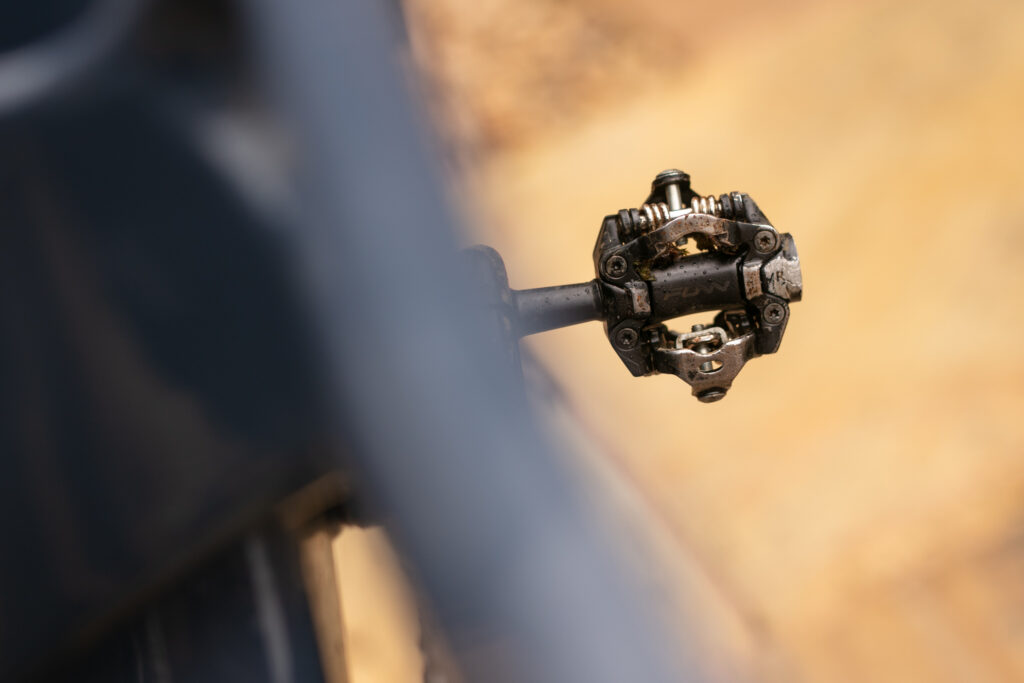
However, like their flat counterparts, clipless pedals come in a wide range of shapes and sizes. Many are merely just the mechanism on an axle. These types of clipless pedals prioritise weight savings and are often ridden by gravel and cross-country riders. Funn’s Tactic is one of these very pedals.
There are then pedals like Funn’s Ripper2 that feature a mechanism that’s wrapped with a platform. These types provide more support to the shoe and traction, allowing the user to tune the resistance of the pedal’s float to their own preferences. Platformed clipless pedals are usually preferred by trail, enduro and downhill riders for the extra heft of stability they deliver.
But you can get the best of both worlds
For some, you might want the security of a clipless pedal one day, but want to commute to work the next. Or you might find yourself chopping and changing between the two from ride to ride. Thankfully, that can be done pretty easily with single-sided pedals.
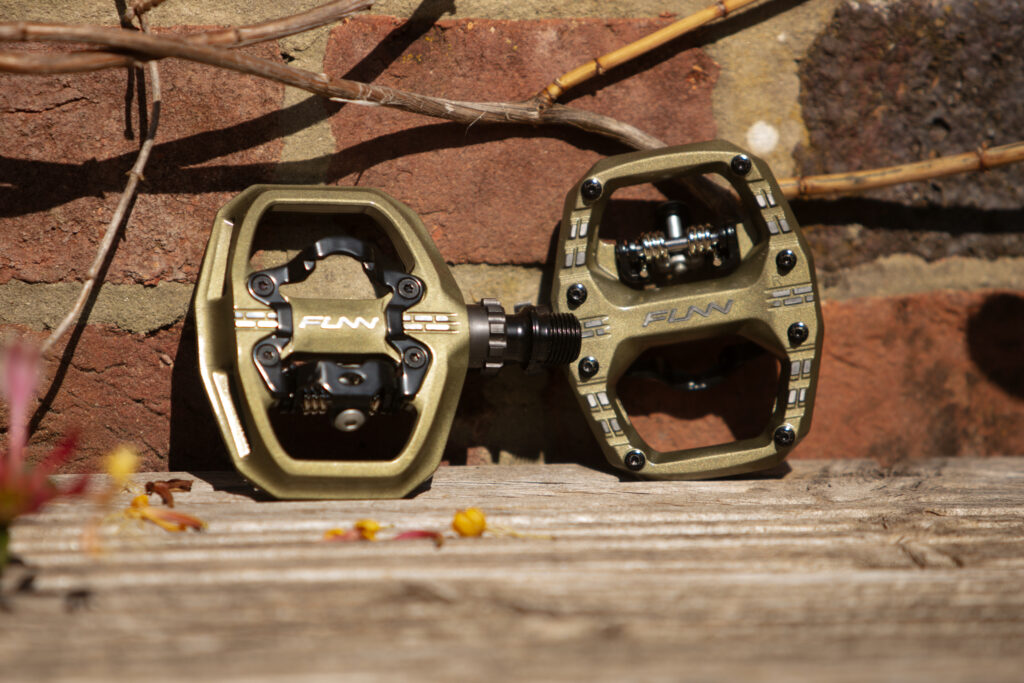
These pedals have a mechanism on one side and a flat platform with pins on the other. Such pedals are excellent if you want just one set of pedals for both clipless pedal riding and flats.
Of course, they’re not without downsides. As they’re single-sided, you’ll need to flip the pedal over when riding to engage with the side of the pedal that you want.
Which is best for you?
As with everything in cycling, there is no set answer. But if you’re one for getting airborne, throwing tricks or if you’re getting to grips with off-road riding, flat pedals are the way to go. If you’re riding wet and slippery trails in winter, the ability to lift a foot from the pedal can pay back in dividends.
But if it’s efficiency and control you’re after, no pedal achieves that as effectively as clipless pedals. For gravel and road riding, they’re a no-brainer (although we won’t judge anyone for riding flats on gravel). The terrain is rarely as challenging, and the benefits in power transfer far outweigh the negatives of moving your foot off the pedal.
For trail, enduro and downhill mountain biking, the move to clipless pedals is merely a personal choice. Sam Hill coined the phrase ‘flat pedals win medals’, and he certainly did that. However, there are a tonne of gravity athletes who rely upon a clipless pedal.

-300x199.jpg "“He wants bikes in traffic lanes. Give him what he wants”: Cyclists urged to “slow every street down to bicycle speed” and ride in middle of lane amid premier’s war on cycle paths + more on the live blog")