



The world of endurance and ultra-distance cycling has changed dramatically in recent years. Events and challenges that were once niche pursuits have grown large enough to attract significant media attention, allowing some riders to build professional careers backed by major brands.
As brand support increases, so too does the expectation of a return on investment. In most cases, that return comes in the form of media exposure, whether through photography, video content, social media coverage or live race updates.
There are plenty of endurance challenges where support is permitted. Alex McCormack’s recent successful attempt on the 7-day distance record is a good example. During his incredible ride of 3,826.47km, a support crew was an essential and permitted part of the challenge.
However, many prestigious events are classed as self-supported. In theory, every rider should face the same conditions, relying only on what is available to all participants along the route.
View this post on Instagram
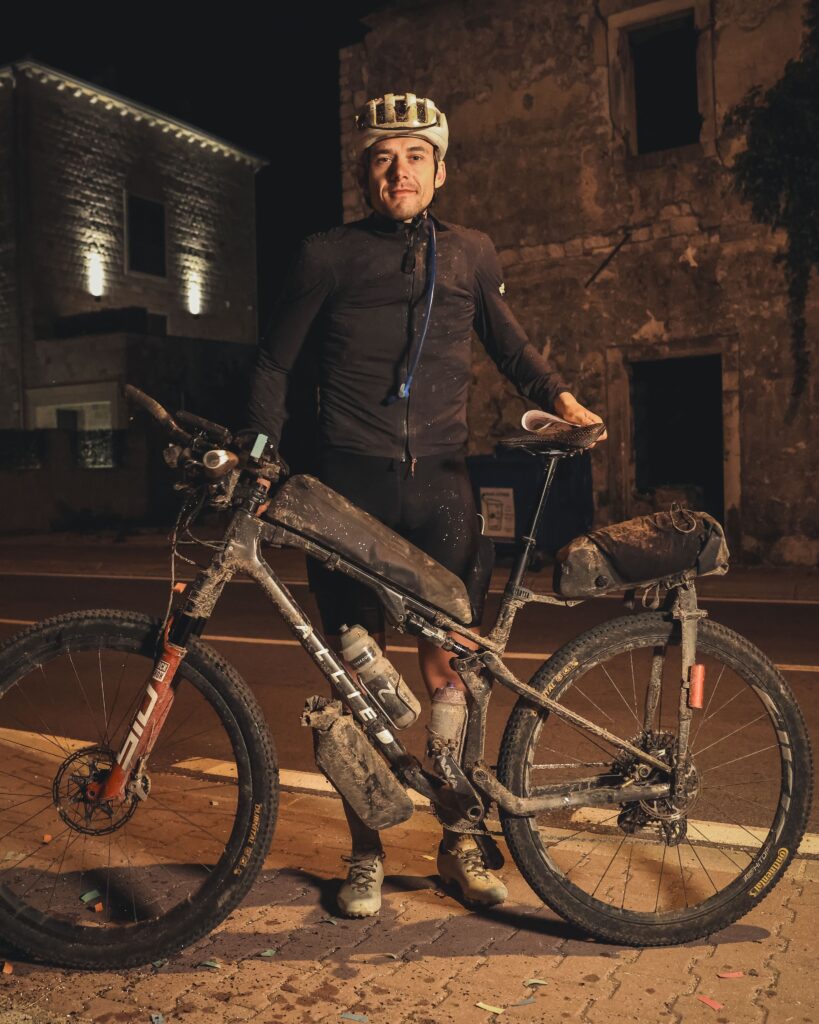
Just yesterday, rider #100 at the Trans Balkan race, Radek Gołębiewski, was disqualified for receiving “unannounced and unauthorised” external assistance from a media crew that was documenting the Polish rider during the event. Gołębiewski was leading when he was pulled from the race.
The incident has once again raised questions about what truly constitutes a self-supported effort. Even if Radek had not directly interacted with his ‘media team’, simply knowing that there were people available to call in the event of a problem arguably changes the nature of the challenge.
The psychological benefit of knowing help is only a phone call away can influence decision-making, risk-taking, and how hard a rider is willing to push themselves. Some events are held in more remote regions, where support is harder to find, which is often what makes them so challenging, while some challenges will frequently pass through, or close to, built-up areas. The key point of an unsupported race is that everyone should face the same potential challenges.
View this post on Instagram
The disqualification at the Trans Balkan Race is far from the first time the issue has surfaced.
Over the previous weekend, riders at the front of Unbound XL, an event that is also intended to be unsupported, were seen asking spectators and film crews to dispose of rubbish for them. On the surface, this seems insignificant, as it might have only taken a few seconds to walk over to the nearest bin to get rid of a few wrappers and empty plastic bottles. But those few seconds might matter.
If avoiding a brief stop allows riders to stay together rather than chase back onto a group, then the assistance has had an impact on the race. More importantly, riders further down the field are unlikely to have the same opportunities. Equal access to support is a key part of what makes self-supported racing fair.
The same debate has emerged around some of the most competitive Fastest Known Time (FKT) attempts on established routes. In several cases, riders have arranged for photographers and videographers to capture content at specific locations along the route. While the media teams may not provide direct assistance, their presence raises familiar questions.
If support is only a shout or a phone call away, is it really an unsupported effort? The definition of support has become increasingly difficult to police. Physical assistance is relatively easy to spot, but psychological support, media presence and the reassurance of having a familiar face, or shouts of encouragement are a much greyer area.
Has the concept of self-supported racing become impossible to enforce? Should organisers simply accept that some level of support is inevitable and adapt their rules accordingly? If this happens, then riders with a bigger budget will inevitably have more support.
The challenge is that media coverage has become an important part of the sport’s growth. Events gain visibility, sponsors receive value, and riders can build careers through the stories that emerge from these races. Without that attention, some of the financial support currently available to riders could begin to disappear.
Even events that are fiercely protective of their self-supported ethos face this dilemma. The Atlas Mountain Race is one of the biggest self-supported events, and it deploys official media crews along the route to document the event. Those crews will undoubtedly have strict instructions not to interact with riders, but it is difficult to imagine a support crew ignoring a rider in genuine need of assistance.
Maybe the answer lies not with stricter rules, but with changing our expectations as spectators. Perhaps we need less live coverage and fewer real-time updates. Maybe we should return to being dot-watchers and YouTube viewers, instead of following live Instagram stories and updates. Some riders have created careers from documenting and storytelling after their adventure. Sharing photos, videos and reflections after finishing, with many that are incredible to sit down and watch.
It may not be as immediate, but perhaps this is the only way to preserve the true spirit of self-supported events, rather than expecting everything to be live and available in real-time.





6 thoughts on “Camera crews, disqualifications and debris disputes: have self-supported cycling events become too difficult to police?”
There’s always audax…
I suspect they always were too difficult to police. Cases of excess support has happened at the top level of the big races for a long time, riders have a different take on what ‘do it yourself’ means. Ultimately the only true self-supported race is the ITT, as soon as you have a number of racers on the course it changes things for the individual. In that respect, true ‘self supported racing’ may be an impossible ask and perhaps that’s why it tends to be called’ ‘ultra’ now, whatever that really means (what distance or format qualifies?).
And the more recent boom in social media interest in ‘ultra’ events will have put more pressure on riders and content creators – I expect it also brings more scrutiny.
I think events that have official media crews could ditch the idea that they’re really ‘self supported’ events and go with it, they’re there to provide racing content and that’s fine. Let some events be about racing and publicity and some other events can be a tracker page and nothing more, for the riders who want that simpler challenge. There will be other events in between. It’s down to the organisers to decide and clarify the rules (and with Lifetime paying what they do to buy events, I guess what the organisers do may be telling of true intentions).
How far do you go? A sponsored rider with a free bike and gear plus travel expenses receives far more support than total amateurs, who are arguably the only truly self-supported riders. Are pros and sponsored top-level amateurs to be banned?
there is a huge gray area in the cell phone. assistance with hotel bookings, ferry info or technical advice to name a few. not to mention pep talk.
there is a huge gray area in the cell phone. assistance with hotel bookings, ferry info or technical advice to name a few. not to mention pep talk.
Does being able to speculate on what a post-Man City career might hold really offer much of an advantage?