


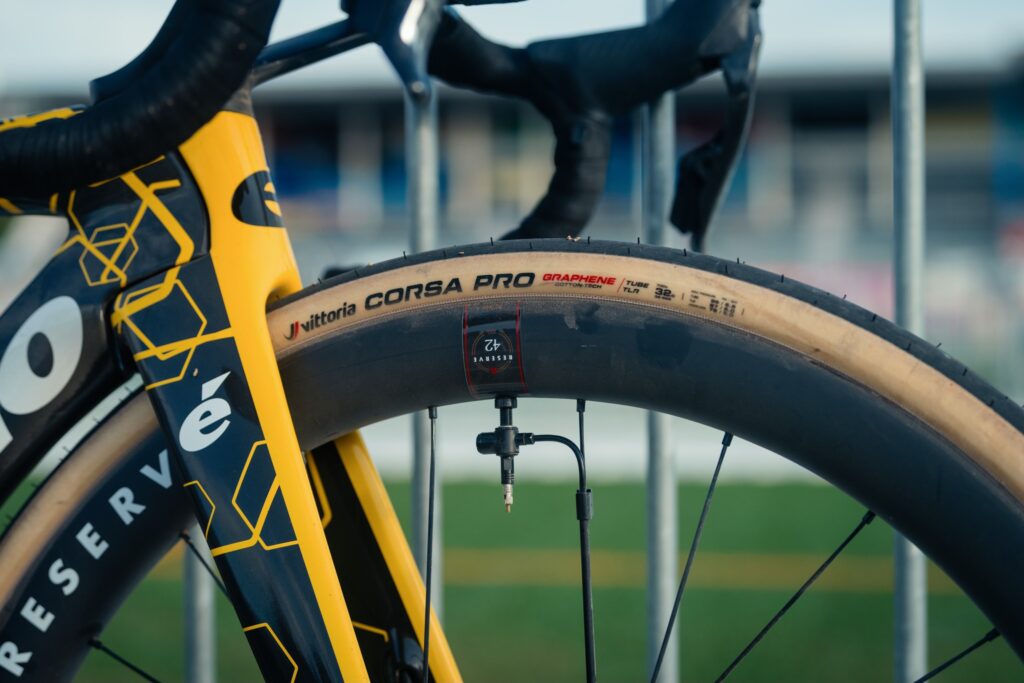

The on-the-fly tyre pressure adjustment system used by Visma-Lease a Bike and Pauline Ferrand-Prévot to great effect at last year’s Paris-Roubaix will not be making a comeback on the cobbles this weekend, after the UCI decided to ban the technology just days before the Hell of the North – and three months after the company behind it went bankrupt.
Gravaa, the Dutch company which pioneered a self-inflating and deflating tyre system allowing cyclists to adjust and monitor tyre pressure while riding, filed for bankruptcy in January, after struggling to obtain enough orders.
The brand’s collapse came less than a year on from the brand’s technology being used by Ferrand-Prévot on her way to victory at Paris-Roubaix Femmes, where she took advantage of the system’s ability to lower her tyre pressure on the cobbles and increase it when she returned to the tarmac.
However, it seems Visma-Lease a Bike were still intent on using the Gravaa system at this weekend’s Hell of the North, continuing to test it throughout the winter, only to be told by the sport’s governing body two weeks ago that they couldn’t due to its lack of commercial availability.
“We have worked with the Gravaa system over the past two years. We developed it further and tested it a lot during the winter,” Visma’s head of performance Mathieu Heijboer told the In de Waaier podcast.
“But two weeks ago, we received a letter saying it is banned by the UCI. Then it stops immediately. It is a bit of a vague story. The reason given is that the company has gone bankrupt. Shortly after there was a restart, but because of the situation the UCI doubts the commercial availability.”
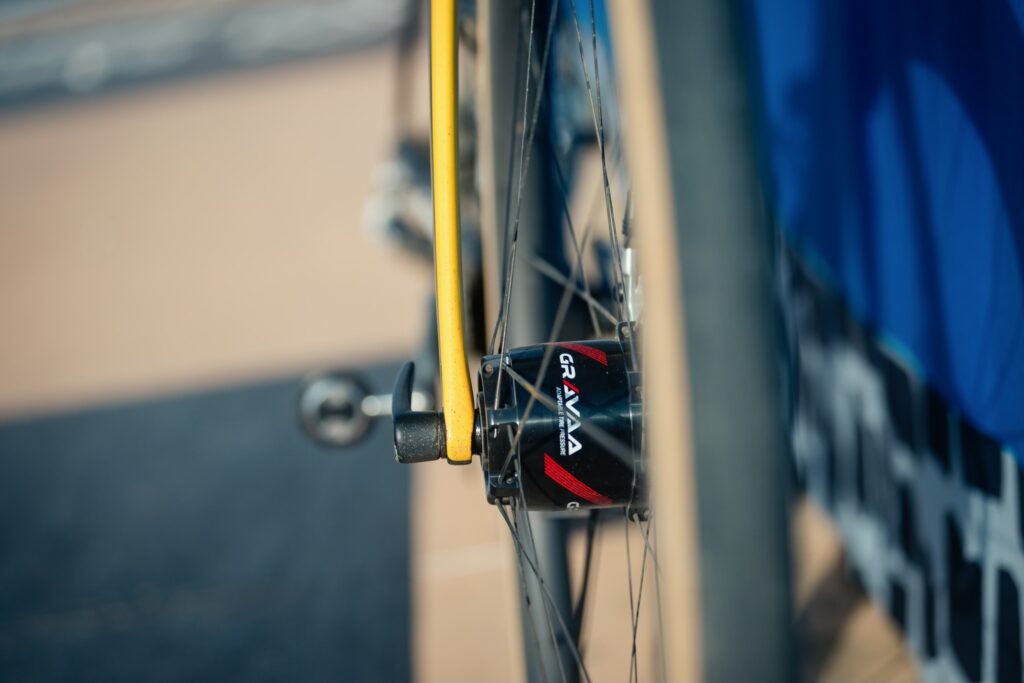
After the Eindhoven-based company was declared bankrupt by a court in the Netherlands in January, a spokesperson for Gravaa told road.cc that the brand could be revived in the future, following interest from within the cycling industry.
The spokesperson also said that it was possible that Gravaa tech could still be used by professional teams and riders during the 2026 season, insisting that the company’s app and back-end remained operational “for now”.
And now Heijboer has questioned the UCI’s decision to outlaw the tech in races, on the grounds that any equipment used in professional races should be available, or set to be made available, to the public to buy.
“You can order one if you want,” he told the podcast. “There is no rule that says a tyre has to be available two weeks or two months beforehand. The moment of use is the race, and if it is commercially available then, you meet the rules.”
Criticising the timing of the announcement, and pointing out that Visma riders used the Gravaa technology at the recent cobble-heavy GP Denain, Heijboer continued: “We received no announcement that this was coming, there was just that letter. After Denain, the biggest cobbled race after Roubaix, there was no problem. Now there is. That is no coincidence.
“We have thought about an appeal, but that would mean a full procedure. Given our previous experiences, we do not think it would be successful in the short term. It was communicated on such short notice that we just have to accept it.”
Finally, Heijboer revealed that Visma will not use the system this weekend at Paris-Roubaix, and would instead appeal the decision at a later date. When asked whether its absence would impact the team’s chances, Heijboer simply said: “Yes.”
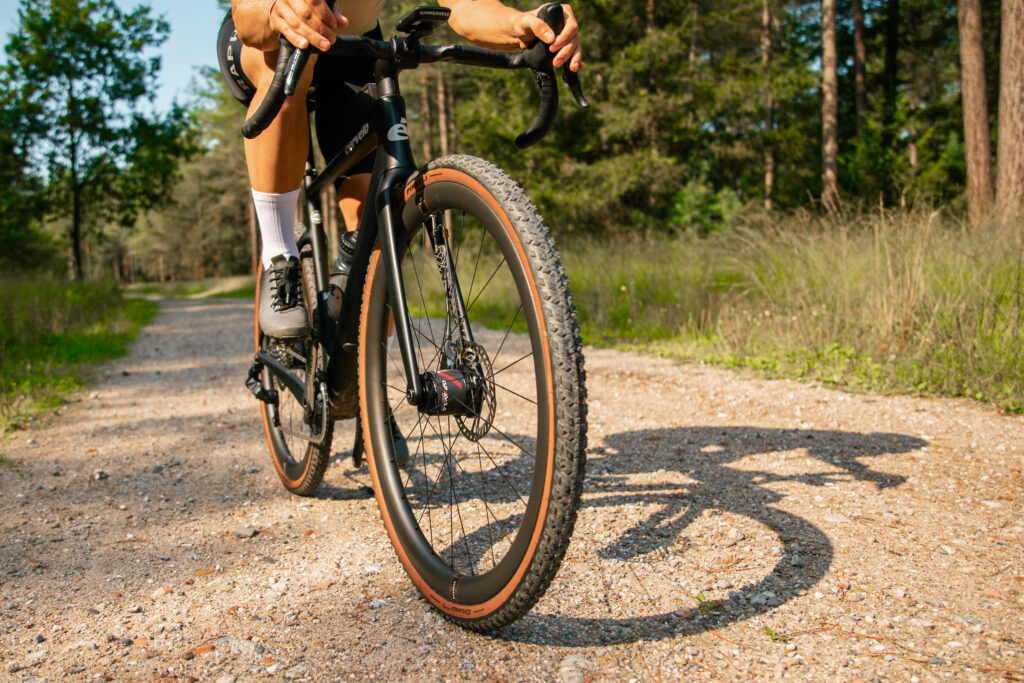
First introduced in 2023 and officially launched in 2024, the same year it was confirmed as an official partner of the Visma-Lease a Bike men’s and women’s teams, Gravaa tasted success at the highest level of the sport last year, with its innovative self-inflating and deflating tyre tech.
Gravaa’s self-inflating and deflating tyre technology allows the rider to adjust and monitor tyre pressure while riding via a pump that’s integrated into the hubs, with a hose running to the valve, and using buttons on the handlebars.
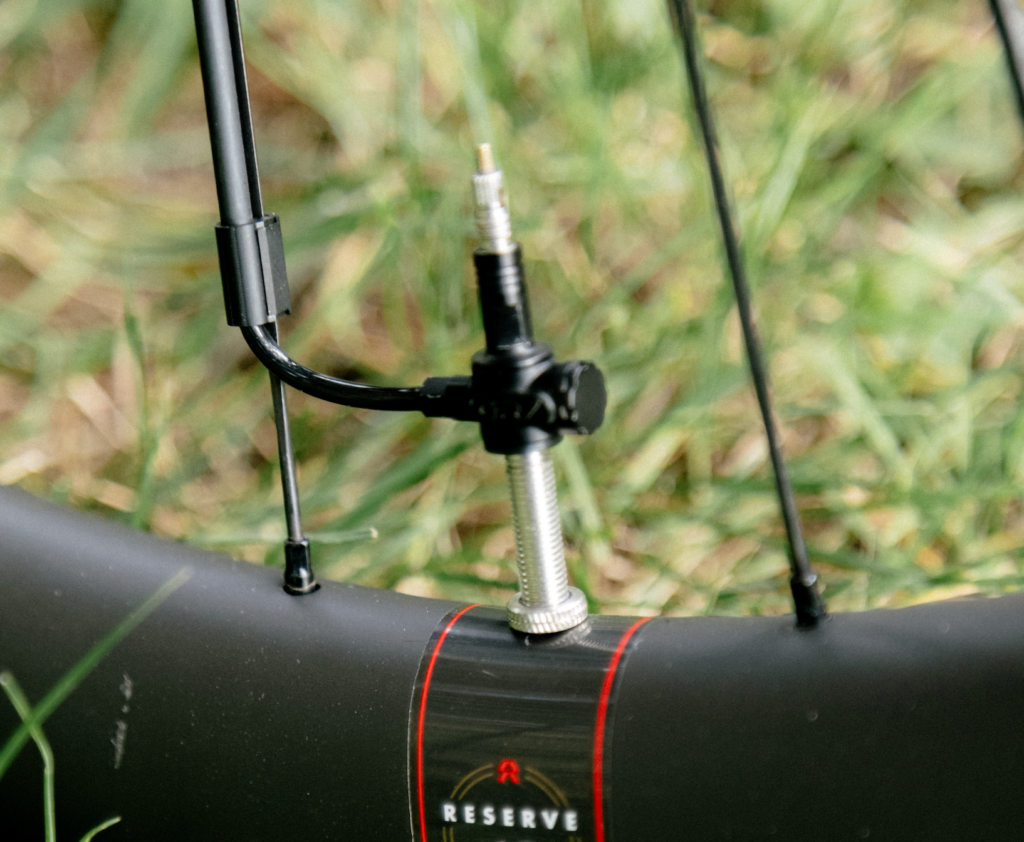
At the core of the hub is the kinetic air pressure system (KAPS), which Gravaa described as a miniature patented mechatronic system. This system, said to weigh 450g, features a pump driven by the rotation of your wheels and a clutch that automatically engages and disengages the pump. For rapid deflation, booster valves are activated to release air quickly.
Tyre pressure inflation or deflation is activated using wireless shifters which resemble satellite shifters mounted on your handlebars.
Gravaa’s system was first used in the professional peloton by Visma-Lease a Bike during the 2023 classics season, with Edoardo Affini debuting the KAPS tech at Dwars door Vlanderen before Dylan van Baarle and Christophe Laporte raced with it at the 2023 Paris-Roubaix.
Team DSM (now Picnic PostNL) had previously tested out a similar self-inflating system, the Scope Atmoz hubs, during the 2022 season.
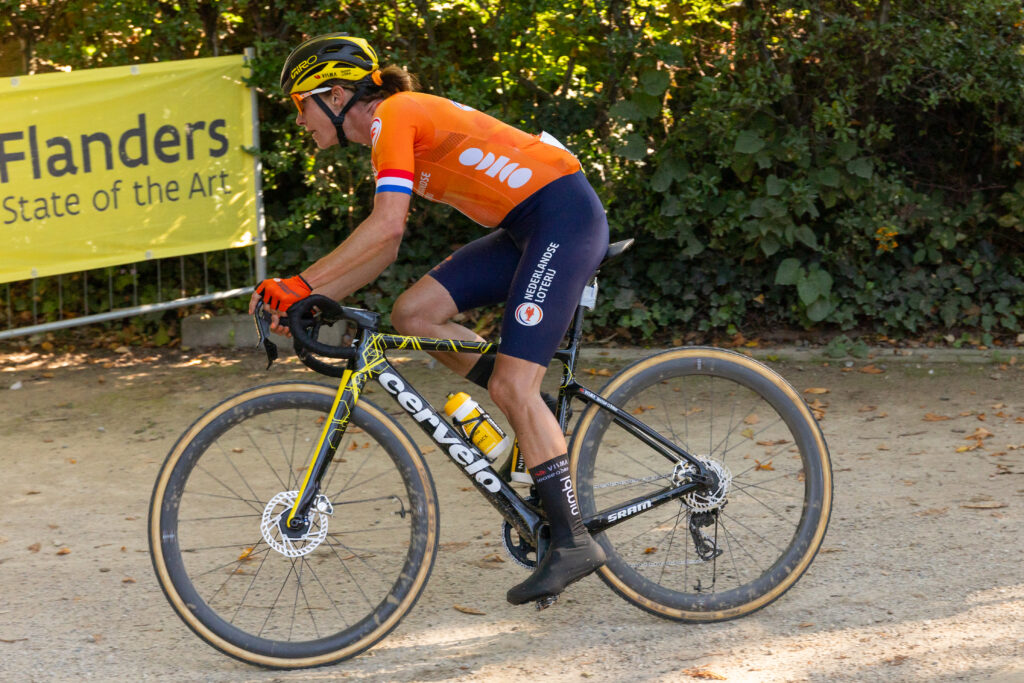
After a brief period of inaction in the peloton, an updated version of Gravaa’s system was used by Marianne Vos as she secured the 14th rainbow jersey of her career at the UCI gravel world championships in October 2024.
That same month, Gravaa officially launched the system and made it available for pre-order, with wheelsets featuring the tech available for around £3,200. Alongside the launch, Gravaa was also confirmed as the official supplier of Visma-Lease a Bike.
That partnership paid off spectacularly last spring, when Ferrand-Prévot and Marianne Vos used the tech at Paris-Roubaix, the French star using it to solo to a superb debut victory at the Hell of the North, three months before her historic triumph at the Tour de France Femmes.
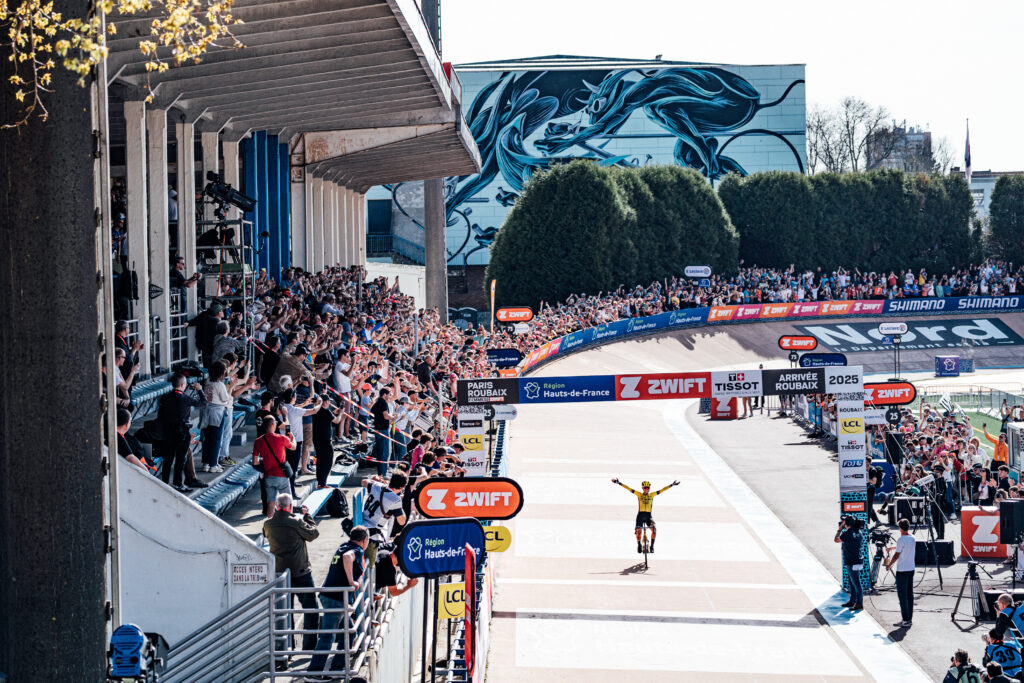
A month before that Paris-Roubaix success, Visma-Lease a Bike’s teenage British sensation Matthew Brennan also won the GP Denain while utilising the tyre pressure system.
The benefits of using the Gravaa system at a race like Paris-Roubaix, where 55km of the 259km route feature rough, jagged cobblestones, are obvious, enabling riders to inflate and deflate their tyres as they switch between road surfaces, increasing comfort and handling on the pavé while retaining speed on the asphalt.
However, the tech didn’t always go to plan for Visma-Lease a Bike. In the build-up to last year’s Paris-Roubaix, Wout van Aert crashed in the Arenberg Forest during a recon ride, after puncturing at speed while testing out Gravaa’s system.

Speaking to road.cc in January, a Gravaa spokesperson attributed the bankruptcy to the company’s struggles to obtain enough orders in the “current market environment”.
The brand was understood to have been aiming to infiltrate the commuter cyclist market in 2026, plans that have been kiboshed by its collapse.













9 thoughts on “Just in time for Paris-Roubaix, UCI bans Gravaa on-the-fly tyre pressure adjustment system… three months after company declared bankrupt”
What a let-down
You beat me to it, how deflating.
When I saw the quality of these puns, I had to let out a long psi.
Quality? A low bar set so far…
…that’s a fabulous comment, the rest aren’t a patch on it.
Good decision.
Soon enough, every team would have this, so no one would actually have any gain on their competitors, yet all teams would have had more costs, more things to maintain, heavier bikes etc.
It’s been available for more than three years without widespread take up from the professional peloton so I don’t think there was any danger of every team buying into it. Most seem to have decided that the supposed benefits don’t justify the cost, additional weight and complexity of the system.
The UCI aren’t the most progressive, but there is no suggestion that they banned this one because they objected on principle to the new tech (I’m sure there is plenty of argument to be had about what level of innovation is desirable).
It’s merely that the rules require devices to be commercially available, and if the manufacturer has collapsed, it is fair to point out that the device is no longer commercially available.
UCI and progressive, that’s not two words you often see close to one another