


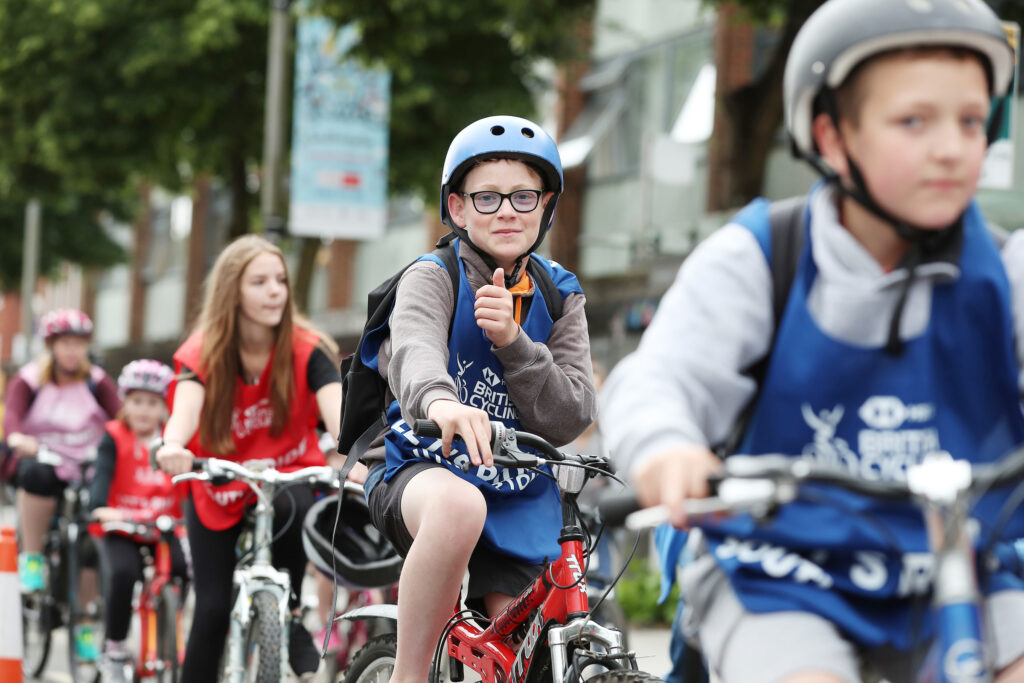

Its active travel policies may continue to divide opinion, but Bristol has been ranked Europe’s eighth most child-friendly city for cycling, thanks to its leading role in implementing 20mph speed limits, according to a new urban mobility report.
The report, which assessed the efforts of 36 European cities to prioritise and support children travelling by foot or bike, also concluded that London is by far the continent’s biggest proponent of School Streets, with 500 of the traffic-restricting schemes installed across the capital over the past decade.
However, despite these accolades, the Clean Cities Campaign, the organisation behind the study, argued that the UK as a whole “lags behind” the rest of Europe when it comes to protected cycling infrastructure due, the campaign says, to the prevalence of unprotected bike lanes and a “lack of political ambition”.
The ‘Streets for Kids, Cities for All’ report was published this week by the Clean Cities Campaign, a Europe-wide non-profit active travel coalition campaigning for healthy and climate-friendly transport.
“Mobility is a key aspect of child-friendly cities, as it shapes a large part of children’s daily lives,” the campaign said in the report.
“How children move around their neighbourhoods or the city – whether to school, leisure activities, or green spaces – has a direct impact on their health, safety, and even academic performance. For this reason, mobility is not only a practical concern, but a fundamental part of creating environments where children can thrive.”
The report ranked 36 cities based on how they support child-friendly mobility in the urban environment, focusing on three key “indicators” which have been proven to be effective in improving road safety and air quality for children, promoting active travel, reducing collisions: the adoption of School Streets, the extent of “safe” 20mph or 30kph speed limits, and the availability of protected cycling infrastructure.
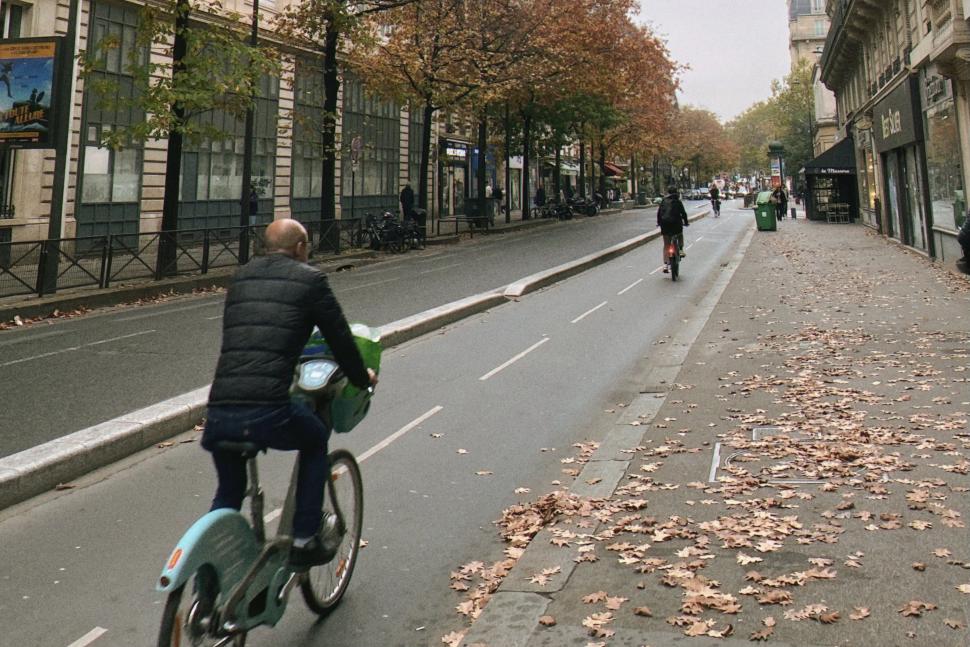
Perhaps unsurprisingly, Paris – Europe’s great active travel success story of the 2020s – came out on top, scoring 78.9 per cent overall in the report’s ranking system, performing consistently across all three key areas, thanks to Socialist mayor Anne Hidalgo’s revolutionary €250m investment in cycling infrastructure in recent years.
“This is mostly the result of Mayor Hidalgo’s efforts to boost the transition of the city over the past decade, from the rollout of school streets and cycling infrastructure to the introduction of a generalised 30kph speed limit,” Clean Cities said.
However, no cities, even Paris, were able to achieve an A grade of 80 per cent or more, according to the report’s metric, with Amsterdam ranking a distant second with 63 per cent, perhaps due to the city’s relative lack of protected infrastructure (something more than made up for in safety terms by its inherent cycling culture).
However, there have been recent concerns that the recent decision by the Netherlands’ current right-wing government to increase road speed limits, as well as its general disdain for climate-friendly policies, could impact the safety of cyclists.
Meanwhile, Antwerp placed third in the ranking with 62 per cent, followed by Brussels, Lyon, Helsinki, Barcelona, Bristol, Oslo, and Ghent, with London finishing just outside the top ten.

Reflecting on the rapid progress of new active travel “champions”, the report said: “Among the leading cities, some – such as Amsterdam and Copenhagen – are widely recognised as long-standing pioneers in progressive urban mobility, having started the re-design of transport infrastructure decades ago.
“Others – like Paris, Brussels and London – have achieved remarkable progress in just the past 10 years. This demonstrates that meaningful change is possible within a relatively short period of time.”
> Bollards installed on new cycle lane outside hospital after drivers immediately block it
According to the report, Bristol, along with Paris, Brussels, Lyon, Amsterdam, and Madrid, stands out as a European “leader” thanks to over 80 per cent of its road network being limited to 20mph, “a key factor in creating safer streets for children”, the campaign says.
Half of the 36 cities assessed have limited at least 50 per cent of their roads to 20mph or 30kph, though five cities – Lisbon, Copenhagen, Rome, Sofia, and Marseille – have fewer than 10 per cent of their streets covered by the lower speed limits.
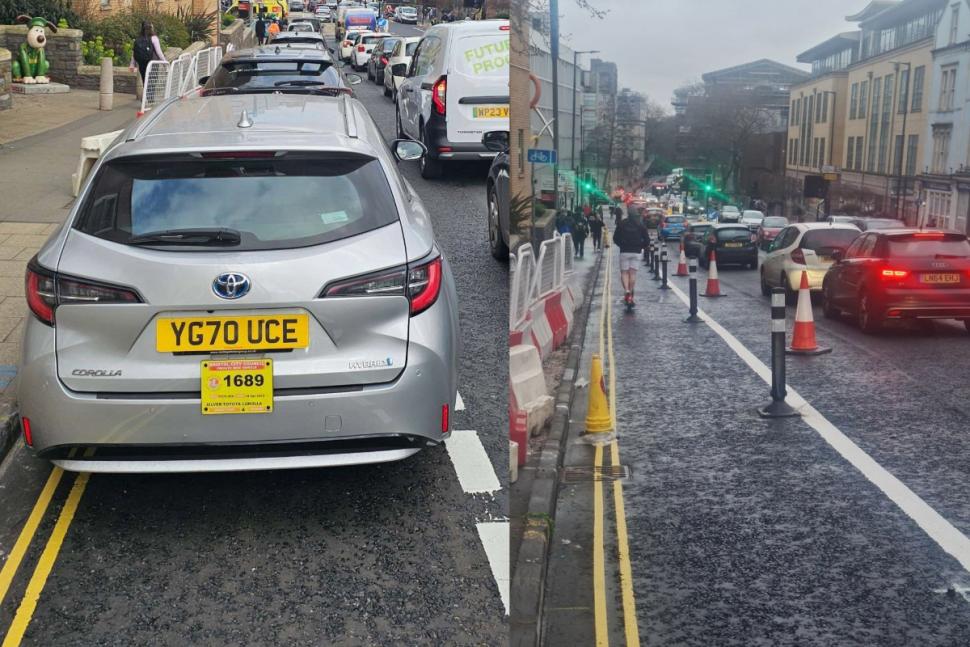
Bristol’s eighth place could even have been higher if it weren’t for its lack of protected cycle lanes, with its seven per cent ratio of segregated infrastructure landing it in 30th on that particular metric, a poor showing currently in the process of being rectified, at least partly, by the city council’s ongoing (and occasionally divisive) active travel plans.
And while London only placed 14th overall, the UK’s capital did at least come out on top on the School Streets ranking, introducing 500 versions of the safety initiative, which restricts motor traffic outside schools at drop-off and pick-up time, over the past decade – roughly half of the total number of School Streets implemented across Europe.
London also had the highest share of School Streets of any city in the ranking, with 27 per cent of all schools now featuring one.
“In cities with a high number of implemented school streets, strong grassroots mobilisation of parents, pupils and teachers has played a crucial role in driving change,” the report said.
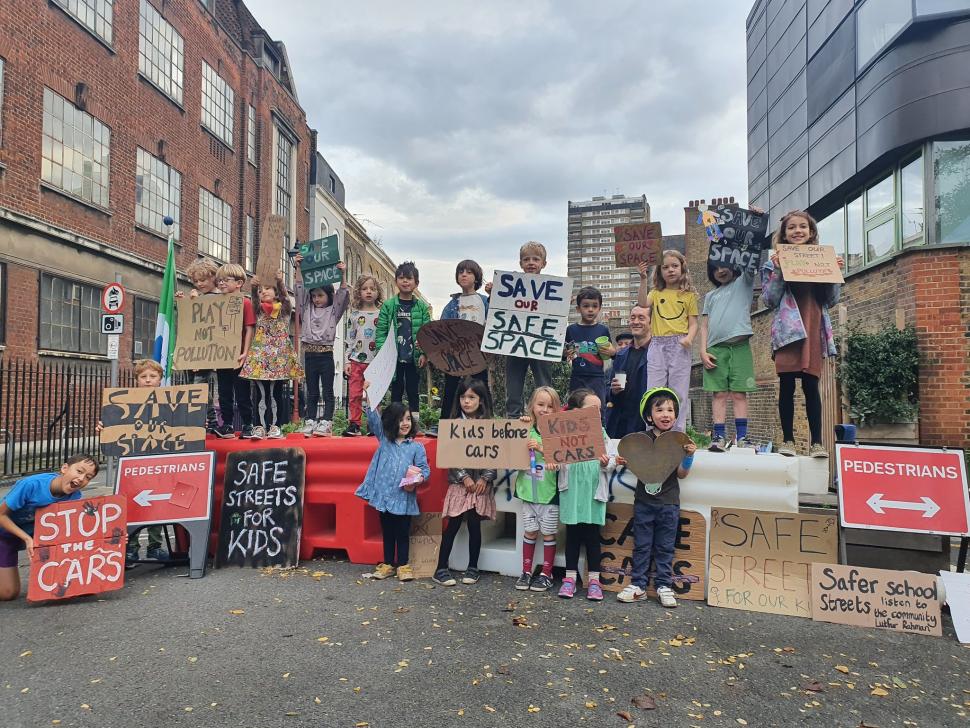
“Cities like London, Paris, Brussels but also Milan, Turin, and Rome have seen participation and bottom-up pressure from local campaigns and communities, which often led to the adoption of school street programmes at the district or city level.”
However, the three British cities assessed for the report, London, Bristol, and Manchester, all finished in the bottom 10 when it comes to protected infrastructure, a blind spot noted by Clean Cities.
“The UK as a whole lags behind… with even its more ambitious cities like London and Bristol struggling due to the prevalence of unprotected cycle lanes and a lack of political ambition,” the campaign noted.
“Major differences between well and poorly performing cities in the same country highlight the critical role of local leadership, long-term investment and vision in building safe, child-friendly cycling networks.”
Based on their findings, Clean Cities has called for a number of policy recommendations to be implemented across the 36 cities to improve the safety of children walking and cycling, including “school streets for every child”, a ‘safe system’ approach to road safety and traffic calming, the creation of ‘living districts’ that prioritise emission-free transport.
“Any city can create the conditions for child-friendly mobility, as demonstrated by the rapid transformations in many of the leading cities,” Clean Cities concluded.
“The common denominator among the leading cities is political leadership.”










14 thoughts on “Bristol ranked eighth best city in Europe for child-friendly cycling – but UK “lags behind” due to unprotected bike lanes and “lack of political ambition”, researchers say”
“However, there have been
“However, there have been recent concerns that the recent decision by the Netherlands’ current right-wing government to increase road speed limits, as well as its general disdain for climate-friendly policies, could impact the safety of cyclists” What is it with these far right whackos? I find it almoost impossible that the Government of the Netherlands, with it’s vulnarability to flooding could even think about dropping climate-friendly policies.
“However, there have been
“However, there have been recent concerns that the recent decision by the Netherlands’ current right-wing government to increase road speed limits, as well as its general disdain for climate-friendly policies, could impact the safety of cyclists” What is it with these far right whackos? I find it almoost impossible that the Government of the Netherlands, with it’s vulnarability to flooding could even think about dropping climate-friendly policies.
When we moved to Paris 5
When we moved to Paris 5 years ago and our children started school there, one difference we noted immediately between Paris and London was the number of bikes with small children on child seats, the number of female cyclists, everyone wearing ‘normal clothes’ whilst cycling and the number of children walking around to school and activities unaccompanied. At first I was quite taken by this, because you don’t see young children walking around unaccompanied to their football lesson or whatever, in London. For example, we always (and still mostly do) drop off our daughter and collect her from her horse riding. (with a cargo bike, by the way) But all the other children arrive and leave by foot or by bus. Now I can go into a whole debate on the ‘French mentality’ (but remember that Paris is an international city like London) and I appreciate that Paris is horrendously expensive so parents have to work, but my main conclusion, bourne out by this report, is that the streets in Paris are relatively safe – so parents feel safe to let their children use the streets.
Rome73 wrote:
I think those are indications of a healthy cycling society – ‘normal clothes’, children on bike seats etc.
What we have in this country is an extremely unhealthy obsession with the car and prioritising drivers over other modes of transport. We should copy Paris if we want to improve our cities.
hawkinspeter wrote:
I’d say not so much a “healthy cycling society” as a healthy society. After all, most of those kids in Paris we’re told are walking or bussing to their activities, school etc. In a healthy society it will safe and normal, and widely accepted as safe and normal, that kids get around on their own by bike, bus, on foot, etc; healthy cycling is a part of healthy society but healthy society is wider.
The article states: “The
The article states: “The Clean Cities Campaign report praised Bristol’s plethora of 20mph roads, describing the city as a European “leader” for safe speeds”
But…
“On 20 mph roads 86% of cars exceeded the speed limit”
Department for Transport, Vehicle Speed Compliance Statistics, Great Britain.
Both could be true, if people
Both could be true, if people are generally doing 27 in a 20 zone, instead of 37 in a 30 zone elsewhere.
mdavidford wrote:
I’d say that is the way it generally works.
Not necessarily antithetical,
Not necessarily antithetical, I haven’t been to Bristol in far too long but if the roads have been properly re-designed with new layouts that encourage drivers to stick to 20 mph – humps, pinch points, speed cameras et cetera – there is no reason they shouldn’t buck the national trend. The problem with 20 mph limits that too often the only investment made in them is the signs. A few strategically placed average speed cameras would work wonders and probably rapidly pay for themselves.
Traffic calming measures have
Traffic calming measures have been installed on a great portion of Bristol’s 20mph roads. This is done in a grass-roots, low cost manner by drivers generously narrowing roads using their currently unused motor vehicles.
I’m all for independent
I’m all for independent mobility for children – aside from just being an end goal I think that’s the most effective way (to campaign) to achieve better active travel provision (and nicer places) for everyone.
However … some of these “cities ranked by…” reports have been rather silly. I wonder if this in same category?
So they are measuring “indicators” here (3 metrics). But surely the best way to measure if a place genuinely favours X is by how much X is happening? For children getting about independently … we should measure that, no? What about “percentage of children walking or cycling to school by primary or secondary education” (of course – those are national average figures not cities)?
Like many of these rankings perhaps the key metric (“independent mobility”) is a bit hard to define, and harder to get (comparable) numbers on than these concrete but indirect “indicators”.
These folks seem to be particularly heavy on transport (car) electrification – I think another of their reports was featured in road.cc on that. Of course, harm minimisation and all that… Anyway, no further speculation why they chose to do this here although I will just note in passing that the “best cycling city” rankings produced by the Copenhagenize index folks curiously always seemed to have … Copehagen at #1.
Their indicators aren’t necessarily bad choices (school streets, safe speeds, protected cycling infra) but again they’re indirect. And for speed limits and for the cycling infra “quality” is at least as important (although they do specify “protected” that also varies…). Some places in the UK would advertise quite a bit of “protected cycle infra” which no rational person would let their kids out on, and our 20mph limits (while helpful) are poorly policed and don’t mean the speed is 20mph or lower in practice. And does “share of primary schools with pedestrianised or temporarily closed school streets” always equate to “great”? It might not be a biggie where children can arrive on completely separate cycling infra.
I live in Bristol, and have
I live in Bristol, and have an 8 year old son who loves cycling.
Bristol doesn’t deserve this high ranking at all. There are a few disconnected routes some of which have segregated cycling on them. Often those routes are closed or obstructed.
The roads are far too busy with speeding cars
Wolfcastle50 wrote:
Most of the speeding cars aren’t being driven in the centre though – it’s far too congested for them to even get up to 20mph
The report seems to be for
The report seems to be for the city as a whole, not just the centre. Most people with families don’t live in the centre. Few children in the centre, but more cycling infrastructure in the centre.