


Forum Replies Created
-
AuthorReplies
-
 hawkinspeter
Captain Badger wrote:
Captain Badger wrote:
No shaming here. What squirrels get up to in the privacy of their own gnome is entirely their own affair…..hawkinspeter wrote:……Don’t kink-shame them
Hmmm
 hawkinspeter
Captain Badger wrote:hawkinspeter wrote:TheBillder wrote:But what would the elves do all day if people didn’t leave the bags? They’d have nothing to tidy up!
hawkinspeter
Captain Badger wrote:hawkinspeter wrote:TheBillder wrote:But what would the elves do all day if people didn’t leave the bags? They’d have nothing to tidy up!They could study for their elf and safety qualifications
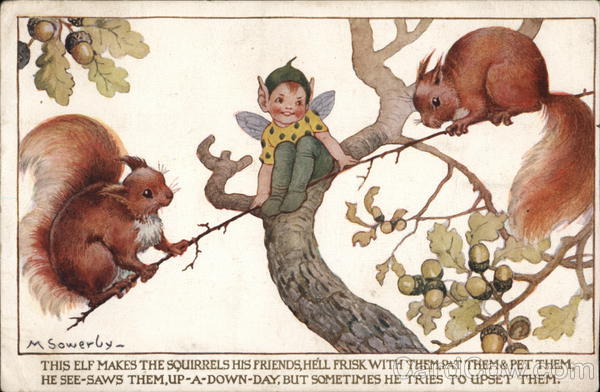
Frisking and petting with the elves, hmmmm?

Don’t kink-shame them
 hawkinspeter
TheBillder wrote:
TheBillder wrote:But what would the elves do all day if people didn’t leave the bags? They’d have nothing to tidy up!They could study for their elf and safety qualifications
 hawkinspeter
Captain Badger wrote:
Captain Badger wrote:
Elimination Reduction Isolation Control Substitution would come under elimination. I’m just being didactichawkinspeter wrote:I thought that was covered by elimination and substitution
Where’s the PPE?
hawkinspeter
wycombewheeler wrote:
wycombewheeler wrote:1a ban motor vehicles – probably not feasible…
I agree that banning motor vehicles isn’t politically possible at the moment, but it’s interesting that some cities have taken that option: https://www.bbc.com/future/article/20191011-what-happens-when-a-city-bans-car-from-its-streets
hawkinspeter
I’m sorry for your loss.
I’m sorry for your loss.
Most enthusiastic cyclists do wear some elements of hi-viz/reflectives and personally, I go for bright (flourescent) green when I can but shorts/tights are usually black though that does provide a two-colour scheme that should provide good contrast against most backgrounds.
Also, as a member of Cycling UK, I’ve got insurance though a lot of household insurance policies will also provide cycling insurance (partly because it’s very cheap to provide due to very few claims against cyclists).
To indicate how bright colours are simply not effective, have a look at this forum thread: https://road.cc/content/forum/car-crashes-building-please-post-your-local-news-stories-276441
The problem we have with people asking cyclists to wear hi-viz/helmets, follow rules, cycle in a certain way etc. is that it steals attention from proven, effective measures to improve road safety. I’d suggest that you’d be doing more good if you were to campaign for reduced inner-city speed limits or even LTNs (though that’s a whole political mess at the moment). There’s also the significant problem of HGVs that have really poor visibility and their drivers have been killing quite a number of cyclists in London especially.
By the way, I can recommend a watch of the short film about how the Netherlands made a determined effort to improve road safety starting in the 70s: https://vimeo.com/361286029
hawkinspeter
Again, it’s not about fault
Again, it’s not about fault and blame, it’s about taking practical steps to improve road safety and ideally achieve Vision Zero (https://en.wikipedia.org/wiki/Vision_Zero). The thing is that focussing on what cyclists/pedestrians are wearing is not going to be an effective strategy to improve road safety and unfortunately we see a lot of misguided attempts by motorists to distract from what does actually work.
Have a look at other cities around the world and how they have successfully managed to increase modal cycling share and improve road safety at the same time – hint: it wasn’t by focussing on cyclists’ clothing but instead improving infrastructure.
I find your “sitting on a cloud…” statement to be patronising and I imagine it’d be quite offensive to anyone who has lost a family member due to a road collision.
hawkinspeter
I’ve lost a small fortune on
I’ve lost a small fortune on my last 3 horse racing bets.
Firstly, ‘Sunshine’ threw the jockey,
Then, ‘moonlight’ fell at the first hurdle,
And finally, ‘good times’ finished last.I blame it on the bookie.
 hawkinspeter
I thought that was covered by
I thought that was covered by elimination and substitution
hawkinspeter
I’d quite happily swap the
I’d quite happily swap the traffic fumes in the air here for some of your horse poo – how much have you got?
hawkinspeter
andy james wrote:Be practical. Its the cyclist who gets killed or injured regardless of who you consider to be at fault. Shouldn’t they at least try to reduce the risk?Most (non-sporting) road cyclists do NOT have reflectors on their clothing.
A practical attitude to risk assessment and reduction is to be commended.
Usually, organisations try to implement a hierarchy of hazard control:
-
Elimination. In simple terms, this means that safety hazards should be eliminated from the workplace whenever possible. For example, if employees are working at heights, businesses should evaluate whether any activities can be done on the ground instead.
-
Substitution. Can a hazardous substance or piece of equipment be replaced with something less dangerous?
-
Engineering controls. These controls don’t get rid of the hazard but they aim to isolate workers from the risk. These controls mitigate events that could cause harm by, for example, putting workers behind guardrails or on elevating work platforms.
-
Administrative controls. These include employee training, placing warning labels on products and posting signs in work areas that alert people to possible hazards.
-
Personal protective equipment (PPE). PPE includes items such as safety glasses, hard hats and respirators. This is the last point at which harm can be mitigated.
Now, high visibility clothing would fall under PPE so that’s literally the last thing to be looking at to increase road safety.
By concentrating on the victim of the hazard (e.g. “it’s the cyclist who gets killed or injured”) you’re inverting the hierarchy and it’s really not an effective approach. Imagine if a building site didn’t worry about builders dropping tools etc from heights because they concentrated instead on people wearing hard hats?
So in terms of road safety, the first step would be elimination which is not really possible outside of lockdowns. Next would be substitution – could we substitute lots of private cars with public transport (or drivers with cyclists)? Then we get to engineering controls which would most likely involve separate cycling infrastructure – we already separate foot and motorised traffic, so it would seem a logical step. Afterwards we get to administrative controls which would be things like road signage and driver education and training. Finally we get to PPE which is not a popular option as can be evidenced by the lack of pedestrians wearing helmets, gloves and knee/elbow pads.
I would also note that by putting the onus (and presumably restrictions) onto everyday cyclists it would act as a “barrier” to people wanting to occasionally substitute their drive with a cycle instead – that would thwart the substitution principle and possibly increase the hazard (more cars, less cyclists and drivers having less exposure to cyclists on the roads).
hawkinspeter
Why are so many cars black or
Why are so many cars black or dark-coloured? You’d’ve thought that insurance would vary for different coloured vehicles, but the statistics do not back that up.
To be honest, if a motorist has trouble seeing a cyclist that’s wearing dark colours, then they need to stop driving until they can get their eyes checked (and do not drive to Barnard’s Castle).
With pedestrians, it’s nothing to do with colour perception and everything to do with them not looking at all.
I would suggest that we need to examine why some motorists/pedestrians don’t pay enough attention to their immediate surroundings rather than trying to shift blame onto the choice of clothing. For what it’s worth, most black cycling clothing also has highly reflective elements which is more than can be said for black-coloured cars.
Black clothing does have the advantage of disguising sweat/dirt etc so there can be pragmatic reasons to choose black. That’s why shorts are often black but tops are more brightly coloured.
hawkinspeter
I’d been riding my MTB for
I’d been riding my MTB for ages, but it wasn’t until my mid 40s that I got myself a nice road bike (Cannondale Synapse) and started to get into road cycling and going for longer rides rather than just getting around town.
I wish I’d discovered bib shorts/tights earlier as they’re so much more comfortable than non bib ones and you don’t get a cold gap if your top rides up a bit.
May 3, 2021 at 12:29 pm in reply to: Help selecting lowest gearing possible using sram red or similar #979893hawkinspeter
You should try the Cateye
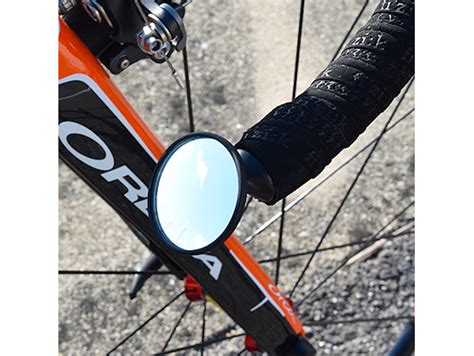
You should try the Cateye BM45 bar-end mirror – I’ve been using one for a few years. It’s the best combination of being easy to adjust whilst riding (on a clear bit of road obviously) so that you can get it in exactly the right position and yet it also stays put so that you don’t have to keep re-adjusting it (unless you knock it with your knee or lean the bike against something).
(generic photo – not my bike)
 hawkinspeter
A persistent cough could be
A persistent cough could be something innocent or could be a symptom of something much scarier, so definitely go see a doctor. I often find myself having a slight cough after riding for a bit, but that only lasts for half an hour and I assume that the exercise and heavy breathing has prompted my lungs to clean themselves up a bit (or cold air and traffic fumes irritating them).
-
-
AuthorReplies
