


- This topic has 62 replies, 22 voices, and was last updated 5 years, 5 months ago by
 Captain Badger.
-
CreatorTopic
-
May 13, 2021 at 11:25 am #31598
andy james
why do the majority of road cyclists wear black or other dark-coloured clothing?
Motorists are more likely to hit them, or pedestrians step in front of them!
-
CreatorTopic
-
AuthorReplies
-
Captain Badger
hawkinspeter wrote:
hawkinspeter wrote:I thought that was covered by elimination and substitution
Elimination
Reduction
Isolation
ControlSubstitution would come under elimination.
I’m just being didactic
Captain Badger
andy james wrote:
andy james wrote:Hi Hawkinspeter,
I have had one cyclist friend killed and another badly injured in the past 18 months, so this subject is close to me.
I am only asking cyclists (the ones saving money or doing what the govt is asking for) to try to be more visible. Bike lights are normally a joke compared to vehicle lights so don’t feel protected by them.
I am not excusing motorists, only asking cyclists to help reduce the accident statistics, whoever is at fault.
Are you suggesting that your friends didn’t make themselves visible enough?
Abrasion intended.Cycloid
I have had many drivers pull out in front of me while I was wearing Hi Viz. If the driver does not look you will not be seen
In 60-70% of collisions with adult cyclists the motorist is found to be at fault.(Cycling UK)
The most common explanation is “I did not see the Cyclist” (Cycling UK)
Most accidents happen on urban roads (RoSPA) Assume 30mph speed limits.
To pass the driving test you need to read a number plate (79mm characters) at 20 metres. Stopping distance at 30 mph is 23metres. If you can read a number plate how is it possible not to see a six foot cyclist at 23 metres? Regardless of what he is wearing.
We are where we are, we cannot do a risk assesment and start again from the beginning. To expand Hawkinspeter’s analogy we are riding through a building site where it’s raining lump hammers from the scaffolding.
So cyclists are almost forced to wear PPE even though they know it will make little difference. Once 50% plus wear PPE the minority can then be branded as reckless, by drivers and defence lawyers.
Upsetting the motoring lobby is a vote loser. No politician will change the status quo.
We are where we are – go back three paragraphs.
You are too polite
You are too polite
 ktache
Slow down a bit Andy, don’t
Slow down a bit Andy, don’t be so impatient, use those big glass windows that you are surrounded by, maybe concentrate on what you are doing.
Hirsute
This low bridge should have
This low bridge should have made itself more visible
These fluorescent yellow illuminated retroreflective bollards should have made themselves more visible.
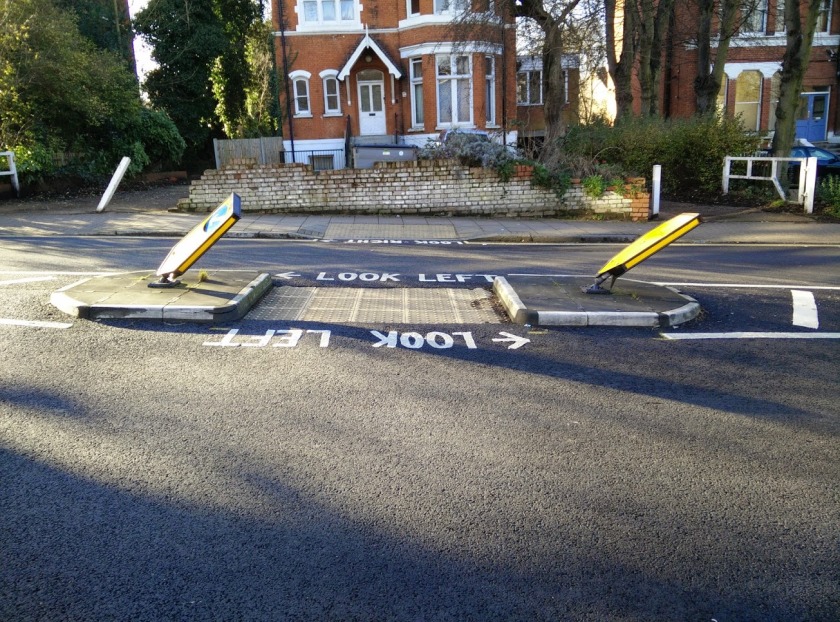
This fluorescent yellow illuminated retroreflective bollard should have made itself more visible.

This georgian house should have made itself more visible

Sriracha
andy james wrote:
andy james wrote:I have had one cyclist friend killed and another badly injured in the past 18 months, so this subject is close to me.I am only asking cyclists (the ones saving money or doing what the govt is asking for) to try to be more visible.
Why are you [i]only[/i] asking cyclists? Why not asking motorists, to try to look?OK, I realise that is a play on the use of the word “only”. But the point stands. I’m sorry for your loss, but if I’d suffered the death of a friend killed by a motorist, I’d be directing my attention primarily towards motorists.
andy james wrote:
andy james wrote:Be practical. Its the cyclist who gets killed or injured regardless of who you consider to be at fault. Shouldn’t they at least try to reduce the risk?
This is a reason for a parent to tell their offspring to wear a fluo jacket. It accepts that there is nothing they can do about all the motorists, and they’d rather their child did not die.However when it comes to public policy, things are different. You don’t assign priorities on the basis of who comes off worse, and you certainly don’t need to accept the status quo.
It would be foolish as a matter of public policy to simply accept the risk posed by motorists, when that is the very thing that needs to be addressed. Mom & Pop can’t do that, so they tell their kid to wear fluo and a helmet and light up like the proverbial Christmas tree, and whatever else. But the bigger picture is to address the source of the danger, in all the ways that Hawkinspeter (et al.) has outlined so well.
There are over 500 “near
There are over 500 “near misses” recorded here. In just about all of them the visibility of the cyclist was not in question. And yet the motorist failed to give the cyclist a safe distance. You can’t fix that by making the cyclist any the more visible. Where the driver did not see the cyclist it is generally because the driver could not see anything else either (eg 581). You can’t make things visible to someone who is unsighted by the sun or roadspray – and proceeds a pace nevertheless, literally in blind hope that nothing is there. hawkinspeter
wycombewheeler wrote:
wycombewheeler wrote:1a ban motor vehicles – probably not feasible…
I agree that banning motor vehicles isn’t politically possible at the moment, but it’s interesting that some cities have taken that option: https://www.bbc.com/future/article/20191011-what-happens-when-a-city-bans-car-from-its-streets
hawkinspeter
I’m sorry for your loss.
I’m sorry for your loss.
Most enthusiastic cyclists do wear some elements of hi-viz/reflectives and personally, I go for bright (flourescent) green when I can but shorts/tights are usually black though that does provide a two-colour scheme that should provide good contrast against most backgrounds.
Also, as a member of Cycling UK, I’ve got insurance though a lot of household insurance policies will also provide cycling insurance (partly because it’s very cheap to provide due to very few claims against cyclists).
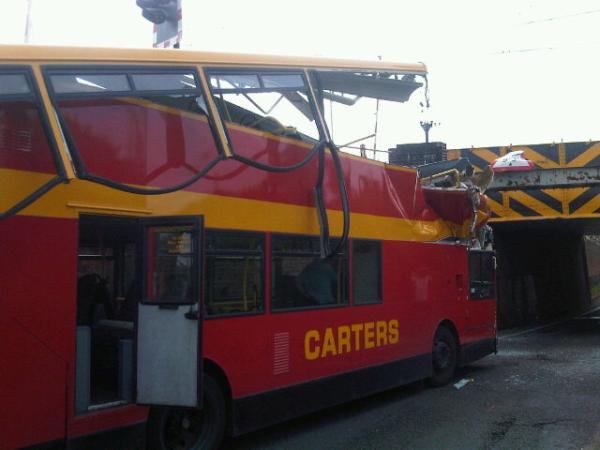
To indicate how bright colours are simply not effective, have a look at this forum thread: https://road.cc/content/forum/car-crashes-building-please-post-your-local-news-stories-276441
The problem we have with people asking cyclists to wear hi-viz/helmets, follow rules, cycle in a certain way etc. is that it steals attention from proven, effective measures to improve road safety. I’d suggest that you’d be doing more good if you were to campaign for reduced inner-city speed limits or even LTNs (though that’s a whole political mess at the moment). There’s also the significant problem of HGVs that have really poor visibility and their drivers have been killing quite a number of cyclists in London especially.
By the way, I can recommend a watch of the short film about how the Netherlands made a determined effort to improve road safety starting in the 70s: https://vimeo.com/361286029
Who is Hairy?
Who is Hairy?
If you want to respond to a poster, then use quote or reply.
“If we had only perfect motorists, cyclists would be safe, but then we would not need safety belts, airbags, crumple zones, crash helmets etc either.”
You are ignoring the risk control model and hierarchy.
wycombewheeler
hawkinspeter wrote:andy james wrote:Be practical. Its the cyclist who gets killed or injured regardless of who you consider to be at fault. Shouldn’t they at least try to reduce the risk?Most (non-sporting) road cyclists do NOT have reflectors on their clothing.
A practical attitude to risk assessment and reduction is to be commended.
Usually, organisations try to implement a hierarchy of hazard control:
-
Elimination. In simple terms, this means that safety hazards should be eliminated from the workplace whenever possible. For example, if employees are working at heights, businesses should evaluate whether any activities can be done on the ground instead.
-
Substitution. Can a hazardous substance or piece of equipment be replaced with something less dangerous?
-
Engineering controls. These controls don’t get rid of the hazard but they aim to isolate workers from the risk. These controls mitigate events that could cause harm by, for example, putting workers behind guardrails or on elevating work platforms.
-
Administrative controls. These include employee training, placing warning labels on products and posting signs in work areas that alert people to possible hazards.
-
Personal protective equipment (PPE). PPE includes items such as safety glasses, hard hats and respirators. This is the last point at which harm can be mitigated.
Now, high visibility clothing would fall under PPE so that’s literally the last thing to be looking at to increase road safety.
By concentrating on the victim of the hazard (e.g. “it’s the cyclist who gets killed or injured”) you’re inverting the hierarchy and it’s really not an effective approach. Imagine if a building site didn’t worry about builders dropping tools etc from heights because they concentrated instead on people wearing hard hats?
So in terms of road safety, the first step would be elimination which is not really possible outside of lockdowns. Next would be substitution – could we substitute lots of private cars with public transport (or drivers with cyclists)? Then we get to engineering controls which would most likely involve separate cycling infrastructure – we already separate foot and motorised traffic, so it would seem a logical step. Afterwards we get to administrative controls which would be things like road signage and driver education and training. Finally we get to PPE which is not a popular option as can be evidenced by the lack of pedestrians wearing helmets, gloves and knee/elbow pads.
I would also note that by putting the onus (and presumably restrictions) onto everyday cyclists it would act as a “barrier” to people wanting to occasionally substitute their drive with a cycle instead – that would thwart the substitution principle and possibly increase the hazard (more cars, less cyclists and drivers having less exposure to cyclists on the roads).
1a ban motor vehicles – probably not feasible
1b reduce motor vehicles – heres an action the driver cn take if they feel they are not up t the job of sharing space with cyclists (OP, this means you)
2 reduce risk from motor vehicles by reducing power and/or mass (subsitutute a less dangerous piece of equipment)
3)segregated cycle infrastructure – opposed by the motor lobby at every turn “yes we are in favour of cycling infrastructure but all existing road space must remain available to motor vehicles” so other than when building new towns this essentially means no cycle infrastructure
4 train drivers to take resposnbility more seriously, perhaps shorter bans for motoring offences rather than totting up oints may help – each incident longer ban thean the previous
5 now, having applied the above and still finding the risk significant we can look at hi vis clothing and helmets being mandatory
EK Spinner
hirsute wrote:I have had comments that my retro-reflective ankle bands are the most visible part of me – presumably because of the constant movement that the eye is drawn too.Hence the ‘rules’ on pedal reflectors
I am a fan of a a full reflective jacket on winter nights as the visible object is actually a human shape, just generally wear bright colours the rest of the time, not for HiViz, just I’m an 80s fan and love my team Z kit amongst others

I’m sure you are right, Hairy
I’m sure you are right, Hairy. If we had only perfect motorists, cyclists would be safe, but then we would not need safety belts, airbags, crumple zones, crash helmets etc either.
I’m sure self-drive cars and/or hi-vis jackets on cyclists are the answer!
-
-
AuthorReplies

- You must be logged in to reply to this topic.