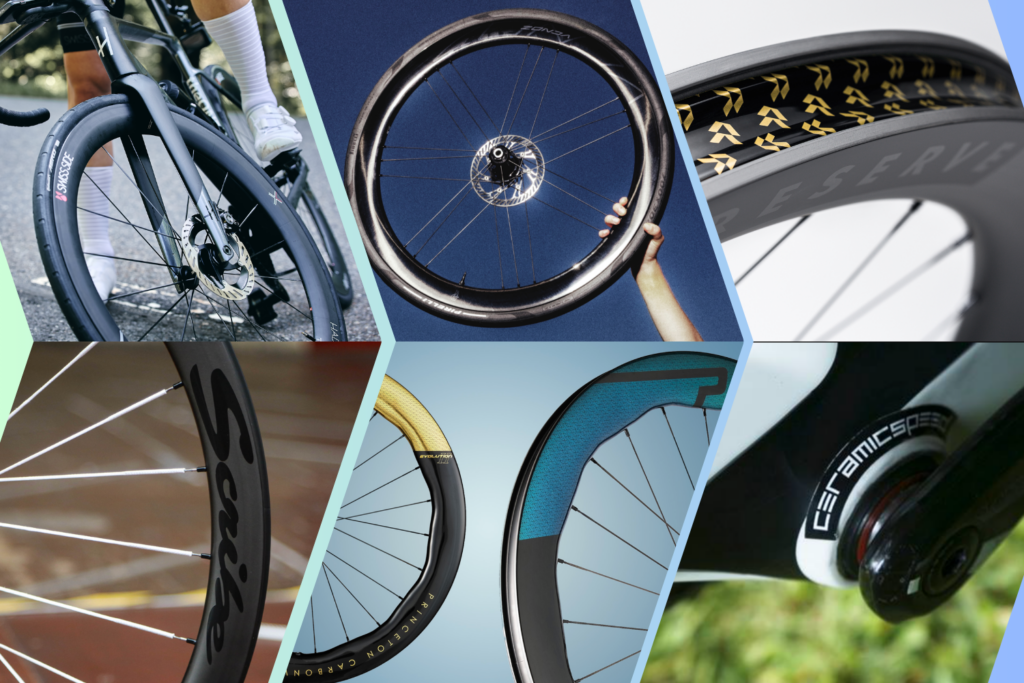

In Part 1 of this double header on all things wheels, we looked at the road bike wheel manufacturers and tyre specialists shaping today’s fastest wheel systems, from aerodynamics and rolling resistance to the ongoing hookless debate. Part 2 takes a step further behind the scenes, looking at the companies and suppliers whose technology increasingly influences how those wheels are designed and built.
I educated myself deeply about the technology and philosophy that shapes the blingiest, zippiest, most performative wheels on the planet. Swiss Side, Princeton Carbon Works, CeramicSpeed, Berd, Fulcrum/Campagnolo and Reserve all bring a different perspective, from wind-tunnel development and carbon technology to bearings, spokes and manufacturing.
Here’s the best of the present from several of the most exciting brands making bike wheels right now, and all the cool ideas and tech just around the corner…
Swiss Side
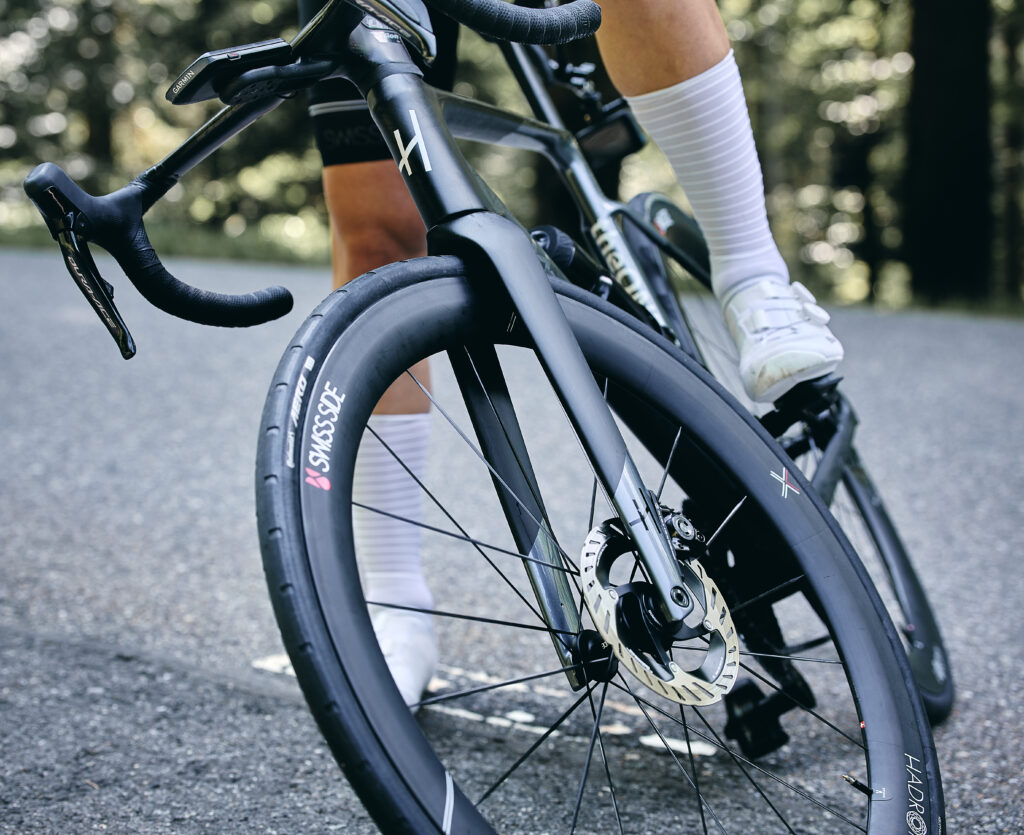
Swiss Side has become one of the leading sports engineering R&D consultancies, best known for its aerodynamic work in cycling. It has a particularly close relationship with DT Swiss as their aerodynamics partner, while also working with brands including Van Rysel, Storck, Merida, Canyon, Abus and Rudy Project.
Let’s start with its relationship with DT Swiss: “We do all of the aerodynamics for them. 100%. That applies to wheels, rims, hubs, spokes and other components, anything to do with the aerodynamic side”, says Jean-Paul Ballard, founder of Swiss Side. The two companies are independent, although some of Swiss Side’s aerodynamic work is exclusive to DT Swiss.
This can be slightly confusing because Swiss Side also manufactures its own wheels. Ballard explains that the differences are usually in the specifications, although some products are shared across both brands. For example, the Swiss Side Hadron Ultimate 55 (£1,500) and DT Swiss ARC 1100 Dicut wheels (around £2,500) both have identical rims and aerolite 2 spokes.
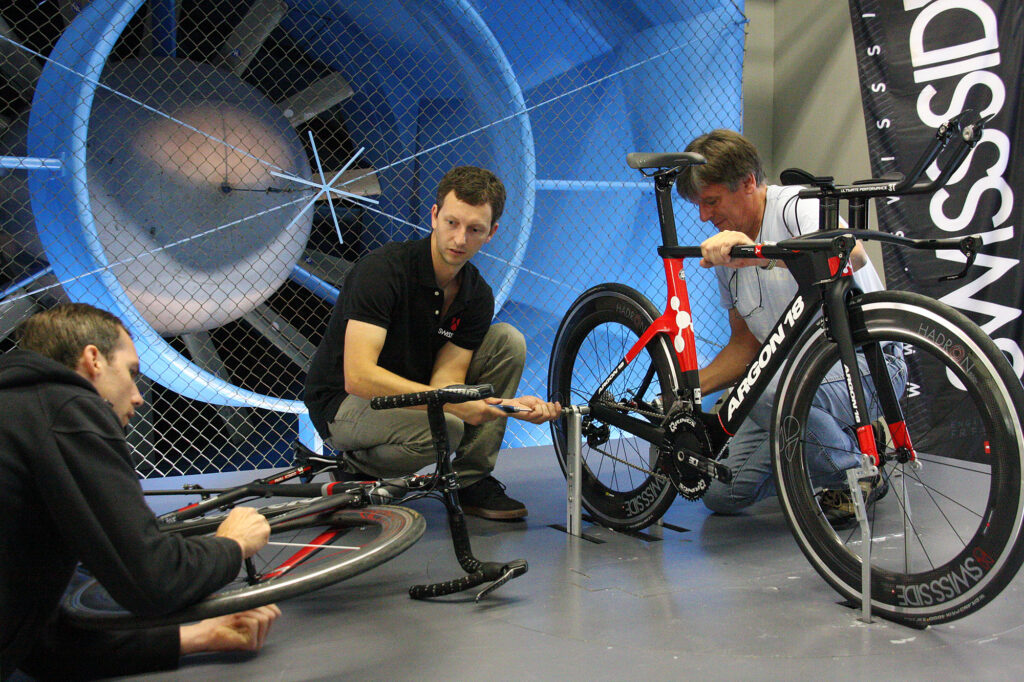
When it comes to wheel design, Swiss Side places as much emphasis on handling as outright aerodynamics. Ballard says it remains the only company using a wind tunnel capable of measuring steering forces, allowing it to develop wheels that remain stable in crosswinds. He believes this can deliver greater real-world benefits than chasing a marginal one or two-watt aerodynamic advantage. For most riders, he says, the priorities are simply: “Quality, reliability, handling, fun and comfort.”
One thing has always puzzled me: every brand claims to make the fastest wheel, yet independent tests rarely agree on which wheel actually comes out on top. Why is there still no consensus? Ballard thinks he has the answer.
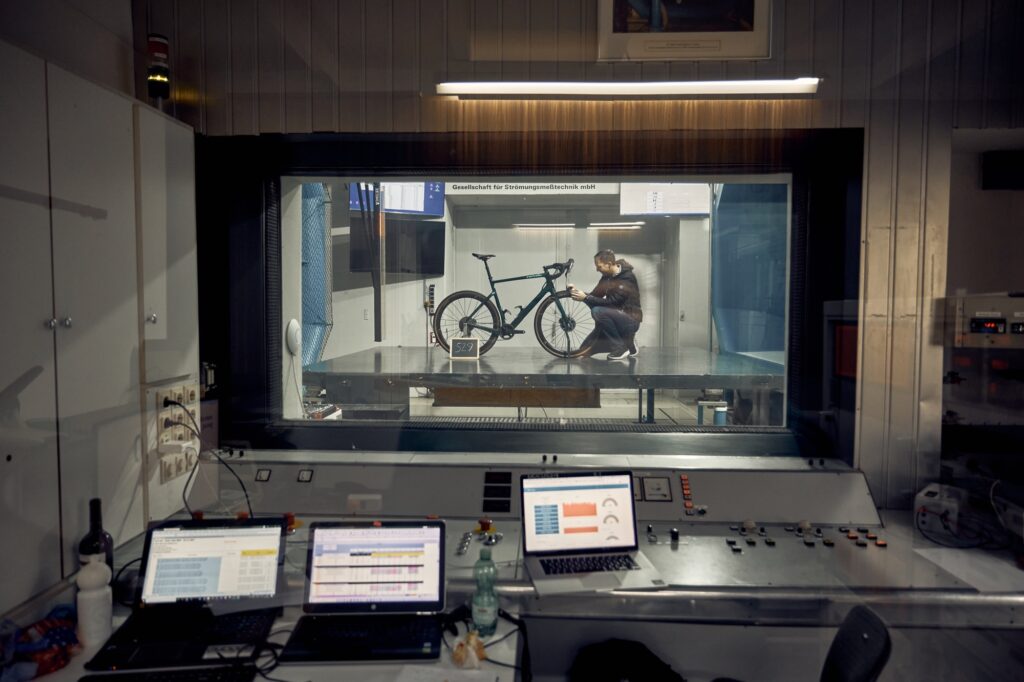
Not all wind tunnels are created equal. Ballard points to the GST wind tunnel in Friedrichshafen that they use, which can measure wheel performance to within 0.2 watts. In comparison, some facilities have a resolution of 2-3 watts, meaning that when the performance gap between the best wheels is only a couple of watts, the results can easily be lost in the measurement noise.
Ballard is data-driven and explains that whenever a competitor brings out a product, Swiss Side/DT Swiss buy it and test it in the wind tunnel. That analysis goes beyond aerodynamics, covering handling, rolling resistance, tyres and tyre pressure.
I also asked about wheel balancing, and, unsurprisingly, Ballard had the data. His conclusion? A 10g imbalance at 45kph is noticeable, but essentially insignificant in performance terms, contributing less than 0.1 watts.
A much bigger factor is wheel roundness. A poorly built wheel can be 0.5mm out of round, creating far greater oscillations and a more noticeable impact on ride feel and rolling resistance. In his view, precision wheel building matters far more than balancing.
Future technologies
One area where Ballard agreed with much of the industry was the potential of carbon spokes, which he believes could have a meaningful impact on future wheel design.
His final reminder was that wheels are about far more than chasing the last watt. The performance difference between many of today’s top wheelsets may be only a few watts, while shaving your legs can be worth 10-15 watts at 45kph.
Princeton Carbon Works
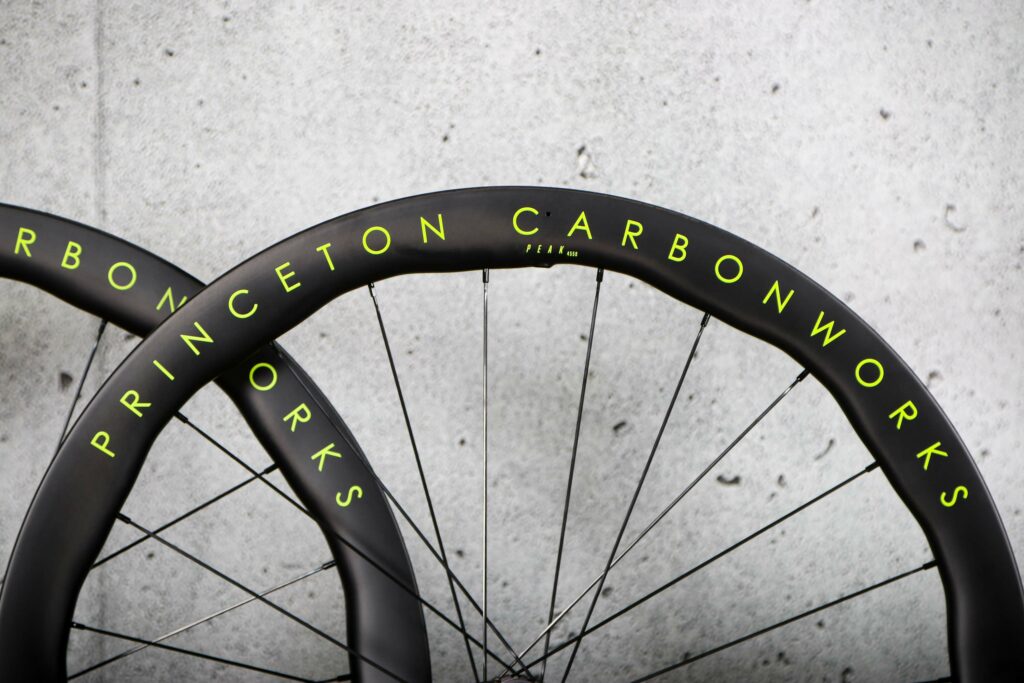
Princeton Carbon Works (PCW) are some of the most expensive wheels on the planet, and I interviewed founder Harrison Macris.

Perhaps the most defining elements of a PCW wheel is the trailing edge shape and their variable depth rims. “We knew that if you wanted to help resolve the flow at the trailing edge of a body, you could vary that trailing edge and create some variable depth in the profile. It’s no secret, this is not like a novel thing. So we went down this road and we thought we were making the world’s first variable depth bike wheel”, says Macris.
Now, every road/gravel wheel they make, except the tri-spokes and discs, have this tell-tale Princeton shape.
He’s the first to admit that “we’re kind of moving against the market trend”. The internal rim width has increased slightly, while the external width has grown considerably, but PCW remains relatively conservative by modern road-wheel standards. The company is also sticking with wider hooks rather than micro-hooks or hookless rims. “Because in our testing we found when you have a hookless sidewall you don’t really have a lot of control over what the tyres do.”
So how did they refine the new 6560 wheels?

They mounted and 3D-scanned 23mm, 25mm, 28mm and 30mm tyres from four different brands on four different rim widths, from 21mm to 24mm. “So now we have this huge matrix of tyre data where we know the exact cross-sectional profile,” explains Macris.
They then combined the tyre profiles with rolling-resistance measurements and CFD modelling, running the different tyre and rim combinations to identify the sweet spot between aerodynamic performance and rolling resistance – essentially finding the point at which aerodynamic gains outweighed any rolling-resistance losses.
This is where that ‘singular purpose’ comes into sharp relief. PCW aren’t designing wheels with comfort as a parameter: “We want to make the fastest wheels for the fastest athletes in the world. Full stop.”
“We make wheels for Olympic gold medallists, for world champions, and for world record holders. If the market wants to buy it, great. If they don’t, great. I want to make the best stuff”, he adds.
That doesn’t mean comfort is ignored entirely, though. Rather, it becomes part of the equation when it helps maximise speed. As Macris puts it: “A comfortable and confident cyclist is the fastest cyclist.”
“If you want to go fast around a course, a time trial, down a mountain or around a track, you have to be confident and if you don’t have confidence in your gear you’re not going to go fast”.
Future technologies
PCW isn’t planning to follow the trend towards ever-wider road tyres. “We don’t play in that sandbox. I don’t buy into this ultra-wide thing,” says Macris.
Wheel balancing, meanwhile, is something Macris sees as increasingly important. “I’ve been a big proponent of wheel balancing,” he says, although he stresses that it needs to be done with the complete wheel-and-tyre system, including the valve and sealant or tube.
That focus comes back to PCW’s wider philosophy: “We solve for one problem because we want to win the Ironman World Championship. We want to win the Olympics… We call it Purity of Purpose.”
CeramicSpeed
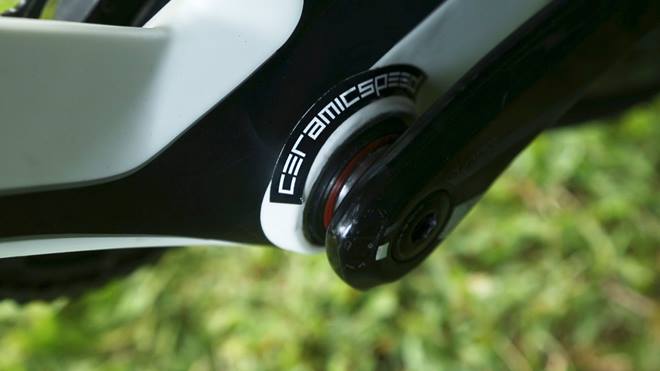
The humble bearing. Perhaps the least talked about wheel component. Though when talking about CeramicSpeed, humble is perhaps not the first adjective that leaps to mind. I spoke to Paul Sollenberger, a CeramicSpeed maven and veteran to see what makes the wheels go round.
“Silicon nitride is the composition of the ceramics that we work with”, says Sollenberger, “so that we can get the density, the strength, and the hardness to ensure that we can stand behind [our product] with up to a lifetime warranty”.
So absolute strength is high currency when talking about the ceramic balls. “All the weight of you as a rider is on four tiny contact points in those bearings,” says Sollenberger. “It’s that efficiency under load that separates [ceramics] from steel which can deflect”.
The ceramic balls are manufactured incredibly carefully and slowly to produce extremely round, hard surfaces, with that lengthy process going some way to explaining their high price.
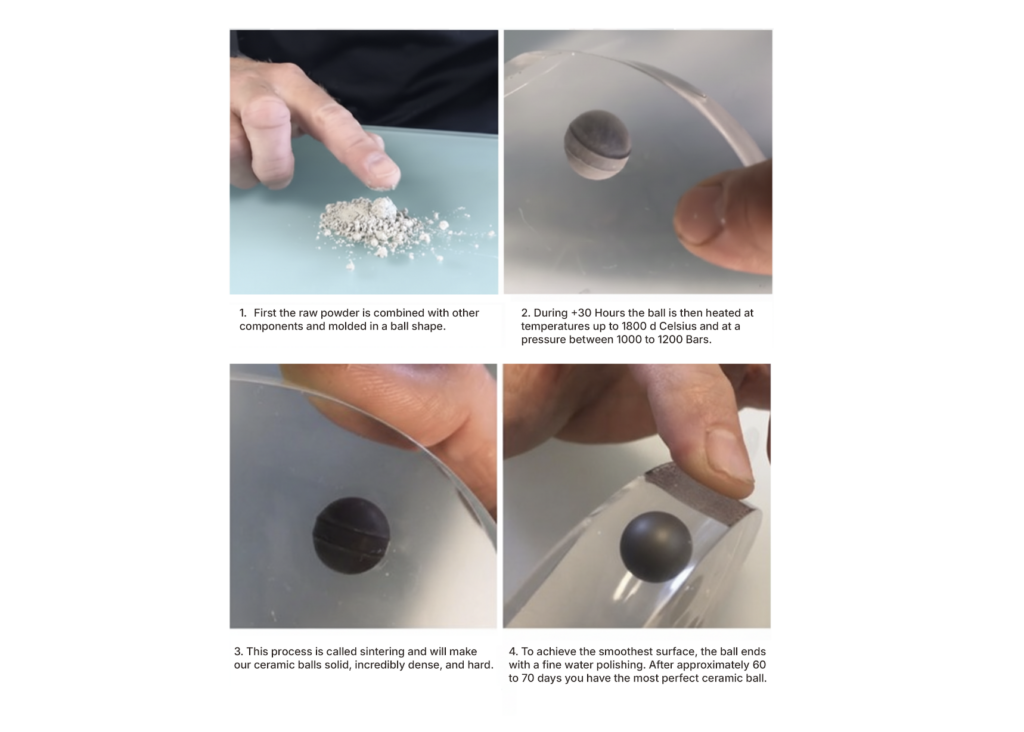
“We start with silicon nitride powder, and then that goes into some basic moulds. What we’re doing is adding heat and pressure to solidify that silicon nitride,” explains Sollenberger.
The process takes around 30 hours of heat and compression, followed by another 30 hours of carefully reversing the process to prevent the material becoming brittle as it cools. And that’s only the beginning.
The resulting balls are extremely hard, but not yet round, so they then go through a grinding and lapping process that “exceeds four weeks”, becoming progressively smoother as they’re polished between multiple plates. The final stage is little more than water polishing, producing the required mirror finish.
You can create a ball-like object from silicon nitride in under a day; CeramicSpeed’s process takes 60–70 days, separating them from others on the market.
Ceramic balls are graded from 3 to 99, with 3 being the highest. CeramicSpeed produces Grade 3 balls, meaning they are within three millionths of an inch of their specified size.
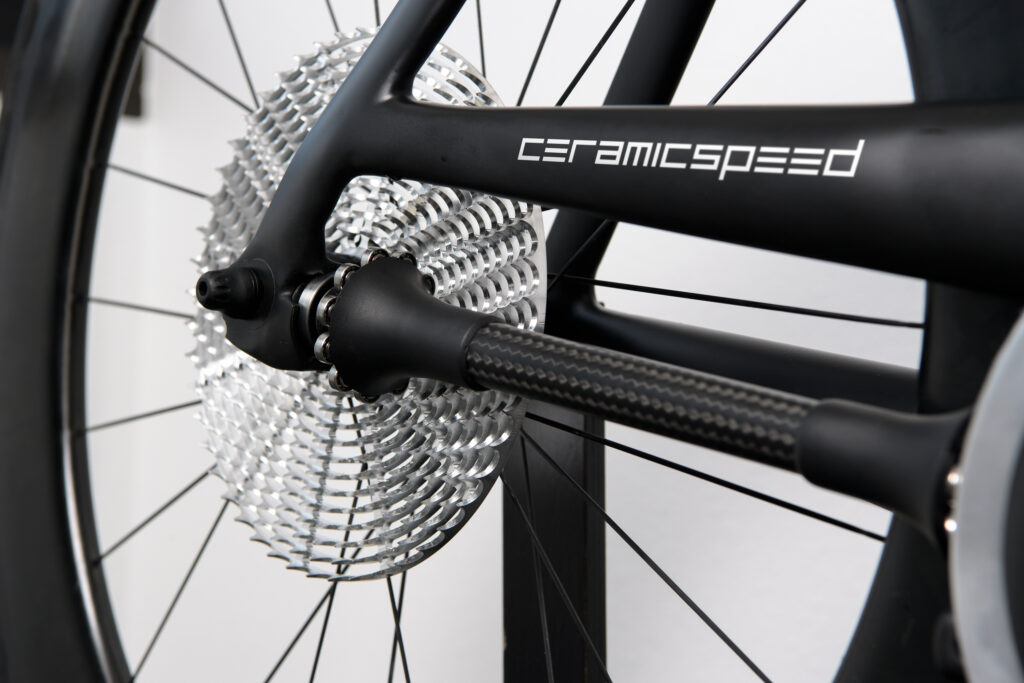
The precision goes even further when CeramicSpeed manufactures bearings for different OEMs. Even when the bearing itself is nominally the same size, different radial clearances require “a different size ball measured at the micron.” For some perspective, a human hair is around 50–100 microns in diameter, while bacteria are typically around 1–5 microns.
How do they quantify performance? Internally, CeramicSpeed tests a complete upgrade over a Dura-Ace-level groupset and claims a saving of 10-16 watts at 250 watts input.
That comes from reducing friction throughout the drivetrain and wheel bearings. Sollenberger says the derailleur system accounts for around five to six watts, the bottom bracket around 2.5-3.5 watts, and the wheel bearings another 3.5-4.5 watts, depending on the exact comparison.
The upper end of that 10-16 watt figure represents a fully optimised setup, with CeramicSpeed’s lowest-friction chain and oversized pulley system, race-day grease and a world-class athlete in mind.
But even Paul acknowledges that “that level of performance might not be [for everyone].” He says he regularly hears from customers: “I am not racing the Tour de France.” His response? “Thank you for letting me know because I was very confused.”
Berd
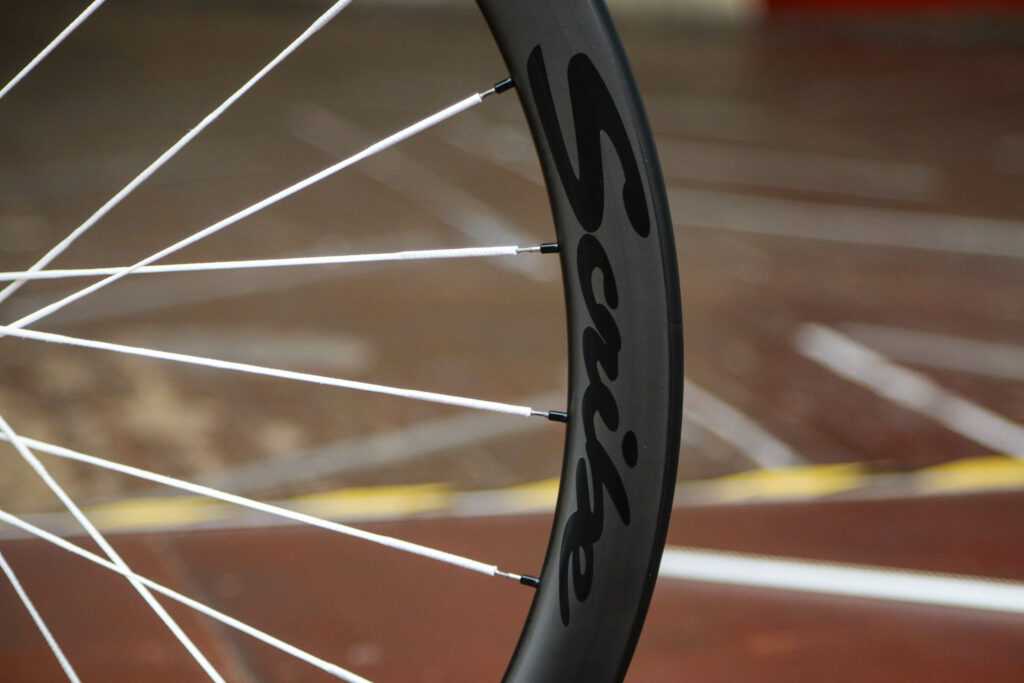
Berd has been around for about a decade and the name, (a portmanteau of ‘bike’ and ‘nerd’) tells you everything about their philosophy. They are a science and epistemology-based company that makes bike spokes out of Dyneema.
Dyneema is an ultra-high molecular weight Polyethylene, and is the “world’s strongest fibre”. It’s also bonkers light; 15 times as strong as steel yet it floats on water, and has uses across every performance industry where strength-to-weight ratios are king.
I spoke to Berd founder Charlie Spanjers, along with Tom Brantman and Jeff McCachren. Their key innovation was connecting Dyneema to a stainless-steel rod, allowing it to attach to metal spoke heads and screw into conventional nipples.
The team came upon the idea of using the Chinese finger-trap mechanism: Dyneema is notoriously difficult to bond to, so the fibres wrap around the rod and compress when tension is applied, creating friction that dramatically increases the strength of the connection. An adhesive is used too, but the friction component multiplies the strength by roughly 10 times.
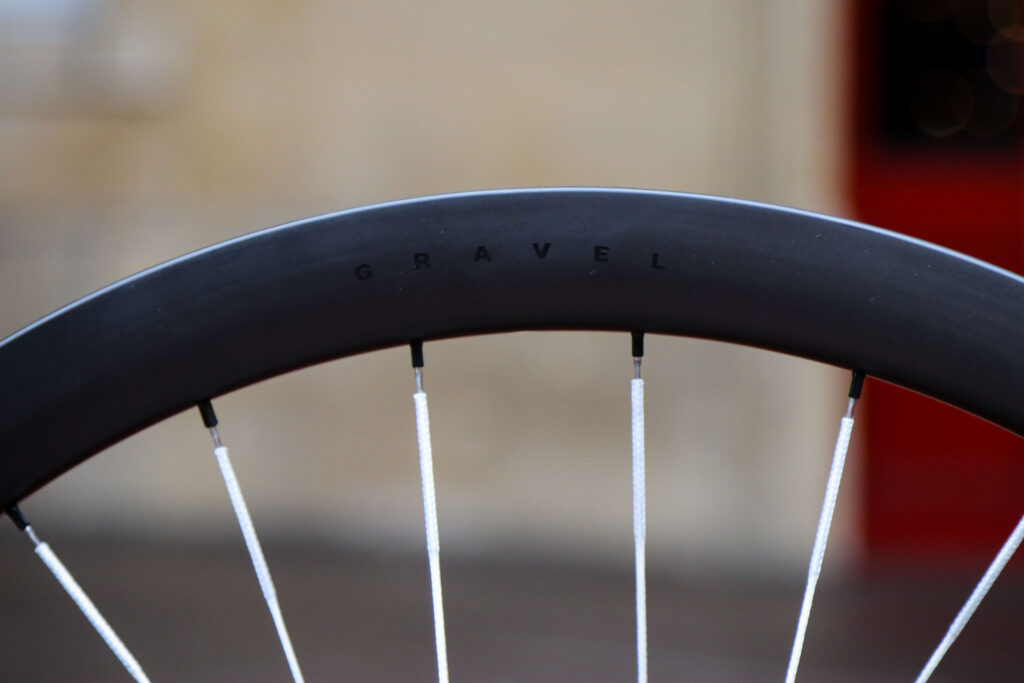
The result is a spoke weighing around 2.5g, compared with approximately 4.4g for a DT Swiss Aerolite. Replacing the spokes in a wheelset can therefore save around 100–150g. A standard 14-gauge steel spoke head at one end, combined with a loop at the other, also means Berd spokes can be retrofitted to a wide range of hubs.
But weight isn’t necessarily the main reason people buy them anymore. Berd originally developed its spokes for their low weight, but the brand says that another property has arguably become more important: vibration damping.
Spanjers is honest about where Dyneema doesn’t necessarily win. Carbon spokes have some significant advantages, particularly at high road speeds, where they can be shaped aerodynamically without adding weight.
Berd’s advantages, he argues, are durability, impact resistance and vibration damping. There is also the possibility that Berd could eventually flatten its round spokes into a more aerodynamic profile – potentially giving it the advantages of both materials.
-1024x640.jpg)
McCachren makes an important point, though: the aerodynamic disadvantage of a round spoke matters most at the speeds where aerodynamics dominate. For the vast majority of riders, Berd’s combination of low weight and vibration damping could be more relevant. “Those riders could be on Berd’s spokes and have a better ride experience than they ever would on a carbon bladed wheel,” he says.
A significant part of Berd’s business is in the US, where it rebuilds customers’ existing wheels with its spokes which opens up some seriously desirable combinations. “We do probably close to a thousand wheel rebuilds here at Berd,” says McCachren. In Europe, its partner Wheel-Tec offers both rebuilds and complete custom wheel builds.
There is also considerably more to building a Berd wheel than simply swapping out the spokes. The Dyneema spokes need to undergo a process that removes their initial viscoelastic stretch before the wheel can be considered stable.
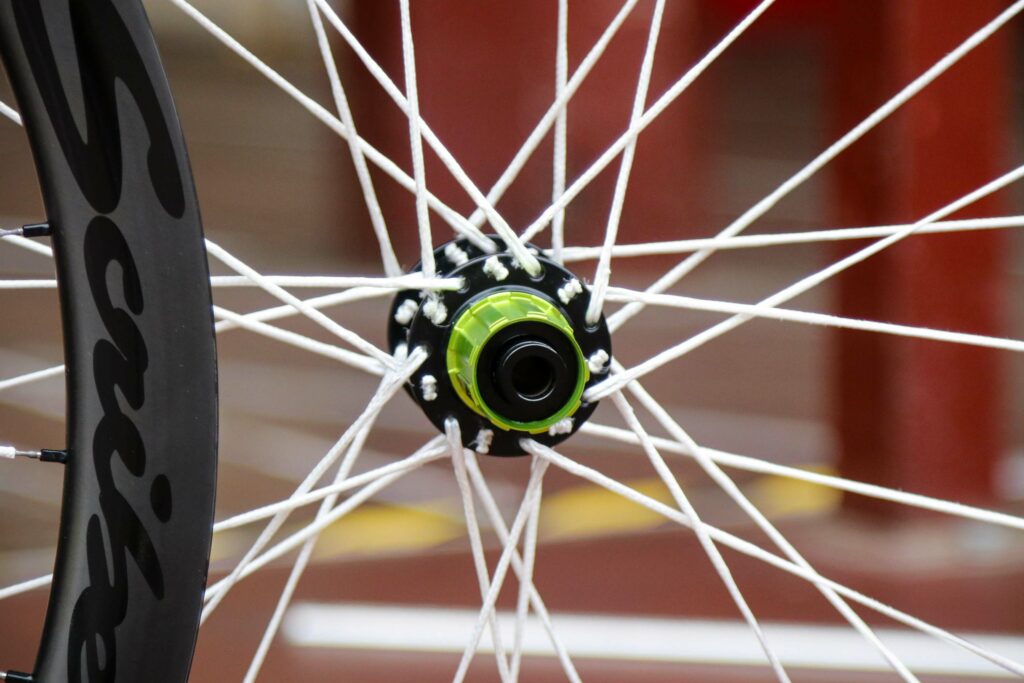
“This press pushes on the wheel to build it up to tension with 680 pounds of force on the spokes,” explains Spanjers. The wheel is held under load, flipped and loaded again, with the process repeated for three cycles. After that, the spoke tension should remain stable.
Future technologies
The second part of their business is TRUDI, a computer-controlled wheel-building machine designed to achieve precise spoke tension. “TRUDI can be used for every single spoke,” says Spanjers. Rather than removing the human from the process, it combines computer-controlled calculations with manual input: “It takes the things that a computer is best at… but still uses a human to put the drill on every single spoke.”
The computer calculates exactly how many turns each spoke needs, allowing the wheel to be tensioned and trued in a single pass. According to Spanjers, this means even a new wheel builder with just half an hour’s training can produce a more precise, rounder wheel in less than half an hour.
Campagnolo and Fulcrum
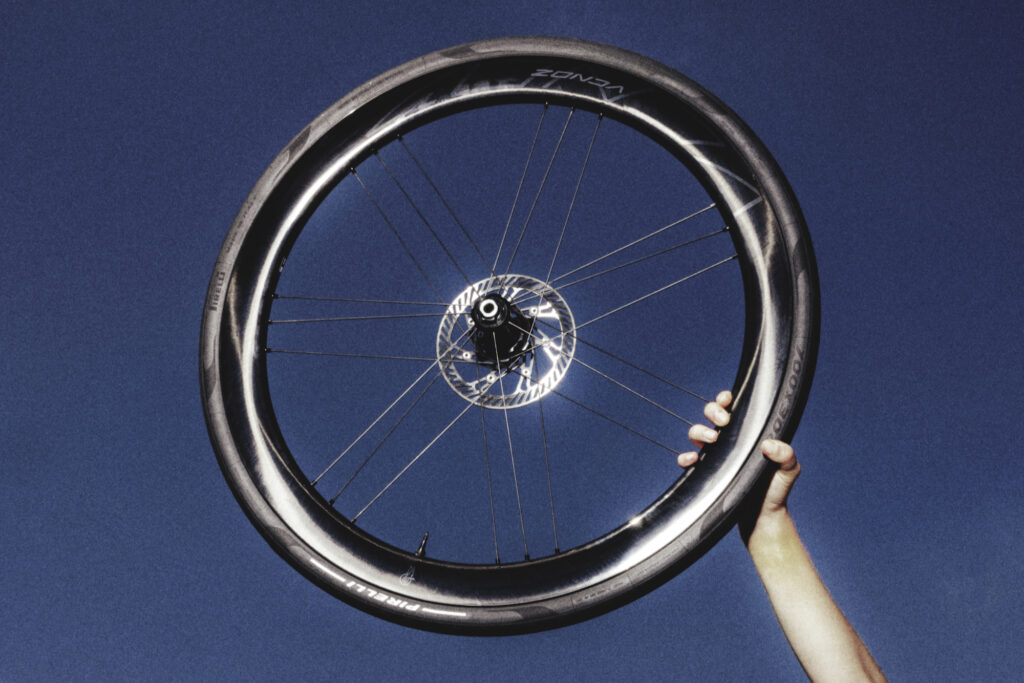
I spoke to Marco Franceschini at Fulcrum, Matteo D’Amanzo at Campagnolo, and Federico Gardin who managed product and marketing for both.
Campagnolo and Fulcrum are housed under one roof. “We are part of the same company, but there are two different teams working for the two brands,” says Gardin. The teams share knowledge, but develop products around distinct brand identities. “We have a clear strategy. We are focusing on specific high-end performance wheels for road with Campagnolo,” while Fulcrum takes a more all-round approach.
Franceschini added that both brands do OEM and aftermarket, although “Fulcrum is stronger in OEM right now.”
So how do they position themselves in the wider marketplace? A lot comes back to their Italian heritage and the amount of manufacturing they retain in-house. “Everything starts here in Vicenza,” says Franceschini. The company can manufacture an entire wheel, including making the moulds used to laminate the rims. Prototypes and initial production runs are made in Italy before mass production moves to Campagnolo Group’s two plants in Romania.

That level of control means the “spokes, rim, hub are designed for that wheel”, rather than simply combining off-the-shelf components. Even the spokes, which are produced by external suppliers, are made to Campagnolo’s own design.
The result is a wheel designed as a complete system, right down to the angle of the spoke holes in the rim bed, which allows the spoke to run straight into the hub flange.
“We treat the wheel as a fully integrated system because we want every force to be perfectly aligned on every single component,” says Franceschini. “It’s the only way we can deliver maximum performance and reliability.”
That attention to detail appears to extend into quality control. Franceschini says the company’s calculated wheel failure rate is now just 0.2 per cent, which he describes as “uncompromising reliability.”
Getting to that figure requires meticulous tracking throughout the manufacturing process. “Each wheel has a [unique] barcode,” says Franceschini. “We know the batch, the [origin of the carbon], the tension of the spokes, where the bearings came from, and who built it.”

In a sentiment that almost verbatim echoed Assos’ thoughts on clothing manufacture, Gardin added that neither Campagnolo nor Fulcrum were trend-followers.
“We know exactly what our competitors are doing because we are testing them,” says Gardin. The philosophy is simple: understand what the market is doing, then only follow if they believe they can improve on it. “If we are not the first one, let’s check and then we can do something better.”
That approach can make them look “more conservative”, particularly when it comes to technologies such as carbon spokes. Gardin says they are studying them carefully because of concerns about how they affect wheel behaviour and predictability.
The same thinking explains their rejection of hookless road wheels. “We never went hookless and we will never go hookless,” says Franceschini.
He argues that, based on their wind-tunnel testing, hookless offers no aerodynamic advantage over a conventional hooked rim, while limiting tyre choice and maximum pressures. “It’s just a limitation to the use of some tires. It’s just a limitation to the pressures.”
Future technologies

Finally, when asked what materials or technologies excite them about the future.
“We’ve always had a huge amount of technologies inside the wheels that were hidden and contributing to the ride feeling we’re looking for,” says D’Amanzo.
Now, the challenge is to turn that recipe for a distinctive Campagnolo/Fulcrum ride feel into something measurable and repeatable. Working with the University of Padua and its testing department, the company is developing a way to “predict the riding feeling starting from precise data that we can measure directly.”
In other words, the future isn’t necessarily about a revolutionary new material. It’s about finding a metric or algorithm that can bottle what makes a Campagnolo or Fulcrum wheel feel like a Campagnolo or Fulcrum wheel.
Reserve
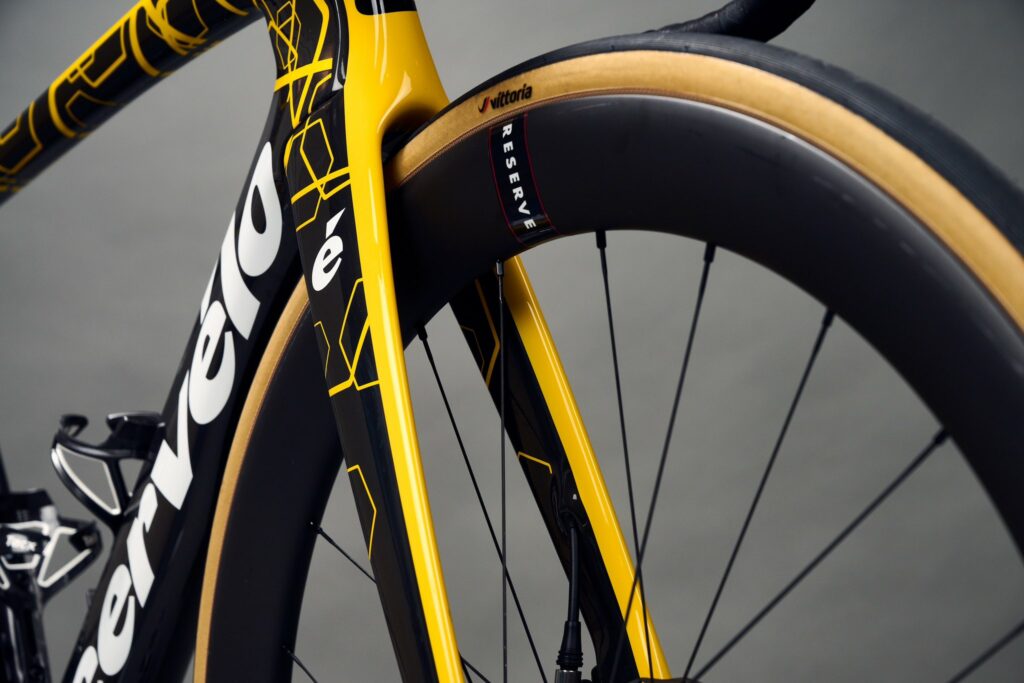
I spoke to Brian Bernard and Chase Holleman from Reserve, which had recently released its SL Turbulent Aero series. There are three depth combinations in the range, with the 57/64 and 42/49 variants having been used by Wout van Aert in major races.
So how does Reserve see itself?
“We’re the strong guys,” says Bernard. The company’s focus, he says, is on strength, durability and reliability, backed by a lifetime warranty. Reserve says it developed its wheels with rider use and abuse in mind.
The latest Turbulent Aero wheels retain that focus while reducing weight. The Vanoa carbon-spoked, Tune Pico-hubbed 42/49 semi-hooked version weighs 1,290g, with no rider weight restriction.
“We are in a place where they’re the lightest they can be while still being as strong as we want them to be,” says Bernard.
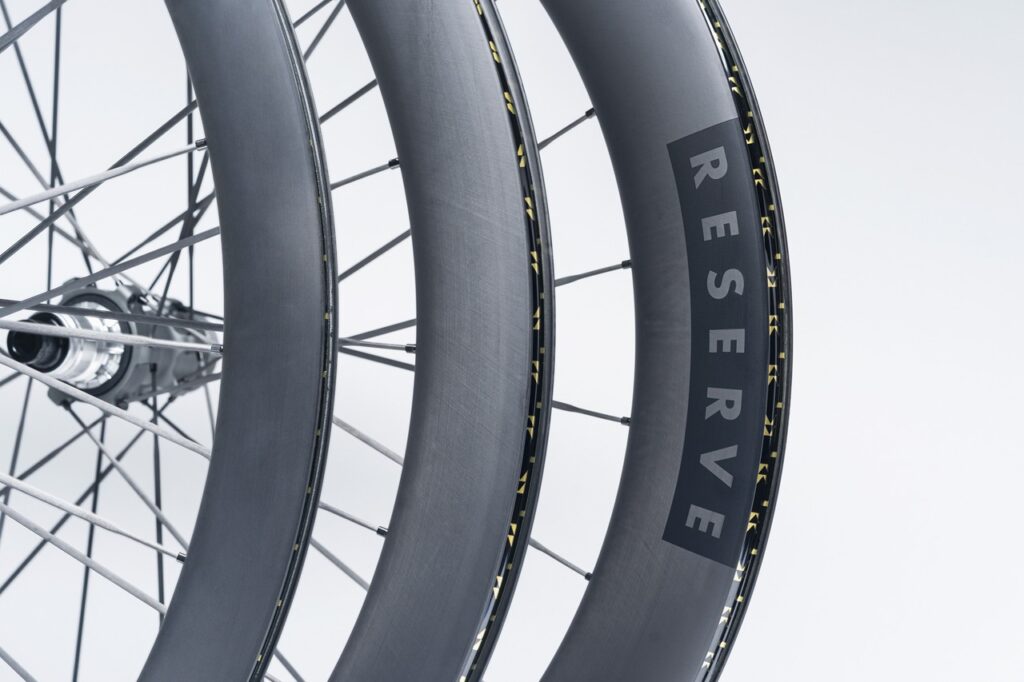
The more interesting development is Reserve’s approach to aerodynamic testing. Its Turbulent Aero protocols were developed with the wind tunnel in Guelph, Ontario, whose testing can replicate the turbulent airflow found in urban environments. Reserve collected real-world wind data from roads and used it to recreate less predictable conditions in the tunnel, rather than relying solely on steady airflow.
The wheels were also developed around the interaction between the wheel and bike. The 57/64 was designed “in conjunction with the S5”, with the wheel shape intended to work with the Cervélo’s seat tube as part of the overall aerodynamic system.
Future technologies
So what’s next?
“There’s a few things out there that we’re exploring, but nothing seismic [on the horizon]”, said Bernard. “There are things that could make a wheelset lighter, higher grades of prepreg carbon that we could use, that have sort of incremental gains… but we’re getting close to as fast as it can be in the current form.”
Carbon spokes, however, could represent the next major step in wheel performance. “That’s the frontier for wheel performance,” says Bernard. They’re becoming lighter, more reliable and, he argues, offer a genuine performance and ride-feel advantage: “I think you’ll see a lot of folks come with carbon spokes in the next couple of years.”
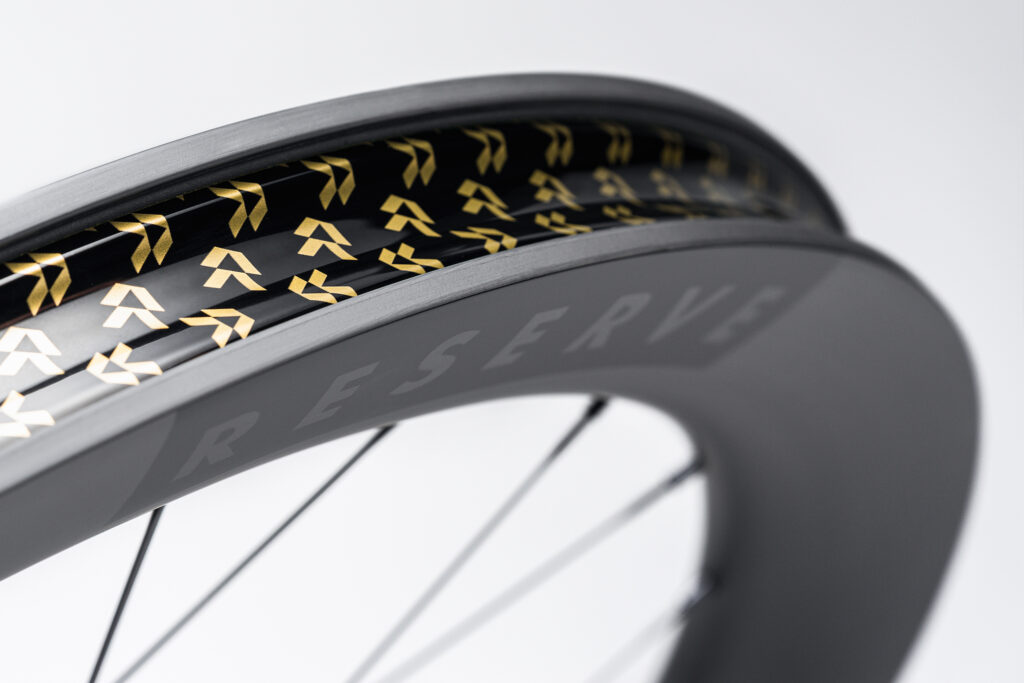
On gravel, Reserve expects tyre widths to settle rather than continue expanding. “I think we’ll see gravel settle back towards sort of the 45mm to 48mm tyres at most,” says Bernard. “I don’t think that the super wide tyres for gravel are going to stick too long or get any bigger.”
Cervélo’s recent Aspero 5 launch, with its renewed emphasis on aerodynamics, certainly suggests that gravel is becoming increasingly aero-focused. It’ll be interesting to see where Reserve goes next.
So there we have it. All the best technologies and philosophies of some of the best bicycle wheel-building companies in the world, and the brands that sit alongside them.