


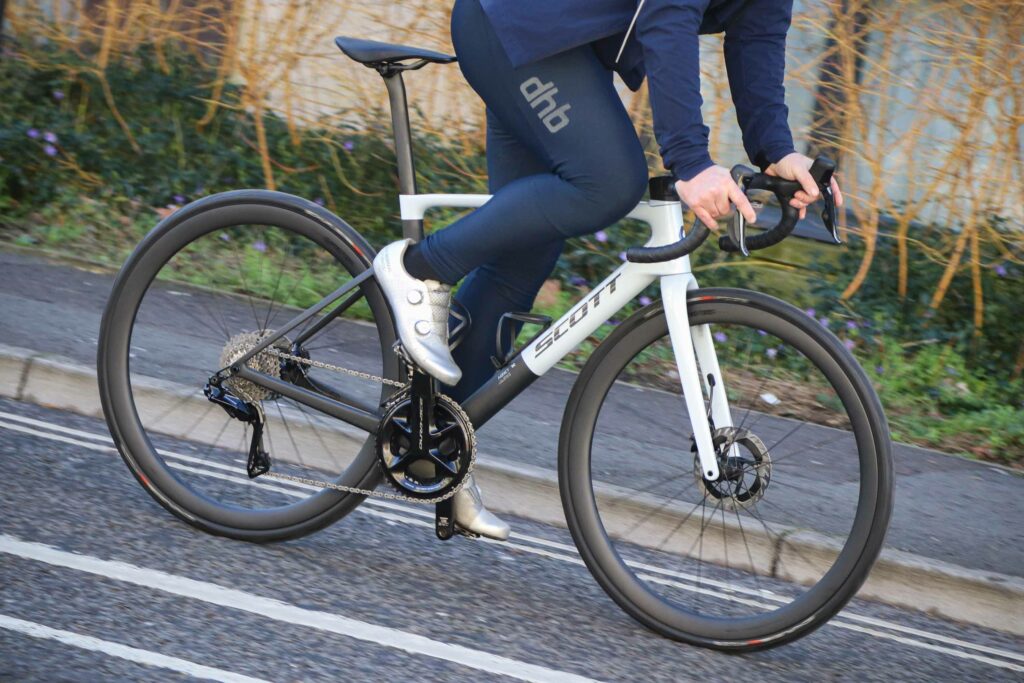



The Scott Addict RC Pro smashes the UCI weight limit; it’s very light and hugely responsive, and also has one of the best ride qualities I’ve found on a super-stiff, pro peloton race machine! It’s a classic all-rounder, and while it’s a big investment, in the current marketplace it’s very well specced for the price.
Check out more options to suit a variety of pockets in our guide to the best road bikes.
Scott Addict RC Pro: Ride
Stunning – I can literally sum up the ride quality of this bike in that one word!

True, you’d be hard pressed to find a bad bike at this sort of price and range-topping level from any brand, but at this ‘marginal gains’ end of the market it is quite literally the tiny details that count.
Bikes of this level are designed to have the stiffness required to cope with the kind of power output by professional riders, but weight also has to be factored in, and to a lesser extent comfort.
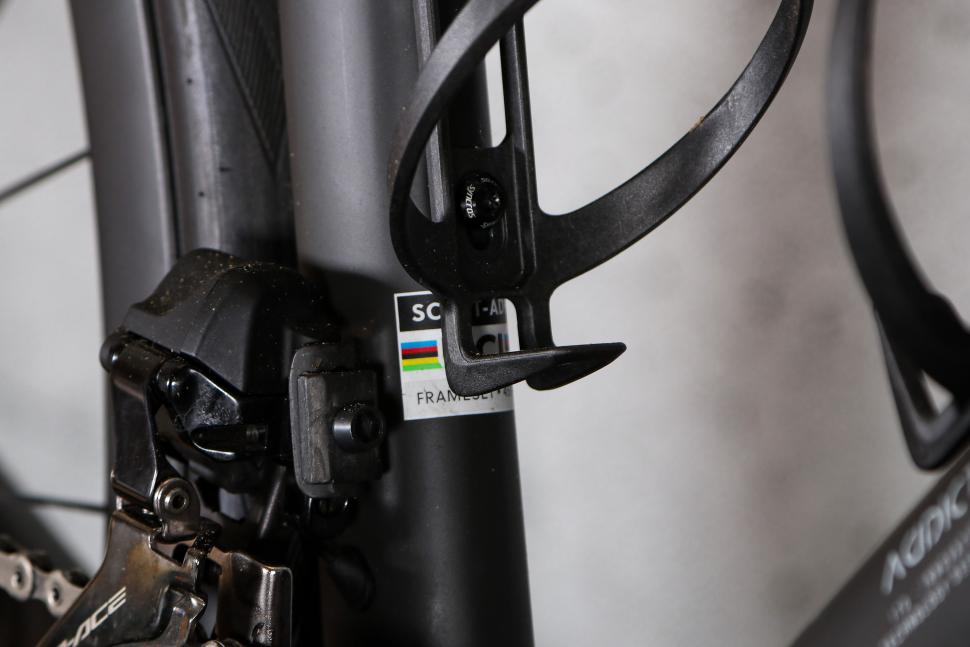
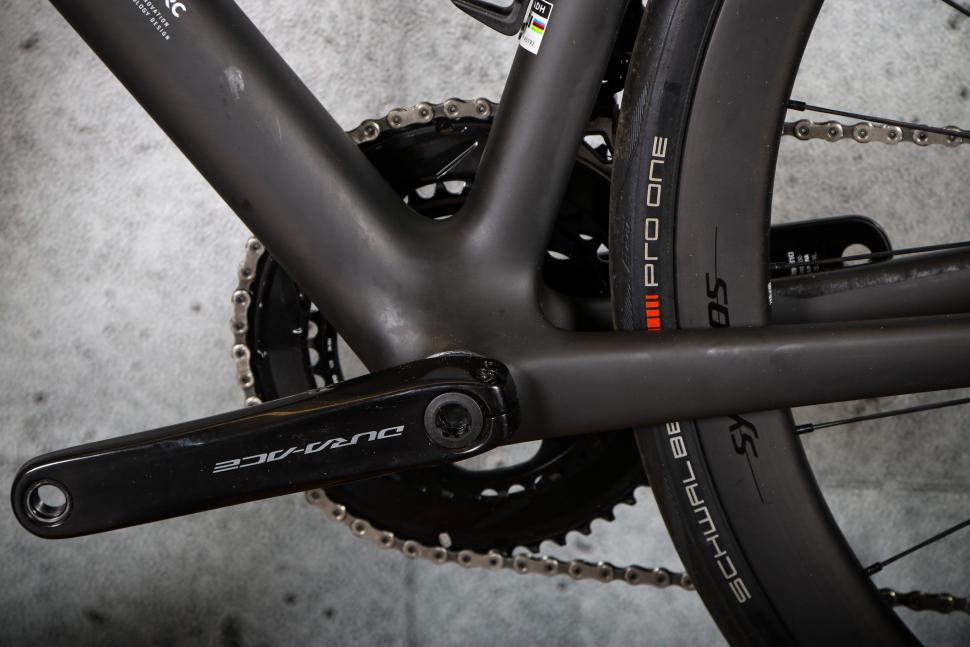
The Addict RC, as you’d expect, has no issues whatsoever with the amount of stiffness on offer for an amateur rider like me. It is incredibly tight around the bottom bracket area and the deep chainstays work hard to keep the rear wheel in check when you’re hammering on the pedals. The head tube area also shows impressive stiffness when pointing the Scott at fast, technical bends, while the fork legs show their resistance to flex under heavy braking.
The ride quality is, therefore, firm, but Scott’s designers have managed to bring in just enough compliance to offset any harshness, resulting in a relatively smooth ride, even on less than perfect country lane road surfaces.
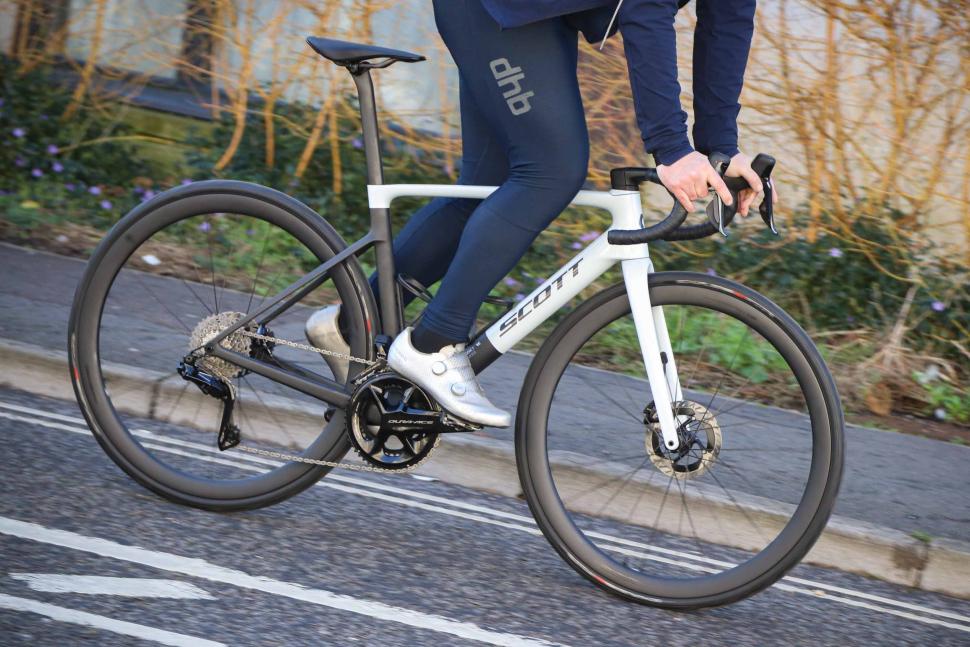
It’s probably not the bike I’d grab out of my collection to complete a hundred-miler, but if I was to, I know that I could finish it without my contact points feeling battered. It would be easy to explain this comfort away as all being down to the 32mm tyres fitted, but I ran them at my usual high-pressure preference, and even with some deep-section wheels and 28mm tyres swapped in, the ride remained unchanged.

This smoothness also means any feedback from the tyres is completely unmolested by high-frequency buzz, which gave me a lot of confidence when descending or riding on damp, greasy roads. I found the Addict RC to be one of the most ‘talkative’ bikes I’ve ridden in a long time.
The old ‘machine and rider as one’ is a well-worn cliché, but it was made for bikes like the Addict RC. Feeling confident of a bike’s ability allows you to push harder into the corners or on descents, which means more efficiency. More important than that, though, it means a big grin factor.
I had so much fun riding this bike!
The weight, or lack of it is also a defining factor in how the Pro behaves. On our scales this M/54cm build weighed in at 6.58kg, and that includes the bottle cages, out-front computer mount and the mini-tool bar-end plug that’s hidden inside the handlebar. Very impressive indeed.
The Pro is very responsive everywhere, especially under hard accelerations, and climbing is at the very least made a lot more enjoyable thanks to the feeling of efficiency as soon as you get out of the saddle and drive the pedals around.
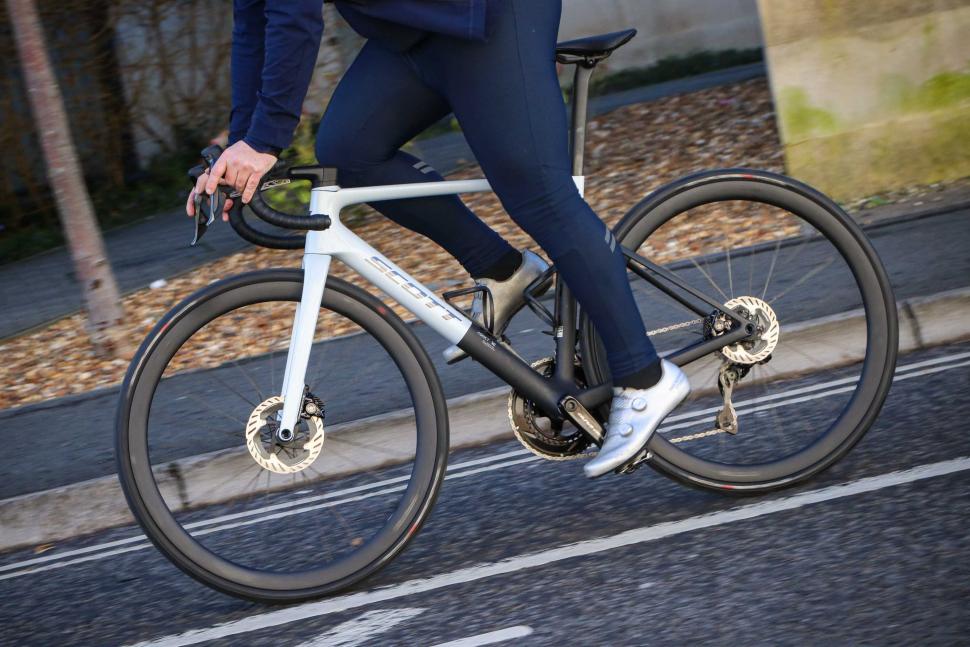
A short wheelbase means it is very reactive in the corners too, and the speed with which this bike changes direction meant I could get out of trouble just as quickly as I got myself into it. The seat and head angles are aggressive enough without being over the top, so while your position and the handling feels racy, it never feels compromised.
The steering is quick, which makes the Scott feel very nimble, and while not exactly twitchy it is right on the cusp of it. The slightest bit of pressure on one side of the bar shows just how quickly this thing will change direction, which could be a bit unnerving to some new to riding road bikes, but the seasoned roadie will be in awe of just how directable the front wheel of the Addict RC is.
From a ride point of view, I have no criticisms of the Addict RC Pro at all. This is a stunning and rewarding bike to be aboard.
Scott Addict RC Pro: Frame & fork
For this new Addict RC, Scott says it has drawn inspiration from its mountain bike designs and manufacturing, which means it has achieved a 300g reduction for the frameset over the previous iteration. Scott now gives a claimed weight of just 640g for the frame, and 915g for the frame and fork.
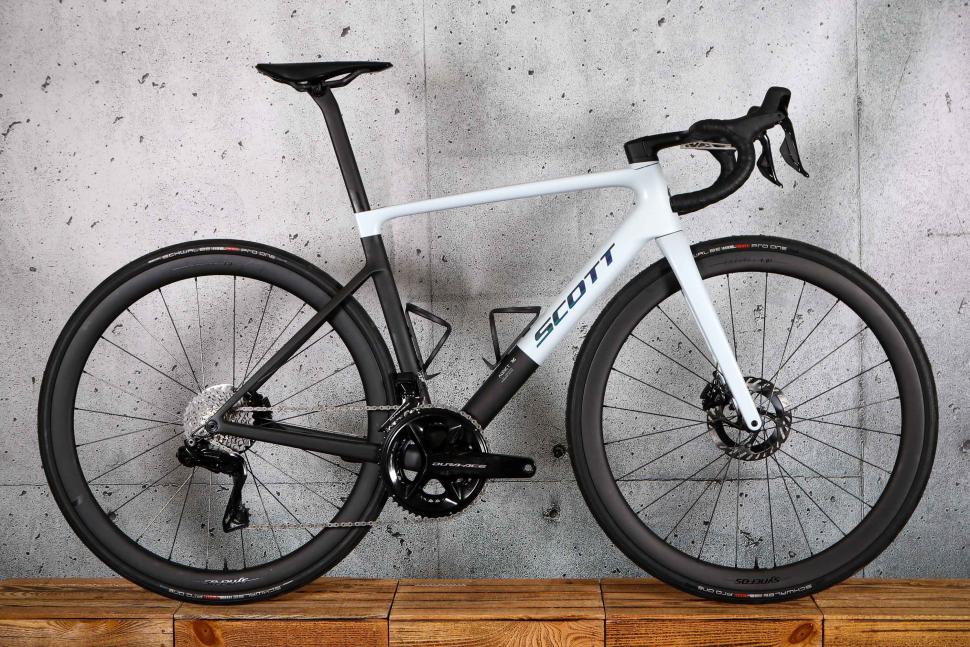
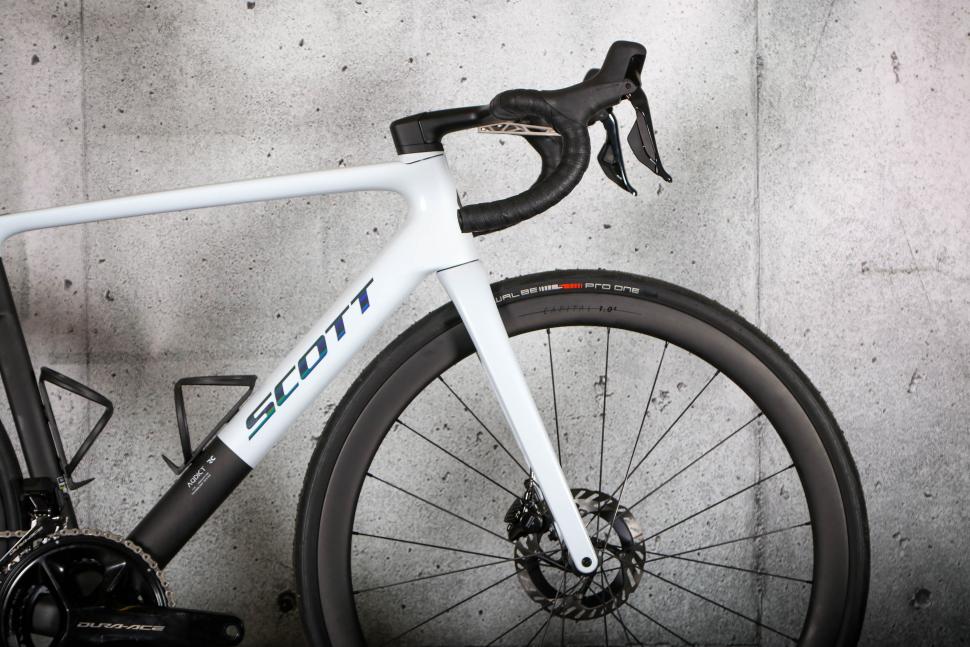
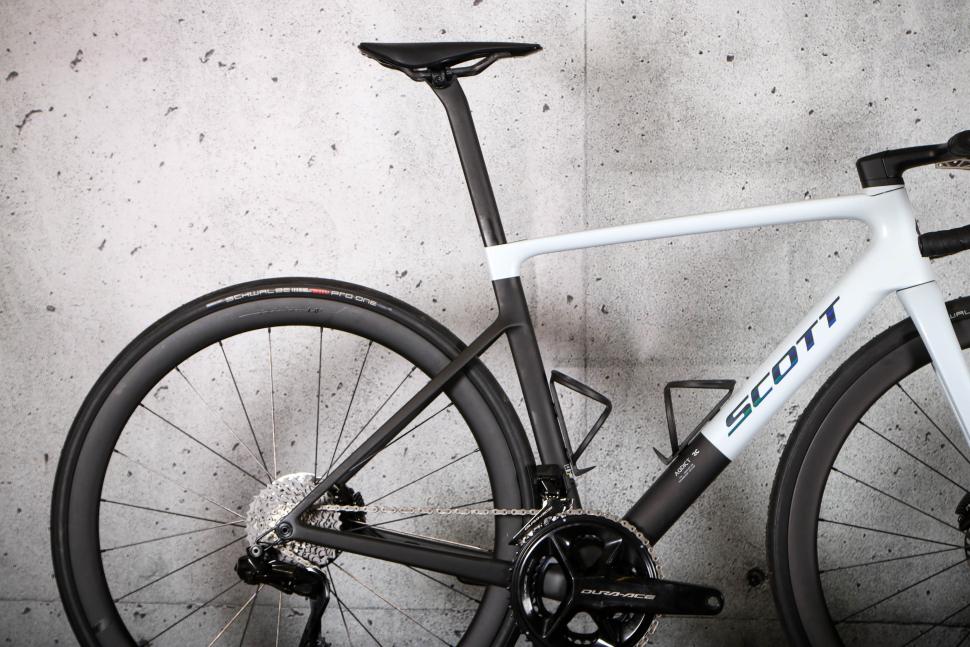
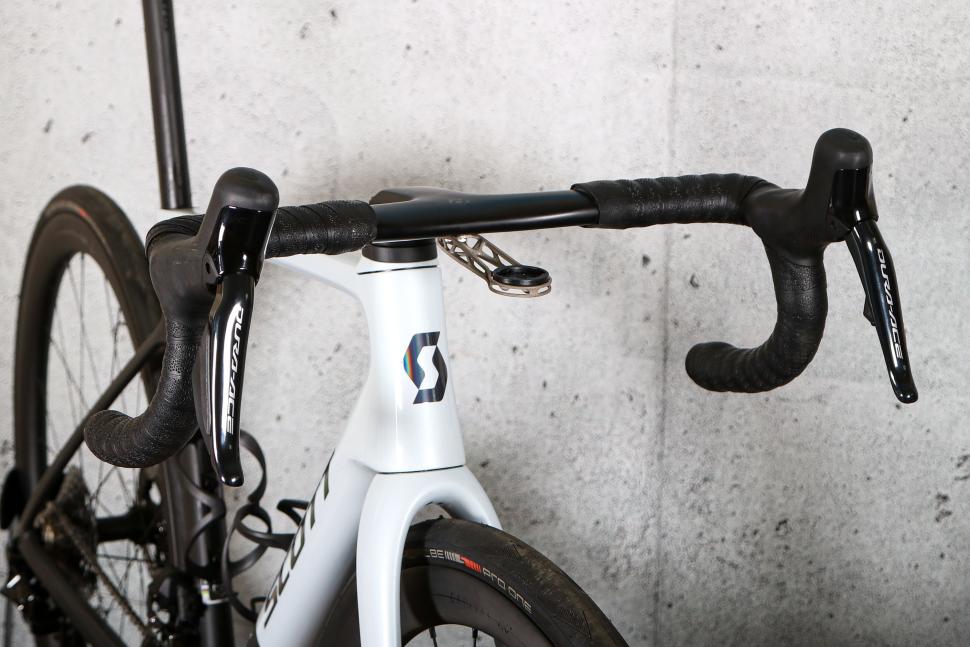
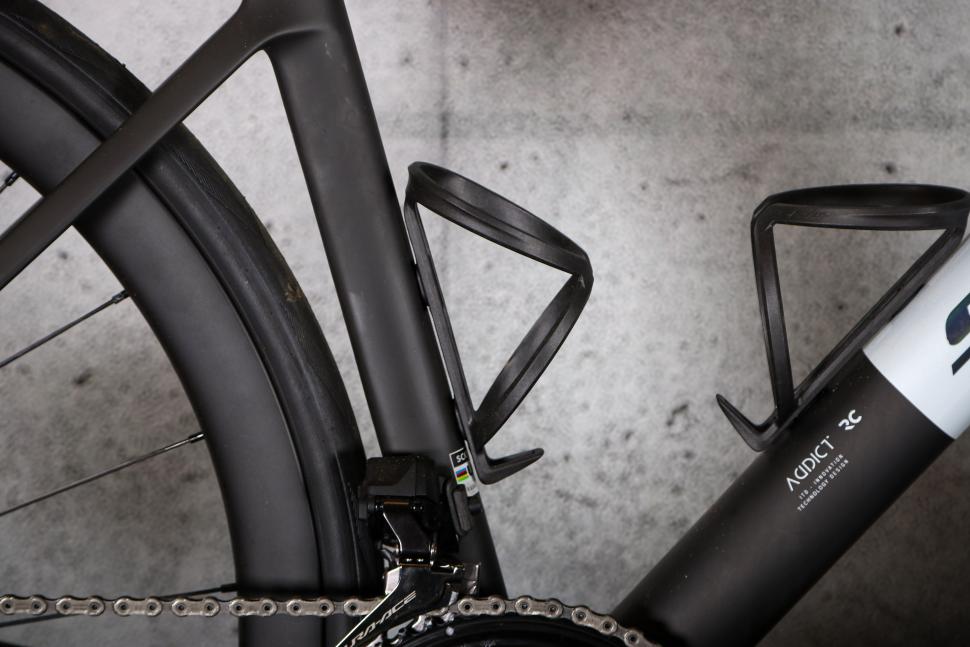
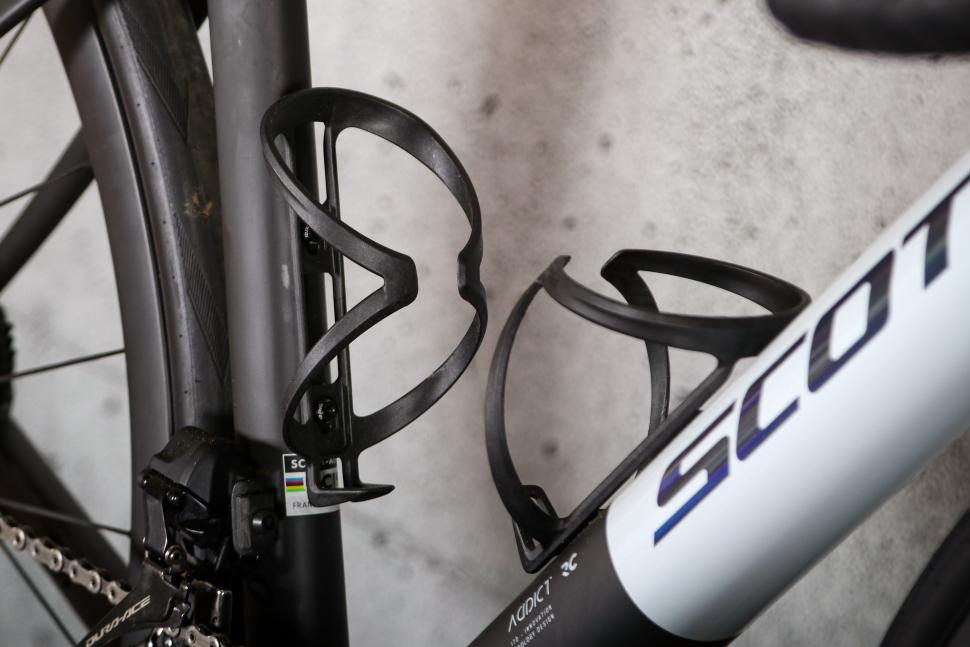
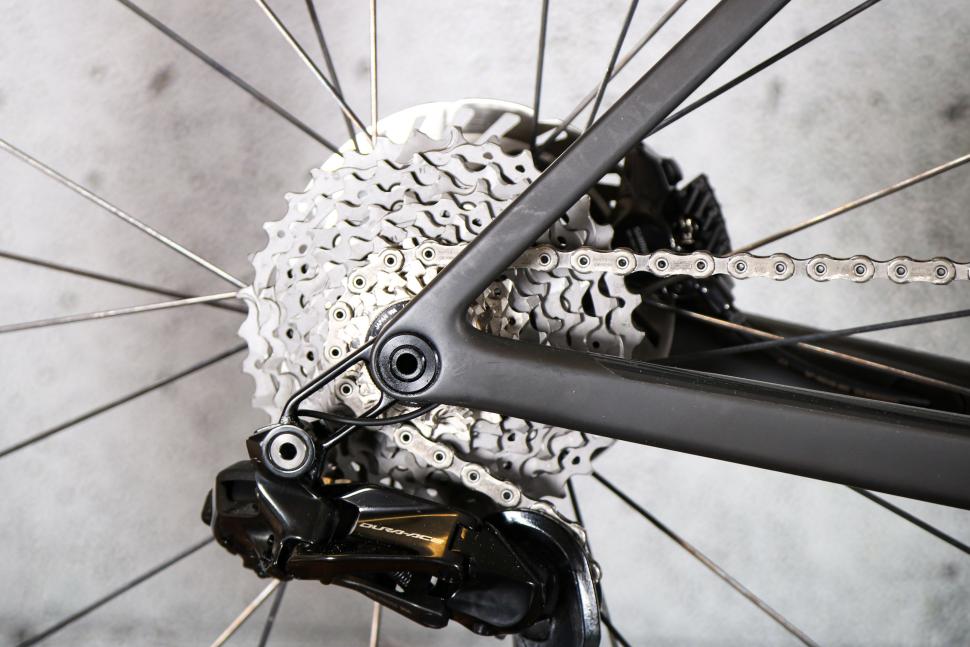
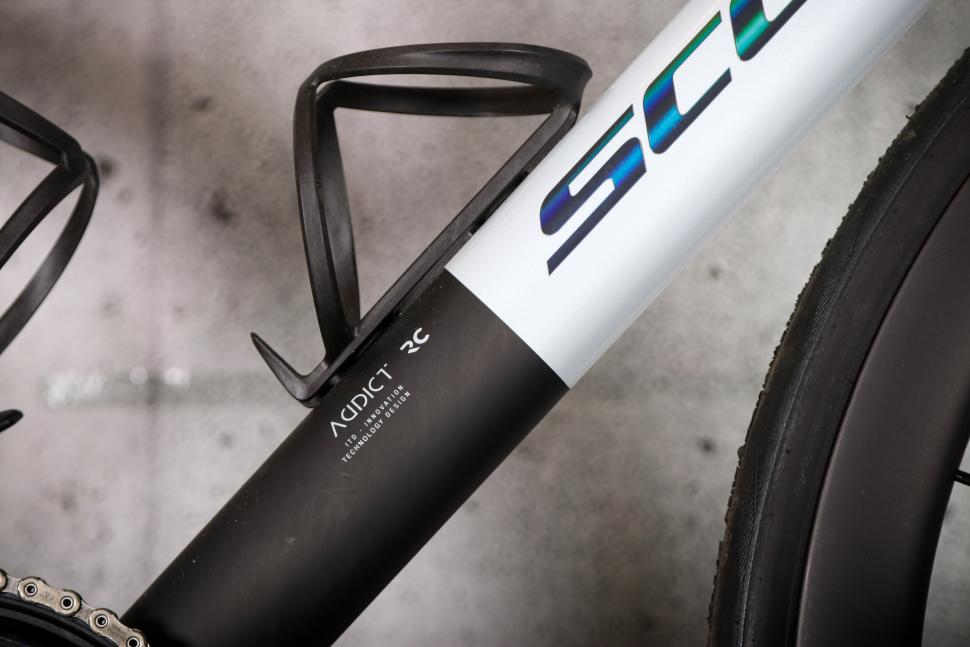
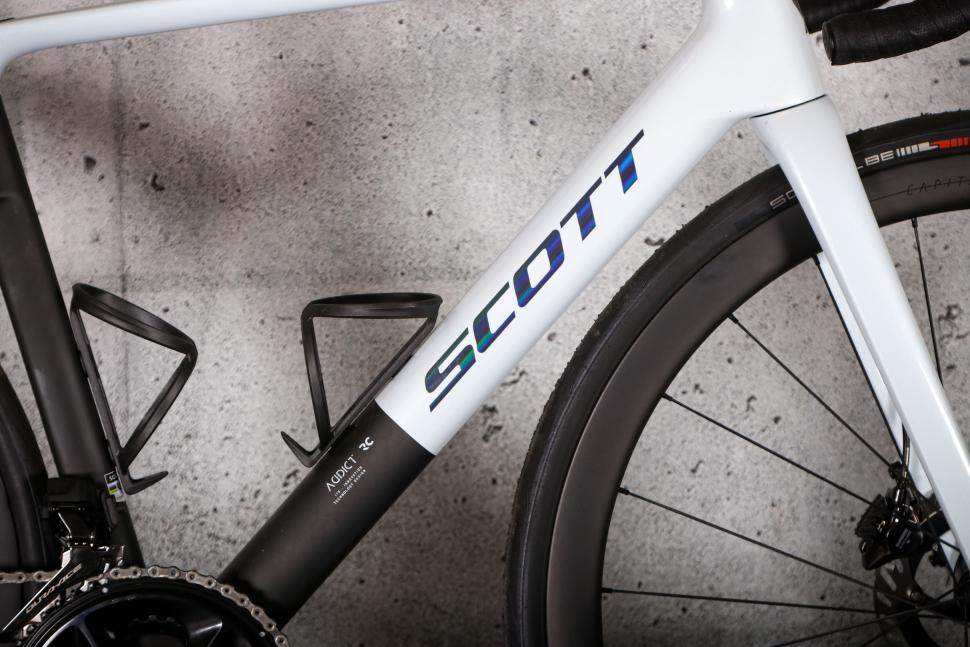
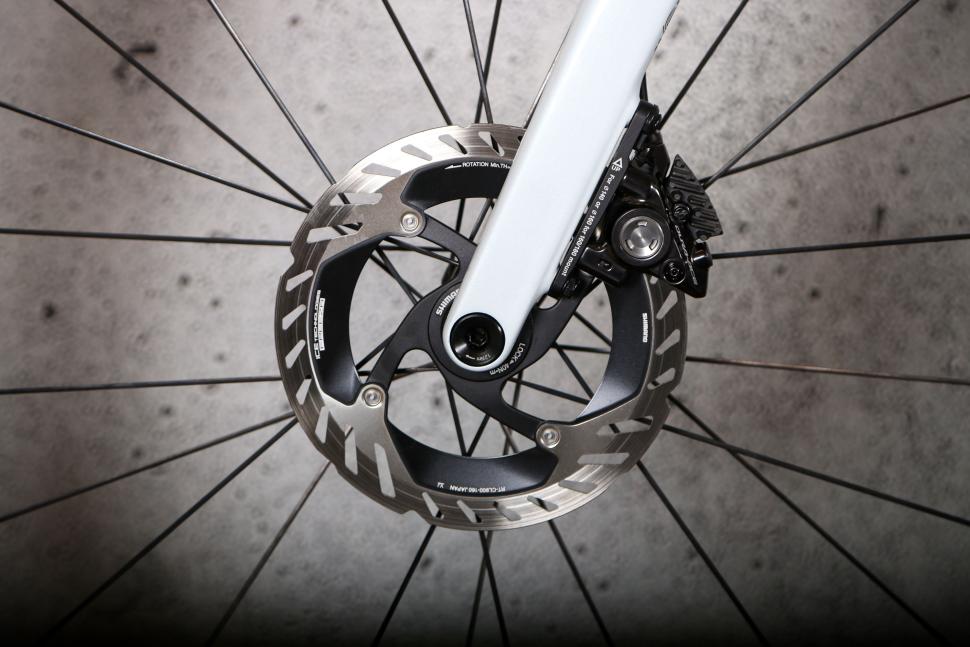
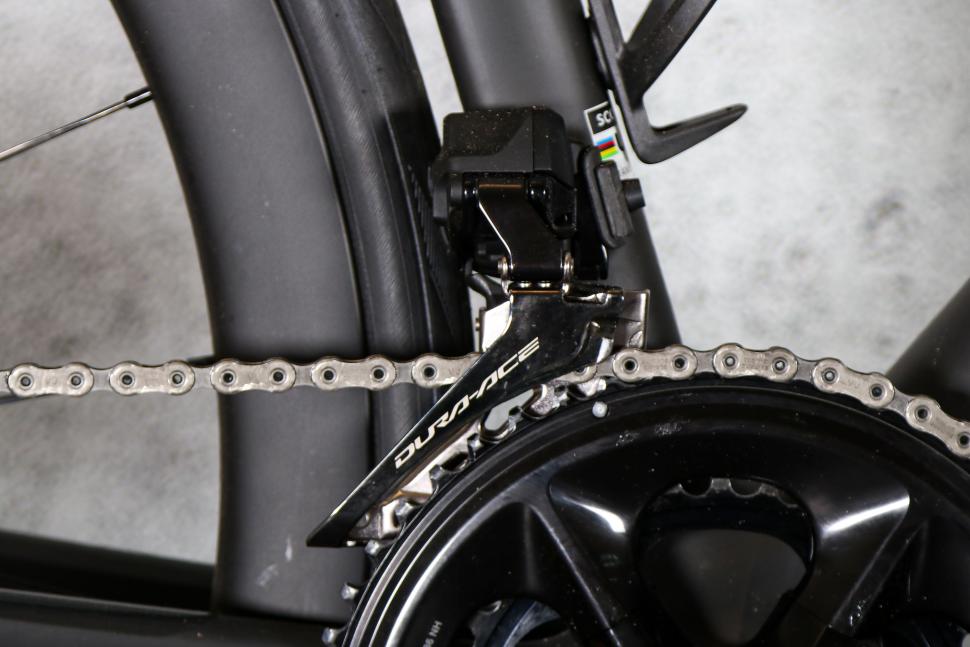
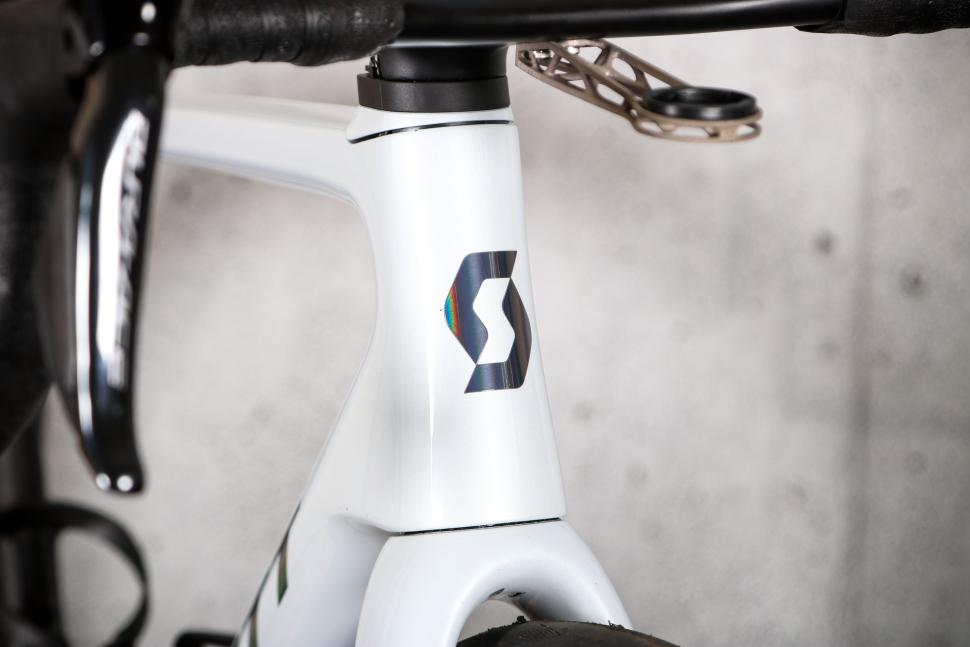
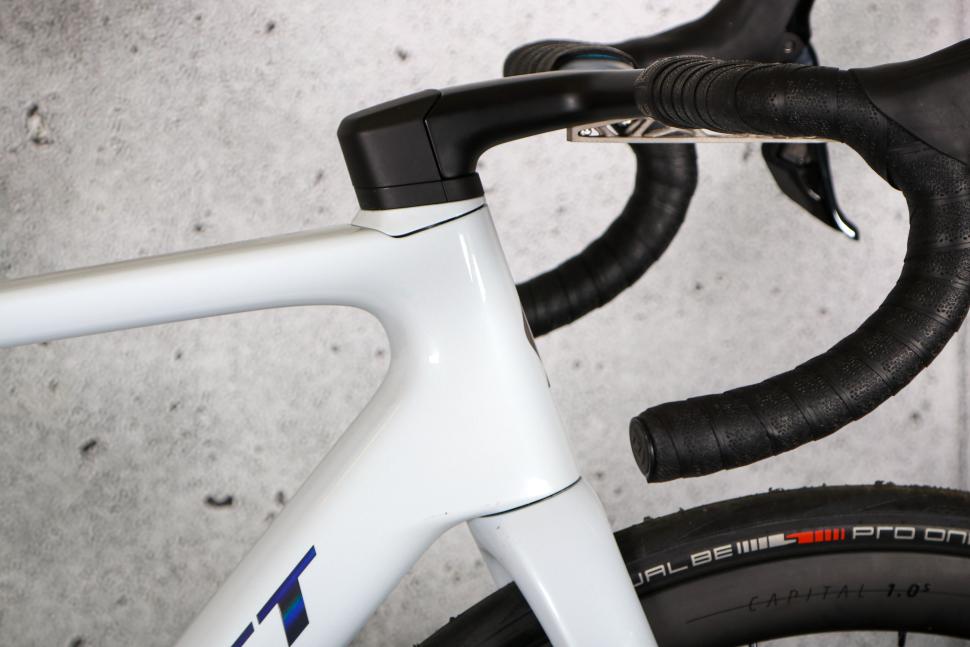
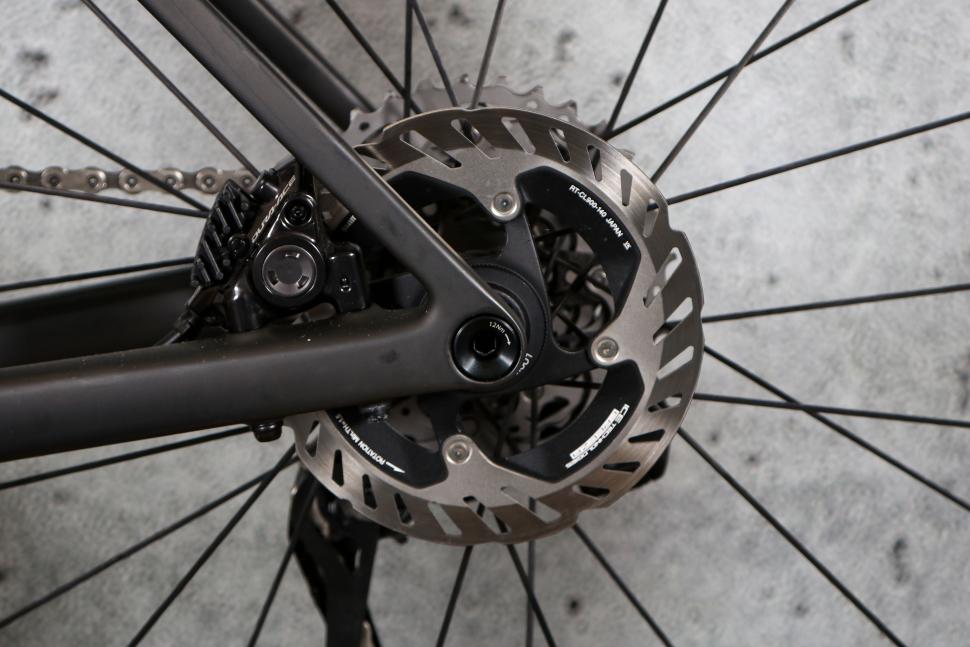
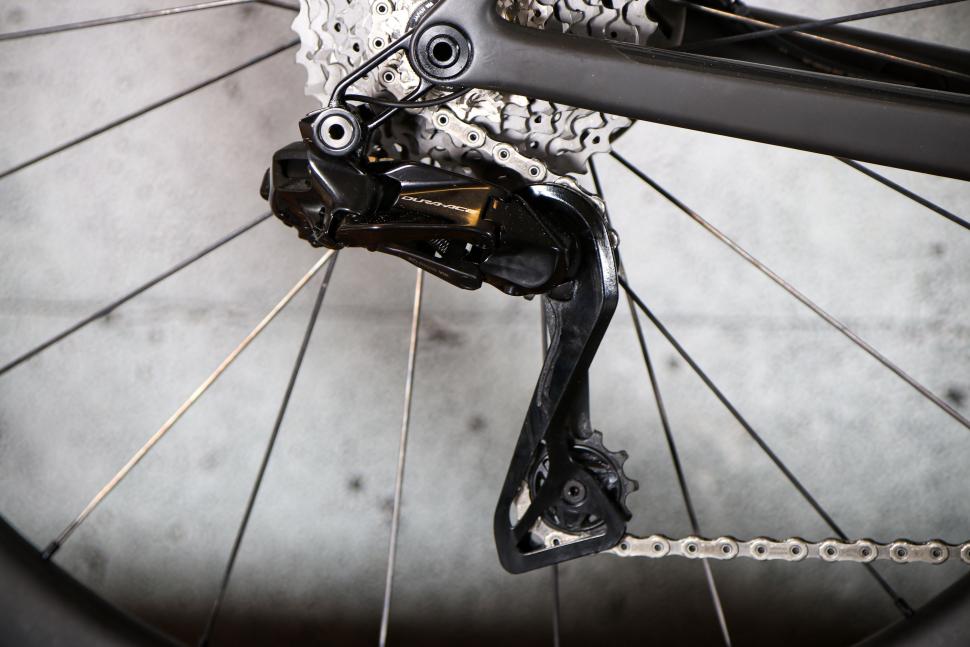
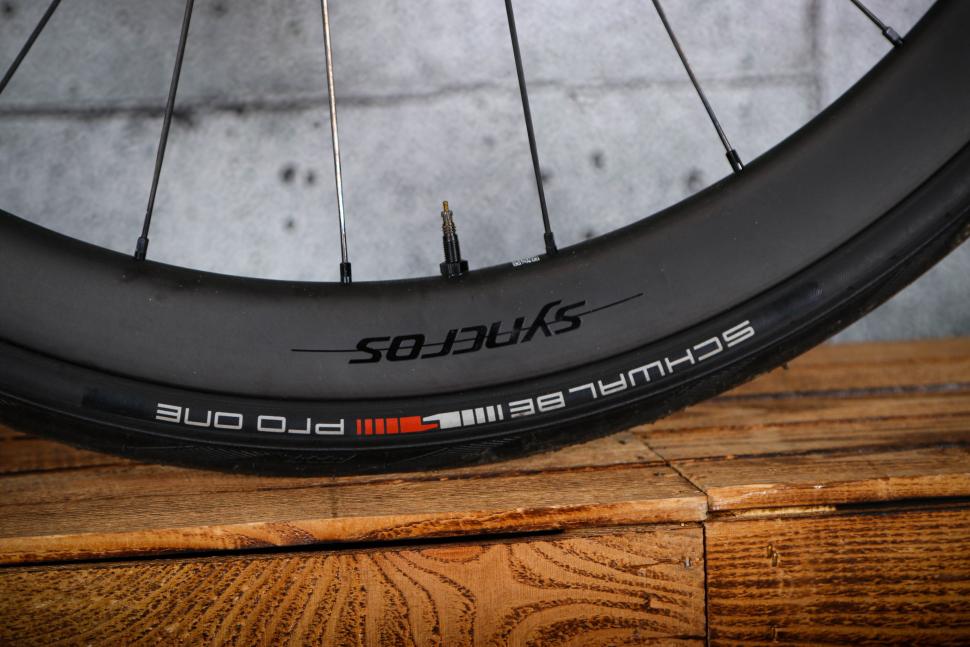
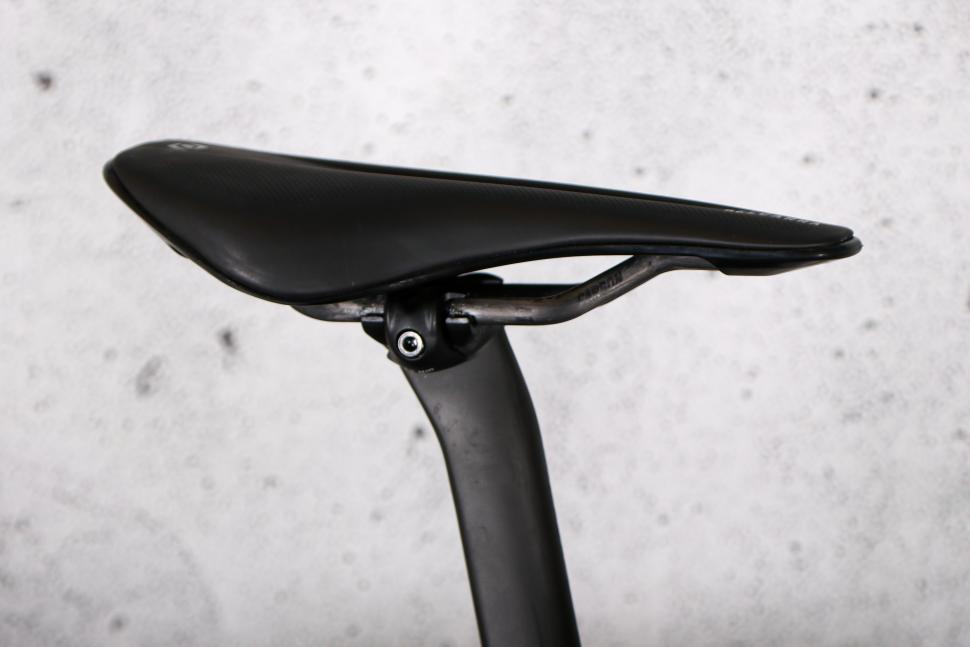
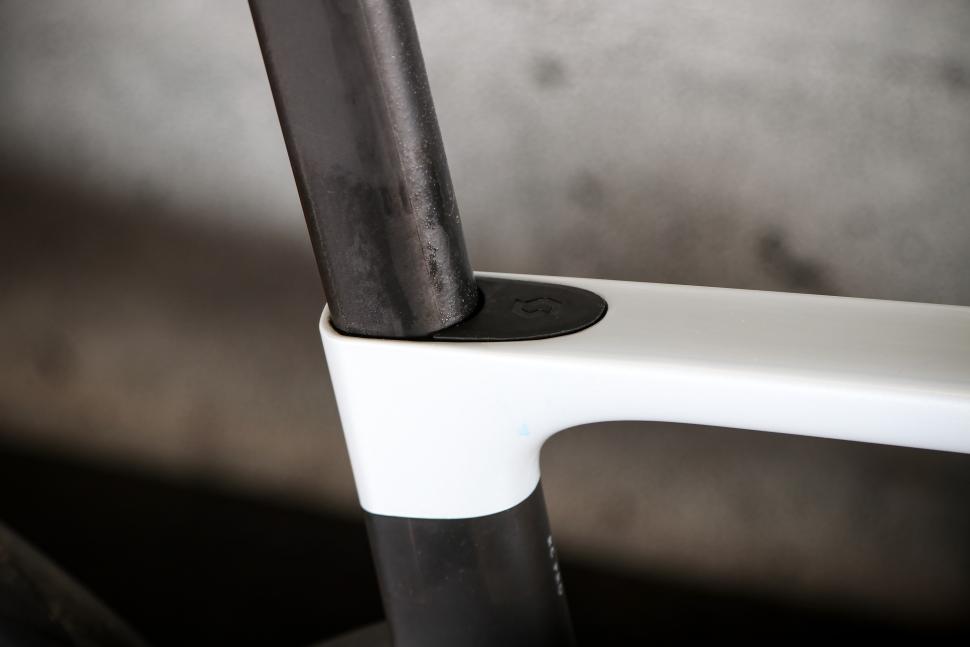
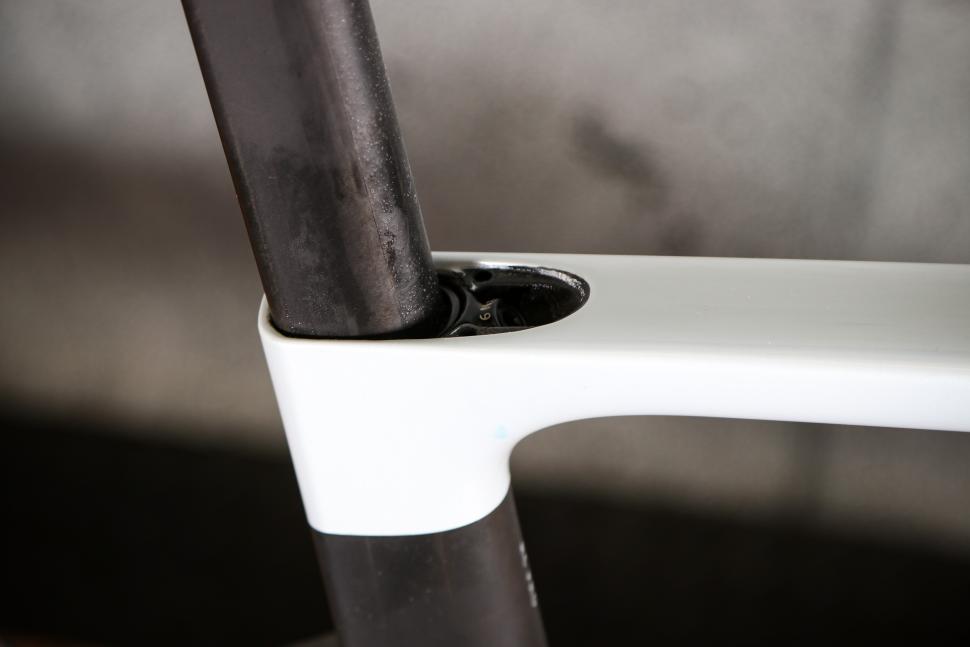
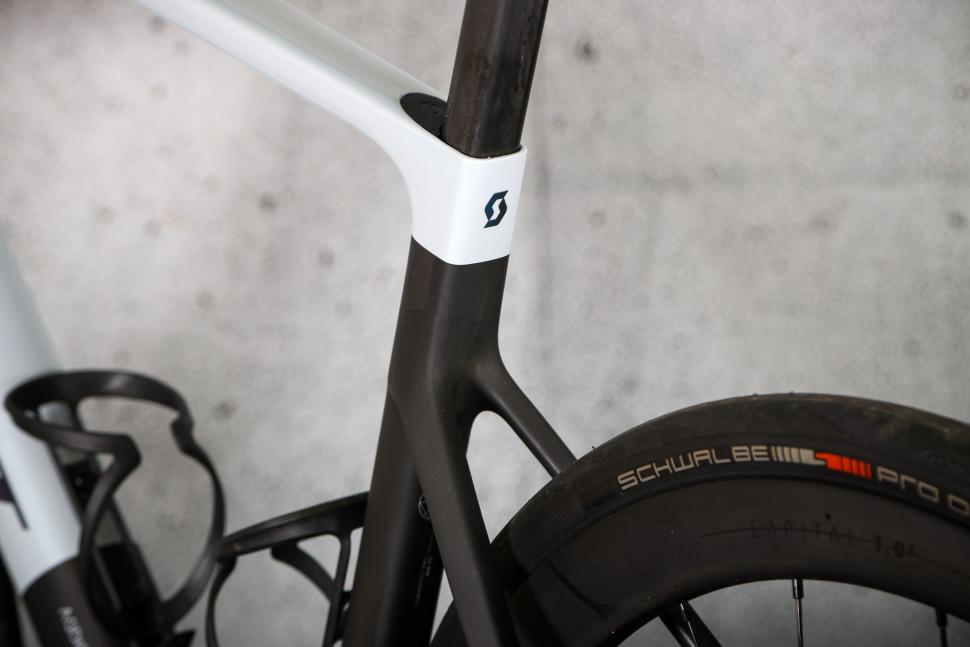
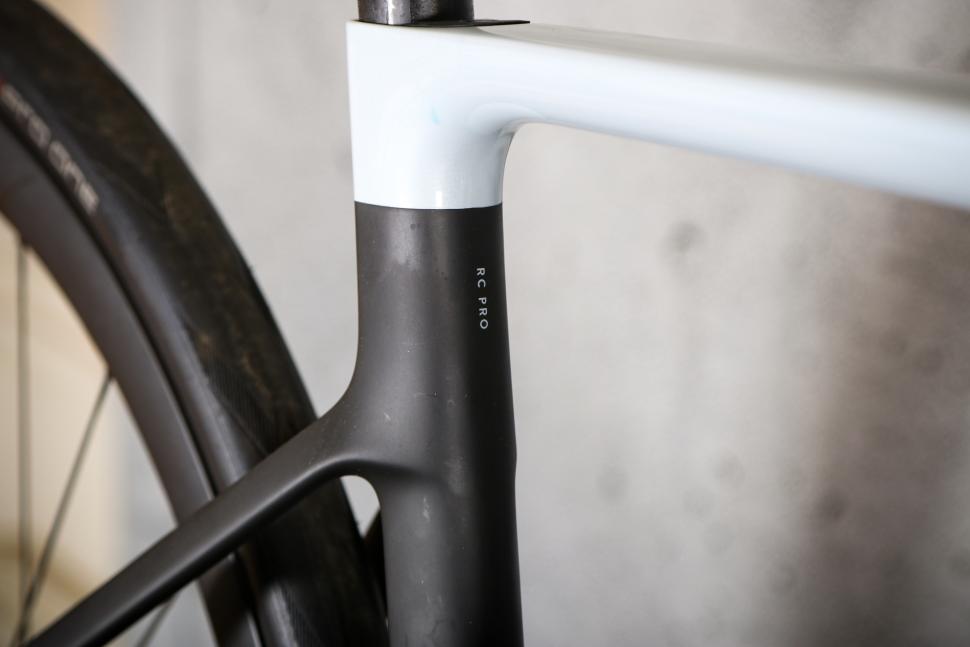
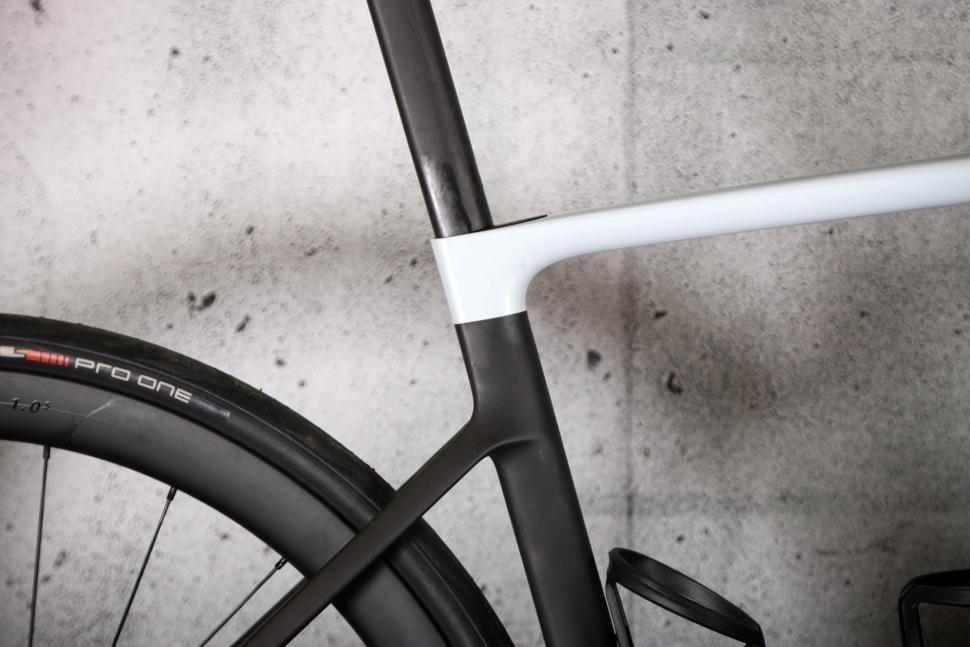
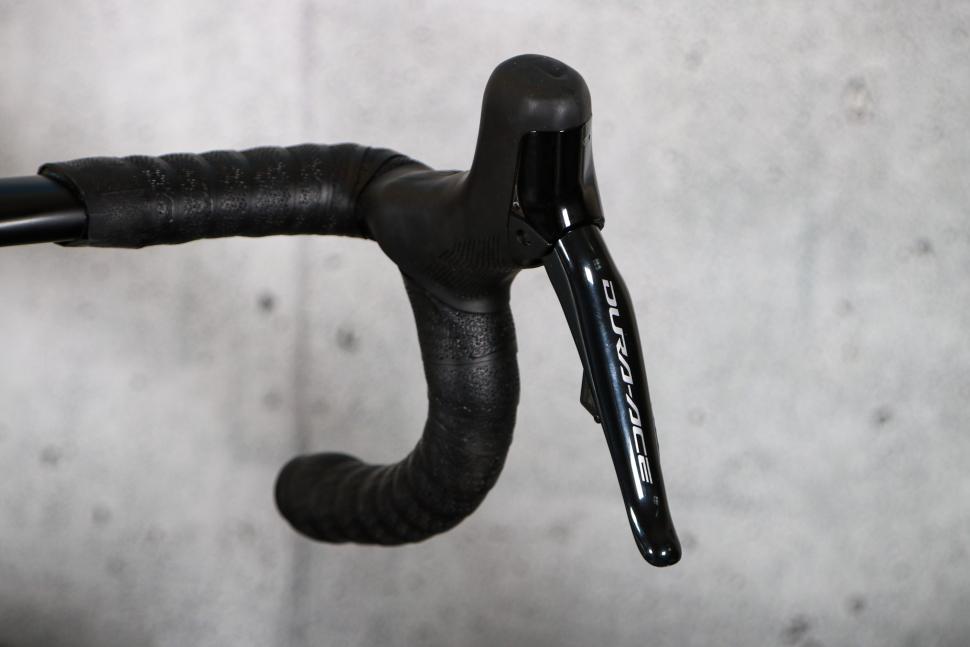
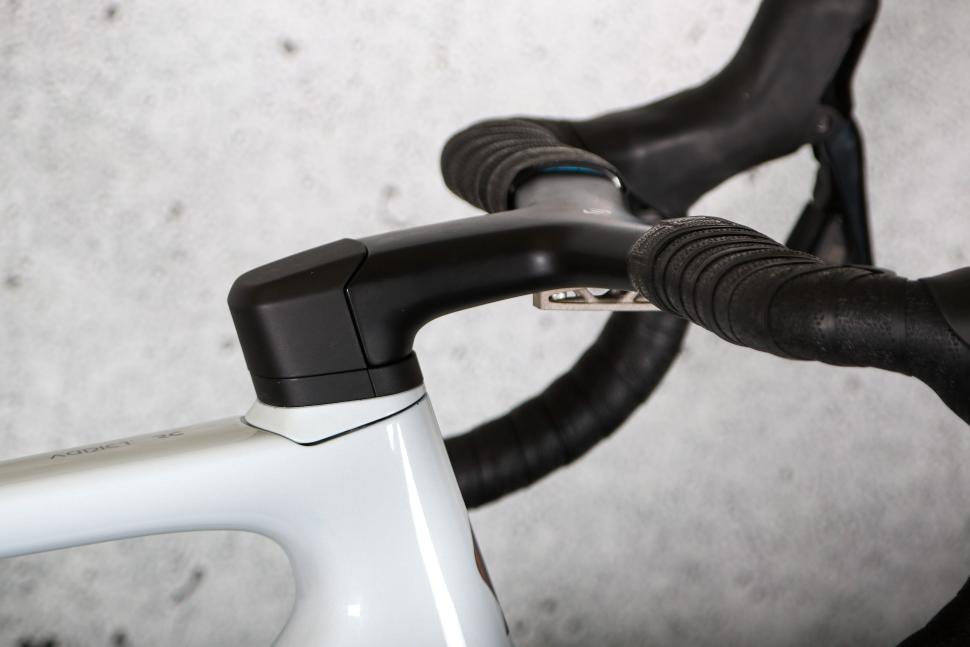


The method used for moulding the carbon frame enables it to produce a completely hollow frame without any dead-end tube segments, according to Scott, and it says that its use is only an option if the frame design is tailor-made for this manufacturing method.
It also creates a completely smooth internal surface thanks to the use of an inflatable preform core, and leaves no signs of any voids or wrinkles in the carbon fibre composite. All excess resin is also removed during the moulding process.
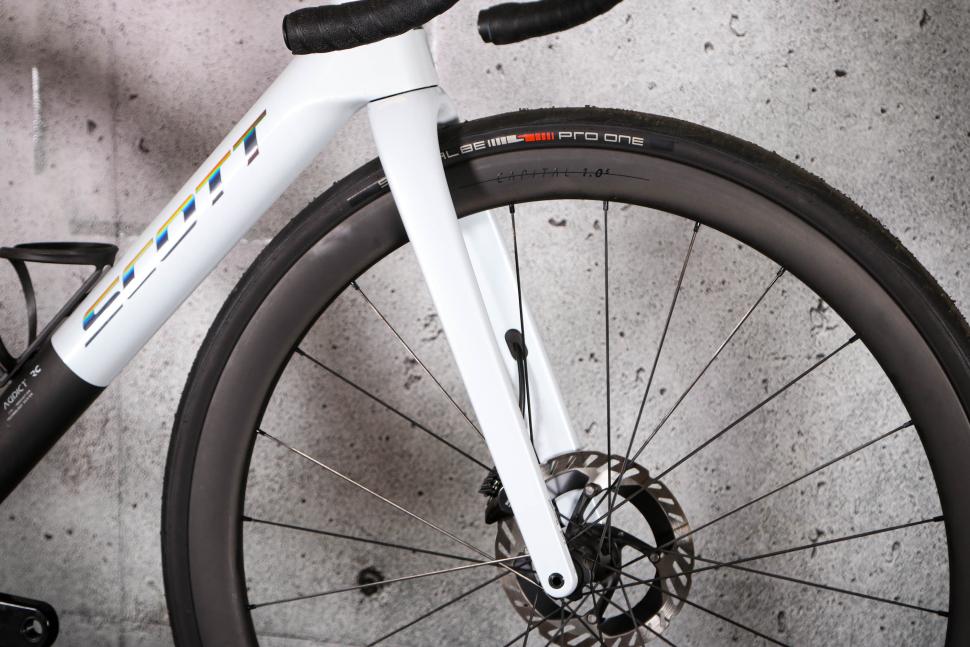
It not only has a smooth looking frame on the inside, the outside is also very neat and tidy too. The RC is designed as an all-round race bike, but aerodynamics haven’t been forgotten, with a kammtail-shaped seat tube, and smooth transitions between all of the tubes – most notably at the front end, where the smooth head tube junction is topped off with an aero, frame-coloured upper headset bearing to keep things very clean when the handlebar is pointed in a straight line.
All cables and hoses are completely hidden from view, and the seatpost cluster is also neatly positioned out of the way of the airflow. Claims from Scott are a saving of 12 watts over the previous model.
For its frame size this M/54’s sloping top tube allows for a lot of exposed seatpost, which adds to the overall comfort due to a very small amount of flex. It’s possible to run up to 34mm tyres on the Addict RC as well.
To the naked eye the Addict RC looks to be very long and low. While everything checked out on the geometry table before I requested this medium, when it arrived I wasn’t sure if my crash-riddled hips and lower back were going to get on with what looked to be a very racy position. In reality, though, it’s not as extreme as I’d thought.
The head tube length is quoted as 130mm, but that is because it stops below the upper face of the top tube to allow for that upper headset bearing. That also skews the stack figure, with it being 543mm on this M/54 compared with 560mm on the same size Canyon Ultimate I reviewed last year.
The reach figure is fairly typical, though, at 395mm. To balance everything out Scott also gives ‘cockpit’ measurements, from the top of the handlebar for the minimum cockpit stack height and to the front of the drops for the reach figure. This makes it easy to take measurements from an existing bike and compare.
As for the other numbers, the top tube length for this bike is 555mm while the BB centre to the top of the top tube is 482mm, which in turn gives a standover height of 778mm. The fork offset is 44mm and the head angle is a smidge under 73 degrees, while the seat tube sits at 73.6 degrees. Chainstays of 410mm help keep the wheelbase to a short 991mm.
In total there are seven sizes ranging from the XXS/47 to XXL/61, with corresponding top tube lengths of 519mm up to 602mm.
Full geometry details are available on Scott’s website.
Scott Addict RC Pro: Groupset
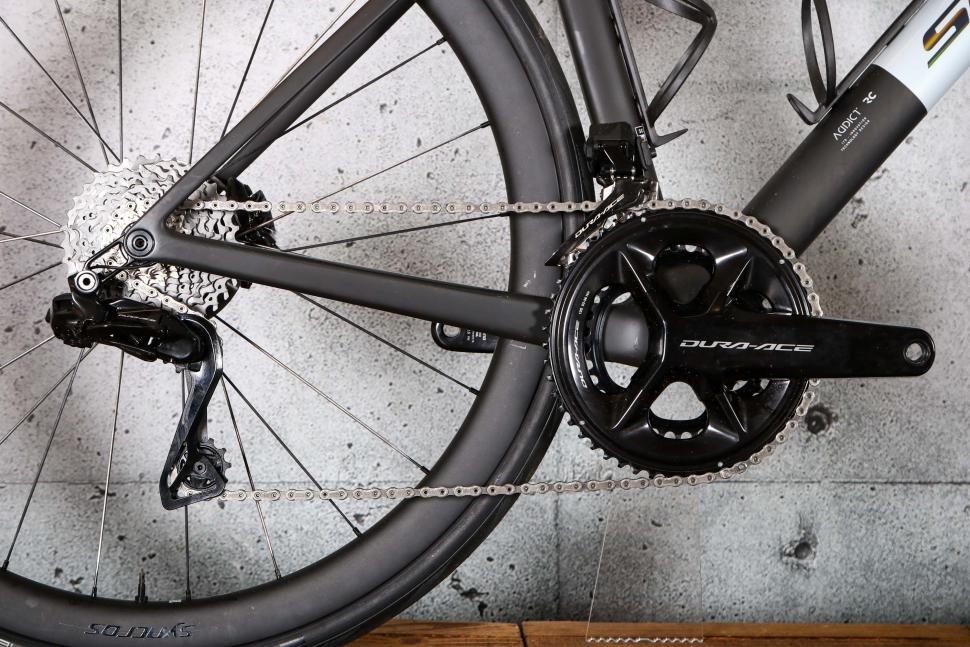
This is one of the top specifications in the line-up, so it’s no surprise to see some money-no-object components such as Shimano’s range-topping Dura-Ace R9200 used for the drivetrain.
We reviewed it after its launch back in 2021 and were very impressed with the overall performance thanks to a range of modifications and tweaks compared with its predecessor, all of which you can read about in that review.
In a nutshell, it has a very lightweight action, is very fast, and about as precise as you can get when it comes to the gear changes.
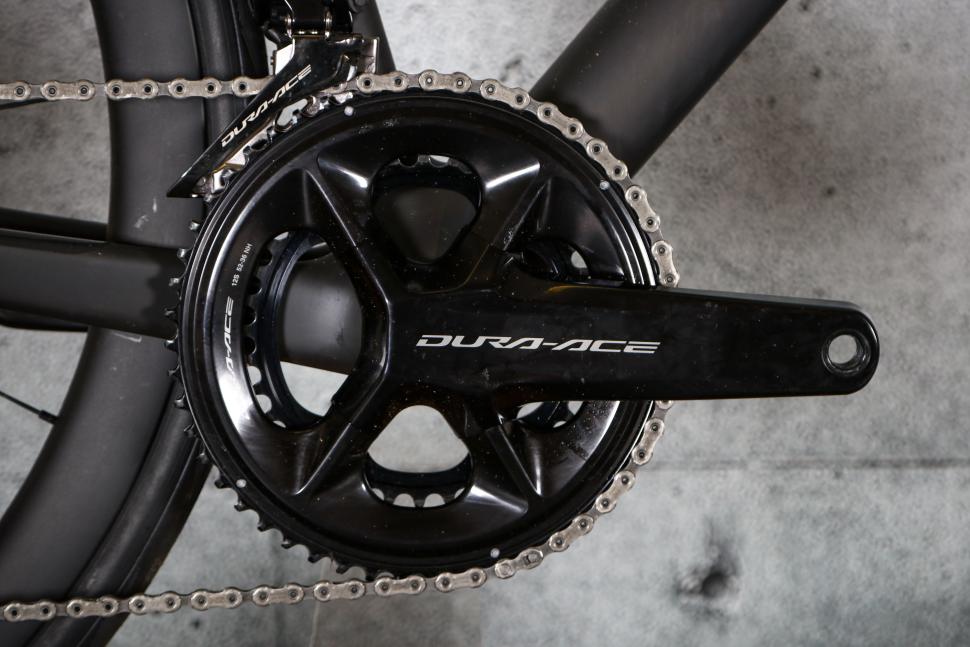
Dura-Ace is now electronic Di2 only and 12 speed. Fitted here is the 52/36-tooth chainset married to an 11-34 cassette. This is a bike built for performance, so it’s got the gearing to match.
The braking power is also excellent too. Scott specs a 160mm front rotor, while the rear is a 140mm, which gives all of the stopping power I needed.
Scott Addict RC Pro: Finishing kit
Scott has an in-house component brand called Syncros, which it has used to spec virtually every other component on the bike bar the tyres.
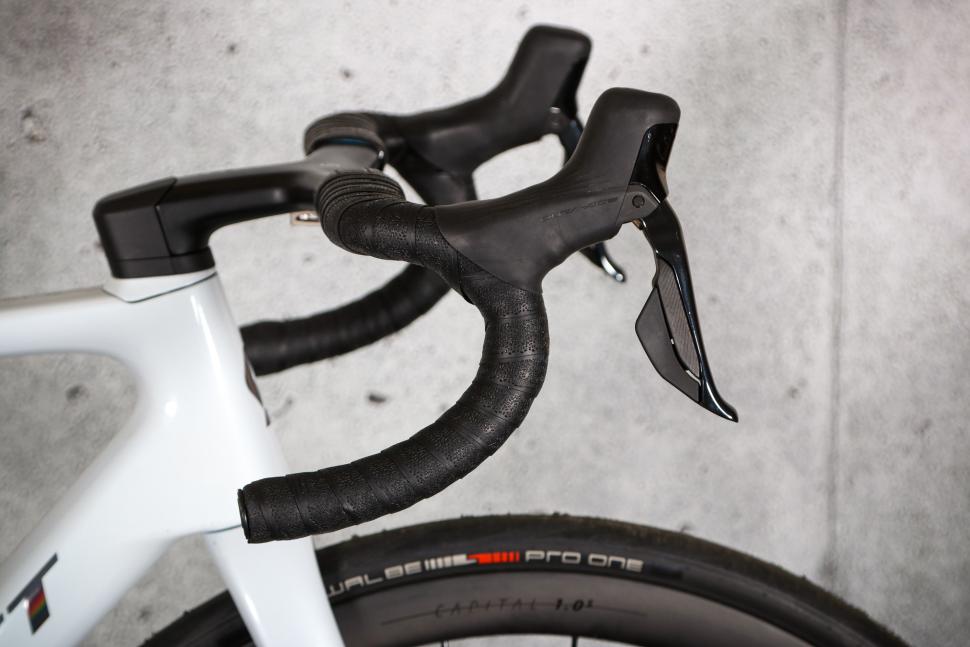
The carbon fibre cockpit is called the IC-R100-SL and it’s a fully integrated unit that runs any hoses and cables internally for a clean finish. The wide, flat top section of the handlebar gives a comfortable position for your hands and plenty of support when spending time in the hoods.
The depth to the drops is reasonably shallow, so my position when using them was aero without being extreme. There is a subtle flare, too, which brings a bit more stability when cornering fast.
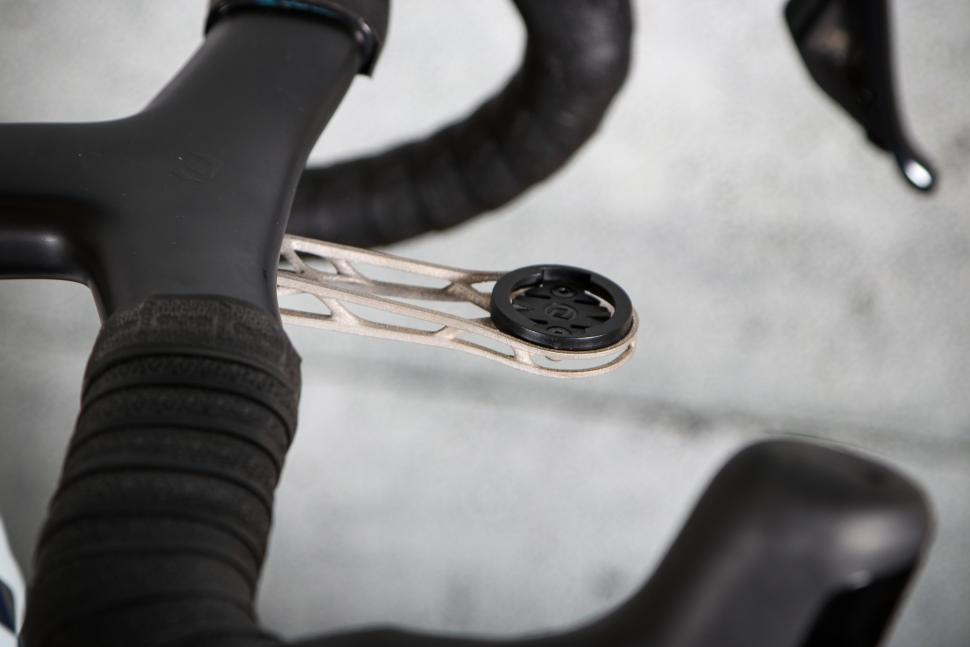
The handlebar is drilled for mounting a computer mount to. The alloy 3D printed one fitted here weighs just 12g, but costs a cool £99.99.
There are eight stem lengths, ranging from 70mm to 140mm, paired with five bar widths, from 360mm to 420mm, although like most brands these off-the-shelf bikes come with predetermined options depending on frame size. This M/54 has a 110mm stem and 40cm bar width, which suited me perfectly.
There is a trend for handlebars to be much narrower than they used to be, which is ideal for aerodynamics or the tight confines of a bunch sprint or a crit race, but in the real world it makes the handling faster and can make the bike twitchier. Something I definitely do not want when sharing roads with traffic and possible crosswinds. The 40cm fitted here was a happy medium here for me.
Inside the left drop you’ll find a mini-tool with a T25 Torx key fitted. Scott has specced the Addict RC to use T25 bolts throughout the components and bottle cage bosses, so you’ll always have the tool on you to tweak things.
The carbon seatpost is also from Syncros, the SP-R100-SL, and atop that sits the Syncros Belcarra Regular 1.0 saddle.
This was probably the only part of the build I didn’t quite get on with. I liked the shape, but it is really firm, and while it wasn’t a major problem, after four or five consecutive days of riding, I could feel some tenderness around my sit bone area. After a while I did change it for one of my favourites.
Scott Addict RC Pro: Wheels & tyres
The Syncros Capital 1.0S wheels have a 40mm-deep carbon fibre rim and an inner width of 25mm, which allows them to work with the wider tyres the Addict RC can take. The rims are hookless, which limits you to the use of tubeless tyres only rather than being able to run clinchers, but as that is the way things have gone, I suppose it’s no big deal.
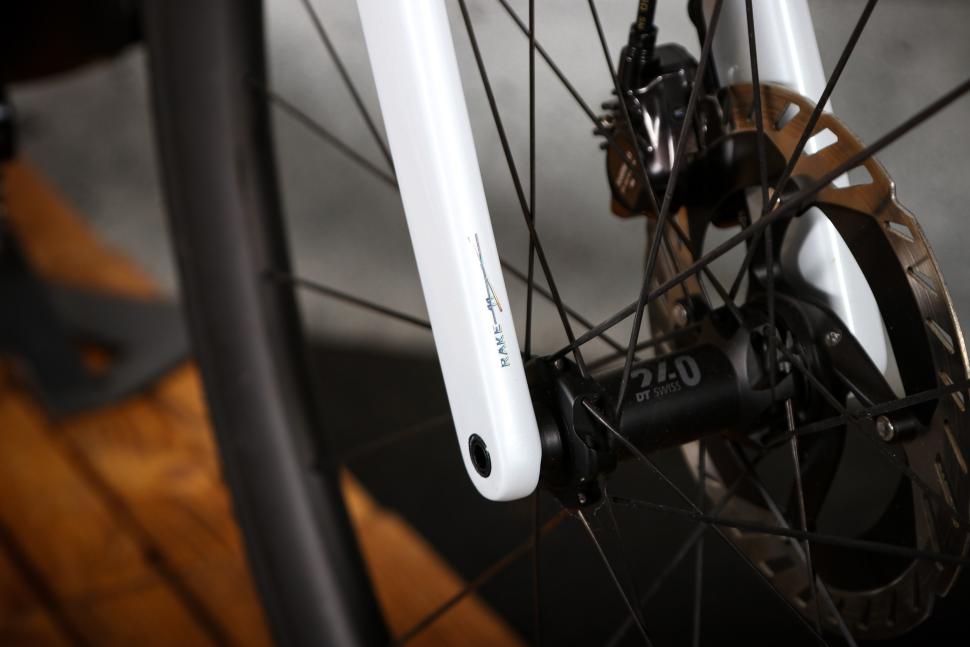
The hubs are the tried-and-proven DT Swiss 240s which finish off what felt to be a very well-built wheelset that balances a small amount of aerodynamics with all-rounder capabilities. Lateral stiffness was also excellent.
As a pair, Scott claims a weight of just 1,335g (620g front, 715g rear) and they have a retail price of £2,019.98 if bought separately.
Fitted to these are a set of Schwalbe’s Pro One Microskin tyres in a 30mm width, along with Schwalbe’s Aerothan tubes. Being a demo bike, ours had something slightly different in terms of width, 32mm, though the width of the wheel rims actually stretched the tyres out to 33.1mm.
The Pro One is an excellent tyre in terms of performance. The compound is very grippy and gives great road feel thanks to the pairing of a supple carcass. They are reasonably robust, too, for a high-end race tyre.
Scott Addict RC Pro: Value
The Addict RC range starts at £4,899 with the RC 30. It uses the same frame – in fact the whole range uses the same frame – but it has a slightly more flex-inducing seatpost and alloy cockpit components. You get carbon 40mm-deep wheels, though, and Shimano’s 105 Di2 groupset.
A jump to Shimano Ultegra Di2 for the RC 20 pushes the price up to £5,899, while the RC 10 also uses Ultegra Di2 but has the same carbon cockpit and wheels as this Pro model, for £6,599.
This particular bike, the Pro, is £8,599 while the range-topping Ultimate gets a SRAM Red eTap groupset and Syncros Capital SL wheels with some very fancy carbon spokes for £12,799.
We all know that bike costs have increased over the last few years to what in some cases have been quite extreme prices, so while £8,599 for the Pro is a lot of money, it is competitive against pro-level-spec builds from other brands, I believe.
The Canyon Ultimate CFR mentioned above weighed 6.75kg and is available in a Dura-Ace build with a carbon cockpit and DT Swiss ARC 1100 Dicut wheels for £9,299. It does get a powermeter included in that price, though.
Giant’s TCR is like the Addict RC, as in it’s a proper all-rounder race bike, with the Advanced Pro 0 AXS winning our bike of the year for 2024. The range-topping models are the Advanced SL, with the entry point to this three-bike line-up costing £8,799. That’s an Ultegra Di2 build with a carbon cockpit and 40mm-deep Giant SLR wheels. The Dura-Ace model is the SL 0 DA, which comes with Giant’s new Cadex 40 MAX wheels with carbon spokes and costs £11,999. There is a SRAM Red model for the same price, so quite comparable to the Addict RC Ultimate model.
Merida’s Scultura Team is ridden by Team Bahrain Victorious and comes with a Dura-Ace groupset with powermeter and Vision Metro 45SL wheels for its £8,000 build price. Merida quotes an 822g frame weight, and an overall build weight of 7.2kg, so it isn’t as light as the Scott. I reviewed one of these back in 2022.
When Jamie reviewed the Specialized S-Works Tarmac SL8 just after it was released, he reckoned it was narrowing in on perfection and was the new race bike benchmark. I haven’t ridden one yet, but I did ride the S-Works Tarmac SL7 and thought it was pretty amazing. I’m going to stick my neck out here and say that the Addict RC Pro has the edge, though. And a Dura-Ace-equipped S-Works Tarmac SL8 will set you back a massive £12k!
Scott Addict RC Pro: Conclusion
I’ve ridden a fair few Addicts over the years, and they’ve always impressed, but this new version has focused on the nth degree and turned a great bike into an awesome one.
This is a full-on professional-level race bike that can be ridden by the masses. It’ll push your handling skills to the edge if you want it to, and also goad you into riding it to its limits, but not in a scary way.
The performance and responsiveness is well balanced with usability and comfort, so it’s a bike you can live with every day. As a package it’s well designed and thought out, and its lack of weight makes it thoroughly rewarding.
Verdict
A showcase of what’s achievable in road bike design in terms of weight, performance and quality
All the deals displayed on our review pages are pulled from a constantly updating database feed of the best affiliate deals available. The criteria for deciding on what are the best deals is who is offering the lowest, delivered price. In most cases we will be showing the very best deal available online, but sometimes you may be able to find an item cheaper. If you can please feel free to post a link in the comments box below. To find out more about affiliate links on road.cc click here.
road.cc test report
Make and model: Scott Addict RC Pro
Size tested: M/54, 555mm
About the bike
List the components used to build up the bike.
Rear Derailleur Shimano Dura-Ace RD-R9250
24 Speed Electronic Shift System
Front Derailleur Shimano Dura-Ace FD-R9250 Electronic Shift System
Shifters Shimano Dura-Ace ST-R9270
Dual control 24 Speed Electronic Shift System
Crankset Shimano Dura-Ace FC-R9200
Hollowtech II 52×36
BB-Set Shimano SM-BB92-41B
Chain Shimano Dura-Ace CN-M9100-12
Cassette Shimano Dura Ace CS-R9200-12
11-34
Brakes Shimano BR-R9270 Hyd.Disc
Rotor Shimano RT-CL900 rotor 160/F and 140/R
Handlebar Syncros IC-R100-SL
Carbon combo
Seatpost Syncros SP-R100-SL
Seat Syncros Belcarra Regular 1.0
Headset Acros AIF-1317S
Wheelset Syncros Capital 1.0S 40mm
24 Front, 24 Rear
Syncros SL Axle
Front Tire Schwalbe PRO ONE Microskin, TL-Easy, Fold, 700x30C Schwalbe Aerothan Tube
Rear Tire Schwalbe PRO ONE Microskin, TL-Easy, Fold
700x30C Schwalbe Aerothan Tube
Accessories Syncros iS Drop Bar Tool 2
Tell us what the bike is for and who it’s aimed at. What do the manufacturers say about it? How does that compare to your own feelings about the bike?
Scott says, “Engineered to defy gravity and elevate your performance, the Addict RC is our lightest production race bike ever. Whether you’re attacking steep climbs or sprinting for the finish line, every aspect of this bike was meticulously crafted with one thing in mind – leaving everyone else in the dust.”
It’s a superlight bike with an incredible performance.
Where does this model sit in the range? Tell us briefly about the cheaper options and the more expensive options
The Pro is the second from the top in the line-up. You’ll find a full breakdown in the main review.
Frame and fork
Tell us about the build quality and finish of the frame and fork?
A high-quality finish throughout.
Tell us about the materials used in the frame and fork?
Both the frame and fork are created from carbon fibre composite, but Scott keeps the exact details to itself.
Tell us about the geometry of the frame and fork?
The Addict RC is definitely set up as a race bike and provides a relatively aggressive riding position.
How was the bike in terms of height and reach? How did it compare to other bikes of the same stated size?
The stack figures are slightly skewed due to the head tube being shorter to allow for the integrated headset upper bearing, but in real world terms there is nothing too out of the ordinary.
Riding the bike
Was the bike comfortable to ride? Tell us how you felt about the ride quality.
Yes, the Scott was very comfortable to ride. The ride quality is excellent.
Did the bike feel stiff in the right places? Did any part of the bike feel too stiff or too flexible?
The Addict RC has high levels of stiffness throughout the frame and fork.
How did the bike transfer power? Did it feel efficient?
A mix of stiffness and low weight means the Pro feels hugely efficient.
Was there any toe-clip overlap with the front wheel? If so was it a problem?
No.
How would you describe the steering? Was it lively neutral or unresponsive? Lively.
Tell us some more about the handling. How did the bike feel overall? Did it do particular things well or badly?
The steering is quick and very responsive, but exactly where I’d expect it to be on a pro-level race bike.
Which components had the most effect (good or bad) on the bike’s comfort? would you recommend any changes?
I didn’t get on with the saddle, so that was changed, but everything else worked really well.
Which components had the most effect (good or bad) on the bike’s stiffness? would you recommend any changes?
The cockpit and wheels are plenty stiff enough to complement that of the frame and fork.
Which components had the most effect (good or bad) on the bike’s efficiency? would you recommend any changes?
The wheels are light, which aids acceleration and climbing, while the grippy tyres improve efficiency, as I felt like I could take corners faster.
The drivetrain
Tell us some more about the drivetrain. Anything you particularly did or didn’t like? Any components which didn’t work well together?
An excellent groupset throughout, with precise shifting and very powerful brakes.
Wheels and tyres
Tell us some more about the wheels.Did they work well in the conditions you encountered? Would you change the wheels? If so what for?
The wheels are low in weight, which helped performance, and their shape works well with wide tyres and they aren’t really affected by crosswinds.
Tell us some more about the tyres. Did they work well in the conditions you encountered? Would you change the tyres? If so what for?
Great tyres thanks to a grippy compound and supple carcass.
Controls
Tell us some more about the controls. Any particularly good or bad components? How would the controls work for larger or smaller riders?
Overall, all of the kit is very good – I just didn’t get on that well with the saddle.
Your summary
Did you enjoy riding the bike? Yes
Would you consider buying the bike? Yes, but the Ultegra-equipped RC 10 would be my pick of the range.
Would you recommend the bike to a friend? Without a doubt, yes.
How does the price compare to that of similar bikes in the market, including ones recently tested on road.cc?
It stacks up well against the competition, as highlighted in the main review.
Use this box to explain your overall score
I’ve ridden a lot of very good, high-end race bikes but Scott has really focused on the details to bring this latest frameset to be near perfection in terms of weight and performance.
About the tester
Age: 46 Height: 180cm Weight: 76kg
I usually ride: This month’s test bike My best bike is: B’Twin Ultra CF draped in the latest bling test components
I’ve been riding for: Over 20 years I ride: Every day I would class myself as: Expert
I regularly do the following types of riding: time trialling, commuting, club rides, sportives, fixed/singlespeed,

3 thoughts on “Scott Addict RC Pro”
Pushfit BB in the year 2025.
Pushfit BB in the year 2025. Really, Scott?!
This is a full-on
This is a full-on professional-level race bike that can be ridden by the masses. “Masses”?? It’s over eight and a half grand for goodness’ sakes! And where are you going to ride that before you get cheesewired off, kicked in the kidneys, and never see it again?
The Addict RC lineup as a
The Addict RC lineup as a whole is a “good value”, considering a Dura Ace Tarmac SL8 SWORKS model from someone like Specialized is close to $13K, not $9K like the Pro. A Tarmac SL8 Pro is $8500 and a RC 10 is $6700. A Tarmac SL8 Expert is $6600-$7000 while a comparable RC 20 is $5700. It should be noted the kicker is that power meters aren’t offered on any Shimano versions and only on the $7000 Team Edition (Force E1) or $13K Ultimate Edition (Red E1).
The biggest selling points for me are, from the Pro model down to the RC 30, you are getting the same insanely low weight 650g HMX frame. It’s not until the Ultimate does Scott use the HMX SL frame which only sheds another 50g. Point being, 650g for the majority of frames makes this one of the lightest race frames out there period without having to pay the SWORKS tax. I think what isn’t being talked about or advertised enough is the aero gains. The Addict is 12w faster than the previous version, great but that bike was kind of a dog of a bike (219w Tour Magazine), however Scott claims the new Addict RC is just as aero as the previous gen Scott Foil RC. I haven’t fully tested my Scott Addict RC 20, but I did own a MY22 Scott Foil RC (1.5 gen), and that bike was fast. Tour Magazine rated the 1st gen rim brake Scott Foil RC at 211w, which would be faster than a Giant Propel Advanced 1 212w, Cannondale SuperSix Evo HiMod 216w, and a Trek Madone SLR 9 AXS Gen 8 216w, Canyon Ultimate CF SL 8 Aero 216w. I assuming Scott tested the bike with a 40mm wheels and their cockpit, would it suprise you if this bike was just as fast as the leading all around race bikes? Scott claims the new Addict RC is 9w slower than their Foil RC, which Tour Magazine rated at 206w, thus is the Addict RC a 215w bike? Even if you factor in the lower models running two piece stems and handlebars that are semi inetgrated, what’s that a 1w-4w penalty at most? My point in all this is to say, I think people know the Addict RC as a “climbing” bike and it’s even being adevrtised more as a climbing bike than true do it all bike, but unless the marketing claims are total BS, should this bike at least be seen in the same sphere as the Trek Madone and Cannondale SuperSix Evo?