


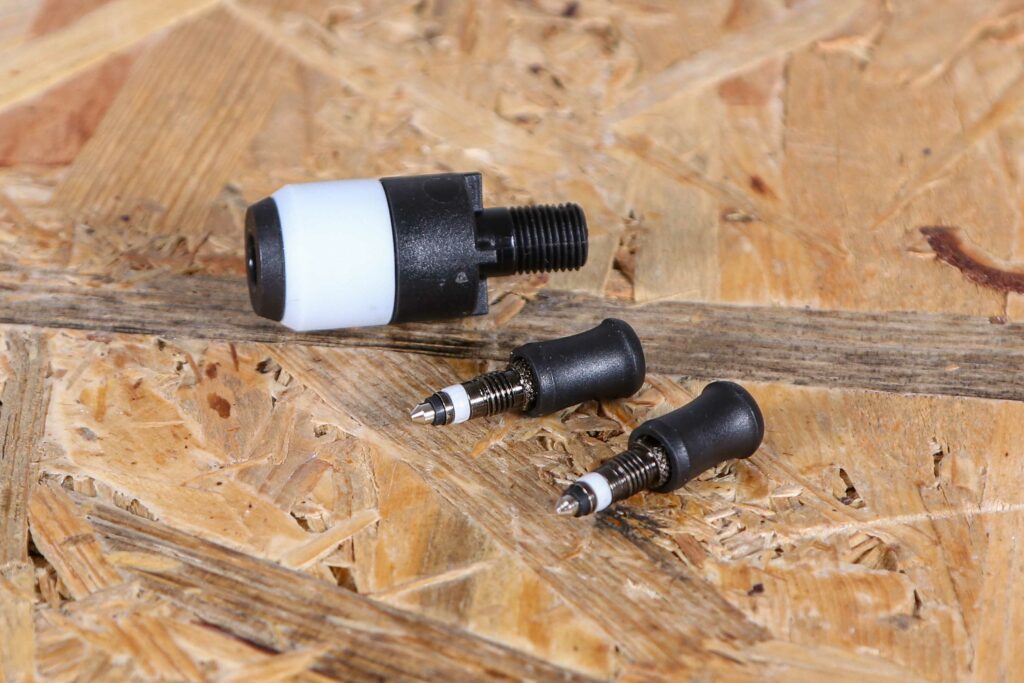



The Schwalbe Clik Valve is the easiest and most foolproof way to inflate your bike tyres. There’s nuance around how you integrate Clik Valves into your fleet of bikes, what pumps you need, and what it means when you’re away from home, but overall it’s an excellent way to get air where it needs to be.
> Buy now: Schwalbe Clik Valve Conversion Kit for £13.99 from Tredz
US patent US11719351B2 granted in 2023 recognises John Quintana of Clik Corp as the inventor of this fiendishly-easy-to-upgrade-and-use solution to a problem that has existed since cycling began: how to get air into your tyres without problems. Schwalbe has licensed the design, and here’s the first offering – with promise of more to come, like dedicated inner tubes, pumps and pressure gauges.
Venting pressure
Before I get into the detail, let’s recognise that some people have absolutely no issues with Presta, Schrader or Woods/Dunlop valves, and will no doubt see the Clik solution as an answer to a question no one asked. In that case this is Not The Review You’re Looking For – on w’ yea and your fiddly wee-nut-turning ways.
Cycling is a broad church and some people seem to actually enjoy looking for accidentally ejected valve cores in long grass or under garage cabinets. Others like pumping up tyres twice after their mini-pump unscrews the core as it’s removed. Still others revel in replacing valve cores after they become damaged by rocks or sticks. Some folks have three upper limbs, thereby being able to hold a wobbly pump head onto a valve while they exercise the trackpump. That’s fine, it takes all sorts. For everyone else, say hello to Clik.
Everyone welcome
For the last hundred years or so, putting air in bike tyres has been a grab-bag of customer experience. People are expected to know what sort of valve, what sort of pump, and how to use it. If you don’t know or get it wrong, you’re let down – literally. Yes, people could take the initiative to train themselves and carry the right gear, but honestly, we want cycling adopted by the masses, not remain a niche restricted to those willing to school themselves.
I can feel the comments section warming up nicely, so I’ll get ahead of all that by saying there are professional racers earning six or seven figures and riding many tens of thousands of miles a year who can barely change a tyre, let alone do more complex work on their bikes. They just can’t be bothered, and I say good on them. I have absolutely no interest in knowing how to knit, but I’m more than happy to wear a jumper. My wife can knit in 3D with her eyes closed – *because she wants to and enjoys it*. To the point – inflating a bike tyre should not involve instructions.
There are videos around of two-year-olds using the Clik system. It was his five-year-old son struggling with a traditional valve and pump that inspired the inventor to create Clik.
As a mechanic I inflate a lot of tyres – and I have scars on my knuckles from years of removing tight-fitting Presta pump heads and accidentally whacking my hands into cassette teeth or brake rotors. I’ve had many instances in the middle of long rides where my blood-glucose-depleted brain has forgotten to check the valve, screwed on a pump head, inflated a tyre, then had all the air fall out again as the valve core came off with the pump. If you haven’t ever had this happen, you’re clearly not riding enough.
Anyway, there’s definitely a strong need for a better tyre inflation experience, and Clik delivers that.
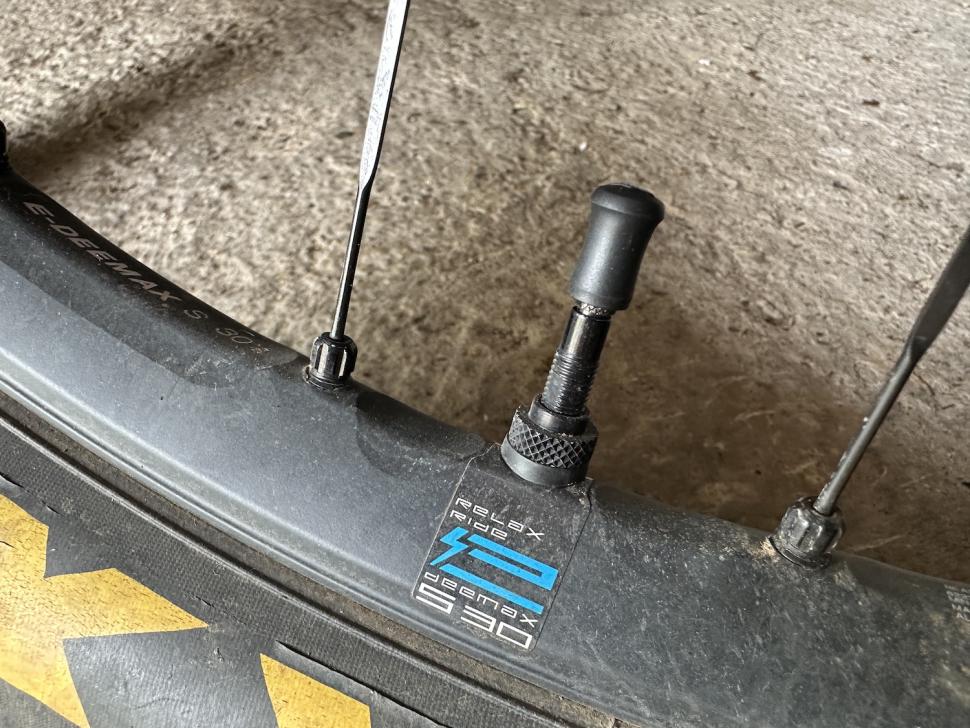
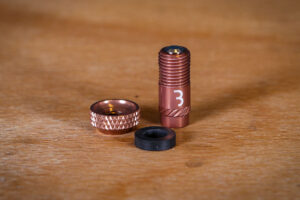
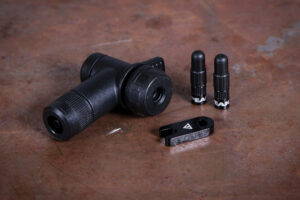
Schwalbe offers half-a-dozen kits to upgrade your ride to Clik. In this case it’s two valve cores, a wee tool and an adaptor head. It takes longer to type out the process of unscrewing your existing Presta valve core and screwing in the new Clik core than it takes to actually do the job. That’s it.
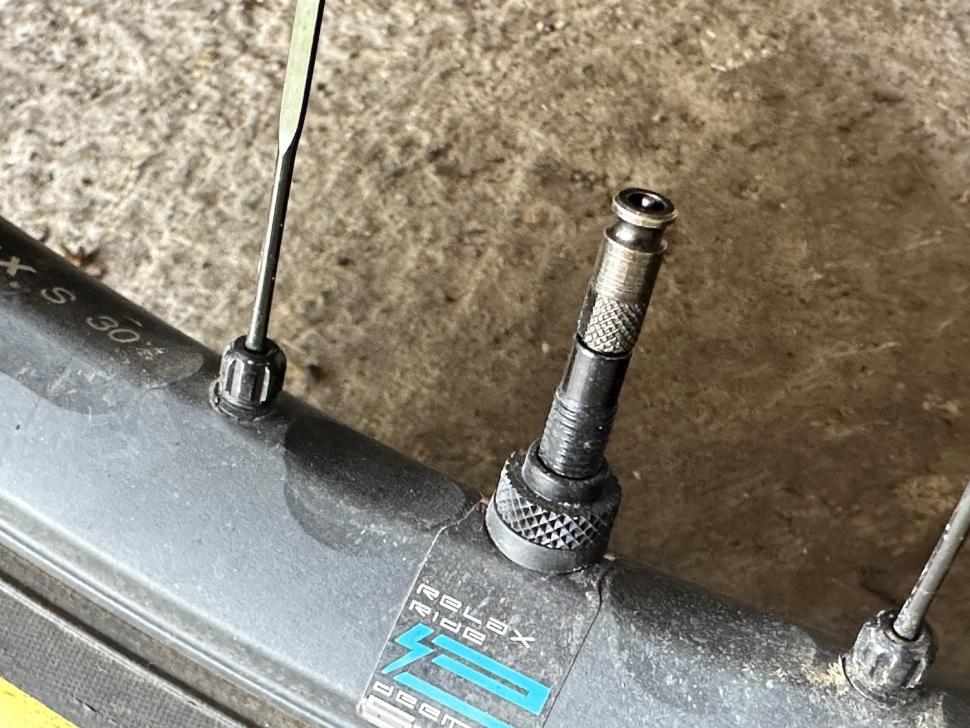
At Clik’s heart is an indent running all the way around the valve end. Inside the Clik head are four little spring-loaded ball bearings that sit into this circular groove, holding the pump head in place. When you click the head on, a small metal tube presses down into the valve core against a small metal nib, pushing it downward against a spring to open the valve and allowing air to flow. In case you’re wondering, inside the core is a rubber seal that the tube inserts itself into, achieving a perfect seal. This is as opposed to Presta valves, where all the sealing happens on the outside, being dragged over threads, hence why Presta head rubber seals wear out over time and need replacing to maintain a seal. Not so with Clik.
The amount of force required to click the pump head on or remove is minimal – two fingers is fine, and there’s no screwing involved. This will be a boon for anyone with weak or injured hands or fingers. Plus, as mentioned, there’s no risk of hitting your hand against anything on removal, or taking the valve core with you. You also don’t have to remember to do up a valve nut. For small wheels the minimal insertion depth will be a bonus, although the additional depth of the adaptor may cause issues if you’re using a legacy pump.
If you need to release some air, you press down on the protruding nib with a fingernail or side of the valve cap. This can be a little fiddly, and if you want to remove all the air quickly, just unscrew the valve itself. It’s no different – maybe even a bit easier – than releasing air from a Schrader valve.
Schwalbe says the valve only needs to be finger-tight – because it’s not at risk of being unscrewed by a pump head. That said, there are two flats on the core, in case it gets stuck and you need to use a traditional side-on core remover.
So – it just works. Brilliantly. This is the future. Once you’ve used it, it’s clearly no contest. It’s a far superior system to what we’ve had before, requires no training or skill, and there’s no risk of accidental air loss. Hence why companies like Schwalbe and SKS have jumped on it.
Legacy covered
But this is just the dawn of a new inflation world – there are hundreds of millions of legacy bikes out there, and pumps not designed for Clik. There’s an answer for them too.
A key takeaway from this review should be that most existing Presta or Woods/Dunlop pumps will inflate Clik valves just fine. I tried half a dozen of my own pumps, they all fitted and inflated fine.
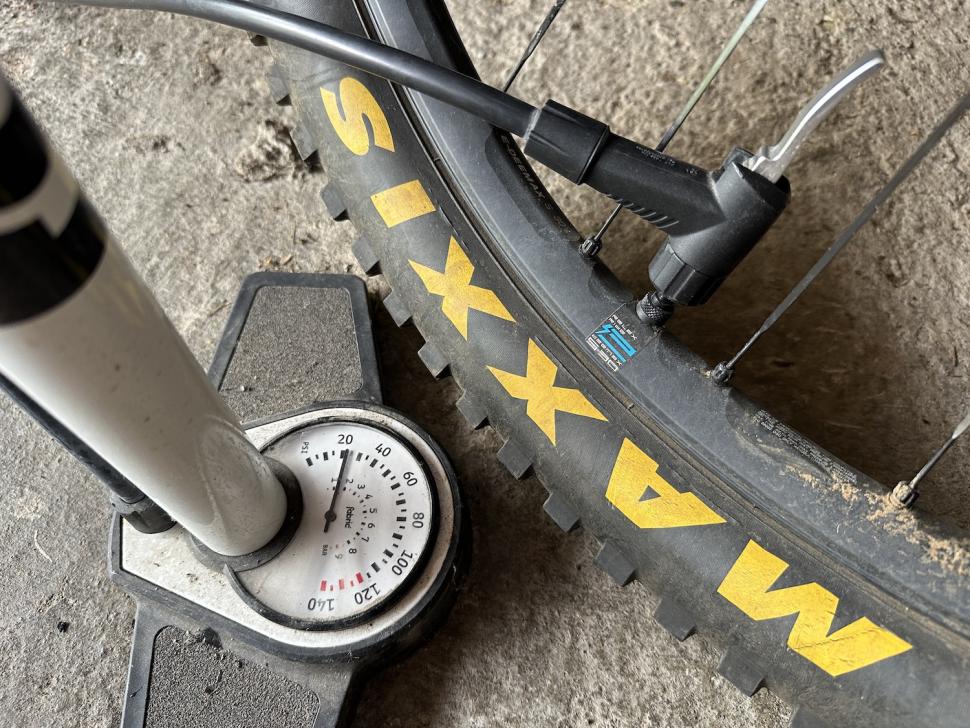
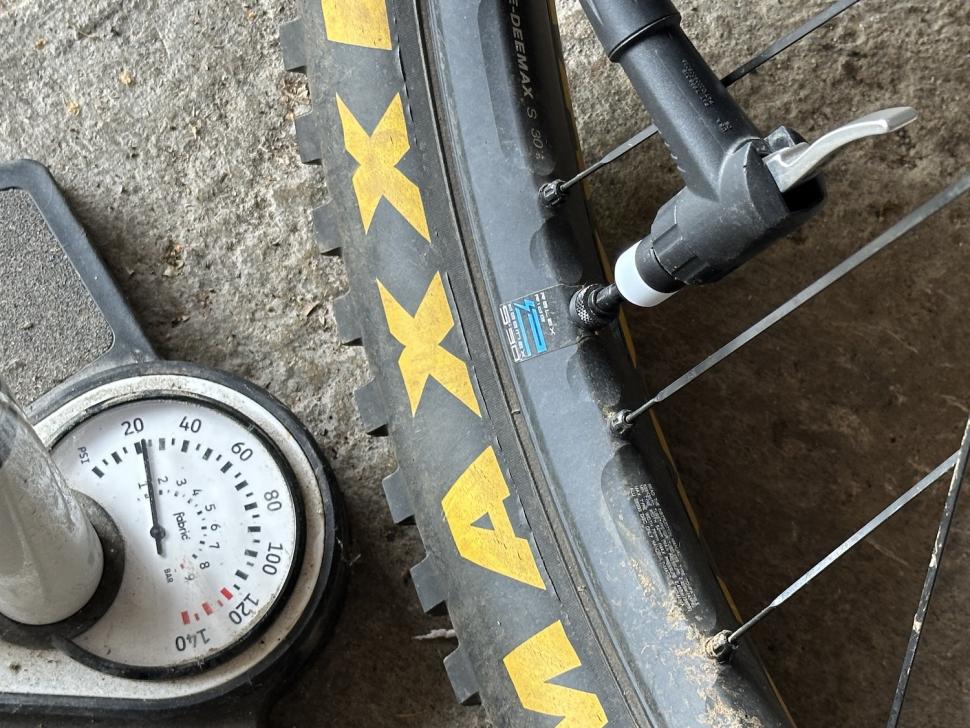
Multi-valve heads that fit both Presta and Schrader (car) valves were actually better, as the three I had to hand could read pressure too. A Presta-only pump won’t show you pressure, because they don’t hold the valve core open, whereas the Schrader-Presta combo heads I have feature internals that press the nib, meaning the Clik valve stays open allowing pressure to be read.
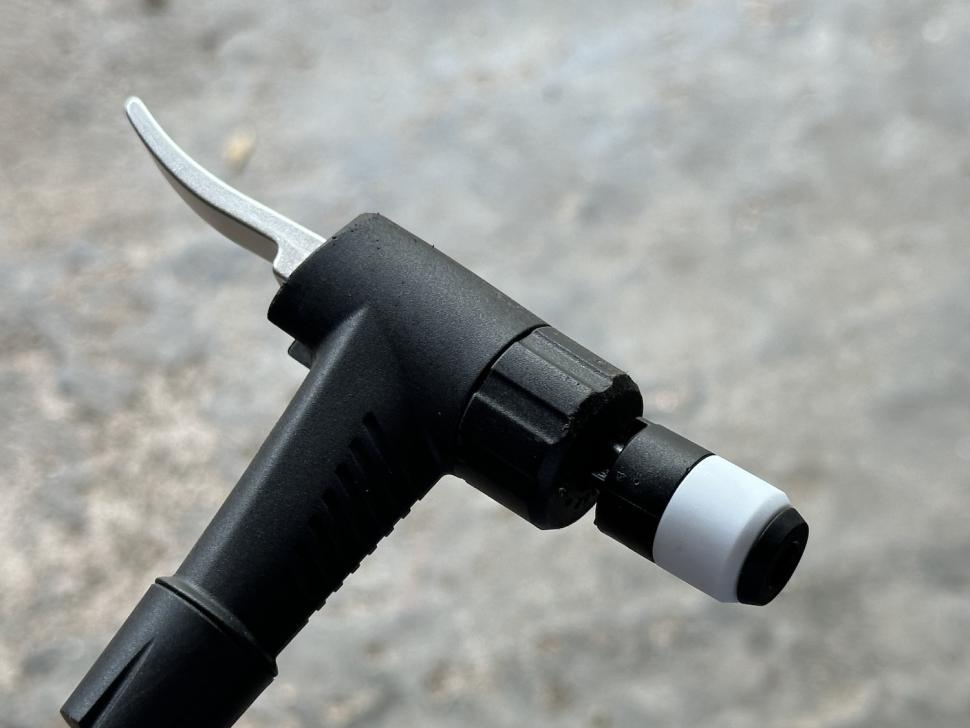
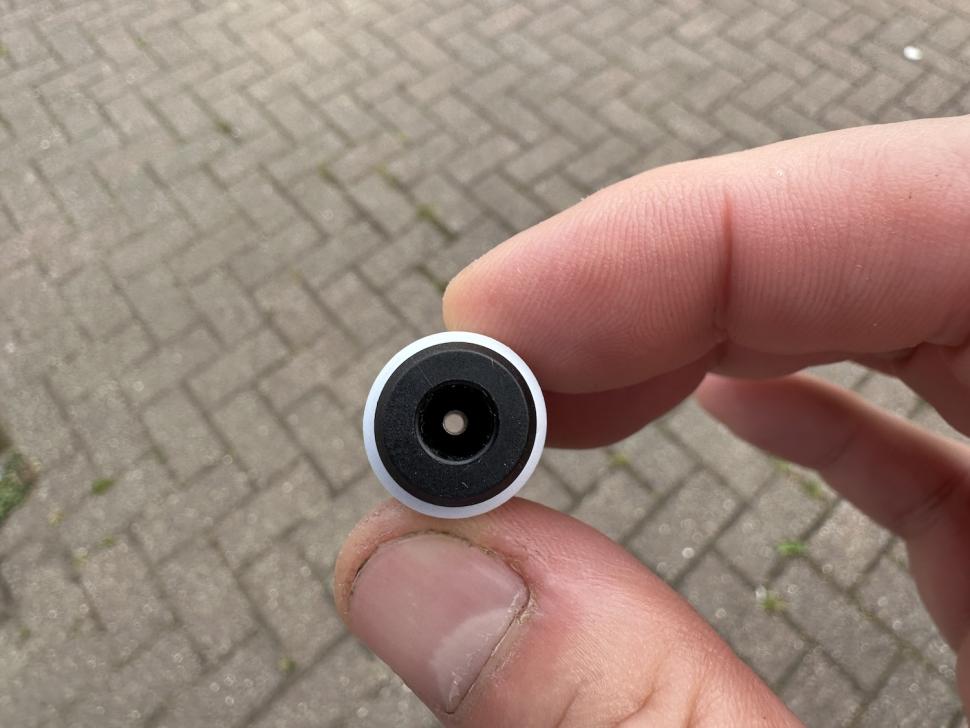
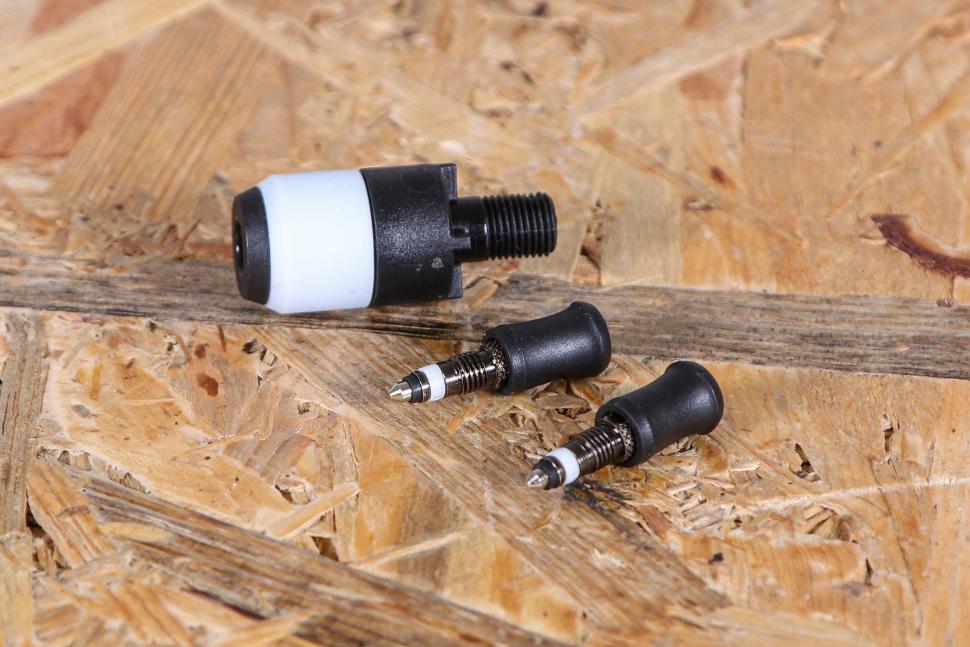
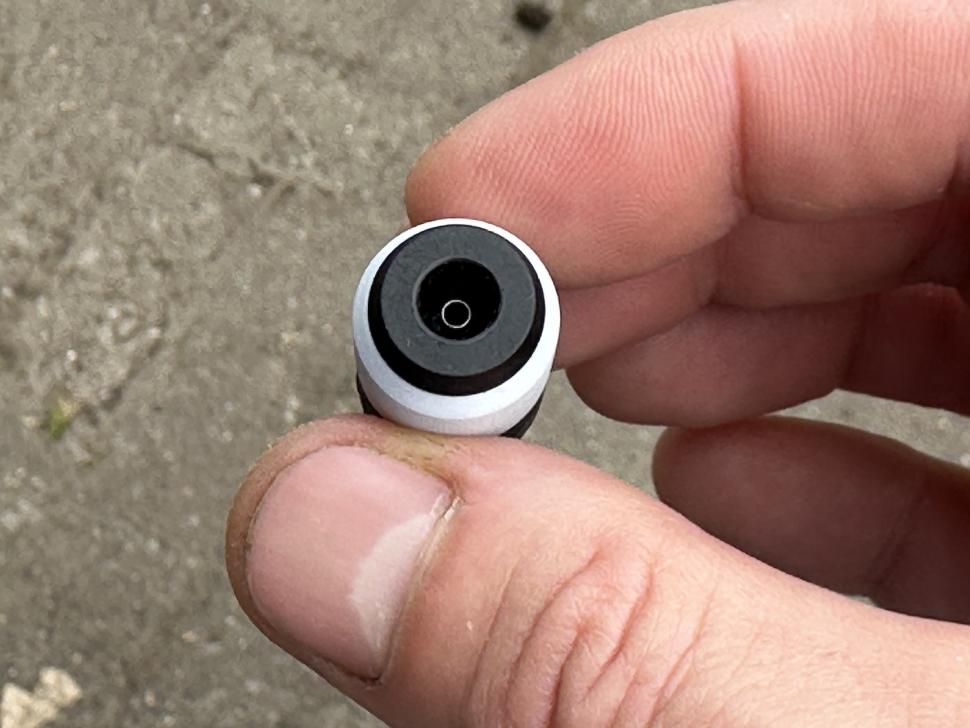
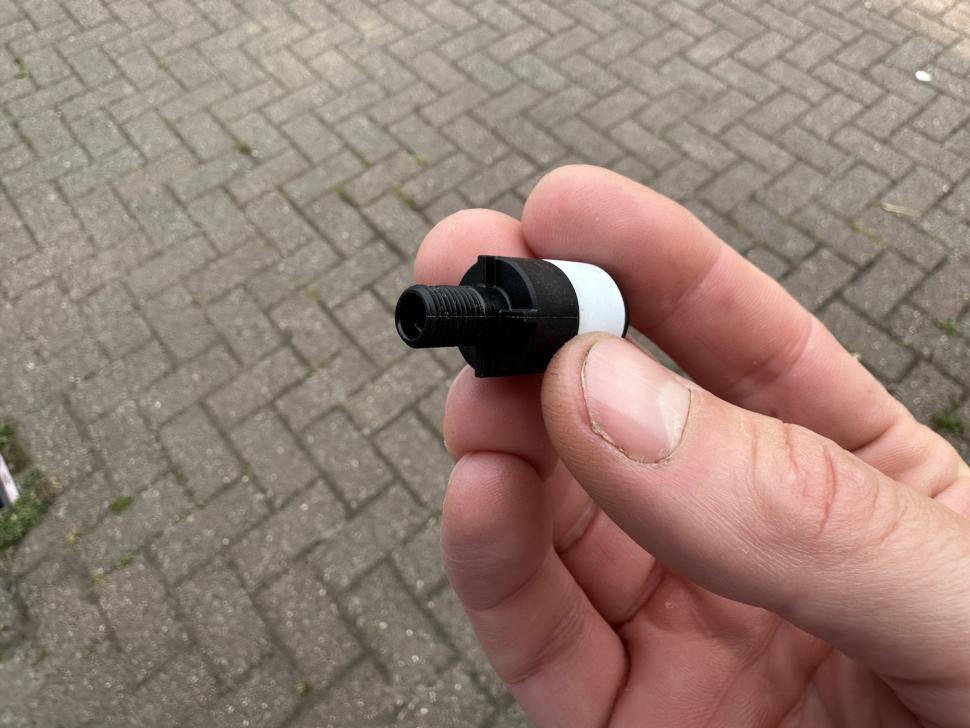
While Clik valves can be inflated by Presta pumps, they need an adaptor head to be inflated by a Schrader pump – one’s included in this set. The back of the adaptor is the same threaded dimensions as a Schrader valve, meaning your legacy pump head will fit it just fine.
Under pressure
The various issues with Presta and Schrader fit mean that your current handheld pressure gauge won’t work by itself to check your tyres. What you can do is use the adaptor inserted into the Schrader side of a pressure gauge, to press on and read. This actually works very well, with no air loss. I checked a tyre ten times using the adaptor held onto my SKS Airchecker and the pressure was constant across all ten readings. Schwalbe says Clik-compatible pressure gauges are on the way, and Clik already sells its own, including a tiny USB-C powered digital one.
> How to choose the best bike tyre pressure – balancing speed, comfort and grip
A big caveat here is that because there’s no Presta core to thread onto, some Presta pumps with hoses will struggle to stay attached as you pump with both hands. If you have another person with you to hold the head on the Clik valve you should be OK. If your pump head attaches directly to the valve, you are holding it on already. Suffice to say, until Clik-compatible mini-pumps hit the market, it’s best to test.
If you have a Presta-only floorpump and want to go the Clik route, you can buy a £16.99 Schwalbe kit with the valve cores that comes with a head with which to replace your existing pump’s head. SKS will sell you just the head for £11.99. SKS also sells the Schrader-Clik adaptor for £7.99 – Schwalbe doesn’t seem to sell just the adaptor, so if you have a number of pumps to add heads or adaptors to and don’t need more valves, SKS might be the cost-effective way to go.
Out and about
If you’re running Clik valve cores and want the option to inflate tyres at service stations, you’ll need to bring the adaptor with you. If you’re using Presta valves then you’re already needing to carry a Presta-Schrader adaptor anyway for service station top-ups – so no additional drama, except you can’t leave the adaptor fitted to your valve like you can with the old-school brass adaptors.
If you have Schrader valves already, Schwalbe offers a Clik adaptor that screws on the Schrader valve. In that case, you just unscrew the Clik adaptor, inflate using a Schrader pump, then replace the Clik adaptor.
Schwalbe/Clik claims an increase of airflow over a Presta valve of around 50 per cent. This might make pumping a bit easier, and it might increase your chances of seating a tubeless tyre. Of course the best option for tubeless seating is to remove the core altogether, seat the tyre, then inflate, so this bonus is questionable.
> 9 things they don’t tell you about tubeless tyres
Something that’s not in question is how resistant to ingress by sealant the Clik valves are. For the last two decades I’ve been used to getting sealant on my fingers when unscrewing and pressing in a Presta valve to make sure it’s flowing free, then attaching my pump to inflate. With the Clik valve there’s nothing to unscrew – just pop it on, check the pressure, and pump. This, more than anything, has sold me on Clik – it’s zero faff and zero mess. The fact that there’s a spring holding the core closed should mean that the chances of sealant working its way into the core are next to nil – whereas a Presta core with no spring actually relies on air pressure flowing back out of the valve as you remove the pump to seal, and you then do up the nut to ensure it stays sealed. Now, if you need to drop your tyre pressure a bit, then yes sealant may blow through the core – but if you then top it up again, even one stroke, it will have expelled any sealant from inside.
Value & conclusion
Comparison with alternatives is nigh-on impossible, because there aren’t any. There’s been a flurry of new ‘high flow’ valve bodies and valves of late, seeking to address the issue of quickly getting air into tubeless tyres, and not clogging the valves. But they all use Presta pumps – with the inherent shortcomings thereof. Clik isn’t here to solve those problems – although improved flow rate and less sealant ingress may render these new designs somewhat superfluous for some users.
Clik is the first truly innovative and practical alternative to other valve designs in the last 130-odd years. Yes, you read that correctly – Schrader, Presta and Woods valves were all created about the same period in the early 1890s. It’s hard to think of any part of a bike that’s remained so fundamentally unchanged in all this time, where the materials, measurements, method of manufacture and use case are fundamentally identical to that of over a century ago.
Clik is easier, faster, cleaner and overall far more user-friendly than any alternative. And it’s only a few quid per wheel to upgrade.
It’s about time inflating tyres got easier. Thank you, John Quintana – your place in the pantheon of great cycling inventors is assured.
> Buy now: Schwalbe Clik Valve Conversion Kit for £13.99 from Tredz
Verdict
The easiest and fastest way to inflate your tyres, do-able by anyone
All the deals displayed on our review pages are pulled from a constantly updating database feed of the best affiliate deals available. The criteria for deciding on what are the best deals is who is offering the lowest, delivered price. In most cases we will be showing the very best deal available online, but sometimes you may be able to find an item cheaper. If you can please feel free to post a link in the comments box below. To find out more about affiliate links on road.cc click here.
road.cc test report
Make and model: Schwalbe Clik Valve Conversion Set
Size tested: Valves with pump head adapter
Tell us what the product is for and who it’s aimed at. What do the manufacturers say about it?
It’s for literally anyone needing to inflate a bike tyre, of any sort, of any age or ability.
Schwalbe says:
The Schwalbe Clik Valve in a package with the matching pump head: inflating your bike tyres suddenly becomes child’s play. You only need two fingers – thanks to the intuitive click system, inflating the valve is child’s play. The pump head is simply clicked onto the valve and then pulled off again. No risk of air loss and no signs of wear on the pump head.
THIS IS Schwalbe CLIK VALVE
The principle of the SCHWALBE CLIK VALVE, winner of the Eurobike Award 2024, is very simple: it works intuitively with a click. What does it need? The valve and the corresponding pump head or pump head adapter. With the Clik Valve, this can be clicked onto the bike valve with minimal force and removed again very easily after successful inflation.
It doesn’t matter which valve and pump you currently have – thanks to conversion kits for all existing bicycle valves and most pumps. To change the bicycle valve, simply replace the valve insert (Sclaverand, Presta, Dunlop, tubeless valve), for the car valve there is an adapter that is screwed over the valve (and can be easily unscrewed again to be able to use petrol station pumps).
The pump head adapter can be integrated into the pump head of current pumps (by clamping or screwing in), even with hand pumps. The Schwalbe Clik Valve can also be inflated with normal SV (Presta) pumps – thanks to this reverse compatibility, you are never at a loss in any situation. SKS already offers its own pump.
The Clik Valve is produced by the Italian specialist valve manufacturing company Record S.p.A. Schwalbe will soon be producing the first tubes with the Clik Valve.
Tell us some more about the technical aspects of the product
Weight: 11g
Tell us how the product performed overall when used for its designed purpose
Cannot fault it – the design is brilliant. The only drawbacks – if you can call them that – are in reverse compatibility with the last century’s legacy.
Tell us what you particularly liked about the product
The lack of effort and security.
Tell us what you particularly disliked about the product
Nothing.
How does the price compare to that of similar products in the market, including ones recently tested on road.cc?
Comparison with alternatives is nigh-on impossible, because there aren’t any. But it’s very affordable as an upgrade.
Did you enjoy using the product? Yes
Would you consider buying the product? Yes
Would you recommend the product to a friend? Yes, with caveats.
Use this box to explain your overall score
It’s excellent. The only things that mark down the Clik system are related to legacy compatibility with existing valves. Standalone Clik is a brilliant system.
About the tester
Age: 47 Height: 183cm Weight: 77kg
I usually ride: Sonder Camino Gravelaxe My best bike is: Nah bro that’s it
I’ve been riding for: Over 20 years I ride: A few times a week I would class myself as: Expert
I regularly do the following types of riding: cyclo cross, general fitness riding, mtb, G-R-A-V-E-L

27 thoughts on “Schwalbe Clik Valve Conversion Set”
What fucking stupid invention
What STUPID invention 🤦♂️ – just like the disc brake on a road bike..but we certainly won’t go there
Hey road.cc, any chance we
Hey road.cc, any chance we can get a downvote option?
I’m convinced- I’ll get one
I’m convinced- I’ll get one anyway, even though I’ve never had a problem with Presta
Had these for a while now on
Had these for a while now on a couple of my bikes (one tubed, one tubeless), I’m enjoying pumping up my tyres without getting my hands dirty.
One thing to watch out for if you’re upgrading – some presta inner tubes don’t have removable cores, so you may need new inner tubes.
“Thank you, John Quintana –
“Thank you, John Quintana – your place in the pantheon of great cycling inventors is assured.”
Settle down.
He’s invented something a two
He’s invented something a two-year-old can use, to replace an invention that frustrates millions of adults every day even after they may know exactly how to use it.
See you back at this comment in say 10 years?
You’ve actually marked the
You’ve actually marked the day on the calendar already, havent’t you?
That’s not a bad idea😍
That’s not a bad idea😍
Enough for a pantheon surely
Enough for a pantheon surely as well?
Just checking I have you
Just checking I have you right here:
– It’s got the form factor of a Presta valve core – so can be swapped for one of those.
– It’s got the mode of operation of a Schrader valve core (a poppet valve) – so both have a spring to help close the valve (different from Presta)
– Different from both it’s got a cut-out for the ball bearings to click into, which makes it easier to attach and should help avoid unscrewing the core accidentally.
That’s it, right?
Oh – and you can still use Presta pumps if they’re the clamp-on type or you hold them, but you can’t read the pressure (because the valve closes at the end of the stroke)?
Of course some of the greatest systems / “inventions” just involve combining parts from others. Consider e.g. the macaroni cheese pie..
Good summary.
Good summary.
You forgot the critical bit of how the air is delivered – down a wee tube that seals inside the valve. That is what gives it the ease of fit and removal, as opposed to the external sealing of other designs that rely on clamping force around the outside of the valve to create a seal that needs to survive up to 200PSI or thereabouts for track bikes.
The inventor was to a degree constrained / influenced by the need for reverse compatablilty with Presta valve bodies, threading, pump head design, etc. If he’d invented something that required a whole new pump to work at all it likely would have flopped – or been much slower to make an impact than it likely will take.
As you say, most inventors stand on the shoulders of others. Very little is genuinely new.
It was precisely that part
It was precisely that part (which you described in the article) which isn’t clear even in eg. the videos / descriptions at Schwalbe – although I guess I didn’t wade through everything there.
That could make for a better seal, although again pros and cons – if the seal is on the inside (thus smaller) presumably keeping crud out is more important – albeit dry stuff may blow clear when the valve operates.
The other concern would be that the tube in the pump head doesn’t get damaged – smaller is normally easier to knock out of whack. If a smaller area has to hold the pressure that is important. (I’m guessing the ball bearings aren’t doing much more than just keeping the thing approximately at the correct depth to ensure the cental pin is pushed to open the valve? ) That’s still getting jerked free while under pressure (from within the tyre).
And I don’t quite understand how what would appear to be a smaller area for air to flow through (the tube sealing on the inside of the valve now) equates to “1.5 times more flow” – although perhaps whatever is the bottleneck in the Presta system just happens to be smaller than that?
Regardless, looks interesting, despite not being a “problem” I knew I had. And we’ll get wear / quirks in use reports pretty quickly if Schwalbe are cranking them out I guess.
Schwalbe have the European
Schwalbe have the European distributon rights for five years. An Italian company manufactures them. Clik has their own Web Site and is based in the US. You can can buy from there but postage is high.
Thanks for clarifying that. I
Thanks for clarifying that. I wonder about SKS – have they only licenced the head design?
If the inventor hangs on as adoption grows, he could sell to a Schwalbe for a fortune.
Do these function with
Do these function with electronic mini-pumps as they have to read the pressure in the tyre to work?
When KiwiMike likes something
When KiwiMike likes something, he really likes something. So I’m convinced. I’m sure I will eventually upgrade and wonder why I hadn’t done it far earlier.
But I’m still liking my Filmore valves, with oil slick upgrades. Particularly the oil slick upgrades.
https://xkcd.com/927/
https://xkcd.com/927/
Backladder wrote:
That one was also linked when the Clik valves were announced.
Perhps you’d prefer that nothing had changed since the 1970s (or even earlier) and we all rode on ‘high pressures’ wore toe clips, trouser clips, fitted Brooks saddles and Ever Ready battery lights. You could have submitted your post on paper with an ink pen.
No, don’t take the above too seriously, I’m joking. Well, partly.
Although I’m invariably a late adopter and something of a Luddite (“if it ain’t broke…”), it seems obvious to me that some thought has gone into this product and seems to have addressed some of the issues and real annoyances with Presta valves. As a result it is one of very few recent inventions that so I’m genuinely keen to try.
What has changed since the
What has changed since the 1970s is that pumps are no longer 18 inches long, the shorter length of modern mini pumps is probably one of the major causes of bent presta valves as they are too short to control easily and require too much effort to inflate the tyre.
All my modern pumps use a threaded tube to connect to the valve and so are incompatible with clik without an easy to lose/forget adaptor so I won’t be bothering.
And no, I don’t have problems with the valves unthreading with the tube, that only really happens if you don’t release the pressure in the tube before you try to unscrew it. 😉
I was just about to change a
I was just about to change a bent valve core on one of my bikes, but after reading this I’ve decided to give the Clik system a try. Have ordered a pump adapter kit and a couple of valve conversion sets. Looking forward to trying them out, starting with the tubeless ones.
Update – kits arrived and I
Update – kits arrived and I have converted the Roubaix and MPA (both tubeless) in minutes. With the pump adapter on a track pump Schrader head, the system seems flawless. Minimal effort to click on and click off. No more risk of hurty knuckles from cassettes or rotors as Mike has said. The other track pumps (plus a portable USB inflator) with Presta heads I’ve tried work well, using the traditional push on method, so not likely to be stranded when out and about.
More kits on order for the Diverge, Venge and Aethos, plus the Clik pump head, to convert an existing track pump hose to work natively with Clik, as the adapter does add some length to the nozzle. Also looking for a kit to convert Schrader valves so I can do the Vado and the Brompton. I can see this being particularly useful on 16″ wheels, as it’s awkward to get a push on pump head with lever between the spokes.
So, in summary, I’m very impressed so far.
I’m definitely curious.
I’m definitely curious. Certainly no big fan of presta valves – I’ve started using Fillmores and so far been happy.
Interested in how these compare to Fillmores. I wasn’t quite sure I understood this comment:
“There’s been a flurry of new ‘high flow’ valve bodies and valves of late, […] But they all use Presta pumps – with the inherent shortcomings thereof.”
I’ve never found the pump per se to be hugely problematic – I appreciate maybe the Clik pump head is even easier, but I don’t see that alone as a big deal. With Fillmores (can’t speak for any of the other of the flurry of new high-flow valves), many of the problems of presta valves are removed: the valve core can’t be unscrewed by a thread-on style pump head; the valve core is far less delicate; much higher flow rates; much less likely to become clogged with sealant.
The one advantage of Clik I can see is that the whole valve core can be removed, which presumably makes it even easier to add sealant, although I’ve never had a problem adding my preferred sealant (Orange Seal) through a Fillmore.
One thing that is putting my off Clik is that it sounds like it’s hit-and-miss whether presta pump heads will work (and Schwalbe pump heads definitely won’t without an adapter). I’m lazy and so have a dedicated mini-pump attached to each bike (various brands), plus a track pump, plus a couple of CO2 inflators, all of which work with Presta/Fillmore valves. I am also sure that any bike shop or indeed most other cyclists would be carrying a pump that I can use with Presta/Fillmore valves. I don’t particularly want to replace all those minipumps, or need to add an adapter to every bike’s saddle pack.
The other thing that is putting me off slightly is that chunky dust cap…
Replaced all my presta valves
Replaced all my presta valves with the Clik valve. Converted my Airshot and and BriskMore CO2 adapter to Click valve. Pump head on the excellent Giant Control Tower Pro 2-Stage Floor Pump worked well but I wanted a full click valve system so replaced with new pump head. Only issue I had is that one cheap Chinese valve stem would not accept the Click valve so binned it (out of spec thread on Chinese stem). Brilliant upgrade, even better than expected. Highly recommended, am a convert.
wich CO2 adaptor are you
wich CO2 adaptor are you using?
BriskMore CO2 Inflator. I
BriskMore CO2 Inflator. I bought it from Amazon. Very well made.
Please tell me about the
Please tell me about the rubber bumpers betwixed pump and tank.
And doesn’t the tank unbalace the pump a bit? I get much more use from my Joe blow deluxe than me turbibooster, very necessary though it is.
Impressive rig mind…
Rubber spacers between pump
Rubber spacers between pump and tank are taken from Zefal Doodad Pump Clips. Straps are elasticated velcro. The booster tank is made from aluminium so very lightweight and does not impact on the balance of the floor pump at all. The pressure gauge on the Giant floor pump is especially good.