



The Core Body Temperature Sensor claims to be the first wearable device that continuously and accurately measures core body temperature on the go, and you don’t have to insert any probes. It’s a non-invasive method that has enhanced my heat awareness. The app is also easy to use and provides additional learning resources, but the price means it’s not for everyone.
While measuring core body temperature is not a novel concept, monitoring it continuously typically requires invasive methods such as thermometers, probes and pills, often in a controlled environment.
> Buy now: Core Sensor for £231 from Core
These days you can measure pretty much any metric while riding, such as heart rate, power, cadence, and glycogen levels. Now, thanks to this device, you can measure core body temperature too.
The Core body temperature sensor is aimed at anyone who trains with a purpose, and there are lots of relevant applications for it.
How does it work?
The Core is a heat flux sensor, which measures heat energy entering or leaving the body, then an AI algorithm converts this heat energy into your real-time core body temperature. The company says it’ll even work under water, measuring temperature accurately while you’re swimming.
While I have no way of testing the accuracy, I found that my core temperature went up and down at the moments I would have expected it to.
To wear the sensor, it can either be clipped to a heart rate monitor strap or sports bra – or, alternatively, stuck to your chest using one of Core’s supplied stickers.
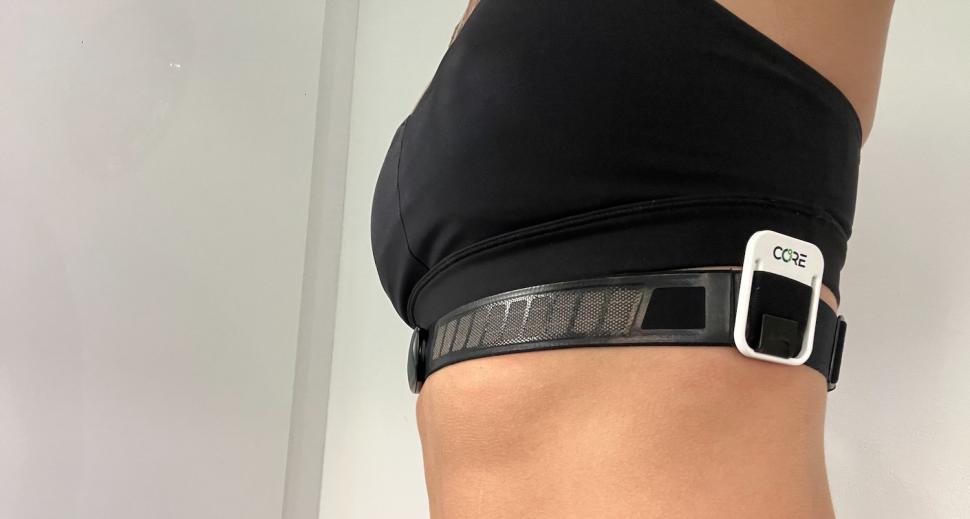
I opted for the former, clipping it onto my heart rate monitor strap and I found that it stayed in place well with the small clip provided and was unnoticeable.
For sports and athletic activity, it is recommended that you pair the Core sensor with a heart rate monitor as it claims to deliver greater temperature accuracy.
Why should I measure core temperature?
Just as altitude training stimulates your body to produce more blood cells, heat stress stimulates your body to produce more blood plasma, and with this sensor you can safely increase the intensity of your sessions in the heat based on how your core temperature is coping.
A common misconception is that a core temperature sensor would only be useful if you live in a hot country or are trying to acclimatise for a hot race, but increasing your blood plasma is beneficial to anyone who wants to get the most out of their training, in a sport that’s dominated by marginal gains.
There are other applications too. Just as training with power involves riding at specific zones to prepare for a race, it’s beneficial to train at the core temperature you’ll experience on race day, typically around 38.5°C for most people. Monitoring your core temperature can assist in determining your heat zones and training safely within them.
Even if you live in a cold climate and spend most of your winter on the indoor trainer, measuring core temperature is still valuable. If you’re doing interval sessions indoors, excessive heat can lead to reduced power output. Using core temperature data allows you to experiment with cooling and hydration strategies to optimise your training sessions.
What are the benefits of heat training?
The principle of heat training is that the body is conditioned to perform better when it gets hot, because when people get hot in sports, their power output drops because of the body diverting blood away from the muscles.
I spoke with Brian Maiorano, Coach Liason at Core, who talked about how heat training has several benefits, including increasing blood plasma volume, lowering the sweating threshold for quicker cooling, and reducing sodium loss in sweat.
Are the pros using them?
The Core temperature sensor was initially targeted at elite athletes and is used by many UCI WorldTour and Continental teams such as Soudal Quick-Step, Ineos and Lidl-Trek for both training and racing.
We reviewed the Supersapiens Glucose Monitoring System which is banned by the UCI for making racing too robotic, but Maiorano assured us that the Core sensor is unlikely to be banned by the UCI, as a big benefit of it is rider safety.
It enhances riders’ awareness, signally when to initiate cooling strategies like ice in jerseys, ice slushies or, in extreme cases, when to ease off.
In use
The Core sensor can be used in various ways, whether you’re a professional cyclist engaged in extensive heat training, preparing for a hot race, or, like me, monitoring heat awareness and pinpointing performance decline threshold.
As well as coming with clips and stickers for mounting the sensor, you’ll also find a small USB charging cable which uses magnets to attach to the Core sensor to charge it up. Core claims a battery life of six days of monitoring, and I found this to be pretty accurate.
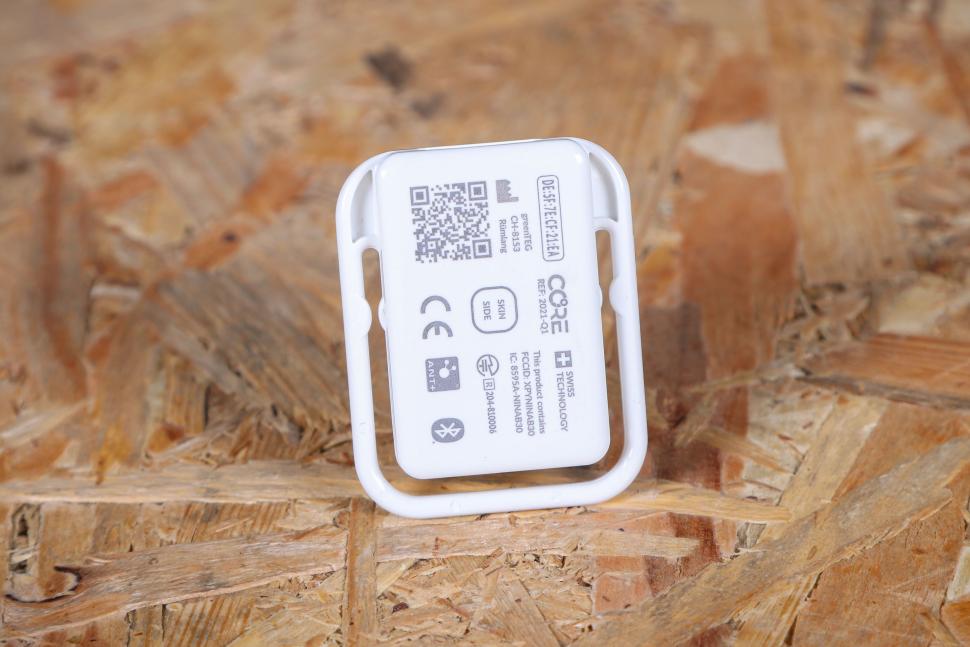


There is a green light that flashes on the sensor to show it’s awake, but a slight negative for me is that this light doesn’t indicate when the sensor is fully charged. You have to open the app, which then shows you the battery level.
For connectivity, the smartphone app paired with the Core sensor and my heart rate monitor seamlessly, and it was easy to set up and use. Usefully, a graph is plotted live on the app while wearing the sensor.
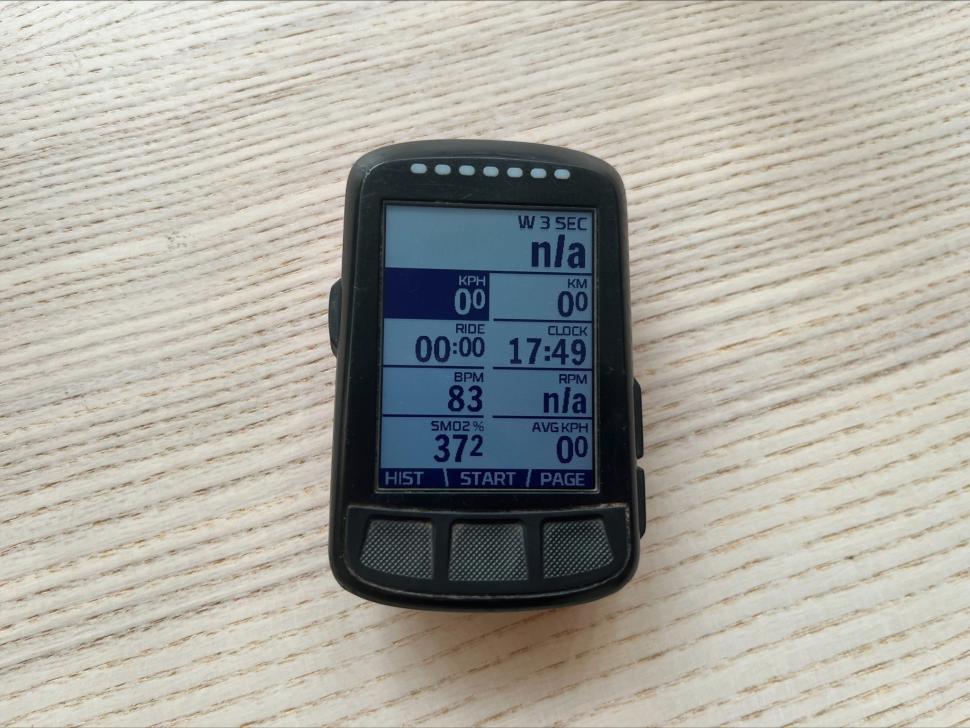
It was also easy to connect the Core sensor to my Wahoo Elemnt, and core temperature was displayed in the SMO2 muscle oxygen field so the unit label showed as SMO2% instead of °C.
To get the most out of the sensor you should start by completing the heat ramp test, like a functional threshold power (FTP) test to determine training zones. While an FTP test gives you power zones for structured training, the heat ramp test gives you core temperature zones for heat training. There are instructions on the app, online and on Core’s YouTube channel on how to carry out the test.
In short, you warm up on the turbo and ride until your core temperature reaches 38°C. You then maintain whatever your heart rate is at this temperature for 45 minutes or until your power drops by 20% and your core temperature will continue to rise.
The test was easy to understand and not as hard as I thought it would be, as you don’t have to ride at a high power to get your core temperature where it needs to be. Core did advise wearing warm clothing and no fan, so it was a sweaty affair!
My heat ramp test delivered a result of 39.3°C, giving me a Heat Training Zone of 38.8-39°C which defines a safe and effective core body temperature range for training that’s individual to me.
Completing the heat ramp test also showed me how unsustainable it is riding when you’re hot, as I only got around 20 minutes into the test and saw my power drop considerably while maintaining the same heart rate.
It was interesting to find out this zone, as prior to completing the heat ramp test I saw temperature values of around 39°C while taking part in a gravel race but didn’t know whether this was sustainable for me or not. Knowing that my core temperature naturally goes up to around 39°C when racing reinforced the importance of training at this core temperature.
I also completed a session riding for 45 minutes in my Heat Training Zone, which was uncomfortable at first, but it surprised me how quickly you adapt. You can then re-do the heat ramp test to see how your body’s ability to cope has improved.
Using the Core sensor made me more aware that your core temperature stays high even when you start feeling cold, like when descending. Your skin cools down, but your core temperature can remain high, which is important to remember before tackling the next climb, particularly during a race, which is why many professional cyclists use cooling methods such as ice or slushies.
Conclusion
Overall, the Core Body Temperature Sensor worked well and increased my heat awareness. I’m not sure how beneficial it would be to me in the long run, so I would say it proves most valuable for individuals with specific training objectives, providing additional data alongside heart rate and power to optimise training sessions.
With this information, you can safely increase the intensity of your sessions during heat training and better understand what temperatures you’re likely to start suffering at during a race. You can then design and test hydration and cooling strategies tailored to you, as well as more accurately pacing races and warm-ups.
The app is easy to use and, usefully, you can view the data on some bike computers and smartwatches.
Verdict
Adds a useful extra dimension to your training, albeit at a cost
All the deals displayed on our review pages are pulled from a constantly updating database feed of the best affiliate deals available. The criteria for deciding on what are the best deals is who is offering the lowest, delivered price. In most cases we will be showing the very best deal available online, but sometimes you may be able to find an item cheaper. If you can please feel free to post a link in the comments box below. To find out more about affiliate links on road.cc click here.
road.cc test report
Make and model: Core Body Temperature Monitor
Size tested: n/a
Tell us what the product is for and who it’s aimed at. What do the manufacturers say about it? How does that compare to your own feelings about it?
Core says, “The CORE Body Temperature Sensor is an easy-to-use, wearable device with Swiss-Made sensor technology that can monitor and deliver real-time, accurate core body temperature data.”
It’s aimed at anyone who trains with a purpose – those wanting to improve their performance.
Tell us some more about the technical aspects of the product?
Core lists:
– A single charge provides power to run up to seven days
– Compatible with ANT+ and Bluetooth devices
– waterproof
Core says, “The CORE sensor is built with an innovative thermal energy transfer sensor and utilises the power of an AI algorithm built from over one billion data points to calculate your real-time core body temperature.”
For sports and athletic activity, it is recommended that you pair the Core sensor with a heart rate monitor as it helps deliver greater temperature accuracy during sports and high-intensity activity.
The sensor and application worked without fault for the review period, providing useful insights. In some cases, the performance is dependent on how much time you put into learning about it using the additional resources to help you get the most out of it.
Had no issues with the sensor throughout the review period.
Once it was attached to my heart rate strap I hardly noticed it.
We haven’t reviewed a product like this before, so it’s a bit difficult to compare value. It’s a bit expensive up front, but there’s no ongoing subscription cost.
Tell us how the product performed overall when used for its designed purpose
It performed very well. It was easy to set up with a clear and easy-to-use app experience.
Tell us what you particularly liked about the product
It’s easy to set up and the app has lots of guidance to help you get the most out of it. There are also informative YouTube videos.
I found that it provided a useful metric that adds another dimension to your training, and it made me consider aspects I hadn’t previously taken into account.
Tell us what you particularly disliked about the product
The light on the sensor doesn’t show when it’s fully charged – you have to check battery status on the app.
Did you enjoy using the product? Yes
Would you consider buying the product? Yes
Would you recommend the product to a friend? Yes, depending on the person…
Use this box to explain your overall score
It’s very good, and effectively heightened my heat awareness. While I may not personally benefit from it in the long term, it holds significant value for those with specific training goals, offering supplementary insights alongside heart rate and power metrics to optimise training. The data obtained enables you to design and test personalised hydration and cooling strategies, as well as precise race pacing and warm-up planning, and the user-friendly app also offers the convenience of data viewing on select bike computers and smartwatches.
Overall, it’s very good.
About the tester
Age: 23
I usually ride: specialised tarmac sl6 My best bike is:
I’ve been riding for: 10-20 years I ride: Most days I would class myself as: Expert
I regularly do the following types of riding: road racing, commuting, club rides, general fitness riding, fixed/singlespeed, mtb,



6 thoughts on “Core Body Temperature Monitor”
“I’m not sure how beneficial
“I’m not sure how beneficial [the body temperature monitor] would be to me in the long run…” coming from a seasoned athelte with a sound pedigree this comment probably tells you all you need to know about this product. It sounds like snake oil to me albeit in handy plastic clip that can be attached to the strap of my heart rater monitor. Painting your nails is more likely to be the secret of riding faster and is far less expensive.
jaymack wrote:
I haf ordered a bottle of go-faster-stripe nail polish, with the special triple-head application brush. Only £76.99 for 15ml! There’s a small spot left in my snake oil cupboard, next to the lucky rabbit’s foot (simulated) and the Muc-off stuff. 🙂
*********
O’er the years of riding in all sorts of conditions with others, it becomes noticeable that some run best when feeling cool and others run best when reet-hot. (I am one of the latter). Moreover, running cool if you’re a hottie or vice-versa can often detract markedly from one’s usual perfomance. So who needs a personal temperature monitor other than the one we all have built-in?
However, I understand that this syndrome has nothing to do with core body temperature, which remains as a personal norm (albeit varying little from a usual-human range) unless there are extreme circumstances causing things like “exposure” (near freezin’ to death from hypothermia) or the opposite (causing heat death from hyperthermia).
So, if yer newfangle body core temperature thing shows an alarming reading, it might be too late anyway to do anything other than call the special ambulance with ice or space blankets in it; or die when it fails to come in time.
Also, you may be even more likely to crash as you fail to notice the hazard ahead whilst gazing at yet another gizmo screen and fretting about it’s general sneer at your efforts.
Still, there is a pastime known as “gizmo-obsession” for which having a bike is just a means to acquire and justify more gizmo of an ever-increasing esoteric aspect enabling all sorts of data-boasting&lying to the other gizmoids.
We need data. Does the
We need data. Does the additional weight of the nail varnish outweigh the aero gains? Can you get pacing stickers for your fingernails – and more importantly is delivery free?
chrisonatrike wrote:
I vill make a report as soon as the varnish manufacturer provides me with a bung and a year’s free supply in their most exotic colours, as well as the
free holidaytesting event in an exotic spot replete with plenty of free grub & grog.I believe that the varnisher’s PR agent already has my report ready.
“and you don’t have to insert
“and you don’t have to insert any probes”
Let’s just take a minute, and think about how we apparently now all have a hobby in which the above statement can be made as a selling point.
Brauchsel wrote:
Some will be disappointed that no probe is involved. As you know, both “suffering” and undignified self-abuse are both features of most cycle sports.
Comments are closed.