


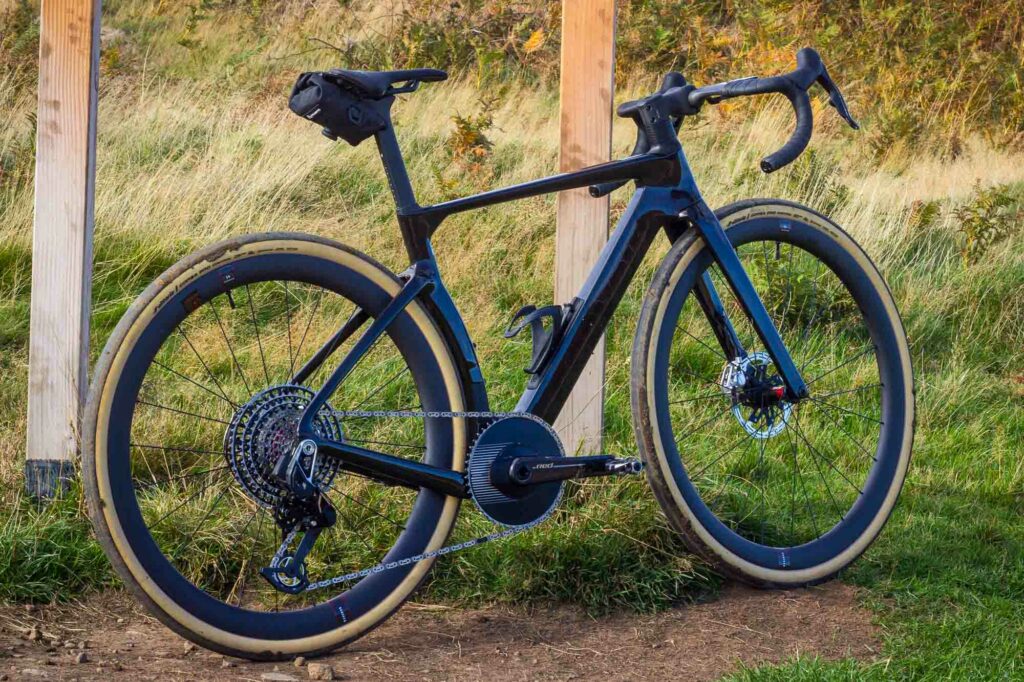

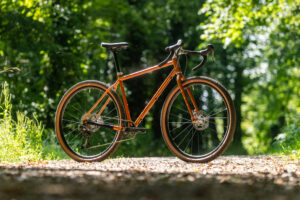
The Cervelo Aspero-5 Red AXS 1 is as racy as a racy thing. It’s not meant for Sunday saunters down the towpath, it’s there to be ridden in anger in UCI gravel races – as long as it’s not muddy or wet.
If a gravel race bike is your bag, then this machine hits the brief brilliantly. But if you want something that’s capable on anything other than champagne gravel, such as multi-day events where you might need to carry more than a banana, you might be better putting your money towards a slightly different bike.
Cervelo Aspero-5: Ride
The essence of what constitutes a gravel bike is becoming increasingly difficult to identify. The lines between mountain, gravel and road bikes are blurring evermore, with some brands taking their ‘gravel’ bikes to either end of the spectrum. ‘Grountain’ bikes, for instance, are becoming increasingly common – those with suspension, dropper posts, and wider tyre clearances.
But at the other end of the spectrum is the out-and-out gravel racing bike. Naturally, how that might present itself depends on what kind of race you’re doing. But for the purpose of the Aspero-5 audience, think Gralloch, UCI Gravel World events and WorldTour riders.
The Cervelo Aspero-5 is by definition a racing gravel bike. It’s designed for fast riders, racers and those who give a damn about aerodynamics even when they’re off-road. Before I dissect the marketing claims about it being 37 watts faster than its predecessor, let’s discuss the ride quality.
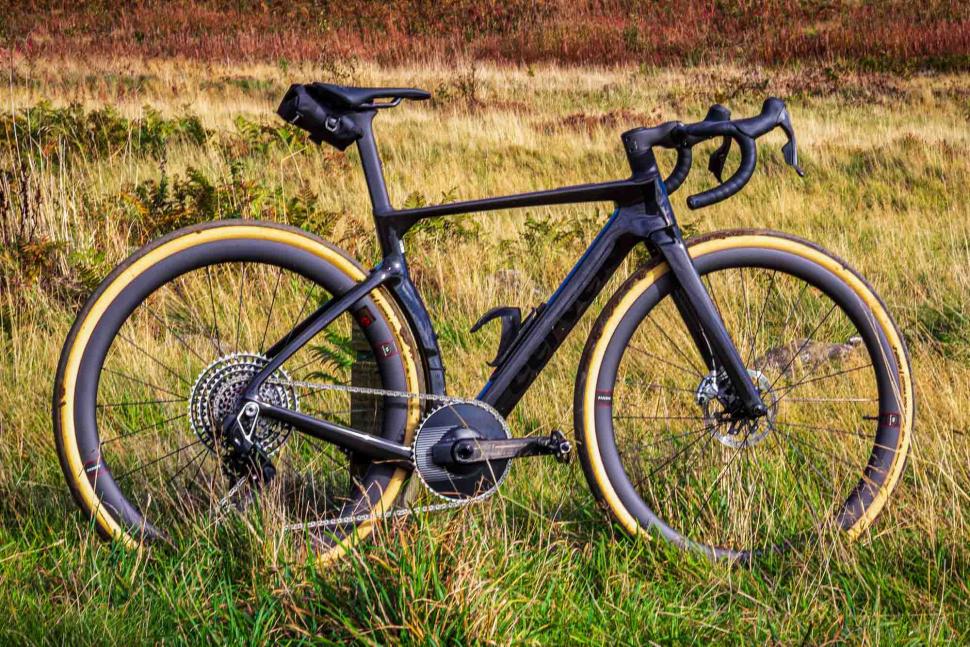
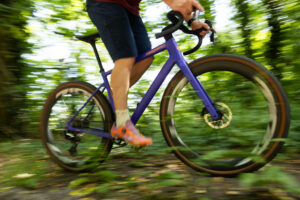
So, how does it ride? On the road, or on hard packed gravel roads that make Yorkshire look like Girona, it’s superb. Climbing is enjoyable, and you can feel the stiffness of the frame when dancing on the pedals but without it being harsh. It feels pretty road-esque, if you get what I mean by that. It’s not sluggish on asphalt, and the fairly narrow (38cm) handlebar without overly flared drops helped me to develop confidence flinging it into corners and on descents pretty quickly.
‘But what about off road?’ I hear you ask. Well, I’m not at all saying that the Aspero-5 is not a gravel bike, nor that it couldn’t be a versatile racing machine with the right choice of components. Namely, the tyres. This bike is shipped with slick 42mm tyres, and it didn’t exactly inspire confidence if the ground had anything more than a spot of rain on it. I found myself having quite a few squeaky bum moments on what I’d call pretty tame bridleways. You know the type, the grass up the middle, bit of a dip on either side from the weight of the farm machinery, and sheep poo speckling the hard packed ground.
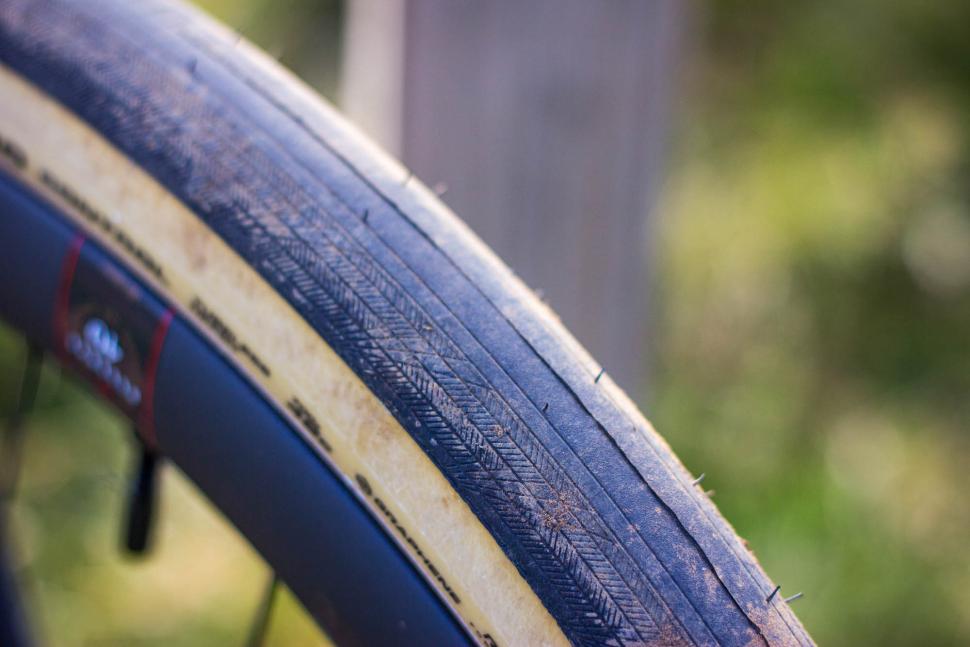
If your response to slipping and sliding is just to put raw power down and rely on that to get you out of sticky situations then you might be fine. And I’m aware that cyclocross riders have to make do with much skinnier tyres in much worse conditions and they all get on just fine. But, I am not a cyclocross rider. On my own gravel bike I run 50mm knobbly tyres, I ride mountain bikes with 2.2in and 2.4in setups, and I’m used to having a little bit of traction beneath me when things get sloppy.
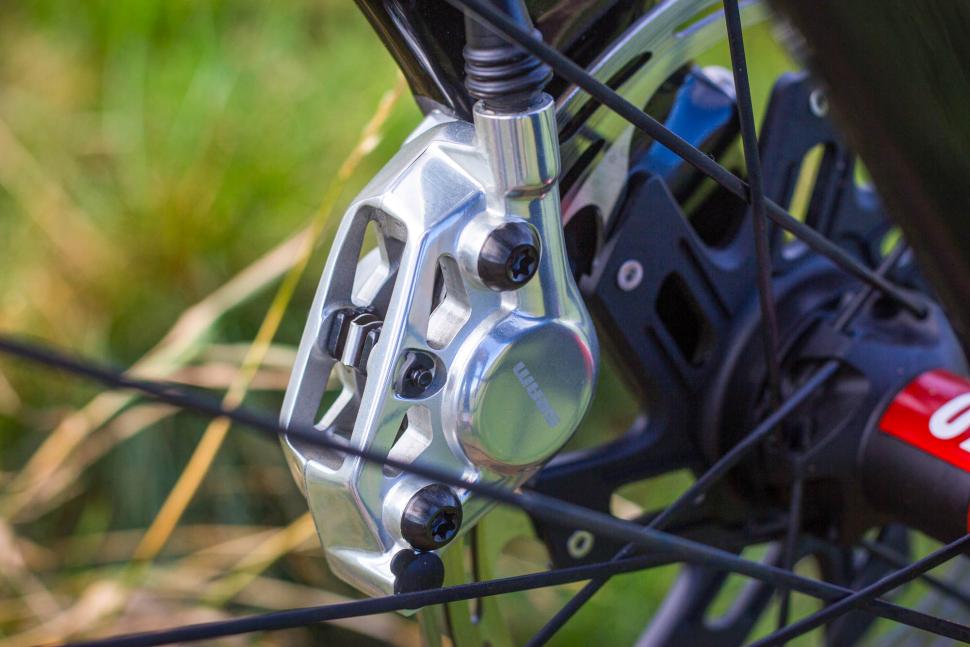
I just struggled to find the enjoyment in riding this bike off-road that I’d expected to be there. I can’t fault the drivetrain, the brakes, or even the finishing kit. But the cloud of fear of encountering anything other than perfect weather hung over me as I rode through picturesque moors.
Luckily, I’m in an area where there is quite an abundance of ‘decent’ gravel, so there were miles upon miles of feeling fast and really putting the hammer down to see how much I could get out of this bike.
So overall, the ride quality gets a thumbs up from me, but it would be vastly improved with more season-appropriate tyres.
Cervelo Aspero-5: Frame and fork
As gravel racing develops, aerodynamics becomes more important. Just like in road cycling, bike brands are now redesigning frames, tube shapes, handlebar setups and more all to get that edge. Cervelo claims that the new Aspero-5 has a 37-watt saving over its previous generation and is ’34 watts faster than the nearest competitor’.
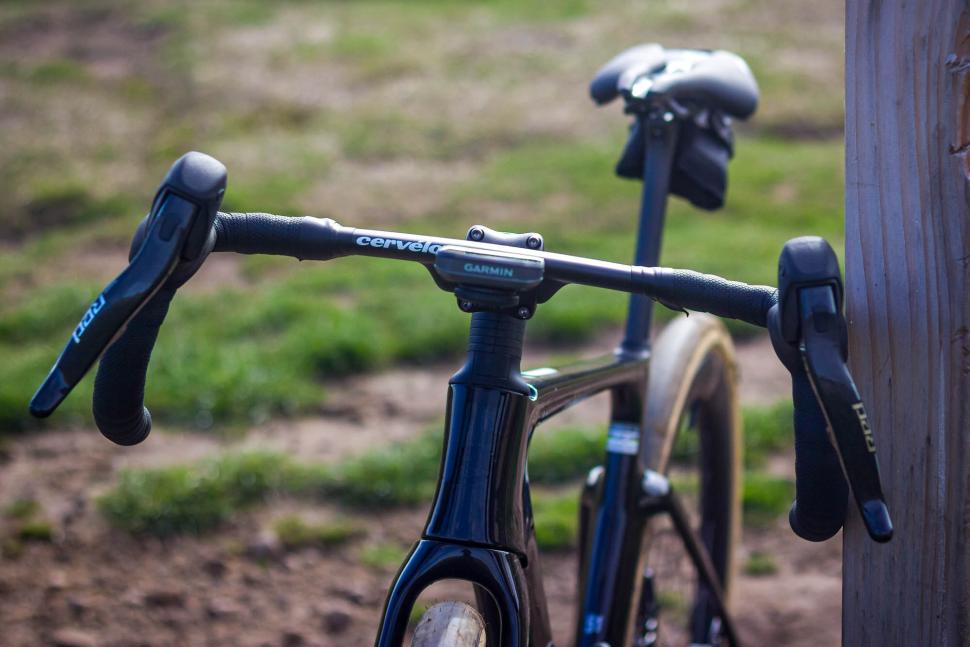
Sadly, I have neither access to a wind tunnel nor an aerodynamicist to back these claims up but looking at the differences in the frame design from the older Aspero to this one, there are some key changes that may contribute to this claim.
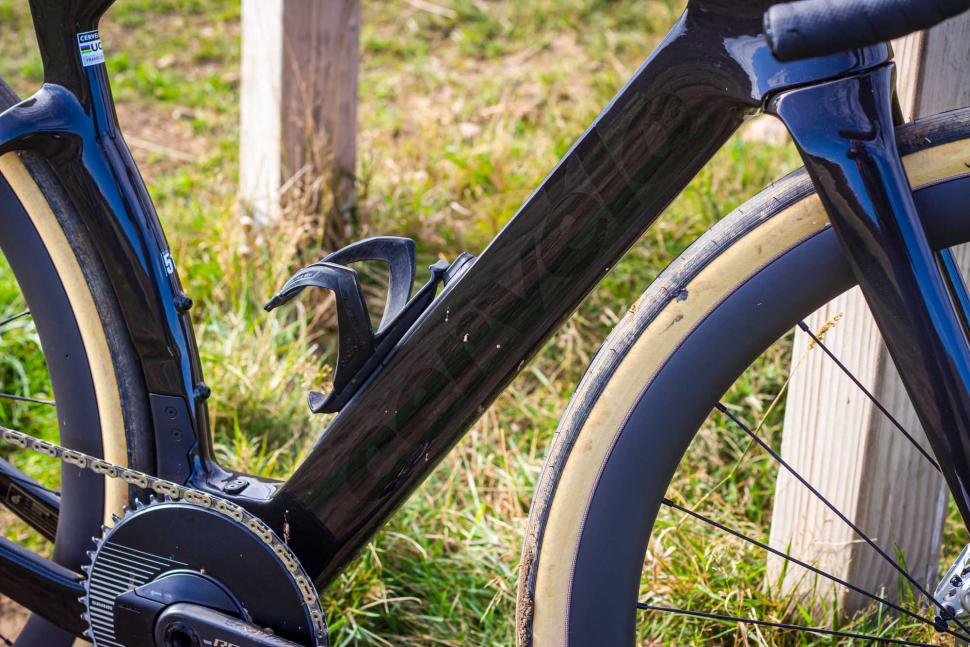
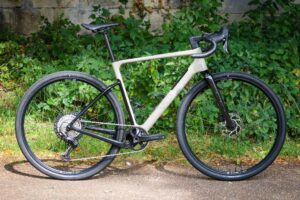
The carbon fibre tubing is slightly wider, and the fork is significantly more bladed than the 2019 model. The down tube uses the brand’s triathlon storage to keep your tools and essentials out of the wind and inside the frame.
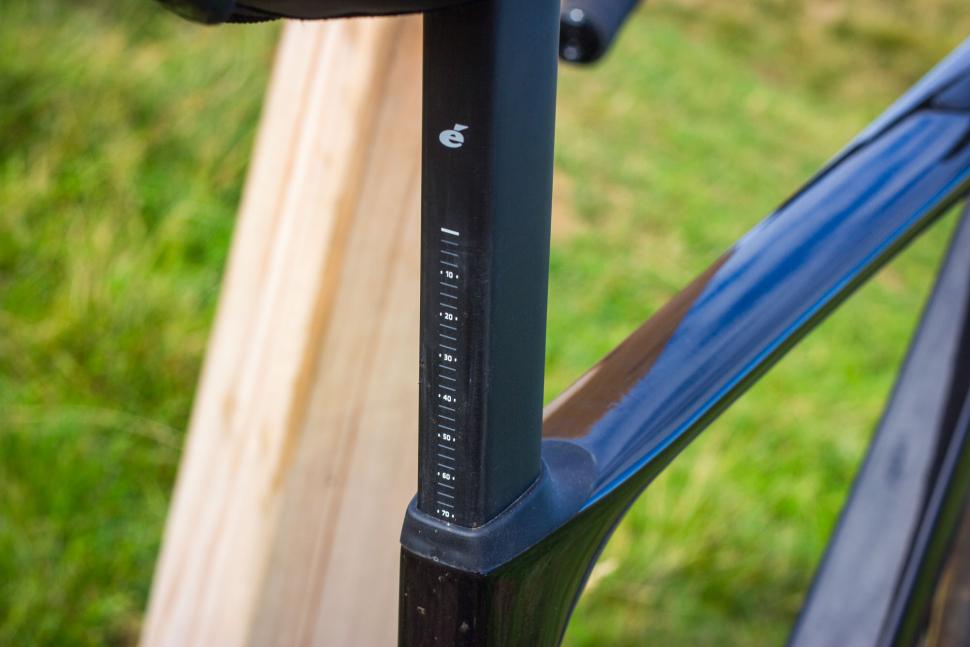
The shape of the seat tube features the traditional Cervelo curvature, paying homage to the S5. While it looks great and makes it recognisable, it doesn’t really lend itself to off-road riding where riders might want to put in a dropper post or even just a different seatpost to the aero-inspired one offered.
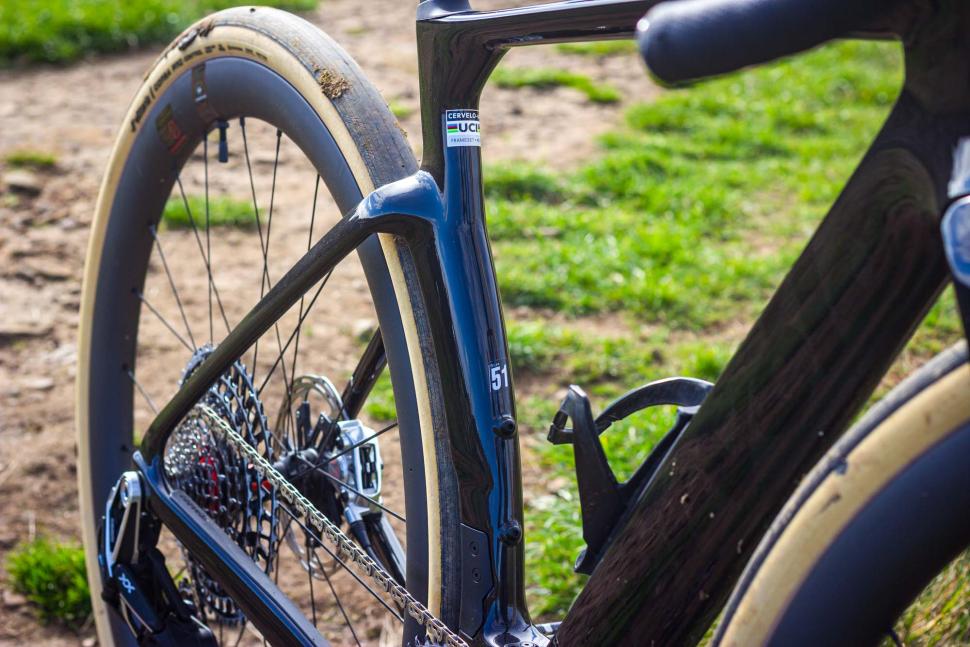
It’s plain to see the inspiration from Cervelo’s road bikes, and there’s absolutely nothing wrong with that; if you’re buying a gravel bike from a brand that has historically focused on road riding, it’s unreasonable to expect anything else. Cervelo isn’t going to go and hire ex-Santa Cruz designers to come and build it a long, slack, low BB gravel bike. Instead, it focuses on what it already does well, which is produce fast bikes that win races.
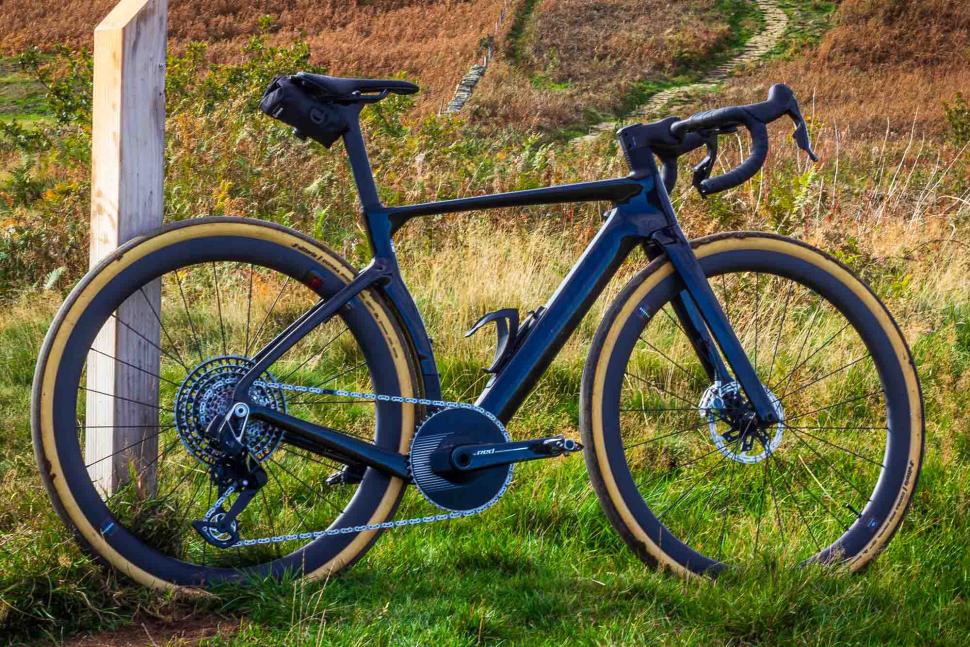
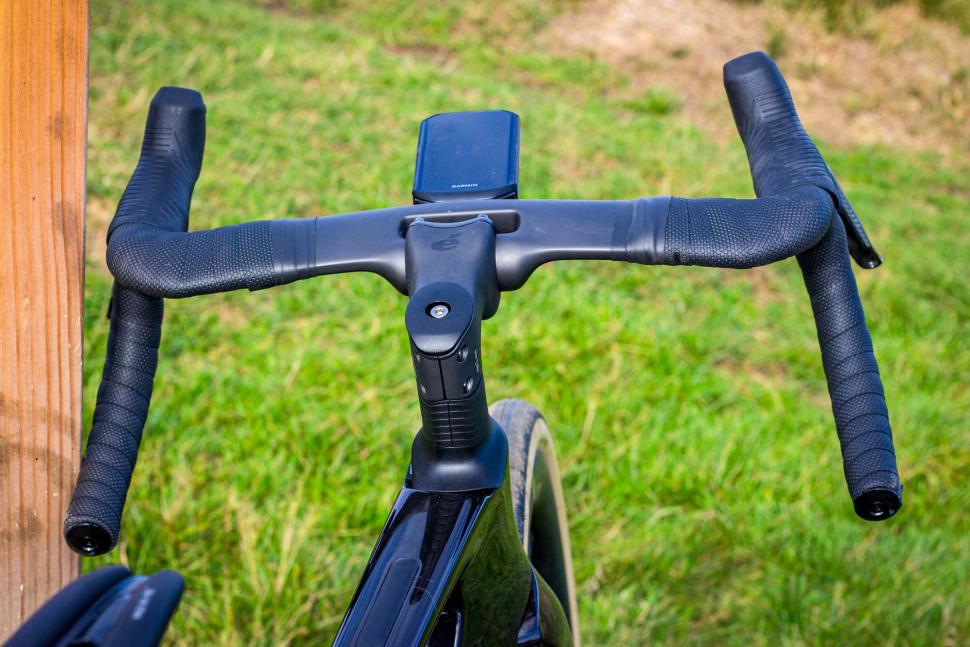
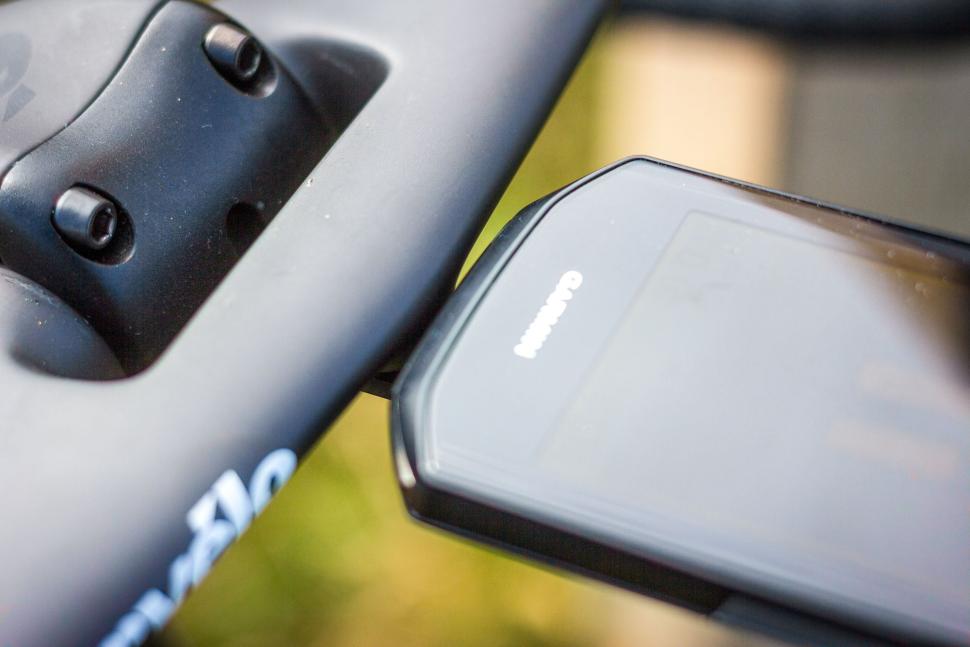
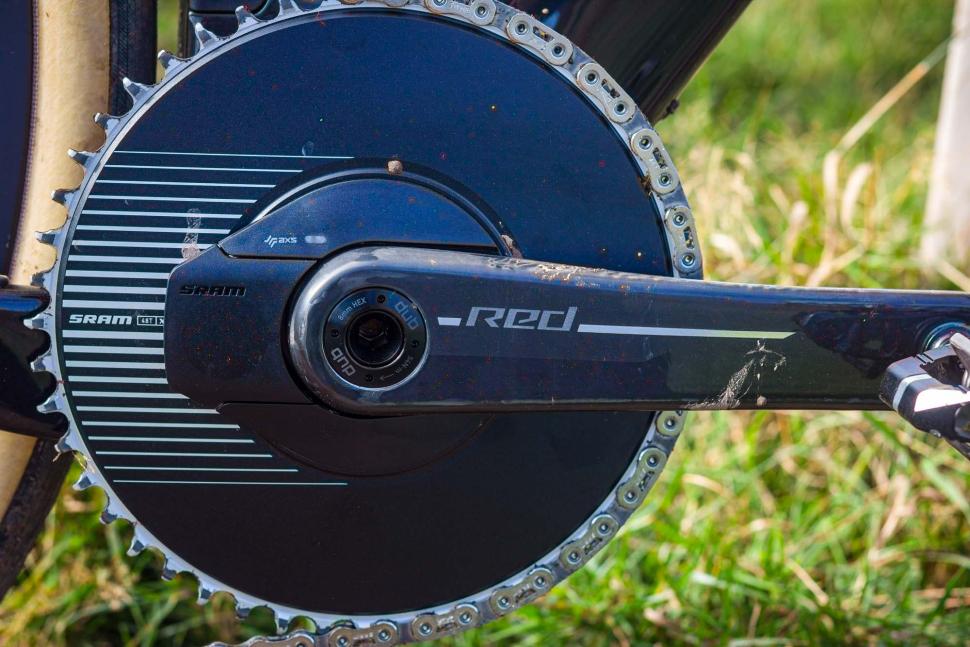
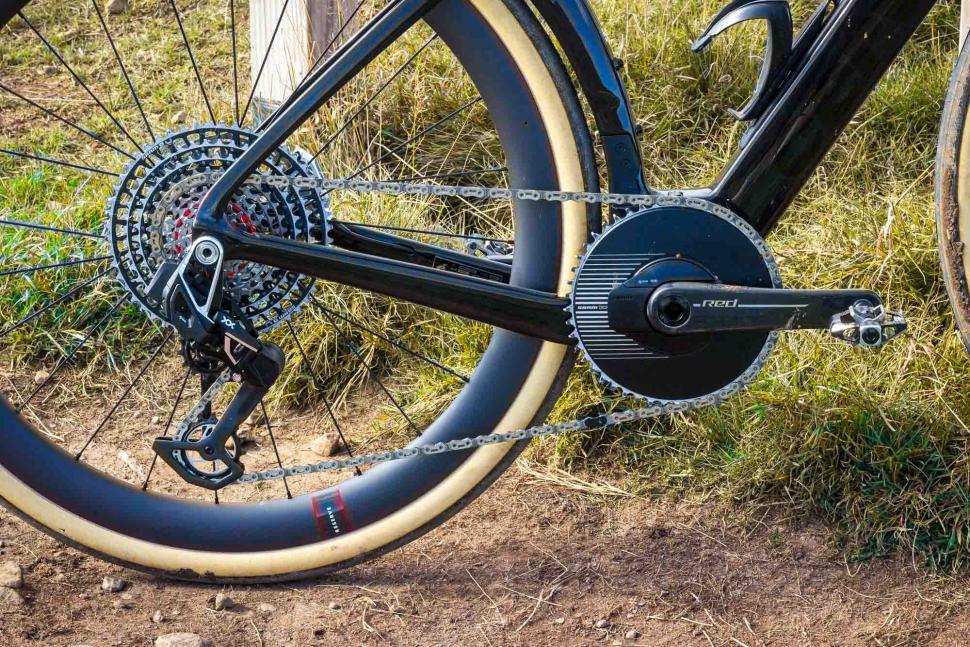
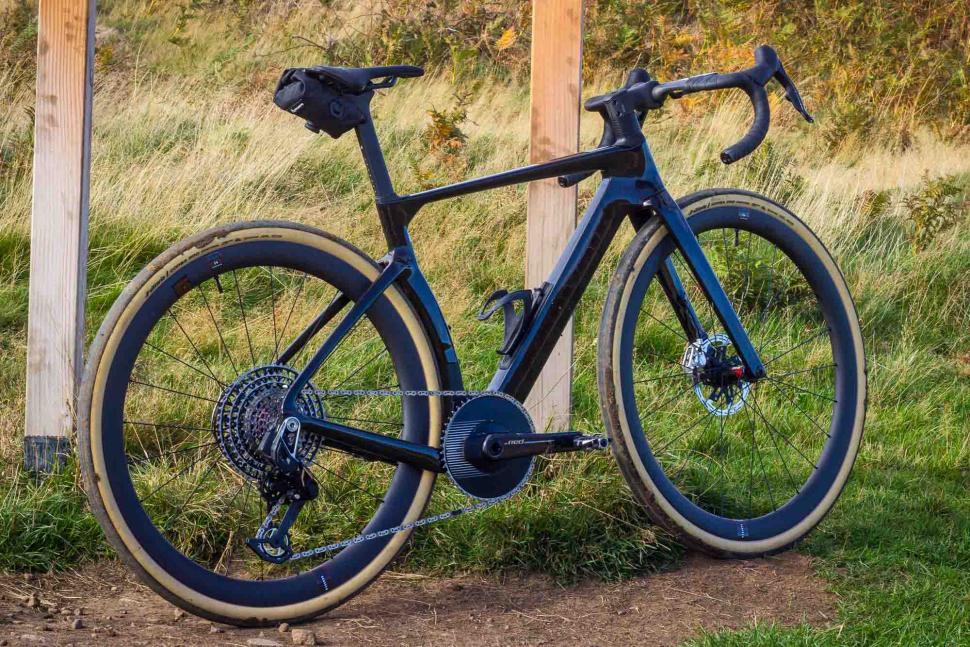
And it certainly is fast. If we look at the geometry, you can see the bottom bracket height has been lowered by 4mm from the last model, which helps to increase stability off-road, and the chainstays remain relatively short – on my size 51 test bike they are 422.5mm.
The 377mm reach and 525mm stack are shorter and lower than the previous edition, although still reasonably long for a road-orientated gravel bike. Cervelo has changed the angles slightly, with the head angle 0.4 degrees slacker at 71.1 and the seat tube angle now at 73.6 degrees from 74.
Interestingly, Cervelo offers two geometry charts as the Aspero-5 can be optimised to run a 40mm front and 44mm rear tyre. Why? According to Cervelo, that’s to optimise the aerodynamics and ‘sharpen handling for less-technical courses’. My test bike, however, came with 42mm tyres fitted front and rear.
Cervelo Aspero-5: Groupset and finishing kit
If you’re a serious racer, you’ll want serious kit. And that’s exactly what the Aspero-5 Red AXS 1 aims to deliver. With SRAM’s top-end electronic groupset and an included power meter, there’s not much you can upgrade on this speed machine.
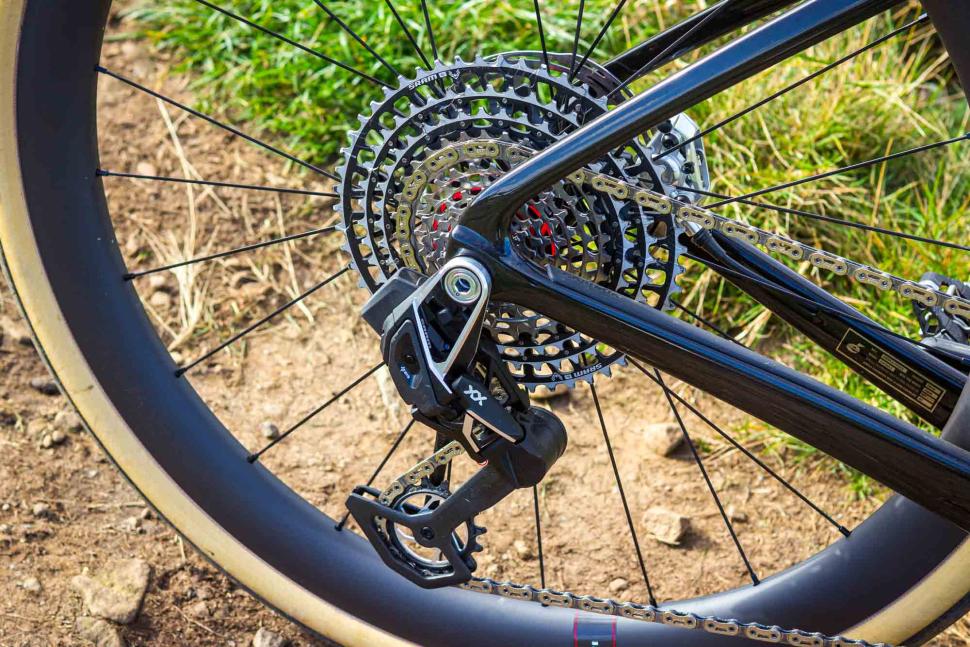
Cervelo has taken advantage of SRAM’s pick’n’mix T-Type system, with Red AXS E1 shifters and cranks, combined with XX SL derailleur, chain and cassette.
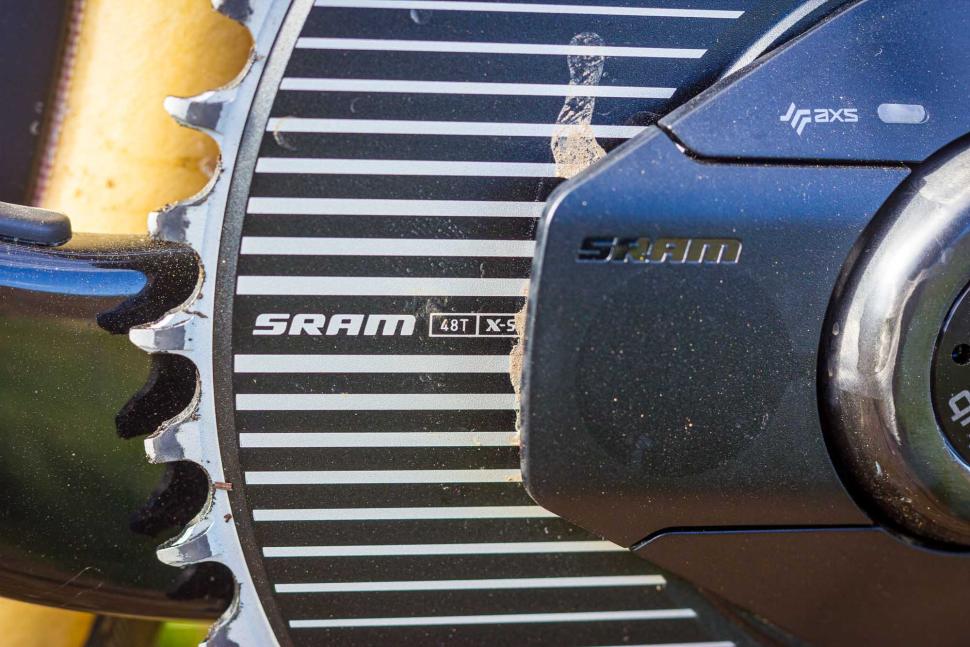
My test bike came with a 48-tooth chainring and a 10-52T cassette. Personally I wouldn’t normally reach for a 48T up front, but this combination worked quite well – I didn’t find I was undergeared on the flat or on a descent, and only had to use the 52T sprocket sparingly, even in the North Yorkshire Moors.
There are six frame sizes to choose from (48-61), and each size gets its own stem length, handlebar width and – something I find refreshing – crank length. On SRAM-equipped models, you get 165mm cranks on the smaller two sizes, but Shimano models stick with 170mm through to size 56.
My size 51 test bike came with a 38cm bar, which is on the narrower side for a gravel bike, but something I welcomed as I usually run 36cm bars on the road. And of course, this will only benefit the aerodynamic riding position. In fact, Cervelo claims that the HB16 Carbon cockpit saves almost 6 watts over the previous setup.
Some further positive changes to the spec include the Universal Derailleur Hanger (UDH) compatibility, which future-proofs the bike somewhat – until the industry develops yet another standard. One thing I particularly like is the threaded BB over a press-fit option as it’s easier to replace at home (unless you have the tools).
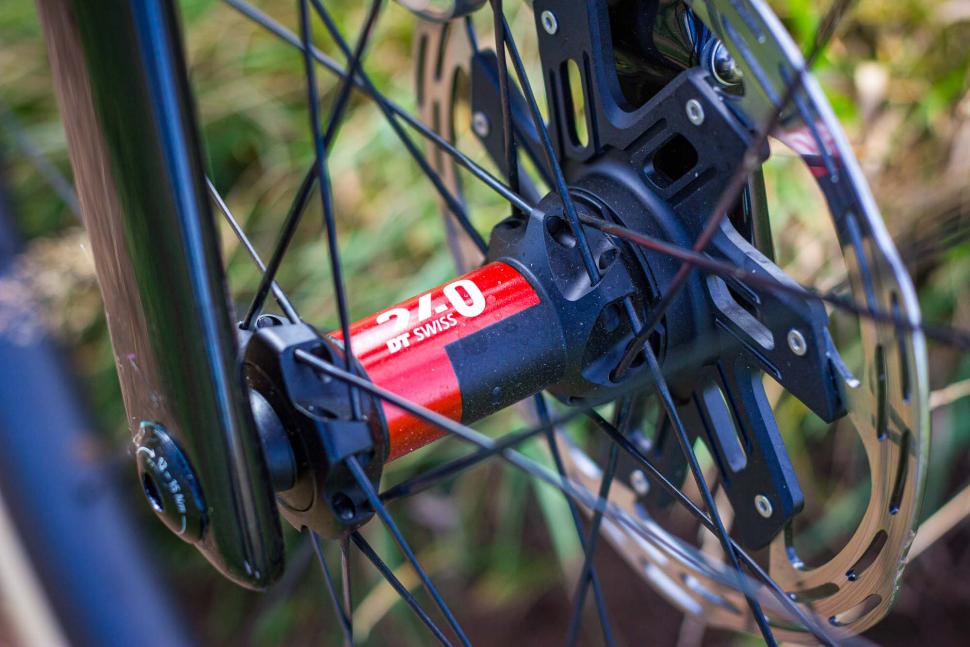
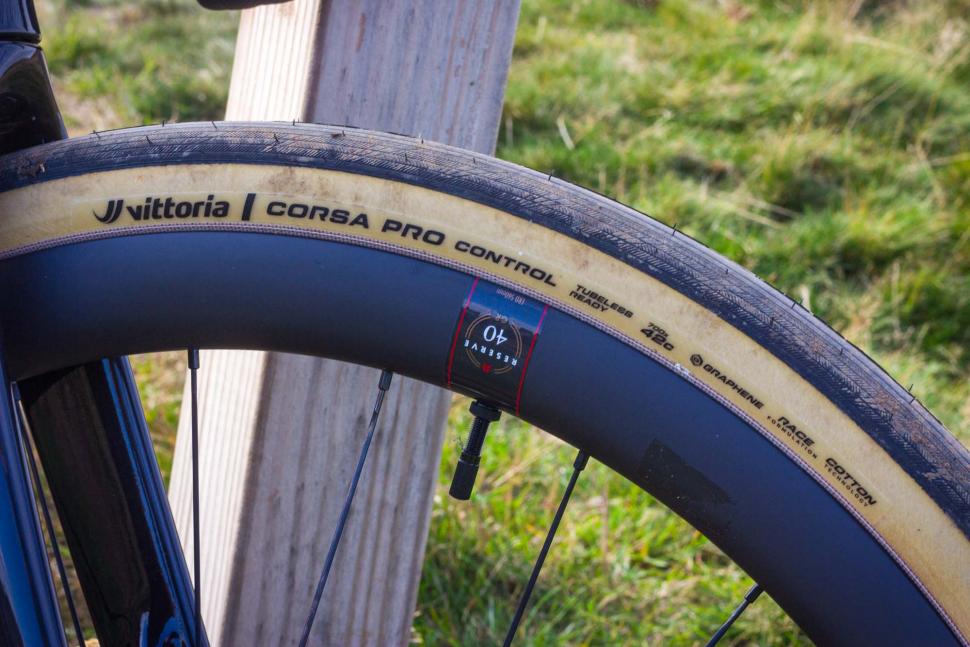
I’ve already talked about the Vittoria Corsa Pro Control tyres and the, erm, lack of control they offer; if I was buying this bike, these slick tyres would be the first change I’d make. But the Reserve 40mm and 44mm wheels offer an excellent platform for the rubberised skates. They use DT Swiss 240 hubs so I probably wouldn’t run them in winter, but I probably wouldn’t run this bike in winter anyway.
Cervelo Aspero-5: Value
At £10,000 the Cervelo Aspero-5 Red AXS 1 has a lot to live up to. Yes, top-end race bikes are generally in this region, but it’s still a massive chunk of cash to part with. In fact, it’s one of if not the most expensive gravel bike we’ve reviewed on road.cc. So how does it stack up against competitors?
We’ll have to look outside of the road.cc review archive for up-to-date race machine comparisons, although Stu did test the Aspero Apex XPLR AXS 1 back in February and thought it was good, though it suffers the same pain points as its rather more expensive racing cousin. It’s less painful on the wallet, though, at £4,200.
The Factor Ostro Gravel is another race-specific machine, with a stiff frame and aerodynamic riding position and a SRAM Red AXS groupset. But it actually costs a little more than the Aspero-5, at £10,399.
The Trek Checkmate is actually a decent rival for the Aspero and costs a little less for the Red XLPR AXS-equipped model, at £8,950. It’s Trek’s ‘fastest and lightest gravel race bike’, too.
So is the Aspero-5 good value for a racing-specific machine? You can certainly get a lot of bike for less money, but it depends what matters to you. If you want an aerodynamically optimised frame without the adaptability of a more adventure-orientated frame, then it may suit, but for the vast majority of us it’s probably a lot of buck for the wrong sort of bang.
For more adventure-ready rides, check out our guide to the best gravel bikes.
Cervelo Aspero-5: Conclusion
Has the Aspero experiment worked for Cervelo? Marianne Vos has won gravel races on it, and while Vos could likely win races on a rusty Carrera, there’s no denying the Aspero has some racing pedigree.
But will we be seeing it as a staple of the professional gravel peloton? Or at least the privateers who aren’t contracted to riding a particular type of bike?
I just fear that it’s not progressive enough for the current pace of development we’re seeing in gravel racing. Its 45mm tyre clearance, for example, in my opinion is probably not enough – even many professionals are choosing 50mm to race on across the world.
The ride quality is hard to beat, and Cervelo definitely knows how to design a fast bike – that’s not in dispute here. But whether there is a big enough market for this potentially niche machine outside of the pro peloton remains to be seen.
Verdict
Gravel racing machine that’s fast and nimble but let down by tyre choice
All the deals displayed on our review pages are pulled from a constantly updating database feed of the best affiliate deals available. The criteria for deciding on what are the best deals is who is offering the lowest, delivered price. In most cases we will be showing the very best deal available online, but sometimes you may be able to find an item cheaper. If you can please feel free to post a link in the comments box below. To find out more about affiliate links on road.cc click here.
road.cc test report
Make and model: Cervelo Aspero-5 Red AXS 1
Size tested: 51cm
About the bike
List the components used to build up the bike.
Fork Cervelo All-Carbon, Tapered Aspero-5 Fork
Headset FSA IS2 1-1/4, 45° x 45° / 1-1/2, 36° x 45°
Front Thru Axle Cervelo Aero Thru Axle, M12x1.5 mm, 122 mm length
Rear Thru Axle Cervelo Aero Thru Axle, M12x1.0 mm, 169 mm length
Front Wheel Reserve 40|TA GR, DT Swiss 240, 12×100 mm, 24h, centrelock, tubeless compatible
Rear Wheel Reserve 44|TA GR, DT Swiss 240, 12×142 mm, XDR freehub, 24h, centrelock, tubeless compatible
Tyres Corsa Pro Control TLR G2.0, 700x42c
Crankset SRAM Red 1 AXS E1, 48T, DUB Wide, with power meter
Bottom Bracket SRAM DUB Wide Ceramic, T47 BBright
Chain SRAM XX SL, 12 speed
Rear Derailleur SRAM XX SL Eagle AXS, 12 speed
Cassette SRAM XX SL, 10-52, 12 speed
Shifter/Brake SRAM Red AXS, 12 speed
Handlebar Cervélo HB16 Carbon, 31.8 mm clamp
Stem Cervelo ST31 Carbon
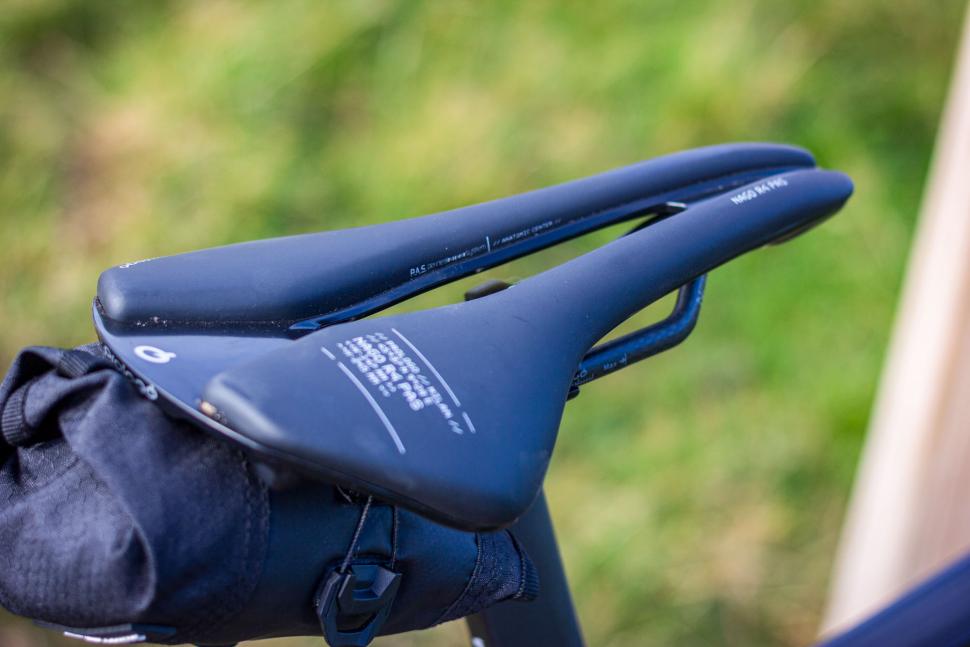
Saddle Prologo Nago R4 PAS NACK
Seatpost Cervelo SP27 Carbon
Brake Rotors SRAM Paceline X, Centrelock
Tell us what the bike is for and who it’s aimed at. What do the manufacturers say about it? How does that compare to your own feelings about the bike?
Cervelo says:
“The all-new Áspero-5 was built for the front end of the race, and is the most aerodynamic gravel bike ever created. Cervélo has long been synonymous with aerodynamic performance, and we’ve brought that 30 years of expertise to gravel racing. The new bike is a stunning 37 Watts faster than the outgoing model, and 34 Watts faster than its nearest competitor.
“With clearance for 45mm tires, downtube storage, and a threaded bottom bracket, Áspero-5 is ready to race the second it rolls off the shop floor. It made its rainbow-jersey debut (and won!) under UCI Gravel World Champion Marianne Vos, and will be campaigned by some of the most elite bike racers in the world.”
Where does this model sit in the range? Tell us briefly about the cheaper options and the more expensive options
The Aspero-5 Red AXS 1 is the top of the range model in this gravel race collection from Cervelo. There are two other options available: the Force AXS 1 and the GRX RX825 Di2 1, both of which cost £8,000; the frame remains the same, with the only difference being the componentry level.
Frame and fork
Tell us about the build quality and finish of the frame and fork?
Hard to fault the quality.
Tell us about the materials used in the frame and fork?
Cervélo All-Carbon frame and fork, tapered Aspero-5 fork.
Tell us about the geometry of the frame and fork?
Interestingly, the bike comes with two geometry charts, depending on whether you run a wider rear tyre setup or not.
From Cervelo: When fitted with equally-sized tires (e.g. 42mm front and rear), Áspero-5’s handling is stable, confidence-inspiring, and ready for the roughest courses. To increase aerodynamics even further, and sharpen handling for less-technical courses, we optimized the geo for a 4mm tire width differential (e.g. 40mm front, 44mm rear).
How was the bike in terms of height and reach? How did it compare to other bikes of the same stated size?
My test bike came with 42mm tyres front and rear, which offers a relatively short reach and short stack height. The difference between the two setups is naturally only millimetres, but compared with other gravel race bikes it’s not the most racy or slackened out position, so might be worth playing around with.
Riding the bike
Was the bike comfortable to ride? Tell us how you felt about the ride quality.
Very comfortable on road, still comfortable off, but slightly less confidence inspiring with the factory tyres.
Did the bike feel stiff in the right places? Did any part of the bike feel too stiff or too flexible?
The Aspero-5 is hard to beat in terms of raw stiffness. It’s an aero bike so there’s barely any noticeable flex.
How did the bike transfer power? Did it feel efficient?
The bike transferred power really well; I didn’t feel like there was much lost, particularly on climbs.
Was there any toe-clip overlap with the front wheel? If so was it a problem?
No overlap experienced on size 51 frame.
How would you describe the steering? Was it lively neutral or unresponsive? It felt quite lively.
Tell us some more about the handling. How did the bike feel overall? Did it do particular things well or badly?
The shorter reach did have me a little bit concerned about my riding position off-road, which felt to me more like an aero road bike. While speed is important on the road, on the types of bridleways on my doorstep sometimes a bit of control is more important, and I felt the bike would have benefited from a shorter seatpost option and/or slightly slackened geometry.
Which components had the most effect (good or bad) on the bike’s comfort? would you recommend any changes?
Really liked the cockpit setup for comfort, although mechanically I’m not sure I’d enjoy facing cable changes. Tyres were comfortable on the road but I’d swap them out if I was going properly off-road.
Which components had the most effect (good or bad) on the bike’s stiffness? would you recommend any changes?
Hard to fault any of the component choices on the Cervelo Aspero-5 Red AXS 1 in terms of stiffness, and I’d say the frame and the cranks were probably the biggest influences. The threaded BB was great, too, with ceramic bearings.
Which components had the most effect (good or bad) on the bike’s efficiency? would you recommend any changes?
I’d like to try the mixed tyre width setup to see how that impacted the bike’s efficiency, but otherwise no changes (besides tyres).
I don’t often sprint on gravel, but I did give it a good whack in the drops to see what it felt like to be Marianne Vos and the bike responded well.
On the road it’s fine, but off-road I wasn’t that confident on anything slightly technical.
The drivetrain
Tell us some more about the drivetrain. Anything you particularly did or didn’t like? Any components which didn’t work well together?
I personally liked the setup of the drivetrain, and the ratios were what I’d choose to put on my own gravel bike. The front can take up to a 54-tooth chainring, though, if you need a bit of extra leverage.
Wheels and tyres
Tell us some more about the wheels.Did they work well in the conditions you encountered? Would you change the wheels? If so what for?
Loved the wheels, Reserve’s aero gravel racing set. They’re under 1,500g a pair and can be run tubeless or with clincher tyres and tubes.
Not ideal for general British gravel for 90% of the year or weather.
Tell us some more about the tyres. Did they work well in the conditions you encountered? Would you change the tyres? If so what for?
The Vittoria Corsa Pro Control TLR G2.0 tyres aren’t available to purchase just yet so I can’t comment on the price or value, but I can say they’re not really suitable for much of what I encountered in North Yorkshire beyond asphalt. They’re wide, yes, but they’re also far too slick for anything beyond champagne gravel. My tyre choice would totally depend on the time of year and the type of riding I’m doing, but I’d probably go up to 45mm wide and for something a bit more grippy like the Vittoria Terreno Wet.
Controls
Tell us some more about the controls. Any particularly good or bad components? How would the controls work for larger or smaller riders?
Top-end electronic SRAM groupset with gravel riding in mind, so not much to complain about here. I did struggle a little to reach the brake levers when on the drops as I have quite small hands.
Your summary
Did you enjoy riding the bike? Yes
Would you consider buying the bike? No
Would you recommend the bike to a friend? Yes
How does the price compare to that of similar bikes in the market, including ones recently tested on road.cc?
We’ll have to look outside of the road.cc review archive for up-to-date race machine comparisons, although Stu did test the Aspero Apex XPLR AXS 1 back in February and thought it was good, though it suffers the same pain points as its rather more expensive racing cousin. It’s less painful on the wallet, though, at £4,200.
The Factor Ostro Gravel is another race-specific machine, with a stiff frame and aerodynamic riding position and a SRAM Red AXS groupset. It actually costs a little more than the Aspero-5, at £10,399.
Trek’s ‘fastest and lightest gravel race bike’, the Checkmate, is a decent rival for the Aspero and costs a little less for the Red XLPR AXS-equipped model, at £8,950.
Use this box to explain your overall score
The body of this bike is hard to beat. The frame is undeniably aerodynamically focused, and if that’s what you’re after then it’ll hit the spot. But if you want something that works slightly outside of this niche, you might want to look elsewhere. The tyre choice, at least in the UK, is puzzling, but I’ll accept it’s something you change most of the time anyway when you buy a bike.
The other stickler is the relatively small tyre clearance of 45mm, which in a few years might not be quite as wide as racers want, as courses become more technical.
Overall, it’s a nicely packaged racing machine and if you’re after a race bike and race bike only, then it’s hard to fault.
About the tester
Age: 29 Height: 5’5 Weight: 55kg
I usually ride: Trek Émonda My best bike is:
I’ve been riding for: 5-10 years I ride: Most days I would class myself as: Expert
I regularly do the following types of riding: road racing, time trialling, sportives, general fitness riding, mtb,

4 thoughts on “Cervelo Aspero-5 Red AXS 1”
Given that big slick tyres
Given that big slick tyres are all the rage now on road bikes, it would have been interesting to read more about how this bike does on the tarmac and how it compares to a road bike, especially one with a racing slant like a Cervelo R/S5 or a Tarmac
This bike could be perfect for many people who want a fast road bike but one that could also do a bit of gravel in the summer when conditions are dry. In that scenario 45mm clearance is plenty.
I had an Aspero ‘cheap’ £3k
I had an Aspero ‘cheap’ £3k version from 2022 with GRX 600. it was great for as you mention road, light to medium gravel, Belgian cobbles and B&B bikepacking (NC500). Even did a cyclo-cross race on it (came 3rd last).
I don’t think I could ever pay 10k for a bike though.
Another bizarre review from
Another bizarre review from Road.cc. They take a bike designed for a specific purpose and then mark it down because it’s no good for another purpose. It’s like saying but a Ferrari is rubbish because it’s no good for transporting the grandparents.
Dodonline wrote:
That’s a fair point about marking it down for lack of mounting points but the other two red crosses are for slick tyres and 45mm clearance; as many gravel racers are moving towards knobbly rubber and 50mm, or even wider, widths, especially in the wet, those do seem fair points. If I were in the market for a £10k gravel bike (if only!) I certainly wouldn’t want one with a tyre clearance that is already starting to look a bit outdated.