



The Merida Silex 8000 uses geometry cues from the mountain bike world spliced with the low weight and drop bar of the road bike to create a capable, easy to ride gravel bike that is just as much at home on the twisty forest singletrack as it is on the wide open military gravel roads on my doorstep.
2025 Merida Silex 8000: Ride
Merida’s Silex was arguably one of the earliest gravel bikes to be based more on MTB geometry than road, and it works really well – especially if your gravel riding focuses on more technical fare than forest fire roads or hard packed by-ways.
‘So why not just ride a hardtail then?’ I hear you ask…
Well, this Silex 8000 is lighter and nimbler, and it’s no slouch on those road sections between the trails thanks in part to the inclusion of a 2x chainset.
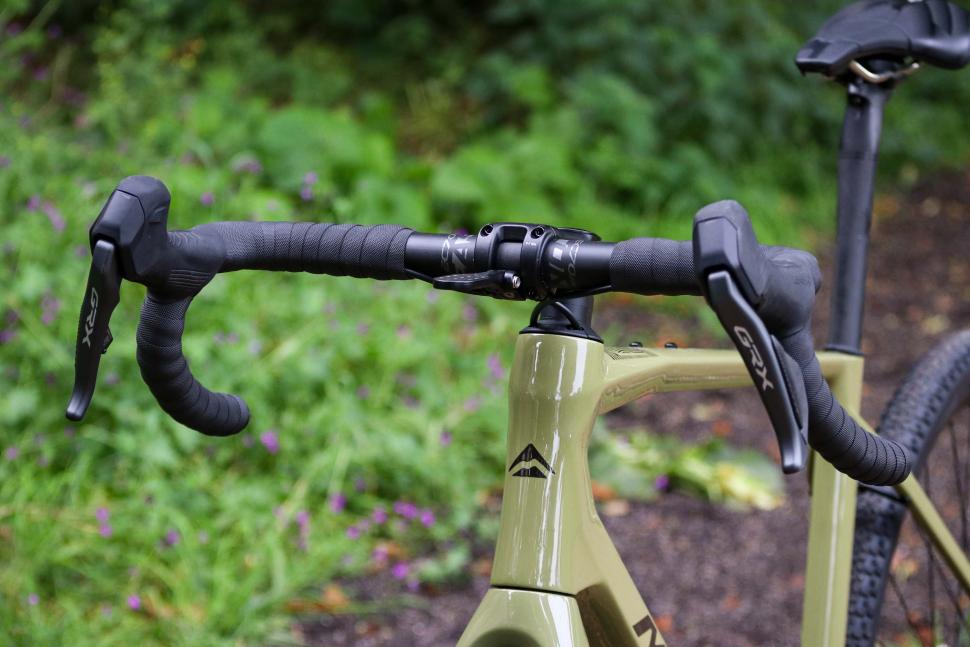
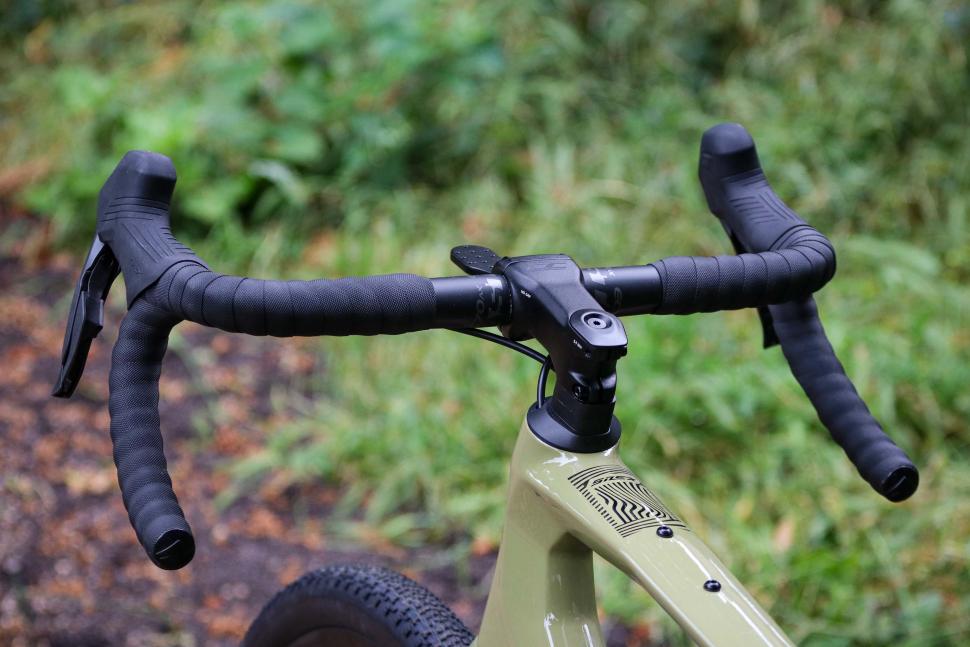
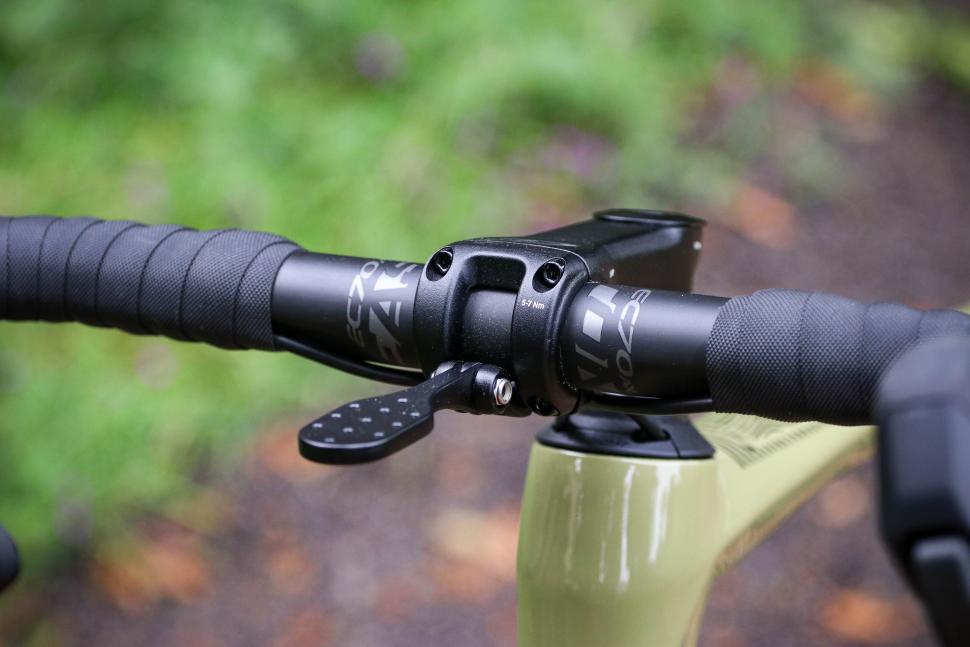
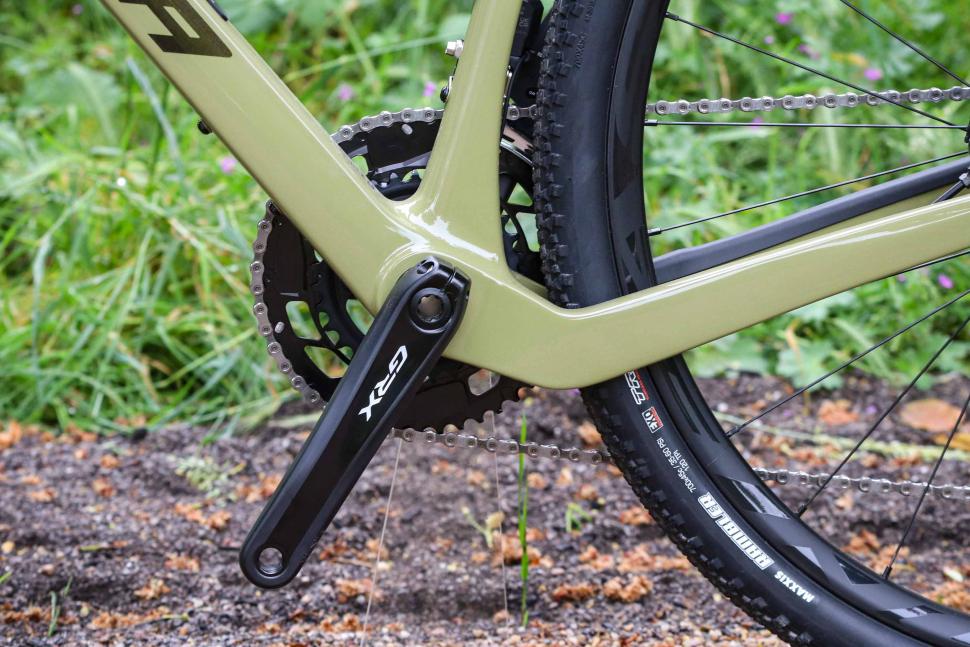
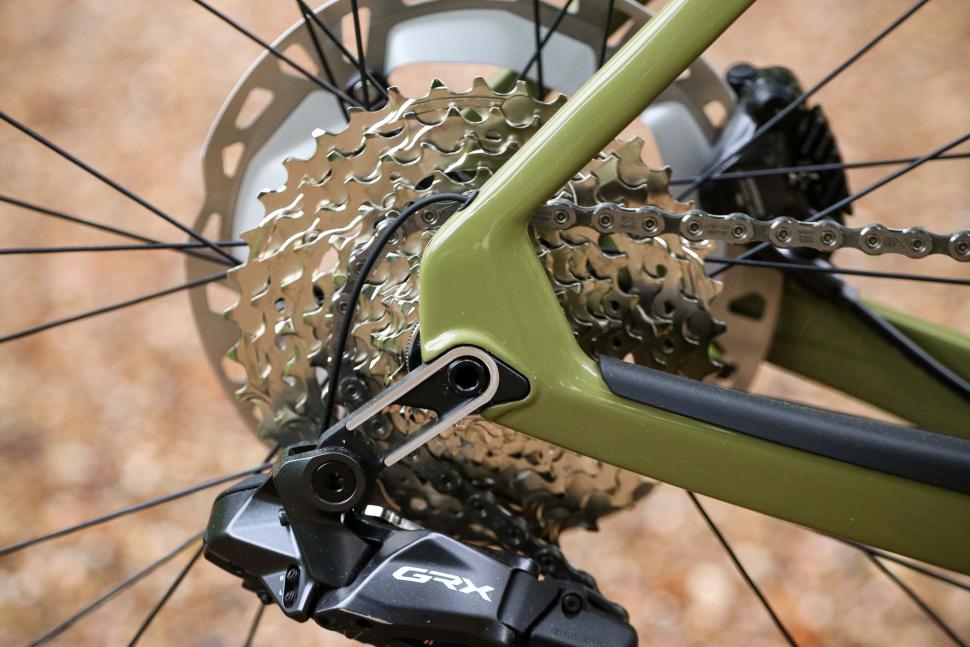

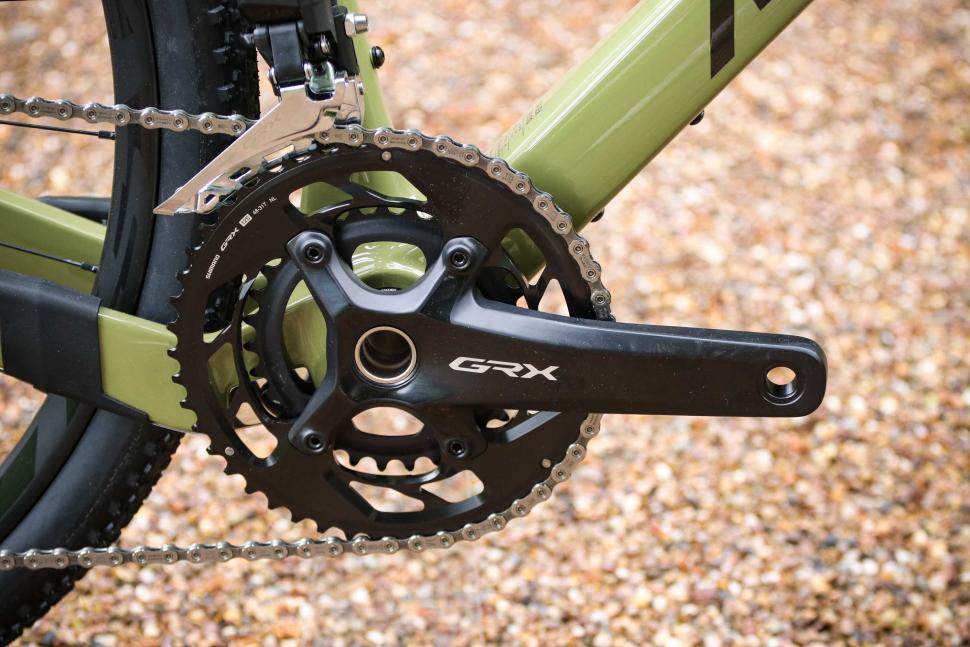
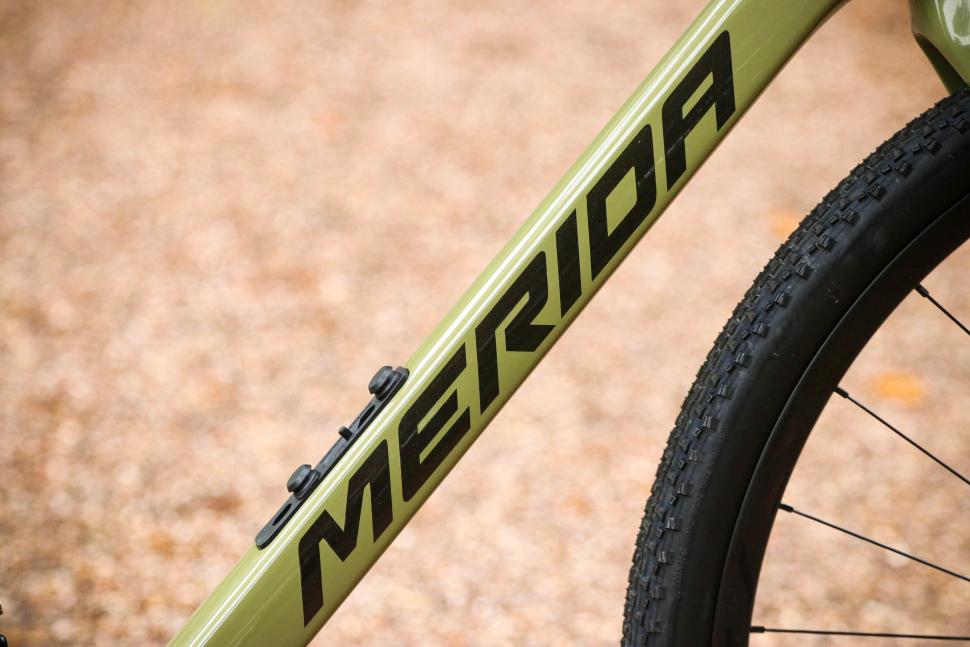
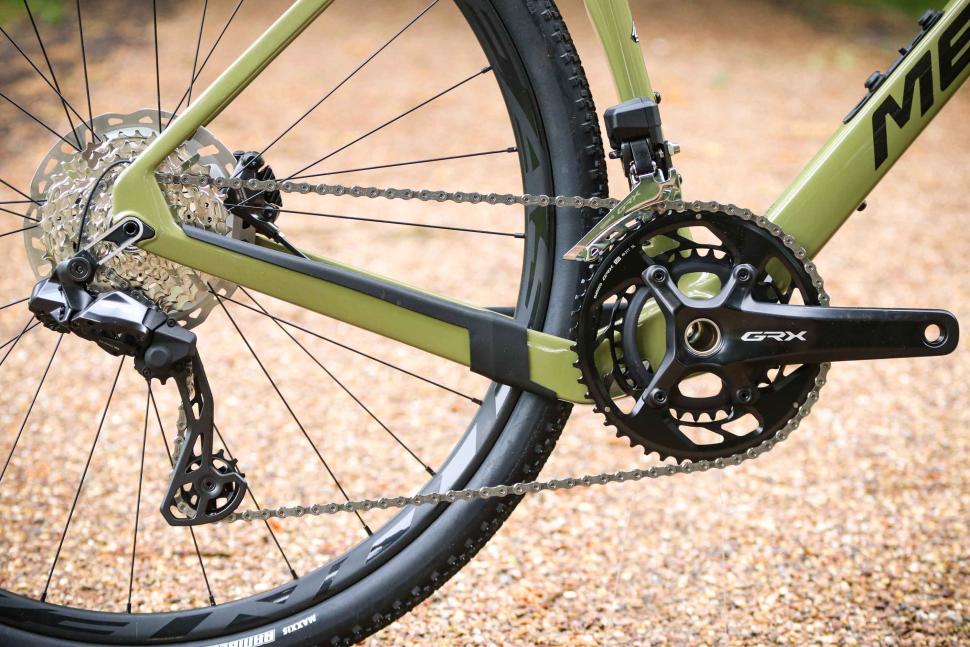
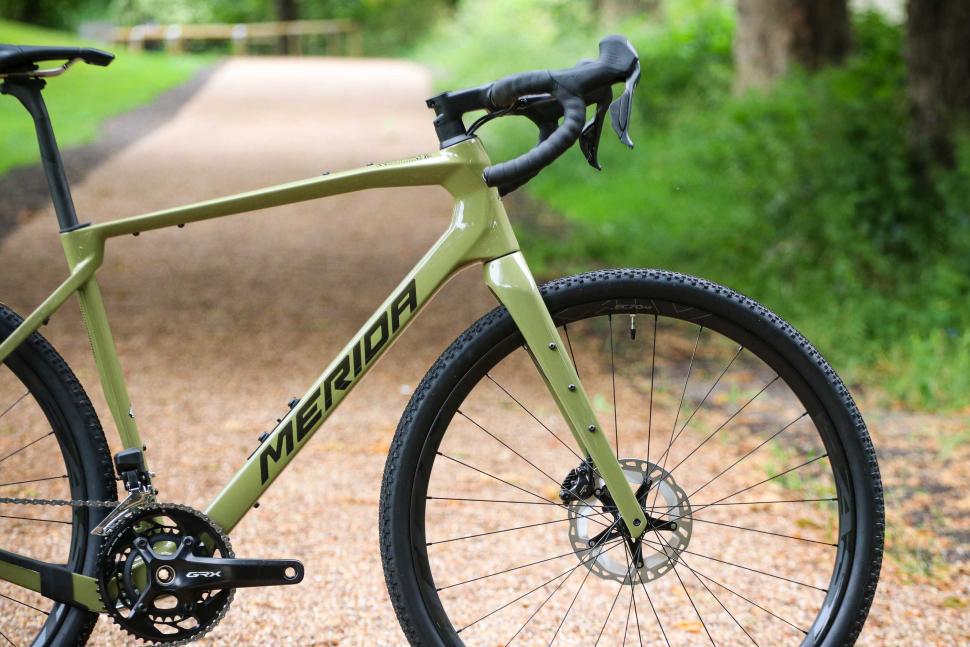
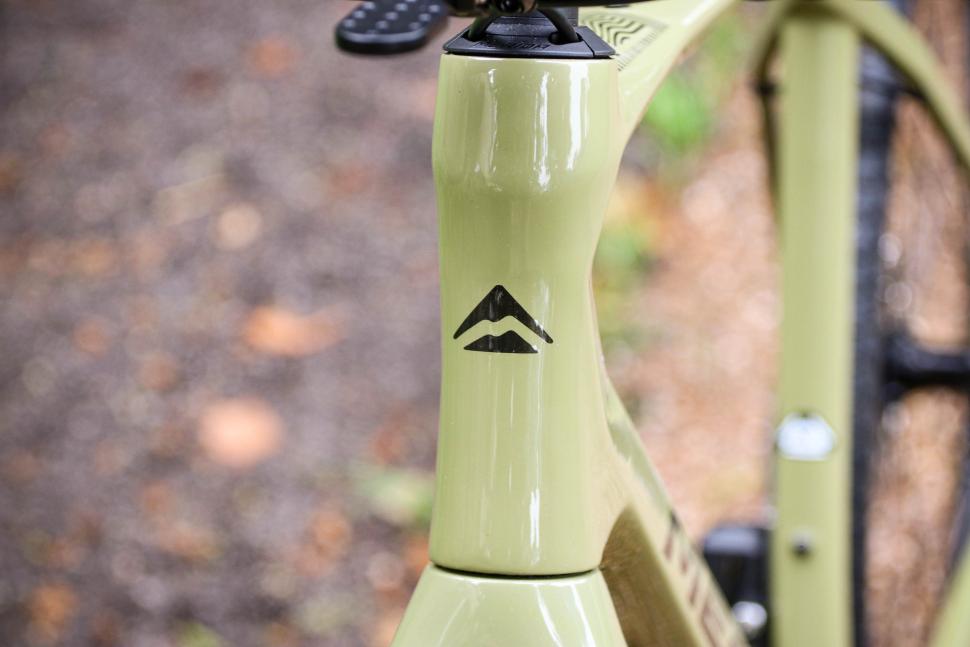
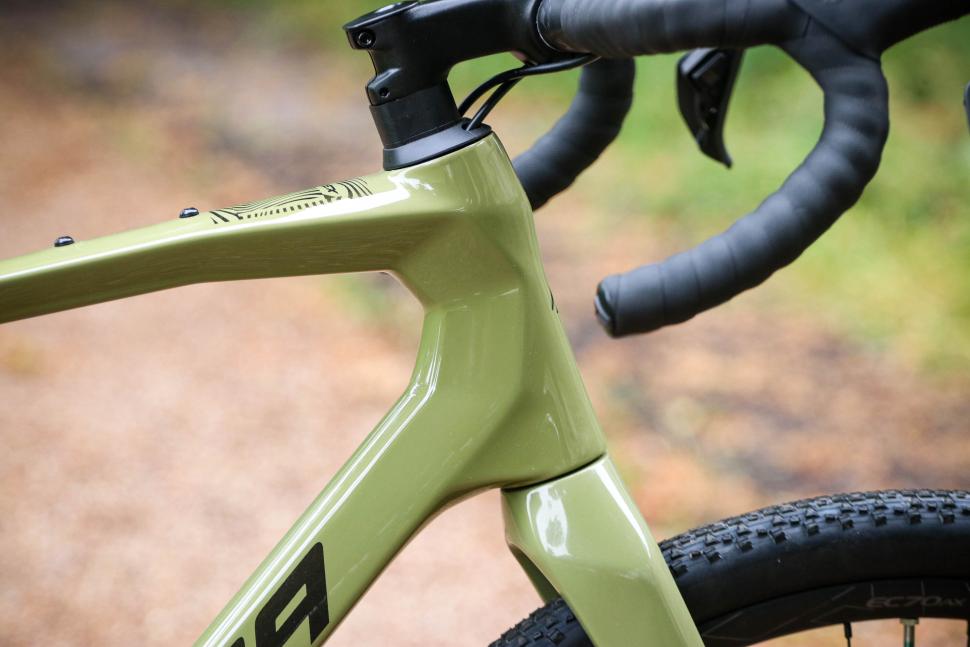
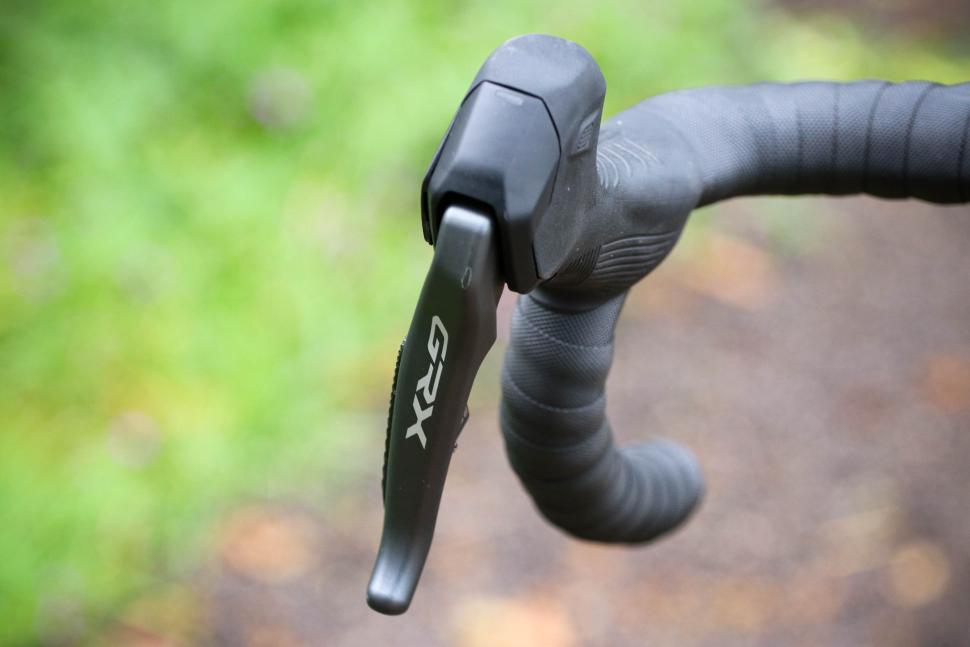
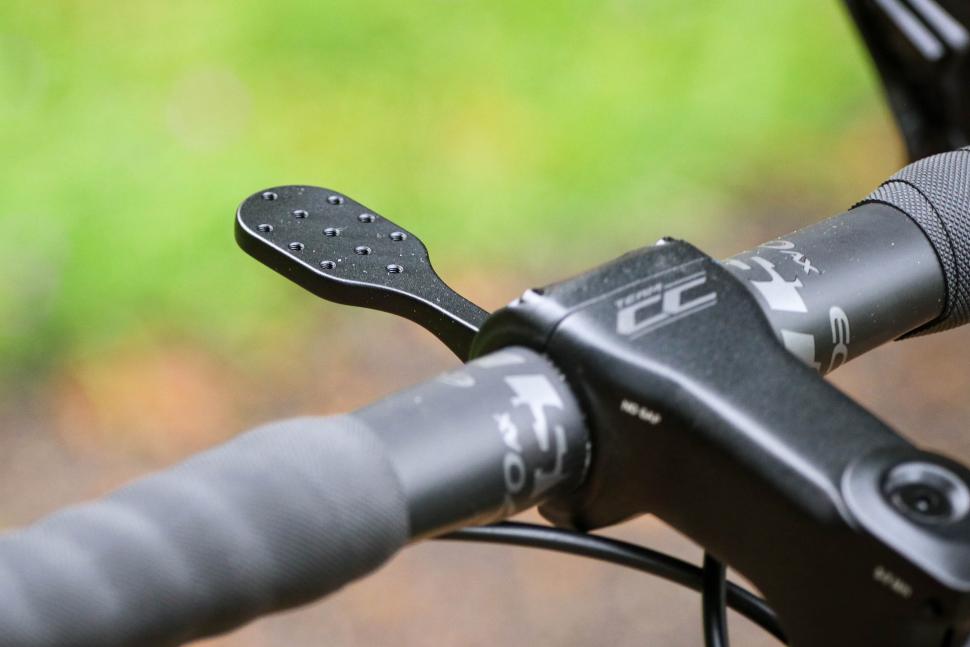
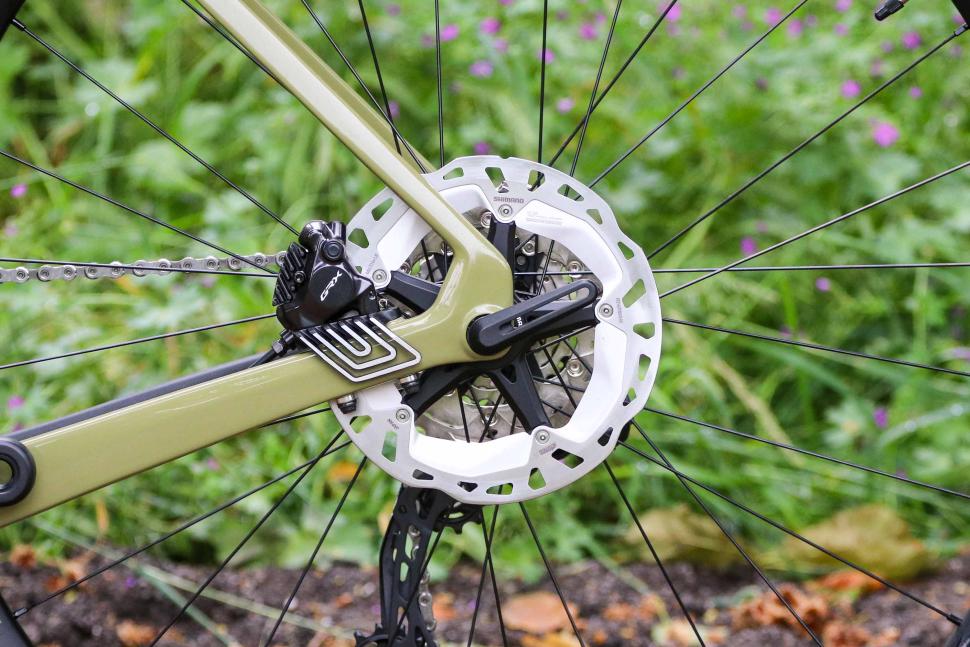
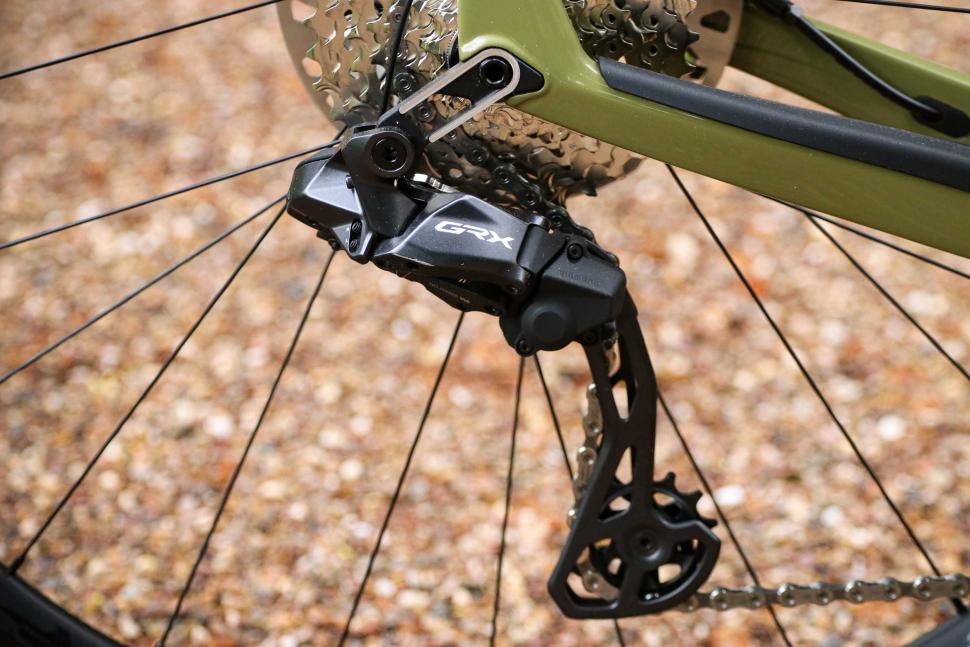
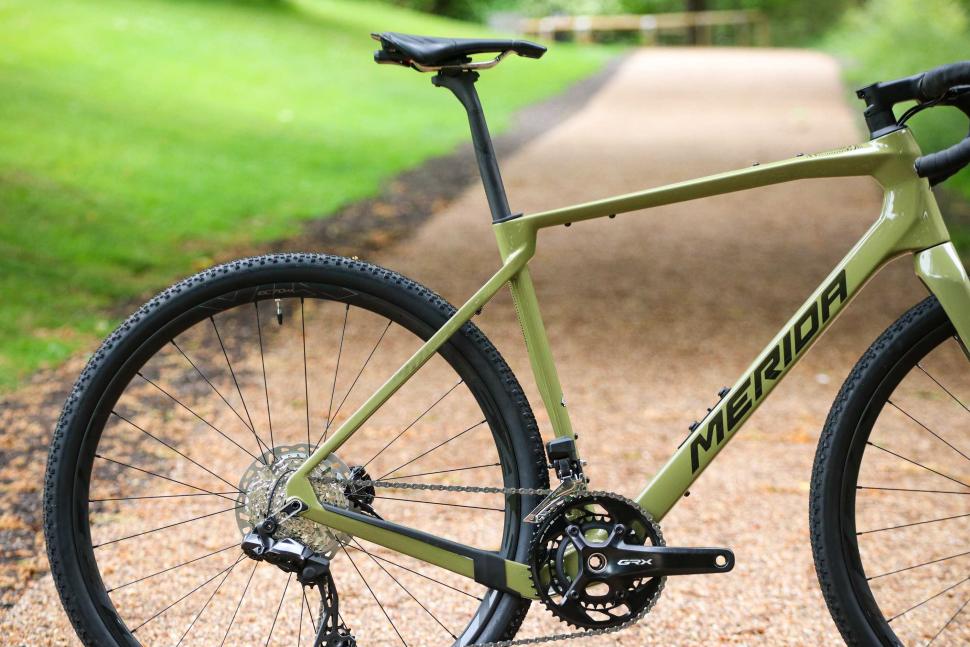
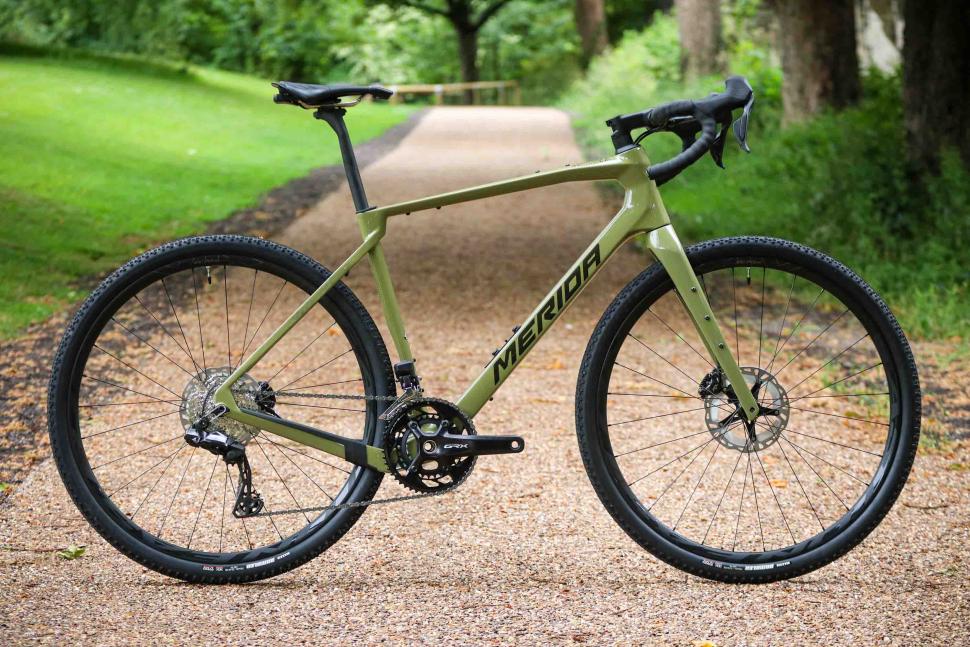
The 8000 sits near the top end of the Silex range, so that means you get a carbon fibre frame – although that doesn’t necessarily mean that low a weight overall, with our office scales showing 8.9kg on the display – excluding the bottle and the multitool that nearly all Merida bikes ship with under the saddle.
That said, this doesn’t feel like a 9kg bike out on the gravel. It is fun to flick about on dry singletrack through the woods and it feels impressively responsive when asked to bunny-hop and wheelie over tree roots and other trail obstacles.
I found that the tall front end allowed me to spread my weight evenly, which helped keep my centre of gravity spot on – ideal on tracks where the gravel is loose, or wet and muddy. It also gave a relaxed position overall which helps comfort and muscle fatigue on longer adventures.
The Silex has a long top tube and therefore increased reach compared to road race inspired gravel bikes, but a shorter stem keeps the handlebar position in check. So while the frame may look different, the ride position still felt familiar to me.
The lengthy head tube lifts the bar position, but makes the drops much more accessible and I found that I used them much more than I normally would. This is great for lowering your centre of gravity and allows for plenty of control at speed.
The MTB style geometry is most evident in the slackness of the head angle. It means the handling is pretty much neutral, so no surprises on changeable terrain and this makes the Silex an easy and predictable bike to ride.
This is even more important when using the many frame mounts for carrying luggage. I loaded it up with about 12kg of bike packing kit using a handlebar bag and large saddleback and the 8000 gave great confidence even on technical parts off trail, both at low and high speed.
The only place that the steering may feel a little ponderous is on the road or very hardpacked surfaces. It’s not a road bike though, so this isn’t a criticism. If your gravel riding is more ‘racer’ than ‘adventurer’ then Merida’s Mission is probably better suited.
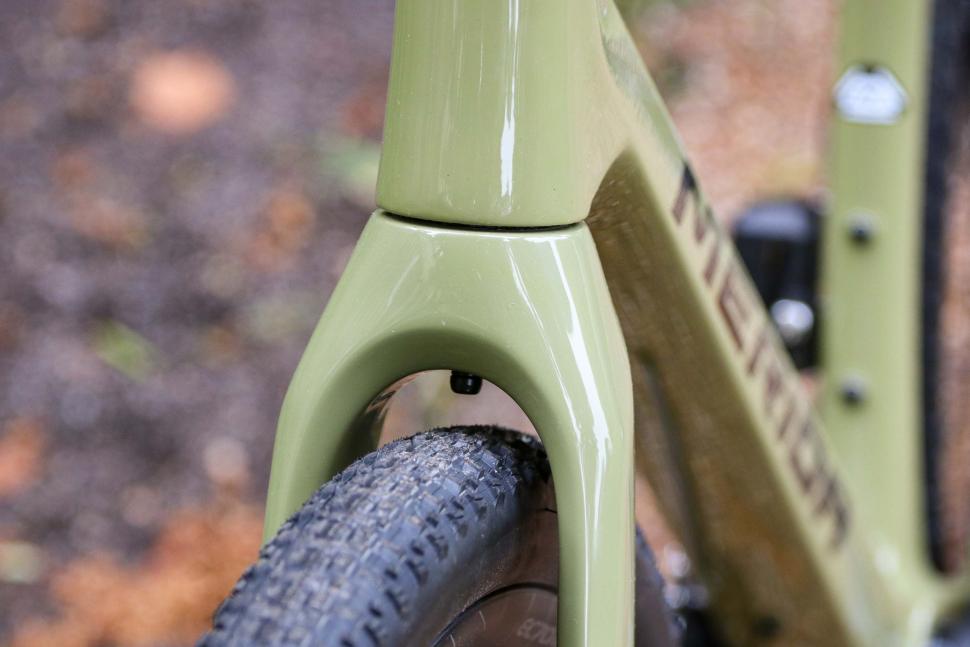
Tyre clearance is capped at 45mm on a 700c wheel, which is plenty in my view for all of the kinds of gravel riding that I do. But we are seeing a trend for gravel bikes taking wider. When you consider the MTB nature of the Silex’s DNA, it would make sense if it could maybe take 50mm or bigger.
This is something that we may see on the next iteration, possibly. I’ve not long finished riding Vielo’s V+1 Race Edition with 50mm tyres fitted and it made for a very surefooted, ride-through-anything gravel machine that really started to come into its own as the trails got wetter and muddier.
When I wasn’t messing around in my local woods, I found the Silex to be very comfortable on longer rides, thanks to the well specced components but also the compliance in the frame and fork. There’s a good ride feel throughout which also adds feedback – ideal when riding on surfaces that could be sliding around underneath you.
Stiffness is taken care of too with the lower part of the frame feeling tight, especially around the bottom bracket area, and the oversized chainstays.
2025 Merida Silex 8000: Frame and fork
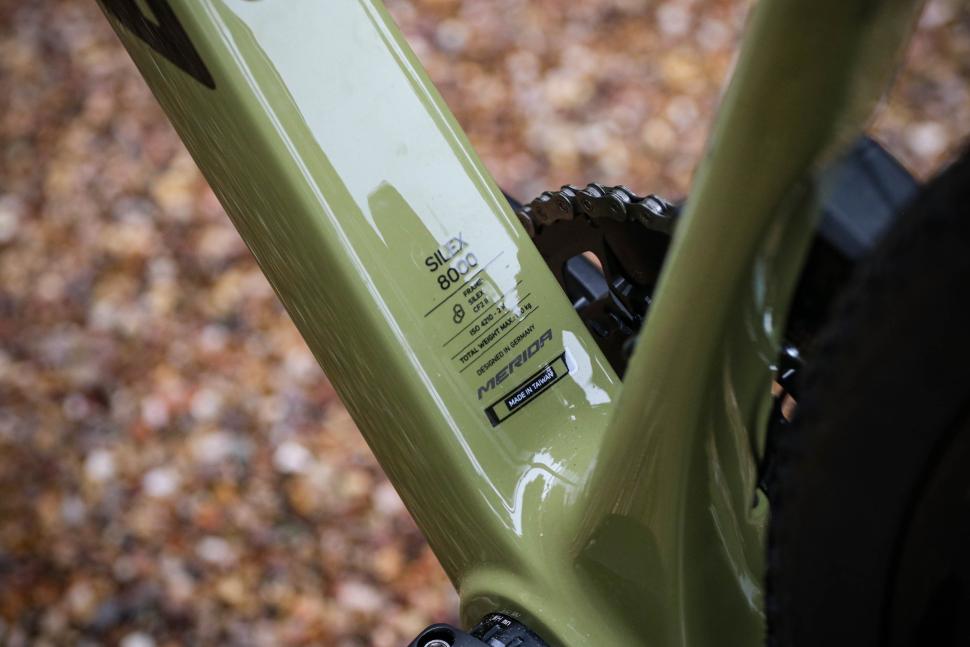
The Silex 8000 uses Merida’s CF2 II carbon frame and fork, although there are also aluminium frames in the line-up.
Merida mentions plenty of different technologies used on the frameset. Things like ‘Nano Matrix Carbon’ where nano-scale particles are added to the resin which are claimed to increase impact resistance by up to 40% – exactly what you want on a bike that may see rock strikes and the odd crash.
The construction method is something the brand calls AWS – anti-wrinkle system – where bladders are used to compress the layers of carbon against the frame mould which gives a smooth internal finish, removing any voids and potential sweet spots.
The frame also uses a tapered head tube, internal cable routing and a BSA threaded bottom bracket.
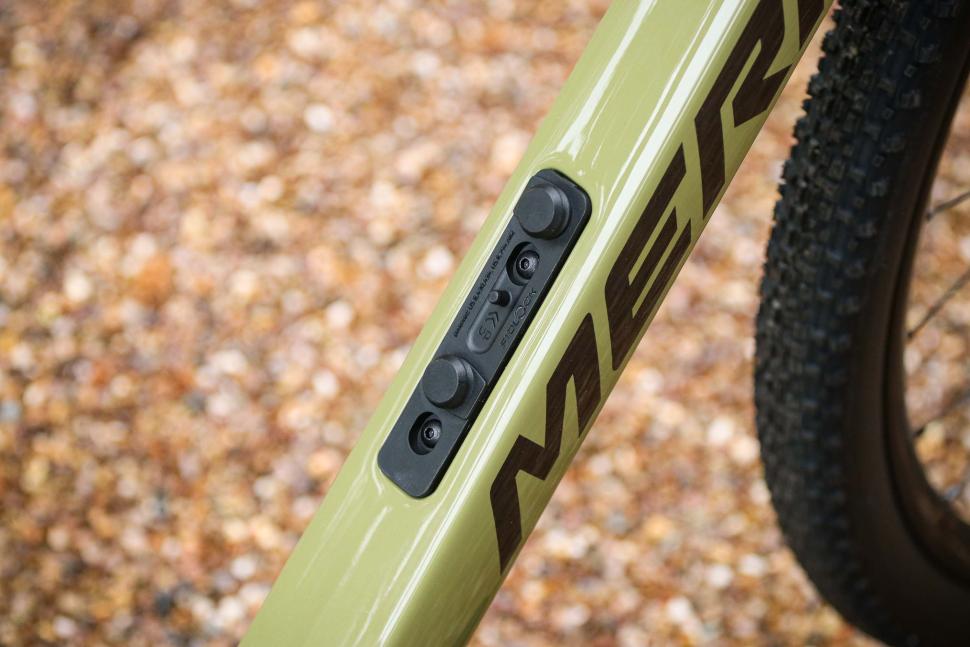
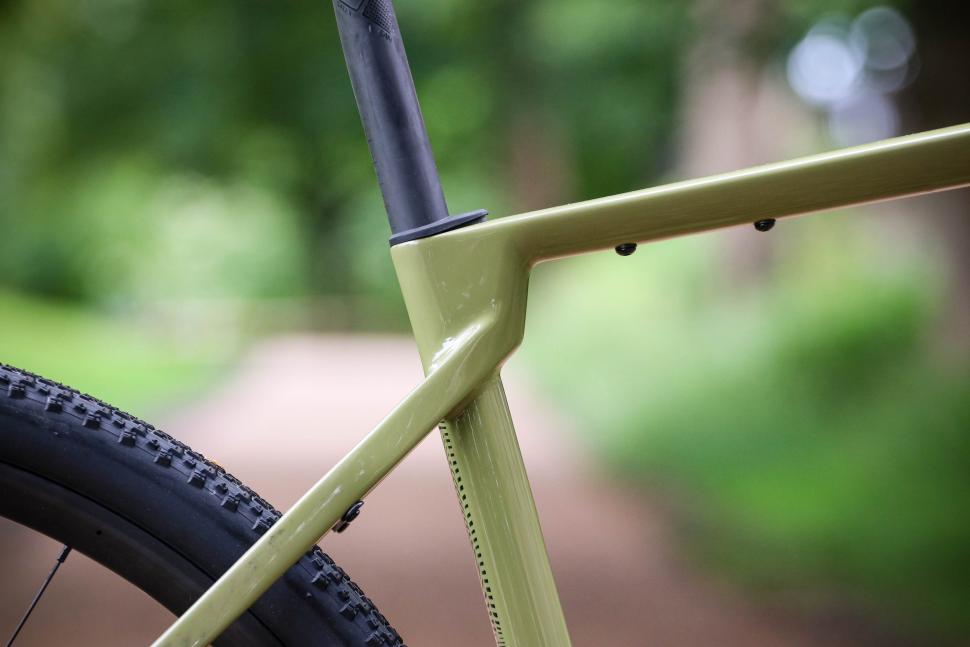
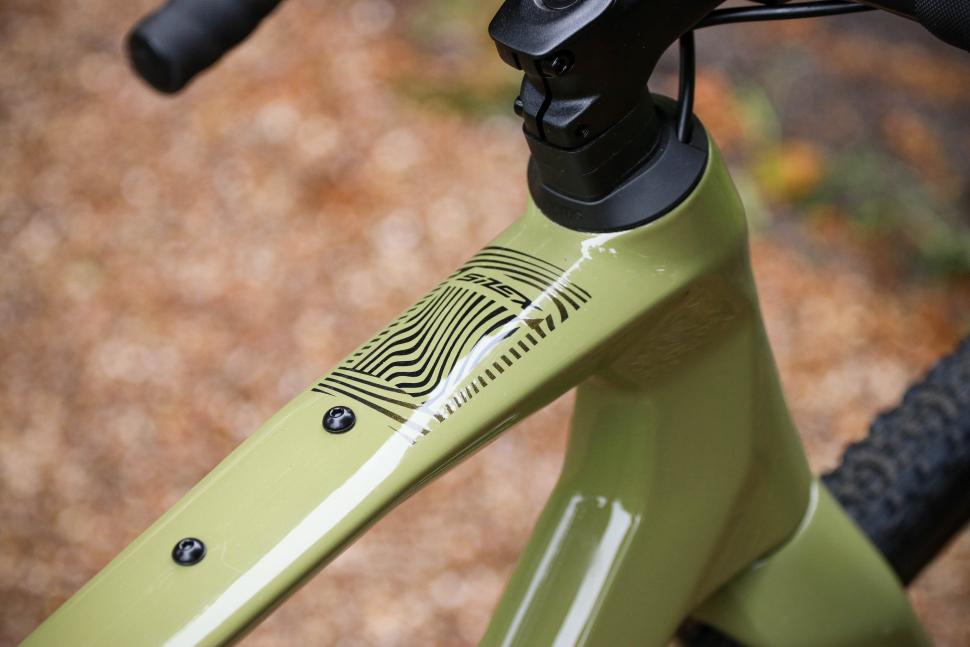
The Silex 8000 has mounts for two bottle cages in the traditional positions, with another set under the down tube. There are also further mounting points on the upper face of the top tube for a ‘bento box’ and another set under the top tube near the seat tube.
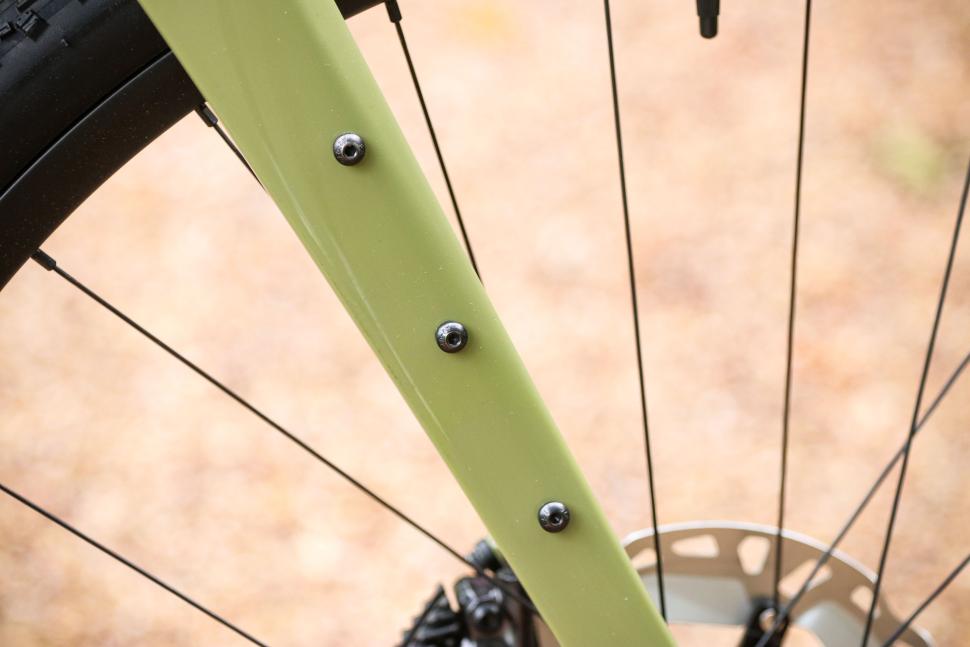
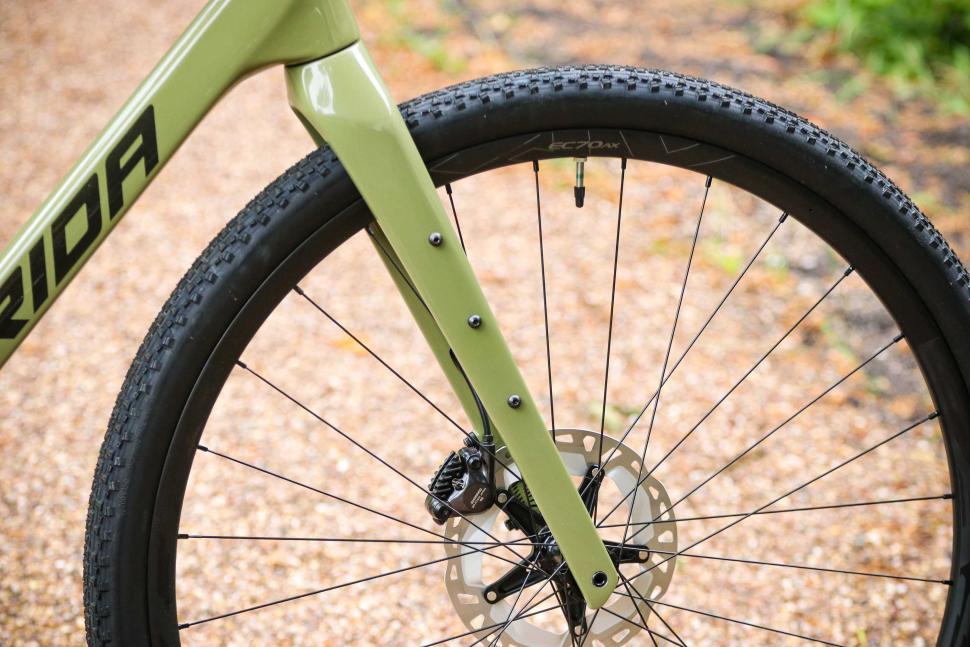
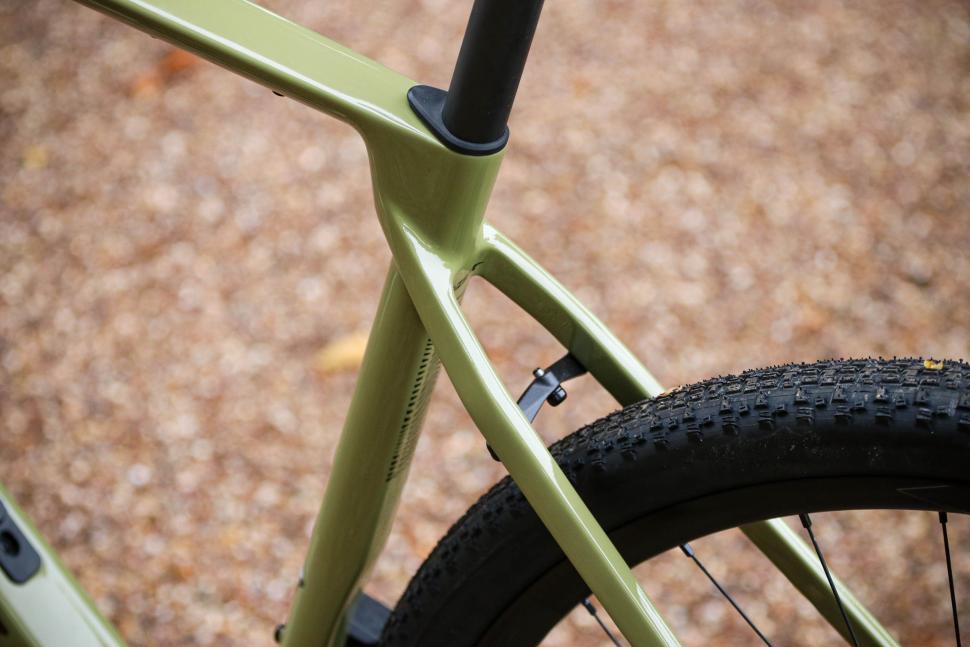
The fork has triple mounting points on each leg for large cages, and cable routing for a dynamo light. Both the frame and fork will also accept Merida’s own mudguards thanks to included mounting points. For the frame, you use the detachable seatstay mount and fitting them only drops tyre clearance to 42mm.
It’s a clean looking frameset throughout and a quick inspection inside the seat tube shows the internals to be clean and smooth.
From a sizing and geometry point of view, you have six options between XXS and XL. Bear in mind that the geometry numbers can look a little off compared to most other gravel bikes when viewed side by side.
For instance, this medium has a 580mm top tube and a 170mm head tube – both way longer than your typical bike of this size. These result in stack and reach figures of 607mm and 412mm respectively.
However, that’s counteracted by an 80mm stem (20mm to 30mm shorter than a roadie biased gravel machine) and a slack 69.5 degree head angle.
The seat angle is a steep 74.5 degree which allows your to really get the power out, and the compact style of the frame means a short 500mm seat tube, but that also allows for a lot of seatpost to be exposed, increasing comfort from flex.
The fork length (taken from the crown to the dropout) is 415mm, while the bottom bracket drop is 75mm. The wheelbase is 1,082mm in length.
2025 Merida Silex 8000: Finishing kit and pricing
The Silex range is available in a selection of builds topping out with the 9000 at £5,000 with a 1x GRX Di2 groupset and Reynolds BL ATR Expert CL carbon wheels.
The cheapest model is the 200 with an aluminium frame, carbon fork and a Shimano ESSA drivetrain. You even get tan wall tyres and matching bar tape and saddle too for your £1,200.
This 8000 model is the 2025 edition which costs £4,800, but the new 2026 model is now on Merida’s UK site priced at £3,800. It has a 1x SRAM Apex AXS wireless groupset as opposed to the 2x GRX Di2 we have on our model, plus a few other changes. It’s the same frameset and everything thought, so a lot of what I say in this review is still relevant for the new bike.
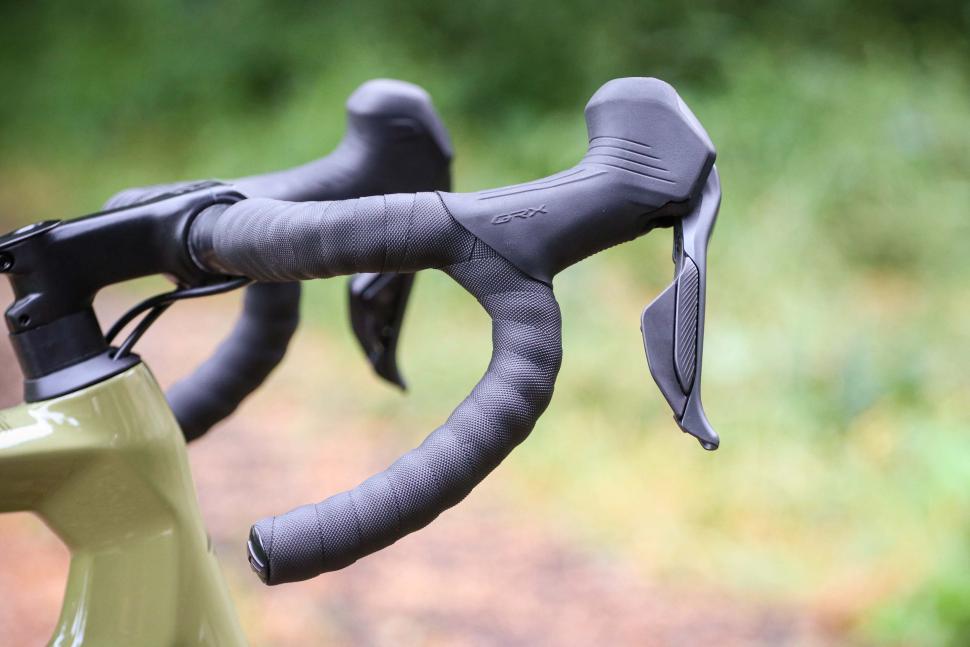
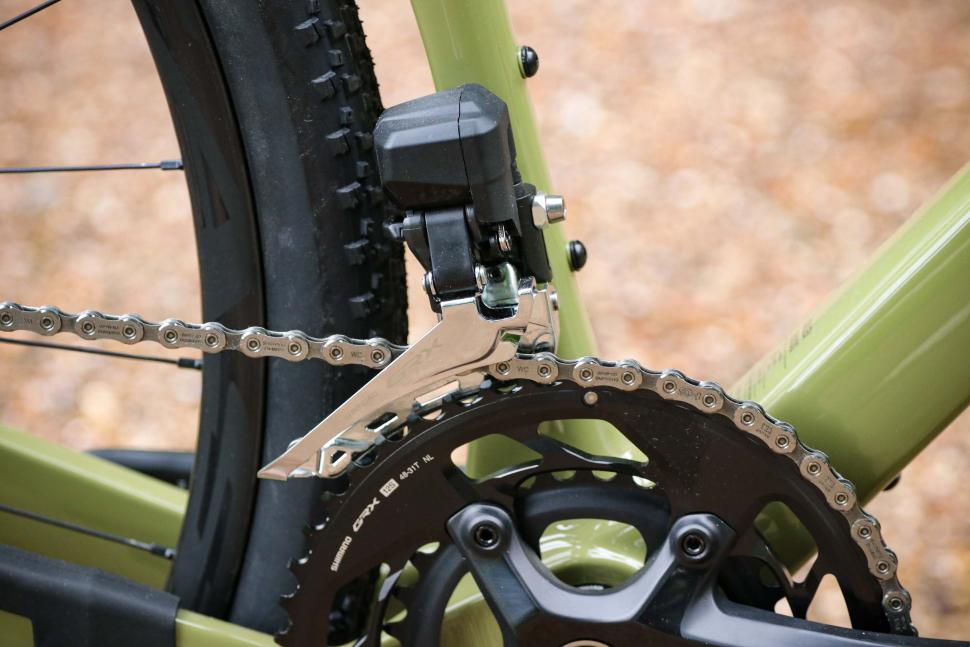
Our version uses 48/31T chainrings paired to a 12-speed 11-36T cassette. The latest version of this GRX Di2 – GRX Di2 RX825 to give it its full name – is an absolute joy to use. The shifting motion is lightweight, but still maintains enough feel at the button that you can feel the shift take place. I almost find Shimano’s range topping groupset, Dura Ace Di2 too light in its operation, so I’m glad GRX still has that tactile feel to it.
The units are small and comfortable, and the ridges on the hoods add extra grip without being obtrusive, even for riders like me who don’t wear gloves. Another big bonus is the flat front to the brake levers. These allow you to apply pressure to the brakes in a more secure way than road brake levers, which tend to be more rounded, even when the ground beneath is rough.
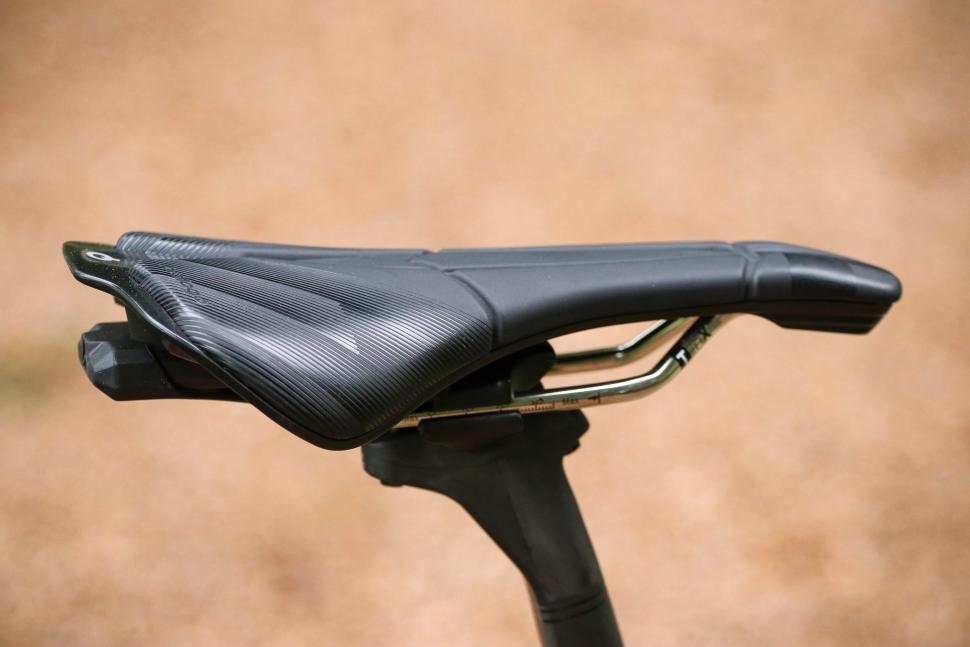
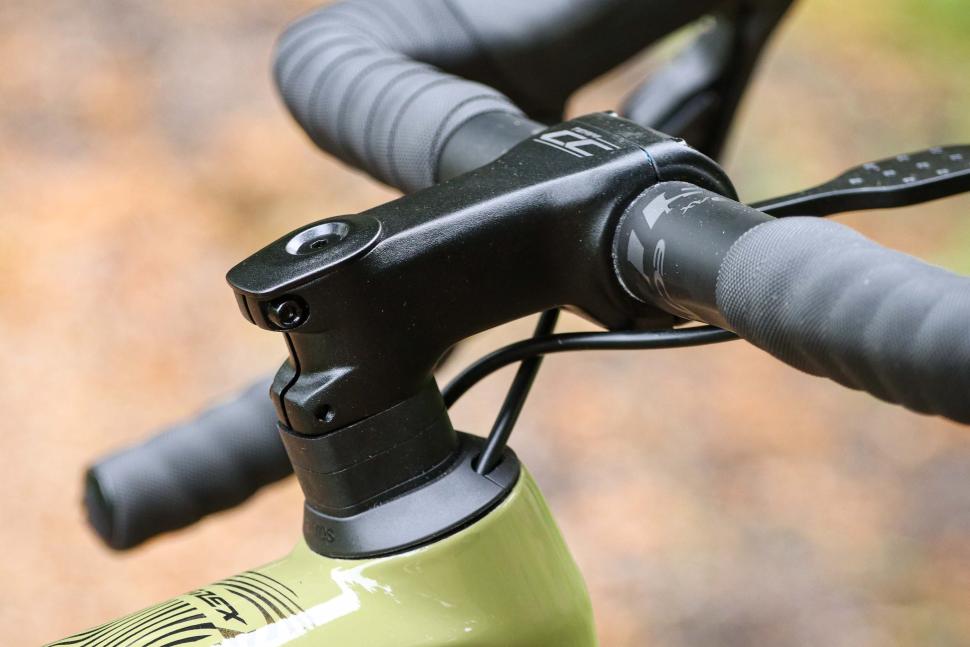
Moving away from the drivetrain, you’ll find a mixture of Merida kit with an alloy stem that hides the cables and hoses as they pass into the frame, and a carbon fibre seatpost. Atop that post is a Prologo Scratch M5 AGX saddle which I think is great. I had one of these for many years on my own bikes. I found it very comfortable and the short shape means that it doesn’t get in your way when you are out of the saddle tackling technical stuff.
For the handlebar, Merida has specced the rather lovely Easton EC70 AX which is made from carbon fibre. It adds some comfort to the front end thanks to the material used, while the 16-degree flare at the drops adds stability when descending.
This medium bike gets a 42cm bar – fine for me, but probably a bit wide for some who follow the latest trend of going narrow for aero purposes.
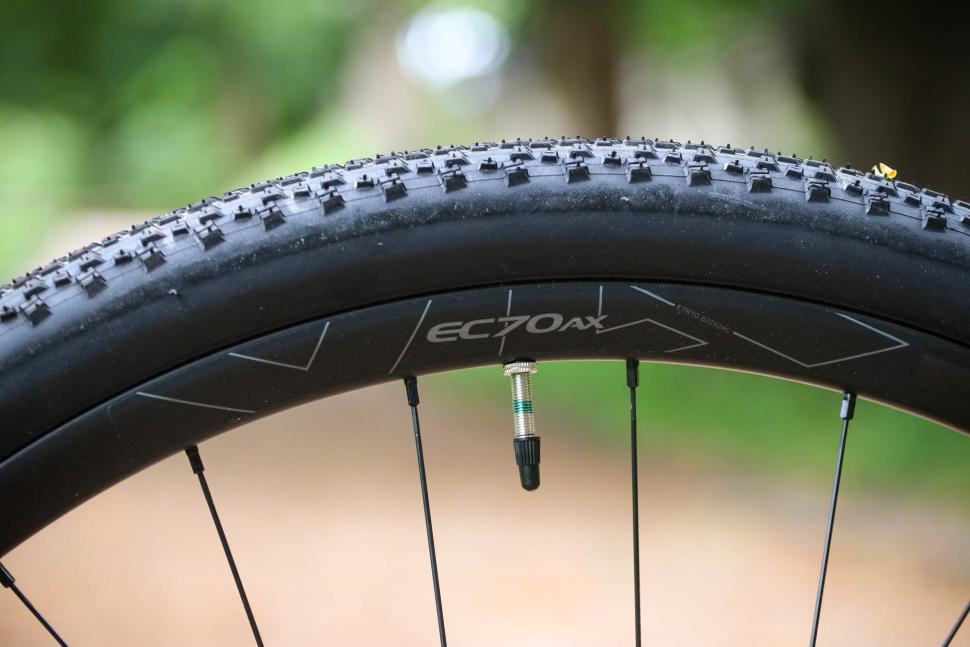
The wheels are from the same brand with the same model number. The Easton EC70 AX wheels have a carbon rim with a 24mm internal width, making them ideal for the 45mm tyres fitted. The wheels have a retail price of around £1,400 with a claimed weight of 1,515g.
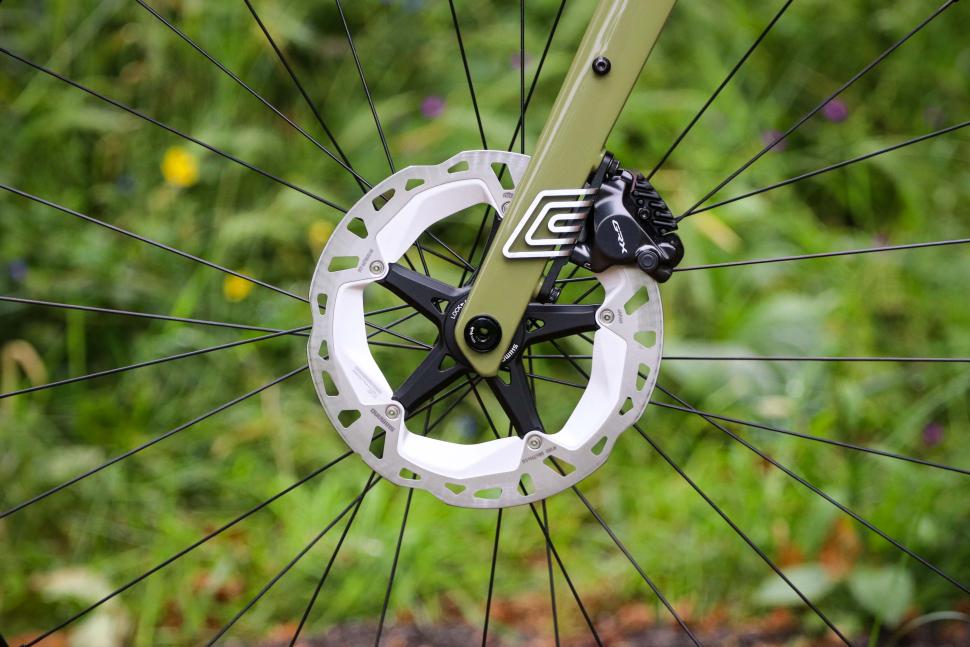
The rims are 21mm deep, you get 28 Sapim spokes front and rear, and they use centrelock for the rotor mounting rather than 6-bolt, which is a big tick for me.
The wheels behaved faultlessly for me, feeling light and stiff, and the Easton X5 hubs ran smoothly throughout testing.
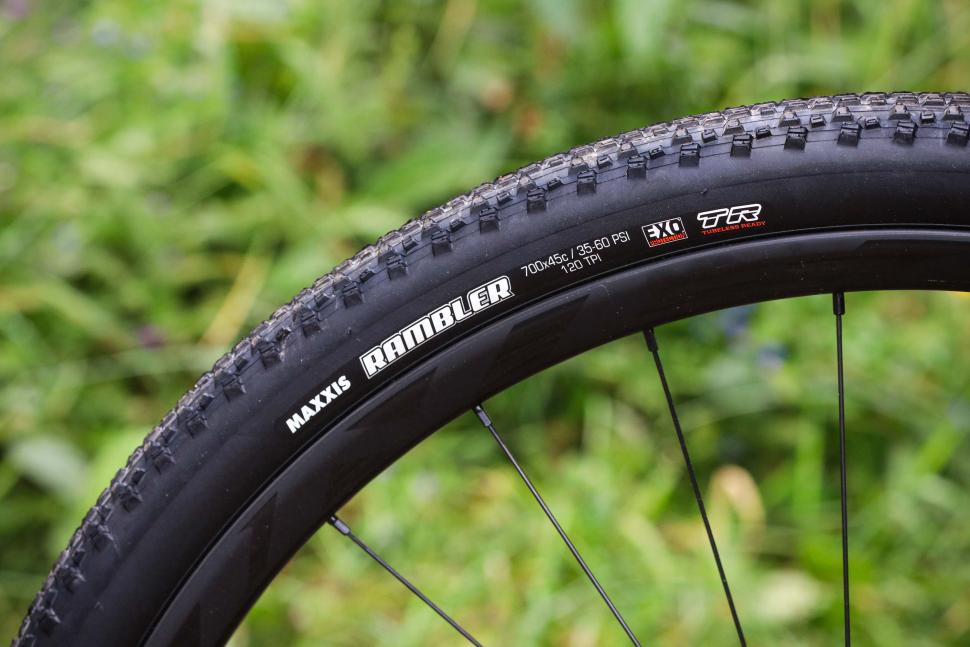
The fitted tyres are Maxxis Ramblers which are good allrounders for dry and dusty conditions due to their minimal tread depth. Puncture proofing is good though and grip levels are also decent enough.
You’ll definitely need something more aggressive though as you head into the winter months and things get muddier.
For the build on offer and the quality of the frame and fork, I reckon this 8000 offers some great value for money.
2025 Merida Silex 8000: Competition
As I mentioned earlier, the majority of gravel bike geometry is biased more towards road than MTB, especially in carbon fibre, so I haven’t ridden many that I can compare directly.
> Best gravel bikes 2026 — off-road and adventure-ready steeds to take you from tarmac to trail
Giant’s latest Revolt follows a long top tube, short stem theme with the Advanced Pro 1 model costing £4,999 (currently reduced to £3,499). It has a SRAM Rival AXS 2x groupset and Giant’s CXR carbon wheels.
Specialized’s Diverge 4 is worth a look (I haven’t ridden this latest iteration yet, but I have requested one from Specialized UK) as they describe it as race-tuned, adventure approved. Previous versions that I have ridden had an excellent ride quality and great geometry, so I’m not expecting this latest version to be any different.
There are plenty of mounting points, including on the fork legs, and it even comes with internal frame storage. The Expert model with GRX Di2, albeit a 1x set up and carbon Roval C wheels for £5,499.
The Comp Carbon model with 1x SRAM AXS (the same as the 2026 Silex 8000) costs £3,799 and includes a set of DT Swiss G540 wheels.
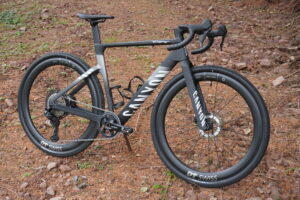
Canyon’s Grizl is the adventure focused bike of their gravel range which has the carrying capabilities of the Silex.
The Grizl CF 8 Di2 uses a GRX/Deore groupset mix and Canyon’s GR 30 CF wheelset for a price of £3,749. It also has 54mm of tyre clearance.
2025 Merida Silex 8000: Conclusion
Overall, the Silex 8000 is a solid all rounder for all kinds of gravel riding. It’s responsive enough that it can be used for those quicker blasts, but with the easy-to-live-with manners that mean it’s just as happy on those longer, adventure-style jaunts.
For the price, it is very well specced, with things like the Easton handlebar and wheelset adding a little bit of bling to the mix.
Verdict
Fun and capable ‘do it all’ gravel bike that’s well specced and a joy to ride
All the deals displayed on our review pages are pulled from a constantly updating database feed of the best affiliate deals available. The criteria for deciding on what are the best deals is who is offering the lowest, delivered price. In most cases we will be showing the very best deal available online, but sometimes you may be able to find an item cheaper. If you can please feel free to post a link in the comments box below. To find out more about affiliate links on road.cc click here.
road.cc test report
Make and model: Merida Silex 8000
Size tested: Medium
About the bike
List the components used to build up the bike.
Wheelset: Easton EC70 AX
Front tyre: Maxxis Rambler
Rear tyre: Maxxis Rambler
Hubs: MERIDA EXPERT TR
Crank: Shimano GRX820
Bottom bracket: Shimano SM-BBR60
Cassette: Shimano GRX HG710
Chain: Shimano M8100
Shifters: Shimano GRX825 Di2
Front derailleur: Shimano GRX825 Di2
Rear derailleur: Shimano GRX825 Di2
Brake lever: Shimano GRX825 Di2
Brakes: Shimano GRX820
Rotors: Shimano MT800
Headset: Acros ICR MERIDA EXTERNAL neck w/diecast splitring
Stem: MERIDA TEAM CC III
Handlebar: Easton EC70 AX
Bar tape: MERIDA ROAD Expert
Seatpost: MERIDA Team SL
Saddle: Prologo Scratch M5 AGX
Seatclamp: MERIDA EXPERT
Bottle cage: Fidlock Integrated Base & MERIDA Bottle
Tell us what the bike is for and who it’s aimed at. What do the manufacturers say about it? How does that compare to your own feelings about the bike?
Merida says: “Solo bikepacking missions, multi-day races – or just putting in the miles in all conditions, all year round. The SILEX 8000 is designed to be mountain bike capable off-road, but with all the versatility our gravel adventure bike has been known for.”
It’s a capable and versatile gravel bike.
Where does this model sit in the range? Tell us briefly about the cheaper options and the more expensive options
This model sits one below the top of the range option (£5,000) with the line up starting at £1,200 for the aluminium framed Silex 200.
Frame and fork
Tell us about the build quality and finish of the frame and fork?
The frame quality is finished to a high quality inside and out.
Tell us about the materials used in the frame and fork?
Frame: SILEX CF2 II
Fork: SILEX CF2 II
Both are carbon and use Merida’s Nano Matrix carbon.
Tell us about the geometry of the frame and fork?
The geometry is MTB based with a longer top tube, tall fork and relaxed head angle.
How was the bike in terms of height and reach? How did it compare to other bikes of the same stated size?
The stack and reach figures are larger than seen on many gravel bikes due to the MTB style geometry, but the shorter stem length brings the contact points back in to a traditional position.
Riding the bike
Was the bike comfortable to ride? Tell us how you felt about the ride quality.
Yes, overall comfort is good thanks to the frame and fork quality and the Maxxis tyres having a decent ride feel.
Did the bike feel stiff in the right places? Did any part of the bike feel too stiff or too flexible?
Stiffness is great throughout the frameset.
How did the bike transfer power? Did it feel efficient?
Thanks to the stiffness, power transfer is great and the Silex feels efficient.
Was there any toe-clip overlap with the front wheel? If so was it a problem?
No.
How would you describe the steering? Was it lively neutral or unresponsive? Neutral.
Tell us some more about the handling. How did the bike feel overall? Did it do particular things well or badly?
The slack head tube brings neutrality to the handling, but it remains fun overall.
Which components had the most effect (good or bad) on the bike’s comfort? would you recommend any changes?
I’m a big fan of the Prologo saddle and the carbon Easton bar had a good ride quality.
Which components had the most effect (good or bad) on the bike’s stiffness? would you recommend any changes?
The Easton wheels have impressive lateral stiffness.
Which components had the most effect (good or bad) on the bike’s efficiency? would you recommend any changes?
The 48/31T chainrings work well giving a close spread of ratios, but lower than the equivalent road options for riding off road.
The drivetrain
Tell us some more about the drivetrain. Anything you particularly did or didn’t like? Any components which didn’t work well together?
The GRX Di2 groupset works really well with crisp, light shifts and powerful braking.
Wheels and tyres
Tell us some more about the wheels.Did they work well in the conditions you encountered? Would you change the wheels? If so what for?
Very good wheels with excellent lateral stiffness and impressive durability.
Tell us some more about the tyres. Did they work well in the conditions you encountered? Would you change the tyres? If so what for?
Decent mid-range tyres that will work on most terrains, especially those that are dry and hardpacked.
Controls
Tell us some more about the controls. Any particularly good or bad components? How would the controls work for larger or smaller riders?
An impressive batch of kit that makes the Silex 800 well specced.
Your summary
Did you enjoy riding the bike? Yes.
Would you consider buying the bike? Yes.
Would you recommend the bike to a friend? Yes.
How does the price compare to that of similar bikes in the market, including ones recently tested on road.cc?
For the spec, the price is very competitive against the other bikes mentioned in the review.
Use this box to explain your overall score
For the money, the Silex 8000 is well specced with some neat finishing touches. The MTB style geometry works really well for all kinds of gravel riding, making it ideal for those who don’t want to be pigeon-holed.
About the tester
Age: 46 Height: 180cm Weight: 76kg
I usually ride: This month’s test bike My best bike is: B’Twin Ultra CF draped in the latest bling test components
I’ve been riding for: Over 20 years I ride: Every day I would class myself as: Expert
I regularly do the following types of riding: time trialling, commuting, club rides, sportives, fixed/singlespeed,


1 thought on “Merida Silex 8000”
Love everything about this bike. The colour, the stance the wheels and the places it would take me.