



London’s walking and cycling commissioner Will Norman has said that reckless behaviour on the capital’s roads — whether by red-light-jumping cyclists, dangerous drivers, or people “generally behaving like idiots” — remains a key challenge for road safety, while warning that online culture war narratives are often exaggerated and bear little resemblance to how people actually behave.
“Let’s not beat around the bush,” Norman said. “Some people are idiots and some behaviour is against the law. Some cyclists don’t stop at red lights, some cut through crossings, and some car drivers drive too fast, uninsured, and use their mobile phones. Of course there are challenges to tackle, but this ‘us vs them’ mentality is often exaggerated online, creating an unhappy and unhelpful narrative.”
In an interview with Zag Daily, Norman insisted that most Londoners do not define themselves simply as “cyclists” or “motorists” — and said that everyday life on London’s streets is far more cooperative than the online rows suggest.
“If you spend all of your time on social media, you’ll certainly think this attitude is prominent. But when you spend time with people on the ground, you’ll see that most people don’t define themselves as a motorist or a cyclist. Nobody driving a car wants to hurt anybody, and those who cycle also drive,” he said.
He also took aim at the idea of a so-called “war on motorists”, warning that toxic rhetoric from politicians and campaigners risks inflaming tensions. “Most Londoners recognise they need to look after one another whatever mode of transport they use — and the antagonism you see below the headlines doesn’t manifest in quite the same way in real life,” he added.
Norman’s comments come at a time when cycling in London is on the rise — and fast approaching a critical point. In the City of London, cyclists already outnumber cars during rush hour, while on key routes like Clerkenwell Road, Blackfriars Bridge, and the Embankment, tens of thousands of daily cycle journeys outstrip motor traffic.
Transport for London data shows that Londoners now make 1.33 million cycling journeys every day — up five per cent on last year and up 26 per cent since 2019 — with four and a half per cent of all journeys in the capital made by bicycle.
“From a London-wide perspective, we are clearly now at a tipping point,” Simon Munk of the London Cycling Campaign said. “Cycling is now a fairly mainstream mode of transport.”

The growth has been driven by a combination of new infrastructure, expanded e-bike hire schemes, congestion charges, and the ultra-low emission zone — alongside the post-pandemic shift in travel patterns.
Despite that, road safety remains a pressing concern. Latest TfL figures show a marginal fall in road casualties — from 3,710 in 2023 to 3,696 in 2024 — with 110 fatalities recorded last year. More than 80 per cent of those killed or seriously injured were pedestrians, cyclists, or motorcyclists.
While Norman welcomed the faster rate of injury reduction in London compared to the rest of the country, he warned that challenges such as SUVs, dangerous driving, and illegal e-scooters continue to put vulnerable road users at risk.
“Larger and heavier vehicles are putting pedestrians and cyclists at greater risk, yet there’s a national trend towards bigger SUVs,” he said. “Modified vehicles and unsafe batteries are posing great risk to high-pressure workers like delivery riders. There’s an awful lot more that needs to happen.”
Norman confirmed that £87 million will be spent this year on active travel safety as part of a wider £150 million programme, but admitted London was “running to stand still” in the face of growing pressures.
He also reaffirmed London’s commitment to its Vision Zero goal of eliminating deaths and serious injuries by 2041.
“It’s an ambitious goal, but there should not be a target other than zero,” he said. “Other cities around the world are proving this. Oslo and Helsinki have got to zero. London is a much larger global city and faces different challenges — whether we’ll get there by 2041, I’m not sure. But zero is still the right target and I’m confident we will achieve it.”

Norman’s stance reflects a rather recent pushback against culture war narratives on active travel — including warnings from England’s chief medical officer Sir Chris Whitty, who said that media-fuelled stereotypes of “middle-aged men in Lycra” were harming public health efforts earlier this month.
Whitty said: “The culture wars will always try and paint the person who’s in favour of active transport as middle-class, entitled, speeding like a bad person. What they don’t see is a woman in a wheelchair who actually benefits even more from the activity we’re talking about.”
Labour’s new government has also sought to distance itself from the divisive rhetoric of the previous Conservative administration. In October, then transport secretary Louise Haigh pledged to “take back streets” for all road users and accused the Tories of pursuing “poisonous culture wars.”
The London Cycling Campaign itself has warned politicians not to stoke fear or drag cycling into phoney political battles — a stance echoed by Norman when he spoke out against the “exaggerated” online rows that often dominate the debate.
At the same time, Norman has faced criticism over controversial decisions like the pedestrianisation of Oxford Street, where he warned that allowing thousands of cyclists through would be “extremely unpleasant” — prompting campaigners to attack the lack of quality alternative routes.
But Norman insisted the real-life reality is far more cooperative than social media suggests: “Most Londoners recognise they need to look after one another whatever mode of transport they use, and the antagonism you see below the headlines doesn’t manifest in quite the same way in real life.”













27 thoughts on ““This ‘us vs them’ mentality is exaggerated online”: London’s cycling chief says reckless, law-breaking cyclists and drivers are fuelling a toxic culture war”
Deleting Twitter and Reddit
Deleting Twitter and Reddit has removed 99.99% of the culture war stuff from my life. Highly recommended.
Just road.cc to go 😂
Just road.cc to go 😂
I only pop in here when it
I only pop in here when it comes up on my Threads feed lol. I’ve had a good relationship with road.cc in the past but haven’t heard from them recently – I took Sigrid on a 600 mile ride and raised £30k+ for charity 2 weeks ago but no response about an article or even a paragraph in the live blog – so I suspect if we aren’t causing culture war drama they aren’t interested.
I imagine it probably has
I imagine it probably has more to do with coming off social media – if it ain’t on bluexagram and doesn’t provide an embed for the article then it didn’t happen.
Well it’s all over social
Well it’s all over social media, and a few small (non-cycling specific) news outlets. Maybe if I post a compilation of the bad driving we saw during the ride it’ll end up here. 🙄
I have deactivated Facebook
I have deactivated Facebook at the moment, due to it shoving ragebait at me left, right and center. Annoyingly it still has its uses I find. Having moved to a new area last year the local groups were valuable in finding decent tradespersons, plus local events and information.
sigirides wrote:
Good suggestions, but Reddit has other non-traffic based communities which aren’t as politicised (e.g. gaming sub-reddits).
hawkinspeter wrote:
Having working in the game industry for many years, I’ve also had my absolute fill of the gaming community. 😂
Here’s Sigrid as a cosmetic in the game Parcel Corps.
sigirides wrote:
Shame Sigrid isn’t available as a custom skin for Stray
hawkinspeter wrote:
I tried haha, but I couldn’t convince them. I suppose at some point she ought to have her own game.
hawkinspeter wrote:
100% that would get me playing it a second time!
Adwitiya:
Adwitiya:
“In the City of London, cyclists already outnumber cars during rush hour, “
shoud be
“In the City of London, cyclists already outnumber DRIVERS during rush hour,”
or
“In the City of London, bicycles already outnumber cars during rush hour,”
I don’t run red lights, but I
I don’t run red lights, but I’m sure that almost all of the time I could do so safely. In some countries cyclists treat red lights as if they were give way signs, and there’s no real reason that this couldn’t work in the UK.
This leads me to ask the question, why is it that the rules regarding red lights are the same for cyclists and drivers? It doesn’t lead to increased safety for cyclists. It slows down journey times for drivers. The only reason I can see is that drivers don’t like it if they see somebody getting ahead while they have to wait, and so the ban on cyclists passing red lights remains – because drivers would get upset if it changed.
bensynnock wrote:
It is more widespread than I thought – even in NL they have this (“rechtsaf voor fietsers vrij”).
…BUT the devil is in two details. Well, 3:
1) Exactly how it’s implemented – some of the NL ones I’ve seen are more like “joining a separate cycle path from the road” rather than “turning into another road where motor traffic may be proceeding” (e.g. here)
2 and 3) Learning / adaption. Currently UK motorists aren’t “looking for cyclists” so that will take time (and sadly casualties) to settle in. We UK pedestrians have been brought up from childhood to be wary of any wheeled vehicles in the road. (As well as not “looking for cyclists” – probably why people get startled when a cyclist “suddenly appears”). So until people unlearn that and become confident mixing (briefly) with cyclists there’s likely to be a lot of “I couldn’t cross because the cyclists didn’t stop even though I had a green person/figure* – it’s not fair!” Plus (again sadly) probably a few more collisions because people feel uncertain and may react in unexpected ways.
* Language seems to have changed here.
Most left turns you could and
Most left turns you could and often it would be safer. I don’t run reds, but one exception was where we used to live, a left turn off a dual carriageway with a cycle lane into a supermarket. I started jumping the light because there was a good period where lights would let traffic out of the supermarket but you could easily turn left. This started after I was nearly taken out by a car that decided to overtake me as the lights changed and the cut me up to turn into the petrol station at the entrance. Safer tonjumo the lights and get ahead of people like that.
Cycling in London though the junctions can be a bit more complex and you can’t second guess easily. I saw a cyclist tonight guess it was fine, but the lights had just changed to traffic on the side road.
The us them culture war BS is stupid. Driving and cycling gives different perspectives, my commute now we have moved involves driving to the station, taking the Brompton with me on the train and then cycling across London. I’d like to ride to the station but we are in Sussex now and it would mean cycling a few miles on the A21 which I wouldn’t advise!
What I have noticed is no one seems to read the road ahead further than what’s right in front of them, both drivers and cyclists. Often ending up in stupid and sometimes dangerous situations. I think since cycling in London again I’ve nearly been taken out by inattentive cyclists more than drivers
It’s a valid point, but I don
It’s a valid point, but I don’t think we will shift that until we have a new design culture in our Highways Profession, and new values at the heart of the DFT and Local Highways Authorities.
That may potentially start as Regional Mayoralties roll out, most progress having been seen in Unitary City Authorities or Regions (London, Greater Manc, Brum, West Yorkshire, Nottingham, Leicester).
But “Red means STOP” is a concept very deep in our system, and overall our road safety numbers by international comparisons are still very good, despite 15 years of resolute dedication to arse-sitting by the last Govt. We don’t compromise on it in all sorts of circumstances, as it would reduce clarity (look at the 60 Usonian mess which is the HAWK crossing – the USA is always 50-100 years behind the times), or where there are loopholes.
IMO people saying things like “Idaho Stop” (treat Red as Give Way) risk bringing in dangerous practices like the “Oregon Left”, by creating a slippery slope.
I think that for now demanding the Idaho Stop here would add to culture war, by allowing the motoring-hoon lobby to create a further cyclists vs pedestrians narrative to feed to media and Susan Hall, IDS, and their friends as a diversion. It would also allow a (fake) equality argument to be made for motor vehicles in the same circumstances, which I don’t think would help.
I think a more creative step within the current system might be “cyclists allowed to start on amber if clear, on their responsibility” (maybe not for right turns), combined with the flashng amber period on certain pedestrian crossing types being turned into solid amber.
mattw wrote:
Personally, I don’t think that a made-up “culture war” should be used as a factor in decision making. What we need is to ensure that the adults in the room make decisions based on data and using the experience gained by other countries when they have changed how we use our shared roads/spaces.
The strong anti-cycling
The strong anti-cycling sentiments are just another type of politicised bigotry.
“Nobody driving a car wants
“Nobody driving a car wants to hurt anybody?” Possibly to probably true. But clearly some people driving cars don’t much care if they hurt anybody given the lack of consequences if they do hit anybody.
cmedred wrote:
Depends if you’re talking about physical or mental harm, I’d say. I couldn’t say for sure that anyone’s ever deliberately tried to injure me physically with their car (though some certainly looked like it), I can say with absolute certainty that every year multiple people deliberately try to scare the bejasus out of me with their cars, and succeed.
cmedred wrote:
I’d hazard a guess these are the same kind of people who wouldn’t much care if they harmed someone while cycling. Case in point the d***head that came flying out of a side road at the top of Kensington, into my path and then tried to kick my back wheel as I had the audacity to tell him to be more more careful.
Well definitely we need to
Well definitely we need to keep them from driving motor vehicles then; harm minimisation and all…
Obviously better would be to simply collect them all and keep them away from the general public (perhaps somewhere like here until they’d mastered some impulse control and sensible road use).
Halfway house – keep all the vehicles of similar size and mass / speed and power in their own spaces as far as practical (including cyclist and pedestrian separation also). Should reduce the amount of policing that we’ll still have to do because some people are idiots or plain antisocial, everywhere.
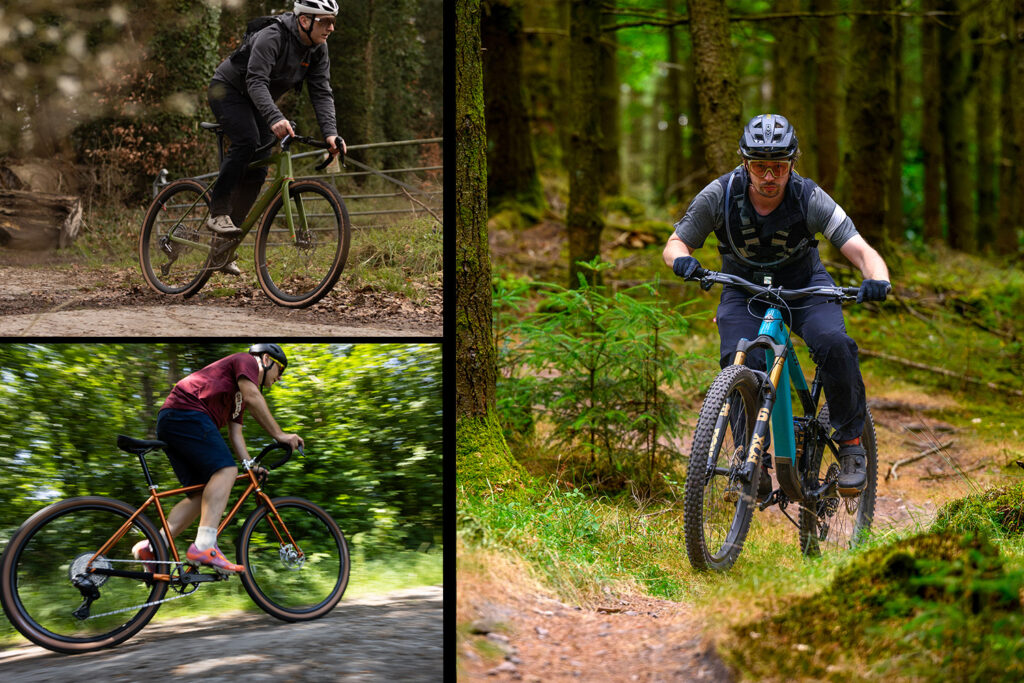
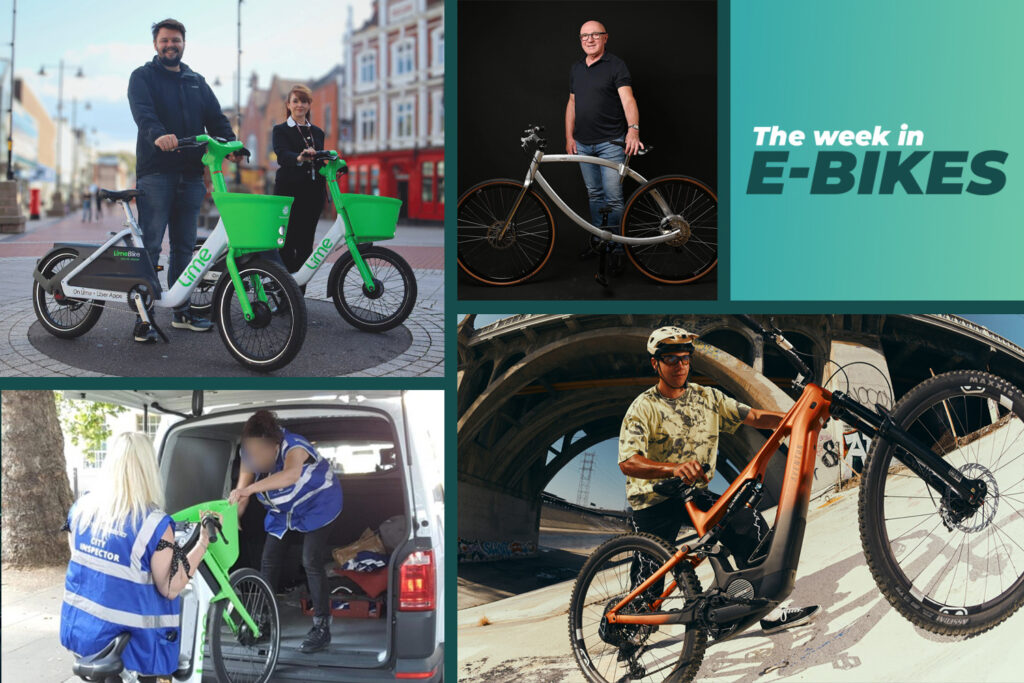
Why are they all wearing lids
Why are they all wearing lids in the protograph?
Is this representative?
The biggest single loss in the last 12 months has been Louise Haigh imo. Heidi Alexander (is it that Heidi?) does not have a “both feet in” political commitment to inclusive travel, so gets eviscerated in the priority wars.
And Lillian Greenwood’s Whitehall Boilerplate the other day on the Queensberry Tunnel was concerning – if there had been a serious argument it would have been OK, but to me it sounded like unquestioned repackaged Highways waffle.
mattw wrote:
I think the person at the top left is just wearing a cap but yes, I would say that in the centre of town somewhere around 80%+ of people riding their own bikes (as opposed to hire bikes) wear helmets.
Lillian Greenwood’s
Lillian Greenwood’s Whitehall Boilerplate the other day on the Queensberry Tunnel was concerning – if there had been a serious argument it would have been OK, but to me it sounded like unquestioned repackaged Highways waffle
You want Highways waffle from Lilian Greenwood?! This is her on 26.6.25 in connection with numerous people in Lancashire evading VED for years, with DVLA (and the police, of course) refusing to do anything at all about it- and I’ve found PO64 AUR since then!
Officials at the DVLA operate a comprehensive package of measures to tackle vehicle excise duty (VED) evasion. These range from reminder letters, penalties and court prosecutions, through to the use of Automatic Number Plate Recognition (ANPR) cameras, wheelclamping and the removal of untaxed vehicles. The DVLA aims to make VED easy to pay but hard to avoid, regularly reviewing and refining processes to encourage compliance and deliver a robust enforcement regime.
The DVLA is always grateful for information it receives from the public that assists in its drive to target untaxed vehicles. [This translates as ‘the little b******s should mind their own business instead of wasting our time by forcing us to think up excuses for inaction’] The DVLA sends this information to its national wheel clamping contractor, NSL Services Ltd (NSL), to enable them to take enforcement action where appropriate during their next visit to the area. However, NSL covers the whole of the UK and it must manage its resources in the most efficient and effective way.
Due to strict data protection legislation, the DVLA is unable to comment on whether any enforcement action has or can be taken. While legislation allows untaxed vehicles to be clamped, there are important exceptions. If the vehicles are parked on land associated with a dwelling or allocated parking bays, they cannot be clamped.
This was in connection with BF64 TGE, first identified by me and reported to DVLA over 3 years ago, when it had no MOT or VED. The photo is dated 23.5.22. DVLA is really playing the long game!
PS A dead giveaway for worthless waffle and tripe is the use of the word ‘robust’- this ranks up there along with ‘holistic’ and ‘innovative’
mattw wrote:
Indeed … As you know – because this is the UK, a “low-cycling” country, and it’s probably as much or more about avoiding negative criticism from others / social pressure from family and friends / fear that not wearing helmet and hi-vis will mean you will be held responsible for your own injuries in an accident. (And indeed – it tends to look quite different elsewhere, approximately in proportion to the feeling of safety of the environment – NL here, NL commuters here, Copenhagen here with a few helmets, Paris …)
As others noted – probably this says “cyclists” and less “people who just decided to get from A to B using e.g. a hire bike”…
More “not helmet row over here”.
While I’d agree that how
While I’d agree that how people actually behave on the roads affects perceptions more that Xitter culture wars, I think this understates the impact that a sensationalist mass media has had.