



A van driver who was using two phones and drinking vodka at the wheel when he hit and killed a cyclist, before driving off, later telling police officers that he thought he had “hit a bird”, has been sentenced to 11 years in prison and banned from driving for a further eight years.
Robert Heyes was driving his work van to a garage for a service when he struck 41-year-old cyclist Keith Brady from behind on the A673 Chorley New Road in Bolton, close to the junction with Lostock Junction Lane, at around 4pm on 17 October 2022.
Mr Brady, who had recently got a new job and purchased a flat, suffered a fractured spine and ribs and a serious head injury in the collision. The factory worker was taken by air ambulance to Salford Royal Hospital, where he died two days later, the Manchester Evening News reports.
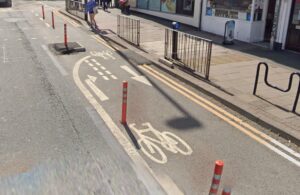
He was the second cyclist to be killed on Chorley New Road, a major A-road between Bolton and Horwich, in the space of five months, after segregated cycle lane wands were controversially removed in 2021.
Heyes, who has a history of drink-driving offences and was wanted by police at the time of the fatal collision, was drinking vodka and playing his car stereo at virtually full volume when he struck the cyclist, before driving off and leaving Mr Brady on the road.
Bolton Crown Court heard this week that the 38-year-old was using both his work mobile phone and his personal phone at the time of the crash, and was sending messages as well as browsing the internet, with later analysis discovering that one of the phones was in continuous use for 33 seconds immediately after the collision took place.
When he arrived at the garage, Heyes told staff that the van’s windscreen was cracked because vandals had thrown a brick at it. He also searched online for news of the fatal collision while still driving the vehicle and told a friend in a text message: “I am going to prison, mate. I’ve knocked someone over.”
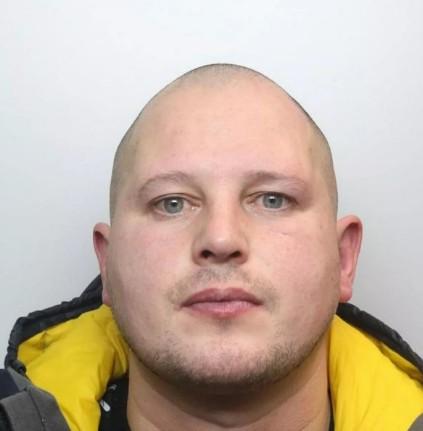
After witnesses noted the company logo on his van, Heyes was arrested by police, who discovered that he had a long history of drink driving, including previous convictions for being drunk in charge of a vehicle, drunk and disorderly, and harassment.
The court heard that the motorist had been arrested in May 2020 after he drove his work van into a ditch near Burnley while under the influence of alcohol. He was charged with failing to provide a breath sample, but did not attend court later that year, leading to a warrant being issued for his arrest.
After evading police for two years, Heyes was re-arrested in September 2022, but was released on bail once again following what officers termed an “administration error” when he should have been in court, leading to a fresh warrant being issued just weeks before the crash which claimed Mr Brady’s life.
“It is regrettable that at the time of the dangerous driving that killed Mr Brady, the defendant was wanted on a warrant without bail,” prosecutor Rob Hall told Bolton Crown Court this week.
Describing the circumstances leading up to the fatal collision, Hall said: “His Apple Car Play hands-free was connected with his work iPhone 7 and he was in possession of his personal Samsung mobile phone.
“Data from the handset shows that it was being activated by hand. There was a use of the WhatsApp application on the works phone and Safari Internet browser. The Samsung mobile phone received a Facebook message and there were other mobile phone applications and message applications used.
“Rather significantly that at the time of the collision, Mr Heyes was using the messaging application on the screen on his phone. For a period of 33 seconds the phone appears to be continued in use after the collision took place.”
He continued: “Mr Brady was on the near-side yellow lines, right on the periphery of the eastbound carriageway, and the defendant’s van was immediately behind him.
“The front near side of the van and the rear of the bicycle collided, propelling Mr Brady back onto the nearside bonnet, and his head hit the windscreen. Sadly, he was not wearing a cycle helmet.
“The defendant simply drove on without any thought of what he had just collided with, despite the obvious smash to the near-side windscreen. Neither did he make any attempt to call emergency services.”
The court also heard that an empty bottle of vodka and a bottle of water were found in a plastic bag under the van at the garage.
Over a year after the fatal crash, in November 2023, Heyes was again involved in another drink-driving incident, when he was caught three times over the legal alcohol limit while driving with his son in the van near Alder Hey Children’s Hospital in Liverpool.
The 38-year-old, who police said was so drunk he struggled to get out of his van, was handed a community order and told to undertake 100 hours of unpaid work for that latest episode.
Defending Heyes in court this week, Rick Holland said: “The defendant has been beset by many problems in relation with alcohol and these problems were exacerbated around this time because his uncle had died in May of that year and a friend took his own life live on Facebook.
“He had also been warned that his unborn child would need open-heart surgery. He was working but plainly drink had a considerable grip on him.”
After admitting causing Mr Brady’s death by dangerous driving, Heyes was sentenced this week to 11 years and two months in prison. He will also be banned from driving for eight years upon his release.
“Your record shows a complete disregard for the safety of other road users,” Judge Abigail Hudson told him. “But even having hit Mr Brady and when you clearly were aware you had at least gravely injured another human being, you yet again used your phone to access a search engine whilst driving your vehicle.
“It is clear that you were intoxicated on the day of this incident, but the level of intoxication cannot be proven because of your decision to leave the scene and thereafter refuse to provide a specimen for testing.”
In a victim impact statement, Mr Brady’s father, Gary Brady, said of his son: “He had suffered from mental health issues most of his adult life, but recently started to make terrific progress and his social interaction improved dramatically.
“He had a job and he was looking forward to Christmas for the first time in a long time. I do not believe I will ever be able to think of Keith again without thinking that afternoon in 2022.”
As we reported at the time, Mr Brady was the second cyclist to be killed on the Chorley New Road in the space of just five months, after wands protecting cyclists using the busy A-road’s bike lane were controversially removed the previous year.
In May 2022, 52-year-old Lee Rayner was also killed in a hit-and-run on the road, with Mr Brady’s death that September raising questions over why the cycle lane segregation – initially installed in early 2021 as part of the Covid-19 Emergency Active Travel Fund programme – was ripped out.
Many local cyclists directed their anger and frustration at Conservative councillor Andy Morgan, who was an outspoken critic of the orca wands, calling their removal “absolutely the right decision” and “common sense” prevailing.
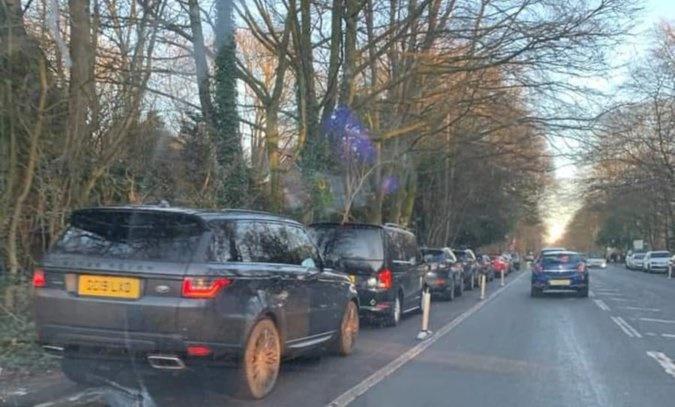
The wands – which were never in place at the two sites where the fatal collisions took place – were initially removed for an Ironman event which used the road in June 2021.
Later that year, in September, the council confirmed that they would not return and that the £275,000 active travel scheme would be scrapped, following a public consultation which found that 68 per cent of those surveyed expressed dissatisfaction with the wider segregated cycle lanes.
However, it was later reported that councillors were warned that removing the wands would mean that the active travel scheme on Chorley New Road would fall short of national safety standards and would fail to comply with Active Travel fund criteria.













101 thoughts on ““I thought I’d hit a bird”: Drink driver who killed cyclist while using two mobile phones in hit-and-run crash jailed for 11 years”
Imagine the parallel
Imagine the parallel situation, in the recently changed climate :
“Drunk cyclist, while surfing the internet on his mobile, kills pedestrian, then leaves the scene, sentenced for (insert a higher number than 11) years.”
It’d also be front-page news
It’d also be front-page news and the subject of every talking-head TV show for the next six months, unlike this which is just lost in the constant noise of horrendous, deadly shit drivers do every day.
Edit: it would also absolutely result in an increase in aggression towards cyclists on the road due to the completely disproportionate, dehumanising rhetoric in the media. I can’t imagine there’s now going to be a nationwide uptick in van drivers getting shit out on the roads like cyclists do every time a big anti-cycling story hits.
Can the system get any more
Can the system get any more bent than what happened, admin error, alterations to the road, lack of initial judgement…what a poor loss of life, the legality of driving is off the scale – out of control
“After witnesses noted the
“After witnesses noted the company logo on his van, Heyes was arrested by police, who discovered that he had a long history of drink driving, including previous convictions for being drunk in charge of a vehicle, drunk and disorderly, and harassment.”
Un-fucking-believable. And he’s going to be allowed to drive again? Can you imagine someone with a long history of endangering human life with a shotgun, finally killing someone and STILL getting his shotgun certificate back after eight years?
If this POS had been taken off the road permanently after the first or second offence, Mr Brady would still be alive.
Agreed – but of course in
Agreed – but of course in practice we’re very poor at stopping people driving who shouldn’t be.
Unless you meant simply removing from society permanently? This guy does seem like someone who’s never going to get the message – incapable/unwilling to act in a way that doesn’t continually bring harm to others.
Or at least until he can accept permanent sober living? And that’s going to be hard for an ex-con in a world of available booze and other drugs.
Eton Rifle wrote:
It’s what always gets me in court reports about mobile phone use or drink driving when the magistrate gives someone a slap on the wrist because ‘it was a one time mistake and you’ve never done it before’. It’s utter bollocks. It’s incredibly hard to get caught for drink driving or phone use at the wheel. The chances of getting caught the one time you do it are vanishingly small. The people who’ve been busted for DUI multiple times must be driving around utterly wankered every single time they get behind the wheel, otherwise there’s just no way.
There is so much leniency
There is so much leniency built into the system: On top of the miniscule chance that anyone is caught, add in the time limit for Notice of Intended Prosecution, and then the points system which allows offenders to continue offending until they reach some arbitrary threshold of atrocious driving, after which they can continue driving ad nauseum anyway by pleading exceptional hardship. The justice system is heavily weighted in favour of not prosecuting motorists.
It sounds like he was working
It sounds like he was working for a company if he was driving a logo’d van. Where was their due dilligence in making sure their employees had valid licenses and were not wanted criminals?
It is terrifying that we share the roads with scum like this. He should never be allowed to drive again.
You’d hope/expect that their
You’d hope/expect that their insurer is giving them a very difficult time over lack of due dilligence and that they’re finding it very difficult to get insurance.
Was this driver going for
Was this driver going for some kind of world record? For either the most phones in use while killing a cyclist, or the most laughable excuse (given that the largest UK bird is about 6kg.) Or for the bogan who looks most like a giant thumb? Of course, if it wasn’t a low-life well-known to the police, the excuse might have worked, and even if it didn’t he’d probably have got a suspended sentence.
ubercurmudgeon wrote:
Not that it makes the excuse any more believable, but a swan can be about twice that, and a great bustard more than three times (though granted the chances of coming across one of the latter on the road are rather small).
Fair beans, though there are
Fair beans, though there are only about 100 great bustards in the country, they’re all on Salisbury Plain (which is a long way from Bolton), and none of them ride bikes.
mdavidford wrote:
What about when fully laden? (say, with a coconut…)
brooksby wrote:
Dunno – I can only find its Bird Weight, not its Gross Ankle Weight Rating.
Now this definitely should
Now this definitely should have resulted in a lifetime driving ban. Instead of updating laws to ensure that extremely dangerous people like this don’t get another chance at ruining people’s lives, we get some half-arsed dangerous cycling law.
Agreed, however I’d be
Agreed, however I’d be willing to bet he would ignore any ban as these are poorly policed. Locking him up for much longer, charging him with manslaughter would be more appropriate IMHO, however that would require police and the courts doing some actual work instead of going for the easy win.
Note – I appreciate the fact that courts and the police resources are stretched, but it still gets my goat.
Of course, if the DVLA and
Of course, if the DVLA and medical professions do their job and this waste of space can’t give up the booze then he, theoretically, won’t be given his license back. Unfortunately, I don’t think the system works.
If the police had actually
If the police had actually done their job, Mr Brady would still be with his loved ones today.
But again, their negligence in not detaining the vile excuse of a human being resulted in Mr Brady’s death.
Why did they fail in executing the warrant, were they more interested in chasing people who had committed no crimes?
Police, best friend of criminals.
They’re more interested in
They’re more interested in jailing people for saying hurty words online and dancing at pride events.
I dialled 999 last year as I followed a driver who was so blind drunk he could barely speak. Unbelievably I was put on hold, after five minutes on hold and watching him almost mow a cyclist down, I ended the call and dialled the non emergency number, only to be told I was in a queue and would take half an hour. I ended the call and prayed he didn’t kill anyone in his way home.
Well done Lancashire Police.
No Reply wrote:
You mean the people who got jailed for inciting others to attack mosques and to set fire to hotels and hostels containing asylum seekers including children? Those “hurty words”?
No, I didn’t mean that. But
No, I didn’t mean that. I was referring to the wasted police visit to the home of Alison Pearson, which they later admitted was wrong and her comments did not warrant a visit. But then, you’ll take no notice because you’ll form an opinion on what you think.
Nice cherry picking of my comment by the way, to ignore the main comment I made and take a sneaky swipe at one sentence. Well done, you must feel very proud of yourself.
Except the review of Essex
Except the review of Essex police’s pursuit of the Daily Telegraph columnist Allison Pearson over an allegedly racist tweet has concluded the force was right to investigate her.
No Reply wrote:
I, or anybody else on this forum including you, have the right to address whatever part of a comment I/they wish. I didn’t bother with your accusation that the police didn’t deal with crime because they were too busy dancing at Pride events because it was just too stupid and childish to be worth bothering about.
Your statement about Alison Pearson is a complete lie. She shared a photograph on Twitter of Pakistani supporters of Imran Khan with a Pakistan flag posing with Greater Manchester police officers. She claimed that this showed “Metropolitan police officers posing with Jew haters”, having mistaken the Pakistan flag for the Palestinian one (some journalist, her). The police visited her as a result and she claimed that she had been told it was a “non-crime hate incident”. Essex police referred her to the Independent Press Standards Organisation, stating that they had bodycam footage which proved they had told her nothing of the sort. Essex voluntarily referred themselves to the National Police Chiefs’ Council for investigation, the conclusion of which was that they had been right to investigate the incident and that the behaviour of their officers had been exemplary. Not quite sure how you managed to make that into the police admitted they were wrong and that her comments did not warrant a visit. It seems to be you who not only forms an opinion on the basis of what they think but actually makes up facts to suit that opinion.
What sort of bird did he
What sort of bird did he think he’d hit? A f-ing emu??

I could be wrong but I
I could be wrong but I suspect he knew who he’d actually hit and the scum made up another excuse.
“When he arrived at the garage, Heyes told staff that the van’s windscreen was cracked because vandals had thrown a brick at it.”
Despite coming out with the truth to his mate before that:
“He also searched online for news of the fatal collision while still driving the vehicle and told a friend in a text message: “I am going to prison, mate. I’ve knocked someone over.””
“Sadly he was not wearing a
“Sadly he was not wearing a cycle helmet”
WTAF?
An impact severe enough to have cracked the car windscreen is unlikely to have been lessened significantly by a polystyrene hat.
Absolutely right. I have
Absolutely right. I have suffered a head injury thanks to a crash during an event (knocked unconscious, fractured skull just above my eye and just below the edge of the helmet) and firmly believe that, without the helmet, the outcome would have been more serious. However, I’m not naive enough to think that it would be enough to protect me if struck from behind by a motorist.
Would have saved him from a
Would have saved him from a spinal injury.
I thought the driving ban should be longer than the sentence normally, although why the hell is he not banned for life ?
No point in a life time
No point in a life time driving ban if it is not backed up with a life sentence that can result in automatic ‘do not pass go’ recall to prison if caught driving or attempting to drive.
PRSboy wrote:
I read the article and intended to post the same thing, but rather more vociferously. An absolutely disgraceful comment by the prosecutor Rob Hall. Was he actually working for the defence?
11 years, so realistically he
11 years, so realistically he’ll be out in 5 or 6. And I’m willing to bet he’ll ignore the driving ban as he already has done, as well as ignoring a court summons. And if he gets caught again he’ll blame the anxiety caused by losing his job and livelihood, and get another (ignored) ban and a paltry fine.
Inadequate doesn’t even begin to describe this. Should have been manslaughter – intentionally drove a vehicle despite being fully aware he was incapable – and 20 years minimum, preferably life as is proposed for causing death by dangerous cycling.
There’s no reason a
There’s no reason a manslaughter charge couldn’t have been brought other than the CPS’s continued reluctance to use it
Only 4 millions? thanks BBC
Only 4 millions? thanks BBC for noticing it..
They could replace that with
They could replace that with an all purpose “LTNs and cycle lanes cost … who cares when people are concerned about traffic chaos, dangers to pedestrians from cyclists and ultimately that this might reduce house prices”.
Then for “balance” they could do a debate featuring Piers Corbyn and the ghost of Adolf Hitler * – that covers both sides of the political spectrum!
* An “avid cyclist” in his youth and all about “more space for people” – as long as those were “racially pure” and not “asocial” Germanic people that is.
I think that you might have
I think that you might have posted this on the wrong article?
If you read the article the
If you read the article the only cost to the council is the maintenance of £55k per annum, meaning that the headline exagerates the cost to the council by around 20,000% assuming that the scheme has been running a full 4 years. I have made a complaint.
But life imprisonment for
But life imprisonment for cyclists who kill, heh?
The maximum sentence for this
The maximum sentence for this offence is also life, not that it’s ever used
Albeit only since 2022 –
Albeit only since 2022 – prior to that it was a max of 14 years.
Aside from the unduly lenient
Aside from the unduly lenient sentence and, as we know, it will completely ignore any driving bans etc going forward, along with the terrible police work…
This is another new example of my advocacy of criminals in such extreme cases losing their libido and taste buds as being (potentially) the only deterrent.
Murder!
Murder!
Repeat drink driver knowingly gets into a lethal weapon and drives it on the public highway, whilst drinking vodka. Reckless endagerment and pre-meditation.
Not only but also, recognising the significant impairment that drinking and being drunk whilst driving he also decides to operate not one but 2 mobile phones.
Continued using the phones after the collision.
Did not stop, left the scene.
Bird or brick, his lies indicate he knew what had occured!
Supported by message to friend.
So repeat offender with history of drink driving collides with other road user while drinking and driving, aggravating factors and no contrition.
Gets caught a year later again drunk in charge of a vehicle and with his own son in the vehicle.
Monster cock up by police to allow him freedom for 2 years and then released -Regrettable – WTF!
I trust they have referred themselves to the IOPC for gross negligence and misconduct.
Where is the sanity in any of this that supports anything other than life imprisonment?
Thing is, he didn’t actually
Thing is, he didn’t actually INTEND to kill anyone. Therefore not murder.
Unfortunately.
He knowingley went equipped
He knowingley went equipped with a lethal weapon whilst drunk, repeatedly.
If he didn’t intend to kill anyone he should have stayed on his sofa.
Take responsibility for the outcome.
A lethal weapon, true … but
A lethal weapon, true … but also an extremely commonly used tool / machine. People don’t see this as any more a weapon than a lawnmower or a bread knife. And in fact less than the latter – if you were wandering about the place with a knife it would be suspect; not so driving a car.
Summary: your objection is quite logical – but we’ve simply accepted the use of potentially deadly machines in public. And where the border between “normal use” * and “lethal” is measured in centimetres, or fractions of a second.
* If not normal use (as here) then “getting away with it” or (usually) at worst an embarrassing but frequently low-harm crash.
That’s pish.
That’s pish.
All tools when being operated by compentent people and in the right manner and the right cirumstances are safe. Chisels, screwdrivers, machetes in the right environment are safe.
As soon as people step outside the law and the controlled environment to use tools in a different manner they can become lethal weapons.
Centimetres or fractions of second – utter bollocks.
In this case someone who perpetually steps outside the law was doing what had become habitual and with impunity because the systems is weak and ineffective.
He wasn’t a first offender that had three pints, stopped and tried to minimise the consequences of the collission he was a long term serial offender who had a persistent drink problem and had been been involved in numerous previous incident.
FFS he even got caught, after already killing another raod user, with his son in the vehicle whilst pissed.
He was 3 times over the legal limit with his own son in the van!
Attempted murder for that alone!
Almost everyone can agree
Almost everyone can agree that this particular case is an egregious example of an addict and long-term criminal, wildly out of control. But (currently, and as far as I can see going forward) we are going to continue to treat offenses committed while driving separately (e.g. not specifically planning an attack with a car).
I think (could be wrong) you’re also interested in the general principle for “holding drivers to account”? I am also – and it is … interesting … where most people (and the law) seem to draw the distinction between “obviously dangerous and criminal” and “unforeseeable / not preventable accident“. On which:
As soon as people step outside the law and the controlled environment to use tools in a different manner they can become lethal weapons.
Centimetres or fractions of second – utter bollocks.— BikingBud
I think you’re missing my point (or possibly the point) there. Allow me a brief discursion. What consider by “safe” varies depending on both what you’re doing and the environment/circumstances you’re doing it in. (For example the same overall activity may have several different appropriate safety standards e.g. for an extreme example military demining vs. humanitarian demining).
If we consider it much at all… given we have agreed on some acceptably safe level (always a compromise) we then implement safety controls e.g. by applying things like the hierarchy of hazard controls. We mandate e.g. where and when things are used/done, other equipment used, particular methods of operation, who gets access, training, perhaps PPE etc.
Many tools are inherently more dangerous in a wider range of circumstances. A spoon is potentially harmful, a hammer is more so, a knife more again, a machete yet more etc. e.g. a large circular saw is clearly dangerous on the face of it – but we confine those to factories, with guard devices, operating procedures and mandate only trained personnel (wearing PPE) have access.
Of course the whole point of a vehicle is that *it* moves around – and cars and trucks (unlike trains or trams) basically go everywhere that people do (or rather they can, when they come off their lanes).
The problems here with our tools motor vehicles then are: a) force magnification b) reduction of control of operators c) operation of dangerous equipment within the public space and in fact amongst the public d) availability / ease of access.
Motor vehicles massively increase the potential of a human to injure or kill (hence why we see “vehicle ramming attacks” and not “cycle ramming attacks”). Because they’re designed to increase our speed (indeed far more than bikes) they also inherently reduce the ability of their operators to control them. They take a certain time to stop or change direction, and in that time they can move quite some distance (hence “centimetres or fractions of second”).
Motor vehicles also reduce personal risk to the human operator / physically and psychologically insulate them from their environment. Indeed modern vehicles are specifically engineered in many ways to deliver a more pleasant or even “relaxing” experience *. That and their ubiquitousness may make people treat their operation more casually, no matter how much we train / exhort their operators to pay attention.
Training and policing of who gets access to motor vehicles can certainly improve that, but humans are fallible, they have certain reaction times. Now combine that by our “fair” policy that all adult humans who pass some fairly basic requirements should have access to motor vehicles.
The other reason for “centimetres or fractions of second” is that we have millions of motor vehicles operating in public spaces in very close proximity to unshielded people. We recognise this to some extent but the most common “protection” in use is about 15 cm wide and perhaps 20cm high … it’s a kerb!
Accessibility – I think a gun control analogy is fair here. It’s like having guns everywhere in society. Controlling access to them all (adults who aren’t allowed them, children … even animals) is now a major issue.
* Some of this is for good reason – it is probably harder for most people to safely operate machinery if stressed. That includes if it’s hard physical effort, or really noisy, or they’re being bumped around in heat / cold with the wind in their face. In fact … perhaps we should have more strict training … for cycling!
I am absolutely content in
I am absolutely content in the difference between trained and competent personnel conducting activities within a safe system of work, a fundamental of the H&SW Act 1974. I also understand implicitly the military imperative and the risks that commanders must take to deliver the military objective (Military commanders will have to make decisions that endanger others but the military imperative demands that action. Mine clearance conducted by civilian staff does not have that level of compulsion.) I am also fully aware of human factors and performance degradation due to simple distractions and slips, lapses and errors.
But I feel you are deliberately digressing.
All are required to follow the laws of the land.
Drivers are given privileges and are trusted to obey the laws pertaining to driving and the Highway Code.
This individual did not show a momentary lapse, they did not make a slight miscalculation, they deliberately and repeatedly got in a motor vehicle, with wanton disregard for the safety of their own child and the general public. And the very worst outcome occurred someone was killed as a direct consequence of that decision. This outcome is not incredible or even extremely remote but I would offer extremely foreseeable and highly likely, that might be why it is illegal in the first place!
But this driver having made the decision to drive should be determined to have gone with intent of the foreseeable outcome.
We have changed behaviours eg compulsory seat belts, compulsory helmets for motorcycle riders, increasing public outcry against driving whilst drunk or otherwise incapable. We can address the focus on driver responsibility and change attitudes if they campaign effectively.
We have spent many words on here complaining about cyclists being charged with manslaughter. But we get pulled into a whataboutery diversion that undermines the true waste of human life. The discussion needs to be repositioned, it needs to focus on the frequent, not on the extremely remote.
Society should do more about this, excuses for not taking action are simply that excuses. We have seen more headline news about cutting a tree down or the outcry about the waste of life following a pedestrian stepping into the path of a cyclist but shrug when collisions kill so many.
Fuck we even kowtow to motorists complaining about SMART motorways being unsafe, the absolute irony goes over the head most people!
Is it tolerable that we kill 5-6 people every day on the roads?
Is it ALARP?
The going back to H&SW Act something should be done. Remove the hazard, poor drivers!
SIMPLES
I apologise if that was
I apologise if that was getting away from your specific complaint about this (really obviously dangerous) driver – or others – not being sufficiently punished. And presumably the much lower charges – if any – for those who kill on the roads, which are more commonly seen. But …
Short: I don’t think focussing on the legal side will “fix” much (but perhaps “if it might save one life” is enough?). Not unless this can somehow change societal attitudes to driving. Which I doubt, because for the majority of people they just see themselves / friends and colleagues as “safe drivers” and driving as a safe activity.
(I note you point to seatbelts and drink driving. Well, we haven’t actually “fixed” intoxicated driving yet … although that has certainly improved and indeed attitudes changed. But both these measures were sold mostly as a very simple action for a “personal benefit”. It’s perhaps a harder ask for “slightly reduce the very small chances you might crash into someone else by continual higher levels of awareness and more attention to following rules”?)
I can see how we could get some movement on further policing / punishing “obviously dangerous drivers” – after all they are “not us”. Currently it seems society, the police and the courts simply don’t think that the “normal” killer drivers (tragic accident / understandable momentary lapse…) should be held responsible. And that is the crux of the matter.
I don’t have numbers but suspect that even if you could somehow lock up / ban and enforce that for all the “clearly dangerous drivers” the casualty figures won’t come down a great deal. That’s because I think that even “careful, competent” drivers are humans, and humans make mistakes. Then there are all the “more or less careful, competent” drivers out there (probably the majority). Both may have a far lower rate of crashes than the “wrong-uns”. But a small probability times a very large number can end up quite large…
Why would the “more or less competent” vote to effectively hold themselves to higher standards? What are the steps that make that happen? Not saying it’s impossible to frame a campaign e.g. in terms of personal pride, or effectively hoodwink people into going for something which may have consequences for them, but … difficult.
And the salience of the issue declines as we make things better. In the bad old days people were being killed very frequently, everywhere. You really couldn’t get away from it. But except in a place like road.cc where such stories are concentrated in the UK these don’t get prominence. (Perhaps “too few to be shocking, too frequent to be a novelty like a cyclist killing someone”?). The numbers for the whole country are still striking … but it seems no longer “shocking” to people.
So … apparently we here are not in tune with what the majority are prepared to vote for / pay for when we say:
Is it ALARP?
— BikingBud
Again – logically we could just “Remove the hazard, poor drivers!” But I don’t think that is “SIMPLES” to actually achieve in practice. While we lobby for people to actually address the reality of death on the roads * I think we should go for the “least crap option”. Apply “health and safety” principles of e.g. “remove the hazard” (literally making some spaces not accessible by motor traffic) / “remove people from the hazard” (footways and cycle paths) ** and “substitution” e.g. replace some private motor transport with more efficient and less dangerous modes (active travel, some public transport … where we have more leverage / control over the operators).
* Or perhaps more likely wait for “tech it better” – which I am also skeptical about, for a variety of reasons.
** The UK (partly by fiat) applied a warped version of this and ended up with “remove the people and leave the hazard there”. Because the motor traffic was unpleasant and because the “remove people from the hazard” approach taken ended up offering a trade of safety vs. convenience, people simply stopped walking and cycling at all in many places.
Motor vehicle users are
Motor vehicle users are trained, they have to know the rules of safe(ish) operation, therefore there should be zero defence and minimal tolerance if they kill or maim whilst breaking those rules.
Robert Hardy wrote:
It’s a great theory… unfortunately as soon as one sees how this works in practice one begins to lose hope that we can ever “fix it” legally.
The idea of “zero tolerance” will also probably always fall foul of the law in that courts are (normally…) keen to take a cooly rational and logical approach (which sometimes we might really approve of…). Hence the judgement in the case where a driver with defective tyreswho killed cyclists when he skidded (more info here). I believe it was held that though he admitted going too fast (at least for conditions) and had defective tyres neither appropriate speed nor good tyres would have stopped this happening – ergo he wasn’t guilty in this particular instance.
Too fast and defective tyres!
Too fast and defective tyres!
Yet another apologist article and dare I suggest an ineffective investigation:
“The driver in a crash that killed four cyclists when his car spun out of control”
Appropriate speed would have limited the occurance as the driver would not have lost control of the car and become a passenger, awaiting the inevitable impact with some other object. And come the inevitable collision the KE would have been significantly less if the driver had been driving at an appropriate speed.
A Scotty said “Cap’n you canna change the laws of physics.”
BikingBud wrote:
I would agree with most of that. And completely agree – as would most here – the “depersonalising” language these reports are couched in is unhelpful for “safer places” and ultimately just helps distance ourselves from the consequences of our decisions. If only that of choosing to drive in the first place.
But… for all that the court did not find that what the driver was doing was sufficient to say they were guilty of that offense.
I personally found this hard to take, but presumably it’s logical. Given first that we think of driving as a normal and unexceptional thing to do (unlike, say, using a firearm in public). And if they were convinced e.g. a) that the driver couldn’t have foreseen there would be black ice sufficient to suggest e.g. they shouldn’t drive, and b) that if it was reasonable to go at all that a “sensible speed” for the conditions wouldn’t have made any difference and c) that a vehicle without defective tyres could also have lost control on the ice – so while the tyres were an offense they made no difference here.
Where you and I might have differed from the court is (a) – but perhaps we would simply have mandated “no driving at all without tyre chains or studded tyres in winter” (perhaps not sensible because the roads would get damaged faster, which could lead to more crashes…), or at (b) suggested that nobody should go faster than 20mph* in winter / wet weather etc. And presumably you’re not happy with (c) either – I’m not sure but didn’t read the details of the investigation.
* Insert your choice of conditions – a 20mph collision still has a notable risk of causing death.
Murder in UK law has to
Murder in UK law has to involve the deliberate intent to kill or cause grievous bodily harm to the victim. However much we all agree, as we obviously do, that the perpetrator’s actions were grotesquely irresponsible and quite clearly carried with them the risk of causing death or serious injury, unless a deliberate intent to kill or injure can be proven a murder charge cannot succeed.
Indeed. What people might
Indeed. What people might have more trouble with though is why things like this aren’t (or aren’t charged as) manslaughter. Then you look at the sort of thing that gets you a manslaughter conviction and 20 years: R v Clayton Williams: driving a stolen vehicle directly at a police officer on the central reservation, following a 10 minute high speed pursuit, while on licence for a dangerous driving conviction, burning evidence, and with a history including 33 offences from the age of 12 up spanning battery, theft, driving without a licence, burglary and aggravated vehicle taking.
The onus should be on the
Given the significant mismatch between motor vehicles and other road users there should be a presumption of manslaughter for killing another road user.
And when killing another whilst unde the influence of drink, drugs or other debillitating substance it should be presumed it was premeditated and the charge should be murder.
The onus should be on the defence to say how continually and habitually being in charge of (driving) motor vehicles when banned, when there is a history of previous conviction for driving whilst extremely intoxicated, is anything other than a deliberate intent to kill/maim/injure other parties.
There is a reason driving under the influence is illegal, he knew that but ignored it!
He drove whilst drunk and whilst under an extensive ban. He killed someone.
The van wasn’t in the garage, it wasn’t being driven by anybody else, he didn’t get transported there by aliens.
He got in with the keys, started the engine and proceeeded onto the highway. Of his own volition.
Being fully aware of the potential consequences.
Therefore there was intent to use it!
Fucking woeful excuses!
I don’t know what else I can
I don’t know what else I can tell you, under UK law it is not murder and never can be. Yes he had intent to use his van, yes he was or should have been aware of the potential consequences of driving drunk and using his phones, but he did not intend to kill the victim and so it can’t be murder under the law.
Your ire would be more properly directed at the sentencing rather than the charging; the same sentence as for murder, life imprisonment, is available for causing death by dangerous driving and it’s hard to imagine a case more deserving of it. The habitual failure of judges to apply the maximum possible penalty is the real scandal here.
brooksby wrote:
Unfortunately.— brooksby
Are you sure?
Please show me the evidence that supports your assertion that there was no intent!
As I see it there are facts that can be analysed:
And that can apply to a single, first time occurence of causing death whilst intoxicated.
The fact that this driver repeatedly got into a vehicle whilst under the influence was merely playing russian roulette with the lives of other road users.
It is an aggravating factor and only goes to support the assertion that a deliberate act was undertaken.
We need to stop apologising and making excuses.
No one is apologising or
No one is apologising or making excuses but trying to explain why a charge of murder will not be brought.
BikingBud wrote:
Please stop acting as if other people on here don’t care as much about this sort of death as you do just because they’re not screaming histrionically (and innaccurately) about it. Nobody here is apologising for the driver or making excuses for him, they have simply pointed out the fact (which is very basic but apparently beyond your grasp) that this incident falls under neither the dictionary nor the legal definition of murder, however much you repeat that you think it does.
Final comment – It is
Final comment – It is entriely within my grasp as is the fact that Laws can, and frequently do, change. And your continued assertion that nothing can be done because Law as currently laid cannot be changed is equally false but I am not accusing you of histrionics.
Otherwise sorry Dad.
I’ll now go and sit on the naughty step😬
As Rendel says, this doesn’t
As Rendel says, this doesn’t meet the definiton of murder in the UK. It could potentially be considered illegal act/gross negligence manslaughter. Or the judge could have just better exercised the sentencing available under Causing Death by Dangerous Driving (which does, in theory, have a life sentence option. And/or lifetime driving ban).
“…..sentenced to 11 years
“…..sentenced to 11 years in prison and banned from driving for a further eight years.”
He must be so grateful that he wasn’t riding a bicycle recklessly and killed a pedestrian: he’d be looking at life.
Nothing could possibly demonstrate the absurdity of the government proposal to jail for life reckless cyclists who kill.
Good job he didn’t do
Good job he didn’t do anything heinous like cutting a tree down
🤯🤯🤯🤯🤯🤯🤯🤯🤯🤯🤯🤯🤯🤯🤯🤯🤯🤯🤯🤯🤯🤯
You are misjudging public
You are misjudging public opinion if you don’t think that was heinous.
https://www.bbc.co.uk/news/uk-england-tyne-66949986
I assume the point was rather
I assume the point was rather that a) we judge and punish motoring offenses (actually causing death and injury to humans) far too leniently – because we have special categories for “offenses committed in the normal course of motoring”. And b) we either shouldn’t have such a category and we should just declare “killed someone – ergo manslaughter or murder” or that category should be far more narrowly applied e.g. “sure he says he didn’t intend to kill anyone in particular or indeed anyone at all … but in fact it was so obvious that what he was doing was lethally dangerous it should be treated as manslaughter”.
My long ramble in another comment was that that battle is probably lost as long as we have mass motoring in the way we currently think of it. That’s partly since we see motoring as a perfectly normal not-specially dangerous tool-using activity that most adults can do and many do every day. That’s reinforced by the reality that UK deaths are relatively rare for the amount of driving (certainly compared to the rest of the world).
So we then accept what would in other circumstances likely be analysed as obvious safety risks. To whit: operating powerful self-moving machinery that it’s easy to let get out of control. And which once out of control will effectively do whatever it does until it runs out of energy. And doing so very close to members of the public, everywhere.
Hirsute wrote:
I would offer there is a significant difference between abhorrent and evil, and stupidly cutting down a tree.
As with a lot of news nowadays, there is always hyperbole and exaggeration that incites and foments public condemnation but the fact remains Mr Brady was killed unlawfully and it gets neither the attention nor the outcry that removing a tree has received.
Perhaps we need to readjust our perspectives and values. 🤷🏼♂️
BikingBud wrote:
I think that’s natural where very old trees are concerned.
It was abhorent and evil.
It was abhorent and evil.
Roads deaths casued by drivers rarely get the coverage or outrage that other deaths do, nor are there the level of inqueries that other incidents get even flights where no one is injured will get more scruntiny
https://www.newser.com/story/368466/co-pilot-pulled-left-when-he-meant-to-go-right.html
The cycle lanes are too
The cycle lanes are too narrow, giving a false sense of safety. If you ride in them you will be overtaken too close. If you ride on the line or outside the lane, drivers will intimidate / threten / hurt / kill you. Blame lies first with drivers who do not overtake giving 1.5m, but poor infrastructure such as this comes a close second. The orcas would have made it just about ok. Those who removed them need to be held accountable – was one death not enough to show this was a huge mistake? What’s more, there is a load of wasted space hatched out in the middle of the road – why make the lanes so narrow?
Prosecutor Rob Hall should
Prosecutor Rob Hall should probably have said “it is regrettable that the defendant is a cnut”…
Police Scotland actually do
Police Scotland actually do *something* against a driver … and charge them with Attempted Murder.
True … it was one of their officers being hit and they were later released from hospital
https://www.edinburghlive.co.uk/news/edinburgh-news/east-lothian-driver-charged-murder-31597474
Attitudes change over time.
Attitudes change over time.
People with an attitude different to the sheeple change attitudes!
Attitudes are framed by poorly informed click bait sensationalist hyperbole in headlines and social media.
The husband of the pedestrian who walked into the road with little concern for her own or other people’s safety has energised sufficient support from the public and politicians such as to change the attitude of many that now casts cyclists as the untermench.
There was sufficient coverage in existing law for people who used mobile phones whilst driving. But for some reason someone decided it wasn’t covered and they convince the lawmakers that we needed additional laws.
Those that say we cannot change are from the same line of thought that suggest American gun laws cannot be repealed, they were provided under constitutional amendment, they can also be amended out. And they keep killing kids at school!
Everytime somebody gets killed on the road should we not be seeking to apply that same level of scrutiny?
To ask if laws are sufficient to protect lives and sufficient in terms of what the offence is called and the level of punishment that might be awarded.
To ask is the deterrent sufficient?
Else we just plod along and it’s always someone else’s problem.
Nothing to see here move on!
People who start throwing
People who start throwing around things like ‘sheeple’ don’t change anything – they just make everyone else stop listening.
mdavidford wrote:
I like it when people use the term “sheeple” as it instantly marks them out as an idiot with nonsensical views that they’ve been given by YouTube vids. It’s a similar kind of marker to people using “woke” as a perjorative.
BikingBud wrote:
Great to see you’re passionate about this. Motorists get special treatment when they kill people (mostly). That’s bad!
…Now what?
The husband of the pedestrian who walked into the road with little concern for her own or other people’s safety has energised sufficient support from the public and politicians such as to change the attitude of many that now casts cyclists as the untermench.— BikingBud
Well… I think it’s probably mostly to do with cyclists being an tiny minority out-group and them being in the way. And I suspect that the billions from the motor lobby (including fuel suppliers, road builders, freight hauliers, cab drivers, delivery companies etc.) may have something to do with that attitude being prevalent… (including their frequent directly malign activities e.g. here, here …)
Media happy to find outrage and jump on it (and politicians the same) don’t help, of course – but that is pretty much a constant through time.
Well … I think folks here have been trying to describe rather than prescribe e.g. explain what is currently (and why) rather than say that should be. I’m always a little dubious about the gun comparison, but … how’s that going? Certainly some restrictions have been applied – it could change completely – but again – how does that happen?
To ask is the deterrent sufficient?— BikingBud
The heart of the matter here. The law may serve punishment, restorative justice, deterrence and perhaps rehabilitation (perhaps giving us crime prevention).
Here we’re looking at crime prevention. It looks like previous punishments haven’t deterred this guy (as many other really horrific offenders in driving cases). Will his punishment deter others? Will any punishments deter the average driver who doesn’t intend to kill people? Perhaps… it might make them a little more careful? I don’t know, but it wouldn’t make me feel safer out there…
Separate subjects maybe but really what we’re looking at is some combination of “chance of being detected” (which currently relies a lot on public attitudes – public are a major source of info to police) times “chance of being convicted” (currently low except for extremes like this case) times “penalty”. There’s also stuff like if we have driving bans they’re currently minimally enforced. And our system is pretty dire at rehabilitation currently.
I feel that this needs an
I feel that this needs an effective high profile champion. Someone in the public light that already has credit. Vine and cycling Mikey are seen as rogues, as grasses, as buffoons. Any campaign should shy away from some of their tactics as it captures adverse not appropriate publicity.
It needs a few private prosecutions where the burden of proof is less and the case can be arraigned and argued much more competently than the recent cases where the defendent has used mitigation that only demonstrates further thier culpability.
It needs to be made headline news, by media savvy people who know how to build a campaign, to generate interest, to edcuate the sheeple.
It actually needs cyclists to support it. Not complain that we cannot change things. Perhaps mass cycles in the locations where riders have been killed and culprits have escaped significant punishment, or the road system is poorly thought out.
We only need to review the actions in some other areas, eg a London firearms officer being further investigated after he was found not guilty in court, to see how campaigns can work.
There are ways and there are means.
Mobilising the means is the difficult part and especially so when such a negative response comes from those at threat.
Those who should be fighting.
BikingBud wrote:
The burden of proof in a private prosecution for a criminal offence is exactly the same as in a state prosecution. One presumes you have confused a private prosecution for a criminal offence with a civil prosecution for damages, where the burden of proof is lower.
Aplogise yes the burden of
Aplogise yes the burden of proof remains the same but in so many cases the facts are there to be argued.
They are not argued effectively and hence the same bar is missed, whereas consistent and coherent presentation of the facts would likely shift the reasoning to meet that test.
BikingBud wrote:
Or it could be that the general public and judiciary are just not with us on this currently. I don’t know if you’ve come across these examples:
Private prosecution via the cyclists defence fund after police did nothing. Not guilty:
https://www.cyclinguk.org/blog/duncandollimore/mason-verdict
Private prosecution by barrister for dangerous driving (close pass): acquitted
http://thecyclingsilk.blogspot.com/2016/03/private-prosecution-results-in-aquittal.html
Again – not saying the proposed end result would be bad – but *how do you propose all this happens*?
Are you putting yourself forward as this public champion?
The individual cases are
The individual cases are dismissed as outliers and the action to change behaviour must focus on the larger picture and the intolerable aspect else there’s too much it is happening elsewhere, not to me, I don’t care.
There will be lots of legwork to delve into all the cases, to demonstrate where cultural norms across many organisations are perpetuating the situation. Referring back to a killed pedestrian and the efforts of their family, they have been able to mobilise mass support via hate of a particular group. Is that resonable rather than focussing on the causal factors?
It is misleading and perhaps purely selfish that their focus has been on satisfying their need for blame, not how the safety of all matters. But we are a selfish people.
As I mentioned below I feel this needs at least one if not a number of champion(s). There are already representative organasations, RoSPA and Think!:
Welcome to THINK!
Delivering road safety campaigns since 2000.
This represents the paucity of thought of some of their current campaigns:
https://www.think.gov.uk/campaigns/?filters=.cycling
Although heart rending stories like this perhaps should be mainsteam:
https://www.think.gov.uk/campaign/the-carvin-family-life-without-zoe/
“It wasn’t an accident it was a road crash caused by somebody doing something they shouldn’t have been”
So yes I am willing to enagage. I am willing to challenge some of these organisations to produce cycle related safety campaings, not for cyclists, to be consumed by cyclists, to build another layer of victim blaming but for other road users for the benefit of improved safety for cyclists.
You will note on another thread I have an ongoing complaint with the BBC about their reporting of RTCs as I feel that any campaign needs to force media to change their outdated and blinkered perspective of road deaths. I will keep that updated.
There is also a thread about motirsits and thier problems, why do we not swamp the news editors of those sites and higlight the issues that are perpetuated by thier poor reporting.
Despite what some of you seem to think this is not just “screaming histrionically” it is about catalysing a change in attitudes but the responses here are not about supporting that, they are undermining.
Thanks
I have long felt that the BBC
I have long felt that the BBC should at least once a year dedicate the same reporting exposure that they would to a major multi fatality air crash or terrorist bombing to all the fatal and near fatal road crashes of a full week. 5 people killed each and every day on average, many more broken for life.
BikingBud wrote:
That’s quite tricky though in the case of cycling, because out group. In the case of e.g. a pedestrian hit by a cyclists we have (general public) identification with the victim “it could be me / my loved one” and NOT identification with the perpetrator – indeed some existing prejudice against such types.
In the case of driver crashing into cyclist again we have some (general public) “fellow feeling” for the driver. Unfortunately *because* we have mass motoring (without training and regular re-testing at the level of e.g. airline pilots…) many people will have experience of having driven badly…
That’s why I think that the “other way” to get there is the one that places from Seville to Switzerland to sunny Trondheim have implemented e.g. expend more effort on the “health and safety” / separate space / public transport / road diet … until we have a bit less driving and more people who cycle.
Once we have enough people with some “skin in the game” the “societal support” for some of your ideas should be available. (Albeit these folks might not see themselves as “cyclists” like we do now, and from the UK this seems a dream…)
Hmm… would that be the “share the road, y’all” folks? “Stay clear of the cars!”
I would prefer a bit more thoughtful understanding of the requirements of cycling (and indeed “safe system” / “sustainable safety” perspective). There are also RoadPeace, Cycling UK *. And those who have a more specific focus but are also keen that cycling should be more widespread and safer: folks looking at the accessibility aspect e.g. Wheels for Wellbeing, the (unfortunately possibly defunct) Cycling Embassy of Great Britain.
And perhaps most importantly lots of local cycling groups!
* Some folks seem to be very quite critical of them. It seems that they feel they’re “the cyclists’ union” and should be calling out pickets from the “cycle lobby” for every local issue (whether or not they’ve paid their subs…). Perhaps it could be that – but currently that’s really the province of local cycling groups.
BikingBud wrote:
I’m going to choose to believe you’re sincere and not trolling. If you want to change attitudes, you’re going to need to bring people who currently have a somewhat different world view along with you. Unfortunately in the course of this thread you seem to have done the opposite and alienated a group of people who were probably formerly predisposed to agree (which is why I had to ask myself if you were sincere or just looking for a keyboard war).
Yes, many of us share your frustration that killing someone in a car seems to be handled leniently. Yes, the law can and does change. But I don’t see what purpose it would serve to infer intent to kill so as to make this murder, rather than treat it as manslaughter or death by dangerous driving. As someone else has said, I would like to see the full sentence for the existing offences being used more often – but then that comes with its own politico-sophical issues about the cost and utility of locking up all these drivers.
quiff wrote:
That’s dashed generous of you! 😀
I think everyone else on here has not given them such benefit of the doubt by now…
Hanlon’s razor, innit
Hanlon’s razor, innit
I’m confused as to why you
I’m confused as to why you think I would waste my time here trolling.
If i wanted to troll there are many much easier forums to bait and go fishing into.
quiff wrote:
Ok so let’s put aside the discussion about murder as a suotble charge and concentrate on the grim reality.
politico-sophical – If only I knew what that meant so I could try and understand the point you are trying to make. Sorry I’m an engineer and try to deal in facts, analysis and objective discussion.
BikingBud wrote:
The point I was trying to make is that, while in principle I would also like to see longer sentences for killer drivers, that comes with political / philosophical issues about the purpose and effect of imprisonment. A custodial sentence could be an attempt at e.g. punishment; protecting the public; deterring crime; rehabilitating offenders. But it also costs an awful lot of money to keep people locked up, and our prisons are full, to the extent that we recently started releasing people early. There is therefore a balance to be struck – converting death by driving into murder with longer custodial sentences may have a positive impact on road safety (or it may not, given that most people didn’t intend to go out and kill in the first place). But it’s probably not going to rehabilitate the wrong-uns, and as a by-product, it’s going to cost a lot.
BikingBud wrote:
politico-sophical – If only I knew what that meant so I could try and understand the point you are trying to make. Sorry I’m an engineer and try to deal in facts, analysis and objective discussion.— BikingBud
You seem to forget, captain, that I am a Vulcan.
Unfortunately we live in a world of humans – and I’m pretty sure all those others outnumber you and I.
That’s “unfortunate” because it’s not just that other schmucks don’t see it how we rational thinkers do. Some of them are in fact running the show – and they’ve got the support of all the others.
Changing society – even in rather small, specific ways – isn’t going to be easy *.
politico-sophical – I googled that, and it meant what I thought – but I can’t claim to understand it!
* Societal change and how that happens is a massive rabbit hole. Outside of “crazes” and “things which explain the world for me / give me a new identity” (which are wildly off topic) the only clear example for me is when someone has a new and shiny thing which looks like it can generate significant concentrations of money – that can certainly catalyse its own adoption and drive some change. (Like – the bicycle, several times but in the past, or the private motor car!)
chrisonabike wrote:
It’s quite straghforward really – it’s a simplified version of politico-sophic-onomical.
chrisonabike wrote:
And there was me thinking I coined it! Nothing new under the sun…
BikingBud wrote:
I quite agree – are there any die-ins happening when these fatalities occur near you that you could join? If not, is there a local cycling group (many cities have these)? You could suggest this kind of direct action to them if there aren’t any happening locally?
You could apply some “malicious compliance” where there is rubbish or even dangerous infra – just ride through blindly following the stupid rules, or take the lane and go slow etc. Make sure that you get publicity but also that people understand what you’re doing and why – that can be difficult to get across!
For a more general “mobilising” – have you got a local Critical Mass ride? That’s a great “fun protest” – albeit the more “protest” it gets the less fun it may be, and perhaps that might lead to the kind of media shouting against cyclists you’ve noted? (But … perhaps we need a few suffragettes as well as suffragists?) If not it’s pretty easy to set one up – just tell people you’re going!
Good to see we have
Good to see we have degenerated to the personal digs as logic and reason seems by some to have been exhausted.
I supposed when “Sheeple” gets into the Cambridge dictionary alongside many ohter words in daily use, it is worthy, see below:
But even if it was still sland and perjorative I would not change my use:
I would offer therefore that the appropriate use of a word, listed in one of the best dictionaries is far from an indicator of an “idiot non-sensical views” or one that drives others away from the conversation.
If you cannot cope with logical discussion without personal digs and comments then that is a shame because there is a serious discussion to be had here. Car drivers wont energise this discussion. Pedesatrians wont enrgise this discussion.
The energy needs to come from those at risk, the cyclists. YOU.
If your attitude doesn’t change and you continue to decry someone who maybe sees a need to change but you all just mumble into your cups of tea and throw names and illogical aspersions. Nothing will change.
The job of a dictionary
The job of a dictionary compiler is to include all new words in common usage in the English language; there is no explicit or implicit approval of their appropriateness, suitability or how their usage reflects on the intelligence of the user. Perhaps whilst you are perusing the dictionary you might look up the definition of murder and then learn what everyone has been saying to you, that it is impossible to classify the killing of this cyclist as such. There is no “serious discussion” to be had about this because, as people have said to you over and over, you are simply wrong both legally and linguistically. If you actually read through all the comments below you will see that in fact people have been extremely polite and patient with you in general, a couple of people have understandably become fed up with the fact that you are histrionically spouting absolute nonsense and have responded, pretty mildly, to the insults that you initiated.
https://lawcom.gov.uk/project
Change can occur!
BikingBud wrote:
Yes it can, however you will note that all of the examples in that link are discussing whether certain offences, e.g. killing your domestic abuser, can be moved to another class of offence from murder and discussing whether changes can be made in sentencing for certain types of murder. It is most definitely not discussing whether other offences that do not include intent and malice aforethought can be brought under the umbrella of murder, because under the legal and commonly accepted linguistic definition of murder they cannot, will not and should not be.
Once again, you are looking at the problem in completely the wrong way in obsessing over whether this sort of killing should be classified as murder (which it can’t be). The mechanism already exists for people who kill by dangerous driving to receive exactly the same sentence as for murder, life imprisonment. If you want to campaign for life imprisonment to become the compulsory sentence for causing death by dangerous driving, I am all for that; that would be something actually worth debating and fighting for rather than repeatedly saying that the definition of murder should be altered in a way that is both legally and logically impossible.
What is disturbing about this
What is disturbing about this case is that it involves so many factors of additional culpability and consistent evidence of utter contempt for the driving laws and previous punishments, and yet, a life sentence is not considered appropriate! Not life imprisonment, but a life spent on licence with very onerous reporting and curfew conditions and the certainty of immediate recall if in breach of his licence terms.
I quite agree, that is, as
I quite agree, that is, as often with cases where cyclists are killed or injured, the problem, not the sanctions available but that magistrates and judges are almost universally reluctant to apply the law properly.
The fact that it’s in regular
The fact that it’s in regular enough use to get into a dictionary doesn’t mean it’s not an indicator of lazy thinking. It just shows how tired and unoriginal it now is.
I have to say I’m not aware of any sheep (except maybe Shaun?) who have access to the internet, or spend much time pontificating on cycling or road congestion.
Sorry teach!
Sorry teach!
What other words do you object to using because they don’t meet your style guides?
I will only use words that meet the approved standards and are on your list.
On the other hand coming into regualar use and into the dictionaries means that it is used in common parlance and most people are content with its meaning.
The fact that you appear to dislike a perfectly accurate and descriptive word and not even accept the dictionary attribution and the examples I provided, might say more about your prejudice, which you’ve already shown, than your objectiveness.
But again why are you debasing the discussion by personal digs about my comments?
Where is the considered perspective about improving road safety by effective action to increase responsiblity of road users towards other road users?
I felt that was the intent of this serious discourse.
BikingBud wrote:
I never said I object to people using them. They’re a useful indicator of how much (little) consideration I should bother giving that person’s outpourings.
However, since you asked, for starters:
Again, I haven’t questioned it’s appearance in the dictionary (or it’s definition – not sure whether that’s what you meant by ‘attribution’?). I merely pointed out that it (a) tends to correlate with writers who are unoriginal and unconsidered in their thinking, and, largely as a result (b) tends to put people off engaging with those writers.
Mostly in chrisonabike’s posts.
Given that you’ve spent most of your energy here trying to convince people that the law is other than it is, and accusing people of saying things they didn’t say, I’m not sure how much ‘serious discourse’ is possible.